This article contains advertising. Our booking links are routed through a partner that adds commission tracking automatically, so if you book through one we earn a commission from the provider, at no extra cost to you. It never affects what we recommend. Affiliate disclosure
Walk from Longshan Temple to the foot of Taipei 101 — about six kilometres, an easy morning — and you cross three centuries of a city in the right order. You start among incense smoke and eighteenth-century carving in Wanhua, the riverside settlement where Taipei began; pass the arcaded Japanese-era government quarter; cut through the leafy post-war lanes of Da’an; and finish among the glass towers of Xinyi, which was paddy fields within living memory. Taipei grew from west to east, away from the river, and its districts still read like the rings of a tree. That is the most useful thing to know about Taipei neighbourhoods: each one is a different era of the same city, and choosing where to spend your days is really choosing which Taipei you want to see.
This guide is the explorer’s map rather than the hotel list. It covers how the city grew, what each of its twelve districts (and the most interesting parts of New Taipei next door) is actually like, which neighbourhoods reward a day on foot and which are just places people live, walks that join them together, and how to move between them. Details were checked in September 2026. If you are deciding where to sleep rather than where to wander, our guide to where to stay in Taipei is the page you want.
Taipei neighbourhoods at a glance
| District | In a sentence | Go for | Nearest MRT |
|---|---|---|---|
| Wanhua | Where Taipei began: temples, old streets and working markets | Longshan Temple, Bopiliao, Ximending | Longshan Temple, Ximen |
| Datong | The nineteenth-century trading port | Dihua Street, Dalongdong temples, Ningxia Night Market | Beimen, Daqiaotou, Yuanshan |
| Zhongzheng | The civic heart, old walled city and Japanese capital | CKS Memorial Hall, 228 Peace Park, Huashan 1914, Treasure Hill | Taipei Main, NTU Hospital, CKS Memorial Hall |
| Zhongshan | Design cafés, Japanese-era lanes and grand hotels | Chifeng Street, the Fine Arts Museum, Linsen North Road | Zhongshan, Yuanshan |
| Da’an | Leafy, liveable and the best food district | Yongkang Street, Daan Forest Park, Shida | Dongmen, Daan Park, Taipower Building |
| Xinyi | The glass-and-steel new centre | Taipei 101, Elephant Mountain, the malls | Taipei 101/World Trade Center, Xiangshan, City Hall |
| Songshan | Residential, with one of the best night markets | Raohe Night Market, Ciyou Temple, Minsheng Community | Songshan, Nanjing Sanmin |
| Shilin | Night market, national museum and hillside suburbs | National Palace Museum, Shilin Night Market, Tianmu | Jiantan, Shilin |
| Beitou | Hot springs in a volcanic valley | Thermal Valley, the hot spring museum, the library | Beitou, Xinbeitou |
| Wenshan | Green south: zoo, tea hills and a gondola | Taipei Zoo, Maokong | Taipei Zoo |
| Neihu | Tech parks, lakes and ridge walks | Dahu Park, hiking trails | Dahu Park, Neihu |
| Nangang | The eastern gateway: exhibitions, music and rail | Taipei Music Center, the exhibition halls | Nangang, Nangang Exhibition Center |
How Taipei grew: reading the city from west to east
You do not need the history to enjoy Taipei, but it explains almost everything about why the neighbourhoods look and feel the way they do — and it makes a walk across the city far more interesting.
Bangka: the river port, 1700s
Taipei began on the east bank of the Tamsui River, where the Ketagalan people traded with Han Chinese settlers from Fujian who arrived by boat in the early eighteenth century. The settlement took its name, Bangka (艋舺), from the Ketagalan word for the dugout canoes that crowded the landing — which is why the district is still called Wanhua, and why its oldest temple and markets are close to the water. Longshan Temple was founded in 1738, and for a century Bangka was the most important town in northern Taiwan.
Dadaocheng: tea and trade, 1850s–1920s
In 1853 a bitter feud between rival groups of settlers drove the losing side out of Bangka. They moved a little downstream to a sunny strip of riverbank used for drying rice — Dadaocheng (大稻埕), “the great rice-drying yard” — and took their City God with them. Their timing was perfect. When the port of Tamsui opened to foreign trade in 1860, Western merchants set up along this stretch of river, and Taiwanese oolong tea made the district rich. The ornate shophouses of Dihua Street date from this boom and the decades after it.
The walled city and the Japanese capital
Between the two riverside towns, the Qing authorities built a walled administrative city in the early 1880s, with the walls finished in 1884. It lasted barely a decade as a Chinese capital. After Japan took Taiwan in 1895, the colonial government pulled most of the walls down, laid out broad boulevards in their place and filled the old city with imposing government buildings — the Presidential Office Building, finished in 1919, is the most famous. This is today’s Zhongzheng district. Four of the old gates survive; the North Gate is the only one still in its original form.
Post-war expansion: Da’an and the east
After 1949, as the Nationalist government retreated to Taiwan and the city’s population swelled, Taipei spread east and south onto farmland. Da’an filled with the tree-lined lanes, low apartment blocks and university campuses that make it so pleasant today, and in the 1980s and 1990s the East District along Zhongxiao East Road became the city’s smartest shopping address.
Xinyi: the new centre
From the 1980s the city planned a new sub-centre on open land to the east. City Hall moved there in 1994; department stores, hotels and offices followed; and in 2004 Taipei 101 opened as the tallest building in the world. Xinyi is Taipei’s showpiece, and the least like the rest of the city. Stand on Elephant Mountain at dusk and you can see the whole sequence laid out below you, from the towers at your feet to the river on the far side of the basin.
The districts, one by one
Taipei City has twelve districts. Some are packed with things to see; others are simply where people live, work and go to school, and are interesting mainly for that reason. Here is what each is like, and whether it deserves a slot in your trip.
Wanhua: where it all started

Wanhua is Taipei at its oldest, busiest and least polished. Around Longshan Temple — two minutes from Longshan Temple station, Exit 1 — the streets are full of herbal medicine shops, fortune tellers, market stalls and elderly regulars, and the atmosphere is closer to the Taipei of the 1970s than to anything in Xinyi. A few minutes’ walk away, Bopiliao is a restored Qing-era street of brick shophouses, and Bangka Qingshan Temple hosts one of the city’s liveliest temple festivals late each year.
Wanhua is also home to three night markets — Huaxi Street is the best known, once notorious for snake — and, at its northern edge, Ximending, the pedestrianised youth-culture district around the octagonal Red House, built in 1908 as a public market and now the heart of the city’s LGBTQ+ nightlife. Our Ximending guide covers that side in detail.
Go for: temples, street life, cheap food, and the sense of a city that has not been tidied up. Be aware: parts of Wanhua are rough around the edges, with visible poverty around the park by Longshan Temple. It is safe, but it is real.
Our Wanhua district guide goes much deeper: the temples beyond Longshan, Bopiliao, the herbal lane, the morning and night markets, and the Qingshan King’s night patrols every November.
Datong: Dadaocheng, Dalongdong and Ningxia
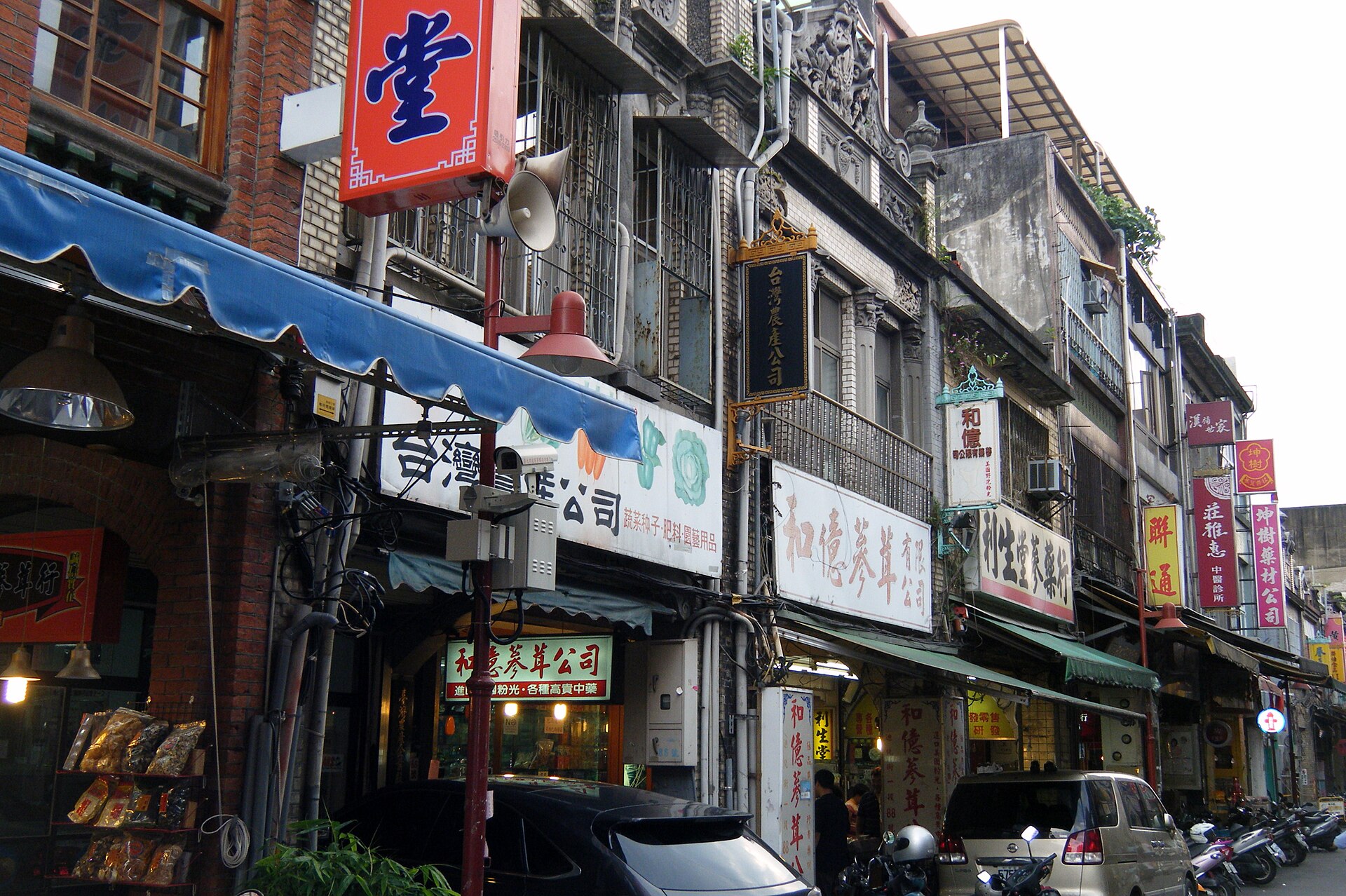
Datong holds two of the most rewarding old neighbourhoods in Taipei. Dadaocheng, along Dihua Street, is the old tea-trading port: a long street of restored shophouses selling dried mushrooms, medicinal herbs, tea and fabric, the little Xia Hai City God Temple where people come to pray for love, and a riverside wharf with container bars that fill up at sunset. It is about six minutes’ walk from Beimen station and best on a Friday or Saturday, when the whole district is at its liveliest; give it two or three hours. See our Zhongshan district guide for the cafés and shops at its southern end.
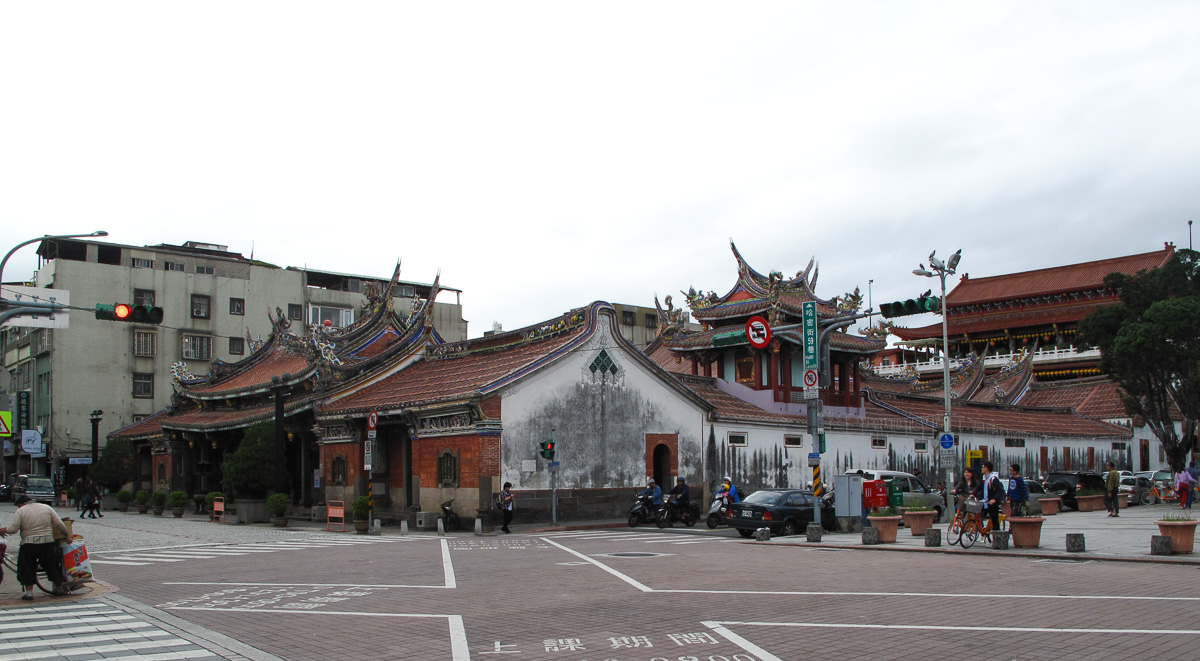
Further north, near Yuanshan station, the old village of Dalongdong has two of the finest temples in the city side by side. Baoan Temple, dedicated to the god of medicine, was painstakingly restored by its community and won a UNESCO Asia-Pacific heritage award in 2003; its carving and painted beams are as good as Longshan’s and the crowds are a fraction of the size. Next door, the Confucius Temple is calm, spare and free, with excellent displays on Confucian ritual. Our temples guide explains what to look for in both.
In between, Ningxia Night Market is one of the city’s best for food: short, dense and focused on eating rather than shopping.
Go for: history, temples, shopping for tea and dried goods, and one of the best night-market meals in Taipei.
For the old tea port street by street — the shophouses, the matchmaker at the City God Temple, the tea merchants and sunset at the wharf — see our Dadaocheng and Dihua Street guide.
Zhongzheng: the civic heart
Zhongzheng is where Taipei governs itself and remembers its history. The Chiang Kai-shek Memorial Hall, with its vast plaza framed by the National Theater and Concert Hall, is here; so are the Presidential Office Building, 228 Peace Park with its memorial museum, and the National Taiwan Museum, Taiwan’s oldest, founded in 1908, at the park’s edge by NTU Hospital station. Taipei Main Station is here too, which means most visitors pass through Zhongzheng many times without noticing.
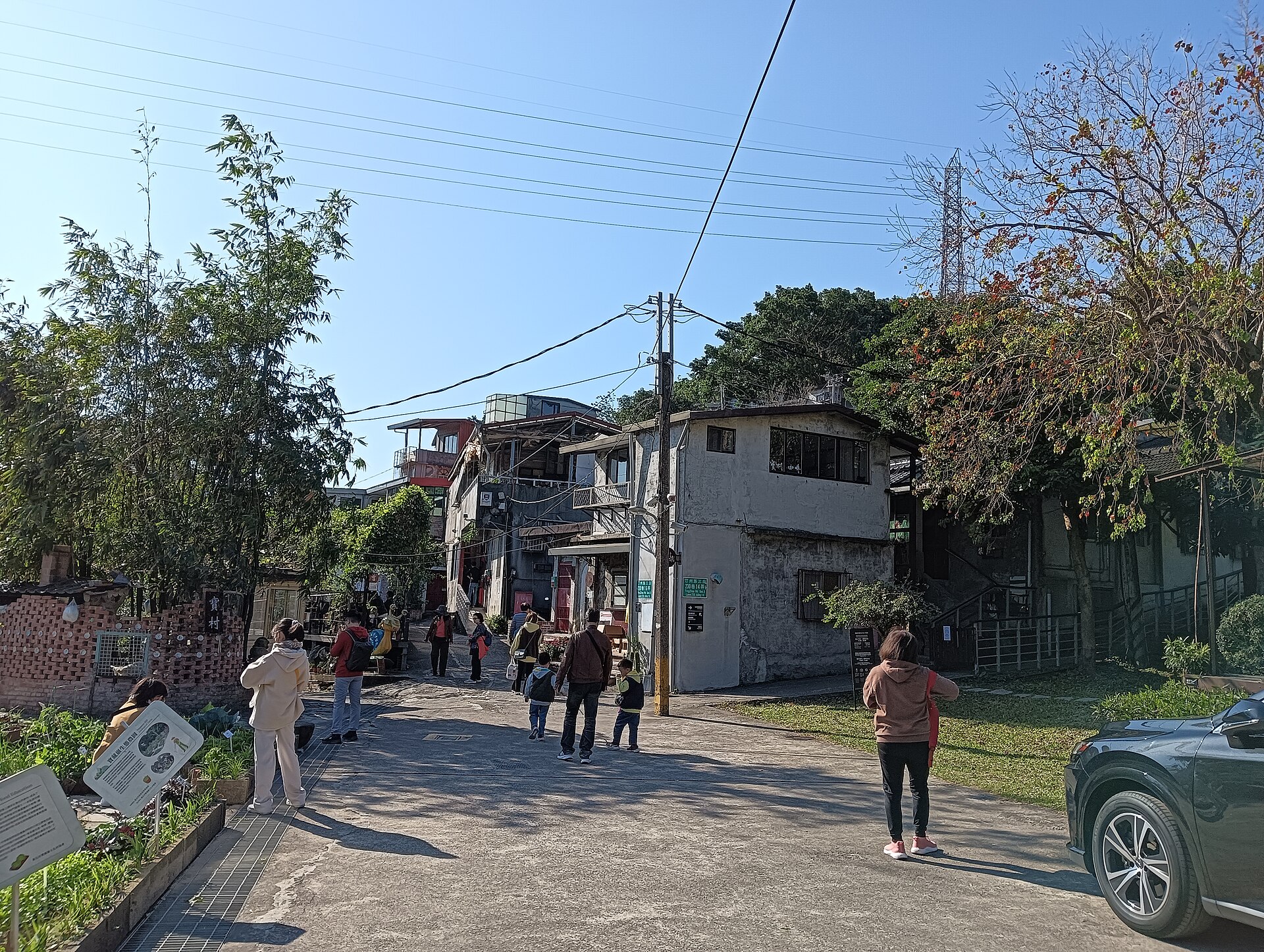
The district has two creative corners worth seeking out. Huashan 1914 Creative Park, a former sake plant and winery turned into galleries, shops and restaurants, is free and open around the clock, a short walk from Zhongxiao Xinsheng station. And at the southern edge, by the river near Gongguan, Treasure Hill Artist Village is a former informal hillside settlement, built by veterans and migrants after the war, that has been turned into artists’ studios, small galleries and a café while keeping its maze of stairs and patched-together houses.
Go for: the big monuments, Taipei’s modern history, and two of its best creative spaces.
Our Zhongzheng District guide explains how to tour the Presidential Office on a weekday morning and links the museums, Liberty Square and the North Gate into a day.
Zhongshan: design, cafés and old Japanese lanes
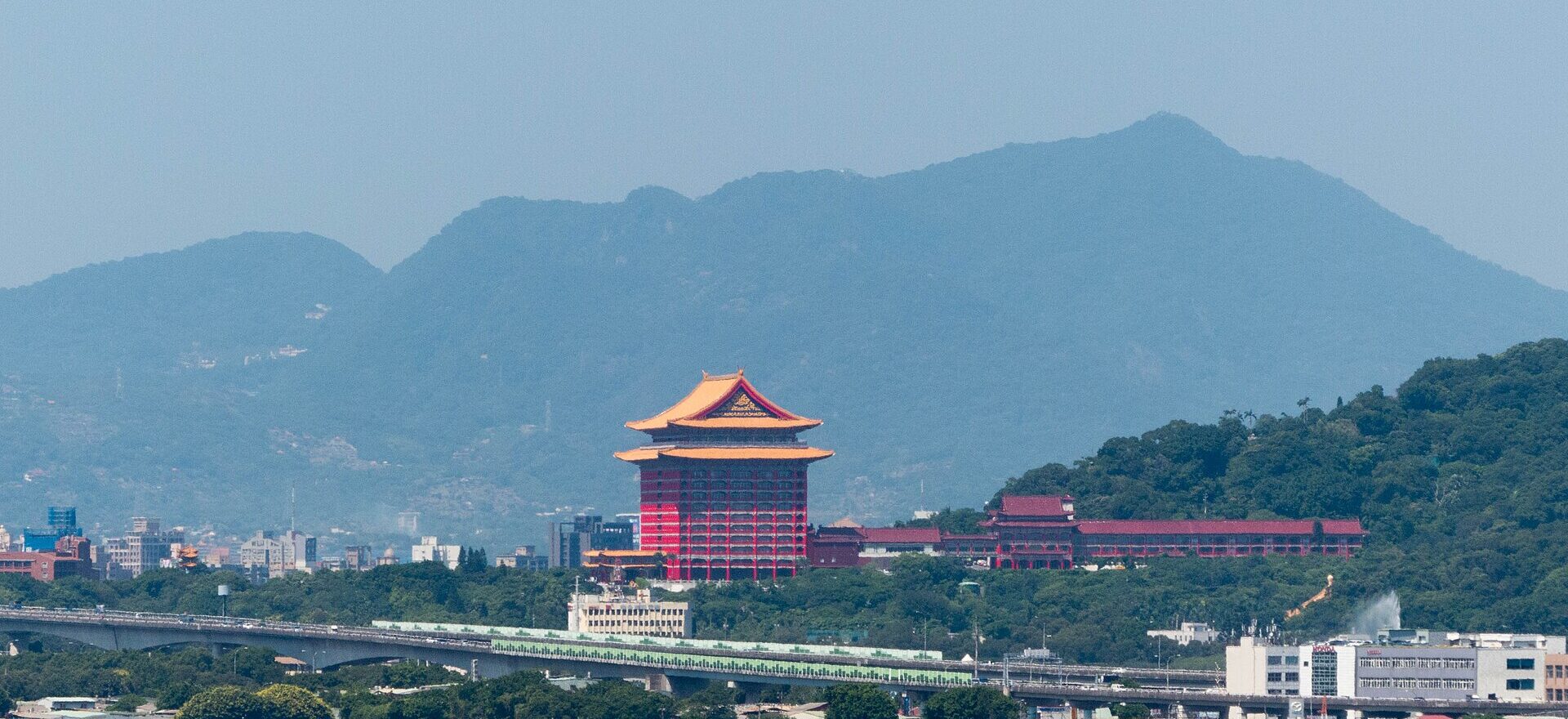
Zhongshan is the stylish district between Taipei Main and the Keelung River. Around Zhongshan station, the grid of small streets east of the MRT — Chifeng Street above all — is full of independent cafés, design shops and small restaurants in converted workshops. Further east, the lanes off Linsen North Road were a Japanese residential quarter a century ago and are now a warren of izakaya, hostess bars and late-night noodle shops that locals still call by their Japanese-era numbers. To the north, the Taipei Fine Arts Museum and the Expo Park sit near Yuanshan station, and the red-and-gold Grand Hotel surveys everything from its hill across the river.
Our Zhongshan district guide goes deeper. Go for: an afternoon of cafés and small shops, and an evening in the lanes.
Da’an: the best district to wander
If you only have time to explore one neighbourhood properly on foot, make it Da’an. It is leafy, lively and liveable, with the city’s best concentration of good food. Yongkang Street, just off Dongmen station, is Taipei’s best-known food street — Din Tai Fung began around the corner on Xinyi Road, and the famous mango shaved ice is at Smoothie House (思慕昔). Daan Forest Park, twenty-six hectares of trees and lawns, is the city’s green living room; Shida Night Market, reached from Taipower Building station, Exit 3, feeds the students of National Taiwan Normal University; and the lanes around National Taiwan University and Gongguan have bookshops, cafés and one of the better small night markets.
Da’an also takes in much of the East District (Dongqu) around Zhongxiao Fuxing and Zhongxiao Dunhua stations, where department stores give way to the side-street boutiques, bars and cafés of the lanes behind them. Our Da’an district guide has the full picture.
Go for: food, cafés, parks and the everyday life of one of Asia’s most pleasant cities.
Three of Da’an’s neighbourhoods have guides of their own: Yongkang Street for the food, Gongguan for the university quarter and Treasure Hill, and the East District for department stores, back-lane bars and late-night hot pot.
Xinyi: the showpiece
Xinyi is the Taipei of the postcards: Taipei 101, a cluster of linked department stores and malls joined by elevated walkways, five-star hotels, and the clubs and rooftop bars that make it the centre of the city’s big-night-out nightlife. It is impressive, clean and very modern, and a day here is easy and enjoyable. It is also, frankly, the least distinctive part of Taipei — much of it could be in any wealthy Asian city.
What lifts it is the setting. Elephant Mountain, a short, steep climb from Xiangshan station at the end of the Red Line, gives the classic view of Taipei 101 and the city; the Four Beasts trails continue along the ridge behind it. And on the edge of the district, the Songshan Cultural and Creative Park — named after the old Songshan tobacco factory it occupies, though it sits just inside Xinyi — is home to the Taiwan Design Museum and a calmer, greener counterpoint to the malls. The Four Four South Village, a preserved block of 1940s military housing in the shadow of Taipei 101, is the best single place to see the old Xinyi beneath the new one. See our Xinyi district guide.
Go for: the view, the shopping and a night out. Do not spend your whole trip here.
Songshan: Raohe and the quiet grid
Songshan, north of Xinyi, is mostly residential, and its star attraction sits at its eastern edge: Raohe Night Market, a single long, packed lane that begins at the gate of the ornate Ciyou Temple, right by Songshan station, Exit 5. Come at dusk, see the temple, then eat your way down the market. It is one of the best evenings in Taipei.
Across the district, the Minsheng Community is worth an hour’s stroll for a different reason: laid out in the late 1960s on American-influenced planning lines, it is a quiet grid of tree-lined streets, small parks and neighbourhood cafés that shows how comfortable everyday Taipei can be.
Go for: Raohe at night; the Minsheng streets if you like seeing where people actually live.
Our Songshan District guide adds the Rainbow Bridge at sunset, the story of the Minsheng Community and the airport’s observation deck.
Shilin: the museum, the market and the hills
Shilin is a big district stretching from the river up into the hills of Yangmingshan, and it contains two of Taipei’s most visited sights. The National Palace Museum, home to one of the greatest collections of Chinese art in the world, is on the edge of the hills, a short bus ride from Shilin station. And Shilin Night Market, by Jiantan station, Exit 1, is the city’s biggest and most famous night market — and, by general agreement, not its best for food. Between the two, the gardens of the Shilin Official Residence, Chiang Kai-shek’s former home, are free and lovely, especially in spring.
Up the hill, Tianmu is the neighbourhood where many of Taipei’s foreign residents have lived since the American military era, with international schools, bakeries and a relaxed, suburban air, and trailheads into the mountains.
Go for: the museum above all; the night market once, for the scale; the hills if you have time.
See our Shilin District guide for everything beyond the night market, and our Tianmu guide for the hillside suburb, its water-pipe trail and its ballpark.
Beitou: steam and green
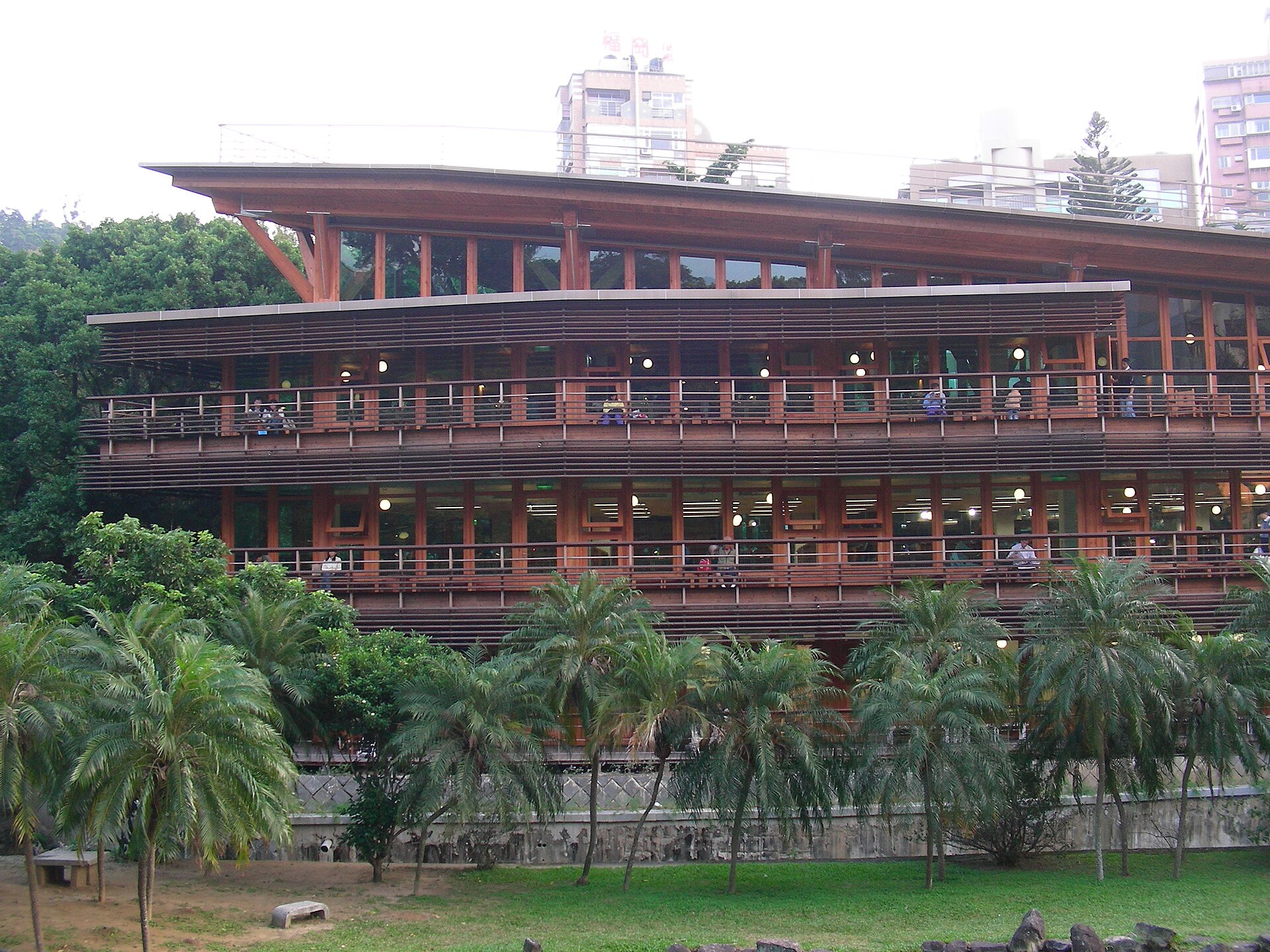
At the northern end of the Red Line, Beitou is the city’s hot spring district, in a valley on the flanks of the Yangmingshan volcanoes. From Xinbeitou station, a short branch line from Beitou, the park runs uphill past the Beitou Hot Spring Museum — the grand Japanese-era public bathhouse of 1913 — and the wooden, balconied Beitou Public Library, opened in 2006 as Taiwan’s first green-building library, to the steaming, sulphurous pool of Thermal Valley. Public baths and hotel spas line the streets. Our Beitou hot springs guide covers the bathing; the district rewards a half day even if you never get in the water.
Go for: a soak, a stroll through the park, and a sense of how close the wild is to the city.
Our Beitou district guide covers the valley walk, Guandu and the hills, and the latest on the public outdoor bath’s renovation.
Wenshan: the green south
Wenshan, in the south-east of the city, is where Taipei goes for fresh air. Taipei Zoo is at the end of the Brown Line, and next to it the Maokong Gondola rises over the forest to the tea plantations and teahouses of Maokong, famous for its Tieguanyin oolong. A late-afternoon ride up, a pot of tea and the view of the city lights coming on is one of the most relaxing things to do in Taipei. The rest of the district is residential, with a riverside cycle path along the Jingmei River.
Go for: the zoo with children, and Maokong at sunset.
Neihu and Nangang: the eastern edge
Most visitors never set foot in Neihu, and most of it is office parks where Taiwan’s tech companies have their headquarters. Its reward is its green edges: Dahu Park, with a lake and an arched bridge reflected in the water beneath the hills, right by Dahu Park station, and a web of hiking trails over the ridges behind. Nangang, further east, is Taipei’s eastern gateway, where the high speed rail, Taiwan Railways and the MRT meet, and where the big exhibition halls and the Taipei Music Center host trade fairs and concerts.
Go for: a lakeside walk or a hike if you are nearby; an event at the exhibition halls or the music centre. Otherwise, you can skip them.
For Neihu in depth — the moon bridge at Dahu Park, the rocky scramble up Jinmian Mountain, strawberry picking at Baishihu and the Miramar Ferris wheel next door — see our Neihu guide.
Beyond the city limits: New Taipei
Taipei City sits inside New Taipei City, a ring of suburbs and towns home to more people than Taipei itself, and several of its districts are well worth an outing on the MRT:
- Banqiao — New Taipei’s administrative centre, with the Lin Family Mansion and Garden, one of the finest classical Chinese gardens in Taiwan, a short walk from Fuzhong station.
- Tamsui — the old river port at the end of the Red Line, with a waterfront promenade, Fort San Domingo and famous sunsets. See our Tamsui day trip.
- Yonghe — the home of the soy milk breakfast shops that spread across Taiwan, and still one of the best places for a traditional Taiwanese breakfast.
- Sanxia and Yingge — a temple town and a pottery town, now joined to the Blue Line by the new Sanying metro line. See our guide to Sanxia and Yingge.
- Wulai — an Atayal village in a river gorge with hot springs, at the end of a bus ride from Xindian. See our Wulai day trip.
Which neighbourhood for what
| If you want… | Go to |
|---|---|
| Old Taipei and history | Wanhua, Dadaocheng, the Zhongzheng monuments |
| Temples | Longshan and Qingshan in Wanhua; Baoan and the Confucius Temple in Dalongdong; Ciyou in Songshan |
| The best eating | Da’an (Yongkang Street, Shida), Ningxia and Raohe night markets, Wanhua’s markets |
| Cafés and design shops | Zhongshan’s Chifeng Street, Da’an, the lanes of the East District |
| Creative parks and galleries | Huashan 1914, Songshan Cultural Park, Treasure Hill, the Fine Arts Museum |
| A big night out | Xinyi’s clubs and rooftop bars; Ximending and Linsen North Road for something less polished |
| Shopping | Xinyi’s malls, the East District, Ximending for youth fashion, Dihua Street for tea and dried goods |
| Views | Elephant Mountain in Xinyi, Maokong in Wenshan, the Grand Hotel’s hill in Zhongshan |
| Green space and walks | Daan Forest Park, Beitou, Maokong, Dahu Park, the riverside parks |
| Everyday local life | Minsheng Community, the lanes of Da’an, Wanhua’s morning markets |
For the full list of sights these neighbourhoods hold, see our guide to things to do in Taipei. See our Banqiao guide.
Three walks that join neighbourhoods together
Taipei is flat and compact in the centre, and some of its best days are spent walking from one district into the next. Three routes that work:
Old Taipei: Wanhua to Dadaocheng (half a day)
Start at Longshan Temple early, walk the few minutes to Bopiliao, then north through the old streets to Ximending and the Red House. From the North Gate, continue on foot into Dadaocheng — about twenty-five minutes — for Dihua Street, the City God Temple and sunset at the riverside wharf. Three centuries of the city in one walk.
Da’an: food, park and campus (half a day)
From Dongmen station, eat your way along Yongkang Street, walk south-east through the lanes to Daan Forest Park, and on to National Taiwan University‘s palm-lined avenue. Finish at Shida or Gongguan for dinner, with Treasure Hill by the river as a detour before dark.
The East: from the old tobacco factory to the mountain (half a day)
Begin at the Songshan Cultural and Creative Park, walk south through the shopping streets to Taipei 101, stop at Four Four South Village, and climb Elephant Mountain in time for sunset. Come down for dinner in Xinyi, or take the MRT to Raohe.
Getting between neighbourhoods
The MRT is the answer to almost every journey. The lines map neatly onto the districts: the Blue Line runs west to east from Banqiao through Wanhua, Zhongzheng and the East District to Nangang; the Red Line runs from Xinyi through Da’an, Zhongzheng and Zhongshan up to Shilin, Beitou and Tamsui; the Green Line links Songshan, Zhongshan, Ximending and Gongguan; and the elevated Brown Line runs from the zoo through Da’an and past Songshan Airport to Neihu. The operator’s Taipei Metro website has the current network map.
- Walk within and between the central districts — Wanhua, Zhongzheng, Datong, Zhongshan and Da’an are all close together.
- Cycle on a YouBike, especially along the riverside paths that link Dadaocheng, Wanhua and Gongguan.
- Take a bus for the National Palace Museum, the hill neighbourhoods and anywhere the MRT misses.
- Use an EasyCard for all of it.
A word on where to stay
This page is about exploring, but the same geography shapes where to base yourself. For most visitors the sweet spot is the band of central districts along the Red and Blue lines — Zhongshan, Zhongzheng, Da’an and the western end of Xinyi — where you can walk to good food at night and reach everything else by MRT. Wanhua and Ximending are cheaper and livelier; Xinyi is the most polished and expensive; Beitou suits a hot spring night rather than a whole trip. Our guides to where to stay in Taipei and the best neighbourhoods for tourists cover the hotels and the trade-offs.
What we would skip
Spending every day in Xinyi. It is the Taipei of the brochures and the least like the rest of the city. See the tower and the view, then go west.
Treating Shilin Night Market as the definitive night market. It is the biggest, not the best. Ningxia and Raohe feed you better.
Neihu and Nangang for their own sake, unless you are going to an event, a hike or Dahu Park.
Dihua Street on a Monday morning. It is a working street and some shops keep their own hours; the district is at its best on a Friday or Saturday.
Judging Wanhua by its first five minutes. The streets around the park by Longshan Temple are the roughest in central Taipei; the temples, markets and old streets a block further on are the city’s soul.
Related Taipei guides
- Things to Do in Taipei
- Where to Stay in Taipei
- The Best Neighbourhoods in Taipei for Tourists
- Da’an District Guide
- Xinyi District Guide
- Zhongshan District Guide
- Ximending Guide
- Longshan Temple
- Beitou Hot Springs Guide
- Taipei MRT Guide
- The Best Temples in Taipei
- Taipei Night Markets
Frequently Asked Questions
What are the main neighbourhoods in Taipei?
Taipei City has twelve districts: Wanhua, Datong, Zhongzheng, Zhongshan, Da’an, Xinyi, Songshan, Shilin, Beitou, Wenshan, Neihu and Nangang. The ones most visitors spend time in are Wanhua (including Ximending), Datong (Dadaocheng), Zhongzheng, Zhongshan, Da’an and Xinyi, with day visits to Shilin, Beitou and Wenshan.
Which is the oldest part of Taipei?
Wanhua, known historically as Bangka, where Han Chinese settlers founded a river port in the early eighteenth century. Longshan Temple dates from 1738. Dadaocheng, a little downstream, grew up from the 1850s and became rich on the tea trade after 1860.
What is the best neighbourhood in Taipei to explore on foot?
Da’an, for its food streets, cafés, Daan Forest Park and university lanes. For history, the walk from Longshan Temple in Wanhua to Dihua Street in Dadaocheng is the best in the city, taking in three centuries of Taipei in half a day.
Is Xinyi worth visiting?
Yes, for Taipei 101, the view from Elephant Mountain, the shopping and the nightlife. But it is the least distinctive part of Taipei, so do not base your whole trip around it — the older districts to the west are where the city’s character is.
What is the difference between Taipei and New Taipei?
They are separate cities. Taipei City is the capital, with twelve districts; New Taipei City surrounds it on almost every side and has a larger population. The MRT serves both, and places such as Tamsui, Banqiao, Yonghe, Wulai, Sanxia and Yingge are in New Taipei.
Where is Dadaocheng?
In Datong District, along the Tamsui River north-west of Taipei Main Station. Dihua Street is its main street, about six minutes’ walk from Beimen station. It is best visited on a Friday or Saturday, when shops and cafés are busiest.
Which Taipei neighbourhood is best for food?
Da’an, for Yongkang Street, Shida and the lanes around Daan Park, followed by the night markets at Ningxia in Datong and Raohe in Songshan. Wanhua’s markets are the best for cheap, old-fashioned Taiwanese food.
Is Wanhua safe?
Yes. Wanhua is one of the older and poorer parts of central Taipei and the area around the park by Longshan Temple has visible homelessness, but Taipei as a whole is very safe and Wanhua is busy day and night. Use ordinary city sense. See our safety guide for more.
What is the East District in Taipei?
Dongqu, the shopping and nightlife area along Zhongxiao East Road around Zhongxiao Fuxing and Zhongxiao Dunhua stations, mostly within Da’an District. It boomed in the 1980s and 1990s and is known for its department stores and the boutiques, cafés and bars in the lanes behind them.
Is the Songshan Cultural and Creative Park in Songshan District?
No — despite the name, it sits just inside Xinyi District. It takes its name from the old Songshan tobacco factory it occupies, and it is about eight minutes’ walk from Sun Yat-sen Memorial Hall station.
How do I get around Taipei’s neighbourhoods?
By MRT for most journeys, on foot within the central districts, by YouBike along the riverside paths, and by bus for the National Palace Museum and the hill areas. An EasyCard covers all of them.
Which Taipei neighbourhood should I stay in?
For most first-time visitors, the central districts along the Red and Blue MRT lines — Zhongshan, Zhongzheng, Da’an or the western edge of Xinyi. Our where-to-stay guide goes through the options and hotels in detail.
How many days do I need to see Taipei’s neighbourhoods?
Three days covers the core — Wanhua and Dadaocheng, Da’an and Zhongzheng, Xinyi — with evenings at the night markets. Five days adds Beitou, Shilin, Maokong and the creative parks without rushing. See our guide to how many days to spend in Taipei.
The Bottom Line
Taipei’s neighbourhoods are best understood as a timeline you can walk. Start in the west, where the city began, among the temples and markets of Wanhua and the tea merchants’ shophouses of Dadaocheng; work east through the monuments of Zhongzheng and the leafy lanes of Da’an; and finish with the view from Elephant Mountain over the towers of Xinyi. Add Beitou for the steam, Maokong for the tea and the hills, and a different night market every evening.
Above all, give the older districts the time the guidebooks give Xinyi. The glass towers are impressive; the real city is a few stops west, and it is at its best on foot.
Photo Credits
The Grand Hotel and Yangmingshan from the Minsheng Community: Grand Hotel Taipei View from Minsheng Community Center 20140930 by 玄史生, CC0, via Wikimedia Commons.
Dalongdong Baoan Temple: Dalongdong Baoan Temple, Taiwan by Rutger van der Maar, CC BY 2.0, via Wikimedia Commons.
Treasure Hill Artist Village: Street in Taipei Treasure Hill by Allervous, CC BY 4.0, via Wikimedia Commons.
Beitou Public Library: BeitouLibrary by Lijun, CC BY-SA 3.0, via Wikimedia Commons.
Dihua Street shopfronts: 2010-06-22 Dihua Street by tomscoffin, CC BY 2.0, via Wikimedia Commons.