This article contains advertising. Our booking links are routed through a partner that adds commission tracking automatically, so if you book through one we earn a commission from the provider, at no extra cost to you. It never affects what we recommend. Affiliate disclosure
If there’s one thing every first-time visitor to Taipei agrees on, it’s that the Taipei MRT is the best public transport system they’ve used. Trains are clean, on time, signed in English, and run every two to four minutes from before 6 AM until after midnight. A single ride costs less than a coffee. The whole system pays for itself in saved taxi fares within about two days.
Equally true: it can look intimidating on day one. Six color-coded lines, 131-plus stations, multiple ticket options, a strict no-eating rule that catches tourists off guard, and a few etiquette quirks (don’t sit in the priority seats; stand on the right of the escalator) that locals quietly enforce. There’s also the wider question of which combination of single tickets, EasyCard, or Taipei Fun Pass actually saves you money for the kind of trip you’re taking.
This is the only Taipei MRT guide you need before your trip. The lines and what they connect, real fares and how to pay (including the new contactless credit card support rolling out in 2026), how to use an EasyCard, when a tourist pass is worth it, the rules and etiquette that matter, and the routes you’ll actually ride as a tourist. By the end, you’ll step into Taipei Main Station on day one and use the MRT like a local.
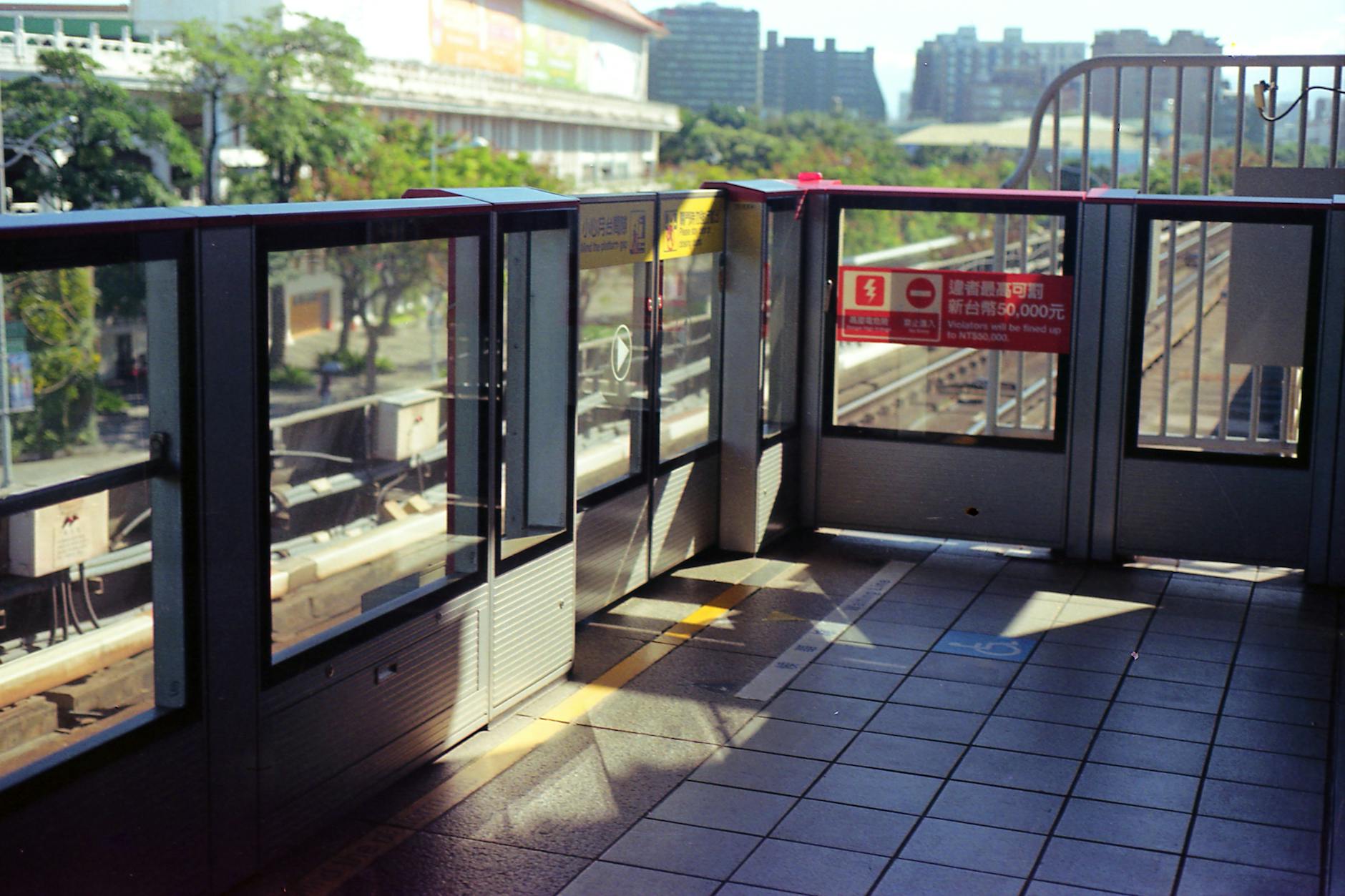
Taipei MRT at a Glance
- Lines: 6 main lines, 131+ stations
- Operating hours: 6:00 AM – 12:00 AM (some lines run later on Friday and Saturday)
- Train frequency: 2–4 minutes during the day, 5–8 minutes late at night
- Single ride: NT$20–NT$65 depending on distance
- EasyCard discount: ~20% off vs single-journey tokens
- Taipei Fun Pass: 1-day NT$1,200, 2-day NT$1,600, 3-day NT$1,900 (includes attractions)
- Languages: All signs and announcements in Mandarin and English (plus some Japanese and Korean)
- Strict rule: No eating, drinking, smoking, or chewing gum inside paid areas — fines NT$1,500–7,500
The Six Taipei MRT Lines (and What Each Connects)
The Taipei Metro Rapid Transit (MRT) network has six color-coded main lines. Knowing where each goes makes route-planning intuitive — most tourists ride only three of the six.
Red Line — Tamsui-Xinyi (淡水信義線)
The most useful line for tourists. Runs north-south, connecting the hot-spring district of Beitou and the riverside town of Tamsui in the north all the way down through Taipei Main Station, the Chiang Kai-shek Memorial, Da’an, and ending at Taipei 101/World Trade Center in the south. If you only learn one line, learn this one.
Key stops for visitors: Tamsui, Beitou (transfer for Xinbeitou hot springs), Shipai, Jiantan (for Shilin Night Market), Shilin (for the National Palace Museum), Yuanshan, Taipei Main Station, Chiang Kai-shek Memorial Hall, Dongmen (for Yongkang Street and Da’an), Daan, Daan Park, Xinyi Anhe, Taipei 101/World Trade Center, Xiangshan (for Elephant Mountain hike).
Blue Line — Bannan (板南線)
The east-west backbone. Connects the western district of Banqiao through Taipei Main Station, Ximending, and continues east through the city to Nangang. The Blue Line is essential for getting between Ximending and Taipei 101 (transfer at Taipei Main to the Red Line).
Key stops for visitors: Banqiao (HSR transfer), Longshan Temple, Ximen (for Ximending), Taipei Main Station, Zhongxiao Xinsheng (transfer), Zhongxiao Fuxing (transfer), Sun Yat-sen Memorial Hall, City Hall (for Xinyi District attractions), Houshanpi.
Green Line — Songshan-Xindian (松山新店線)
Connects the southern student/temple districts to the east-end of central Taipei. Useful for the southern half of Ximending and for accessing Songshan, Raohe Night Market, and the Songshan Cultural and Creative Park.
Key stops for visitors: Xindian (for Bitan scenic area), Taipower Building (for Shida Night Market), Guting (transfer to Orange Line), Ximen (for Ximending), Beimen, Zhongshan, Songjiang Nanjing, Nanjing Sanmin, Songshan (for Raohe Night Market and Songshan Cultural Park).
Orange Line — Zhonghe-Xinlu (中和新蘆線)
Runs roughly north-south through the central-west corridor, connecting Daqiaotou (near Dihua Street) and the Lubing/Xinzhuang areas to the south. Less commonly used by tourists but handy for Dadaocheng/Dihua Street and the LuZhou-Sanchong area.
Key stops for visitors: Daqiaotou (for Dihua Street), Zhongshan Junior High School (transfer to Brown Line), Xingtian Temple, Songjiang Nanjing (transfer to Green Line), Dongmen (transfer to Red Line).
Brown Line — Wenhu (文湖線)
The driverless elevated metro running east-west through the eastern half of the city, including the Songshan Airport and Taipei Zoo / Maokong Gondola areas. The trains are smaller and the views from the elevated tracks are scenic.
Key stops for visitors: Taipei Zoo (for Taipei Zoo and Maokong Gondola), Liuzhangli, Daan (transfer to Red Line), Zhongxiao Fuxing (transfer to Blue Line), Songshan Airport, Dazhi (for Miramar Ferris Wheel), Jiannan Road, Jiannan Pottery and Kunyang.
Yellow Line — Circular Line (環狀線)
The newest line, running in a loop around the western and southern outskirts of greater Taipei. Less commonly used by tourists, but handy if your hotel is in Banqiao, Sanchong, or LuZhou and you want to bypass central transfers.
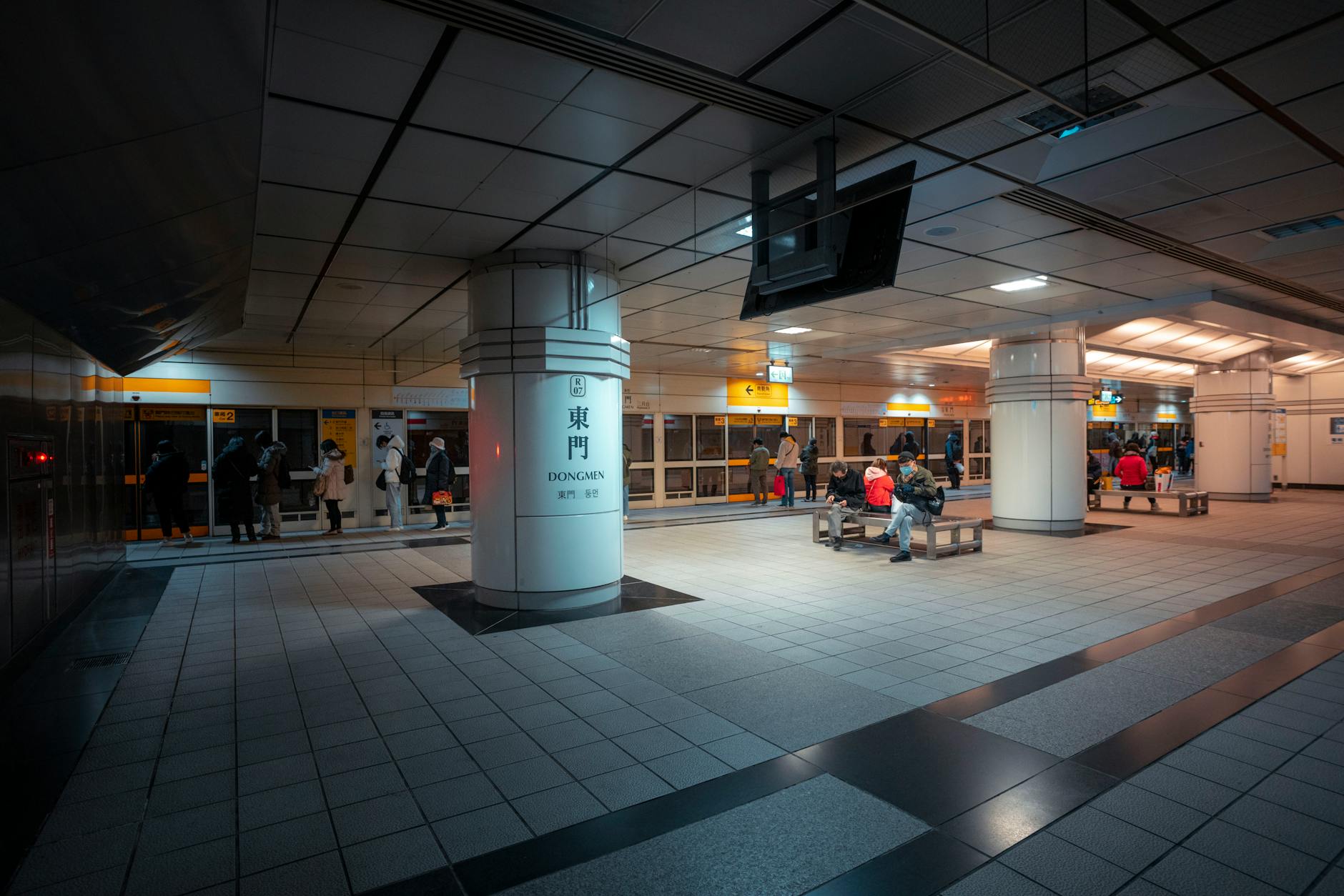
How to Pay for the Taipei MRT
Five options, listed in rough order of usefulness for a tourist:
1. EasyCard (悠遊卡) — The Best Default
The EasyCard is a contactless transit card you tap on entry and exit. It works on the MRT, city buses, the Maokong Gondola, the Tamsui-Bali ferry, the YouBike rental system, and even at most convenience stores. Single MRT rides on EasyCard get a roughly 20% discount versus a single-journey token, so the card pays for itself within 5–10 rides.
Where to buy: The EasyCard customer service desk at any MRT station, every 7-Eleven and FamilyMart, and at Taoyuan Airport. The card itself is NT$100 (non-refundable) and you load it with the credit you want — most tourists start with NT$300–500 and top up if needed.
Refunds: Unused stored value can be refunded at the airport service desk or any major MRT station’s customer service window before you leave Taiwan. The NT$100 card cost is not refunded.
2. iPASS
Functionally similar to EasyCard with the same MRT discount and almost identical use cases. iPASS originally came from Kaohsiung but works fully in Taipei. There’s no real reason for a tourist to pick iPASS over EasyCard unless you find one first.
3. Single-Journey Tokens
If you don’t want a card, you can buy single-trip plastic tokens at the automated machines in every station. The machines accept cash (coins and most NT bills) and have an English-language interface. Tap the token on the gate to enter; drop it in the gate slot when you exit. Token rides are about 20% more expensive than EasyCard rides.
4. Contactless Credit Cards (New in 2026)
Starting in 2026, the Taipei Metro is rolling out support for international contactless credit cards (Visa, Mastercard, American Express) and mobile wallets (Apple Pay, Google Pay). Tap your card or phone on the gate reader to enter and exit, and the fare is charged to your card automatically. This is the easiest option for short visits where you don’t want to manage a stored-value card. It’s still being rolled out station by station — most major stations support it; some smaller stations may not yet.
5. Taipei Fun Pass
The Taipei Fun Pass is an unlimited-rides pass for the MRT, city buses, and gondola, plus discounted or free entry to many attractions. Three durations: 1-day at NT$1,200, 2-day at NT$1,600, 3-day at NT$1,900. It includes free entry or discounts to Taipei 101 observatory, the National Palace Museum, the Taipei Zoo, and several other attractions.
Is the Fun Pass worth it? Honest math: the unlimited-rides pass alone usually doesn’t beat a topped-up EasyCard for a tourist (the MRT is too cheap). But if you’ll visit Taipei 101 + the National Palace Museum + the Maokong Gondola in three days, the Fun Pass starts to pay off when you account for the included entries. Run the numbers based on your itinerary.
How to Read the Taipei MRT Map
Each line has a color and a station code. Stations are numbered like R02 (Daan) or BL11 (Ximen). The letter indicates the line color (R = Red, BL = Blue, G = Green, O = Orange, BR = Brown, Y = Yellow), and the number is the station’s position on the line. Transfer stations have multiple codes — Taipei Main Station is R10 / BL12, for example.
Stations and exits are also numbered. When directions say “Take Exit 4 of Zhongxiao Fuxing Station,” that’s the specific exit out of the station, with its own location relative to the surrounding street grid. Always check the exit number — at major stations like Taipei Main, the wrong exit can put you a 10-minute walk from where you wanted to be.
How to Ride the Taipei MRT
The whole process from arrival to platform takes about 2 minutes once you know it.
- Find the station entrance. Look for the round MRT logo (a stylized “M” inside a square). Most stations have multiple entrances — any will do.
- Buy a ticket. If using an EasyCard or contactless card, skip this step. Otherwise, use the automated ticket machines (English option in the bottom-left of the screen). Pick your destination, pay, take the token.
- Tap in at the gate. Touch your EasyCard, contactless card, or token to the reader. The gates open. Walk through.
- Find your platform. Signs indicate the line color, line name, and the direction (the next major station is shown). Mistakes are easy at transfer stations — double-check the platform’s “Direction toward [final station]” sign.
- Wait at the marked queueing arrows. Yellow arrows on the platform floor mark where to stand. Let passengers off first.
- Board. Trains arrive every 2–6 minutes. Don’t run for a closing-door train; another is coming.
- Disembark. Listen for the Mandarin/English announcement. Stop names are also displayed on the in-car screens.
- Tap out at the gate. EasyCard / contactless: touch the reader on exit. Tokens: drop them in the gate slot.
Taipei MRT Etiquette: The Rules That Catch Tourists Off Guard
The Taipei MRT has a quietly strict etiquette culture. Locals enforce it gently — usually with a side-eye rather than a confrontation — but the rules are real, and a couple of them carry actual fines.
1. No eating, drinking, smoking, or chewing gum in the paid area. This rule starts at the gate, not at the train doors — so the platform counts. Even drinking water from a bottle technically violates it. Fines range from NT$1,500 to NT$7,500. Sealed bubble tea in a bag is generally fine because you can’t drink it; opened drinks are a problem. If you’re carrying a takeaway coffee, drink it before the gate.
2. Don’t sit in the priority seats unless you need them. The dark blue priority seats are reserved for elderly, pregnant, disabled, or injured passengers. Even if the rest of the car is full, locals rarely sit in them. As a tourist, leave them empty — there’s a strong cultural expectation here.
3. Stand on the right on the escalator. The left side is for walking; the right is for standing. This isn’t enforced by any law, but it’s deeply ingrained — block the left side and you’ll get a polite “excuse me” within 30 seconds.
4. Take backpacks off in crowded trains. The polite move is to shift your backpack to the front or hold it down by your knees so it doesn’t bump anyone behind you. Locals do this without thinking.
5. Keep your voice down. Phone calls are technically permitted but expected to be quiet. The cars are noticeably quieter than most metros — match that energy.
6. Let passengers off first. Stand to the side of the doors, wait for the off-flow to clear, then board.
7. No durian. No surfboards. Yes, these are actually on the rules sheet. Most tourists don’t violate either, but the absurdly specific list is part of the system’s charm.

Operating Hours and Frequency
Most Taipei MRT lines operate from 6:00 AM to midnight, with the last trains leaving terminal stations around 11:50 PM. On Friday and Saturday nights, several lines extend service until 1:00 AM.
Trains run every 2–4 minutes during the day and every 5–8 minutes late at night. Peak hours (8–9 AM and 5–7 PM) see the fastest frequencies and the densest crowds.
For the latest first/last train times for any specific station, check the official Taipei Metro website or the in-station digital boards.
Routes Tourists Actually Ride
If you’re trying to map your trip ahead of time, these are the routes you’ll use most often.
Taoyuan Airport to Taipei Main Station: Take the Airport MRT (a separate line from the Taipei Metro proper, but EasyCard works on it). Express trains take 35 minutes; commuter trains 50 minutes. Cost: NT$160 (about US$5).
Ximending to Taipei 101: Blue Line from Ximen → Taipei Main Station, transfer to Red Line → Taipei 101/World Trade Center. About 18 minutes.
Taipei Main Station to Shilin Night Market: Red Line to Jiantan Station (not Shilin Station — the market is closer to Jiantan). 12 minutes.
Taipei Main Station to Beitou Hot Springs: Red Line to Beitou, transfer to the short Xinbeitou shuttle. 25–30 minutes.
Taipei Main Station to Tamsui: Red Line straight north to the end of the line. 35 minutes.
Taipei Main Station to Taipei Zoo / Maokong Gondola: Brown Line to Taipei Zoo. 30 minutes.
Taipei Main Station to Longshan Temple: Blue Line, two stops west to Longshan Temple Station. 6 minutes.
Taipei 101 to Raohe Night Market: Red Line to Daan, transfer to Brown Line, transfer to Songshan-Xindian Green Line. About 25 minutes. Cabs are sometimes faster for this specific cross-city ride.
Common Taipei MRT Mistakes
Getting off at Shilin Station for Shilin Night Market. The market is closer to Jiantan Station. The single most common error first-time visitors make.
Buying a Taipei Fun Pass for a 4-day trip if you’re only doing one big attraction. Run the numbers — for many trips, EasyCard plus paid attraction tickets is cheaper.
Not topping up the EasyCard. If your card runs low mid-trip, you can’t pass through the exit gate. Top up at the customer service desk or the in-station Add Value machines.
Eating that mango on the platform. The fruit and the fine are both very real.
Standing on the left of the escalator. The polite tap-on-the-shoulder is real.
Mistaking the Brown Line trains for the others. The Brown Line uses smaller, narrower automatic trains. They look different — that’s normal, not a problem.
Trying to use a contactless card at a station that hasn’t been upgraded yet. If the gate beeps red on credit card tap, fall back to EasyCard or buy a token.
Accessibility on the Taipei MRT
The Taipei MRT is genuinely one of the most accessible metros in Asia. Every station has elevators, accessible bathrooms, and tactile paving for the visually impaired. Trains have wheelchair spaces, priority seats, and audio-visual announcements. Service dogs are welcome.
For travelers with mobility needs, the official Taipei Metro app shows the elevator-equipped exit at every station — handy for trip planning.
Taipei MRT Apps and Resources
Three apps that make MRT travel easier:
- Taipei Metro Go (official): Real-time train arrivals, route planner, station maps. iOS and Android. Free.
- Google Maps: Works fully in Taipei. Public transit directions are accurate and include the latest service updates.
- EasyCard app: Check your balance, view recent rides, top up via mobile in some cases. iOS and Android.
One underused feature of the network: most stations of any size have coin lockers in the concourse, outside the ticket gates, and they take EasyCard as well as coins. They turn a checkout-to-flight gap into a usable day. Our guide to luggage storage in Taipei covers prices, size limits, which stations fill up first, and the quieter station one stop along that usually has space.
The rules on this network are worth taking more seriously than they look. Eating and drinking is banned from the yellow line just inside the station entrance — not from the ticket gates — it covers plain water, and the fine runs from NT$1,500 to NT$7,500. The dark blue priority seats carry no fine and considerably more social weight. We go through those and the rest of the unwritten code in our guide to Taiwan etiquette, dos and don’ts.
It is worth stating what this network does for disabled passengers, because it is genuinely exceptional: step-free access from street to platform at effectively every station, wide gates, level boarding, a marked wheelchair space in every carriage, and an accessible toilet inside the gates at every stop. The one thing to plan around is that the lift may serve just one of six exits. Our guide to wheelchair accessible Taipei has the detail, along with the accessible taxi numbers worth saving.
The network grew again in 2026. The driverless Sanying Line opened on 30 June, running 14.3 kilometres from Dingpu, at the southern end of the Blue Line, through Sanxia to Yingge, with twelve stations and fares of NT$20–35 on the usual EasyCard system. For visitors it turns the Sanxia and Yingge old streets into an easy metro day out — see our guide to Sanxia Old Street and Yingge.
Related Taipei guides
- Taipei Taxi Guide: Fares, Apps & Safety
- Does Uber Work in Taipei?
- Taiwan High Speed Rail from Taipei: Booking & Tips
- Car Rental in Taipei: Do You Actually Need One?
- Day Trips from Taipei: 12 Best Nearby Escapes
Frequently Asked Questions
How much does the Taipei MRT cost?
Single rides cost NT$20–65 depending on distance. Most central tourist trips are NT$25–40. Using an EasyCard saves about 20% per ride compared to a single-journey token. The Taipei Fun Pass offers unlimited rides at NT$1,200/1,600/1,900 for 1, 2, or 3 days plus attraction entries.
Should I get an EasyCard or a Taipei Fun Pass?
Get an EasyCard if your trip is mostly MRT rides and a few attractions you’ll pay for separately. Get a Taipei Fun Pass if you’ll visit Taipei 101 + the National Palace Museum + the Maokong Gondola in 1–3 days — the included attraction entries can tip the math in the pass’s favor.
Can I use a credit card on the Taipei MRT?
Yes, contactless credit cards (Visa, Mastercard, Amex) and mobile wallets (Apple Pay, Google Pay) are accepted at most stations starting in 2026. Tap the card or phone on the gate reader on entry and exit. A few smaller stations may not yet support contactless — fall back to EasyCard if so.
Is the Taipei MRT safe?
Yes, exceptionally so. The system is heavily monitored, the platforms are gated with safety doors, and Taipei has very low crime overall. Solo travel late at night is widely considered safe.
Can I drink water on the Taipei MRT?
Technically no — even drinking water in the paid area can earn you a fine of NT$1,500–7,500. In practice, locals quietly sip from a water bottle and nobody usually says anything, but the rule is on the books and tourists have been fined. Drink before passing through the gate.
What time does the Taipei MRT open and close?
Trains run from about 6:00 AM to midnight, with last trains leaving terminal stations around 11:50 PM. Friday and Saturday nights, some lines extend to 1:00 AM. Always check the last-train times if you’re out late.
How do I get from Taoyuan Airport to my hotel by MRT?
Take the Airport MRT to Taipei Main Station (35 minutes express, NT$160), then transfer to the Taipei Metro Red or Blue Line for your hotel’s station. Total trip from gate to hotel is usually 50–70 minutes.
Can children ride the Taipei MRT?
Yes, and it’s family-friendly. Children under 6 (or under 115 cm tall) ride free with a paying adult. Reduced-fare children’s tickets are available for older kids. Strollers are welcome — every station has elevators.
Is the Taipei MRT crowded?
Peak hours (8–9 AM and 5–7 PM weekdays) on the Red and Blue Lines can be packed standing-room. Mid-day and weekends are usually comfortable. The system is enormous and the trains are frequent enough that real overcrowding is rare.
Final Take
The Taipei MRT is the easiest, cheapest, and fastest way to get around Taipei. Buy an EasyCard on day one, top it up with NT$500, and you’re set for almost any trip the city will throw at you. Learn the Red and Blue Lines, ignore the Brown Line until you actually need it, eat your snacks before the gate, and stand on the right of the escalator. That’s 90% of mastering the system.
The MRT does for Taipei what it does for almost no other Asian capital — it makes the entire city feel like a 15-minute walk away. Lean on it, and your trip gets noticeably smoother.