This article contains advertising. Our booking links are routed through a partner that adds commission tracking automatically, so if you book through one we earn a commission from the provider, at no extra cost to you. It never affects what we recommend. Affiliate disclosure
Taipei is two cities stacked on top of each other, and the accessibility gap between them is enormous. Underground, it is one of the best-designed transit systems on the planet for a wheelchair user: a lift from the street to the platform at essentially every station, level boarding onto the train, a designated space in every carriage, accessible toilets inside the gates. Above ground, on the same street, the pavement changes height three times in a block, a transformer box takes up half the width, and forty scooters are parked across the rest of it. Planning a trip to wheelchair accessible taipei means understanding that split, because it decides almost everything about how you move.
This guide covers what genuinely works, what genuinely does not, how to book an accessible taxi at the ordinary metered fare, which attractions are straightforward and which are not worth the fight, and the specific questions to ask a hotel before you book. Everything was checked in September 2026, and where something is variable we say so rather than promising you a smooth ride.
The honest summary
| What | How it actually is |
|---|---|
| MRT | Excellent. Lifts, level boarding, wheelchair spaces, accessible toilets, tactile paving. Among the best in Asia. |
| Accessible taxis | Very good. 24 hours, metered at the normal fare, no booking fee. Must be pre-booked. |
| Buses | Mixed. Low-floor vehicles common on main routes, not universal. |
| Major attractions | Mostly good. Big modern venues have thought about it. |
| Pavements | Poor and inconsistent. The single hardest part of the city. |
| Small shops and restaurants | Often inaccessible. Steps, narrow doors, upstairs seating. |
| Night markets | Possible but crowded and uneven. Go early or not at all. |
| Hotels | Variable and often overstated. Verify everything in writing. |
The pattern is consistent: anything the government built recently is good; anything privately owned or older is a lottery. That is a useful heuristic to carry around all week.
The MRT, which is the whole plan
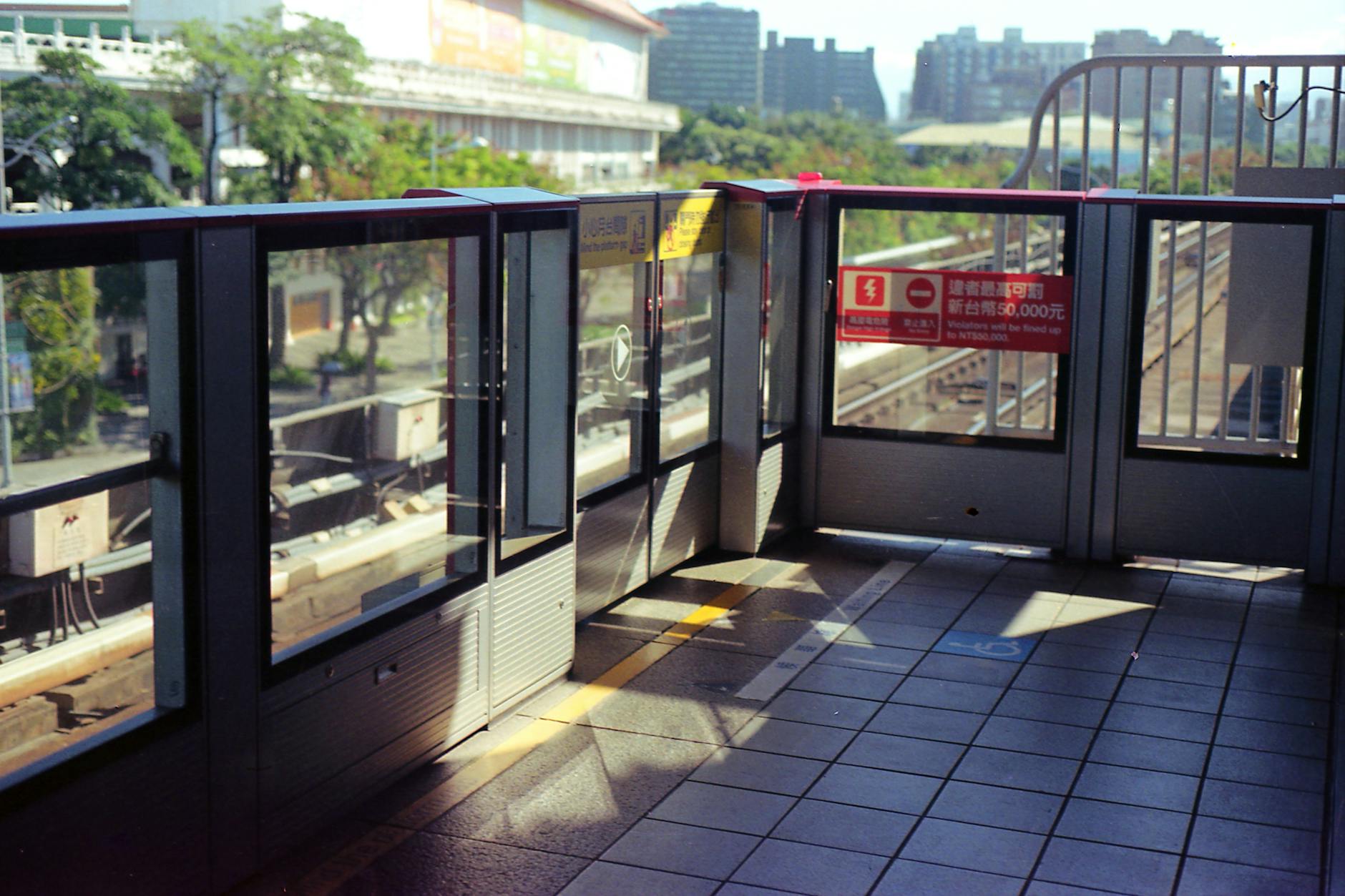
Build your trip around the metro and most of Taipei’s problems disappear. The Taipei MRT was the first public transport system in Taiwan to design in barrier-free facilities from the start, and it shows:
- Step-free access from street to platform at effectively every station, by lift.
- Wide gates at every station for wheelchairs, mobility scooters and pushchairs — look for the wider gate at the end of the row.
- Level boarding onto the train, with a very small platform gap and full-height platform screen doors on most lines.
- A designated wheelchair space in every carriage, marked on the floor and on the outside of the car.
- Accessible toilets inside the paid area at every station, which quietly solves the biggest logistical problem of a day out in any city.
- Tactile guide paths throughout, plus audio announcements in four languages.
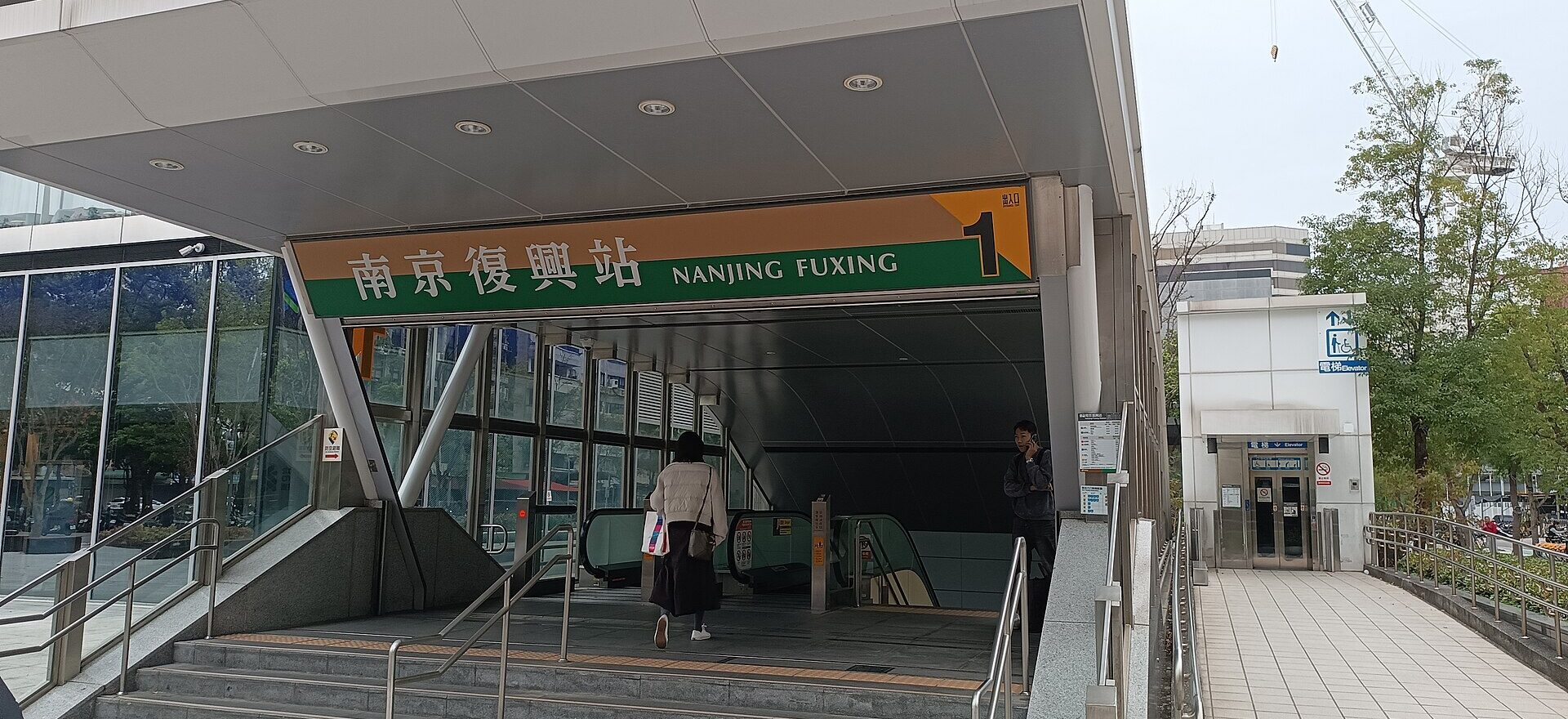
Two things worth knowing. First, the lift is often not at the exit you want. A station may have six exits and one lift, and that lift can come out three hundred metres from where you were aiming. Check the station map in the concourse — every station has one showing lift locations — or the Taipei Metro app, before you commit to an exit. Getting the exit right matters more in Taipei than in most cities.
Second, a small number of older or awkward sites use a staff-operated stair lift rather than a conventional lift. Station staff will operate it; it is slower, and you should factor in ten minutes. The official reference is the Department of Rapid Transit Systems, which publishes the barrier-free design standards the network is built to.
Staff, generally, are the best part. Taipei Metro staff are trained, present, and will help without being asked twice.
Accessible taxis, and the number to save

This is Taipei’s quiet triumph and almost nobody writes about it. The city runs a wheelchair-accessible taxi service, and the terms are better than in most Western capitals:
- 24 hours a day.
- Charged on the ordinary taxi meter — the same fare a walking passenger would pay for the same trip.
- No booking fee.
- Cash or EasyCard.
- One wheelchair user plus up to four other passengers per vehicle, so a family travels together.
- Advance booking required — this is not a service you hail.
To book, call the Taipei satellite taxi fleet on 412-8333, or the toll-free line 0800-055850, extension 3; from a mobile, 55850 extension 3 with a surcharge. Explain that you need a wheelchair-accessible vehicle and give a pick-up address and time. Book as far ahead as you reasonably can, particularly for an airport run or an early start. The Taipei City Department of Transportation is the source of record.
Practical notes. Have your hotel or a Mandarin speaker place the booking if you are not confident on the phone — the operators are helpful but the call is easier in Chinese. Ordinary Taipei taxis and Uber are fine if you can transfer to a car seat and your chair folds into a boot, which is a much larger group of travellers than the accessible-vehicle fleet is sized for.
Buses, and why they are the weak link
Low-floor buses with ramps run on many Taipei routes and are increasingly standard, but coverage is not universal and you cannot rely on any given service being one. Combine that with tightly packed stops, drivers under schedule pressure and pavements that make the approach to the stop the hard part, and buses become the option you take when the MRT does not go there.
If you do use them, our Taipei bus guide covers how the system works. Board at the front, allow more time than you think, and be prepared for the ramp to be deployed manually.
The pavements: the part nobody prepares you for
Here is the thing we would want to be told, so we will tell you. Taipei’s street-level accessibility is poor, and it is the reason the city is harder than its metro suggests.
The specific problems, all of them widely documented and all of them things you will meet on day one:
- Kerb cuts are inconsistent — sometimes absent, often far steeper than a standard gradient, occasionally ending in a step.
- Pavement height and surface change constantly. Taipei’s footways are built and maintained by the building owners fronting them, which produces a patchwork of tiles, concrete, ramps and drops within a single block.
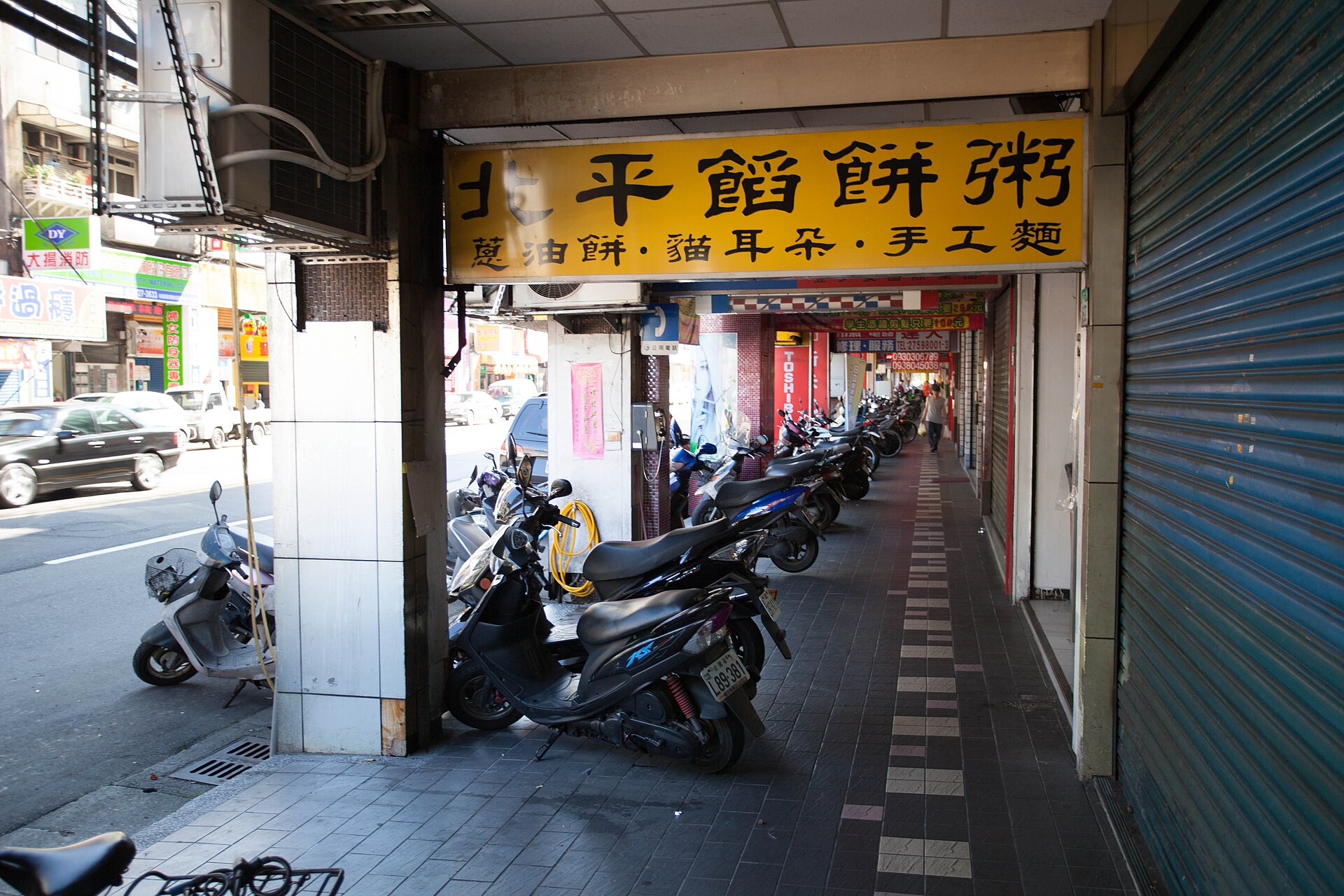
- The arcade walkway (騎樓) is blocked. These covered colonnades are wonderful in the rain and are also where the city parks its scooters, stacks its deliveries, and puts its shop displays and air conditioning units.
- Street furniture in the middle of the path — lamp posts, transformer boxes, utility cabinets, planters.
- The result is that wheelchair users frequently end up in the traffic lane, alongside scooters, which is exactly as unpleasant as it sounds.
What to do about it. Plan door-to-door, not area-to-area. Rather than “spend the afternoon around Zhongshan”, pick a specific destination with a known accessible approach and go there directly by MRT or accessible taxi. Use satellite view on a mapping app to look at the actual pavement before you commit to a walking route — you can usually see the arcade, the kerb and the scooter rank. And accept from the start that some spontaneous wandering is going to be replaced by planning, which is a loss, and one the city has not yet fixed.
It is improving. Taiwan has spent the last few years reckoning publicly with a road environment that international coverage bluntly called a living hell for pedestrians, and pedestrian priority law has tightened considerably. Enforcement of pavement parking has not caught up.
Attractions: what works
Reliably good
- Taipei 101 — a modern tower with modern provision. Lifts throughout, accessible toilets, step-free from the MRT through the mall to the observatory ticket desk. The single easiest major sight in the city.
- The National Palace Museum — lifts between floors, wheelchairs available to borrow, accessible parking and a drop-off point. Worth arriving by accessible taxi rather than working out the bus from Shilin.
- Chiang Kai-shek Memorial Hall — the vast plaza is flat and open, and the hall itself has lift access. The main staircase is the famous approach; the lift is the sensible one.
- The Maokong Gondola — has wheelchair-accessible cabins with ramps at the stations, which makes one of Taipei’s best experiences genuinely available. Tell the staff at the gate.
- Taipei Zoo — large, modern, laid out on wide paved paths, and it shares an MRT station with the gondola. Hilly in places, but designed with ramps.
- The creative parks — Huashan 1914 and Songshan are flat converted factory sites with wide yards and mostly level interiors.

Possible with planning
- Longshan Temple — raised thresholds and steps at the halls, crowded at peak times, but the courtyards are reachable and staff are accommodating. Go on a weekday morning.
- Night markets — flat, but narrow, crowded, uneven underfoot and full of stall legs and cable runs. Ningxia is a single straight street and the most manageable; Shilin’s covered food hall is a basement. Arrive at opening, around 17:00–18:00, before the crush.
- Beitou hot springs — the public park and the museum are reachable, and some larger hotels have accessible private bathing rooms. Ask specifically; the older bathhouses are not designed for this.
- Tamsui — the riverside boardwalk is flat, wide and one of the nicest accessible outings from the city. The old street behind it is the crowded part.
Realistically difficult
- Jiufen — a mountain village built as a staircase. The famous Shuqi Road is several hundred steps. There is no version of this that works in a wheelchair, and we would rather say so than send you up there.
- Elephant Mountain — stone stairs the whole way. For the same view, go up Taipei 101 or take the gondola.
- Older neighbourhood alleys — Wanhua’s back lanes, much of Dadaocheng’s interior, the hillside parts of Beitou.
- Small restaurants generally. The good ones are frequently a single narrow room up one step, with tables eighteen inches apart. This is the most persistent daily frustration of an accessible trip here.
Hotels: what to ask, and why it matters
“Accessible” is defined loosely across the region, and a hotel’s website is not evidence. Taiwanese hotels are usually honest and helpful when asked directly — they are simply working to a different default than a British or American traveller expects.
Email, do not phone, and ask for specifics with numbers:
- Door widths in centimetres — room door, bathroom door, and the lift. Ask for the actual measurement, not “wide enough”.
- Is there a step or lip at the bathroom door or the shower? A raised threshold is the single most common failure.
- Roll-in shower or bath? Ask for a photograph. This one request eliminates most bad surprises.
- Grab rails by the toilet and in the shower, and on which side.
- Bed height, and whether the bed has clearance underneath for a hoist if you use one.
- Is the entrance step-free from the street, and how far from a lift-equipped MRT exit?
Newer international-brand hotels in Xinyi and around Taipei Main are the safest bet, and the ones near a station with a lift are worth paying for — see Taipei hotels near the MRT and our wider where to stay guide. Older boutique properties, hostels and the charming small guesthouses are frequently in walk-up buildings; our boutique hotel guide is worth reading with this filter on.
Arriving, and getting into town
Taoyuan is a large modern airport and the accessibility provision is good — assistance can be requested through your airline, and both terminals have accessible toilets, lifts and staff support.
Getting into the city, in order of ease:
- Pre-booked accessible taxi — simplest, door to door, metered. Book before you fly.
- Taoyuan Airport MRT — step-free, lifts at both ends, around 35–40 minutes and NT$160 to Taipei Main. The catch is at the other end: Taipei Main Station is enormous, and the airport line platforms are a long way from the Red and Blue lines. Allow serious time for the transfer, and consider a taxi for the last leg to your hotel.
- Airport buses — cheap, and the least reliable for accessibility. Not the one to pick.
If you are continuing beyond Taipei, both Taiwan Railways and the high speed rail have wheelchair spaces and staff assistance, booked in advance. HSR is the more predictable of the two.
Practical things that make the week easier
- Get an EasyCard. It works on the MRT, buses, the gondola and accessible taxis, and removes the need to handle cash at a gate.
- Use station toilets. Every MRT station has an accessible one inside the gates, which is a better network than the street offers.
- Bring your own repair kit and spares. Taipei has good bicycle and mobility workshops but finding the right part at short notice is a lost day.
- Travel in shoulder season. A Taipei August makes every physical task harder; see the best time to visit. Late October to early December is the kindest weather of the year.
- Carry a printed card in Chinese explaining what you need. Willingness to help here is very high; the language gap is the friction.
- Ask. Staff at museums, stations and larger venues will find the ramp, open the side entrance, or fetch a colleague. The provision often exists and is simply not signposted.
Travelling with other access needs
Visual impairment. Tactile guide paths are extensive in the MRT and on many main pavements, station announcements are audio in four languages, and lifts speak. The street environment is the same obstacle course described above, with the added hazard of near-silent electric scooters.
Hearing impairment. Visual information is good — every MRT station and train has screens, signage is bilingual, and written communication with staff is straightforward. Translation apps work well here.
Sensory sensitivity and autism. Taipei is loud, bright and dense, and night markets in particular are a lot. It is also full of quiet retreats: temple courtyards, the café culture, public libraries, and large flat parks. Building quiet hours into the day works better here than trying to avoid the noise.
Chronic illness and fatigue. The MRT plus accessible taxis makes a low-energy itinerary genuinely feasible, and Taipei’s density means a lot is packed into short distances. Our healthcare and pharmacies guide covers what to do if something goes wrong, and it is worth knowing that visitors are not covered by National Health Insurance.
Related Taipei guides
- Taipei Travel Essentials: the pre-trip checklist
- Getting Around Taipei
- The Taipei MRT Guide
- Taipei Taxis: How They Work
- Taipei Hotels Near the MRT
- Taoyuan Airport to Taipei
- Healthcare and Pharmacies in Taipei
- Stroller-Friendly Taipei
- The Best Time to Visit Taipei
- Taiwan Etiquette: Dos and Don’ts
- Chiang Kai-shek Memorial Hall
- The Maokong Gondola
Frequently Asked Questions
Is Taipei wheelchair accessible?
The transport is excellent and the streets are not. The MRT has lifts, level boarding, wheelchair spaces and accessible toilets at effectively every station, and the city runs metered accessible taxis 24 hours a day. Pavements, kerb cuts and small businesses are the weak points, and they are weak enough to shape your whole itinerary.
Does the Taipei MRT have lifts at every station?
Effectively yes, with step-free access from street to platform network-wide. The important caveat is that the lift may be at one specific exit out of six, so check the station map or app before choosing an exit — that detail matters more here than in most cities.
How do I book a wheelchair-accessible taxi in Taipei?
Call the Taipei satellite fleet on 412-8333, or the toll-free line 0800-055850 extension 3 (from a mobile, 55850 extension 3, with a surcharge). Give a pick-up address and time. The service runs 24 hours, charges the ordinary meter fare with no booking fee, and takes one wheelchair user plus up to four other passengers.
Are accessible taxis in Taipei more expensive?
No. They run on the standard taxi meter with no booking premium and accept cash or EasyCard — an unusually good policy compared with most Western cities.
Are Taipei’s pavements wheelchair friendly?
Generally not. Kerb cuts are steep or missing, surfaces and heights change block by block because footways are maintained by individual building owners, and the covered arcades are used for scooter parking and deliveries. Plan door-to-door journeys rather than assuming you can wander between them.
Which Taipei attractions are the most accessible?
Taipei 101, the National Palace Museum, Chiang Kai-shek Memorial Hall, Taipei Zoo, the Maokong Gondola (which has ramp-equipped cabins) and the Huashan and Songshan creative parks. Newer, larger and government-run is the pattern.
Can wheelchair users visit Jiufen?
Honestly, no. Jiufen is a hillside village built around long flights of steps, and the famous Shuqi Road is a staircase. Tamsui’s riverside boardwalk is the accessible day trip we would send you on instead.
Can you use the Maokong Gondola in a wheelchair?
Yes. The gondola has wheelchair-accessible cabins with ramps at the stations. Tell the staff at the gate and they will board you on a suitable car.
Are Taipei’s night markets accessible?
Partly. The ground is flat but the lanes are narrow, crowded and cluttered with stall legs and cabling, and the crush after 19:00 is significant. Ningxia is a single straight street and the easiest; arrive at opening rather than at peak.
Are Taipei buses wheelchair accessible?
Some are. Low-floor vehicles with ramps run on many main routes but coverage is not universal, and you cannot count on a particular service being one. Use the MRT and accessible taxis as the backbone and treat buses as a bonus.
How accessible is Taoyuan Airport?
Good — lifts, accessible toilets and airline-arranged assistance in both terminals. The Airport MRT into the city is step-free, but Taipei Main Station is huge and the airport line platforms are a long way from the other lines, so allow real time for the transfer or take a taxi for the last leg.
What should I ask a Taipei hotel about accessibility?
Door widths in centimetres for the room, the bathroom and the lift; whether there is a lip or step at the bathroom or shower; roll-in shower or bath, with a photograph; grab rails and which side they are on; bed height and clearance underneath; and whether the entrance is step-free from the street.
Is Taiwan accessible outside Taipei?
Less so, and it varies sharply. Kaohsiung’s metro is modern and accessible, Taichung has a newer network, and the high speed rail has wheelchair spaces with staff assistance. Rural and mountain destinations are considerably harder, and provision thins the further you get from a city.
Are Taipei’s accessible toilets easy to find?
Inside the MRT network, yes — every station has one within the paid area, which makes the metro the most reliable toilet network in the city. Department stores and major attractions are also good. Street-level provision is patchy.
The Bottom Line
Taipei rewards a wheelchair user who plans and punishes one who improvises. The MRT will take you almost anywhere in the city, step-free, cheaply, with a lift at both ends and an accessible toilet at the destination. A phone call gets you a wheelchair taxi at the same fare a walking passenger pays, at any hour. The big sights — 101, the Palace Museum, the Memorial Hall, the gondola — have all been thought about properly.
What Taipei has not fixed is the ground between those places, and it is not close to fixing it. So make the metro the spine of every day, book accessible taxis for the awkward legs, choose a hotel near a lift-equipped station and verify it in writing, and do your wandering somewhere designed for it — Tamsui’s boardwalk, the Memorial Hall plaza, a creative park — rather than in an alley you have not seen. Do that and Taipei is one of the more rewarding accessible city breaks in Asia. Ignore it and you will spend a week in a traffic lane.
Photo Credits
Accessible lift at Nanjing Fuxing MRT station: Exit 1 and accessible elevator, Nanjing Fuxing Station 20240310 by Ounfs Robmmy 238, CC0, via Wikimedia Commons.
Scooters parked along a Taipei arcade walkway: 2012-07-01 Scooters parked on sidewalk, in Taipei by Ray Terrill, CC BY-SA 2.0, via Wikimedia Commons.