This article contains advertising. Our booking links are routed through a partner that adds commission tracking automatically, so if you book through one we earn a commission from the provider, at no extra cost to you. It never affects what we recommend. Affiliate disclosure
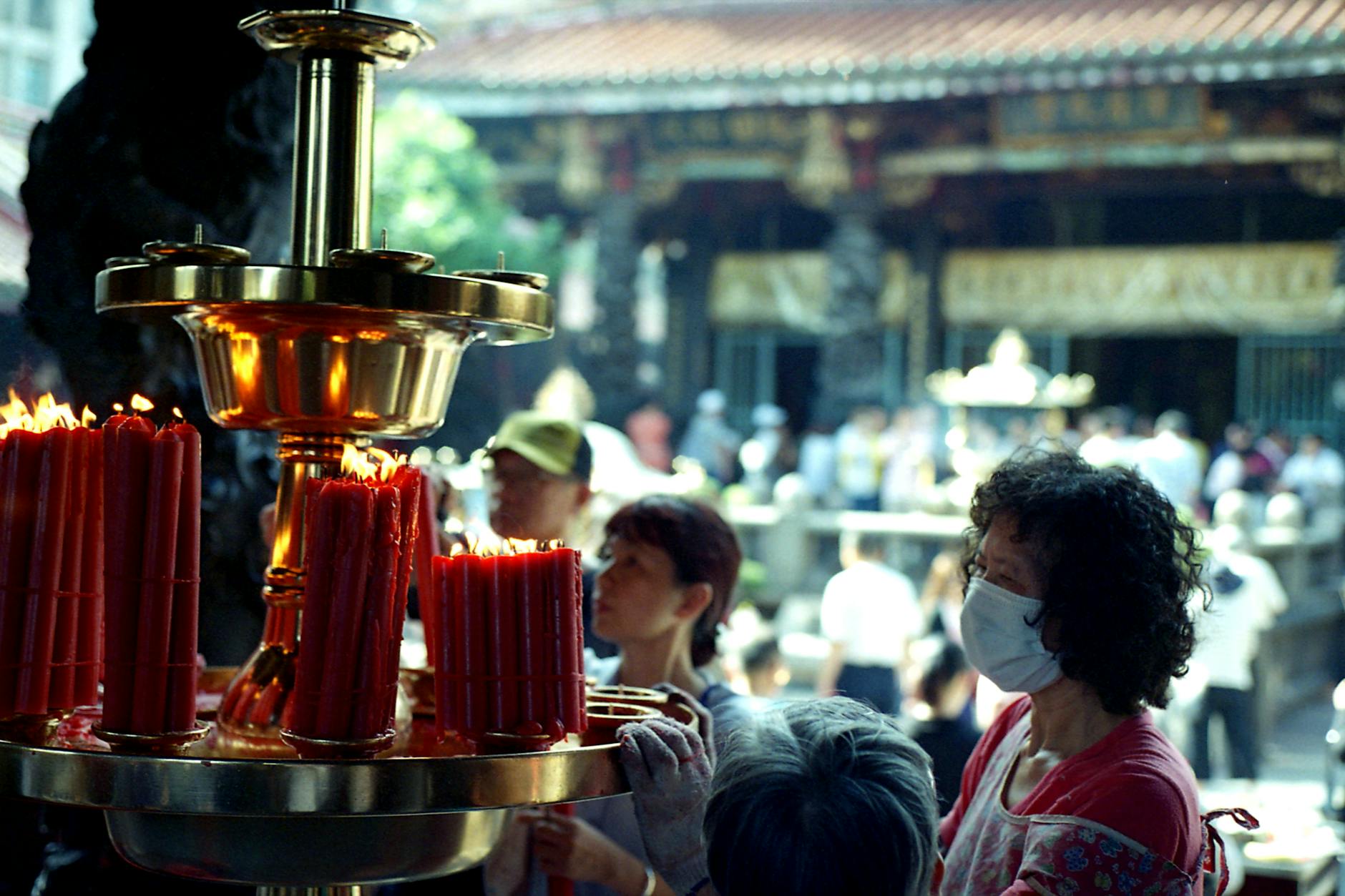
Built in 1738 by Fujianese settlers, Longshan Temple (龍山寺) is the oldest and most famous temple in Taipei — and one of the most spiritually active in all of Taiwan. Where a typical museum-style temple visit takes 30 minutes and feels static, Longshan is the opposite: actively used, deeply layered with local prayer culture, and one of the few places in the city where you can stand in a 280-year-old religious tradition while watching it happen in real time. Locals come here daily to pray for love, exam success, business fortune, family health, and the kind of personal concerns Taipei residents have always brought to this temple.
For travelers, Longshan Temple is the most accessible deep cultural experience in Taipei. Free to enter, open from dawn to late evening, in the historic Wanhua District just minutes from Ximending. The temple houses over 100 deities under one roof — Buddhist, Taoist, and Chinese folk religion blended in a uniquely Taiwanese way. The morning chanting ceremony at 6 AM and 8 AM is genuinely atmospheric. And the small details — the way locals throw moon blocks for divine answers, the brass bell at the entrance, the courtyard incense brazier that fills the air on busy days — make Longshan feel alive in a way that’s rare for an ancient temple.
This guide is the deep-dive on Longshan Temple for 2026: the temple’s full history, the major deities and what they’re prayed to for, how to pray respectfully as a visitor, etiquette, photography tips, and how to combine a visit with the surrounding Wanhua District.

Longshan Temple at a Glance
- Address: No. 211, Guangzhou Street, Wanhua District, Taipei
- Hours: 6:00 AM – 9:30 PM daily
- Admission: Free
- Get there: MRT Bannan (Blue) Line to Longshan Temple Station, Exit 1
- Founded: 1738 by Fujianese settlers
- Number of deities: Over 100, blending Buddhism, Taoism, and folk religion
- Best time to visit: Early morning (6:00–8:30 AM) for ceremonies and quiet; evening for the lit-up facade
- Time needed: 30–60 minutes
- Highlight ceremonies: Morning chanting at 6:00 AM and 8:00 AM
- Note: Incense burning was banned in 2020 to protect air quality; worship continues with hands-only prayer
The History of Longshan Temple
Longshan Temple was founded in 1738 by Chinese settlers from Fujian province on the southeastern coast of mainland China. Specifically, the temple was funded by Han Chinese immigrants from three Fujianese cities: Jinjiang, Nan’an, and Huian. These settlers had migrated to Taiwan in the early 18th century and brought a Guanyin (the Buddhist Bodhisattva of Compassion) statue from their original hometown temple, which became the center of the new Longshan Temple.
The temple is located in the Wanhua District (萬華), historically known as Bangka or Monga — the original walled city of Old Taipei. As Taipei grew through the 18th and 19th centuries from a small Han Chinese settlement into an actual city, Longshan Temple grew with it. By the late 1800s, the temple was the religious, social, and political center of the Wanhua District — a place where business deals were brokered, disputes were arbitrated, and community matters were settled.
The Temple Has Survived Multiple Destructions
Longshan Temple has been damaged, destroyed, and rebuilt multiple times in its history:
- 1815: Damaged by a major earthquake; rebuilt by the community.
- 1867: Damaged by another earthquake; rebuilt again.
- 1919: Major renovation completed.
- World War II (1945): The main hall was hit by an American bombing raid that destroyed many of the wooden structures. Famously, the Guanyin statue inside the main hall was unharmed — locals took this as a miracle.
- 1957: Post-war reconstruction completed; this is largely the temple you see today.
The endurance of the temple — through earthquakes, war, and decades of Taiwanese political transformation — is part of what gives it its spiritual weight for locals. This isn’t a relic; it’s a place that’s been continuously serving its community for nearly three centuries.
The Architecture and Layout
Longshan Temple follows a traditional southern Fujianese Buddhist temple layout:
The Front Hall (Gate)
The triple-arched front entrance, decorated with elaborate stone and wood carvings. The central door is traditionally reserved for the gods (and for high-ranking dignitaries during major ceremonies); regular visitors use the side doors. Stepping over the wooden threshold (not on it) is the polite entrance.
The Main Hall
The heart of the temple. Houses the central Guanyin Bodhisattva statue plus four major Buddhist figures (the Eighteen Arhats are along the side walls). The main hall is where the morning chanting ceremony happens and where most worshippers focus their prayers.
The Rear Hall
Contains over 100 deities — Buddhist, Taoist, and Chinese folk religion gods all in one space. The notable ones include:
- Mazu (天后) — the sea goddess, protector of fishermen and sailors
- Wenchang Dijun (文昌帝君) — the god of literature and exams; popular with students
- Yue Lao (月老) — the matchmaker god under the moon; popular with single Taiwanese praying for romance
- Guan Yu (關羽) — the god of war, business, and brotherhood
- Bao Sheng Da Di — the medicine god
- And dozens more — Cheng Huang (City God), Tu Di Gong (Earth God), various other folk deities
The Side Halls and Courtyards
Smaller altars and side shrines flank the main building. The outer courtyard features the great incense brazier (no longer used since the 2020 incense ban but still impressive), the waterfall feature, and several stone-carved details worth noticing.
The Deities and What Locals Pray For
Knowing which deity is which transforms a visit. Here are the major ones:
Guanyin (觀音)
The main deity. The Buddhist Bodhisattva of Compassion. Locals pray to Guanyin for general blessings, health, family well-being, and spiritual peace. The central statue in the main hall.
Mazu (天上聖母)
The sea goddess. Worship of Mazu is particularly strong in Taiwan because the island’s identity is closely tied to seafaring history. Mazu is also widely prayed to for general protection and travel safety.
Yue Lao (月下老人)
The famous matchmaker god. Single Taiwanese pray to Yue Lao for romance and finding the right partner. You’ll often see a small altar dedicated to him with notes, photos, and red strings (a symbol of fated romantic connection). This is the most-photographed side altar in the temple, especially in February around Valentine’s Day.
Wenchang Dijun (文昌帝君)
The god of literature and exams. Students throughout Taiwan come here before major exams (the high school entrance, the college entrance, etc.) to pray for academic success. You’ll see notebooks, pens, and student ID photos left as offerings.
Guan Yu (關公)
The deified Chinese general turned god of war, business, and brotherhood. Particularly venerated by Taiwanese business owners, who pray to him for business success and good faith in deals.
Bao Sheng Da Di (保生大帝)
The god of medicine and healing. Locals come to pray for recovery from illness, for protection from disease, and during major flu seasons.
How to Visit Longshan Temple Respectfully
Before You Enter
- Dress modestly. Covered shoulders; avoid swimwear-style clothing. Shorts and t-shirts are fine.
- Don’t enter through the central door. Use the side doors (left or right of the main entrance).
- Step over the threshold, not on it. Most temple doorways have an elevated wooden threshold.
- Phone on silent. No ringtones, no loud videos.
Inside the Temple
- Keep your voice low.
- Don’t run or shout.
- Don’t sit on prayer cushions (they’re kneeling pads).
- Don’t touch deity statues, altar items, or ritual objects.
- Don’t eat or drink in worship halls.
- Step around worshippers in active prayer.
Photography
- Photography is allowed; no flash.
- Don’t photograph people in active prayer close-up.
- Don’t pose with deity statues for selfies.
- The exterior architecture and stone carvings photograph beautifully.
Optional Donations
A donation box near the main altar accepts small donations. NT$20–100 is typical for non-religious visitors who’ve spent time there. Not required.
How to Pray at Longshan Temple
You don’t have to participate in worship to visit. But if you want to engage respectfully, here’s how locals do it:
Step 1: Approach the Main Hall
Walk into the front area facing the main hall (where the Guanyin statue is located). Stand with your feet together and palms together at chest level.
Step 2: Bow
Bow three times to the central deity. Each bow should be slow and respectful.
Step 3: Silent Prayer
In your mind (not out loud), say:
- Your name
- Your date of birth
- Where you live (city / country is fine)
- What you’re praying for (health, love, business, family, peace, etc.)
The traditional belief is that the deity needs to identify you specifically before answering — hence the personal details.
Step 4: Optional Moon Blocks (Jiaobei)
If you want to ask a yes/no question, find the wooden moon blocks (red crescent-shaped wooden pieces) at one of the altars. Hold both in your hand, ask your question silently, and drop them on the ground.
- One up, one down: Yes — affirmative answer (聖筊)
- Both face up: A laughing answer — the deity is amused; try again or rephrase (笑筊)
- Both face down: No — negative answer (陰筊)
Tradition holds that three of the same answer in a row confirms the deity’s response.
Step 5: Optional Fortune Sticks (Qian)
If you want a more specific divine reading, shake the box of bamboo sticks until one falls out. Take the stick to the temple staff, who can help you interpret its number on the temple’s fortune slip board.
The Morning Chanting Ceremony
Two ceremonies happen daily and are open to the public:
- 6:00–6:45 AM: Early morning chanting led by temple staff and Buddhist nuns. The most atmospheric — fewer crowds, gentler light.
- 8:00–8:45 AM: Morning chanting. Slightly more crowded as locals come in for daily prayer.
The ceremonies are formal Buddhist chants (typically in Mandarin), accompanied by drum and bell. Visitors are welcome to stand at the back and observe. Don’t photograph the ceremony with flash. Don’t move around during the chanting.
If you want to experience Longshan at its most spiritual, arrive 15 minutes before the 6 AM ceremony. The dawn light, the rising incense (when permitted), and the cadence of the chanting create one of the most genuinely moving moments available to visitors in Taipei.
Best Time to Visit Longshan Temple
The temple is open from 6:00 AM to 9:30 PM, but the experience varies by time:
Best time of day:
- 6:00–8:30 AM: The most atmospheric window. Morning ceremonies, gentle light, fewer tourists, locals praying earnestly before work.
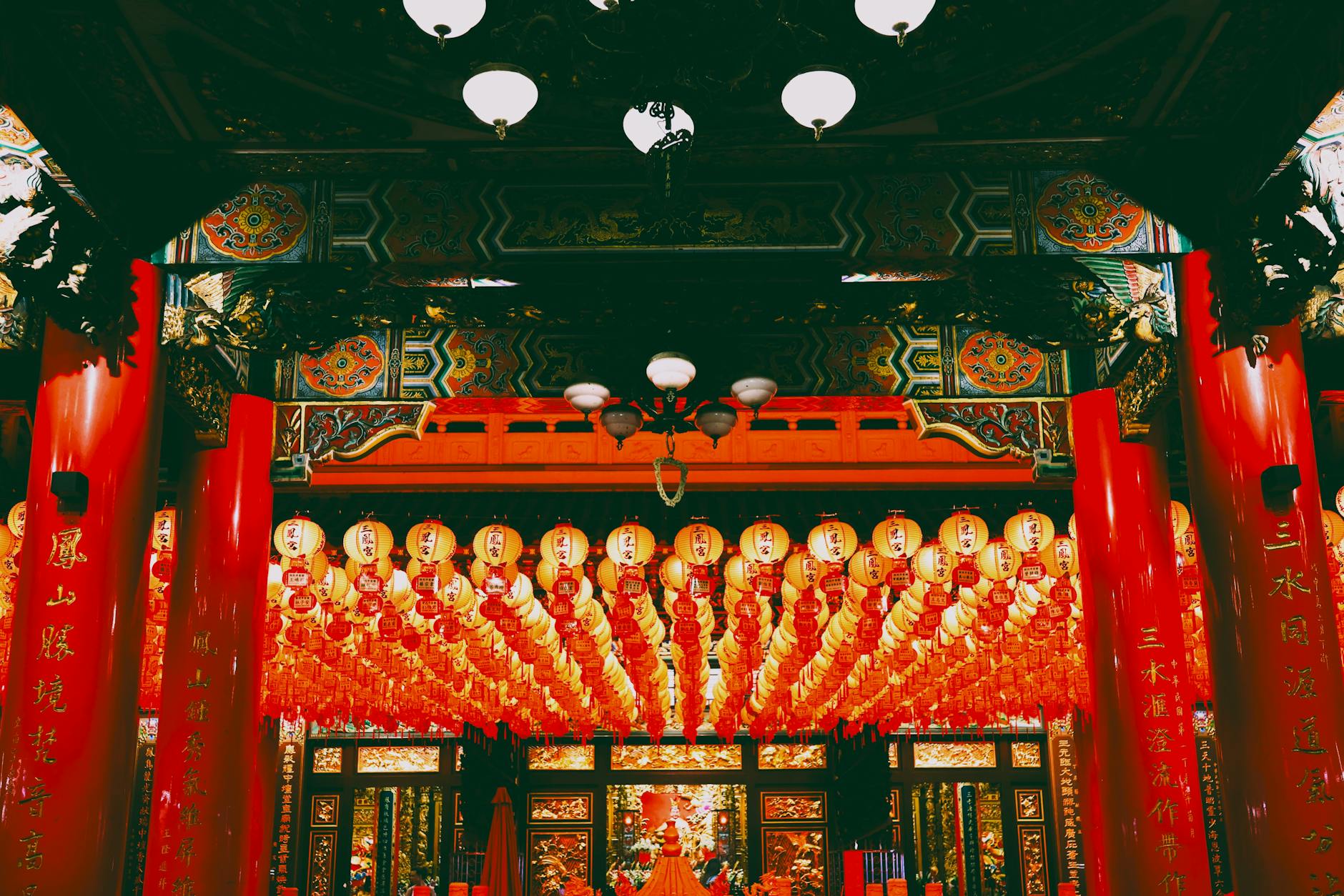
- 4:30–6:30 PM: Second-best. Golden hour light on the exterior; quieter than midday; the temple is beautifully lit at dusk.
- 10:00 AM – 4:00 PM: Busiest. Tour groups arrive. Less atmospheric but still meaningful.
- After 7:00 PM: Calmer. The temple’s lights are on; great for exterior photography.
Best day: Tuesday–Thursday for the most relaxed visit. Lunar 1st and 15th of the month (lunar calendar) bring extra worshippers.
Best season: October–November and March–April. Mild temperatures make the courtyards comfortable.
Special days: Buddha’s Birthday (typically May), the Birthday of Guanyin (typically February or March on lunar calendar), and other major Buddhist holidays bring significant local visitor traffic — beautiful to witness, very crowded.
What to See Around Longshan Temple
The temple is in the Wanhua District, an area with significant historical and culinary depth. A visit to Longshan pairs beautifully with:
Bopiliao Historic Block (剝皮寮歷史街區)
A 5-minute walk south. A preserved row of Qing-dynasty and Japanese-era shophouses, now a free cultural exhibition space. 30–45 minutes.
Huaxi Street Night Market (華西街夜市)
The traditional Wanhua District night market — quieter and more old-school than Shilin. Famous for traditional Taiwanese seafood and herbal medicine stalls. Best after 5 PM.
Mengjia Boai Temple (艋舺青山宮)
A 10-minute walk. Smaller temple dedicated to the local protector god of Wanhua.
Ximending
10-minute walk north. The pedestrianized shopping district perfect for combining a temple morning with afternoon shopping or food.
Mengjia Park
The small park adjacent to the temple, popular with elderly locals for tai chi practice in the morning.
A Longshan Temple Half-Day Itinerary
If you have a morning free, here’s a tested combination:
- 5:45 AM: Arrive at MRT Longshan Temple Station. Walk to the temple.
- 6:00 AM: Catch the morning chanting ceremony. Stand quietly at the back.
- 6:45 AM: Walk the temple grounds slowly. Photograph the carvings in the gentle light.
- 7:30 AM: Breakfast at a Wanhua traditional shop — try beef noodle soup or scallion pancake.
- 8:30 AM: Walk to Bopiliao Historic Block.
- 9:30 AM: Bopiliao exhibition + cultural center.
- 10:30 AM: Walk to Ximending. Coffee and Pop Mart browsing.
- 12:00 PM: Lunch at Ay-Chung Flour Rice Noodle or Hot-Star Fried Chicken.
This is one of the best free cultural mornings available in Taipei.
Tips for Visiting Longshan Temple
Carry small cash. Donations are typically NT$20–100. Bring small bills.
Wear modest clothes. Covered shoulders; avoid swim-style clothing.
Take off your hat in the main hall. A respect gesture.
Don’t burn incense. The temple banned incense burning in 2020 for air quality. Worship is now hand-only.
Free temple-supplied prayer book. Available at the temple desk for visitors who want to learn formal prayers.
Pick up a temple map. Available at the visitor desk; helps identify which deity is which.
Restrooms: Public toilets in the temple compound. Free, clean.
Combine with breakfast at a local shop. Wanhua has some of Taipei’s best traditional breakfast.
Photograph the exterior at dusk. The lit-up facade is one of Taipei’s most photogenic temple shots.
Stay 30–60 minutes. Less and you’ll miss the depth; more and you’ll be lingering.
Common Mistakes
Walking through the central door. Reserved for deities. Use the side doors.
Sitting on prayer cushions. They’re for kneeling prayer, not seating.
Taking selfies in front of altars. Disrespectful. Architecture photos are fine; deity selfies are not.
Eating or drinking inside. Not allowed.
Skipping the rear hall. The 100+ deities are mostly here. Don’t miss it.
Going only at midday. The morning ceremonies (6 AM and 8 AM) are when the temple is at its spiritual peak.
Treating the temple as a tourist photo stop. It’s a living religious center. Pace yourself; observe; respect.
When you leave the temple, do not head straight back to the MRT. The streets around it are the oldest part of the city: a lane of herbalists selling bitter tea, the restored shophouses of Bopiliao, the carved stone columns of Qingshan Temple and some of the best old-fashioned breakfast stalls in Taipei. Our guide to Wanhua puts them together into a morning.
Related Taipei guides
- Things to Do in Taipei: 45+ Must-See Attractions & Experiences
- Taipei 101 Observatory: Tickets, Tips & What to Expect
- Chiang Kai-shek Memorial Hall: Complete Visitor Guide
- National Palace Museum Taipei: Must-See Artifacts & Guide
- Elephant Mountain Hike: Best Sunset in Taipei
- Beitou Hot Springs Guide: Public & Private Baths
Frequently Asked Questions
What is the Longshan Temple?
Longshan Temple is the oldest and most famous temple in Taipei, built in 1738 by Fujianese settlers. It’s a working Buddhist-Taoist-folk religion temple housing over 100 deities, with daily morning ceremonies and a continuous tradition of local worship.
How do I get to Longshan Temple?
Take the MRT Bannan (Blue) Line to Longshan Temple Station, Exit 1. The temple is right at the exit. From Taipei Main Station, the trip is 6 minutes.
What time is the morning ceremony at Longshan Temple?
The morning chanting ceremonies run from 6:00–6:45 AM and 8:00–8:45 AM daily. The 6 AM ceremony is the most atmospheric and least crowded.
Is Longshan Temple free?
Yes. Entry is free. Donations are accepted in the box near the main altar but not required.
What’s the dress code for Longshan Temple?
Modest casual is fine — covered shoulders, no swimwear or beach clothes. Shorts and t-shirts are acceptable. Closed-toe shoes are easier than sandals.
Can I take photos at Longshan Temple?
Yes, generally. No flash. Don’t photograph people in active prayer close-up. Don’t pose with deity statues.
What can I pray for at Longshan Temple?
Common prayers include health (Guanyin), love (Yue Lao), exam success (Wenchang), business prosperity (Guan Yu), and protection during travel (Mazu). The temple houses over 100 deities for different concerns.
Why was incense banned at Longshan Temple?
The temple banned incense burning in 2020 to improve air quality, both for worshippers and for the surrounding Wanhua community. Worship continues with hands-only prayer.
How long does a visit to Longshan Temple take?
30–60 minutes for a thorough visit. The morning ceremony (45 minutes) plus exploration of the temple grounds adds up to about 90 minutes total.
Final Take
Longshan Temple is the deepest cultural experience available for free in Taipei — a 1738-built religious center that has survived earthquakes, war, and the modernization of the city, and remains actively used by locals today. Arrive at 6 AM for the morning ceremony, walk the temple grounds slowly, learn the major deities, and let yourself be moved by a 280-year tradition of worship still happening in real time. Combine with Bopiliao and Ximending for a perfect half-day. The temple won’t try to impress you with grandeur — but if you slow down and pay attention, it will.