This article contains advertising. Our booking links are routed through a partner that adds commission tracking automatically, so if you book through one we earn a commission from the provider, at no extra cost to you. It never affects what we recommend. Affiliate disclosure
From 2004 to 2010 it was the tallest completed building on Earth. It’s still the tallest in Taiwan and the symbol you see on every Taipei postcard. The Taipei 101 observatory sits about 383 meters above the streets of the Xinyi District, reached by an elevator that held the world speed record for 12 years, until 2016, and it’s the place almost every first-time visitor wants to tick off on day one.
It’s also a place that’s surprisingly easy to do badly. Show up at the wrong time and you’ll queue for an hour, pay for a ticket bundle you don’t need, and miss the sunset window that’s the actual reason to come. Show up at the right time, pre-booked, and you’ll glide up in 37 seconds, get an empty floor-to-ceiling window for your photos, and watch the city flip from gold-hour gold to the lit-up grid that locals quietly think is the most beautiful in Asia.
This guide is the one you wish someone had handed you before you went. Ticket prices for 2026, the difference between the 89th-floor deck and the 101st-floor Skyline 460 tour, how to find the giant tuned mass damper, what to skip in the gift shop, the timing tricks that turn a 45-minute queue into a 5-minute walk-up — it’s all here.

Taipei 101 Observatory at a Glance
- Standard ticket: NT$600 (about US$19)
- Skyline 460 (open-air 101F, reservation only): NT$3,000; a 101F visit on its own costs NT$380 on top of the standard ticket
- Hours: 10:00 AM – 9:00 PM daily, weekends and holidays included; check the official Taipei 101 site for the last entry time
- Floors: 89F (main indoor deck), 88F (the damper), 101F (Skyline 460, a separate guided tour); ask at the counter whether the 91F outdoor terrace is open
- Height: 383 m (1,257 ft) at the 89th-floor observatory
- Elevator speed: ~60 km/h, 5F to 89F in roughly 37 seconds
- How to get there: Taipei MRT Red Line (Tamsui-Xinyi), Taipei 101/World Trade Center Station
- Best time to visit: 60–90 minutes before sunset
- Time needed: 60–90 minutes; longer if you stay for blue hour
What Is the Taipei 101 Observatory?
Taipei 101 opened in 2004 and was the world’s tallest completed skyscraper from then until the Burj Khalifa overtook it in 2010. The observatory occupies the building’s upper floors and is open to the public seven days a week. The building’s silhouette, with its distinctive eight-section pagoda-style design, is meant to evoke a stack of traditional Chinese ingots — and the number eight, which it leans on heavily, is a Chinese symbol of prosperity.
There are four observatory floors:
- 88F: Indoor, where the giant tuned mass damper is on display.
- 89F: Indoor main observation deck with floor-to-ceiling windows on all sides — this is where most visitors spend their time.
- 91F: Outdoor terrace, weather-permitting and not always open; ask at the counter whether it is open that day.
- 101F: “Skyline 460” — an open-air platform, visited on a separately priced, reservation-only guided tour.
For most travelers, the 89F deck with the 88F damper (the standard ticket) is more than enough. Skyline 460 on 101F is dramatic, but you’re outdoors and the experience is shorter. We’ll cover when it’s worth it below.
Taipei 101 Observatory Tickets and Prices in 2026
There are essentially three ticket categories you’ll see when you book:
- Standard Observatory Ticket: NT$600 (about US$19). Gets you 88F + 89F; ask at the counter whether the 91F terrace is open that day. No time slot — once you’re up, you can stay as long as you want until the deck closes.
- Skyline 460: NT$3,000, by reservation only. A guided tour with limited places that takes you out onto the open-air 101st floor and also covers 89F and 88F. Sessions run on a daily schedule, and the exact timing can shift on the day. If you only want to step up to 101F, that costs NT$380 on top of the standard ticket.
- Children’s tickets: NT$540 concession for children above 115 cm in height. Children under 115 cm enter free with a parent.
Where to buy: You can walk up and buy at the Observatory Ticket Counter on Office Tower 1F, but third-party platforms (Klook, KKday, GetYourGuide, Trip.com) often run the same ticket for a few dollars less and let you skip the on-site queue. For a sunset visit during peak season, pre-booking is strongly recommended — same-day same-time availability often runs out.
What’s NOT worth paying extra for: Photo packages on the deck. Staff will offer to take a posed photo against a green screen — they’re harmless but overpriced, and your phone takes a better one against the actual window.
How to Get to Taipei 101
The MRT is the only sensible way for tourists. Taipei 101/World Trade Center Station (Tamsui-Xinyi Red Line) is the dedicated stop. From the platform, follow the signs to Taipei 101 and on to the Observatory Ticket Counter on Office Tower 1F.
By taxi, just say “Taipei 101” — every driver knows it. Expect to pay NT$200–350 from most central neighborhoods. At rush hour, allow extra time: Xinyi’s roads can back up, and the MRT doesn’t sit in traffic.
Once inside the building, follow signs to the 5F Observatory entrance. This is a different elevator from the mall lifts — you’ll go through a security check (typical airport-style bag screening), then up the dedicated high-speed elevator to the 89th floor.
The Best Time to Visit Taipei 101 Observatory
The single most important decision is when you go up. Get this right and the rest takes care of itself.
The sweet spot: 60–90 minutes before sunset. Arrive an hour before the sun goes down, take a lap of the 89F deck while it’s still bright, then settle near a west-facing window for the actual sunset, then stay another 20–30 minutes for blue hour and the city’s lights coming on. You’re seeing the view three ways for one ticket. Just check the actual sunset time for your travel month — Taipei sunsets range from about 5:10 PM in December to 6:50 PM in June.
Best alternative — opening at 10 AM. First-thing arrivals walk straight up with no queue and often get the deck mostly to themselves for the first 30 minutes. The view is fine on a clear day. The trade-off is no sunset and no city lights.
Worst time: 4–6 PM. Crowds peak as everyone tries to be there for sunset, queues swell, and the windows fog with breath and fingerprints. If you’re booked for sunset, get on the elevator before 4:30 PM at the latest.
Day-of-week matters too. Weekdays (Tuesday–Thursday) are quietest. Weekends and Taiwanese public holidays are busiest, especially during Lunar New Year, Dragon Boat Festival, and Mid-Autumn Festival.
Weather check before you go up: The observatory is fully open in cloud cover, but a low-cloud or foggy day means you’ll be inside the cloud and see almost nothing. Check Taipei’s PM2.5 air quality index and the cloud forecast on your travel day. Winter months (November–February) often have the clearest skies; summer (June–August) brings haze and the typhoon season.
What to Expect: The 89th and 91st Floor Experience
You enter the queue on 5F, hand over your ticket, walk through security, and step into the elevator. The doors close, the lights dim, the ceiling lights up like a starry night, and a digital readout on the wall climbs through the floor numbers. Roughly 37 seconds later, the doors open on 89F.
The 89th floor is the main attraction. It’s a fully enclosed deck with floor-to-ceiling windows on all four sides. Audio guide handsets are included with your ticket and are worth picking up at the desk; the guides are available in English, Mandarin, Japanese, Korean, and several other languages.
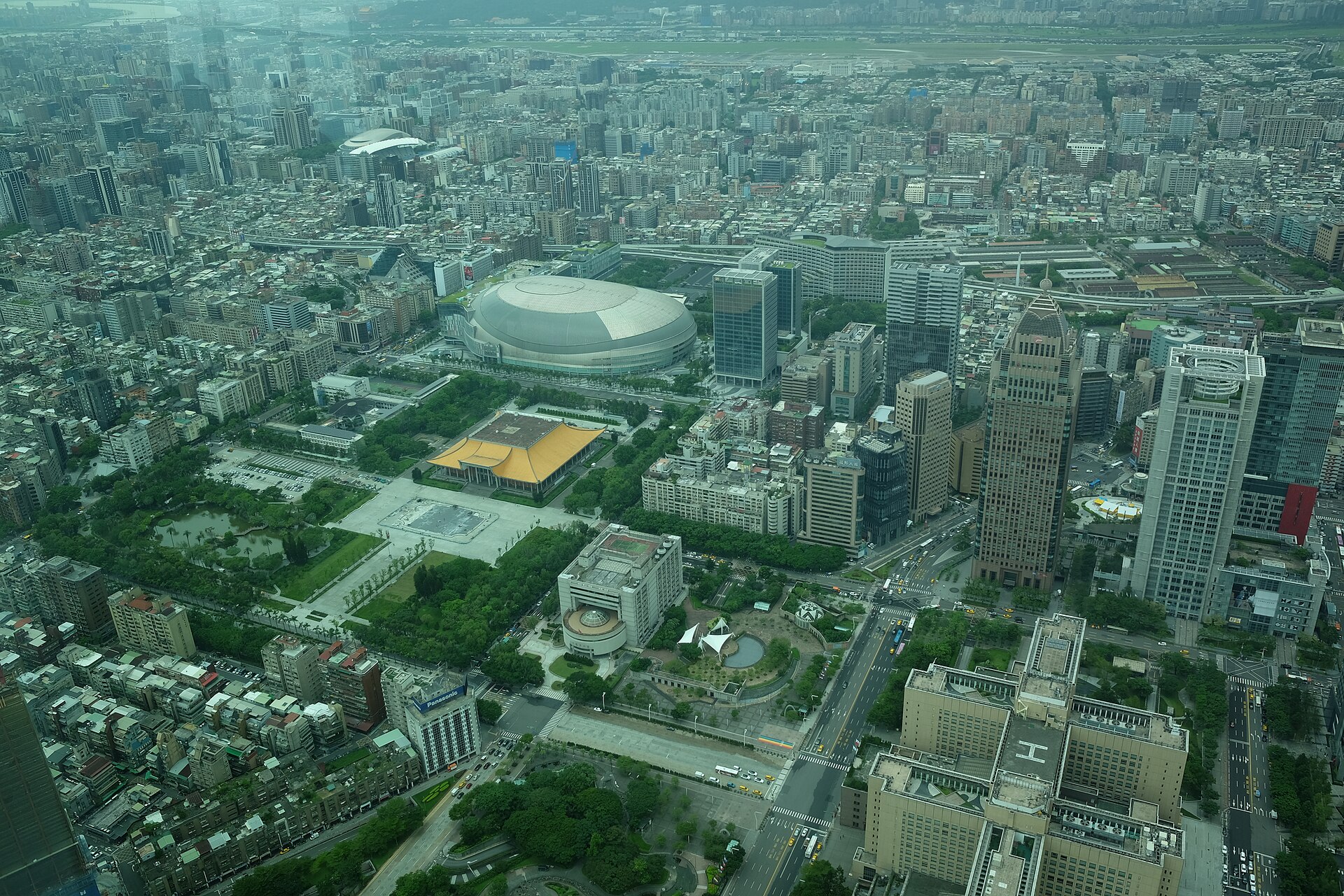
Move clockwise around the deck and pick out the landmarks: Elephant Mountain close by (the hike most visitors do for the view of 101), the green wedge of Yangmingshan National Park to the north, and the dense grid of central Taipei to the west.
When it is open, the 91st floor is an outdoor deck, reached by a staircase from 89F. It’s exposed and closes in bad weather, but on a calm clear evening it’s the better view — no glass between you and the city, the wind in your hair, and a perfect spot for unfiltered photos. Worth the ten extra minutes if it’s open.
The 88th Floor Damper: The Coolest Engineering You’ll See in Taipei
One of the things that makes Taipei 101 unforgettable isn’t the height — it’s the 660-ton golden ball hanging in the middle of the building. This is the tuned mass damper, and it’s an engineering legend. Taiwan sits in a typhoon zone, and a major fault runs near the tower, so the building was designed with a giant pendulum that swings against the building’s sway in strong winds and reduces it, on top of a structure built to resist earthquakes. It’s the largest publicly visible damper in any skyscraper in the world.
The damper is on the 88th floor, accessed by a staircase down from 89F. It’s free with your standard observatory ticket. You’ll walk into a viewing area where the steel sphere is suspended by cables in the open atrium between floors 88 and 92. There are touchscreens explaining how it works, and a mascot called “Damper Baby” — a series of cute cartoon versions of the ball that have somehow become the building’s unofficial brand. The gift shop down here is the best one in the building if you want a quirky souvenir.
During and after a typhoon, the damper visibly sways. If you visit during typhoon season and the weather is heavy, this floor becomes the more interesting view than the deck.

Skyline 460: Should You Pay Extra for the Open-Air Deck?
The Skyline 460 ticket takes you out onto the 101st floor, an outdoor open-air observation platform, on a guided tour with limited places that also takes in 89F and 88F. It stands 460 meters above sea level.
It’s dramatic. You’re outside, exposed to the wind, with nothing between you and the drop except a guardrail. Staff hand you a hard hat and a high-visibility vest and walk you through a short safety briefing. You then have your one-hour window to wander, photograph, and reset the heart rate.
Is it worth NT$3,000? Honest take: it’s worth it once, on a clear-weather day, if you want the brag and the photos. It’s not as essential as the 89F view — the 89F panorama is broader, has the audio guide, and is climate-controlled. Skyline 460 is more about the experience of being outdoors at that height than about any unique view.
Skip Skyline 460 if the forecast is poor — in bad weather the tour can be canceled and moved to another day. Skip it if you’re scared of heights and the 89F deck already has you nervous. Otherwise, book ahead: it runs by reservation only.
How to Skip the Line at Taipei 101 Observatory
The wait at the observatory ticket counter on a Saturday at sunset can stretch past an hour. Several easy ways to avoid that:
1. Book online before you arrive. The official Taipei 101 site sells the standard ticket at NT$600. Klook, KKday, GetYourGuide and Trip.com sell tickets too, but their prices move around, so compare before you pay. Online tickets often have a separate dedicated lane at the entry point — check your voucher for the entry instructions.
2. Go on a weekday, not a weekend. Tuesday through Thursday are dramatically quieter. Friday afternoon onward is when the queues pick up.
3. Be there at opening (10 AM) or after 8 PM. Queues vary from day to day, but both windows sit well away from the sunset rush.
4. Avoid the 4–6 PM sunset rush if you can. If you’re set on sunset, arrive by 3:30–4 PM, queue, and use your buffer time on the deck before the sun drops.
5. Don’t show up during a Taiwanese public holiday. Lunar New Year and Mid-Autumn Festival are mob scenes — book the day before or after instead.
What to Do at Taipei 101 Beyond the Observatory
The base of the building is a multi-floor luxury mall, and around it is the rest of the Xinyi District — Taipei’s upscale shopping and entertainment hub. A few easy adds before or after your observatory visit:
Din Tai Fung B1. This isn’t the original Din Tai Fung (that shop opened on Xinyi Road in 1972), but the branch in the Taipei 101 mall basement is the handiest one for an observatory visit. The xiao long bao is the benchmark and the wait is reasonable on weekdays before 6 PM.
The 5F food court. Higher-end and pricier than typical Taipei food courts, but a solid stop if you want a quick meal before your observatory time slot.
Page One bookstore. Excellent English-language travel and design section on the 4th floor.
Xinyi pedestrian zone. Walk out of the building to the north and you’ll be in the heart of the Xinyi shopping district — open-air walkways, big global brands, and several rooftop bars with views back at Taipei 101 that are arguably better than the views from inside it.
Sun Yat-sen Memorial Hall. A walk north. The main building is closed for renovation, but the surrounding Zhongshan Park is open, free, and gives you a frequently photographed view of Taipei 101 from across the lawn.
Photography Tips for the Observatory
The 89F windows reflect interior lights badly after dark. A few tricks:
- Press your phone or camera lens directly against the glass to eliminate reflections.
- Bring a small lens cloth — fingerprints and breath build up fast on the windows in the busiest spots.
- For night shots, switch to night mode or hold steady for at least 2 seconds. The auto-exposure usually overcorrects for the dim interior.
- The southwest corner has the best Elephant Mountain + skyline composition.
- The 91F outdoor deck is your best photo spot if it’s open — no glass, no reflections.
Common Mistakes to Avoid
Going up on a foggy day. The deck stays open but you’ll see almost nothing. If your travel day is overcast, swap your observatory plan to the next clear day if possible.
Buying the photo package. Staff offer this aggressively after the elevator. Politely decline — the green-screen composite is dated and your phone shot is better.
Skipping the audio guide. It’s free with your ticket and adds real context, especially on identifying landmarks across the city.
Rushing through the damper. It’s easy to glance at the ball on 88F and move straight on. Spend 15 — read the panels, watch the short documentary on the touchscreens. The engineering story is genuinely interesting and you’ll never see another building like this.
Eating dinner at the building first, then going up. You’ll often miss your sunset window. Reverse the order — observatory first, dinner after.
Is the Taipei 101 Observatory Worth It?
Yes, with caveats. At NT$600 for an adult it isn’t cheap, and it earns the visit on a clear day at sunset. The view, the elevator, and the damper together are a 90-minute experience you won’t forget.
If you’re tight on time or budget, Elephant Mountain is the free alternative. It’s a short climb up the hill behind Taipei 101, costs nothing, and gives you the iconic photo of Taipei 101 in the skyline rather than from inside it. Many travelers do both — Elephant Mountain at dusk on one day, the observatory on another.
If it’s foggy, raining, or air quality is poor, postpone. The view is the entire point and it doesn’t survive bad weather.
The NT$600 observatory ticket is also one of the attractions included in the Taipei Fun Pass, so whether that pass pays off depends a lot on whether you were going up the tower anyway. If you are weighing the two, the short version is that the pass needs three paid attractions in one day to beat buying separately — the full arithmetic is in our guide to whether the Taipei Fun Pass is worth it.
Once a year the tower becomes the show rather than the viewpoint. At midnight on 31 December, the Taipei 101 fireworks show accompanies the final countdown, and hundreds of thousands of people gather in Xinyi for the New Year party. Our guide to the Taipei 101 New Year fireworks covers the best places to stand, when to arrive and how to get home.
From the observatory, look south-east and you will see a line of forested hills rising straight out of the city. They are the Four Beasts, and walking them gives you Taipei 101 from the outside: a ridge route over forested peaks that finishes on Elephant Mountain’s famous viewpoint. How long it takes depends on where you start and how often you stop. Our Four Beasts hike guide covers the route.
Related Taipei guides
- Things to Do in Taipei: 45+ Must-See Attractions & Experiences
- Chiang Kai-shek Memorial Hall: Complete Visitor Guide
- National Palace Museum Taipei: Must-See Artifacts & Guide
- Longshan Temple Taipei: History, Etiquette & Tips
- Beitou Hot Springs Guide: Public & Private Baths
- Maokong Gondola: Tea Plantations & Scenic Views
- Best Things to Do in Taipei: Top 25 Activities
Frequently Asked Questions
How much is a ticket to the Taipei 101 observatory?
The standard observatory ticket is NT$600 (about US$19) and covers the 89th-floor deck and the 88th-floor damper; ask at the counter whether 91F is open that day. Skyline 460 costs NT$3,000, must be reserved in advance, and takes you out onto the open-air 101st floor. A 101F visit on its own is NT$380 extra.
What time does the Taipei 101 observatory open and close?
The observatory is open daily from 10:00 AM to 9:00 PM, the same hours on weekdays, weekends and holidays. Hours can shift slightly during typhoons or for private events — check the official site for the last entry time and any changes if you’re booking close to the day.
Is the Taipei 101 observatory worth the money?
Yes for most travelers, especially at sunset on a clear day. The view, the world-class elevator, and the giant tuned mass damper together justify the NT$600 price tag. Skip it on a foggy or rainy day and consider Elephant Mountain as a free alternative.
How long does it take to visit the observatory?
Plan for 60–90 minutes from elevator-up to elevator-down — longer if you stay through sunset and blue hour. Add 30 minutes for the queue at peak times if you don’t have a pre-booked online ticket.
Can you walk up Taipei 101?
Not on a regular visit. The Taipei 101 Run Up is an organised stair climb of 2,046 steps from floor 1 to floor 91; check Taipei 101’s announcements for details of the next one.
Where do you buy Taipei 101 observatory tickets?
You can buy at the Observatory Ticket Counter on Office Tower 1F when you arrive, or pre-book online on the official Taipei 101 ticket page. Pre-booking is recommended for sunset visits and weekend days.
Is there a dress code or bag size limit?
No formal dress code. Large backpacks need to go through security and any tripods or selfie sticks may be checked depending on the day. Cameras and phones are fine. Avoid wearing strong perfume — the 88F damper space is enclosed.
Can children visit the observatory?
Yes. Children under 115 cm tall enter free with a parent, and those above that height pay the NT$540 concession price. The deck is family-friendly with railings, full glass enclosure on 89F, and accessible toilets and elevators throughout.
Is Taipei 101 open during typhoons?
The building is open but the outdoor 91F and 101F decks close in heavy weather. Operating hours can be reduced or the entire observatory closed during the worst of a major typhoon — check the official site or social channels on the day if a typhoon warning is active.
Final Take
The Taipei 101 observatory is the iconic Taipei sight for a reason. Go on a clear weekday, time your slot for an hour before sunset, pre-book online to skip the queue, take the elevator up, ride the damper escalator down, and walk out into the Xinyi night feeling like you’ve checked the right box. It’s not a local favorite — it’s the city’s calling card, and it earns the visit.
Photo Credits
The city from Taipei 101 Observatory: Utsikt från Taipei 101 Observatory 8 August 2023 03 by Johan Jönsson (Julle), CC BY-SA 4.0, via Wikimedia Commons.