This article contains advertising. Our booking links are routed through a partner that adds commission tracking automatically, so if you book through one we earn a commission from the provider, at no extra cost to you. It never affects what we recommend. Affiliate disclosure
If you have to pick one museum to visit in Taipei — and on a 3- to 5-day trip you really should pick just one — make it the National Palace Museum. The collection here is one of the most important holdings of Chinese imperial art and artifacts in the world: roughly 700,000 pieces spanning nearly 8,000 years of Chinese civilization, evacuated from Beijing’s Forbidden City to Taiwan in 1949 and slowly built into the museum complex you can visit today. The headline draws — the Jadeite Cabbage, the Meat-Shaped Stone, the Mao Gong Ding — are real, displayed in well-lit cases, and absolutely as small (or weird) as the photos suggest.
For travelers, the National Palace Museum is also the easiest cultural-prestige stop in Taipei. It sits in a calm hillside compound in the Shilin District, costs NT$350 to enter, and rewards 3–4 hours of patient browsing with one of the best museum visits in Asia. Done well, it’s a focused trip through the highlights with a clear understanding of why each one matters. Done badly — wandering aimlessly through three floors of porcelain and jade — and it can feel like a slog. This guide is for doing it well.
Here you’ll find the practical visitor guide for 2026: ticket prices, hours, how to get there, the must-see artifacts (with the current display status of the rotating headline pieces), the best route through the galleries, how long to spend, and the small details that separate a satisfying visit from a tired one.
National Palace Museum at a Glance
- Address: No. 221, Section 2, Zhishan Road, Shilin District, Taipei
- Hours: 9:00 AM – 5:00 PM, Tuesday–Sunday (closed Mondays in some seasons; check the official site for current schedule)
- Tickets: NT$350 (about US$11) adults; discounts for students; under 6 free
- Get there: MRT Tamsui-Xinyi (Red) Line to Shilin Station, then Bus R30, 255, or 304 (10-minute ride)
- Headline pieces: Jadeite Cabbage, Meat-Shaped Stone, Mao Gong Ding
- Collection size: ~700,000 pieces; ~3,000 on display at any time
- Time needed: 3–4 hours for highlights; full day for thorough visit
- Best for: Chinese art and history, jade and porcelain, calligraphy, bronze ritual vessels
What Is the National Palace Museum?
The National Palace Museum (國立故宮博物院, Guólì Gùgōng Bówùyuàn) holds the bulk of the imperial collection that once filled Beijing’s Forbidden City. Established in 1925 in Beijing as the Forbidden City reopened to the public as a museum, the collection was evacuated south from 1933 onward to escape the Japanese invasion. After the Chinese Civil War, the Republic of China government transferred the most valuable items to Taiwan in 1948–49, and the museum’s permanent home in Taipei opened to the public in 1965.
The collection covers roughly 8,000 years of Chinese civilization: Neolithic jade, Shang and Zhou bronze ritual vessels, Tang Dynasty calligraphy and Buddhist scrolls, Song and Yuan landscape paintings, Ming porcelain, Qing imperial paintings and personal effects. Around 700,000 items are in the collection; only about 3,000 are displayed at any given time. The rest rotate through scheduled exhibitions, so a visit at any given moment is one slice of the larger holdings.
Today the museum operates two branches: the Northern Branch in Shilin (Taipei) — the main and most-visited site — and the Southern Branch in Chiayi (southern Taiwan), which opened in 2015 and focuses on Asian art beyond just Chinese.
How to Get to the National Palace Museum
The museum is in the hillside of northern Shilin and isn’t on the MRT line directly. You’ll need a quick transfer.
From Central Taipei by MRT + Bus
- Take the MRT Tamsui-Xinyi (Red) Line to Shilin Station.
- Exit at Exit 1.
- Cross the road to the bus stop and board Bus R30, 255, or 304 — all run to the museum.
- The bus ride is about 10 minutes; tap your EasyCard on the bus.
Total trip time: About 40 minutes from Taipei Main Station.
By MRT to Dazhi + Bus
If you’re coming from the eastern Wenhu (Brown) Line, take the metro to Dazhi Station and board Bus B13 to the museum. About 10 minutes by bus.
By Taxi
NT$200–400 from most central Taipei neighborhoods. Useful if you’re traveling as a group of 3–4 and want to skip the bus transfer.
Free Shuttle from Specific Hotels
Some hotels (Cosmos Hotel Taipei and a few others) run free shuttle services to the museum. Ask your hotel concierge.
Ticket Prices and Hours (2026)
Tickets
- Adult ticket: NT$350 (about US$11)
- Concession (students, seniors, certain groups): Approximately NT$150
- Children under 6: Free
- Free entry days: International Museum Day (May 18) and a few other annual cultural days — check the official site
Tickets can be bought on-site or pre-booked via Klook, KKday, or the museum’s official site. Pre-booking sometimes includes a small discount.
Hours
- Tuesday–Sunday: 9:00 AM – 5:00 PM (last entry 4:30 PM)
- Monday: Closed (verify for your specific date — schedule occasionally varies)
- Lunar New Year and major Taiwanese holidays: Closures vary; check before going
Audio Guide
An English audio guide is available at the entrance for NT$150. It covers the major artifacts in roughly 90–120 minutes of audio. Worth the rental for first-time visitors.
The Must-See Artifacts
Trying to see everything is the most common mistake. Instead, focus on these headline pieces and the surrounding galleries; treat anything else as bonus.
1. The Jadeite Cabbage (翠玉白菜)
The single most famous artifact in the collection — and the one most visitors arrive specifically to see. A small (about 19 cm tall) Qing Dynasty (1644–1912) carving of a Chinese cabbage from a single piece of jadeite, with a translucent green head shading into a paler-green base. The master craftsman used the natural color variations of the stone to suggest the white stem and green leaves. Two small insects on the head — a katydid and a locust — symbolize fertility, suggesting the cabbage was a wedding gift, likely for Consort Jin of the Guangxu Emperor.
Why it’s important: A masterpiece of carved jadeite, an art form at which Qing Dynasty Chinese craftsmen excelled. The naturalistic use of the stone’s color variation is technically extraordinary.
2026 display status: The Jadeite Cabbage rotates between the Northern Branch and Southern Branch. From March 5 to June 7, 2026, it’s displayed at the Southern Branch (Chiayi). The Northern Branch (Taipei) has it the rest of the year. Always check the museum’s current schedule before visiting.
2. The Meat-Shaped Stone (肉形石)
The other most-photographed artifact. A piece of jasper carved and dyed to look uncannily like a piece of Dongpo pork — a classic Chinese braised pork dish. The craftsman achieved layered “fat” and “lean meat” effects with the stone’s natural variations and added small dimples on the upper “skin” surface to mimic pork hair follicles. The result looks dangerously edible.
Why it’s important: A virtuoso piece of Qing Dynasty stone-carving artistry that captures everyday food in eternal form.
2026 display status: The Meat-Shaped Stone is on view at the Northern Branch (Taipei), Gallery 302, Exhibition Hall I, from March 31 to May 31, 2026. Check current schedule.
3. The Mao Gong Ding (毛公鼎)
The third of the museum’s “Three Treasures.” A massive bronze ritual cauldron (ding) cast in the Western Zhou Dynasty, around the 9th century BC. The exterior is dignified but plain; the interior holds a 500-character inscription — one of the longest known bronze inscriptions from ancient China — recording the king’s commission to the noble Mao Gong.
Why it’s important: Both a major artifact of bronze casting and a critical document of Western Zhou political history. The inscription is studied by every serious student of early Chinese history.
4. The Olive Stone Boat (橄欖核舟)
A tiny (3.4 cm long) carved olive stone, intricately detailed into a boat with 8 miniature figures and engraved text under the boat. A Qing Dynasty virtuoso piece that demonstrates extreme micro-carving skill.
5. Along the River During the Qingming Festival (清明上河圖)
One of China’s most famous paintings — a 24-foot-long handscroll painted in the early 12th century by Zhang Zeduan, depicting daily life along the Bian River in the Song Dynasty capital of Kaifeng. The museum holds one of the most important Qing-era reproductions (the original is in Beijing). Even the reproductions are extraordinary.
6. Tang Dynasty Calligraphy and Painting
The Tang Dynasty galleries hold scrolls by Yan Zhenqing, Wang Xizhi (in reproduction), and a number of other masters of Chinese calligraphy. For travelers with any interest in calligraphy, this is a quiet but profound floor.
7. Song and Yuan Landscape Paintings
Ink-on-silk landscape paintings from the 10th–14th centuries. Several rotating exhibitions of monumental landscapes. The Song Dynasty paintings in particular are considered among the highest achievements of Chinese visual art.
8. Ming and Qing Porcelain
One of the deepest porcelain collections in the world. Imperial blue-and-white, polychrome enameled wares, monochrome glazes — many pieces commissioned for the Qing imperial household.
9. Qing Imperial Personal Effects
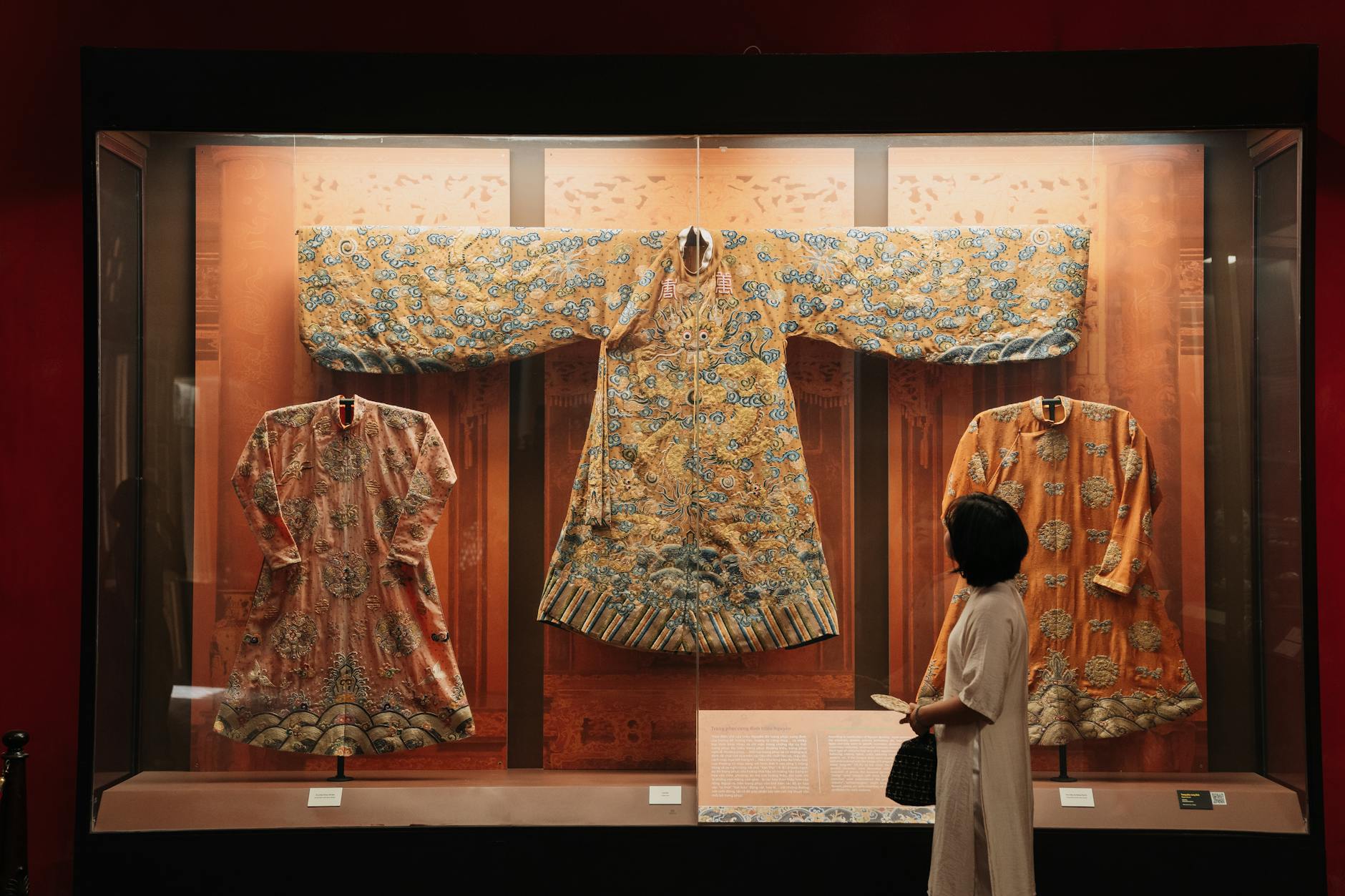
Robes, seals, jewelry, decorative objects from the personal household of Qing emperors and empresses. Particularly poignant for understanding the daily life of late imperial China.
10. Buddhist Sculpture
Tang, Song, and earlier Buddhist sculpture in stone, wood, and bronze. The dedicated Buddhist gallery is one of the museum’s quieter and more contemplative spaces.
Best Route Through the Museum
The Northern Branch has three floors (1F, 2F, 3F) plus the main lobby. The most-popular artifacts are typically on the third floor.
Recommended Route (3–4 hour visit)
- Lobby: Pick up audio guide. Lock large bags in the lockers.
- 3F first: Head straight to the Jadeite Cabbage and Meat-Shaped Stone (when displayed). Lines form here, so visit early.
- Bronze ritual vessels: See the Mao Gong Ding and surrounding Western Zhou bronzes.
- Qing imperial pieces: Move to the porcelain and personal-effects galleries.
- 2F: Calligraphy, painting, and selected scrolls.
- 1F: Special exhibitions and rotating displays.
- Optional: Tea or lunch at Silks Palace (the museum’s premier restaurant — book in advance for the food-art tasting menu).
Quick Visit (90 minutes)
For a tight schedule: 3F only. See the Jadeite Cabbage, Meat-Shaped Stone, Mao Gong Ding, plus 30 minutes of porcelain and bronze. Skip 1F and 2F.
Deep Visit (Full Day)
All three floors, all galleries, audio guide. Plus a 1-hour lunch at Silks Palace and a visit to the museum’s gardens and outdoor pavilions. Expect 6–8 hours.
What’s Special About 2026
Several rotating exhibitions are scheduled at both branches in 2026. Highlights:
- “A Gathering of Treasures”: Coordinated display at both Northern and Southern branches featuring the museum’s most iconic pieces in rotating cycles.
- “Our Beloved Treasures”: Southern Branch (Chiayi), March 5 – June 7, 2026 — includes the Jadeite Cabbage.
- Meat-Shaped Stone: Northern Branch (Taipei), March 31 – May 31, 2026.
- Special calligraphy and painting exhibitions: Rotating; check the museum’s website for current schedule.
For the most up-to-date display schedule, the museum’s official site (npm.gov.tw) maintains a current exhibitions list.
Eating at the National Palace Museum
Silks Palace (故宮晶華)
The museum’s premier restaurant, set in a dramatic glass-walled building adjacent to the main galleries. Famous for its “treasure menu” — Chinese dishes inspired by the museum’s most famous artifacts (yes, including a “jadeite cabbage” and a “meat-shaped stone” made of food). Reservations strongly recommended; the tasting menu books out days in advance.
- Cost: Lunch tasting menu NT$1,500–2,500 per person; à la carte NT$800–1,500.
- Reservations: Via the restaurant’s website or call ahead.
Casual Café
The museum has a smaller casual café for coffee, drinks, and light snacks. Open during museum hours. NT$80–250 per item.
Eat Outside
The Shilin Night Market and Tianmu area restaurants are within a 10-minute taxi from the museum, making them practical post-museum dinner options.
Tips for a Better Visit
Buy tickets online. Klook, KKday, and the official site all sell tickets — pre-booking lets you skip the ticket counter queue.
Arrive at opening (9:00 AM). Crowds are lightest. Headline pieces have shorter lines.
Avoid weekends if possible. Tuesday–Thursday are calmest.
Avoid free-entry days unless you’re committed to crowds. The International Museum Day (May 18) brings huge attendance.
Lock your bags. Large bags, backpacks, and umbrellas aren’t allowed in galleries. Lockers are free with returnable deposit; smaller bags can be carried.
Bring a sweater. The galleries are heavily air-conditioned to preserve the artifacts.
Audio guide for first-timers. NT$150. Adds significant value for visitors not deeply familiar with Chinese art history.
Photography rules: Photography is allowed in most galleries without flash and without tripod. Flash photography and certain temporary exhibitions are prohibited — watch for signs.
Restrooms: Available on every floor. Clean.
Map and gallery layout: Pick up a printed gallery map at the lobby. The 3-floor layout is easy to navigate but a map helps target the headline pieces.
Wear comfortable shoes. You’ll walk and stand for 3–4 hours.
Confirm headline piece display schedule. The Jadeite Cabbage and Meat-Shaped Stone rotate between Northern (Taipei) and Southern (Chiayi) branches. Verify before traveling specifically to see them.
Combining with Other Stops
The museum is in the Shilin District, so several other family-friendly destinations are within a short trip:
- Shilin Night Market: 15-minute taxi or bus + MRT. Perfect post-museum dinner.
- Shilin Official Residence: 10-minute taxi. The former residence of Chiang Kai-shek, now a public park with seasonal gardens.
- Taipei Children’s Amusement Park: 15-minute taxi. Good combination for families.
- National Taiwan Science Education Center: 15-minute taxi. Good combination for families.
- Tianmu shopping district: 10-minute taxi. Upscale neighborhood with cafes and restaurants.
Common Mistakes
Trying to see the whole museum. It’s too big; you’ll be exhausted by hour 4 and remember nothing. Focus.
Skipping the audio guide. If you’re not deeply familiar with Chinese art, the audio guide turns a confusing wander into a structured visit.
Going on a Monday. The museum is closed.
Showing up at 4 PM. Last entry is 4:30 PM, but the headline galleries close at 4:30. You’ll get 30 minutes, not enough.
Going to the Southern Branch when you wanted the Northern Branch. The Northern Branch is in Taipei (Shilin). The Southern Branch is in Chiayi (3+ hours south). They share collections but display different pieces at different times.
Eating only at Silks Palace. The tasting menu is special, but plan time outside the museum for the rest of Taipei food.
Not checking the rotation schedule. Coming all the way to Taipei to see the Jadeite Cabbage, only to find it’s on display at the Southern Branch in Chiayi, is a real risk.
The museum is the anchor of a very good day in Shilin. Across the road, the Shung Ye Museum of Formosan Aborigines tells the story of Taiwan’s first peoples; back down the valley, the free gardens of the Shilin Official Residence are lovely in the late afternoon, before dinner at the night market. Our Shilin District guide has the route.
Related Taipei guides
- Taipei 101 Observatory: Tickets, Tips & What to Expect
- Longshan Temple Taipei: History, Etiquette & Tips
- Elephant Mountain Hike: Best Sunset in Taipei
- Beitou Hot Springs Guide: Public & Private Baths
- Yangmingshan National Park: Trails, Flowers & Hot Springs
- Maokong Gondola: Tea Plantations & Scenic Views
Frequently Asked Questions
How much does the National Palace Museum cost?
Adult tickets are NT$350 (about US$11). Concession tickets are roughly NT$150 for students. Children under 6 are free. Audio guide rental is NT$150 additional.
What are the must-see artifacts at the National Palace Museum?
The three signature pieces are the Jadeite Cabbage, the Meat-Shaped Stone, and the Mao Gong Ding (a bronze ritual cauldron). Beyond these, the museum has world-class collections of Song landscape paintings, Tang calligraphy, and Ming porcelain.
How long does it take to visit the National Palace Museum?
3–4 hours covers the headline pieces and major galleries. A full thorough visit is 6–8 hours. A quick visit (just headline 3F pieces) is 90 minutes.
How do I get to the National Palace Museum?
Take the MRT Red Line to Shilin Station, then transfer to Bus R30, 255, or 304 to the museum. Total trip is about 40 minutes from Taipei Main Station.
Is the National Palace Museum open on Mondays?
Generally no — the museum is closed on Mondays. Schedules occasionally vary, so verify before traveling on a Monday.
Can I take photos at the National Palace Museum?
Yes, in most galleries — no flash, no tripod. Some temporary exhibitions and special displays prohibit photography. Check signage as you enter each gallery.
Is the National Palace Museum worth visiting?
Yes — it’s widely considered one of the world’s most important museums of Chinese art and artifacts. If you have any interest in Chinese history, art, or culture, it’s an essential Taipei stop. Even casual visitors find the headline pieces (the Jadeite Cabbage, Meat-Shaped Stone) memorable.
Where is the Jadeite Cabbage in 2026?
The Jadeite Cabbage rotates between the Northern Branch (Taipei) and Southern Branch (Chiayi). From March 5 to June 7, 2026, it’s at the Southern Branch. The rest of 2026 it’s typically at the Northern Branch. Verify via the museum’s official website before visiting.
Is there food at the National Palace Museum?
Yes — Silks Palace (the museum’s premier restaurant, famous for “artifact food”) and a casual café. Reservations recommended for Silks Palace.
Final Take
The National Palace Museum is the single most important museum in Taipei and one of the most important in Asia. The Jadeite Cabbage and Meat-Shaped Stone are the headlines, but the collection is enormous — Song landscapes, Tang calligraphy, imperial porcelain — and rewards an unhurried 3–4 hour visit. Pre-book your ticket, arrive at opening, focus on the third floor first, and don’t try to see everything. Patience and focus turn this into one of the best museum experiences in Asia.