This article contains advertising. Our booking links are routed through a partner that adds commission tracking automatically, so if you book through one we earn a commission from the provider, at no extra cost to you. It never affects what we recommend. Affiliate disclosure
Getting Around Taipei: The Complete Transportation Guide (2026)
Taipei is one of the easiest cities in Asia to navigate as a foreign visitor. Between a world-class metro system, affordable taxis, ubiquitous bike-sharing stations, and a single rechargeable transit card that works on virtually everything, you can explore every corner of the city without ever needing to rent a car or decipher complicated ticketing systems. Whether you are stepping off the plane at Taoyuan International Airport for the first time or planning day trips on the bullet train to southern Taiwan, this taipei transportation guide covers every option available to you in 2026.
Public transport in Taipei is clean, safe, punctual, and remarkably affordable. The signage is bilingual in Mandarin and English, station announcements are made in four languages, and the locals are famously helpful if you look lost. Most visitors find that a combination of the MRT metro, the occasional bus ride, and a YouBike bicycle is all they need for a memorable trip. For everything else, taxis and ride-hailing apps fill in the gaps.
This page is part of our comprehensive Taipei Travel Guide. Below, we break down every mode of transport with current fares, practical tips, and honest advice so you can spend less time figuring out logistics and more time enjoying the city.

EasyCard and iPASS: Your Key to Taipei Public Transport
Before you ride a single bus, train, or bicycle in Taipei, the first thing you should do is pick up an EasyCard (悠遊卡). Think of it as Taipei’s version of London’s Oyster card or Tokyo’s Suica. This small rechargeable smartcard is the single most useful item a tourist can carry, and getting one takes less than two minutes. For a deeper look at every feature, see our dedicated EasyCard Taiwan guide.
What Is the EasyCard?
The EasyCard is a stored-value contactless smartcard that you tap on readers when boarding the MRT, buses, YouBike stations, and even when paying at convenience stores, supermarkets, vending machines, and many restaurants. It eliminates the need to carry coins or buy individual tickets for every journey. More importantly, using an EasyCard on the MRT gives you an automatic discount of around 20 percent compared to buying a single-journey token, and it unlocks transfer discounts between the MRT and bus network.

Where to Buy and How to Top Up
You can purchase an EasyCard at any MRT station service counter, at convenience stores such as 7-Eleven, FamilyMart, and Hi-Life, or at the airport upon arrival. A standard card costs NT$100 (non-refundable card fee) and comes with zero balance, so you will need to add value immediately. Special edition cards with unique designs are also available and make a nice souvenir.
Topping up is equally simple. Every MRT station has add-value machines that accept cash in NT$100, NT$500, and NT$1,000 notes. You can also top up at any convenience store register by handing the cashier your card and telling them the amount you would like to add. The minimum top-up is NT$100. For most visitors spending a week in Taipei, loading NT$500 on arrival is a sensible starting point; that covers roughly 15 to 20 MRT rides plus several bus trips.
Contactless Credit Cards and Mobile Pay (New in 2026)
As of 2026, Taipei’s MRT gates and many buses now accept contactless credit and debit cards from Visa, Mastercard, and JCB, as well as mobile wallets including Apple Pay and Google Pay. This means you can technically skip the EasyCard entirely and tap your phone or bank card at the turnstile. However, there are trade-offs. Contactless bank cards do not receive the 20 percent MRT discount that EasyCard holders enjoy, and they cannot be used on YouBike or at most small vendors that accept EasyCard payments. For short visits of one or two days, tapping your phone may be convenient enough. For anything longer, an EasyCard remains the better deal.
iPASS and Other Cards
The iPASS (一卡通) is a competing transit card that functions almost identically to the EasyCard on Taipei’s MRT and buses. It originated in Kaohsiung and is now fully compatible with Taipei’s transport network. If you already have an iPASS from a previous trip to southern Taiwan, it works perfectly in Taipei. For first-time visitors, the EasyCard is more widely available in the capital and is the default recommendation.
Taipei MRT Guide: Riding the Metro Like a Local
The Taipei Mass Rapid Transit system, universally known as the MRT, is the backbone of getting around Taipei. It is fast, air-conditioned, spotlessly clean, and covers virtually every major tourist area in the city. If you only use one form of transport during your visit, make it the MRT. For station-by-station tips and itinerary planning, check our full Taipei MRT guide.
MRT Lines Overview
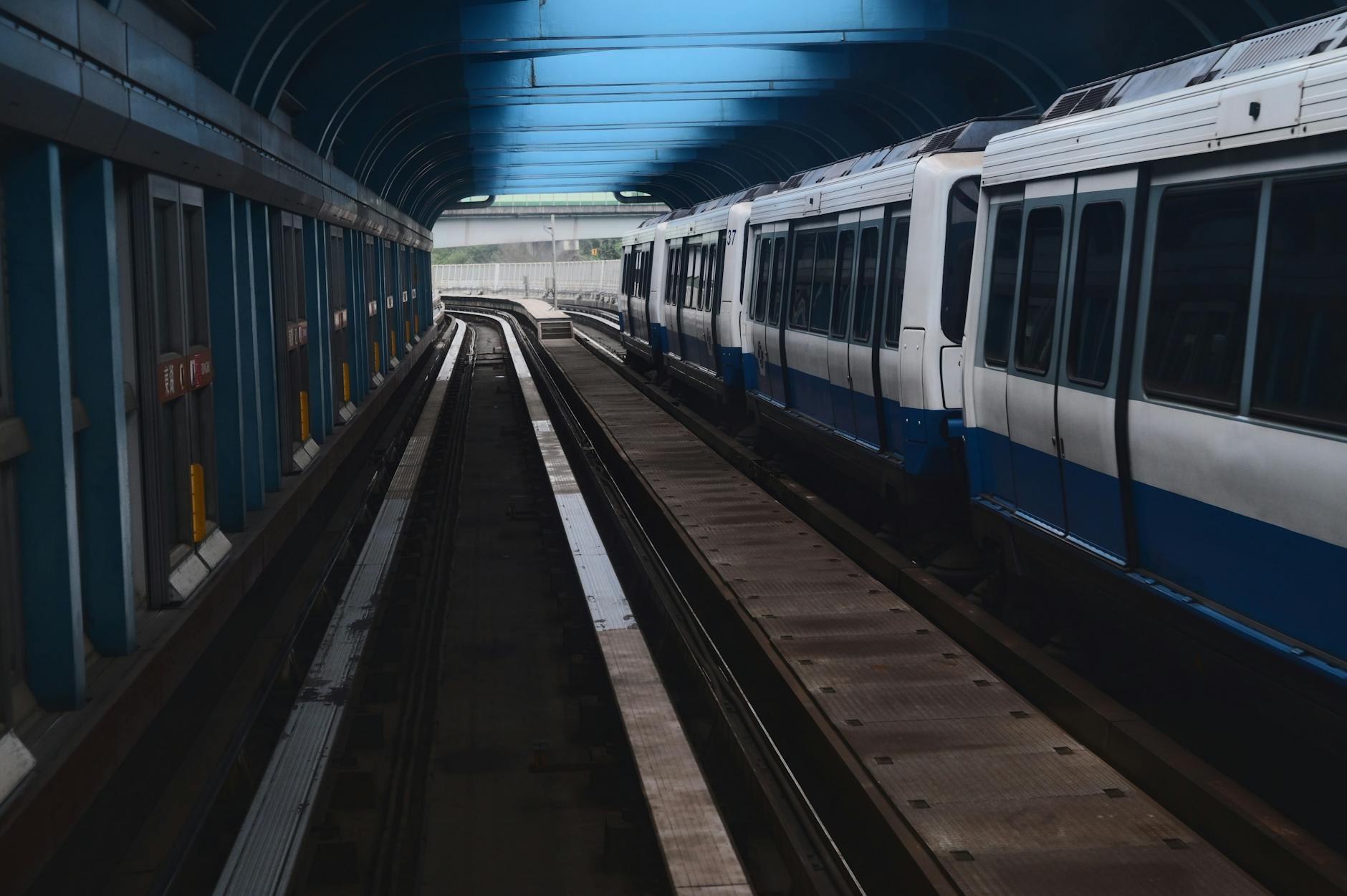
Taipei’s metro network consists of six main lines, each identified by a color and an official name. Together they cover more than 130 stations across the greater Taipei metropolitan area.
- Red Line (Tamsui-Xinyi Line): Runs north-south from the scenic riverside town of Tamsui through Taipei Main Station, Chiang Kai-shek Memorial Hall, and Taipei 101 at Xiangshan. This is arguably the most useful line for tourists.
- Blue Line (Bannan Line): Runs east-west through Ximen (the shopping and nightlife district), Taipei Main Station, Zhongxiao Dunhua, and out to the eastern suburbs. Essential for reaching Raohe Night Market and Songshan area attractions.
- Green Line (Songshan-Xindian Line): Connects Songshan Station in the north to Xindian in the south, passing through Shida Night Market and Guting areas.
- Brown Line (Wenhu Line): An elevated, driverless automated line running from Taipei Zoo (for Maokong Gondola) through the Neihu technology district. It also serves Songshan Airport directly.
- Orange Line (Zhonghe-Xinlu Line): Useful for reaching areas in the southwest of the city and connecting with the Circular Line.
- Yellow Line (Circular Line): The newest addition, this elevated loop line connects several outer districts and interchange stations, reducing the need to transfer through the congested city center.
All lines converge at or near Taipei Main Station, which serves as the primary interchange hub. Free transfers between lines are available within the paid zone, so you never need to tap out and back in when switching lines.
MRT Fares and Tokens
A single MRT ride costs between NT$20 and NT$65 depending on distance. If you do not have an EasyCard, you can purchase a single-journey token from the automatic machines at every station. These machines have full English-language interfaces: simply select your destination on the map, insert coins or notes, and collect the blue plastic token. Tap the token to enter, and insert it into the slot at the exit gate when you arrive.
With an EasyCard, the same rides cost roughly 20 percent less, and you save time by not queuing at the token machines. For visitors staying several days, the savings add up quickly.
Operating Hours and Frequency
The MRT operates from approximately 6:00 AM to midnight every day. During peak hours (roughly 7:00 to 9:00 AM and 5:00 to 7:00 PM on weekdays), trains arrive every three to five minutes. During off-peak hours and on weekends, the interval extends to five to eight minutes. Late at night, the gap between trains can stretch to ten or twelve minutes, so plan accordingly if you are heading home from a night market close to midnight.
MRT Etiquette and Tips
Taipei’s MRT is famous for its strict but sensible rules. No eating, no drinking, and no chewing gum inside the paid zone (past the turnstiles). Fines for violations start at NT$1,500, and inspectors do enforce them. Stand on the right side of escalators and walk on the left. Priority seats (usually dark blue) are reserved for elderly, pregnant, and disabled passengers; locals take this extremely seriously and you should too.
Cell phone reception works throughout the system, including in tunnels, and free Wi-Fi (Taipei Free) is available at most stations. Each platform has electronic displays showing the arrival time of the next train and the destination, always in both Chinese and English.
Taipei Bus System: Reaching Beyond the MRT
While the MRT covers most major tourist destinations, Taipei’s extensive bus network fills in the gaps and reaches neighborhoods the metro cannot. There are hundreds of routes crisscrossing the city, and fares are among the cheapest of any transport option. For a deep dive into routes and apps, visit our Taipei bus system guide.
How the Bus System Works
A standard bus ride in Taipei costs NT$15, payable by tapping your EasyCard when you board. Some longer routes charge two segments (NT$30 total), and the electronic display at the front of the bus will indicate whether you should tap when getting on, getting off, or both. In practice, the safest approach is to tap your card on the reader once when you board and once when you alight; if only one tap is required, the system simply will not charge you twice.
If you transfer from the MRT to a bus (or vice versa) within one hour using the same EasyCard, you receive a transfer discount that effectively makes the bus segment free or heavily reduced. This is one of the best reasons to use an EasyCard rather than paying cash on buses.
When Tourists Should Use the Bus
Buses are particularly useful for reaching destinations such as Yangmingshan National Park (buses from Jiantan MRT station), Jiufen and the northeast coast (buses from Zhongxiao Fuxing or Ruifang), and certain temples or neighborhoods tucked in the hills. They are also handy for short hops between spots that would require a multi-transfer MRT journey. Google Maps provides accurate real-time bus information in Taipei, showing you exactly which bus to take, where the stop is, and when the next one arrives.
Tips for Riding Buses
Bus stops display route numbers and the names of stops along the route, usually in both Chinese and English. Most buses also have electronic displays inside showing the next stop in English. If you are nervous about missing your stop, follow along on Google Maps and press the buzzer button one stop before you need to get off. The driver will pull over at the next designated stop.
Air-conditioning is standard on all city buses. The ride can be bumpy on older roads, so hold on to the overhead rails, especially if you are standing. Buses run from roughly 5:30 AM to 11:00 PM, though schedules vary by route.
YouBike Taipei: Exploring the City on Two Wheels
Taipei is an increasingly bicycle-friendly city, and the YouBike public bike-sharing system is one of the best ways to explore riverside paths, park-lined avenues, and neighborhoods at your own pace. With over 5,000 bikes distributed across more than 400 stations, you are never far from a set of wheels. Read our complete YouBike Taipei guide for registration walkthroughs and route suggestions.

How to Rent a YouBike
The current generation of bikes in Taipei is the YouBike 2.0, which features a built-in electronic lock on each bike rather than a fixed docking station. To rent, you have two main options:
- EasyCard: If you have registered your EasyCard with the YouBike system (which requires a local Taiwanese phone number for SMS verification), you simply tap your card on the bike’s reader to unlock it.
- Credit card or mobile app: Foreign visitors without a local phone number can now use a contactless credit card or the YouBike app to rent a bike. This option was expanded in recent years specifically to make the system more accessible to international tourists. Simply download the YouBike app, register with your email and international credit card, scan the QR code on the bike, and you are off.
YouBike Costs
YouBike pricing is designed to encourage short trips. The first 30 minutes costs approximately NT$5, making it almost free for quick rides between nearby attractions. After 30 minutes, the cost increases incrementally, but even a full hour rarely exceeds NT$15 to NT$20. Return the bike to any YouBike station when you are finished; you do not need to bring it back to the same place you rented it.
Best Places to Ride in Taipei
The riverside bike paths along the Tamsui River and Keelung River are flat, scenic, and separated from motor traffic, making them ideal for leisurely cycling. A popular route runs from the Dadaocheng Wharf area north along the Tamsui River all the way to Tamsui Old Street, a ride of roughly 20 kilometers each way. Within the city center, the wide sidewalks and dedicated bike lanes around Da’an Forest Park, the Xinyi District, and the area near National Taiwan University are all pleasant rides.
A word of caution: Taipei traffic can be intense on main roads, especially during rush hour when scooters dominate the streets. Stick to bike lanes and riverside paths whenever possible, and always wear a helmet if one is available at the station.
Taipei Taxis: Yellow Cabs and How to Use Them
Taipei’s iconic yellow taxis are plentiful, affordable by international standards, and a convenient option for late-night trips, luggage-heavy transfers, or destinations that are awkward to reach by public transit. For a full breakdown of fares, tipping norms, and safety information, see our Taipei taxi guide.

How to Hail a Taxi
You can flag down a taxi almost anywhere in Taipei. Available cabs display a lit red sign in the windshield (or on the roof at night). Simply raise your hand and the driver will pull over. Taxis also queue at designated stands outside major MRT stations, hotels, department stores, and hospitals. There is no need to call ahead for a standard yellow cab in most parts of the city.
Taxi Fares
All legitimate taxis in Taipei use a meter. The flag-fall (starting fare) is NT$85, and the meter ticks up NT$5 for every 200 meters traveled or every minute and 20 seconds of waiting time. A typical cross-town trip of 20 to 30 minutes will cost somewhere between NT$200 and NT$350, which is remarkably reasonable. A surcharge of NT$20 applies for rides between 11:00 PM and 6:00 AM, and on certain holidays. Some drivers may add a small luggage surcharge if you have oversized bags, though this is not universal.
Tips for Non-Chinese Speakers
The biggest challenge with Taipei taxis is the language barrier. Many drivers, especially older ones, speak little or no English. The most effective strategy is to have your destination written in Chinese characters on your phone, either as a screenshot from Google Maps or typed out in advance. Showing the driver the Chinese address on your screen is far more reliable than trying to pronounce the name in English.
Hotel business cards almost always have the address printed in Chinese on the back. Grab one from your hotel’s front desk on your first day and keep it in your wallet for return trips. For restaurants and attractions, saving the Chinese name in your phone’s notes app before heading out will save you time and frustration.
Taxis in Taipei accept cash and EasyCard, and an increasing number accept credit card payments via a terminal in the back seat. Tipping is not customary in Taiwan, so the metered fare is the total amount you pay.
Uber and Ride-Hailing Apps in Taipei
Uber operates in Taipei and is a popular alternative to traditional taxis, particularly among foreign visitors who appreciate the English-language app interface and cashless payment. For a comparison of Uber and other ride-hailing options, check our Uber in Taipei guide.
How Uber Works in Taipei
Uber in Taiwan pairs you with licensed taxi drivers and rental car operators rather than private individuals. This means the cars are regulated and insured, and the experience is similar to hailing a regular taxi except that you book, pay, and communicate through the app. Fares are generally comparable to metered taxis, sometimes slightly higher during surge pricing and occasionally lower during promotions.
Advantages Over Traditional Taxis
The main advantage of Uber for tourists is convenience. You enter your destination in the app using English (or by dropping a pin on the map), so there is no need to show the driver a Chinese address. Payment is handled automatically through your linked credit card, removing the need for cash. You also get a fare estimate before you book, and you can track your ride in real time and share your trip details with someone back home for safety.
The downside is that during periods of high demand, particularly on Friday and Saturday nights or during typhoon weather, surge pricing can push fares well above taxi meter rates. In those cases, flagging down a regular yellow cab may be cheaper and faster. LINE Taxi is another popular ride-hailing app in Taiwan that functions similarly and is widely used by locals.
Taoyuan Airport to Taipei: All Your Transfer Options
Most international visitors arrive at Taiwan Taoyuan International Airport (TPE), located approximately 40 kilometers southwest of central Taipei. Getting from the airport to your hotel is straightforward, with several options to suit every budget and schedule. Our dedicated Taoyuan Airport to Taipei transfer guide covers this journey in even greater detail.

Taoyuan Airport MRT Express
The Airport MRT is the fastest and most popular choice for most travelers. The express train departs from the airport’s underground station and reaches Taipei Main Station in approximately 35 minutes, with only one intermediate stop at New Taipei Industrial Park. Trains run every 15 minutes from around 6:00 AM to 11:00 PM. A one-way fare is NT$160. You can purchase a ticket from the machines at the airport MRT station using cash or credit card, or simply tap your EasyCard (if you bought one at the airport arrivals hall) at the turnstile.
The express train is comfortable, with spacious seats, luggage racks, and free Wi-Fi. At Taipei Main Station, you can transfer directly to any MRT line or catch a taxi from the station’s street-level exits. There is also a free in-town check-in service at the A1 Taipei Main Station for several airlines: you can drop your bags and get your boarding pass up to three hours before your departure flight, then ride the Airport MRT back hands-free. This is an excellent perk for travelers with a late flight who want to explore the city on their final day.
Airport Bus (Kuo-Kuang and Others)
Several bus companies operate frequent services between Taoyuan Airport and various points in Taipei. The most popular route, Kuo-Kuang 1819, runs 24 hours a day and takes approximately 55 to 70 minutes to reach Taipei Main Station, depending on traffic. The fare is around NT$125 to NT$145 one way. Buses depart from clearly signposted stops outside the arrivals hall at both Terminal 1 and Terminal 2.
The bus is a solid option if you arrive on a very late-night or early-morning flight when the Airport MRT is not running. It is also slightly cheaper. However, during daytime rush hours, highway traffic can extend the journey to 90 minutes or more, so the MRT express is the faster bet during the day.
Taxi from Taoyuan Airport
A metered taxi from Taoyuan Airport to central Taipei typically costs between NT$1,000 and NT$1,200, including highway tolls. The journey takes around 40 minutes in light traffic, but can stretch to over an hour during peak periods. Taxis queue outside the arrivals hall at both terminals. This option makes sense if you are traveling in a group of three or four and can split the fare, or if you have heavy luggage and want a direct door-to-door transfer.
Private Transfer
Pre-booked private car services are available through hotel concierges and online travel platforms. Expect to pay NT$1,500 to NT$2,500 depending on the vehicle type. The driver will meet you in the arrivals hall with a name sign, help with luggage, and take you directly to your accommodation. While the most expensive option, it offers maximum comfort and is worth considering if you are arriving late at night with a family or after a very long flight.
Airport Transfer Comparison at a Glance
| Option | Travel Time | Cost (One Way) | Availability | Best For |
|---|---|---|---|---|
| Airport MRT Express | ~35 min | NT$160 | 6 AM – 11 PM | Most travelers |
| Airport Bus (1819) | 55–70 min | NT$125–145 | 24 hours | Late-night arrivals, budget travelers |
| Taxi | ~40 min | NT$1,000–1,200 | 24 hours | Groups, heavy luggage |
| Private Transfer | ~40 min | NT$1,500–2,500 | Pre-booked | Families, comfort priority |
Songshan Airport: The City Center Airport
Taipei Songshan Airport (TSA) handles domestic flights to destinations like Hualien, Taitung, Kinmen, and Penghu, as well as select international routes to Tokyo Haneda, Seoul Gimpo, and Shanghai Hongqiao. Its biggest advantage is its location: it sits right inside the city, directly on the MRT Brown Line. Read more in our Songshan Airport guide.
Getting To and From Songshan Airport
Songshan Airport MRT station is located inside the airport terminal building. Exiting the arrivals hall, you can walk to the MRT platform in under five minutes. From there, the Brown Line takes you to Zhongxiao Fuxing (transfer to the Blue Line) in about 10 minutes, or you can ride south to Taipei Zoo. A taxi from Songshan Airport to most central Taipei hotels costs under NT$200 and takes 10 to 20 minutes. If you are flying to or from one of the cities served by Songshan, the convenience advantage over Taoyuan Airport is enormous.
Taiwan High Speed Rail (HSR): Day Trips and Onward Travel from Taipei
The Taiwan High Speed Rail, known locally as the HSR or 高鐵, is one of the most efficient ways to travel between Taipei and other major cities on the western coast of Taiwan. If you are planning day trips to Taichung, Tainan, or Kaohsiung, the HSR transforms what would be a grueling drive into a relaxing, scenic train ride. See our HSR from Taipei guide for booking tips and suggested itineraries.
HSR Basics
The HSR runs at speeds up to 300 kilometers per hour along a dedicated track from Nangang (in eastern Taipei) through Taipei Main Station and Banqiao, then south through Taoyuan, Hsinchu, Miaoli, Taichung, Changhua, Yunlin, Chiayi, Tainan, and finally Zuoying (Kaohsiung). The full journey from Taipei to Kaohsiung takes approximately 90 minutes, and Taichung is reachable in under 50 minutes.
Tickets can be purchased at the station, through the T Express mobile app, or at convenience stores. A standard reserved seat from Taipei to Kaohsiung costs around NT$1,490 one way. Non-reserved car tickets are slightly cheaper and are available on a first-come, first-seated basis. Foreign tourists can save significantly by purchasing an HSR Tourist Pass, which offers unlimited rides for a set number of days at a flat rate.
Boarding the HSR in Taipei
You can board the HSR at two stations in the Taipei area: Taipei Main Station and Banqiao Station. Both are integrated with the MRT system, so getting to your HSR platform is a matter of following signs within the station complex. At Taipei Main Station, the HSR platforms are on the lower levels of the same building that houses the MRT, Taiwan Railways (TRA), and the Airport MRT. It can be a sprawling, initially confusing building, so allow an extra 10 to 15 minutes to find your platform if it is your first visit.
Scooter and Car Rental in Taipei
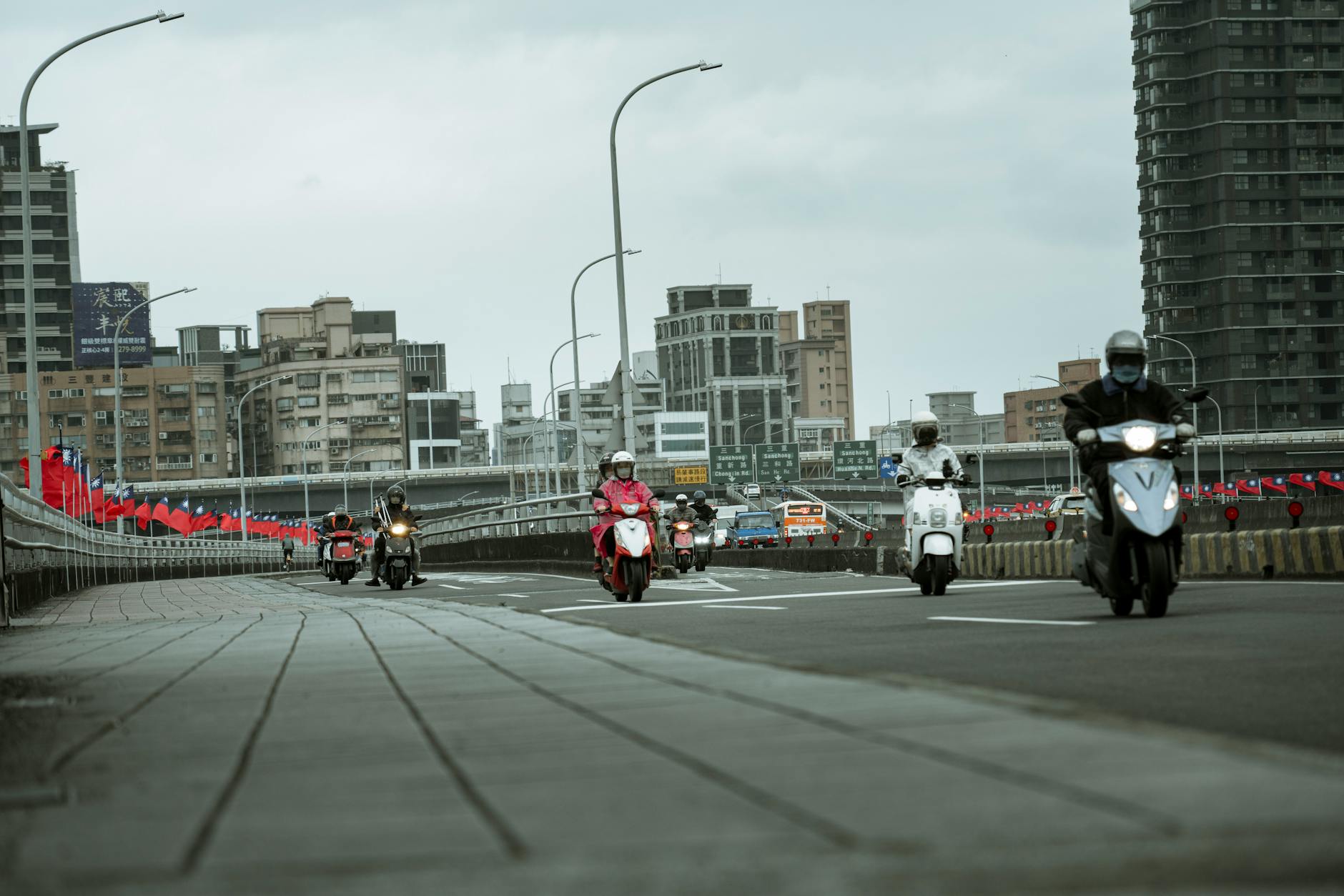
Taiwan is famous for its rivers of scooters weaving through city traffic. While it is technically possible for tourists to rent a scooter or car, we generally advise against it unless you have specific experience riding in dense Asian traffic. For context and regulations, see our car rental in Taipei page.
Why Most Tourists Skip Scooter and Car Rental
Riding a scooter in Taipei requires a valid international driving permit that includes motorcycle endorsement, and the traffic pattern takes significant adjustment. Scooters share lanes with buses and trucks, intersections require a unique two-stage left turn, and parking regulations can be confusing. Add in occasional typhoon rain and unfamiliar roads, and the risk-reward balance is not favorable for most visitors. The public transport network is so comprehensive and affordable that there is little practical reason to rent a vehicle within the city.
Car rental makes more sense for exploring rural areas outside Taipei, such as the mountainous east coast, Alishan, or Sun Moon Lake, where public transport is sparse. If you plan to rent a car for a road trip, pick it up outside the city and return it before heading back to Taipei. Driving inside the city proper is stressful, parking is scarce and expensive, and you will almost certainly get around faster on the MRT.
Accessibility, Luggage, and Practical Transport Tips
Taipei has invested heavily in making its transit system accessible, and the city continues to improve its infrastructure for travelers with mobility challenges, families with strollers, and anyone hauling heavy luggage.
Wheelchair and Stroller Accessibility
Every MRT station has elevators connecting the street level to platforms, though you may need to ask station staff for directions to the nearest one, as elevator locations vary. Priority wheelchair spaces are available in every MRT train car. Low-floor buses, which allow level boarding for wheelchair users, are increasingly common on major routes. Tactile paving for the visually impaired is standard throughout the MRT system.
Traveling with Luggage
The MRT permits luggage of any reasonable size, though during rush hour you should expect tight quarters. If possible, avoid traveling with large suitcases between 7:00 and 9:00 AM or 5:00 and 7:00 PM. The Airport MRT express has dedicated luggage racks and more spacious cars designed specifically for airport-bound travelers.
Coin-operated lockers are available at Taipei Main Station, Zhongxiao Fuxing, Ximen, and several other major stations. Sizes range from small (big enough for a daypack) to large (suitable for a full-size suitcase). Rates are typically NT$20 to NT$70 for three hours. These are useful if you want to explore the city on your last day after checking out of your hotel but before heading to the airport.
Lost and Found
If you leave something on the MRT, report it to the nearest station’s service counter as soon as possible. The Taipei Metro has a centralized lost and found system, and recovered items are kept for a set period. You can also call the MRT customer service hotline or check the Taipei Metro website. For items lost in taxis, the situation is trickier; if you used Uber or a ride-hailing app, you can contact the driver through the app. For regular taxis, note the cab number displayed on the outside of the vehicle (it is a four-digit number on the door) and report to the taxi company or police.
Useful Transport Apps for Taipei
Your smartphone is your best navigation tool in Taipei. Here are the apps worth downloading before you arrive:
- Google Maps: Provides accurate MRT, bus, and walking directions in Taipei with real-time transit information. This is the single most useful app for getting around.
- Taipei Metro (Official App): The official MRT app includes a route planner, fare calculator, station facility information, and real-time service alerts.
- YouBike: Shows nearby stations with available bikes and empty docks in real time. Essential if you plan to cycle.
- Uber: For ride-hailing with English interface and cashless payment.
- LINE Taxi: A locally popular ride-hailing app, useful as a backup to Uber.
- T Express: The official HSR booking app for purchasing high-speed rail tickets on your phone.
Connectivity on the Go
Having mobile data is almost essential for navigating Taipei’s public transport smoothly. Pick up a prepaid SIM card or an eSIM before you leave the airport. Vendors at both Taoyuan and Songshan airports offer tourist SIM packages starting from around NT$300 for five days of unlimited data. With a data connection, you can use Google Maps in real time, look up bus schedules, check YouBike availability, and call an Uber whenever you need one.
Taipei Transport Quick Reference Table
Use this summary table to compare your options at a glance. Fares listed are approximate and current as of 2026.
| Transport Mode | Typical Fare | Hours | Best For | Payment |
|---|---|---|---|---|
| MRT | NT$20–65 per ride | 6 AM – Midnight | Most city travel | EasyCard, token, contactless card |
| City Bus | NT$15 per segment | 5:30 AM – 11 PM | Areas MRT doesn’t reach | EasyCard, cash (exact change) |
| YouBike | ~NT$5 for 30 min | 24 hours | Short trips, riverside rides | EasyCard, credit card, app |
| Taxi | NT$85 flag-fall + NT$5/200m | 24 hours | Door-to-door, late night | Cash, EasyCard, credit card |
| Uber | Similar to taxi metered rates | 24 hours | English interface, cashless | Credit card via app |
| Airport MRT Express | NT$160 one way | 6 AM – 11 PM | Taoyuan Airport transfers | EasyCard, single ticket, contactless |
| Airport Bus (1819) | NT$125–145 | 24 hours | Late-night airport transfers | Cash, EasyCard |
| HSR (to Kaohsiung) | ~NT$1,490 one way | 6:30 AM – 10:30 PM | Intercity travel, day trips | Credit card, cash, T Express app |
Frequently Asked Questions About Taipei Transportation
Is Taipei easy to get around without speaking Chinese?
Yes. The MRT, HSR, and Airport MRT all have comprehensive English signage and announcements. Bus stops and route maps include English names. The main area where you may face a language challenge is in taxis, but having your destination written in Chinese characters on your phone solves this problem easily. With Google Maps and a data connection, you can navigate the entire city without speaking a word of Mandarin.
Do I need an EasyCard, or can I just tap my credit card?
For visits of one or two days, tapping a contactless Visa, Mastercard, or JCB card (or Apple Pay / Google Pay) at MRT gates will work. However, for stays of three days or longer, an EasyCard is strongly recommended because of the 20 percent MRT discount, the bus transfer discount, the ability to use YouBike, and the convenience of paying at convenience stores and small shops. The NT$100 card cost pays for itself within a few rides.
How do I get from Taoyuan Airport to my hotel?
The best option for most travelers is the Airport MRT Express, which takes 35 minutes and costs NT$160 to Taipei Main Station. From there, transfer to the MRT or grab a taxi to your hotel. If you arrive between 11:00 PM and 6:00 AM when the Airport MRT is not running, the Kuo-Kuang 1819 bus operates 24 hours and costs around NT$140. Taxis and private transfers are also available around the clock.
What is the best way to get to Taipei 101?
Take the Red Line (Tamsui-Xinyi Line) to Taipei 101/World Trade Center station. The exit brings you directly to the base of the tower. Alternatively, YouBike stations surround the Xinyi District if you prefer to cycle from a nearby neighborhood.
Is Uber available in Taipei?
Yes, Uber operates throughout Taipei and New Taipei City. It uses licensed taxi and rental car drivers, fares are comparable to standard taxi rates, and the English-language app makes it easy for tourists. LINE Taxi is a popular local alternative.
Can I use YouBike without a Taiwanese phone number?
Yes. While EasyCard-based YouBike rental originally required a local number for registration, you can now rent bikes using a credit card through the YouBike app or by tapping a contactless credit card directly on the bike’s reader. This makes YouBike fully accessible to international visitors.
How late does the MRT run?
The last trains depart terminal stations around midnight. Check the Taipei Metro app or website for the exact last-train times for your specific line and station. On New Year’s Eve and a few other special occasions, the MRT operates extended hours or runs all night.
Should I rent a scooter in Taipei?
We recommend against it for most tourists. Taipei’s traffic is congested and unfamiliar, the two-stage left turn rule is confusing, and an international driving permit with motorcycle endorsement is required. The public transport system is comprehensive enough that a scooter provides very little advantage within the city.
How do I get to Jiufen from Taipei?
The most common route is to take the MRT or train to Ruifang Station, then transfer to bus 788 or 965 up the mountain to Jiufen Old Street. Alternatively, direct bus 1062 departs from Zhongxiao Fuxing MRT station (Exit 2) and takes about 90 minutes. A taxi from central Taipei costs approximately NT$1,000 to NT$1,200 each way.
Is there a day pass for unlimited MRT rides?
Yes. The Taipei Metro offers a one-day pass (NT$150) and a 48-hour pass (NT$280) for unlimited rides on the MRT. There is also the Taipei Fun Pass, which combines unlimited MRT and bus rides with admission to select attractions. Whether a day pass saves you money depends on how many rides you plan to take; for most casual sightseers, the EasyCard with its 20 percent discount works out to be a better deal unless you plan to take six or more MRT rides in a single day.
Are taxis safe in Taipei?
Generally, yes. Taipei taxis are regulated, metered, and safe for both solo travelers and families. As in any major city, exercise basic precautions: make sure the meter is running (it should start at NT$85), sit in the back seat, and note the taxi number on the outside of the car. If a driver refuses to use the meter or quotes a flat fare (which is not standard practice), find another cab.
Final Thoughts: Getting Around Taipei Is Easier Than You Think
Taipei consistently ranks as one of the most tourist-friendly cities in Asia, and a large part of that reputation comes from its excellent transportation infrastructure. The MRT alone can take you to night markets, temples, hot springs, mountain trailheads, and world-famous landmarks. Add in the bus network, YouBike, and affordable taxis, and there is genuinely no corner of the city that is out of reach.
Our top advice for first-time visitors: buy an EasyCard the moment you land, download Google Maps, and do not be afraid to experiment with different modes of transport. The MRT will be your workhorse, YouBike will surprise you with how much fun it is, and the occasional taxi will save you on late nights or rainy evenings. Taipei’s transport system is designed for people like you, visitors who want to explore freely without the stress of driving in an unfamiliar city.
For more on planning your trip, return to our main Taipei Travel Guide, or dive deeper into the specific topics linked throughout this article, including our MRT guide, EasyCard guide, Taoyuan Airport transfer guide, YouBike guide, and taxi guide.
One group gets a very different version of this city, and it deserves saying plainly: Taipei’s metro is among the most accessible in Asia — lifts from street to platform network-wide, level boarding, a wheelchair space in every carriage — while its pavements are among the least. The city also runs wheelchair-accessible taxis 24 hours a day on the ordinary meter with no booking fee, which almost nobody writes about. Our guide to wheelchair accessible Taipei covers the whole picture, including the parts we would not recommend attempting.