This article contains advertising. Our booking links are routed through a partner that adds commission tracking automatically, so if you book through one we earn a commission from the provider, at no extra cost to you. It never affects what we recommend. Affiliate disclosure
You will get almost all of this right without trying. Taiwan is one of the most forgiving places in Asia to be a slightly clueless foreigner — nobody is testing you, nobody is offended by a fumbled bow that should have been a nod, and the general assumption is that you mean well. Which is exactly why a short list of taiwan etiquette dos and donts is worth reading before you arrive: the handful of things that genuinely matter here are not the ones travel guides usually put at the top, and one of them will get you a NT$1,500 fine on your first morning if nobody tells you.
What follows is the practical version — transport rules that carry actual penalties, table manners that carry actual meaning, the superstitions worth knowing because they will shape someone else’s behaviour towards you, and a fair number of things you have probably read elsewhere that simply are not true here. Everything was checked in September 2026.
The five that actually matter
If you read nothing else, read this. Everything further down is nuance; these five are the ones where getting it wrong has a consequence rather than a shrug.
| Rule | Why | What happens if you get it wrong |
|---|---|---|
| No eating or drinking in the MRT — including water | Enforced by law, not custom | NT$1,500–7,500 fine |
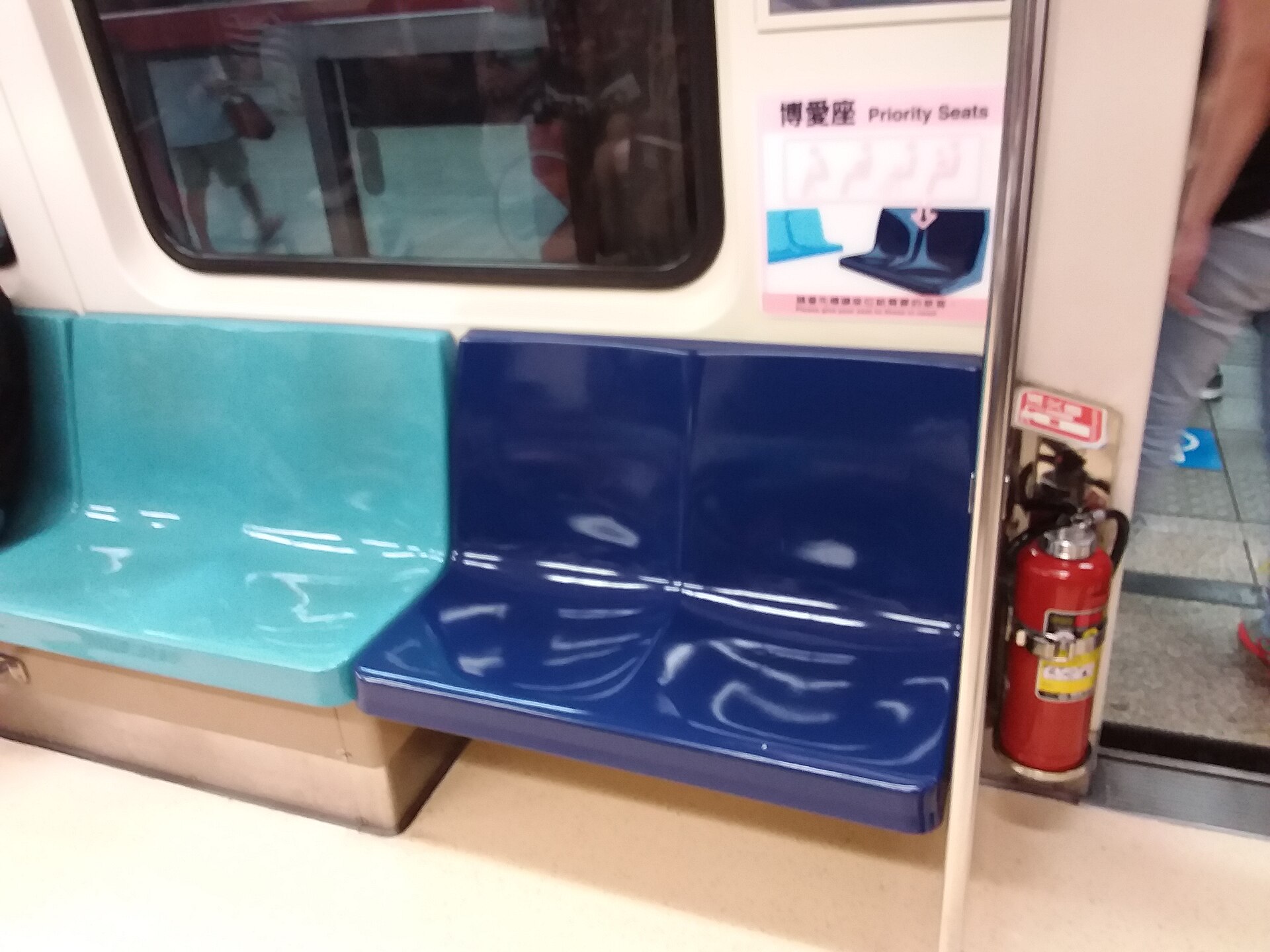
| Do not sit in the dark blue priority seats | Taken extremely seriously | Silent, universal disapproval. Worse than the fine. |
| Never stand chopsticks upright in rice | It is what incense looks like on a funeral altar | Genuine distress, not just faux pas |
| Do not tip | Not part of the system; can read as odd or patronising | Confusion, sometimes a chase down the street to return your money |
| Take your shoes off in homes, some restaurants, temple halls and guesthouses | Universal, non-negotiable | Immediate, visible awkwardness |
On the MRT: the rules with teeth
The Taipei Metro is the cleanest big-city metro many visitors will ever use, and the reason is not civic magic. It is a set of rules that are enforced.
No eating, drinking, or chewing gum
This is the one. The ban applies from the yellow line just inside the station entrance — not from the ticket gates, which is where most visitors assume it starts — and it covers plain water. Finish your bubble tea before the yellow line or carry it sealed and untouched. The fine runs from NT$1,500 to NT$7,500, and inspectors do issue them.
The exceptions are narrow and humane: passengers who feel unwell, and breastfeeding. Taking a sip of water because it is thirty-four degrees is not an exception, however reasonable it feels. Our Taipei MRT guide covers the rest of the system, and the official rules are on Taipei Metro’s own site.
Priority seats
The dark blue seats near the doors are 博愛座. They are for elderly, pregnant, injured and disabled passengers, and the social enforcement around them is stronger than anything written down. On a rush-hour train you will regularly see two empty blue seats and a carriage full of standing commuters, because nobody wants to be the person who has to give one up — or worse, the person who did not notice they should.
As a visitor you can simply avoid them. It costs you nothing and it removes any chance of a scene.
Queueing and boarding
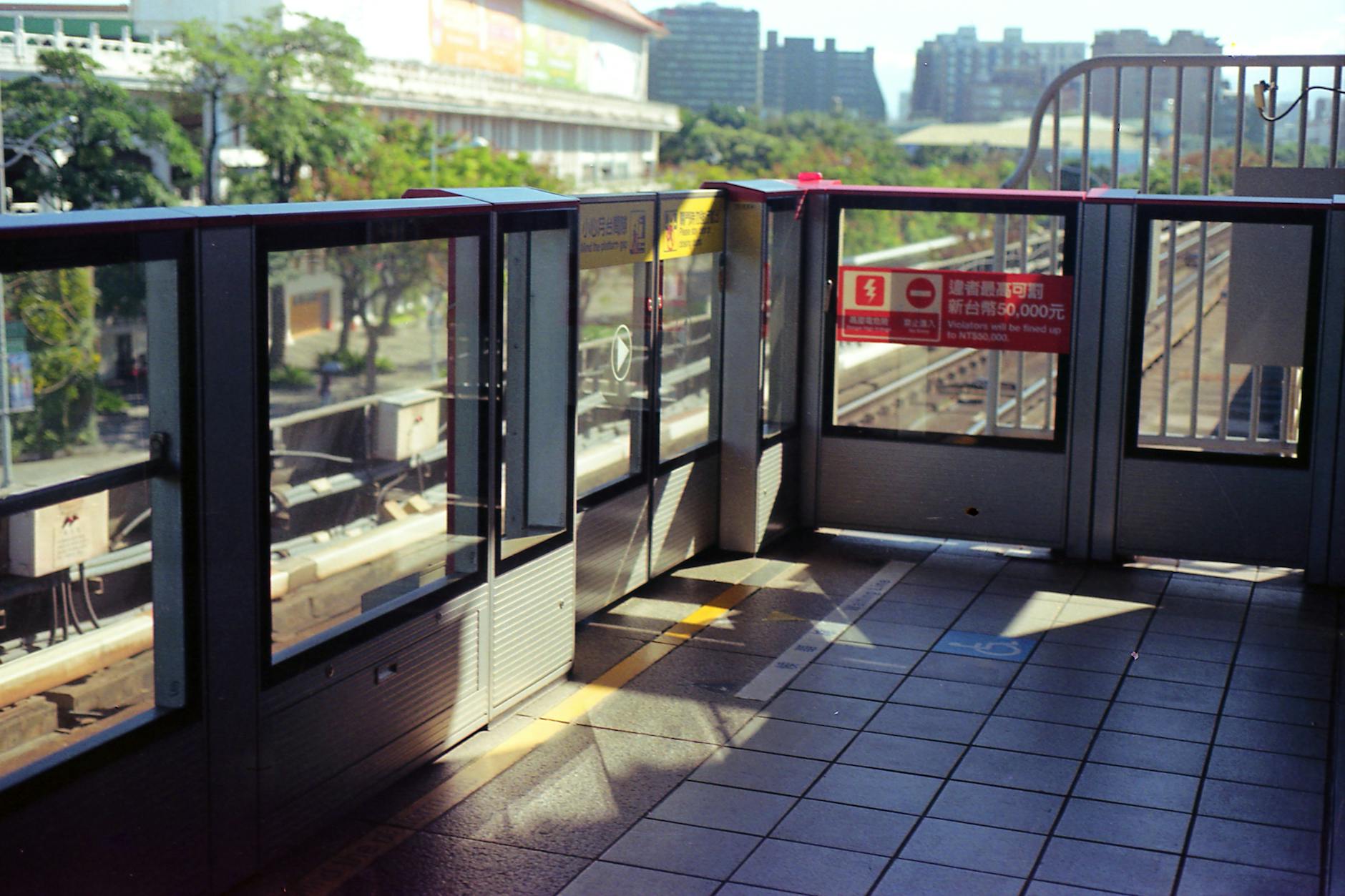
Look at the floor. There are painted arrows on every platform showing where to line up, and people use them. Two lines form either side of the door, the middle stays clear, and everyone getting off goes first. This is not aspirational signage — it is how it actually works, and breaking the pattern is the most conspicuous thing a visitor can do here.
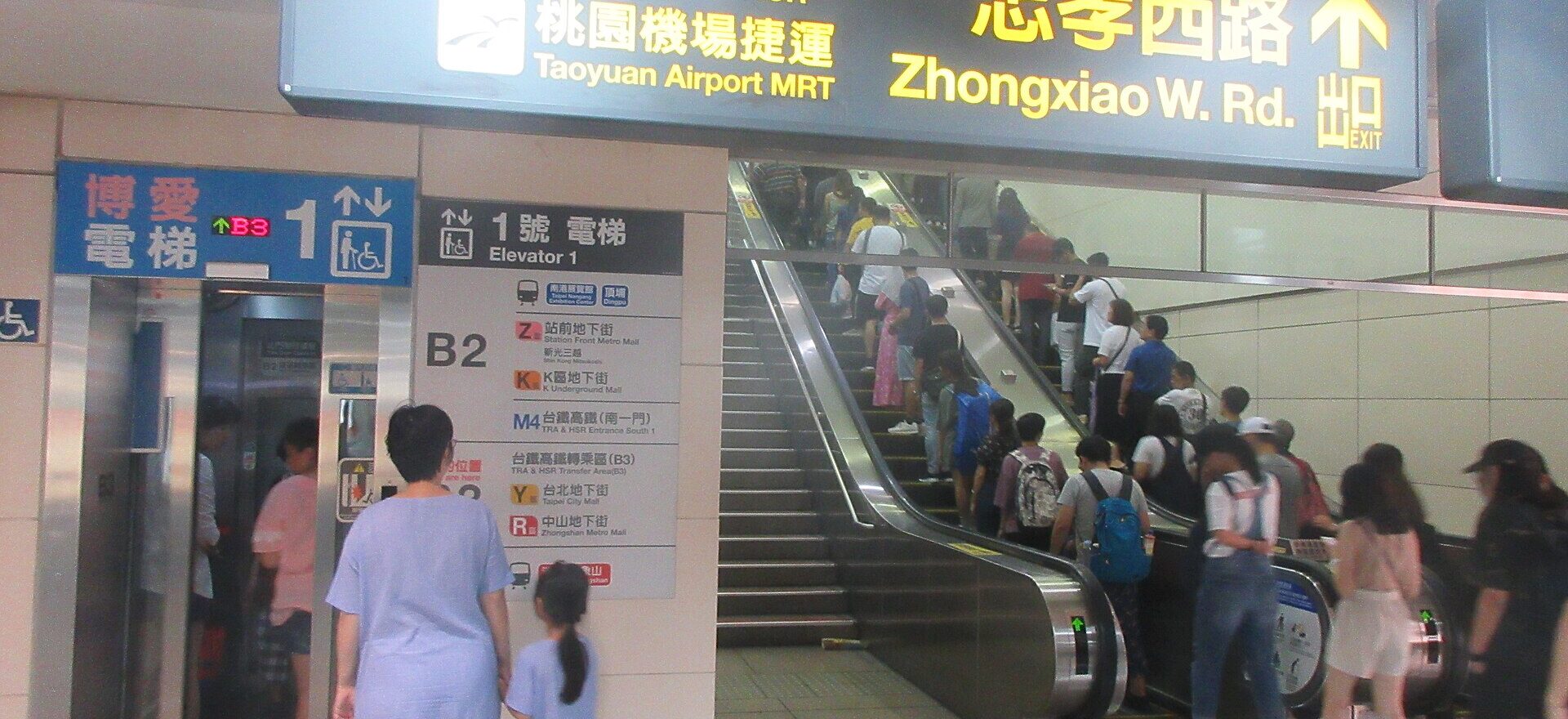
Escalators
Stand on the right, walk on the left. There is a nuance here that makes for good small talk: Taipei Metro has spent years officially asking passengers to stand on both sides, on the grounds that walking on a moving escalator causes injuries and uneven wear. The campaign has comprehensively failed. The habit is so entrenched that a visitor standing on the left is the one causing the problem, whatever the posters say. Follow the crowd.
Talking, phones and volume
Taipei carriages are quiet. Not silent — people talk — but the ambient volume is markedly lower than a London or New York train, phone calls are kept short and hushed, and nobody plays audio without headphones. It is one of the first things visitors notice and one of the easiest to match.
At the table
Chopsticks: the one that genuinely matters
Do not stand chopsticks upright in a bowl of rice. This is the single non-negotiable table rule in the Chinese-speaking world, and it is not squeamishness about luck — it is a direct visual quotation of incense sticks planted in an urn of ash at a funeral altar. It reads as putting a death offering on the table. Lay them across the bowl, on the rest, or flat on the table instead.
Two smaller ones. Do not tap chopsticks on the bowl, which is associated with begging. And do not pass food chopstick-to-chopstick, which mirrors a step in the funerary handling of cremated bones; put it on the person’s plate instead.
Serving, sharing and the last piece

Meals are communal. Dishes land in the middle and everyone works from them, so a few reflexes help:
- Serve others before yourself — the older people at the table first, then the person next to you, then you. Doing this once, badly, will earn you more goodwill than any phrasebook.
- Use the serving spoon if there is one, or turn your chopsticks around to use the clean ends when taking from a shared plate. Taiwan is more relaxed about this than Japan, but the gesture is noticed.
- Do not take the last piece without offering it around. It will usually be pressed on you anyway, at which point you should take it.
- Rice bowls are lifted to the mouth. Leaving the bowl on the table and reaching down to it looks awkward here.
- Leaving a little food is fine and traditionally signals you were fed generously. Clearing every plate is also fine. Nobody is scoring this.
Who pays
The person who invited you, or the eldest, or whoever is most senior at work — and they will not accept a split. The performance of fighting for the bill is real, enjoyable and largely decided in advance. Offer, lose gracefully, and reciprocate next time. Actually succeeding in paying when you are the guest is closer to a mild insult than a favour.
Drinking
Toasts matter. Gānbēi (乾杯) means dry the glass and is meant literally; if you are not up for that, say suíyì (隨意) — “as you please” — and sip. Nobody in Taiwan will bully you into drinking, which is a genuine difference from parts of the region. When someone toasts you, hold your glass slightly lower than theirs if they are older or more senior. Our craft beer guide and cocktail bar guide cover where to do this.
Tipping: don’t
Taiwan does not have a tipping culture and importing one is not helpful. Restaurant staff are paid a wage rather than a sub-minimum topped up by strangers, and leaving money on the table can produce anything from confusion to someone running after you down the street to give it back.
The specifics:
- Restaurants — no tip. Mid-range and up add a 10% service charge automatically, which is your total contribution.
- Taxis — no tip. Rounding up so you do not both hunt for coins is normal and unremarkable.
- Hotels — no tip expected. NT$50–100 for a porter who carries heavy bags upstairs is fine if you want to.
- Bars, cafés, night markets, hairdressers, massage — no tip. Some places have a jar; ignoring it is fine.
- Private guides and drivers — the one exception, where a tip for a good day is genuinely appreciated.
Our guide to tipping in Taipei goes through the edge cases, and money in Taipei covers cash, cards and what to carry.
Temples: how to behave, and how not to worry
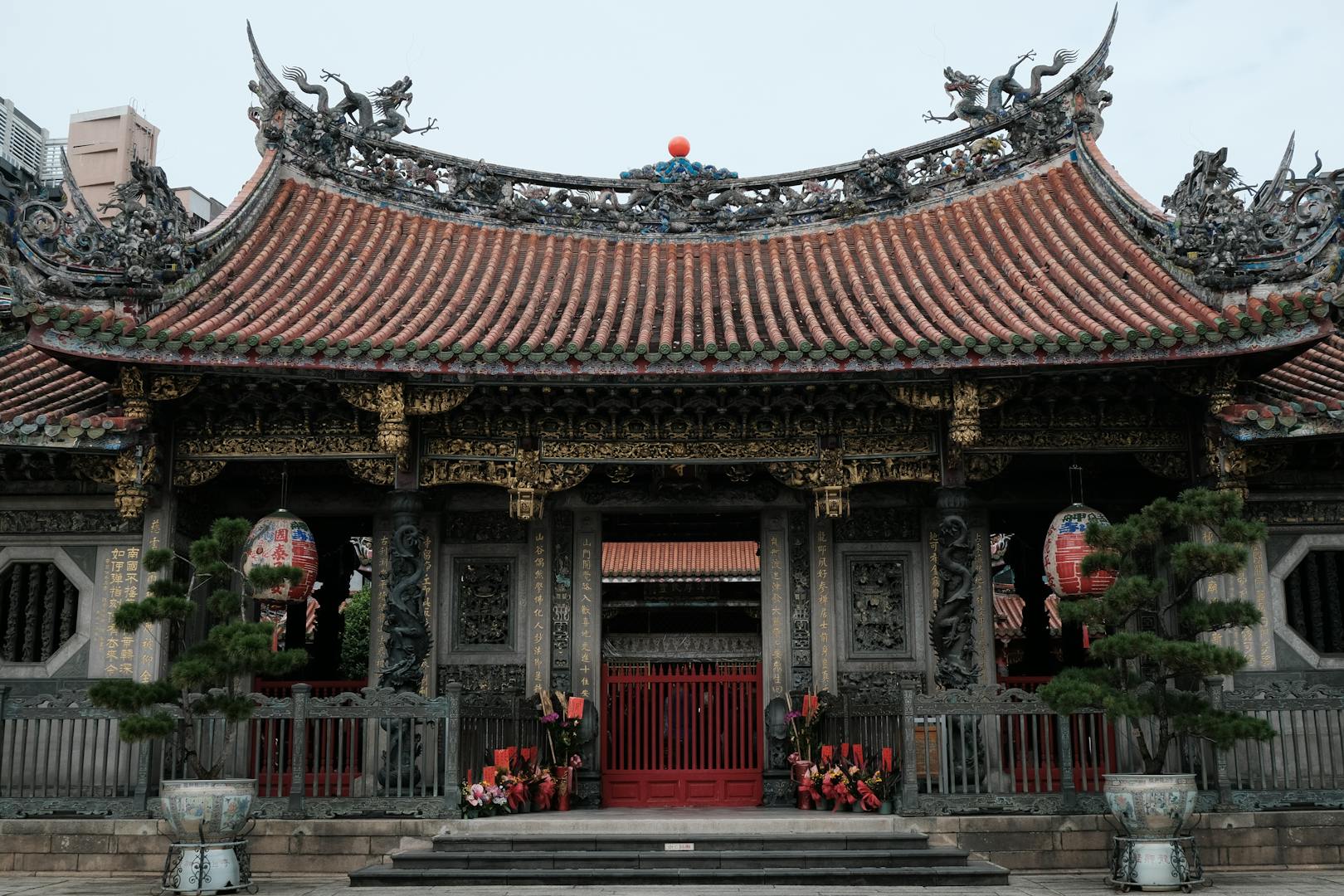
Taiwanese temples are far more welcoming than most visitors expect. They are busy, noisy, functional buildings where people drop in on the way to work, and there is no ticket, no dress inspection and no expectation that you know what you are doing.
The things worth getting right:
- Enter by the right-hand door and exit by the left as you face the temple. The central door is for deities and, at some temples, for the temple’s own officials. If you get it wrong, nobody will stop you.
- Do not step on the threshold. Step over the raised wooden sill rather than on it.
- Dress reasonably. Shoulders covered is polite; there is no formal code and you will see plenty of shorts. Shoes come off only for specific inner halls, which will be obvious.
- Do not photograph people mid-worship, and do not photograph the deity statues at some temples where signs ask you not to. The buildings themselves are fine.
- You may use the incense if you want to, and you may not. Watch someone first. Nobody will be offended either way.
- Do not point at deity statues with a finger — an open hand is the gesture — and do not turn your back squarely on the main altar to take a selfie.
Start at Longshan Temple, which is used to visitors and is genuinely spectacular in the evening. Our guide to Taipei’s temples and the piece on religion in Taipei cover what you are actually looking at.
Numbers, gifts and the superstitions that shape behaviour
You do not need to believe any of this. You do need to know it, because it explains things you will otherwise find baffling — the missing fourth floor in the lift, the odd reaction to a well-meant present.
Four is death
四 (four) and 死 (death) are near-homophones, which is why hospitals and hotels skip the fourth floor, why nothing is sold in sets of four, and why you should never give four of anything. Eight, by contrast, sounds like 發 (prosperity) and is actively lucky. Nine is fine, six is good, odd numbers are for funerals and even numbers for celebrations.
Gifts that mean the wrong thing
- Clocks and watches — 送鐘 (giving a clock) sounds like 送終, attending someone’s funeral rites. This is the big one and it catches a lot of well-intentioned visitors.
- Umbrellas — 傘 sounds like 散, to separate or break up. Fine to lend, bad to give.
- Scissors, knives and anything sharp — cutting the relationship.
- White or yellow chrysanthemums — funeral flowers. So are white envelopes.
- Green hats — a Chinese-language idiom for a man whose partner is unfaithful. Do not buy one as a joke.
What works instead: food from your own country, decent whisky or wine, tea, pastries, anything in a smart box. Present it and receive it with both hands. Expect it to be politely declined once or twice before acceptance, which is form rather than rejection — keep offering. And do not expect it to be opened in front of you; putting it aside is polite, not indifferent.
Red envelopes
If a wedding or a New Year lands during your trip and you are included, money goes in a red envelope (紅包): new notes, an even total, ending in 8 if you can manage it, never containing a 4. Our guide to Taipei souvenirs covers what to bring home, which is the reverse problem.
Ghost Month
The seventh lunar month — usually falling across August — is when the gates of the underworld are held to open. You will see offerings of food, drinks and incense outside shop doorways, and paper money being burned in metal drums on the pavement. Practically, people avoid moving house, starting businesses, swimming, getting married and travelling at night during it. As a visitor you are affected almost not at all, but do not kick over a roadside offering, do not step on burning ghost money, and do not make jokes about it in front of people who take it seriously. Our August guide covers what it looks like on the ground.
Out and about
Shoes off
Always in a private home, in most guesthouses and homestays, in some restaurants with raised tatami-style seating, in temple inner halls, in clinics and doctors’ rooms, and in a lot of small shops selling clothes you might try on. There will be a rack, a shelf or a pile by the door. If in doubt, look at the floor immediately inside the entrance and copy whatever is there.
Queueing
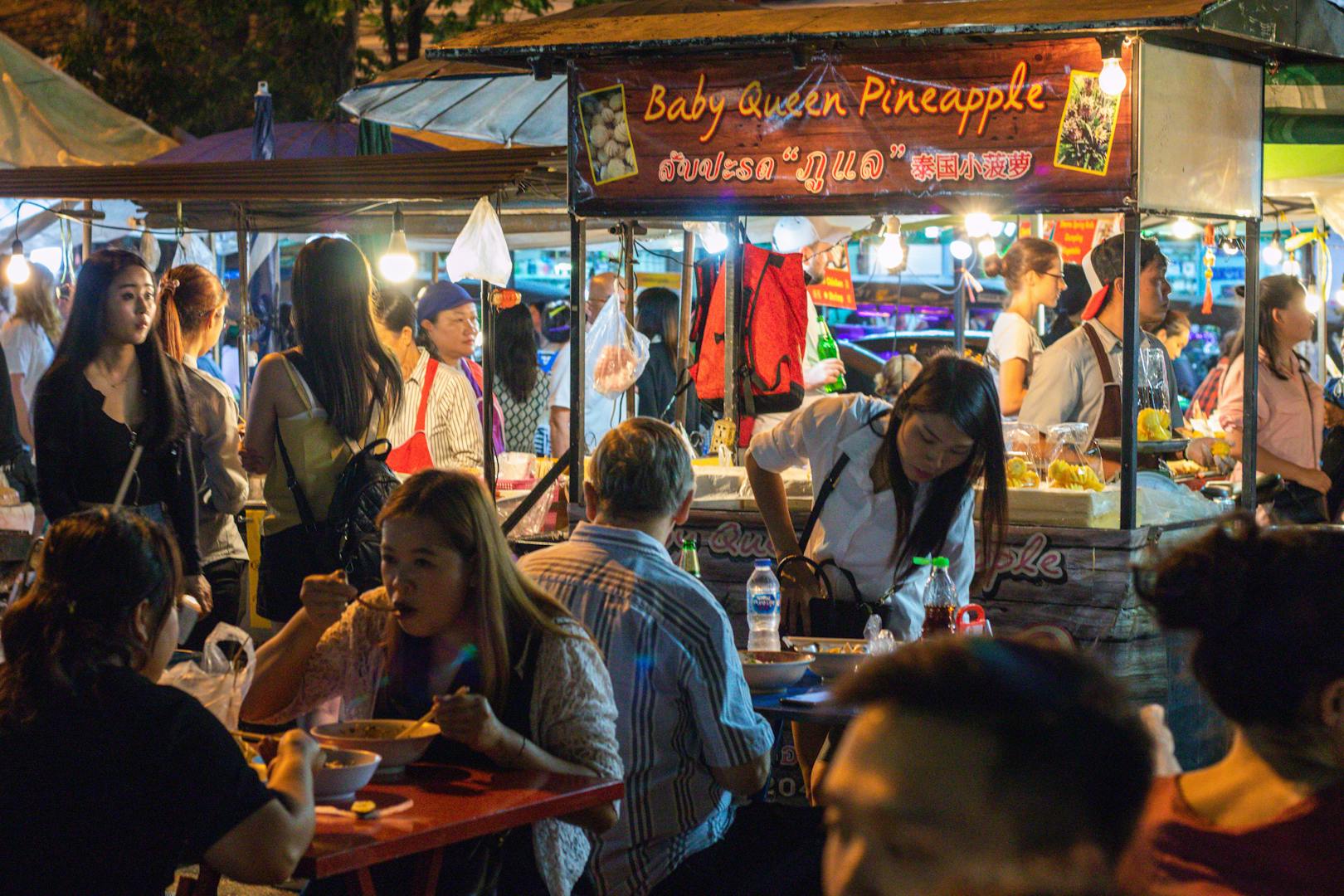
Taiwan queues, seriously and for everything — bubble tea shops, bakeries, cash machines, the door of the MRT carriage. Cutting in is one of the few things that reliably produces open annoyance. A queue that appears to be for nothing is usually for something extremely good.
Rubbish
There are almost no public bins, which comes as a shock. This is deliberate policy — Taiwan’s recycling system is genuinely world-class and it works partly by making disposal a household responsibility. Carry your rubbish until you find a bin at an MRT station, a convenience store or your hotel. If you hear a truck playing Beethoven’s Für Elise, that is the rubbish collection, not an ice cream van, and residents are running out to meet it with sorted bags.
Volume, personal space and physical contact
Speak more quietly than you would at home. Taiwanese personal space is closer than Northern European norms on a train and further away in conversation; hugging is not a standard greeting; a nod and a smile do more work than a handshake, though handshakes are entirely normal in business. Backslapping and shoulder-grabbing are not.
Smoking
Banned indoors nationwide, and increasingly restricted outdoors — around schools, hospitals, parks and covered walkways. Smokers cluster at designated spots and nobody flouts it. Vaping is legally murkier and socially frowned on; e-cigarettes are in fact prohibited, which surprises a lot of visitors.
Traffic
Scooters are the real hazard, and they will filter through gaps you did not know existed. Cross on the green man, look both ways anyway, and be aware that vehicles turning right on a green light are legally allowed to do so through your crossing. Pedestrian priority has improved sharply since the “living hell for pedestrians” headlines of a few years ago, and the law now firmly favours you at crossings — but the physics have not changed. Our getting around Taipei guide covers the practicalities.
Talking about Taiwan
The subject visitors most worry about, usually unnecessarily. Taiwanese people discuss their own politics constantly, freely and with enormous variation of opinion, and no one is going to be upset by a foreigner asking a question in good faith.
A few useful bearings. Referring to Taiwan as part of China, or calling it “Chinese Taipei” outside the specific sporting context where that name is used, will land badly with a great many people. Assuming everyone here holds one view on independence and unification will be wrong: opinion is genuinely split, generationally layered, and treated as normal political disagreement rather than a taboo. And “do you speak Chinese?” is a slightly awkward question, because Mandarin, Taiwanese Hokkien (台語), Hakka and sixteen recognised Indigenous languages all live here.
The practical advice is simple: ask, listen, and do not tell people what their own country is. Our piece on how Taiwan differs from China goes into this properly, and a handful of Mandarin phrases will get you a genuinely warm reception.
Things you have probably read that are not true
“Bow when you meet someone.” That is Japan. In Taiwan a nod and a smile is standard; handshakes are normal in business. Bowing deeply will look like you have confused the two countries, which is a slightly sensitive thing to have done.
“Never show the soles of your feet.” Not a Taiwanese concern.
“Business cards must be studied for thirty seconds.” Both hands, a glance, and not shoving it straight into a back pocket. The elaborate ritual is, again, Japanese.
“Slurping noodles is polite.” Also Japan. It is neither required nor forbidden here — nobody is listening.
“You must refuse food three times.” Overstated. Once is plenty, and enthusiastic acceptance of food is universally welcomed.
“Taiwan is unsafe for solo travellers, women, LGBTQ visitors.” Taiwan is among the safest countries in the world for all three, and was the first place in Asia to legalise same-sex marriage, in May 2019. See is Taipei safe for tourists and our LGBTQ travel guide.
Related Taipei guides
- Taipei Travel Essentials: the pre-trip checklist
- Tipping in Taipei
- The Taipei MRT Guide
- Night Market Etiquette
- The Best Temples in Taipei
- Taiwan vs China: the Cultural Differences
- Mandarin Phrases for Travellers
- Taipei Culture
- Religion in Taipei
- Is Taipei Safe for Tourists?
- Can You Drink the Tap Water in Taipei?
- The Best Taipei Souvenirs
Frequently Asked Questions
What are the main etiquette rules in Taiwan?
Do not eat or drink anywhere in the MRT system, avoid the dark blue priority seats, never stand chopsticks upright in rice, do not tip, and take your shoes off in homes and guesthouses. Those five cover almost every situation where a visitor can actually cause a problem.
Is tipping expected in Taiwan?
No. Restaurants at the mid-range and above add a 10% service charge automatically and that is the end of it. Taxis, bars, hotels and hairdressers do not expect anything. Private guides and drivers are the one reasonable exception.
Can I eat or drink on the Taipei MRT?
No — and the ban starts at the yellow line just inside the station entrance, not at the ticket gates. It includes water and chewing gum. The fine is NT$1,500 to NT$7,500 and it is enforced.
Why should I not put chopsticks upright in rice?
Because it looks exactly like incense sticks planted in an urn of ash at a funeral altar. It is not a luck superstition so much as a death image on the dinner table. Rest them across the bowl or on the chopstick rest instead.
Do I need to take my shoes off in Taiwan?
Always in private homes, usually in guesthouses and homestays, in temple inner halls, in clinics, and in restaurants with raised seating areas. Look at the floor just inside the door — the rack or the pile of shoes will tell you.
What gifts should I avoid giving in Taiwan?
Clocks and watches (the phrase for giving a clock sounds like attending a funeral), umbrellas (sounds like separating), scissors and knives (cutting ties), white or yellow chrysanthemums (funeral flowers), green hats (an idiom about infidelity) and anything in a set of four.
Is it rude to refuse food or drink in Taiwan?
No. A polite decline is fine and nobody will pressure you, including with alcohol — say suíyì at a toast and sip rather than downing the glass. Accepting enthusiastically is welcomed, but refusing is not an insult.
How do I behave in a Taiwanese temple?
Enter by the right-hand door and leave by the left, step over the threshold rather than on it, dress reasonably, do not photograph people mid-prayer, and do not point at statues with a finger. Using the incense is optional and welcome. Nobody will correct you if you get the doors wrong.
Is it OK to talk about politics with Taiwanese people?
Yes, if you ask rather than assert. Taiwanese people discuss their own politics openly and disagree with each other constantly. What lands badly is telling people their country is part of another one, or assuming everyone holds the same position.
Should I bow when greeting someone in Taiwan?
No. A nod and a smile is standard, and handshakes are normal in business settings. Deep bowing is Japanese and, in Taiwan, reads as having mixed up two very different countries.
Why are there no rubbish bins in Taipei?
Deliberate policy. Taiwan’s recycling system relies on household separation and kerbside collection rather than public disposal, and it works — the country has one of the highest recycling rates in the world. Carry your rubbish to an MRT station, a convenience store or your hotel.
What is Ghost Month and does it affect my trip?
The seventh lunar month, usually across August, when spirits are said to visit. You will see roadside offerings and paper money being burned. It barely affects a visitor’s plans — just do not disturb the offerings, and expect locals to avoid swimming, moving house or travelling late at night.
Do Taiwanese people speak English?
Younger people in Taipei often do, signage is bilingual and MRT announcements are in four languages. Outside the capital it thins out quickly. A translation app and half a dozen Mandarin phrases will carry you through anything.
Is it rude to leave food on the plate in Taiwan?
No. Leaving a little traditionally signals you were fed generously; finishing everything is also fine. This is one of the rules that people worry about far more than anyone in Taiwan does.
The Bottom Line
Taiwan makes it very hard to offend anyone. The culture is warm, tolerant of foreigners and disinclined to take offence at a genuine mistake, so the risk of a badly judged gesture ruining your trip is close to zero. What is worth learning is the small set of rules with real weight behind them: the MRT eating ban, which has a fine attached; the priority seats, which have a whole society’s disapproval attached; the chopsticks; the not-tipping; and the shoes.
Get those five right, speak a little more quietly than you would at home, queue where the arrows tell you to, and serve someone else before yourself at dinner. That is the entire syllabus. Everything else you will pick up in three days of paying attention, and the mistakes you do make will be met with the thing Taiwan is genuinely famous for, which is patience.
Photo Credits
Escalator at Taipei Main Station: Escalator to Bannan Line on MRT Taipei Main Station B3 20190811 by Hisaou 28lFIGEU, CC BY-SA 4.0, via Wikimedia Commons.
Priority seats in a Taipei Metro carriage: Priority seats in Taipei Metro Tamsui Line EMU 20190811 by Sungmei Laiun Mingsri, CC BY-SA 4.0, via Wikimedia Commons.