This article contains advertising. Our booking links are routed through a partner that adds commission tracking automatically, so if you book through one we earn a commission from the provider, at no extra cost to you. It never affects what we recommend. Affiliate disclosure
You can absolutely visit Taipei with zero Mandarin and have a good trip – English is widely understood in tourist areas, signage in the MRT and at airports is bilingual, and Google Translate works fine for restaurants and shops. But learning 20-40 basic phrases dramatically improves your experience: locals appreciate the effort, you unlock interactions at small night-market stalls and traditional shops, you handle emergencies more confidently, and you simply get treated better. This 2026 guide of Mandarin phrases for travelers in Taipei gives you what to learn (in priority order), how to pronounce it, and when to use it. No grammar lessons – just useful phrases.
Quick Notes on Mandarin in Taiwan
A few things to know before you start:
Taiwan uses Traditional Chinese characters, not Simplified (which is used in mainland China). For tourist purposes, this rarely matters since you will be speaking, not reading.
The Taiwanese accent is slightly different from Beijing Mandarin. Pronunciation is softer; “shi” and “si” often sound similar. Foreigners who learn Mandarin in Taiwan have a noticeably different accent from those who learn in Beijing or Shanghai.
Tones matter. Mandarin uses 4 tones. The same syllable spoken in different tones means different things. For tourists, getting the tones approximately right is enough; locals will figure out the meaning from context.
Pinyin is the romanization system. “Ni hao” is the standard romanization for “hello.” We use Pinyin throughout this guide.
Taiwanese Hokkien (Taiwanese) is the other major language, used especially by older locals and in some traditional businesses. Mandarin is universally understood; Hokkien is a bonus.
Many Taipei residents speak some English, especially in tourist areas, malls, and chain restaurants. Smaller local shops have varying English levels.
The 40 Most Essential Mandarin Phrases for Travelers
Greetings and Basic Courtesy (Priority 1)
These are the highest-priority phrases. Learn these and you have 60% of what you need.
你好 (Ni hao): Hello. Universal greeting, works in any situation.
謝謝 (Xie xie): Thank you. Use constantly. Locals respond positively to foreigners who say this.
不客氣 (Bu ke qi): You’re welcome. The response to xie xie.
對不起 (Dui bu qi): Sorry / Excuse me. Use when bumping into someone or making a mistake.
不好意思 (Bu hao yi si): Excuse me / Pardon me. Softer than dui bu qi. Use to get attention.
請問 (Qing wen): May I ask. Polite way to ask a question. “Qing wen, this Yongkang Street?”
再見 (Zai jian): Goodbye. Formal. Common alternative: “Byebye” (yes, English byebye is widely used).
是 (Shi) and 不是 (Bu shi): Yes and No (literally “is” and “is not”). Used in answers.
對 (Dui) and 不對 (Bu dui): Right/correct and not right/incorrect. Alternative yes/no.
我聽不懂 (Wo ting bu dong): I don’t understand (what I’m hearing). Critical phrase for tourists.
我不會說中文 (Wo bu hui shuo Zhong wen): I don’t speak Chinese. Often used; locals will switch to English or gestures.
你會說英文嗎 (Ni hui shuo Ying wen ma): Do you speak English?
Food and Ordering (Priority 2)
菜單 (Cai dan): Menu. “Cai dan, please.”
這個 (Zhe ge): This one. Point at the menu or display and say “Zhe ge” to order.
多少錢 (Duo shao qian): How much money? The most useful price question.
好吃 (Hao chi): Delicious / tasty (about food). Compliment to the cook.
好喝 (Hao he): Delicious (about drinks).
不要辣 (Bu yao la): Not spicy. Useful for tomato or non-spicy options.
素食 (Su shi): Vegetarian. Or “我吃素” (Wo chi su) = “I eat vegetarian.”
不要 (Bu yao): Don’t want / no. Useful for “don’t want X ingredient.”
結帳 (Jie zhang): Check please / settle the bill. Use at sit-down restaurants.
外帶 (Wai dai): Take out / to-go.
內用 (Nei yong): Dine in / eat here.
水 (Shui): Water.
啤酒 (Pi jiu): Beer.
米飯 (Mi fan): Rice (cooked).
麵 (Mian): Noodles.
Directions and Transportation (Priority 3)
哪裡 (Na li): Where? “Cesuo zai na li?” = “Where is the bathroom?”
洗手間 / 廁所 (Xi shou jian / Ce suo): Bathroom / toilet. Xi shou jian is more formal; ce suo more direct.
左 (Zuo): Left.
右 (You): Right.
直走 (Zhi zou): Go straight.
停 (Ting): Stop. “Ting!” tells a taxi or driver to stop.
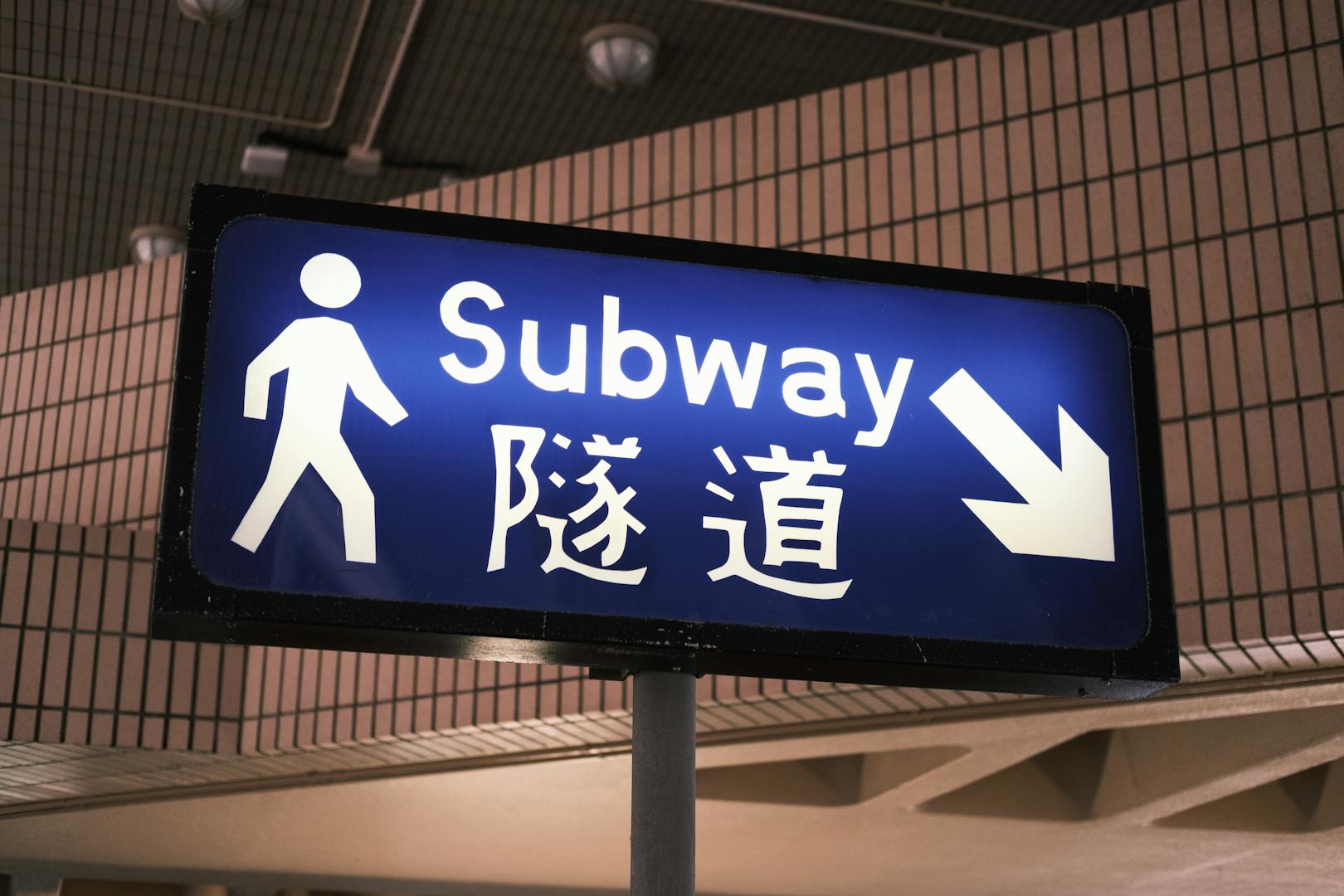
地鐵 / 捷運 (Di tie / Jie yun): Subway / MRT. Di tie is generic; Jie yun is Taiwan-specific MRT term.
計程車 (Ji cheng che): Taxi.
機場 (Ji chang): Airport.
火車 (Huo che): Train.
遠 (Yuan): Far. “Yuan ma?” = “Is it far?”
近 (Jin): Close / near.
Shopping
太貴了 (Tai gui le): Too expensive. Common at night markets and traditional shops.
便宜一點 (Pian yi yi dian): A little cheaper / discount? Polite bargaining.
可以 (Ke yi): OK / yes I can. Useful affirmative.
不可以 (Bu ke yi): Cannot / not allowed.
信用卡 (Xin yong ka): Credit card.
現金 (Xian jin): Cash.
收據 (Shou ju): Receipt.
Numbers (Useful)
For prices and quantities. Learn 1-10 and you can handle most basic transactions.
1: yi / 2: er (or “liang” for “two of something”) / 3: san / 4: si / 5: wu / 6: liu / 7: qi / 8: ba / 9: jiu / 10: shi
20: er shi / 30: san shi / 100: yi bai / 1000: yi qian
Practical: “Si ge” = “four of them” (when ordering 4 dumplings). “Liang ren” = “two people” (for restaurant seating).
Emergencies and Health (Memorize Just in Case)
救命 (Jiu ming): Help / Save me. Emergency phrase.
叫救護車 (Jiao jiu hu che): Call an ambulance.
警察 (Jing cha): Police.
醫院 (Yi yuan): Hospital.
我生病了 (Wo sheng bing le): I’m sick.
痛 (Tong): Hurts / pain.
過敏 (Guo min): Allergy. “Wo dui X guo min” = “I am allergic to X.”
藥局 (Yao ju): Pharmacy.
How to Practice and Improve
A few tips for actually using Mandarin in Taipei:
Start with greetings. Say “Ni hao” and “Xie xie” everywhere – at hotels, taxis, shops, restaurants. The most-used phrases are easy and locals respond warmly.
Use Google Translate’s conversation mode for complex things. No reason to learn enough Mandarin to negotiate a complicated situation – use the technology. Reserve your spoken Mandarin for greetings, basic ordering, and simple courtesy.
Point and say “Zhe ge.” The single most useful tourist phrase. “This one” works for food, products, directions.
Number practice. Practice 1-10 before your trip. It transforms night market interactions.
Listen for tones. When locals say “xie xie,” listen to how they pronounce it. Try to match. Tones get easier with practice.
Don’t be shy about mistakes. Taiwanese people are unusually patient with foreigners trying Mandarin. Pronunciation mistakes are forgiven.
Use apps to practice. HelloChinese, Duolingo, and Pleco are free and useful. Pleco’s character dictionary is essential.
Watch Taiwanese TV before your trip. The intonation patterns differ from mainland Mandarin. Get used to the Taiwanese accent before arriving.
Phrases for Common Tourist Situations
At a Restaurant
“Ni hao. Liang ren.” (Hello, two people.)
“Cai dan, qing.” (Menu, please.)
“Wo yao zhe ge.” (I want this.) (point at menu)
“Bu yao xiang cai.” (No cilantro.)
“Bu yao la.” (Not spicy.)
“Hen hao chi! Xie xie.” (Very delicious! Thank you.)
“Jie zhang, qing.” (Check please.)
At a Night Market
“Zhe ge duo shao qian?” (How much is this?)
“Liang ge, xie xie.” (Two of them, thank you.)
“Wo wai dai.” (I’ll take it to go.)
“Hao chi!” (Delicious!)
At a Taxi
“Ni hao. Wo qu Taipei 101.” (Hello. I’m going to Taipei 101.)
“Jiu zhe li ting.” (Stop right here.)
“Xie xie.” (Thank you.)
Or just show the Chinese name on your phone – more reliable than spoken directions.
At a Shop
“Zhe ge duo shao qian?” (How much is this?)
“Tai gui le.” (Too expensive.)
“Pian yi yi dian, ke yi ma?” (A little cheaper, OK?)
“Wo yao zhe ge.” (I’ll take this one.)
“Xin yong ka, ke yi ma?” (Credit card, OK?)
Asking for Directions
“Qing wen, MRT zai na li?” (Excuse me, where is the MRT?)
“Yongkang Street zen me zou?” (How do I get to Yongkang Street?)
“Yuan ma?” (Is it far?)
“Xie xie.” (Thank you.)
At the Hotel
“Ni hao. Wo de fang jian.” (Hello. My room.) (then show key card or room number)
“Zao can, ji dian?” (Breakfast, what time?)
“Wo qu jing che.” (I’m going to the airport.) (When checking out)
“Xie xie.” (Thank you.)
Cultural Notes on Speaking Mandarin in Taipei
Smile and gesture. Body language matters. Smile when you greet, point clearly at things, nod when you understand.
Don’t be loud. Mandarin sometimes sounds louder than English because of the tones. Match the volume of the local you’re talking to.
Show respect to elders. “Xie xie” with a slight head nod works wonders.
Use “qing” liberally. “Qing” means “please” – adding it to any request softens the phrase.
Avoid politically loaded topics. Don’t bring up China-Taiwan politics unless invited. Local opinions vary; topics can be sensitive.
Bowing. Less formal than Japan or Korea. A slight nod with “Xie xie” is enough.
Compliments to the cook. Saying “Hao chi!” to a small-shop owner after eating is genuinely appreciated.
When You Get Stuck
Inevitably, you will hit situations where your phrases run out. Strategies:
Google Translate camera mode. Point your phone at signs, menus, instructions. Real-time English overlay. Lifesaver.
Google Translate conversation mode. Speak English; phone speaks Mandarin to the other person. They speak Mandarin; phone speaks English back. Awkward but works.
WhatsApp / LINE. Type your message and let translation happen.
Show, don’t tell. Pointing at photos on your phone, on menus, on Google Maps removes the language barrier instantly.
Ask younger people. Younger Taiwanese (under 35) typically have stronger English than older generations.
Hotel concierge. If you’re stuck on something important, return to your hotel and ask the concierge. They can call the relevant business, translate, mediate.
The one situation where a translation app earns its place is a clinic waiting room. Typing your symptoms out before you go in turns a difficult conversation into a straightforward one, and the characters worth recognising on a shopfront are 診所 for a clinic and 藥局 for a pharmacy. Our guide to getting medical help in Taipei has the rest.
Related Taipei guides
- Taipei Culture & Traditions: A Visitor’s Guide
- Best Temples in Taipei: A Guide for Respectful Visits
- Taipei Festivals Calendar: What’s On in
- Mid-Autumn Festival in Taipei: Mooncakes, BBQ & Moon Viewing
- Dragon Boat Festival in Taipei: Races & Zongzi
- Tipping in Taipei: Do You or Don’t You?
Frequently Asked Questions
Do I need to learn Mandarin to visit Taipei?
No – English is widely understood in tourist areas, the MRT is bilingual, and Google Translate handles most situations. But learning 20-40 basic Mandarin phrases (greetings, food ordering, directions) dramatically improves your experience and shows respect for the culture.
What are the most essential Mandarin phrases for Taipei travelers?
“Ni hao” (hello), “Xie xie” (thank you), “Dui bu qi” (sorry), “Zhe ge” (this one), “Duo shao qian” (how much), “Wo ting bu dong” (I don’t understand), “Cesuo zai na li” (where is the bathroom), and numbers 1-10. These cover 80% of tourist interactions.
Do Taiwanese people speak English?
Many do, especially in tourist areas, chain restaurants, malls, and major hotels. Smaller local shops and traditional businesses have varying English levels. Younger Taiwanese (under 35) typically speak better English than older generations. Service staff at most international-level establishments speak functional English.
What is the difference between Taiwanese Mandarin and mainland Chinese?
Pronunciation is slightly softer in Taiwan; “shi” and “si” sound more similar. Taiwan uses Traditional characters (mainland uses Simplified). Vocabulary differs in some everyday terms. Overall mutually intelligible – Taiwanese Mandarin speakers can converse fully with mainland Mandarin speakers.
How do I say “thank you” in Mandarin?
“Xie xie” (謝謝). Pronounced approximately “shyeh-shyeh.” The single most useful phrase for visitors to Taipei. Say it constantly – to taxi drivers, shop clerks, restaurant servers, hotel staff, anyone who helps you.
What about Taiwanese (Hokkien)?
Taiwanese Hokkien is a separate language widely spoken in Taiwan, particularly by older people and in traditional businesses. Mandarin is universally understood, so learning Hokkien is not essential for tourists. A few words (“oah-tia” = peace/safe, “dou xia” = thank you in Hokkien) are a nice bonus.
Should I use Google Translate in Taipei?
Yes. Google Translate is essential for camera mode (read Chinese menus and signs), conversation mode (real-time translation), and offline use. Most tourists use it daily. Pleco and Naver Papago are also good alternatives for Chinese specifically.
How do I order food without speaking Mandarin?
Point at items on the menu and say “Zhe ge” (this one). Use numbers to indicate quantity. Use “Wo chi su” for vegetarian or “Bu yao la” for no spice. Take photos of Chinese names for repeat ordering. Many restaurants have English menus, especially in tourist areas.
Is it offensive to use Google Translate instead of speaking Mandarin?
Not at all. Taiwanese are pragmatic about communication; Google Translate is widely accepted. Tourists trying their broken Mandarin are appreciated, but using technology to communicate is also fine. Mix both for the best results.
What are some pronunciation tips for Mandarin?
Mandarin uses 4 tones – getting them approximately right helps. “Ni hao” uses two third tones (rising, falling). “Xie xie” uses two fourth tones (sharp falling). Listening to native speakers and mimicking is the best approach. Apps like HelloChinese and YouTube videos help.
The Bottom Line
The Mandarin phrases for travelers in Taipei included in this guide are the high-impact ones – learn them and you have most of what you need for a smooth trip. Start with greetings and basic courtesy (priority 1), add food ordering and directions (priority 2-3), and supplement with Google Translate for everything else. Locals appreciate the effort even when your pronunciation is imperfect, and 20 well-chosen phrases will transform your Taipei trip from a tourist visit into something closer to a cultural exchange.