
This article contains advertising. Our booking links are routed through a partner that adds commission tracking automatically, so if you book through one we earn a commission from the provider, at no extra cost to you. It never affects what we recommend. Affiliate disclosure
Taiwan has one of the better-regarded healthcare systems in the world, and the practical consequence for a visitor is that a problem which would mean a ruined afternoon and an alarming bill in the United States is here a forty-minute detour and a receipt you barely notice. seeing a doctor in taipei tourist queries usually come from people who have already got the flu, so the short version first: walk into a neighbourhood clinic, pay cash, keep the receipt for your insurer, and expect it to be far cheaper and faster than you fear.
This guide covers where to go for what, what it costs without National Health Insurance, how pharmacies work, what to bring from home, and the numbers to save. It is practical logistics, not medical advice — for anything clinical, see an actual doctor, which this article is largely about how to do. Costs were checked in September 2026 and are in New Taiwan dollars.
Where to go, by how bad it is
| Situation | Go to | Typical cost |
|---|---|---|
| Minor complaint, want advice | Pharmacy (藥局) | Price of the medicine |
| Cold, stomach upset, rash, minor injury | Neighbourhood clinic (診所) | Several hundred to ~NT$1,500 |
| Something that needs a specialist or a scan | Hospital outpatient department | NT$1,500–5,000+ |
| Serious, urgent, out of hours | Hospital emergency department | Varies; treated first, billed after |
| Life-threatening | Call 119 | — |
The single most useful thing to understand is the difference between a clinic and a hospital. Taipei is dense with small private clinics — one or two doctors, a receptionist, a dispensary, often on the first floor above a shop — and they handle the overwhelming majority of what goes wrong with travellers. They are quick, cheap and everywhere. Going straight to a large hospital for a sore throat is the expensive, slow way to solve a small problem.
Neighbourhood clinics
Clinics are marked 診所 (zhěnsuǒ) and usually specify their speciality on the sign: 內科 internal medicine (the general one), 耳鼻喉科 ear nose and throat, 皮膚科 dermatology, 小兒科 paediatrics, 牙醫 dentistry. For a general complaint, look for 內科 or a “family medicine” (家醫科) sign.
Most operate morning, afternoon and evening sessions rather than continuous hours — commonly something like 09:00–12:00, 14:00–17:00 and 18:00–21:00, closed Sundays and often Wednesday or Saturday afternoons. The evening session is a genuine convenience and means you rarely have to give up a day.
How it works. Walk in, hand over your passport at reception, fill in a short form, wait. Waits are usually short — twenty to forty minutes is typical rather than exceptional. You see the doctor, and in most clinics the medication is dispensed on site before you leave, so there is no second trip to a pharmacy.
What it costs. Without National Health Insurance you pay the self-pay rate. At a small clinic that is usually somewhere between a few hundred NT$ and about NT$1,500 including basic medication. Cash is safest; many clinics take cards but not all do.
English. Varies. Younger doctors in central districts frequently speak good English; reception staff may not. Da’an, Xinyi and Zhongshan are the best bets. Having your symptoms typed into a translation app before you walk in makes the whole thing considerably smoother — our Mandarin phrases guide covers the basics.
Pharmacies
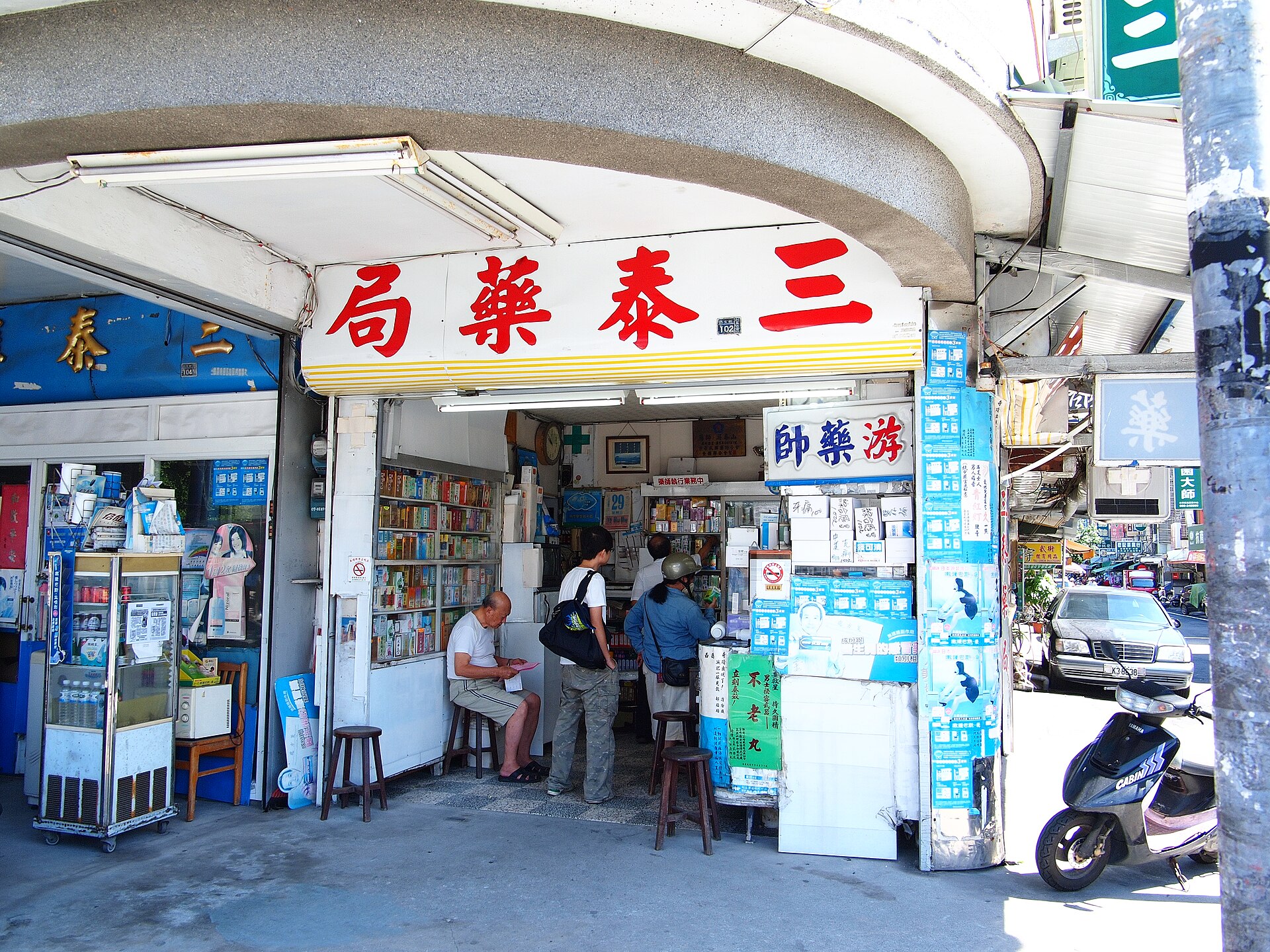
Pharmacies are marked 藥局 (yàojú) or 藥房, usually with a green cross. Chain pharmacies — Watsons, Cosmed, Poya — are everywhere and stock the everyday things, while independent neighbourhood pharmacies have a pharmacist who will often talk you through a minor problem directly, which is faster than a clinic visit for something small.
What you can buy over the counter: painkillers, antihistamines, cold and flu remedies, indigestion and diarrhoea medication, rehydration salts, plasters and dressings, antiseptic, insect bite cream, motion sickness tablets, contact lens solution, and the excellent local sunscreen.
What you cannot: antibiotics, most sleeping medication, and a range of things that are freely sold elsewhere. Taiwan regulates prescription medicine tightly and pharmacists will not bend it. If you need a prescription drug, you need a clinic.
Brand names differ. The active ingredient is what matters — paracetamol, ibuprofen, loratadine, omeprazole — and writing it down or showing the packet from home is far more effective than naming the brand you use. This is the main reason to bring your own regular medication in its original labelled packaging.

For the smallest problems, the convenience store is open when the pharmacy is not: plasters, basic painkillers, cold packs, sports drinks and rehydration. See our convenience store guide.
Hospitals and specialists
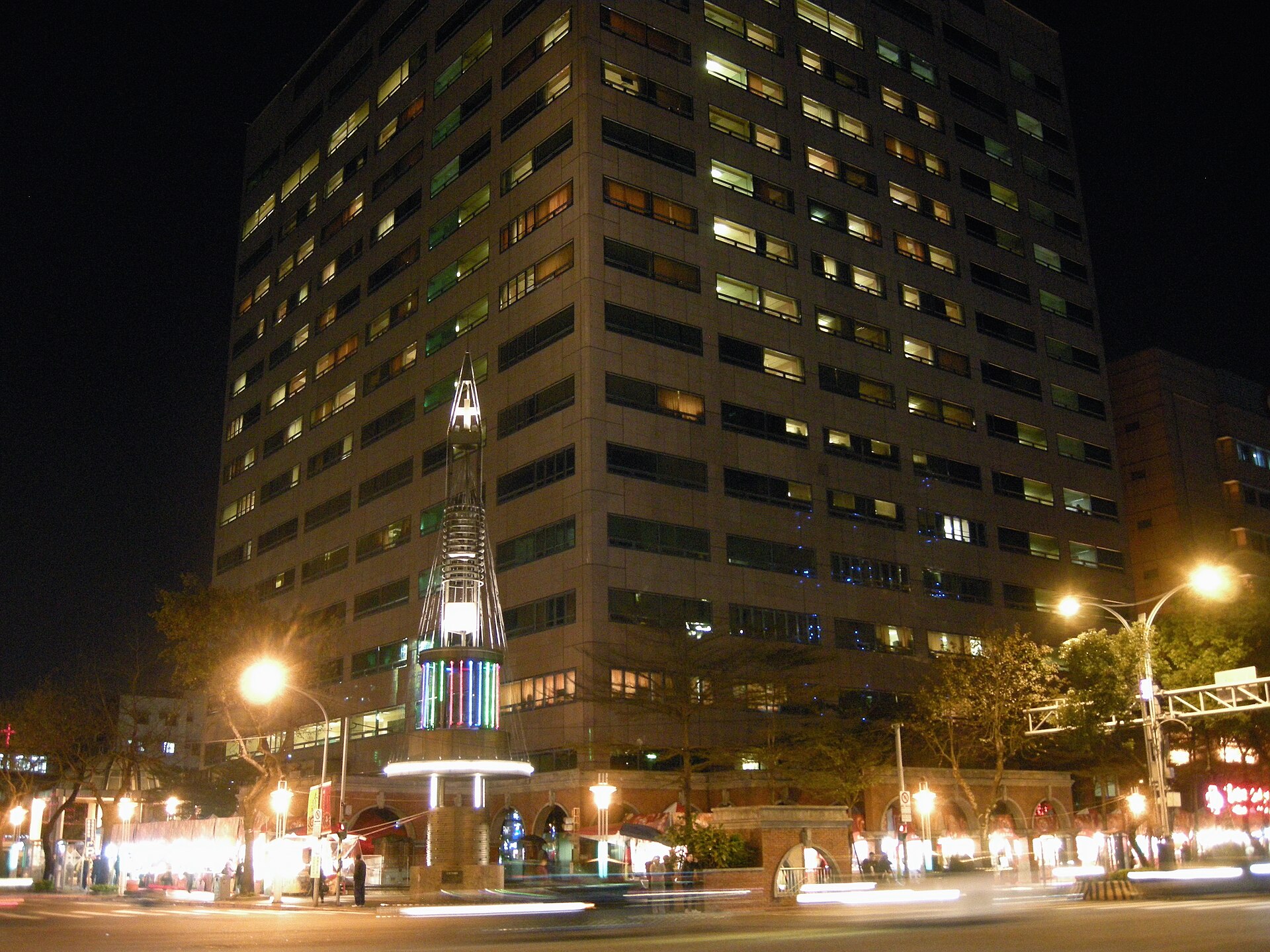
Taipei’s large hospitals are excellent, and several run dedicated international medical centres with English-speaking coordinators who will book appointments, walk you through registration and handle the paperwork. National Taiwan University Hospital, Taipei Veterans General, Mackay Memorial, Taipei Medical University Hospital and the Chang Gung group all have well-developed international services.
Use a hospital when you need a specialist, imaging, or something a clinic has referred you on for. Do not use one as a first stop for a minor complaint: outpatient departments are busy, the registration process is more involved, and it costs several times what a clinic would.
What it costs. A self-pay specialist outpatient visit typically runs NT$1,500–5,000, more with scans or through an international centre desk. Several large hospitals bill patients without National Health Insurance at around 1.3 times the standard self-pay rate — National Taiwan University Hospital states this openly — so the figure on the published price list is not quite the figure you will pay.
Even so, by British private, Australian or especially American standards these are small numbers, and this is why so many visitors are surprised by the bill in the other direction.
Emergencies
Save these before you travel:
- 119 — ambulance and fire
- 110 — police
- 0800-011-765 — the 24-hour tourist information hotline, staffed in English, Japanese and Mandarin, and a genuinely good first call if you are unsure what to do
- 1990 — the foreign-national help line for non-emergency problems
Ambulances are dispatched through 119 and there is no charge for the public service. Operators may not speak English; if you can, have a Mandarin speaker — hotel staff, a passer-by — make the call, or use the tourist hotline to be connected.
Hospital emergency departments treat first and bill afterwards. Bring your passport, and bring a card as well as cash. Waiting is triaged rather than first-come, so a genuinely serious problem is seen immediately and a sprained ankle at 23:00 may take a while.
Getting there is usually a taxi rather than an ambulance if the situation allows — see our Taipei taxi guide — and every driver knows where the nearest hospital is.

Insurance, and why you still need it
Because treatment here is affordable, a lot of visitors talk themselves out of travel insurance. That is the wrong calculation, and it is worth being clear about why.
The cost that ruins a trip is not the consultation. It is the medical repatriation flight, the cancelled onward leg, the extra week of accommodation while you recover, or the emergency dental work on a Sunday. A NT$1,000 clinic visit is affordable. An air ambulance is not, anywhere.
Three things to check on the policy specifically for Taiwan:
- Hiking cover. Trails start inside the city and Yangmingshan, Taroko and the high mountains are on many itineraries. Some policies exclude walking above a stated altitude.
- Scooter cover. If you intend to hire one, check explicitly — a great many policies exclude motorcycles outright, and many more require a licence category you may not hold.
- Direct billing or reimbursement. Most insurers will want you to pay and claim back. Keep every receipt and ask the clinic for an itemised one, which they will provide if asked at the time and not always afterwards.
Our Taipei travel essentials guide covers the rest of the pre-departure admin.
What to bring from home
- Your regular prescription medication, in its original labelled packaging, in enough quantity for the whole trip plus a few days’ margin. Carry it in hand luggage.
- A copy of the prescription, or a letter from your doctor, for anything unusual or controlled. This matters at the border as well as at a pharmacy.
- The generic names of anything you take, written down. Brand names are useless here.
- Any specialist item you cannot easily describe — a particular inhaler, a specific dressing, a rarely stocked contact lens prescription.
Almost everything else is available locally, usually better and cheaper than at home. There is no need for a comprehensive first-aid kit; see our packing list.
Staying well: the things that actually catch visitors out
Taipei is a healthy place to travel. There are no required vaccinations for entry from most countries, food hygiene is high, and the water is treated to a drinkable standard. The genuine risks are boringly practical.
Heat. July and August combine 33–35°C with humidity that stops sweat working, and heat exhaustion is the single most common problem for visitors. Drink more than you think, use the free filtered water dispensers in every MRT station, and reorganise the middle of the day indoors rather than pushing through.
Mosquitoes. Taiwan has occasional dengue activity, overwhelmingly in the south rather than Taipei, and no malaria. Repellent is sold everywhere and is worth using at dusk, particularly around water and in the hills. The Taiwan Centers for Disease Control publishes current advisories in English.
Traffic. Scooters are the largest actual danger to visitors — they turn across crossings, use pavements when the road is blocked, and do not always yield on a green man. Look twice.
Trails. Taipei’s hikes are stone steps rather than paths, which means slips rather than falls, and they are considerably more slippery wet. Sensible shoes solve most of it.
Hot springs. Beitou’s pools run hot, and long soaks combined with alcohol or dehydration are a bad combination. Our Beitou guide covers the etiquette and the practicalities.
Dentists, opticians and the other things that break
Not everything that goes wrong is an illness, and Taipei handles the rest unusually well.
Dentists. Taiwan is a minor dental tourism destination for a reason: the standard is high, the equipment is modern and the prices are a fraction of British, Australian or American ones. Emergency dental work — a lost filling, a cracked crown, an abscess — is treatable within a day at a walk-in dental clinic (牙醫診所), of which there are several in every district. Expect to pay cash, expect it to cost less than you feared, and keep the itemised receipt for your insurer.
Opticians. Glasses and contact lenses are cheap and fast here, and an optician will usually test your eyes free when you buy. If you have broken or lost your glasses, a replacement pair can often be ready the same day or the next morning for a fraction of what you would pay at home. Bring your prescription if you have it; if not, they will simply test you.
Physiotherapy and massage. If you have walked eighteen kilometres a day for a week and your legs have opinions about it, Taipei’s foot and body massage shops are inexpensive, everywhere and genuinely good. Licensed physiotherapy exists too, usually attached to a clinic or hospital, if the problem is an actual injury rather than fatigue.
Contraception and sexual health. Condoms are sold in every convenience store and pharmacy. Emergency contraception requires a doctor. Sexual health clinics exist and are discreet; a general clinic will refer you.
If you are travelling with children
Paediatric clinics (小兒科) are common, cheap and quick, and Taiwanese parents use them liberally for exactly the sort of minor complaints that worry a parent abroad. Walk-in works the same way as for adults.
Nappies, formula, baby food, rehydration solution and children’s medication are all widely available in pharmacies and larger supermarkets, so there is no need to carry a fortnight’s supply. What is worth bringing is any specific formula your child will actually accept, since brands differ, and a thermometer you trust.
Heat is the main practical risk with small children in summer — the humidity makes it harder for them to regulate temperature, and the shade in central Taipei is limited. Plan indoor middles of the day and carry more water than feels reasonable. Our Taipei with kids guide covers the rest.
Traditional Chinese medicine
TCM is fully integrated into Taiwan’s healthcare system rather than being an alternative to it: it is covered by National Health Insurance for residents, practitioners are licensed and regulated, and many hospitals have a TCM department alongside the western one.
Visitors can use it — acupuncture and tui na massage in particular are widely available and inexpensive — but two sensible cautions apply. Tell any TCM practitioner what medication you are already taking, because herbal preparations do interact with western drugs. And do not substitute it for treatment of something acute; use it for what it is good at rather than as a first response to an urgent problem.
What we would skip
Going to a big hospital for a small problem. A clinic is faster, cheaper and closer, and will refer you on if it needs to.
Skipping insurance because treatment is cheap. Treatment is cheap. Repatriation, cancellations and extra accommodation are not.
Trying to buy antibiotics over the counter. You cannot, and the attempt wastes an afternoon you could have spent at a clinic actually being seen.
Packing a full first-aid kit. Plasters, painkillers and antiseptic are in every convenience store in the country. Bring your prescriptions and nothing else.
Related Taipei guides
- Taipei Travel Essentials: the pre-trip checklist
- Is Taipei Safe for Tourists?
- What to Pack for Taiwan
- Taiwan’s Convenience Stores
- Mandarin Phrases for Travellers
- Taipei Taxis: fares, apps and etiquette
- The Beitou Hot Springs Guide
- Taipei Typhoon Season
- Taipei with Kids
- Taiwan Visa Requirements
Frequently Asked Questions
Can tourists see a doctor in Taiwan?
Yes, easily. Walk into a neighbourhood clinic with your passport, fill in a short form and wait — usually twenty to forty minutes. You pay the self-pay rate in cash, and medication is normally dispensed on site before you leave.
How much does it cost to see a doctor in Taipei without insurance?
A small clinic visit typically costs from a few hundred NT$ up to about NT$1,500 including basic medication. A hospital specialist outpatient appointment runs NT$1,500–5,000 or more, and several large hospitals bill non-NHI foreigners at around 1.3 times the standard self-pay rate.
Are tourists covered by Taiwan’s National Health Insurance?
No. NHI covers residents and certain longer-term visa holders. Visitors pay self-pay rates, which are still low by international standards — but that is an argument for keeping receipts for your travel insurer, not for going uninsured.
What is the emergency number in Taiwan?
119 for ambulance and fire, 110 for police. Also worth saving: 0800-011-765, the 24-hour tourist hotline staffed in English, and 1990, the foreign-national help line for non-emergencies.
Do doctors in Taipei speak English?
Many do, particularly younger doctors and anyone at a hospital’s international medical centre. Reception staff at small clinics often do not. Type your symptoms into a translation app before you go in and the visit becomes much easier.
Can I buy antibiotics over the counter in Taiwan?
No. Antibiotics and most other prescription medicines require a doctor, and pharmacists will not dispense them without one. Fortunately a clinic visit is cheap and quick, so this is an inconvenience rather than a problem.
What can I buy at a Taiwanese pharmacy without a prescription?
Painkillers, antihistamines, cold remedies, stomach medication, rehydration salts, dressings, antiseptic, bite cream, motion sickness tablets, contact lens solution and excellent local sunscreen. Ask by active ingredient rather than brand name.
Should I bring my own medication to Taiwan?
Yes — enough for the whole trip plus a few days, in the original labelled packaging, in hand luggage, with a copy of the prescription for anything unusual. Brand names differ here and some common Western over-the-counter drugs are prescription-only.
Do I need vaccinations for Taiwan?
No vaccinations are required for entry from most countries. Routine immunisations should be up to date, as anywhere. Check the Taiwan Centers for Disease Control and your own country’s travel health service before you fly, particularly if you are travelling on elsewhere in the region.
Is the food and water safe in Taipei?
Yes. Night market hygiene is inspected and generally high, turnover is fast, and food is cooked in front of you. Taipei’s tap water is treated to a drinkable standard, and every MRT station has free filtered dispensers.
Is there dengue fever in Taipei?
Dengue activity in Taiwan is overwhelmingly in the south rather than the capital, and there is no malaria. Use repellent at dusk, especially near water and in the hills, and check the CDC’s current advisories if you are travelling beyond Taipei.
What happens if I need an ambulance in Taiwan?
Call 119. The public ambulance service is dispatched free of charge. Operators may not speak English, so if possible have hotel staff or a passer-by make the call, or ring the tourist hotline to be connected.
Is travel insurance necessary for Taiwan?
Yes, despite the low treatment costs. The expense that hurts is repatriation, cancelled flights or extra accommodation while you recover. Check specifically that your policy covers hiking and, if relevant, riding a scooter — many exclude both.
The Bottom Line
For anything minor, go to a neighbourhood clinic marked 診所, take your passport, pay cash, and expect to be out within an hour having spent under NT$1,500 including the medication. For advice on something smaller, ask a pharmacist. For a specialist or a scan, use a hospital’s international medical centre. For an emergency, dial 119.
Buy travel insurance anyway, bring your own prescriptions in their labelled boxes, and know the generic names of what you take. Then stop worrying about it — Taipei is one of the easiest places in the world to be mildly ill in, and the most likely thing to go wrong is that you underestimated the August heat.
Photo Credits
A traditional Taiwanese neighbourhood pharmacy: A pharmacy at downtown Taitung City 20100911 by othree, CC BY 2.0, via Wikimedia Commons.
Mackay Memorial Hospital, Taipei: Mackay Memorial Hospital Taipei 20130128 night by contri, CC BY-SA 2.0, via Wikimedia Commons.