This article contains advertising. Our booking links are routed through a partner that adds commission tracking automatically, so if you book through one we earn a commission from the provider, at no extra cost to you. It never affects what we recommend. Affiliate disclosure
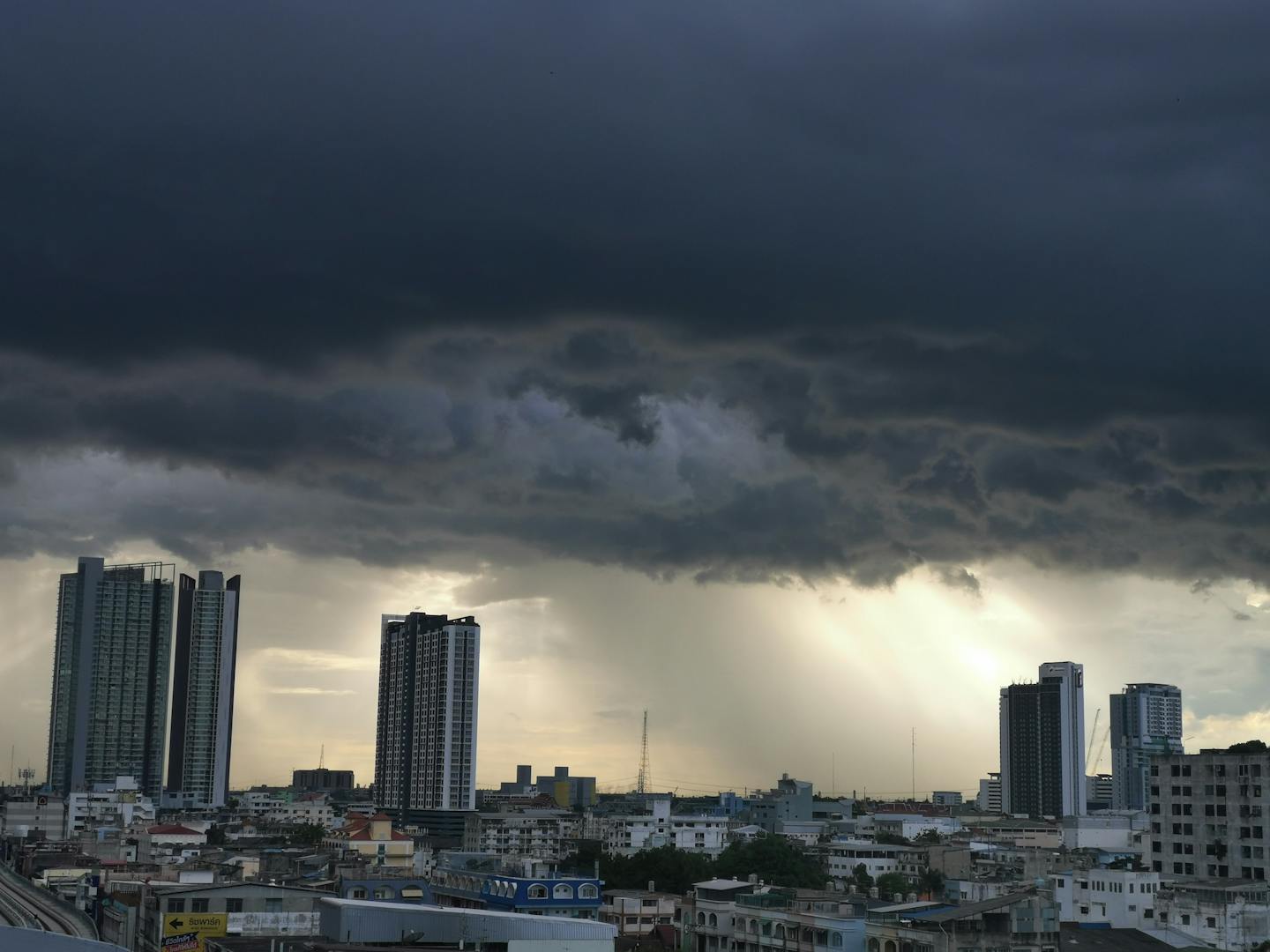
Taipei typhoon season is the single biggest weather variable for visitors planning a Taiwan trip between late spring and late autumn. In a typical year, three to five typhoons pass close enough to affect Taipei in some way – from heavy rain and gusty wind to full city shutdowns where MRT service halts and the government cancels work and school. If you are flying into Taipei in August or September, the typhoon season is genuinely worth planning around. If you are visiting in May or November, it is a small footnote. This 2026 guide explains when Taipei typhoon season runs, what to expect, how to track storms, what to do if your trip lands during one, and which months to book for to minimize the risk.
When Is Taipei Typhoon Season?
Taipei typhoon season officially runs from May 1 to November 30, but in practice the dangerous window is much narrower. Storm activity ramps up in July, peaks in August and September, tapers through October, and is essentially over by mid-November. May and June see the occasional early-season storm but produce more “plum rain” (continuous monsoon-style rain) than full typhoons. December through April is reliably typhoon-free.
Looking at 10-year averages from Taiwan’s Central Weather Administration, here is roughly how many typhoons affect Taiwan each month:
May: 0-1, typically light rain effects only.
June: 1, usually moderate.
July: 2-3, storms growing in intensity.
August: 3-4, peak season – this is the highest-risk month.
September: 2-3, still peak, often the strongest storms of the year.
October: 1-2, weaker but still possible.
November: 0-1, season-ending storms, usually east coast only.
The most powerful storms typically hit between mid-August and the end of September. Taiwan’s strongest historical typhoons (Morakot 2009, Soudelor 2015, Megi 2016) all hit during this 6-week window.
What Actually Happens in Taipei During a Typhoon
This matters more than the headlines. A “typhoon hit” can mean anything from “we got 20mm of rain and breezy wind” to “the city was shut down for 36 hours and the high-speed rail stopped.” Taipei specifically is somewhat sheltered: the city sits in a basin surrounded by mountains, which weakens incoming storms compared to the east coast (Yilan, Hualien) and the south (Kaohsiung). A storm that devastates the east coast often arrives in Taipei as heavy rain and wind but not catastrophic damage.
That said, even moderate Taipei typhoons disrupt travel in predictable ways:
Flights: Taoyuan International Airport closes when sustained winds exceed about 50 km/h, which happens with most Category 1+ typhoons. Airlines proactively cancel flights 6-24 hours in advance. Songshan Domestic Airport closes faster. Expect mass cancellations during direct hits.
High-speed rail (HSR): Service reduces or suspends when winds exceed safety thresholds. Tunnels and elevated sections are most vulnerable. Refunds are automatic.
Conventional rail (TRA): Eastern line (Yilan, Hualien) often suspends first. Western trunk line usually keeps running but at reduced frequency.
MRT (Taipei subway): The MRT itself is largely typhoon-proof – it is underground or elevated with weather protection. Service rarely halts entirely, but station entrances can flood briefly in extreme storms. Buses are more affected.
Taxis and Uber: Operate throughout most typhoons but with longer wait times and surge pricing during peak storm hours.
Restaurants, shops, attractions: The Taipei City Government declares a “typhoon day” (停班停課) for the strongest storms. When declared, all government offices close, public schools close, most private businesses close, and the city effectively shuts down for 12-36 hours. Convenience stores (7-Eleven, FamilyMart) usually stay open. Some night markets and outdoor attractions close even on borderline storm days.
Power and internet: Taipei’s grid is robust; brief outages are possible but city-wide blackouts are rare. Hotel WiFi typically stays up.
How to Track Typhoons Heading for Taipei
The good news: modern forecasting gives you 3-7 days of warning for most typhoons. The Central Weather Administration (中央氣象署) is the official Taiwan source and publishes English-language warnings and tracking maps. Useful tools:
cwa.gov.tw/eng: Central Weather Administration English site. Official typhoon warnings, real-time tracking, satellite imagery, and forecast cones.
Joint Typhoon Warning Center (JTWC): US Navy site that tracks Pacific typhoons. More technical, often releases forecast updates slightly ahead of CWA.
Windy.com: Excellent visualization of incoming storms with multiple model overlays. Free.
Twitter (X) accounts: @CWA_eng (official), @typhoon_news, and several private Taiwan weather enthusiasts post forecast updates faster than the official site.
Taipei City Government Twitter and website: Official announcements of “typhoon day” closures usually come the night before by 9pm or the morning of by 5am.
A typhoon’s path is forecast with a “cone of uncertainty” that narrows as the storm approaches. Once a typhoon is within 48 hours, the forecast cone is generally accurate within 100 km. If the cone clearly includes Taipei, plan for impacts; if Taipei sits on the edge of the cone, expect heavy rain and wind but not full shutdown.
Should You Cancel Your Trip?
Almost never, unless a major typhoon is forecast to hit during your exact travel days. Even during Taipei typhoon season’s peak in August and September, the city has perfectly pleasant weather most days. A typical typhoon affects 24-48 hours; you typically lose one to two days of your trip, not the whole trip. The rest of your time you will have warm temperatures, decent weather, and far fewer tourists than in non-typhoon months.
The case for cancellation rises sharply when:
A major typhoon (Category 3+) is forecast to make landfall within 48 hours of your arrival or during your stay.
You have inflexible travel plans (cruise, group tour, one-day visit) that cannot tolerate disruption.
You are flying into Taipei from somewhere with limited rebooking options.
For most independent travelers with normal hotel and flight bookings, the right call is to monitor forecasts and rebook only if a confirmed major storm threatens your trip. Travel insurance with weather coverage handles the edge cases.
What to Do If You Are Caught in a Typhoon
If a typhoon hits during your trip, here is the practical playbook:
Stock up the day before. Buy snacks, water, and a phone charger. Convenience stores stay open but get crowded.
Stay in your hotel during the peak hours. Most Taipei hotels are well-built and weather-safe. Hotel WiFi, room service or delivered food, and any onsite gym/spa become your friends. Avoid windows in extreme storms.
If a typhoon day is declared, treat it as a free indoor day. Most museums, malls, and indoor attractions close. Use the time for catching up on sleep, working through movies, or planning the rest of your trip.
Watch the MRT, not buses or taxis. If you must move during a typhoon day, the MRT is the most reliable transport. Walking outside is dangerous during peak wind hours due to flying objects (signs, debris).
Use food delivery. Foodpanda and Uber Eats continue operating in most typhoons. Tip generously – couriers are working in hard conditions.
If your flight is cancelled, rebook online first. Calling the airline produces 2-3 hour hold times. Most airlines push out 24-72 hour free rebooking. Hotels in Taipei honor extended stays without overnight surcharge if you are stranded by a typhoon.
Outdoor attractions reopen quickly. Yangmingshan, Beitou, Tamsui, and the surrounding hiking areas may have damage and trail closures for a few days after a major storm. Check before going.
Insurance and Booking Strategy
If you are booking during Taipei typhoon season, a few simple precautions:
Buy travel insurance with weather coverage. Specifically look for “trip interruption due to severe weather” and ideally “trip cancellation.” Standard policies (World Nomads, Allianz, Travel Guard) cover typhoons in Taiwan. Annual policies are cheaper if you travel multiple times a year.
Book flexible hotel rates. Pay 10-15% more for free cancellation. Booking.com and Agoda offer it on most properties; Airbnb is usually less flexible.
Avoid non-refundable tour bookings. If you want day trips to Jiufen, Yehliu, or Sun Moon Lake, book closer to the date or use providers with weather refund policies (Klook, KKDay both offer this on most tours).
Build buffer days at the start and end. If you have a tight onward connection, arrive a day early. If you have an important meeting after Taiwan, leave Taiwan a day early. A 48-hour buffer absorbs almost all typhoon disruption.
Keep some cash and snacks. Mostly out of an abundance of caution – Taipei is well-supplied during typhoons – but having NT$3,000-5,000 cash and a few protein bars in your hotel room costs nothing.
Best Months to Visit Around Taipei Typhoon Season
If you want to dodge Taipei typhoon season entirely, here is the calendar in order of risk:
Lowest risk: December-March. Reliably typhoon-free. Cooler weather (12-22 °C), occasional cold-front rain but no tropical storms.
Low risk: April, May, late November. Spring and shoulder-season weather. Possible plum-rain monsoon in early May.
Moderate risk: June, late October, mid-November. Storms possible but usually weak or off-track.
Higher risk: July. Hot and storm-active; not the worst month but trending bad.
Highest risk: August, September. Peak season. Plan for at least one disruption if visiting more than a week.
Conversely, the post-typhoon-day weather is often spectacular – clear skies, low humidity, dramatic visibility. If a typhoon passes during your trip, the days immediately after can be the best of your visit.
Historical Major Typhoons in Taipei
Some context on what severe Taipei typhoons can look like, drawn from the most damaging storms of the past 20 years:
Typhoon Soudelor (August 2015): Direct hit on Taipei. Sustained winds 175 km/h. Power outages for hundreds of thousands of households. MRT closed for 24 hours. The Yangmingshan area saw extreme damage to trees and trails.
Typhoon Megi (September 2016): Caused regional flooding and citywide closures. Strongest winds since 2008.
Typhoon Morakot (August 2009): Catastrophic damage to southern Taiwan but lighter impact on Taipei. Reference storm for how unevenly typhoons distribute their effect across Taiwan.
Typhoon Khanun (August 2023): Recent reference storm. Tracked west of Taiwan; Taipei saw 24 hours of heavy rain and wind but no major damage.
The trend over the past decade has been more frequent but slightly weaker storms reaching Taipei. Climate-related sea-temperature increases mean storms have more energy at formation, but most of that energy still dissipates over the Central Mountain Range before hitting the city.

Specific Activities and Typhoon Season
If you are visiting during Taipei typhoon season, some activities are more typhoon-resistant than others:
Reliable in typhoon weather: Museums (National Palace Museum, MOCA, Songshan Cultural Park indoor galleries), mall food courts, department store shopping, hot pot restaurants, gay nightlife in Ximending Red House (covered courtyard), Beitou hot spring hotels (most have indoor pools), and the basement food halls.
Cancel if a typhoon is forecast: Yangmingshan hikes, Maokong Gondola (closes in high wind), Yehliu Geopark (very exposed coast), Pingxi lantern release, day trips to Jiufen or Shifen, any beach trip to Fulong or the north coast.
Worth a coin flip: Taipei 101 Observatory (closes only in extreme winds, but views are non-existent in storm cloud), Ximending shopping (shops may close), Shilin and Raohe night markets (close in heavy rain).
Related Taipei guides
- Taipei Weather & Best Time to Visit: Month-by-Month Guide
- Taipei in Spring: Weather, What to Wear & Events
- Taipei in Summer: Heat, Typhoons & Survival Tips
- Taipei in Autumn: The Best Weather of the Year
- Taipei in Winter: Is It Cold? What to Pack
- Cherry Blossoms in Taipei: Where & When to See Them
- Taipei in March: Cherry Blossoms & Spring
- Taipei in May: Hydrangeas, Plum Rain & What to Expect
Frequently Asked Questions
When is Taipei typhoon season?
Officially May 1 to November 30, with peak risk from mid-July through mid-October. August and September are the highest-risk months. December through April is reliably typhoon-free.
How many typhoons hit Taipei per year?
On average 3 to 5 typhoons affect Taiwan each year, of which 1 to 3 produce significant impact on Taipei specifically. Of those, typically 1 results in a full “typhoon day” city shutdown.
Is it safe to travel to Taipei during typhoon season?
Yes, with reasonable precautions. Taipei is well-prepared for storms, the MRT and most infrastructure stay operational, and modern forecasting gives 3-7 days of warning. Most visitors during typhoon season experience no major disruption. Buy travel insurance with weather coverage and build flexibility into your itinerary.
Should I cancel my Taipei trip if a typhoon is forecast?
Usually no. Most typhoons affect Taipei for 24-48 hours and the rest of your trip will be unaffected. Cancel only if a major typhoon (Category 3+) is forecast to hit during your exact arrival or departure days, or if your itinerary cannot tolerate any disruption.
How can I track typhoons heading for Taipei?
Use the Central Weather Administration (cwa.gov.tw/eng) for official Taiwan warnings, plus Windy.com for visualization. The Joint Typhoon Warning Center (JTWC) provides US Navy forecasts. Taipei City Government announces “typhoon day” closures the night before by 9pm or morning of by 5am.
What happens to flights during Taipei typhoons?
Taoyuan International Airport closes when sustained winds exceed approximately 50 km/h, which happens with most Category 1+ typhoons. Airlines proactively cancel flights 6-24 hours ahead and offer free rebooking. Major typhoons can ground all flights for 12-36 hours.
Does the MRT keep running during typhoons?
Usually yes. The Taipei MRT is largely underground or weather-protected and rarely fully suspends. Service may reduce in extreme storms but the network remains the most reliable transport during typhoon weather. Buses are more frequently disrupted.
When is the worst month for typhoons in Taipei?
August has the highest typhoon count for Taiwan; September often produces the strongest storms. The 6-week window from mid-August to end of September is the peak Taipei typhoon season risk.
Are hotels open during typhoons?
Yes. Hotels remain open and operational throughout typhoons, including check-in and check-out. Many will honor extended stays at the same rate if you are stranded by a flight cancellation. Hotel restaurants may reduce service but room service and food delivery generally continue.
Can I get a refund if my Taipei trip is cancelled due to a typhoon?
It depends on your bookings. Travel insurance with weather coverage typically covers flight cancellations, hotel night losses, and trip interruption. Direct refunds from airlines are limited to involuntary cancellations on their side; voluntary cancellations by you usually only get the standard cancellation policy of your fare class.
The Bottom Line
Taipei typhoon season is a real consideration for visitors traveling between July and October, especially in August and September. But it is not a reason to avoid Taiwan in those months – storms are forecastable, the city is well-prepared, and most disruption can be planned around. Build flexibility into your itinerary, buy travel insurance with weather coverage, monitor forecasts in the week before you travel, and treat any storm day as an unexpected indoor adventure rather than a ruined trip. Outside the peak August-September window, the typhoon risk drops sharply, and from December to April it disappears entirely. Plan accordingly and enjoy the rest of what is one of Asia’s most rewarding destinations.