
This article contains advertising. Our booking links are routed through a partner that adds commission tracking automatically, so if you book through one we earn a commission from the provider, at no extra cost to you. It never affects what we recommend. Affiliate disclosure
The two things almost every visitor gets wrong are the same two things every year: they bring a waterproof jacket, and they bring one pair of shoes. Both decisions are made at home in a dry, temperate climate by someone who has not yet stood on a Taipei pavement in August. Working out what to pack for taiwan is really a question about humidity — roughly 75 to 80 per cent, most of the year — and almost every sensible packing choice follows from that one number.
This is a season-by-season list rather than a generic one, because a January trip and a July trip need genuinely different bags. It also covers what not to bring, what to buy on arrival instead, and the customs rule that will cost you real money if you ignore it. Climate figures are long-run averages; check the Central Weather Administration forecast in the fortnight before you fly.
Taipei’s climate, in one table
| Season | Typical temperatures | What it feels like | The key item |
|---|---|---|---|
| Winter (Dec–Feb) | 13–20°C | Damp, grey, wind off the sea; feels colder than the number | A warm mid-layer |
| Spring (Mar–Apr) | 18–26°C | Pleasant, unsettled, increasingly humid | Layers and an umbrella |
| Plum rains (May–Jun) | 24–31°C | Warm, sticky, persistent grey drizzle | Quick-dry everything |
| Summer (Jul–Aug) | 26–35°C | Genuinely hot, very humid, aggressive indoor air conditioning | A light indoor layer |
| Typhoon tail (Sep) | 25–32°C | Still hot, occasional dramatic weather | Flexibility |
| Autumn (Oct–Nov) | 20–28°C | The best of the year: warm, drier, comfortable | Very little |
Two things are true all year and shape everything below. Humidity rarely drops below 70%, which means cotton stops drying and sweat stops evaporating. And indoor air conditioning is set considerably colder than most visitors expect, so the temperature you dress for outside is not the temperature you will sit in.
The six things that actually matter
If you read nothing else, read this. These six choices account for most of the difference between a comfortable trip and a soggy one.
1. A folding umbrella, not a rain jacket
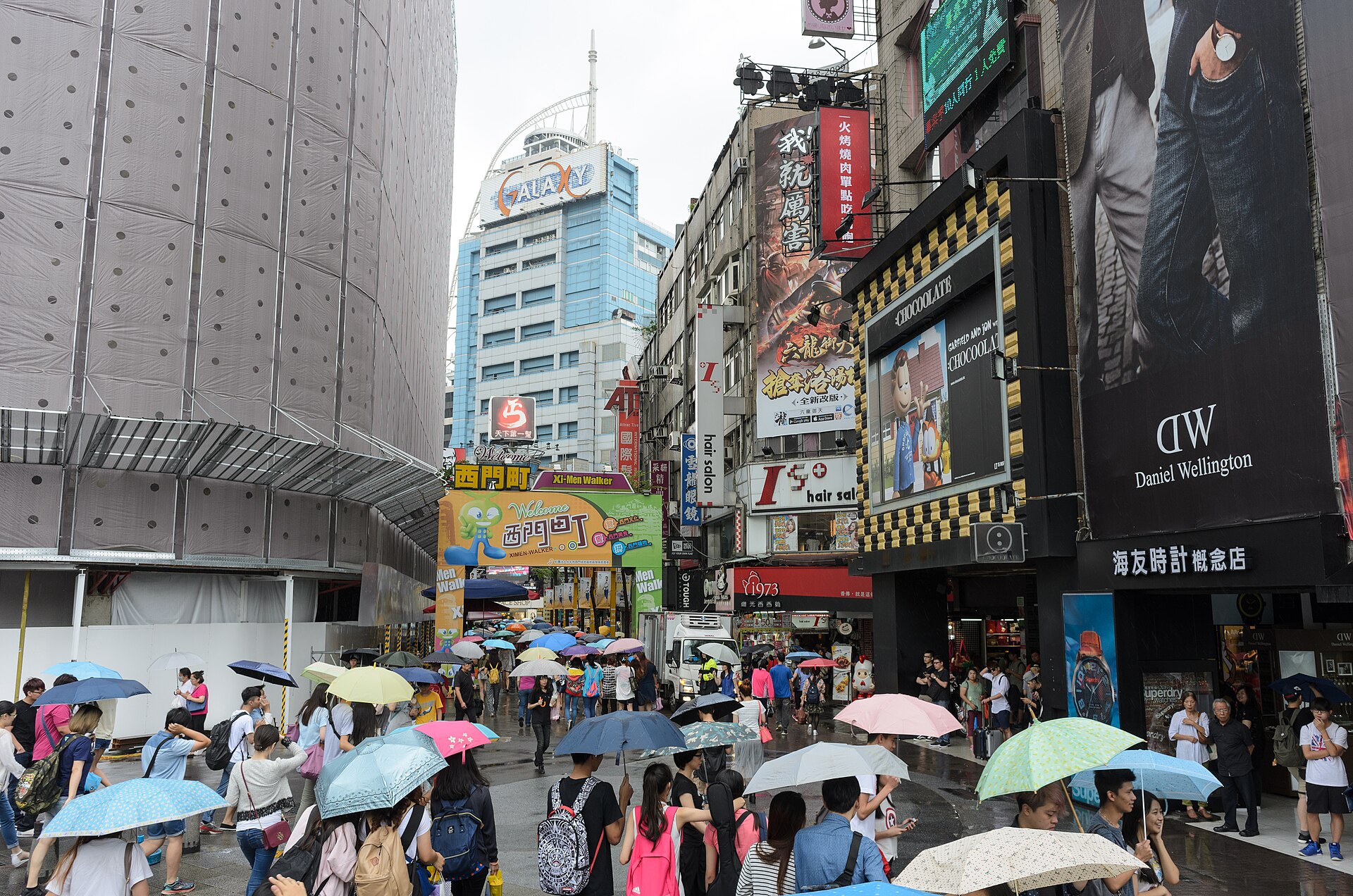
A waterproof shell in 80% humidity does not keep you dry — it keeps the sweat in. Ten minutes into a Taipei shower in a good jacket and you are wetter inside than out. Locals carry a compact folding umbrella year-round, for sun as much as rain, and it is the single most useful object you can put in a day bag here.
You do not even need to bring one. Every convenience store sells them for NT$150–300, and buying one on your first afternoon is a rite of passage. Bring one if you have a good compact model; do not buy one specially.
2. Two pairs of shoes
You will walk far more than you plan to — twelve to eighteen kilometres a day is normal on a first trip, between neighbourhoods, night markets, temples and the MRT. Pavements are uneven, temple courtyards are stone, and there are proper hiking trails inside the city limits.
The reason for two pairs is not comfort, it is drying time. A pair of shoes soaked in a Taipei downpour will still be wet the next morning, and the morning after that. Bring a second pair, ideally something that dries fast, and rotate them.
3. Quick-dry fabrics over cotton
This is the change that most improves a summer trip. Cotton t-shirts absorb sweat and then stop drying, which means you need one per day plus spares. Merino wool or synthetic technical fabric dries overnight in an air-conditioned hotel room, does not hold smell, and lets you travel for a week on three shirts. Linen is the natural-fibre answer if you dislike technical clothing.
4. A light layer for indoors
Restaurants, department stores, cinemas, long-distance trains and the MRT are cold. A cardigan, overshirt or light long-sleeve is genuinely useful in August, and visitors consistently underestimate this. It also covers your shoulders for temple visits, which solves two problems with one item.
5. Sun protection
The UV index in Taipei is high even on overcast days, and shade is scarce in Xinyi, on the north coast and on the ridge trails. Sunscreen, a hat and sunglasses. Taiwan makes excellent, cheap sunscreen, so this is a good candidate for buying on arrival rather than carrying.
6. Your own medication, in its original packaging
Pharmacies here are excellent and pharmacists often speak some English, but brand names differ and some common Western over-the-counter drugs are prescription-only or unavailable. Bring what you actually rely on, keep it in the labelled box, and carry a copy of the prescription for anything unusual.
Season by season
Winter: December to February
Taipei’s winter is the season people pack worst for, because 15°C sounds mild and does not feel it. The combination of high humidity, persistent drizzle and a lack of central heating in most buildings makes it feel several degrees colder than the thermometer, and buildings do not warm up the way they do in Europe or North America.
Pack a warm mid-layer — a fleece or light down jacket — plus a waterproof outer shell you can put over it, long trousers, closed shoes, and one warm accessory. You will not need a heavy winter coat, gloves or a scarf unless you are going up Yangmingshan, where it is several degrees colder and occasionally sees snow on the peaks.
The compensation is that this is hot spring season, and Beitou in January is one of the great pleasures of the city. Bring a swimming costume — many public hot spring facilities require one — and read our Beitou hot springs guide for which ones do. Our Taipei in winter guide covers the season properly.

Spring: March to April
The most variable season and the one that most rewards layers. A March day can start at 16°C and reach 26°C, or it can rain sideways for eight hours. Pack for both: light layers, a mid-layer you can carry, closed shoes and the umbrella.
This is also cherry blossom season on Yangmingshan and at Wuji Tianyuan Temple, which means an early-morning trip up the mountain where it is meaningfully colder than the city. Bring something warm for that specific outing even if you need nothing warm in town.
The plum rains: May and June
The meiyu is not dramatic tropical downpour. It is persistent, low-grade grey drizzle that can last days, combined with warmth and very high humidity — the least pleasant combination on this list to have packed cotton for.
Quick-dry fabrics become close to mandatory. Bring a dry bag or a waterproof sleeve for electronics, sandals or shoes you accept will get wet, and plan indoor alternatives. Our rainy season guide and rainy day activities cover the contingency planning.
Summer: July and August
July is marginally the hottest month on the long-run normals, not August, whatever your instincts say. Both bring daytime highs of 33–35°C with humidity that makes it feel considerably worse, and both bring sudden afternoon thunderstorms.
Pack the least you own: loose, light, quick-dry clothing, sandals plus one closed pair, a hat, high-factor sunscreen, a refillable water bottle and that light indoor layer. Leave anything black, anything tight and anything made of denim. A change of shirt in your day bag is not excessive.

Typhoon season overlaps from July into October. It rarely affects a given trip, but if it does, you want flexible bookings rather than special equipment. See our typhoon season guide.
Autumn: October and November
The easiest packing of the year and the best time to visit. Warm days, cooler evenings, lower humidity, less rain. A t-shirt and a light layer covers almost everything, with long trousers for evenings in November. This is the season where you can pack normally and be right.
Our Taipei in autumn and best time to visit guides make the case for coming now rather than any other month.
Packing for the hills
Taipei’s proximity to genuine mountains catches people out. Yangmingshan sits a forty-minute bus ride from the city centre and runs consistently five to eight degrees cooler, wetter and windier, with fog that arrives without warning.
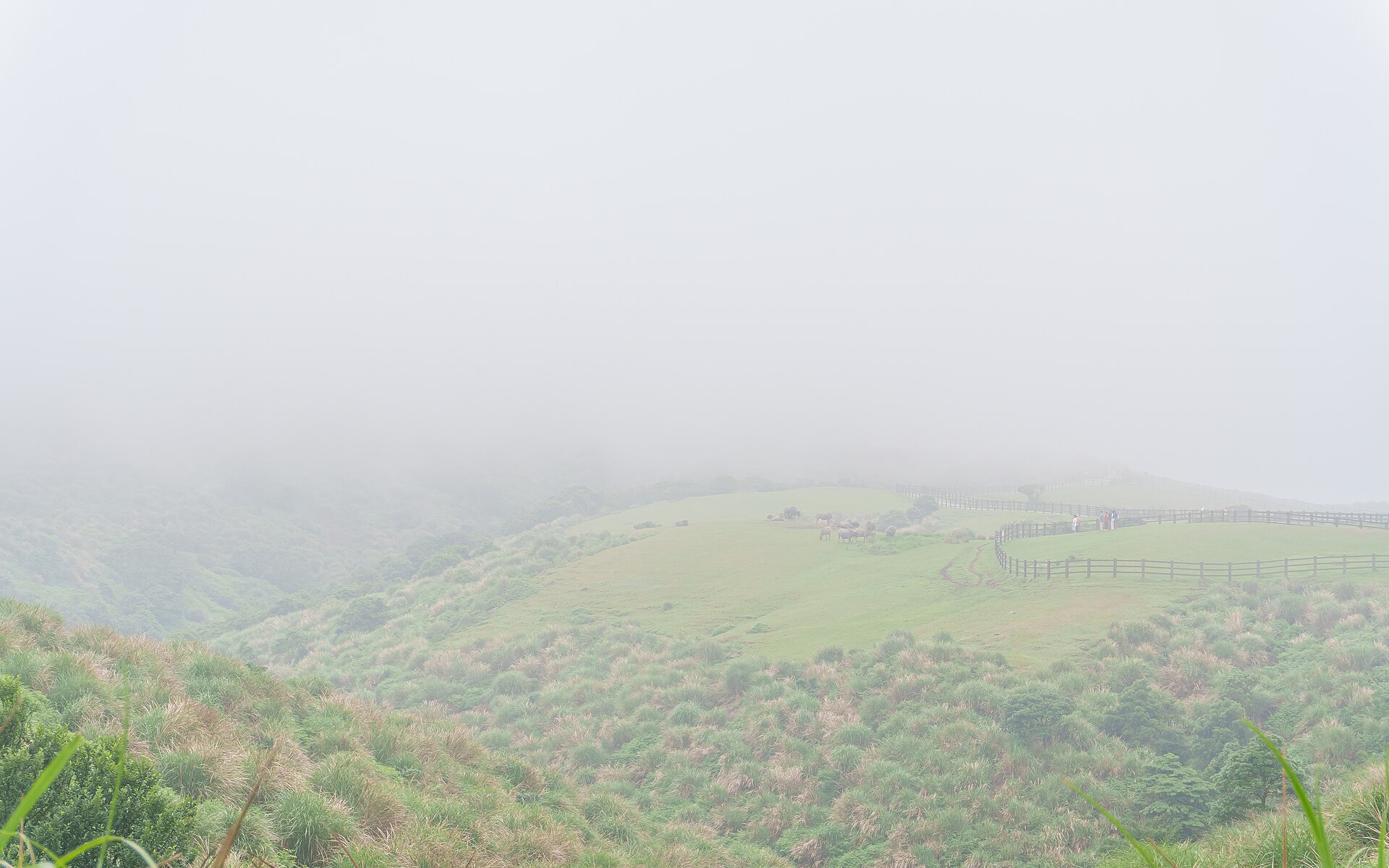
If any hiking is on your list — Yangmingshan, the Elephant Mountain and Four Beasts trails, the waterfall walks around Pingxi — add proper shoes with grip, a light windproof layer, and more water than you think. Trails here are frequently stone steps rather than paths, which is harder on the knees and considerably more slippery when wet. Elephant Mountain in particular is a staircase, not a stroll, and people attempt it in flip-flops daily.
Electronics and the 110-volt problem
Taiwan runs on 110 volts at 60 hertz with flat-pin Type A and Type B sockets — the American and Japanese standard. This is the detail that quietly ruins a packing list assembled in Europe, the UK or Australia.
Anything that charges a battery is almost certainly fine. Phone chargers, laptop bricks, camera chargers, electric toothbrushes and modern shavers are overwhelmingly rated 100–240 V, which is printed in small type on the plug or the brick. Check it before you travel; if it says 100–240 V, all you need is a physical plug adapter.
Anything that generates heat usually is not. Hair dryers, straighteners, curling tongs and travel kettles sold in 230 V countries are frequently single-voltage. Plugging one into 110 V will not destroy it, but it will run at roughly a quarter of the power, which means a hair dryer that takes twenty minutes to achieve nothing. Leave them; every hotel in Taipei supplies a dryer.
Practical advice: bring one plug adapter and one multi-port USB charger rather than four adapters. If you forget, adapters cost NT$100–200 in any convenience store or electronics shop, and Guanghua Digital Plaza will sell you a better one for the same money.
Two more electronics notes. A power bank is close to essential given how much you will use maps and translation, and airlines require it in cabin baggage. And if you are bringing a camera, bring more memory than you think — Taipei is a photogenic city and there is nowhere convenient to offload files mid-trip.
What not to pack
Taipei has a convenience store roughly every hundred metres, a chemist on every high street and some of the best-value shopping in Asia. Almost anything you forget is available within ten minutes, usually cheaper and often better. Leave these at home:
- Toiletries beyond the flight minimum. Taiwanese skincare, shampoo and sunscreen are excellent and cheap. Buy on arrival.
- Towels. Every hotel and almost every hostel provides them.
- Mosquito repellent. Sold everywhere, and the local formulations are better suited to the local mosquitoes.
- Hair dryers, straighteners, travel kettles. Taiwan runs on 110 V; most 230 V appliances will either not work or work uselessly slowly. Every hotel has a dryer.
- A comprehensive first-aid kit. Plasters, painkillers and antiseptic are in every convenience store. Bring only your own prescriptions.
- Formal clothes. Taipei is comfortable and unshowy. Unless you have booked somewhere with a stated dress code, smart-casual is the ceiling.
- Water purification anything. Taipei’s tap water is treated to a drinkable standard and every MRT station has a free filtered dispenser.
The customs rule people ignore
Bringing meat products into Taiwan is prohibited and enforced with genuinely serious fines, as part of African swine fever controls. This is not a formality and it does not only apply to raw meat — packaged, cooked, vacuum-sealed and processed products all count, including the sandwich you did not eat on the plane and the jerky at the bottom of your bag.
Empty your bag before you land. Detector dogs work the arrivals hall and the penalties start high.
Beyond that, standard duty-free limits apply to alcohol and tobacco, and there are declaration thresholds for cash and gold. Nothing else in a normal traveller’s luggage is contentious.
The day bag
What you carry around Taipei matters more than what is in the suitcase, because you will be out for twelve hours at a stretch.
- Folding umbrella, always.
- Refillable water bottle — free filtered dispensers are in every MRT station and public building.
- Power bank. You will use maps and translation constantly.
- Cash in small notes for night markets and temples, plus your EasyCard.
- Tissues or a small pack of wipes. Some public toilets do not supply paper, and street food is a hands-on activity.
- A light layer, for the aggressive indoor air conditioning.
- A plastic bag or two for wet things, because there is no other way to carry a soaked umbrella onto the MRT.
One point of etiquette that affects packing: public bins are rare in Taipei by design, so you will carry your rubbish for a while. A small bag for that is not excessive.
Packing for specific trips
Three variations that change the list meaningfully.
If you are going beyond Taipei
A trip that includes Taroko, Alishan, Sun Moon Lake or the high mountains needs warmer clothing than a Taipei-only trip in the same month, and it needs it in a bag you can carry. Alishan sits above 2,000 metres and is cold at dawn year-round; the difference between a July morning at Alishan and a July morning in Taipei is close to fifteen degrees. Add a proper insulating layer and long trousers regardless of what the Taipei forecast says.
If you are travelling with children
Children sweat through clothing far faster here than at home, so pack more changes than instinct suggests — and then use the launderette rather than packing even more. Nappies, formula, baby food and every brand of wipe are widely available in Taipei, so carry a day or two of supplies rather than a fortnight’s. A lightweight, foldable pushchair beats a robust one: station lifts exist but are not always where you want them, and older pavements are narrow.
If you are here for the food
This sounds facetious and is not. Bring trousers with give in them, wet wipes, and something to carry leftovers and bakery purchases in. A collapsible tote is more useful in Taipei than in most cities because plastic bags carry a small charge and because you will buy pineapple cake and tea you did not plan to buy. See our Taipei food guide for what to make room for.
Luggage strategy
Pack lighter than you think. Taipei’s MRT is superb but many stations have long walks and stairs at some exits, older hotels and guesthouses have narrow lifts or none, and a lot of the best accommodation is up a flight in a converted building. A cabin-sized bag is enough for two weeks here if you use quick-dry fabrics and the laundry.
Laundry is easy and cheap: self-service launderettes are everywhere, hotels offer a service, and hostels almost always have machines. Washing twice on a two-week trip halves what you carry.
Leave room in the bag. Taipei is a good shopping city — tea, pineapple cake, stationery, skincare, books — and most visitors go home heavier than they arrived. Our souvenirs guide and shopping guide cover what is worth the weight.
The 110-volt question deserves a closer look than a packing list can give it, particularly if you are travelling with anything that heats rather than charges. Our guide to Taiwan power plugs, voltage and adapters covers which devices work, why an adapter is not a converter, and where in Taipei to buy one at 3am.
Two things not to pack, while we are here: water purification tablets and a heavy-duty filter bottle. Both are good kit and both solve a problem Taipei does not have — the city’s water is tested to 141 parameters and free filtered refill stations are everywhere. A plain reusable bottle is all you need, and our guide to Taipei’s tap water explains where to fill it and why the locals still use a flask.
Related Taipei guides
- Taipei Travel Essentials: the pre-trip checklist
- The Best Time to Visit Taipei
- Taipei’s Rainy Season Explained
- Taipei Typhoon Season: what to expect
- Taipei in Winter
- Taipei in Summer
- Yangmingshan National Park
- The Beitou Hot Springs Guide
- Rainy Day Activities in Taipei
- The Best Taipei Souvenirs
Frequently Asked Questions
What should I pack for Taiwan in summer?
Loose, light, quick-dry clothing, sandals plus one closed pair, a hat, high-factor sunscreen, a refillable water bottle, a folding umbrella and — counter-intuitively — a light long-sleeve layer for indoor air conditioning. Leave denim, black clothing and anything tight-fitting at home.
Do I need a raincoat in Taipei?
No. In this humidity a waterproof jacket traps sweat and leaves you wetter than the rain would. Carry a compact folding umbrella instead, as every local does. Winter is the one exception, when a shell over a warm layer makes sense.
How cold does Taipei get in winter?
Daytime highs of 16–20°C and lows around 13°C, which sounds mild and feels colder because of the damp and the absence of central heating. Pack a warm mid-layer and a waterproof shell rather than a heavy coat. Yangmingshan is several degrees colder again.
What shoes should I bring to Taipei?
Two pairs you can walk fifteen kilometres in, at least one of which dries quickly. Soaked shoes do not dry overnight in Taipei’s humidity, which is the whole reason for the second pair. Add grippy soles if you plan to hike, since trails here are often wet stone steps.
Can I buy clothes and toiletries easily in Taipei?
Extremely easily and cheaply. Convenience stores, chemists and clothing chains are everywhere, and Taiwanese skincare and sunscreen are genuinely good. Pack light and buy what you forget — it is almost always the better trade.
What is the plum rain season and how do I pack for it?
The meiyu runs through May and June: persistent grey drizzle, warmth and very high humidity. Quick-dry fabrics, a waterproof sleeve for electronics, footwear you accept will get wet, and a list of indoor plans. It is the season where cotton fails you worst.
Do I need to dress modestly for temples in Taipei?
Cover your shoulders and avoid very short shorts, and you will be fine. Taiwanese temples are relaxed compared with much of Asia, but the light long-sleeve layer you are already carrying for air conditioning solves it.
Should I pack a swimming costume for Taipei?
Yes if hot springs are on your list — many public bathing facilities in Beitou and Wulai require one, and the ones that do not are single-sex nude pools. Also useful for hotel pools and the north coast beaches in summer.
What can’t I bring into Taiwan?
Meat products of any kind, including cooked, packaged and processed ones, are prohibited under African swine fever controls and the fines are substantial. Check your bag before landing. Standard limits apply to alcohol, tobacco and undeclared cash.
How much luggage do I need for two weeks in Taipei?
A cabin bag is genuinely enough if you use quick-dry fabrics and do laundry once. Self-service launderettes are cheap and everywhere. Lighter is better here — station exits have stairs, and older buildings have small lifts or none.
Do I need warm clothes for Yangmingshan?
Yes, in any season. The national park runs five to eight degrees colder than the city, with wind and sudden fog. A windproof layer is worth carrying even on a warm day in town, and in winter it is essential.
Is Taipei’s tap water safe, or should I bring purification tablets?
Leave the tablets. The city treats its water to a drinkable standard, hotels supply kettles or dispensers, and every MRT station has free filtered water. Carry a refillable bottle instead.
What should I pack for a Taipei trip with children?
The same principles, plus more changes of clothing than you would at home, since children sweat through things faster in this humidity. Nappies, formula and baby food are widely available, so carry a day’s supply rather than a fortnight’s. See our Taipei with kids guide.
The Bottom Line
Pack for humidity, not temperature. Quick-dry fabrics instead of cotton, two pairs of shoes instead of one, a folding umbrella instead of a rain jacket, and a light layer for indoors regardless of the season. Bring your own medication and leave the toiletries, towels, hair appliances and first-aid kit at home.
Add a warm mid-layer for December to February, quick-dry everything for May and June, and the least you own for July and August. Come in October or November and you can more or less pack normally — which is one more reason it is the best time to be here.
Photo Credits
Pedestrians with umbrellas in Ximending: People with Umbrellas Walking into Hanzhong Street, Taipei 20160610 by 玄史生, CC0, via Wikimedia Commons.
Fog over the Qingtiangang grassland: 202506 早晨起霧的擎天崗草原 01 by Junyu-K, CC BY 4.0, via Wikimedia Commons.