
This article contains advertising. Our booking links are routed through a partner that adds commission tracking automatically, so if you book through one we earn a commission from the provider, at no extra cost to you. It never affects what we recommend. Affiliate disclosure
There is a particular hotel-room moment, usually around 11pm on the first night, when a visitor from London or Berlin discovers that the socket on the wall is not the shape they expected and that the front desk has run out of loaners. Getting the taiwan power plug adapter question right before you fly takes about ninety seconds of checking, and it removes one of the few genuinely annoying things that can go wrong in an otherwise easy country.
This guide covers the sockets and voltage Taiwan actually uses, which of your devices will work and which will not, why an adapter is not the same thing as a converter, where to buy one locally and for how much, and how to keep everything charged on a long day out. Prices were checked in September 2026 and are in New Taiwan dollars.
The short version
| Taiwan | |
|---|---|
| Voltage | 110 V |
| Frequency | 60 Hz |
| Plug types | Type A (two flat pins) and Type B (two flat pins plus round earth) |
| Same as | United States, Canada, Japan, Mexico, the Philippines |
| Adapter needed from | UK, Ireland, all of continental Europe, Australia, New Zealand, India, South Africa, most of Asia |
| Adapter needed from (no) | US, Canada, Japan — your plugs already fit |
| Adapter cost in Taipei | NT$100–200 at a convenience store; NT$150–400 at an electronics shop |
| Voltage converter needed? | Only for single-voltage 220–240 V heating appliances |
The national grid is run by the Taiwan Power Company, and 110 V / 60 Hz is the standard everywhere on the island — there is no regional variation to worry about, and the same standard applies in hotels, guesthouses, airports and public buildings.
What the sockets look like
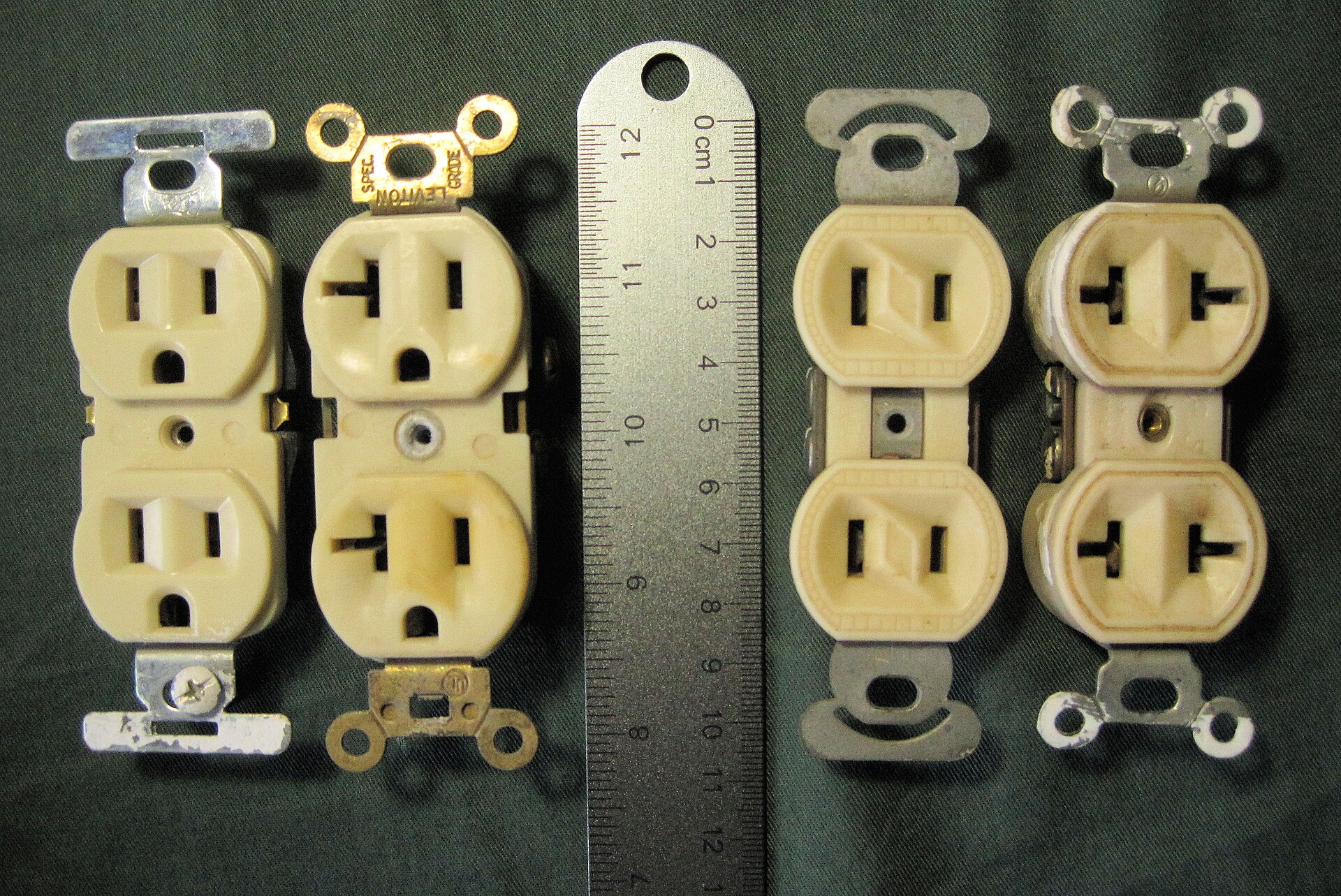
Type A is the two flat parallel slots you will see in older apartments, guesthouses and anywhere the wiring predates the 1990s. Type B adds a round earth hole below them. A Type A plug fits a Type B socket; a Type B plug does not fit a Type A socket, which is the one incompatibility that occasionally bites Americans and Canadians in older Taipei buildings.
One quirk worth knowing: on polarised Type A sockets, one slot is slightly wider than the other. Cheap adapters with symmetrical pins sometimes will not go in. If a plug refuses to seat, try it the other way round before assuming the socket is broken.
New hotels are almost universally Type B and increasingly have USB ports built into the bedside sockets, which quietly solves the whole problem for phone-and-laptop travellers. Older boutique hotels in converted buildings, hostels and guesthouses are much more variable.
Adapter or converter? They are not the same thing
This is where most of the confusion lives, and getting it wrong is the only way to actually damage something.
A plug adapter changes the physical shape of the pins. It does nothing to the electricity. It is a passive lump of plastic and metal that lets a British plug sit in a Taiwanese socket, and it costs a couple of pounds.
A voltage converter (or transformer) changes 110 V into 220–240 V so that a device built for European power can run. It is heavy, expensive, and almost never necessary for a traveller.
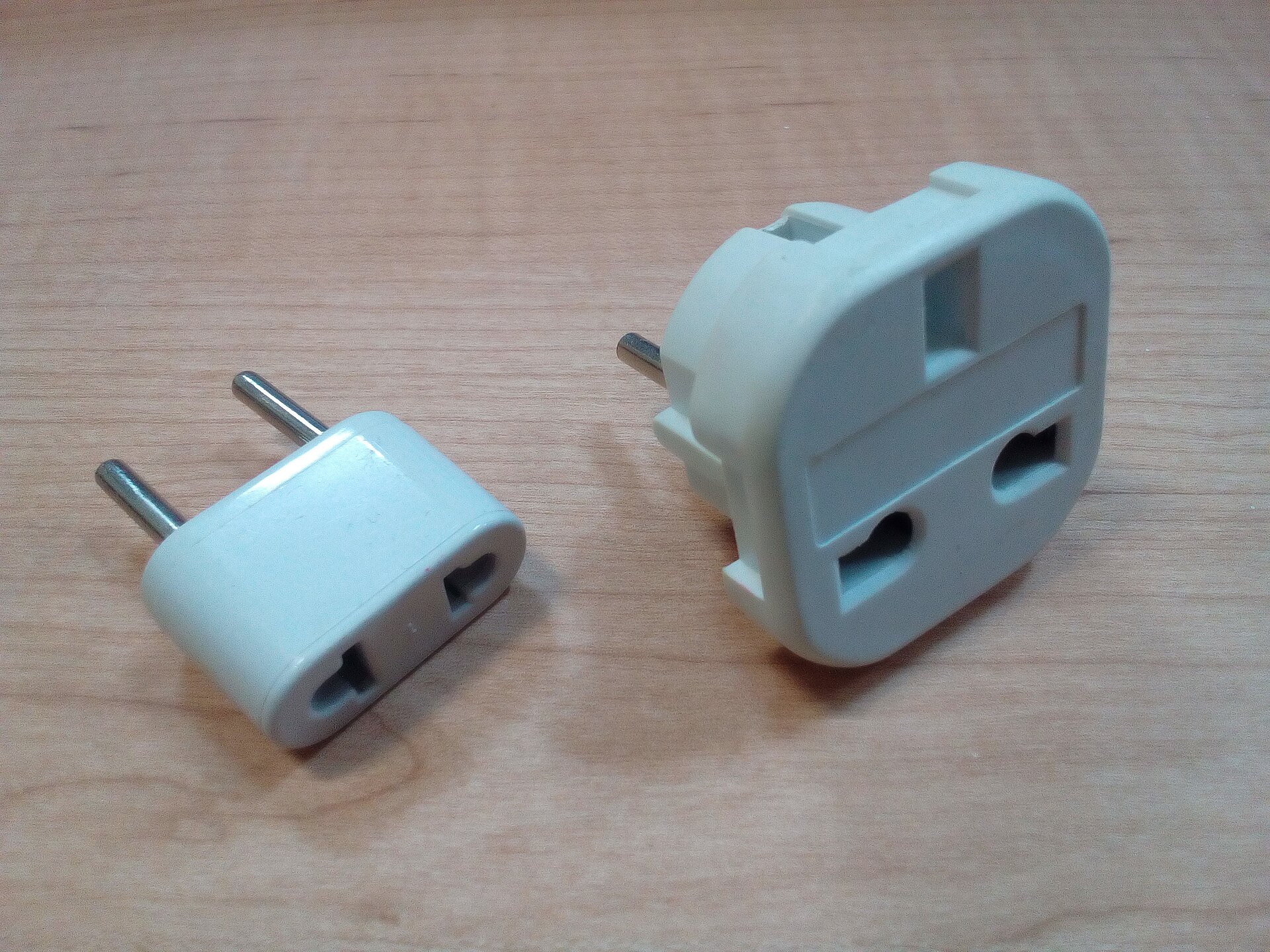
Which one you need depends entirely on a line of small print on your device. Look at the plug, the charger brick or the label on the appliance:
- “INPUT: 100–240 V, 50/60 Hz” — dual voltage. It works in Taiwan. You need only a plug adapter. This covers virtually every phone charger, laptop power supply, camera charger, tablet, electric shaver and electric toothbrush made in the last fifteen years.
- “INPUT: 220–240 V” only — single voltage. It will not work properly on 110 V. You need a converter, or more sensibly you need to leave it at home.
- “INPUT: 100–120 V” only — American or Japanese single voltage. Perfect for Taiwan; useless when you get home.
What actually fails on 110 V
Plugging a 230 V appliance into 110 V does not usually destroy it — under-volting is far more forgiving than over-volting. What happens instead is that it runs at roughly a quarter of its rated power, which makes heating appliances useless rather than broken.
The usual suspects: hair dryers, hair straighteners and curling tongs, travel kettles, travel irons, and older electric toothbrush charging bases. A 2,000 W European hair dryer on Taiwanese power becomes a warm breeze that takes twenty minutes to achieve nothing.
The correct response is not to buy a converter capable of handling 2,000 W, which would be large, heavy and cost more than the dryer. It is to leave the dryer at home. Every hotel in Taipei provides one, most guesthouses do, and hostels usually have communal ones.
The one genuine exception is medical equipment — CPAP machines, nebulisers, some mobility devices. Check the rating carefully, and if it is single-voltage, a proper converter rated well above the device’s draw is a legitimate purchase. Talk to the manufacturer rather than guessing.
What to buy, and where
Before you travel
Buy one decent adapter rather than several cheap ones, and pair it with a multi-port USB charger. A single GaN charger with three or four USB-C and USB-A ports, plugged into one adapter, will charge a laptop, two phones and a power bank simultaneously from the one socket that is inevitably behind the bed. This is a much better setup than four adapters and four bricks, and it weighs less.
Universal “all-in-one” adapters are convenient and generally fine, but the cheap ones are bulky, fall out of sockets under their own weight, and often have no fuse. If you buy one, buy one with a fuse and a surge indicator. If you are only travelling to Taiwan, a simple single-country adapter is smaller and more secure in the socket.
What no adapter does is increase the current a device can draw, so do not run a power strip full of high-draw appliances through one small travel adapter.
In Taipei

Forgetting your adapter is a very fixable problem here. Options, in rough order of convenience:
- Ask the hotel first. Most keep a box of loaners at reception. It costs nothing to ask and they often will not charge a deposit.
- Convenience stores — 7-Eleven, FamilyMart — carry basic adapters and cables at around NT$100–200. Not the best quality, always available, open at 3am.
- Electronics chains like Sanmin or the electrical sections of the big department stores sell better-made ones for NT$150–400.
- Guanghua Digital Plaza is the enthusiast option: several floors of small shops selling every cable, charger, adapter and battery in existence, at prices that reward a little browsing. Nearest MRT is Zhongxiao Xinsheng. Worth the trip if you need something specific.
Taiwan makes a lot of the world’s power electronics, so a charger or cable bought here is likely to be better than the equivalent bought in an airport at home, and cheaper. It is one of the few “buy it there” items that genuinely improves on what you would have brought.
Keeping things charged on a long day
Taipei days are long and screen-heavy — maps, translation, photos, transport apps — and the practical constraint is usually battery rather than sockets.
Bring a power bank. It is close to essential rather than optional here. A 10,000 mAh unit covers a full day of navigation with room to spare. Airlines require power banks in cabin baggage, not hold luggage, and most cap capacity at 100 Wh (roughly 27,000 mAh) without prior approval, so check yours before you pack.
Free charging is easier to find than you would think. Convenience stores with seating areas, the larger chain cafés, department store rest areas, airport lounges and some MRT station concourses all have accessible sockets. Public libraries are the quietest option and are genuinely welcoming.
Some hostels charge for locker charging or restrict it to communal areas. Ask when you check in if that matters to you. Our Taipei hostels guide covers what the good ones provide.
One warning: cheap unbranded power banks bought on the street are a genuine fire risk and a genuine airline problem. If you need one here, buy it from an electronics shop or a department store rather than a night-market stall.
Hotel sockets: what to expect
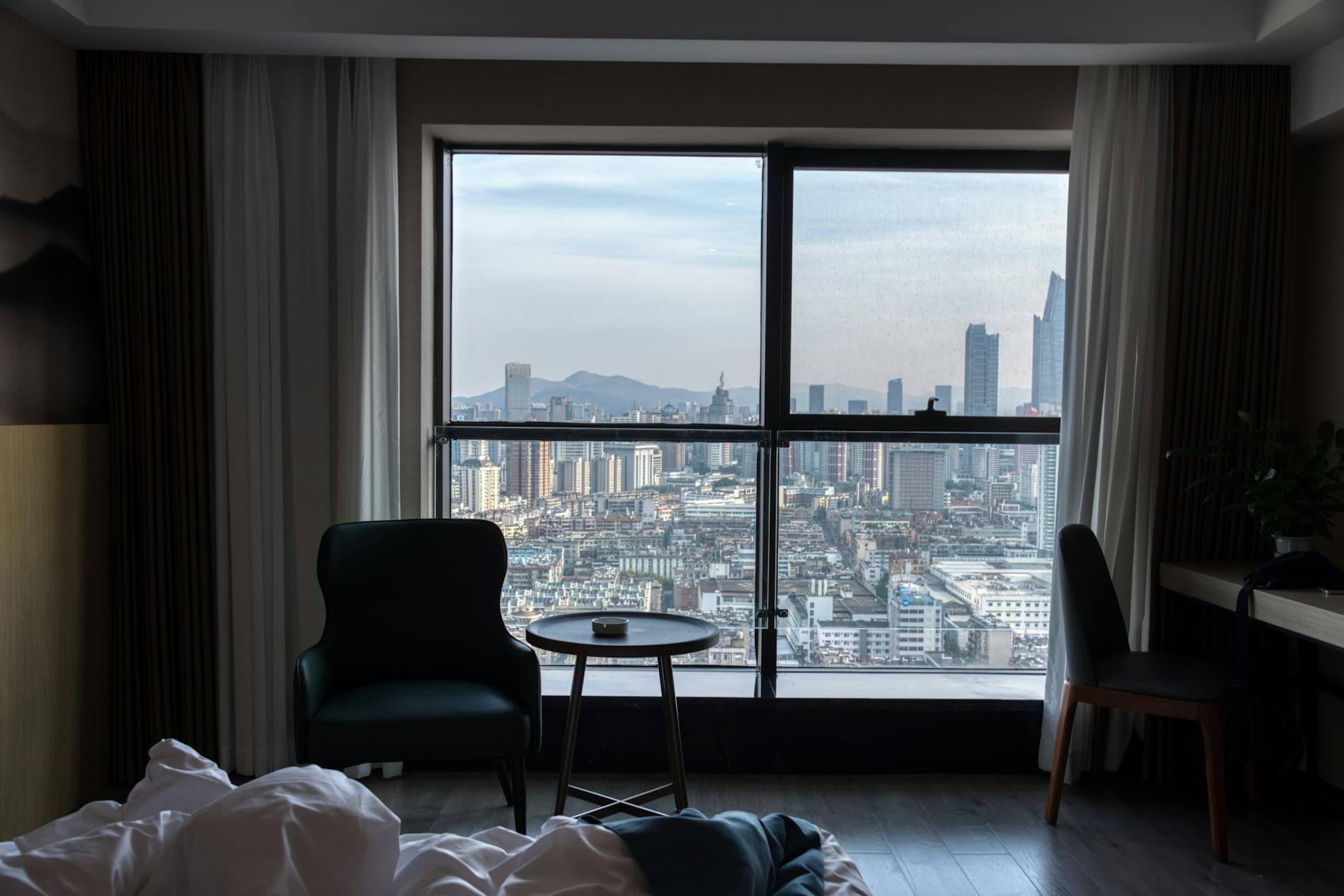
Newer hotels — anything built or refurbished in the last decade — will have earthed Type B sockets, usually several of them, frequently with USB-A and increasingly USB-C ports beside the bed and at the desk. If you are staying somewhere like this and travel only with phone and laptop, you may not need an adapter at all.
Older properties, converted apartment buildings and family-run guesthouses are a different story: fewer sockets, often only two-slot Type A, sometimes positioned inconveniently behind furniture. If you are staying somewhere characterful rather than corporate, bring the adapter and consider a short extension lead.
Business hotels aimed at international travellers often have multi-standard sockets that accept British, European and Australian plugs directly. It is worth checking the room description before you buy anything. Our hotels near the MRT and where to stay guides cover the accommodation landscape.
Country by country: what you need
The answer depends on where your plugs come from, not where your passport is from — which matters if you have bought electronics abroad.
United Kingdom and Ireland. Three rectangular pins, 230 V. You need an adapter, and every charger you own is almost certainly dual-voltage so that is all you need. Do not bring the kettle, the dryer or the straighteners.
Continental Europe. Two round pins, 230 V. Same answer: an adapter, and check the small print on anything that heats.
Australia and New Zealand. Angled flat pins, 230 V. An adapter, and the same caution about hair appliances. Australian-market chargers are essentially all dual-voltage now.
United States and Canada. Nothing needed. Your plugs fit and your voltage matches. The only snag is that a three-pin earthed American plug will not enter an older two-slot Taiwanese socket, so a cheap two-to-three-prong adapter is worth having if you are staying somewhere old.
Japan. Nothing needed. Japan uses the same Type A plug at 100 V, which is close enough to 110 V that everything works normally. Japanese travellers have the easiest time of anyone here.
India, Singapore, Hong Kong, Malaysia, South Africa. Adapter required, and voltage differs, so check every device rating carefully — appliances sold in these markets are more likely to be single-voltage than European ones.
Mainland China and South Korea. Chinese Type I and Korean Type C/F plugs do not fit; both markets run at 220 V. Adapter required and device ratings worth checking.
Electrical safety, briefly
Taiwan’s electrical infrastructure is modern and reliable, and the supply is stable. Two situations are worth a moment’s thought.
Typhoons and power cuts. Localised outages happen during major storms, usually brief and usually in outlying areas rather than central Taipei. Keep your devices topped up when a typhoon is forecast, and keep the power bank charged. Our typhoon season guide covers the rest.
Humidity and older wiring. Bathroom sockets in older buildings are not always well protected, and Taipei is a humid city. Do not charge anything on a bathroom shelf, and do not run a device from a socket that looks damaged or scorched — tell the hotel instead.
Beyond that, this is a country with high standards and enforced electrical codes. The grid operator, Taipower, publishes supply information and outage notices in English.
If you are working from Taipei
Taipei is a comfortable place to work remotely for a week or a month, and the power question changes slightly when you are running a laptop for eight hours a day rather than charging a phone overnight.
Bring a short extension lead with your home country’s sockets on it. One travel adapter plus a four-socket lead turns a single awkward Taiwanese outlet into a full desk setup, and it weighs almost nothing. This is the single best piece of advice for a longer stay and almost nobody follows it.
Cafés are generous with sockets by international standards, though the specialist coffee bars are less so than the chains — the good independents in Da’an and Zhongshan often have a laptop policy rather than an open-plan office atmosphere, and it is worth reading the room. Chain cafés, the seating areas in larger convenience stores, and public libraries are all reliable. Our Taipei café guide covers which ones welcome a laptop.
If you need a second monitor, a keyboard or a replacement charger, Guanghua and the surrounding streets will sell you one at a price that makes buying locally sensible rather than shipping something in. Just remember that anything you buy here comes with a Taiwanese plug, which is the reverse of your original problem when you get home — and that a 110 V-only device bought in Taipei will not work on 230 V at all.
Common mistakes
Buying a voltage converter you do not need. The vast majority of travellers need a NT$150 plug adapter and nothing else. Converters are heavy, expensive and relevant only to single-voltage heating appliances you should probably not be packing.
Assuming “universal adapter” means “voltage converter”. It does not. A universal adapter changes pin shape only. The marketing on the box is often deliberately vague about this.
Packing a hair dryer. It will not work usefully, and the hotel has one.
Bringing one adapter for four devices. Everyone does this and everyone regrets it at 23:00 when three things need charging overnight. One adapter plus a multi-port USB charger solves it.
Buying at the airport. Airport adapters cost three times what a convenience store charges, at either end of the journey.
Related Taipei guides
- Taipei Travel Essentials: the pre-trip checklist
- What to Pack for Taiwan, Season by Season
- Taiwan SIM Card vs eSIM
- Guanghua Digital Plaza: Taipei’s electronics market
- Shopping in Taipei
- Where to Stay in Taipei
- Taipei Hotels Near the MRT
- The Best Hostels in Taipei
- Taipei Typhoon Season
- How Much a Taipei Trip Costs
Frequently Asked Questions
What plug does Taiwan use?
Type A and Type B — the flat two-pin plug, with or without a round earth pin below. It is the same standard used in the United States, Canada, Japan and Mexico. Supply is 110 volts at 60 hertz across the whole island.
Do I need a plug adapter for Taiwan?
If you are travelling from the UK, Ireland, continental Europe, Australia, New Zealand, India, South Africa or most of Asia, yes. If you are coming from the US, Canada or Japan, no — your plugs already fit, though a three-pin American plug will not enter an older two-slot socket.
What voltage is Taiwan?
110 volts at 60 hertz. That is half the 220–240 V used across Europe, Australia and much of Asia, which matters for single-voltage appliances and not at all for the dual-voltage chargers most people travel with.
Will my phone and laptop charger work in Taiwan?
Almost certainly. Check the small print on the charger for “100–240 V”; virtually every phone, laptop, tablet and camera charger made in the last fifteen years is dual-voltage. You need only a plug adapter to change the pin shape.
Can I use my hair dryer in Taiwan?
If it is a 220–240 V single-voltage model, not usefully. It will run at a fraction of its power rather than break. Leave it at home — every hotel in Taipei supplies one, and a converter big enough to run it would be heavier than the dryer.
What is the difference between a plug adapter and a voltage converter?
An adapter changes the shape of the pins and nothing else. A converter changes the actual voltage. Travellers almost always need the first and almost never the second. Marketing on “universal” adapters frequently blurs this, so read the box.
Where can I buy a plug adapter in Taipei?
Ask your hotel first — most keep loaners. Otherwise any convenience store sells basic ones for NT$100–200, electronics chains do better ones for NT$150–400, and Guanghua Digital Plaza has the full range at good prices.
Do Taipei hotels have USB charging ports?
Newer and business hotels usually do, often built into the bedside panel, and some have multi-standard sockets that take British and European plugs directly. Older guesthouses and converted-building boutique hotels frequently do not, so check the room description.
Should I bring a power bank to Taipei?
Yes. You will use maps, translation and transport apps constantly, and a 10,000 mAh unit covers a long day. Carry it in your cabin bag — airlines prohibit power banks in checked luggage and cap capacity at around 100 Wh.
Are Taiwanese sockets earthed?
Newer installations use Type B, which is earthed. Older buildings often have unearthed two-slot Type A sockets. If your appliance has an earth pin and the socket has only two slots, you need an adapter that accommodates it rather than forcing the plug.
Is it safe to buy electronics in Taiwan?
Yes, and often better value than at home — Taiwan manufactures a great deal of the world’s power electronics. Buy from electronics shops, chains or department stores rather than night-market stalls, particularly for anything containing a battery.
Does Taiwan have power cuts?
The supply is stable and outages are uncommon. Typhoons can cause localised, usually short interruptions, mostly outside central Taipei. Charge your devices when a storm is forecast and keep a power bank topped up.
Can I use a UK plug in Taiwan without an adapter?
No. British three-rectangular-pin plugs do not fit Taiwanese sockets at all, and there is no safe workaround. Buy an adapter before you leave or pick one up at any convenience store in your first hour.
The Bottom Line
Taiwan runs on 110 V, 60 Hz, with flat-pin Type A and Type B sockets. Travellers from North America and Japan need nothing. Everyone else needs a plug adapter — and only a plug adapter, provided every device says 100–240 V on the label, which almost all of them do.
Bring one good adapter and one multi-port USB charger rather than four of each. Leave the hair dryer and the travel kettle behind, because 110 V will make them useless and the hotel already has what you need. And if you forget the adapter entirely, it is a NT$150 problem solvable at any convenience store, at any hour, in a city where there is one on nearly every corner.
Photo Credits
Type A and Type B electrical receptacles compared: NEMA 5 1 devices2 by Yak99, public domain, via Wikimedia Commons.
Travel plug adapters: Two AC Converter Adapters by Fructibus, CC0, via Wikimedia Commons.