This article contains advertising. Our booking links are routed through a partner that adds commission tracking automatically, so if you book through one we earn a commission from the provider, at no extra cost to you. It never affects what we recommend. Affiliate disclosure
The Dragon Boat Festival in Taipei is one of Taiwan’s three major traditional holidays, and June visitors get a chance to see the city celebrate a 2,300-year-old tradition with international-scale dragon boat races, hundreds of thousands of zongzi (sticky rice dumplings) eaten in a single weekend, and family rituals that have not changed since the Tang Dynasty. The 2026 Dragon Boat Festival falls on June 19, with race weekends typically extending across June 19-21. This guide covers what the festival is, where to watch the races, where to eat the best zongzi, and what other traditions you might catch around the city.

What Is the Dragon Boat Festival?
The Dragon Boat Festival – “Duanwu Jie” (端午節) in Mandarin or “Duan Yang” in Hokkien – falls on the 5th day of the 5th month of the Chinese lunar calendar. The 2026 date is Friday, June 19. It is one of Taiwan’s three biggest traditional holidays (alongside Chinese New Year and Mid-Autumn Festival), giving most Taiwanese a 3-4 day weekend depending on calendar alignment.
The festival commemorates Qu Yuan (屈原), a poet and minister of the ancient state of Chu who drowned himself in the Miluo River in 278 BCE after his political advice was ignored and his country fell to the rival state of Qin. Legend says villagers raced boats to recover his body and threw rice into the river to keep fish from eating him – origins of the modern dragon boat races and the zongzi rice dumplings. Whether or not the historical Qu Yuan was the actual origin, the festival’s elements (boats, dumplings, rituals to ward off summer disease) clearly draw from very old Chinese midsummer traditions.
In modern Taiwan, the Dragon Boat Festival is celebrated with three main activities: dragon boat racing, zongzi eating, and the symbolic balancing of eggs at high noon. Family gatherings and temple visits round out the cultural elements.
When Is the 2026 Dragon Boat Festival?
Friday, June 19, 2026. The official public holiday is one day, but the racing typically extends across Friday-Sunday (June 19-21). Most Taiwanese take Saturday and Sunday off plus the Friday holiday for a 3-day weekend.
For visitors:
The festival weekend is one of the busiest domestic travel weekends of the year in Taiwan. Taipei hotels fill up; trains to mountain destinations are at capacity. Plan accordingly.
If you specifically want to see dragon boat racing, target Saturday June 20 or Sunday June 21 – the actual race day at the main locations. June 19 (Friday) has smaller racing events but the main competition is the weekend.
Weather is hot and humid (28-33 °C) with possible afternoon rain. Bring water, sunscreen, and a hat for race watching.
Where to Watch Dragon Boat Races in Taipei
Taipei hosts the largest dragon boat race series in Taiwan. Two main locations:
Dajia Riverside Park (大佳河濱公園)
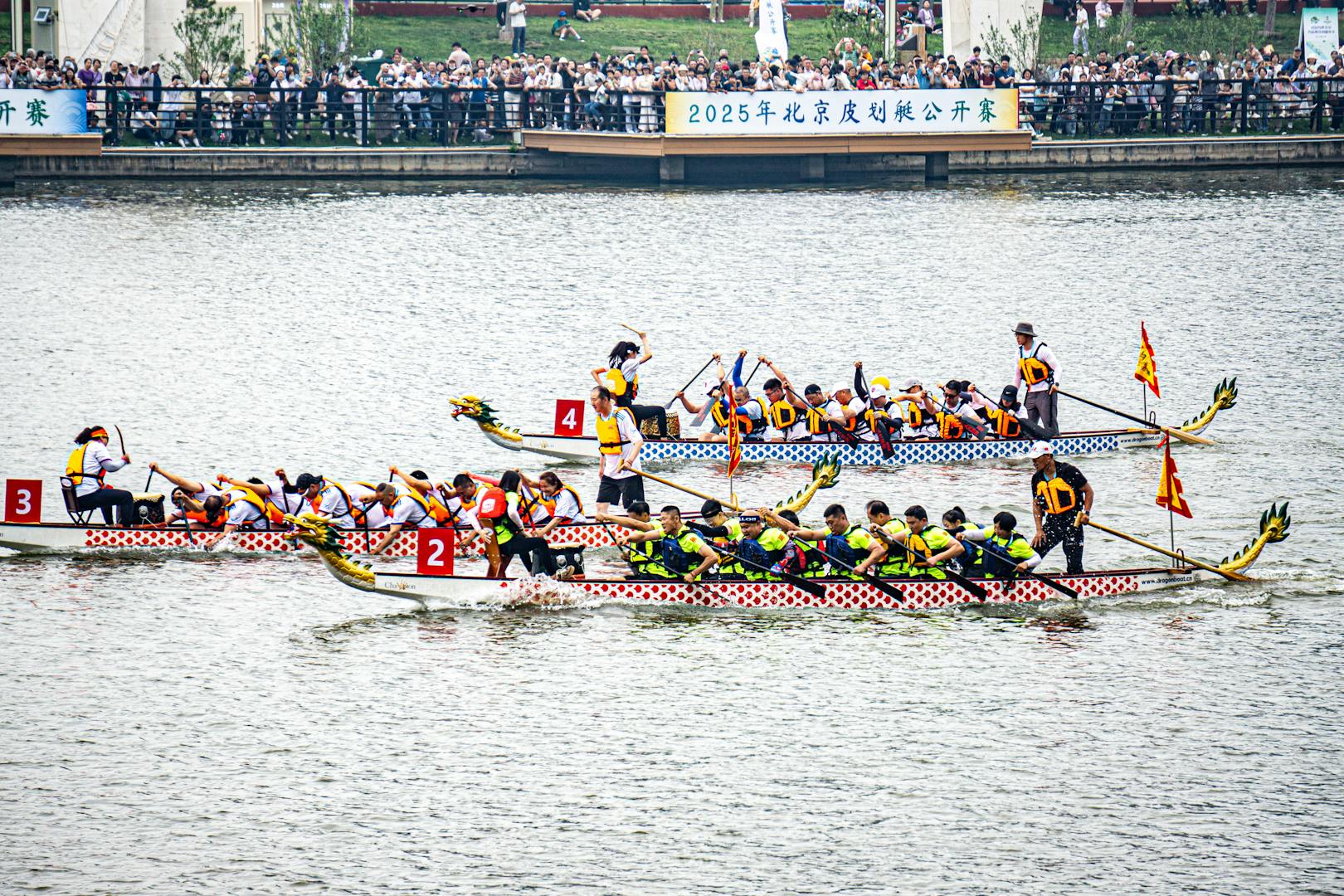
The flagship Taipei City race venue. Located along the Keelung River in Zhongshan District. The Taipei International Dragon Boat Championship is held here annually, with 200+ teams from Taiwan and overseas competing across multiple categories – men’s, women’s, mixed, corporate, university. Crowds 50,000-100,000 over the weekend.
Race schedule typically runs 8am-5pm Saturday and Sunday. International teams compete in the late morning premier categories. Local corporate and university teams race afternoons.
The riverside park has paved viewing paths, food vendors set up for the weekend, and a festival atmosphere with stages, music, and traditional craft demonstrations.
How to get there: MRT to Dazhi Station (Brown Line), then 15-minute walk via Mingshui Road. Free entry. Free parking is gone by 9am on race weekend – take public transport.
Bitan (碧潭), Xindian
The secondary major race venue, on the Bitan section of the Xindian River south of Taipei. Smaller scale than Dajia but still 50+ teams competing across the weekend. The water is wider and the surrounding hills give a more scenic backdrop. Less crowded than Dajia.
How to get there: MRT to Xindian Station (Green Line, last stop), then 5-minute walk to the Bitan suspension bridge area.
Tip: Bitan is also home to a year-round riverside paddleboat and cafe scene. Combine the dragon boat race watching with paddleboat rental, cafes, and the suspension bridge walk for a half-day outing.
Other Smaller Venues
Smaller dragon boat races happen at Tamsui Fisherman’s Wharf, Tongan Riverside Park, and around the Taipei riverfront. These are local-team races without the international visitors but offer a quieter way to see the tradition.
Zongzi: The Festival’s Iconic Food
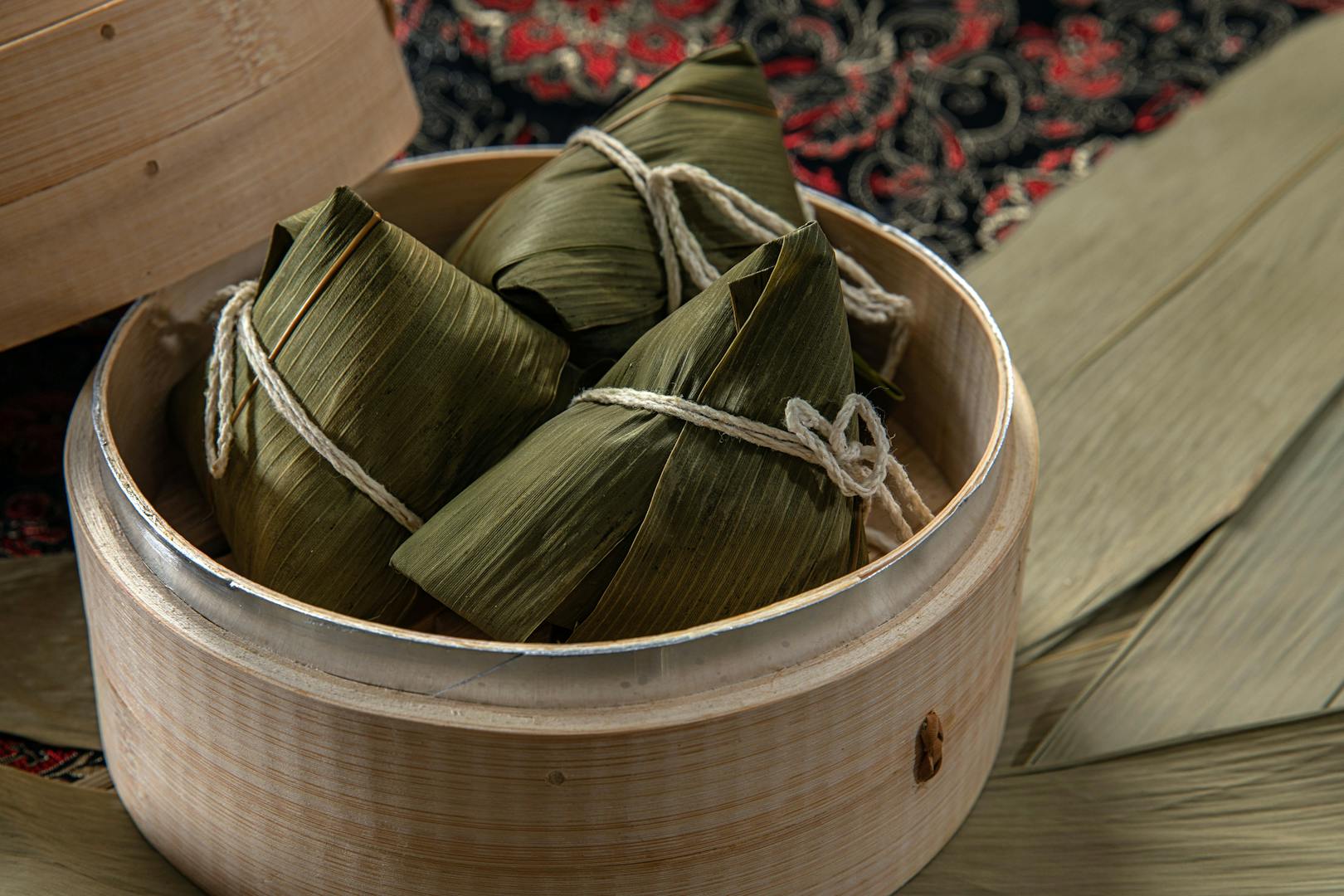
Zongzi (粽子) are pyramidal packets of glutinous rice wrapped in bamboo or reed leaves and tied with string, filled with savory or sweet ingredients and steamed or boiled. Eating zongzi during the Dragon Boat Festival is essentially mandatory in Taiwan – bakeries, restaurants, and grandmothers all start producing them in May, and the typical Taiwanese family will eat dozens across the festival weekend.
Types of Zongzi
Northern style (北粽): Steamed. Rice is partly cooked with flavor first then stuffed and steamed. Fillings include pork belly, peanuts, mushrooms, shallots, salted egg yolk, and sometimes chestnuts. Drier texture, savory dominant.
Southern style (南粽): Boiled. Rice stuffed raw and boiled long, absorbing flavors from the bamboo. Wetter, softer. Fillings include pork, peanuts, mushrooms, sometimes squid or dried fish.
Hakka style (客家粄粽): Made with sticky-rice flour rather than whole rice grains. Different texture – more like a soft dumpling than a rice packet.
Sweet variations: Red bean paste filling (鹼水粽), Cantonese-style sweet zongzi with lotus seed paste. Less common but available at some bakeries.
Modern fusion: Some Taipei bakeries make “western” zongzi with cheese, sausages, or curry. More marketing than tradition; not bad but not the iconic experience.
Where to Buy Zongzi in Taipei
Wang’s Northern Style Zongzi (王記府城肉粽): A famous Beimen neighborhood bakery serving traditional Tainan-style zongzi year-round. Festival weekend they sell thousands. NT$50-80 per zongzi.
Liu Ji Zongzi (劉記端午粽): Dihua Street veteran shop. Festival production is enormous. The hand-tied bamboo-leaf wrapping is photogenic.
Department stores: Mitsukoshi Xinyi, SOGO, and Eslite Spectrum food halls all have zongzi corners during the festival weekend with multiple regional styles. NT$60-150 per zongzi depending on filling.
Convenience stores: 7-Eleven and FamilyMart sell pre-packaged zongzi during the festival period. Quality is OK but not the artisanal experience.
Night markets: Most night markets have at least one zongzi vendor selling fresh-steamed at NT$50-80. Try multiple regional styles in one visit.
If you visit Taipei during the festival, eating a Northern-style and a Southern-style zongzi side by side gives you the cultural snapshot in one meal. Pair with sweet rice wine or oolong tea.
Other Dragon Boat Festival Traditions
Beyond the races and the zongzi, several smaller traditions enliven the festival weekend:
The Standing Egg at High Noon
At exactly 12:00 noon on the Dragon Boat Festival day (June 19, 2026), Taiwanese families try to stand a raw egg on its end. Folk tradition holds that the Earth’s gravitational forces are uniquely aligned at this moment, allowing eggs to balance. Whether it actually works is debatable but the tradition is widely practiced. Try it at your hotel.
Realgar Wine (雄黃酒)
Traditional families dab a small dot of realgar wine (a slightly arsenic-bearing herbal mixture) on children’s foreheads or burn the alcohol as a ritual to ward off summer pests and disease. Adults sometimes drink a tiny amount. Mostly symbolic now – the alcohol is too low-grade to actually drink, and the arsenic content makes it medically unwise. You will see it sold ceremonially at temples.
Mugwort and Calamus on Doors
Bundles of mugwort (艾草) and calamus (菖蒲) leaves hung on doorways are traditional Dragon Boat Festival protection against summer disease and evil spirits. You will see these bundles for sale at flower markets and temples during the festival weekend. The smell is herbal and slightly bitter; some Taiwanese still hang them at home.
Five-Color Strings
Children wear strings of five colored threads on the wrist or ankle for the festival. The strings are removed and discarded at the first rain after the festival, supposedly carrying away misfortune. Sold at temple stalls and craft shops for NT$30-100.
Perfume Bags (香包)
Small embroidered fabric bags filled with herbs that traditionally warded off insects and disease. Now sold as decorative crafts at temples and craft markets. Beautiful souvenirs from the festival.
What to Expect at a Dragon Boat Race
If you have never seen a dragon boat race:
Boats: 22-foot wooden boats with a carved dragon head at the prow and a dragon tail at the stern. 20 paddlers in 10 rows, plus a drummer at the front setting pace and a steerer at the back.
Race format: Sprint races, usually 200-500 metres. Heats throughout the day, finals in the late afternoon.
Spectator experience: Free standing viewing along the river. Race announcements in Mandarin (limited English at smaller venues; full bilingual at Dajia). The drummers’ beats and synchronized paddling are mesmerizing.
Food at the races: Vendor food at all venues. Local snacks, drinks, and yes, plenty of zongzi. NT$50-200 per snack. Bring cash.
Time commitment: 1-3 hours typically. Watch a few heats, eat some zongzi, walk the riverside, return home.
Where to Stay During the Dragon Boat Festival
If you are visiting Taipei specifically for the festival, accommodation tips:
Book 4-8 weeks ahead. The festival weekend is one of Taipei’s higher-demand periods, especially if hotels in Xinyi, Da’an, and Zhongshan.
Stay near the race venues if possible. Zhongshan hotels are closest to Dajia Riverside Park. Da’an hotels are within a 20-minute taxi of both Dajia and Bitan. Avoid staying in Xindian unless you specifically want the Bitan area – getting back to central Taipei from there is slow late-night.
Budget travelers: Hostels and budget hotels in Wanhua and Datong fill quickly. Book even cheaper accommodation at least 2 weeks ahead.
Luxury travelers: Suite upgrades during festival weekends often disappear; book the highest tier you want early.
Combining Dragon Boat Festival With Other Taipei Activities
The festival weekend is hot and humid – plan indoor cooling breaks alongside the festival activities:
Morning races, afternoon mall: Watch races 8am-12pm, then air-conditioned mall lunch and shopping until evening dinner.
Hot spring soak after the race: Counter-intuitively, a hot spring in summer is restful. Beitou or Wulai afternoon after Dajia morning works.
Festival food crawl: Wang’s, Liu Ji, and Dihua Street zongzi – combine into a half-day food walk.
Tamsui evening: The northern terminus of the MRT is cooler in the evening and has secondary dragon boat races and a relaxed waterfront. Good after a heavy day.
Temple visits: Taipei’s major temples (Longshan, Xingtian, Bao’an) have special Duanwu rituals on the festival day. The atmosphere is unique to this weekend.
Related Taipei guides
- Taiwan vs China: Cultural Differences Tourists Should Know
- Taipei Festivals Calendar: What’s On in
- Tipping in Taipei: Do You or Don’t You?
- LGBT Travel to Taipei: Complete Guide
- Religion in Taipei: Buddhism, Taoism & Temple Life
- Things to Do in Taipei: 45+ Must-See Attractions & Experiences
Frequently Asked Questions
When is the 2026 Dragon Boat Festival in Taipei?
Friday, June 19, 2026. The official one-day public holiday creates a 3-day weekend with most major events spanning June 19-21. The 2027 festival will be on Wednesday, June 9; 2028 on Sunday, May 28.
Where can I see dragon boat races in Taipei?
Dajia Riverside Park (大佳河濱公園) in Zhongshan is the largest venue, hosting the Taipei International Dragon Boat Championship with 200+ teams. Bitan in Xindian is the secondary major venue, smaller but more scenic. Smaller races happen at Tamsui Fisherman’s Wharf and other waterfront parks.
What is zongzi and where can I try it in Taipei?
Zongzi are sticky rice dumplings wrapped in bamboo leaves, traditionally eaten during the Dragon Boat Festival. Northern style is steamed and savory; Southern style is boiled and softer. Best shops in Taipei: Wang’s (Beimen), Liu Ji (Dihua Street), and department store food halls during the festival weekend. NT$50-150 per zongzi.
What is the Dragon Boat Festival celebrating?
It commemorates Qu Yuan, a poet and minister of the ancient state of Chu who drowned in 278 BCE. Legend says villagers raced boats to recover his body and threw rice into the river – origins of the modern dragon boat races and the zongzi rice dumplings. The festival also has older roots as a midsummer ritual against disease and evil spirits.
Is the Dragon Boat Festival a public holiday in Taiwan?
Yes – one of three major traditional holidays alongside Chinese New Year and Mid-Autumn Festival. Most government offices, banks, and schools close. Many private businesses give a long weekend. Public transport runs at reduced frequency on the holiday itself.
Are dragon boat races free to watch?
Yes. Both Dajia and Bitan venues offer free public viewing along the riverside. Pop-up VIP seating with reserved seats is sometimes sold by organizers but standing along the river works perfectly well.
Should I plan my Taipei trip around the Dragon Boat Festival?
If you are flexible and interested in Taiwanese culture, yes – the festival is one of the few times you see the city celebrate openly with a single ancient tradition. If you are visiting independently of cultural interest, the weekend is fine but not essential – hotel prices and crowds are higher.
What is the standing-egg-at-noon tradition?
At exactly noon on the Dragon Boat Festival day, families try to balance raw eggs on their ends. Folk tradition says the Earth’s gravity is aligned at this moment to permit egg standing. Whether or not it works scientifically (it can sometimes work but not because of cosmic alignment), the tradition is widely practiced.
Can I take a dragon boat ride as a tourist?
Generally no during the festival itself – boats are reserved for competing teams. Outside the festival, some local rowing clubs offer paid dragon boat experiences as private bookings. Klook and KKDay occasionally list these. Bitan also has paddleboats available year-round.
What should I bring to a dragon boat race?
Water (hot June weather), sunscreen, a hat, light clothing, cash for vendors (NT$500-1,000), and a fan or umbrella for sun shade. Wear comfortable shoes for standing 2-3 hours. Sun protection is essential – Taipei in June at midday is 32-34 °C.
The Bottom Line
The Dragon Boat Festival in Taipei is one of Taiwan’s three biggest traditional holidays and a worthwhile reason to time a Taipei visit around. Watch races at Dajia Riverside Park, eat traditional Northern and Southern zongzi side by side, try to balance an egg at noon on June 19, and visit Longshan Temple for the festival ritual. Book hotels 4-8 weeks ahead, pack for hot humid weather, and plan air-conditioned breaks between outdoor events. It is the most distinctly Taiwanese weekend of the year, accessible to first-time visitors, and far less commercialized than equivalent dragon boat festivals in Hong Kong or Macau.