This article contains advertising. Our booking links are routed through a partner that adds commission tracking automatically, so if you book through one we earn a commission from the provider, at no extra cost to you. It never affects what we recommend. Affiliate disclosure
Walking into Longshan Temple at dawn — incense smoke thick in the air, locals bowing in front of the central deity, the slow rhythm of chanting from the morning ceremony, gold-painted dragons curling along the carved roof — is one of those Taipei moments that doesn’t translate into photographs. The temples of Taipei are still active, still community-anchored, still places where families come to pray for exam results, business success, or new love. They are not museums, even when they look like museums.
For travelers, this is the city’s best free cultural experience and arguably its richest one. Taipei has hundreds of temples — Buddhist, Taoist, folk-religion, Confucian, Mazu-dedicated — but for visitors, four stand above the rest: Longshan Temple (the most famous), Bao’an Temple (the most architecturally ornate), Confucius Temple (the most peaceful), and Xingtian Temple (the most modern in approach to environmental and worship traditions). Each shows a different facet of how Taiwanese religious life actually works in 2026.
This guide is about the best temples in Taipei for travelers who want to visit them respectfully, photograph them well, and understand what’s happening when locals are praying. By the end, you’ll know which temples to visit, when to go, what to do (and not do), and how to time visits around morning ceremonies and folk celebrations.

Best Temples in Taipei at a Glance
- Longshan Temple (龍山寺): The most famous; ancient and atmospheric; perfect first-temple visit
- Bao’an Temple (保安宮): The most ornate and most artistically significant; UNESCO Asia-Pacific heritage award winner
- Taipei Confucius Temple (台北孔廟): Quieter, contemplative; right next to Bao’an
- Xingtian Temple (行天宮): Modern, no-incense, pragmatic; Guan Yu-dedicated; popular with locals praying for business success
- Tianhou Temple (天后宮): Mazu-dedicated; in Ximending
- Songshan Ciyou Temple (松山慈祐宮): Mazu temple at the entrance to Raohe Night Market
- Best time to visit: Early morning (6–8 AM) for ceremonies and quiet
- Entry: All free
- Etiquette: Be quiet, dress modestly, don’t photograph worshippers
What Are Taipei’s Temples?
Taiwan’s temples are mostly a blend of three traditions: Taoism, Mahayana Buddhism, and Chinese folk religion (including the worship of regional deities like Mazu the sea goddess and Guan Yu the warrior god). Some temples (Confucius temples) are dedicated to Confucian ritual rather than religious worship; others (like Longshan) house dozens of deities under a single roof. The lines between these traditions often blur — most everyday Taiwanese temple visitors don’t strictly distinguish “Buddhist” vs “Taoist” vs “folk.”
What does distinguish them: most temples in Taipei are still actively used. The morning chanting at Longshan, the evening pilgrimages at Songshan Ciyou, the family-led visits to Bao’an for births and deaths — these are real community practices, not tourist performances. Visitors are welcome but expected to be respectful guests, not spectators at a show.
The 6 Best Temples to Visit in Taipei
1. Longshan Temple (龍山寺)
The most famous temple in Taipei, dating to 1738. The temple sits in the historic Wanhua District, surrounded by old streets and food markets. The complex houses dozens of deities — Guanyin (the Bodhisattva of compassion) at the main altar, plus Mazu, Wenchang (god of literature, popular with students), and many others. The morning chanting ceremony at 6:00–6:45 and 8:00–8:45 AM is one of the most atmospheric experiences in Taipei.
- Address: No. 211, Guangzhou Street, Wanhua District
- Hours: 6:00 AM – 9:30 PM daily
- Get there: MRT Bannan (Blue) Line to Longshan Temple Station, Exit 1
- Entry: Free
- Highlight: Morning chanting ceremony; the love deity Yue Lao (the “old man under the moon”) on the side altar — popular with locals praying for romantic relationships
- Time needed: 30–60 minutes
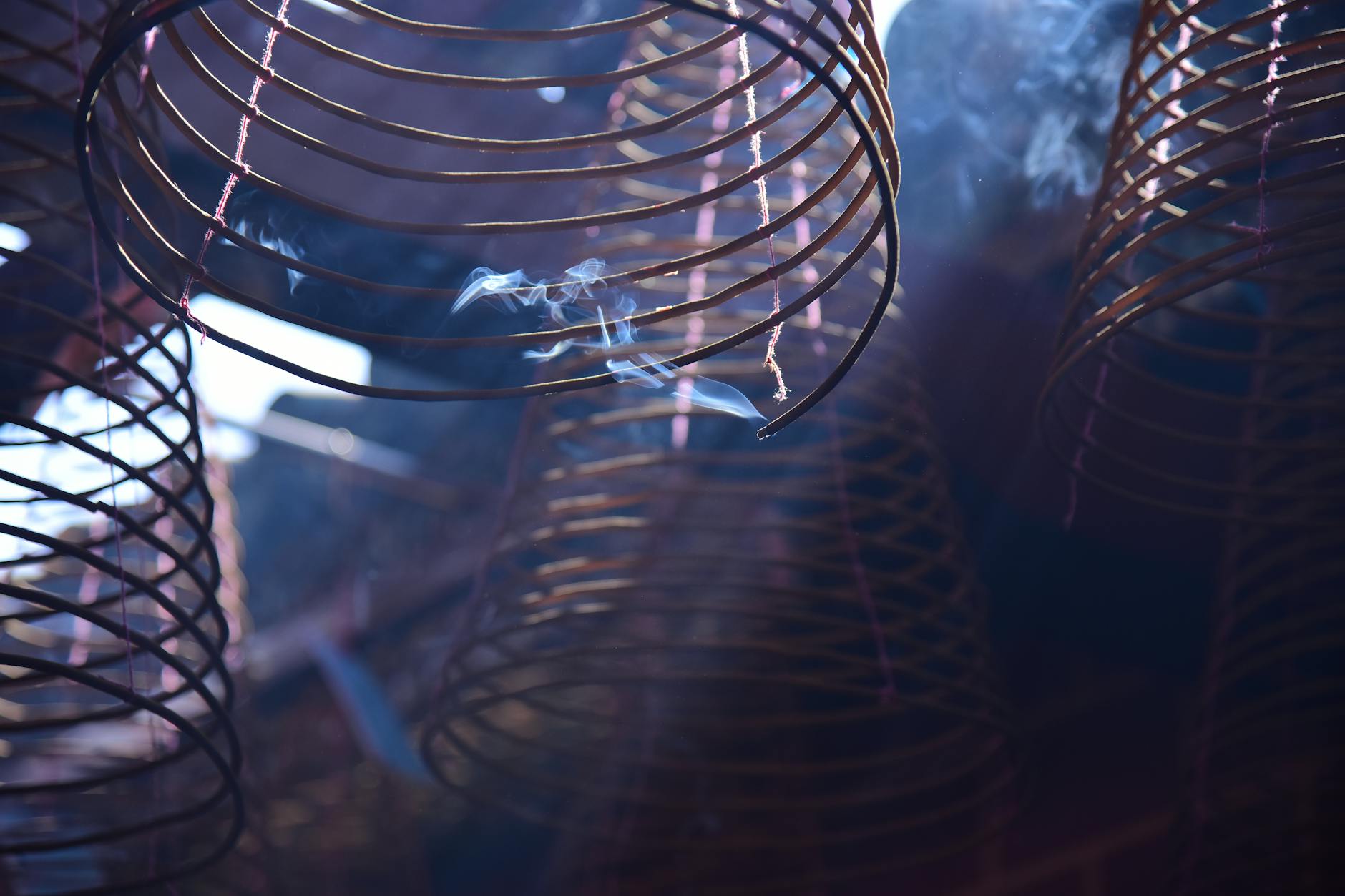
- Note: Incense burning was banned in 2020 to protect air quality. The temple still feels sacred, just without the heavy smoke.
2. Bao’an Temple (保安宮)
The most architecturally ornate and artistically significant temple in Taipei. Built in 1742 and won the UNESCO Asia-Pacific Heritage Award for cultural conservation in 2003. The temple is dedicated to Baosheng Dadi, the deity of medicine and healing, and features intricate stone carvings, painted ceilings, and dragon-pillar columns that are considered some of the finest examples of Taiwanese temple craftsmanship.
- Address: No. 61, Hami Street, Datong District
- Hours: 6:30 AM – 9:30 PM daily
- Get there: MRT Tamsui-Xinyi (Red) Line to Yuanshan Station, Exit 2 (10-minute walk)
- Entry: Free
- Highlight: The annual Baosheng Cultural Festival (April–May), featuring traditional Taiwanese opera performances, religious processions, and folk arts
- Time needed: 45–90 minutes
3. Taipei Confucius Temple (台北孔廟)
Right next door to Bao’an Temple. A peaceful, contemplative compound dedicated to Confucian ritual and education rather than religious worship. Built in 1879. Free interactive 4D theater, calligraphy demonstrations, and cultural exhibitions. The annual Confucius Birthday Ceremony (September 28) features traditional dance, music, and a 24-stage classical Confucian ritual that’s one of the most authentic surviving Confucian ceremonies in the world.
- Address: No. 275, Dalong Street, Datong District
- Hours: 8:30 AM – 9:00 PM, Tuesday–Sunday (closed Mondays)
- Get there: MRT Yuanshan Station, walk to Bao’an Temple, then next door
- Entry: Free
- Highlight: The classical Confucian ceremony on September 28 (annual)
- Time needed: 45–60 minutes
4. Xingtian Temple (行天宮)
Founded in 1968 — relatively young compared to the centuries-old Longshan and Bao’an. The temple is dedicated to Guan Yu, the deified general who became a god of business, war, and brotherhood. Xingtian is famous for its modern approach: incense burning was banned in 2014 (the first major Taipei temple to do so), prayers are quiet and orderly, and worship is largely conducted standing upright rather than the elaborate kneeling-and-bowing patterns at older temples. Popular with locals praying for business success.
- Address: No. 109, Section 2, Minquan East Road, Zhongshan District
- Hours: 4:00 AM – 11:00 PM daily
- Get there: MRT Zhonghe-Xinlu (Orange) Line to Xingtian Temple Station, Exit 4
- Entry: Free
- Highlight: Quiet, orderly worship style; very different from older temples; popular fortune-telling stalls outside
- Time needed: 30–45 minutes
5. Tianhou Temple (天后宮) — Ximending
A smaller Mazu (sea goddess) temple located in the heart of Ximending pedestrian district. Easy to combine with shopping or street food. The temple’s interior is more compact than the major temples, but it’s an active community space and a good way to see how an everyday Mazu temple looks.
- Address: No. 51, Chengdu Road, Wanhua District
- Hours: 7:00 AM – 10:00 PM daily
- Get there: MRT Ximen Station, Exit 1
- Entry: Free
- Highlight: Convenient combination with Ximending shopping
- Time needed: 15–30 minutes
6. Songshan Ciyou Temple (松山慈祐宮)
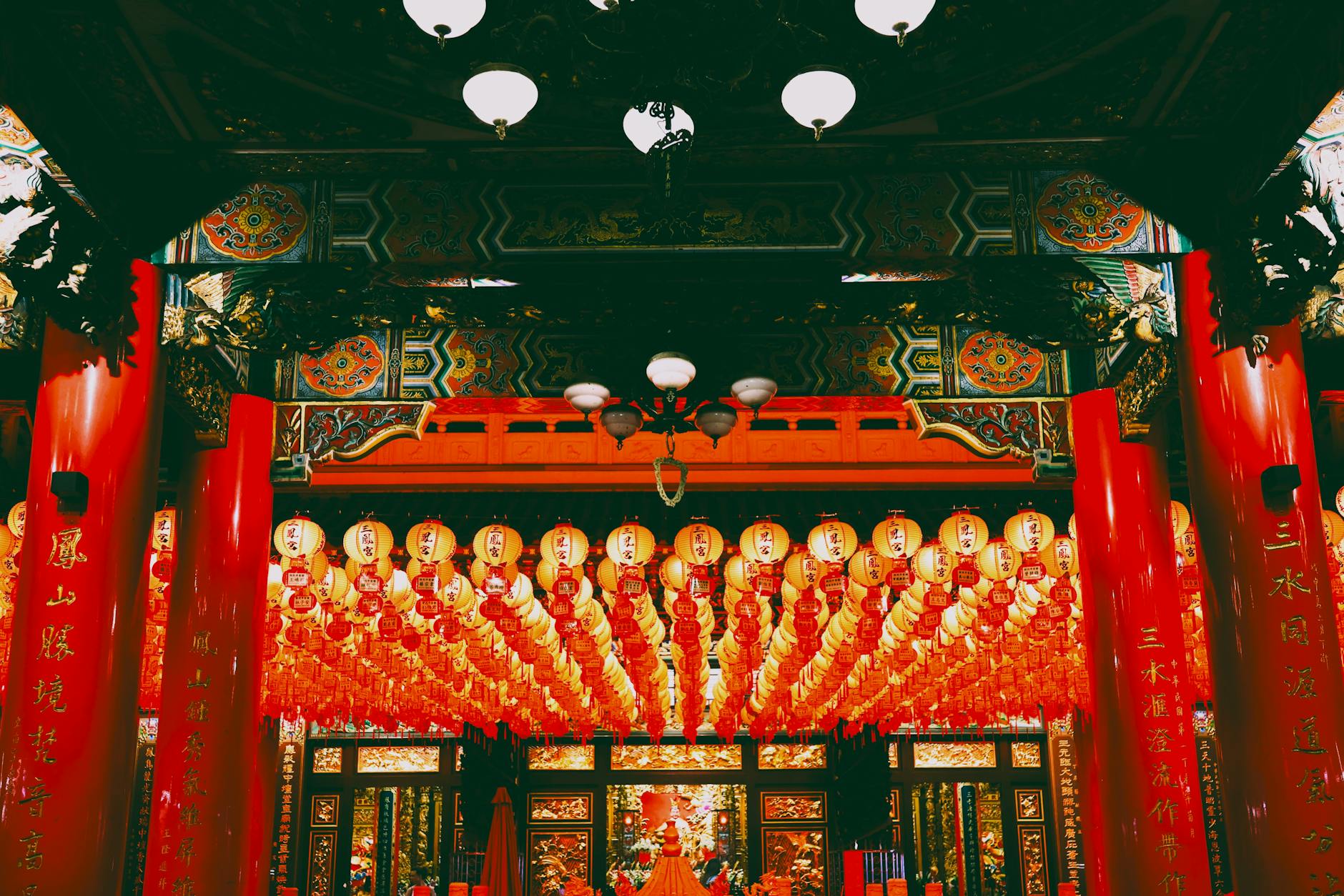
The lantern-lit Mazu temple at the western entrance to Raohe Night Market. Built in 1757. Six floors with elaborate carvings at the rear; the front-facade lantern display at dusk is one of Taipei’s most photogenic temple scenes. Free to enter; usually a 15-minute visit before the night market.
- Address: No. 761, Section 4, Bade Road, Songshan District
- Hours: 4:00 AM – 11:00 PM daily
- Get there: MRT Songshan-Xindian (Green) Line to Songshan Station, Exit 5
- Entry: Free
- Highlight: Lantern-lit facade at dusk; doorway to Raohe Night Market
- Time needed: 15–30 minutes
Temple Etiquette: How to Visit Respectfully
Taiwanese temples are welcoming to visitors but have customs that locals genuinely care about. Following them isn’t difficult and is appreciated.
Dress and Approach
- Dress modestly — covered shoulders and avoiding bathing-suit-like clothing. Shorts and t-shirts are fine; bare-chested, swim-only attire, or barefoot is not.
- Don’t enter through the central door if there’s a clear central main entrance with side entrances. Use the side doors. The central door is traditionally for deity processions.
- Step over the threshold, not on it. Most temple entrances have an elevated wooden threshold; step across, not on.
- Follow the worship route if there’s a marked path (signs are usually clear). Most temples have a recommended visiting order.
Inside the Temple
- Keep your voice low. Phone calls outside the temple. Conversations soft.
- Phone on silent. No ringing, no loud videos.
- Don’t run or shout. Children excused; adults shouldn’t.
- Don’t stand between a worshipper and the altar or incense brazier. Step around them.
- Don’t sit on prayer cushions. They’re for kneeling worship.
- Don’t touch deity statues, incense braziers, or ritual items. Look, don’t touch.
- Don’t eat or drink inside the main worship halls.
Photography
- Photography is generally allowed at most Taipei temples. Bao’an and Longshan permit it freely.
- Never use flash. Disrupts ceremonies and is disrespectful.
- Don’t photograph people in active prayer. If you want to capture a worship scene, be discreet, photograph from a distance, and never get close to a person mid-prayer.
- Don’t pose for selfies in front of altars or deity statues. Photograph the architecture, the carvings, the lanterns — not yourself with the god.
- Some inner shrines may have “no photography” signs. Respect them.
Donations
Most temples have a donation box near the main altar. Donations are not required, but small ones (NT$20–100) are normal if you’ve spent significant time. Some travelers also leave a small donation if they participate in any ritual (lighting incense, throwing moon blocks, drawing fortune sticks).
How to Pray at a Taiwanese Temple (If You Want To)
You don’t have to participate in worship to visit. But if you want to engage respectfully, the basic rituals are accessible:
Lighting Incense (At Temples That Still Permit It)
- Take 3 sticks of incense from the temple-supplied bundle (or 6, depending on the temple’s tradition). Light them at the central candle or torch.
- Hold the lit incense between your hands, both hands together, and bow three times toward the central altar.
- Plant the sticks in the appropriate brazier — outside braziers for outdoor deities, inside for indoor.
- Move to the next altar. Repeat.
Note: Longshan and Xingtian Temples no longer permit incense. Bao’an and many smaller temples still do.
Bowing (Universal)
Stand straight, hands clasped together at chest level, bow three times forward. Say a short prayer in your mind — your name, where you’re from, what you’re hoping for, thanks to the god. Step back.
Throwing Moon Blocks (Jiaobei, 筊杯)
The traditional “yes/no” ritual. Pick up two crescent-shaped wooden blocks. Hold them, ask your question silently, and let them drop on the ground.
- One up, one down (笑筊): Yes — affirmative answer.
- Both face up (聖筊): A laughing answer — try again or rephrase.
- Both face down (陰筊): No — negative answer.
You can throw the blocks 3 times for confirmation. Tradition holds that 3 of the same answer in a row confirms the deity’s response.
Drawing Fortune Sticks (Yao Qian, 搖籤)
Many temples have wooden sticks in a cylindrical box. Shake the box until one stick falls out. Take the stick, look up its number on the temple’s fortune slip board, and read your fortune. Confirm with moon blocks if you’re not sure the stick was the “right” one.
Best Time to Visit Taipei Temples
Early morning (6:00–8:30 AM) is the most rewarding window. The light is gentle, locals are praying earnestly before work, the air is cool, and the morning chanting ceremony at Longshan (6:00 AM and 8:00 AM) is the best way to see the temple at its most alive. Crowds are minimal.
Mid-morning (10:00 AM–noon) is the busiest tourist window. Tour groups arrive. Photography is harder.
Mid-afternoon (1:00–4:00 PM) is moderate. Local worshippers come during lunch breaks. Tour groups often clear by 2 PM.
Evening (4:30–7:00 PM) is calmer than midday. Some temples (especially Mazu temples) light lanterns at dusk for striking photos. The Songshan Ciyou Temple’s lantern lighting at sunset is photogenic.
Late evening (7:00 PM onwards) is quiet. Most temples remain open until 9:00 or 10:00 PM, and locals come for personal worship.
Combining Temple Visits
The best multi-temple itinerary in a single morning:
- 6:00 AM: Arrive at Longshan Temple. Catch the chanting ceremony.
- 7:00 AM: Walk to Bopiliao Historic Block (next door, 5 minutes).
- 8:00 AM: Breakfast at a Wanhua-area shop.
- 9:00 AM: MRT to Yuanshan Station (15 minutes).
- 9:15 AM: Walk to Bao’an Temple. Spend 60 minutes.
- 10:30 AM: Walk next door to Confucius Temple. 45 minutes.
- 11:30 AM: MRT to Xingtian Temple Station. 30 minutes there.
- 12:30 PM: Lunch in Da’an or Zhongshan.
This covers four of Taipei’s most important temples in a single morning, and you’ll feel you’ve genuinely engaged with the city’s religious culture.
Tips for Better Temple Visits
Carry small bills. Donations are typically NT$20–100 in cash. Coins are also fine.
Bring a light scarf. Useful for shoulder coverage if you’re wearing a tank top.
Bring small shoes. Some inner shrines may require shoe removal — small, easy-to-slip-off footwear is helpful.
Carry tissues. The wooden floors in inner shrines can be dusty; if you go barefoot, your feet will need wiping.
Do not light extra incense without asking. Use the temple-supplied bundle if available. Don’t bring outside incense.
Don’t whisper “Aiya” or other markers of dismay loudly. Even minor sounds carry inside.
Avoid heavy perfume. Some temples have sensitive worshippers with allergies; subtle is better.
Pace your visit. 30–60 minutes per temple is typical. Don’t rush.
Common Mistakes
Walking through the central door at the main entrance. Use the side doors.
Photographing close-up of a person mid-prayer. Disrespectful. Stand back and shoot wide.
Sitting on the prayer cushions. They’re not seats; they’re kneeling pads.
Treating the temple as a backdrop for selfies in front of altars. Architecture photos are fine; deity-statue selfies are not.
Loud talking inside. Even tourist-comfortable conversation volume is too loud.
Wearing flip-flops or short shorts. Not officially banned but considered slightly rude.
Skipping Bao’an because it’s “less famous.” Bao’an is arguably the most beautiful temple in Taipei. Don’t skip it.
Taipei’s temples are excellent and they are not the country’s main event. Tainan has more than a thousand historic temples, including Taiwan’s oldest Confucius Temple, founded in 1665, packed into a walkable old city where the good ones are rarely the famous ones. It is under two hours away on the high speed rail — our guide to Taipei to Tainan covers the journey and a two-day plan built around them.
If the carving is what draws you, make the trip to Sanxia’s Qingshui Zushi Temple, on the south-western edge of New Taipei. Rebuilt from 1947 under the painter Li Mei-shu, who oversaw the work until his death in 1983, it has stone columns carved so deeply you can see through them — as fine as temple craftsmanship gets in northern Taiwan. Our guide to Sanxia and Yingge explains how to get there on the new Sanying metro line.
Related Taipei guides
- Taipei Culture & Traditions: A Visitor’s Guide
- Taiwan vs China: Cultural Differences Tourists Should Know
- Taipei Festivals Calendar: What’s On in
- Mid-Autumn Festival in Taipei: Mooncakes, BBQ & Moon Viewing
- Dragon Boat Festival in Taipei: Races & Zongzi
- Mandarin Phrases for Taipei Travelers: 40 Essentials
Frequently Asked Questions
What are the best temples in Taipei?
Longshan Temple (most famous), Bao’an Temple (most ornate, UNESCO heritage award), Taipei Confucius Temple (most peaceful), and Xingtian Temple (modern, no incense). All four are free to visit and accessible by MRT.
How do I get to Longshan Temple?
Take the Bannan (Blue) Line MRT to Longshan Temple Station, Exit 1. The temple is right at the exit. From Taipei Main Station, the trip is 6 minutes.
What time do Taipei temples open?
Longshan opens at 6 AM, Bao’an at 6:30 AM. Most close around 9:30 PM. Confucius Temple closes at 9 PM and is closed Mondays.
Are Taipei temples free?
Yes. All major temples in Taipei are free to enter. Donations are optional and not expected.
What’s the best time to visit Taipei temples?
Early morning (6–8:30 AM) is best — gentle light, fewer tourists, locals praying for the day, and the morning chanting ceremony at Longshan. Late afternoon (4–7 PM) is also good, especially for lantern-lit photos at Mazu temples.
What should I wear to a Taipei temple?
Modest casual is fine — covered shoulders, no swimwear or beach clothes, no bare chest. Shorts and t-shirts are acceptable. Closed-toe shoes are easier than sandals if you may be asked to remove them at inner shrines.
Can I take photos inside Taipei temples?
Yes, generally — at Longshan, Bao’an, and most others. No flash. Don’t photograph people mid-prayer up close. Don’t pose with deity statues. Some inner shrines may have “no photography” signs that should be respected.
How long do I need at a Taipei temple?
30–60 minutes for a thorough visit at Longshan or Bao’an. 15–30 minutes at smaller temples like Tianhou or Songshan Ciyou. A multi-temple morning covering 4 temples takes about 4 hours.
What’s the difference between Bao’an and Longshan Temple?
Longshan is more famous, busier, and dates to 1738. Bao’an is more architecturally ornate, won a UNESCO heritage award, and is generally less crowded. Many travelers prefer Bao’an for the architecture; Longshan for the iconic religious atmosphere.
Final Take
The best temples in Taipei aren’t museum stops — they’re living religious centers, and visiting them respectfully is one of the city’s most rewarding cultural experiences. Time your morning at Longshan for the chanting ceremony, then move to Bao’an and Confucius Temple for the architecture, then end at Xingtian for a different model of modern worship. Wear modest clothes, keep your voice low, photograph carefully, and you’ll come away with a genuine sense of how Taipei still prays in 2026.