
This article contains advertising. Our booking links are routed through a partner that adds commission tracking automatically, so if you book through one we earn a commission from the provider, at no extra cost to you. It never affects what we recommend. Affiliate disclosure
Taipei will let you pay for a NT$3,200 hotel night by tapping a phone against a terminal, and then refuse to sell you a NT$60 bowl of noodles because you only have a card. That contradiction is the single most useful thing to understand about money in taiwan for tourists: the modern payment infrastructure is excellent, and the parts of the city you most want to eat in have chosen not to use it.
This guide covers how much cash to carry, where cards work and where they do not, how to use ATMs without giving away 8% in fees, whether to change money at home (no), what the 5% tax refund is actually worth after charges, and the mobile payment systems you can and cannot use as a visitor. Figures were checked in September 2026 and are in New Taiwan dollars.
What things cost: a mental price list
Before deciding how much cash to carry, it helps to know what you are carrying it for.
| Item | Price | Cash or card? |
|---|---|---|
| Bottle of water, convenience store | NT$20–25 | Either |
| Single MRT ride | NT$20–35 | EasyCard |
| Bowl of beef noodle soup | NT$150–250 | Usually cash |
| Night-market snack | NT$50–120 | Cash |
| Bubble tea | NT$50–80 | Either at chains, cash at stalls |
| Coffee in a good café | NT$120–180 | Card fine |
| Beer in a bar | NT$180–280 | Card fine |
| Mid-range dinner for two | NT$900–1,600 | Card, plus 10% service |
| Taxi across town | NT$150–300 | Cash or EasyCard; app for card |
| Museum entry | NT$100–350 | Card fine |
| Temple donation or fortune sticks | Whatever you like | Coins |
A useful anchor for mental arithmetic: NT$100 buys a coffee or two night-market snacks, NT$1,000 is a comfortable day’s spending on food and transport, and NT$3,000 is a decent hotel night outside the top tier. Our Taipei travel cost breakdown does the full week.
The currency itself
Taiwan uses the New Taiwan dollar, written NT$ or TWD and colloquially just “kuai” (塊). Notes come in 100, 500, 1,000 and 2,000; coins in 1, 5, 10 and 50. The 2,000 note is genuinely rare — many small vendors have never handled one and some will not accept it, so if an ATM offers you one, do not take it. The 1,000 is the workhorse and is easily broken at any convenience store.
The coins matter more here than in most countries because temple donation boxes, older vending machines, lockers and some market stalls want them. Do not throw your change in a drawer at the hotel.
How much cash to carry
NT$2,000–3,000 on you at any one time is the right answer for most days. That covers two night-market meals, several taxis, temple donations and a market purchase with room to spare, and it is a small enough amount that losing it would annoy rather than ruin you.
Carry more on days you have specifically planned around cash: a full day at the traditional markets on Dihua Street, a day trip where you are buying tickets and food in small towns, or an evening committed to night markets. Carry less on days that are museums, department stores and restaurants.
Taipei is safe enough that walking around with cash is not a real risk. Pickpocketing is rare and violent street crime rarer still. The reason to hold less is convenience, not fear.
Where cards work, and where they absolutely do not
Contactless is widespread and reliable in the places you would expect it: hotels, department stores, chain restaurants, museums, cinemas, convenience stores, supermarkets, larger cafés, bookshops and most bars. Visa and Mastercard are universally accepted at those, American Express less so, and mainland Chinese networks like UnionPay are common but not relevant to most visitors.
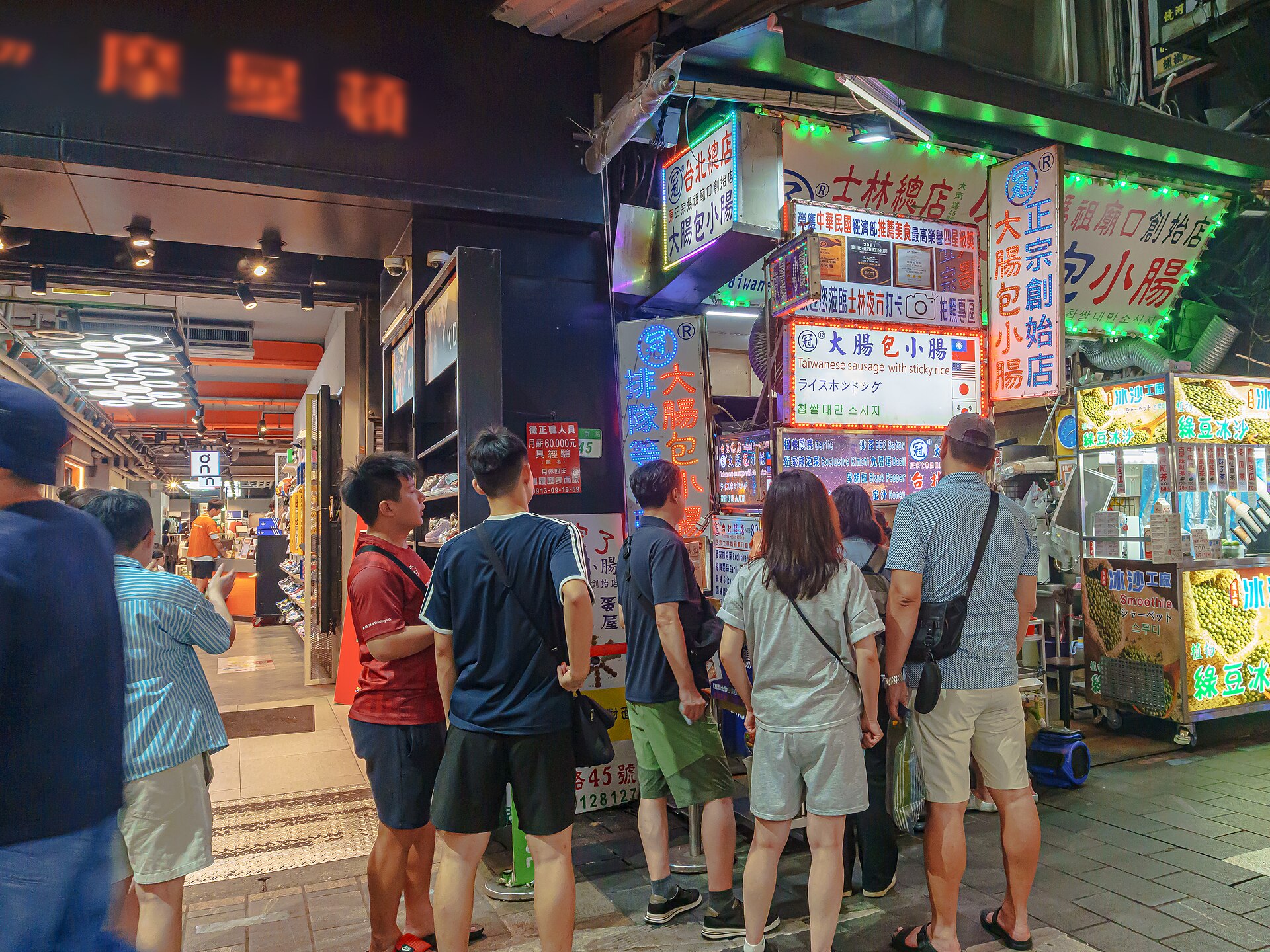
Cash-only territory, reliably:
- Night-market stalls. All of them, effectively. A handful of larger operators take EasyCard, and it is not worth planning around.
- Traditional markets — the morning markets, the dried-goods shops on Dihua Street, the fabric market.
- Small family-run restaurants. The rule of thumb: if there is no printed menu in English and the tables have plastic stools, bring cash.
- Temples. Donation boxes, incense, fortune-telling, blessing services.
- Taxis flagged on the street. Many will take EasyCard, some take cards, plenty take neither. If you booked through an app, the app handles it.
- Local buses outside the EasyCard system, and small-town transport on day trips.
The failure mode that catches people is ordering first and discovering the payment situation afterwards, in a night market, with a queue behind them. Ask before you order if you are unsure, or simply keep enough cash that you never have to.
ATMs: the cheapest way to get New Taiwan dollars
Withdrawing from a Taiwanese bank ATM with your home debit card gives you the interbank exchange rate, which is better than any exchange counter, any airport bureau and certainly better than changing money before you leave.
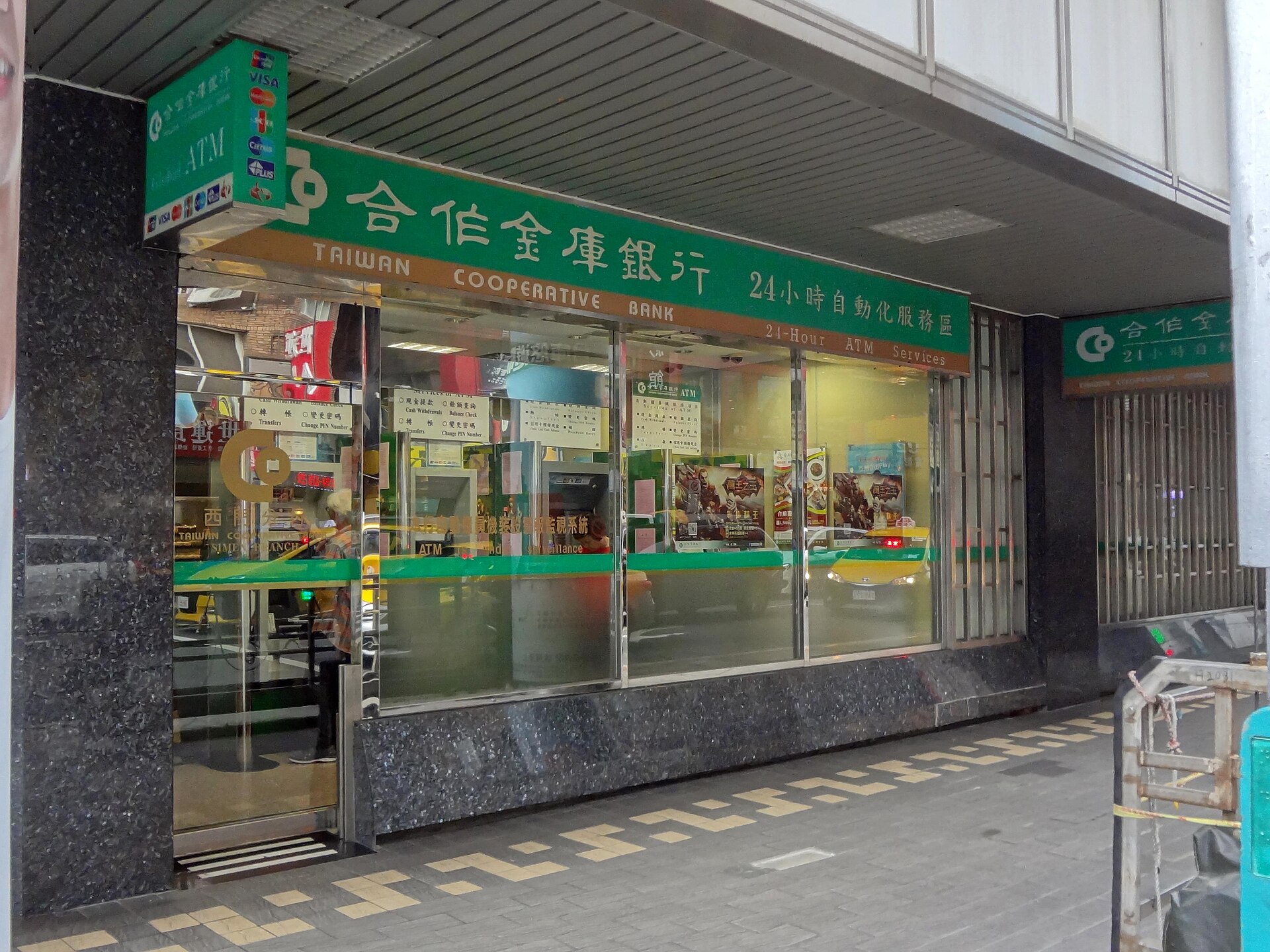
Where to find them. Every 7-Eleven and FamilyMart has one, there are 24-hour ATM lobbies attached to most bank branches, and there are banks of machines in every MRT station of any size and in the airport arrivals hall. The convenience-store machines are the most useful because they are everywhere and always open.
Which ones take foreign cards. Look for Visa, Mastercard, Cirrus or PLUS logos on the machine or the sign above it. The large banks — Bank of Taiwan, Taiwan Cooperative, Cathay United, CTBC, E.SUN — are all reliable. Post office ATMs are the one common exception that often will not take a foreign card, which is a nasty surprise because they are otherwise everywhere.
How to not lose money at the machine
Three rules, in order of how much they cost you if you get them wrong.
Always decline dynamic currency conversion. The machine will offer to charge you in your home currency at “a guaranteed rate”. That rate is worse than your bank’s, typically by 3–6%, and the offer is designed to be the path of least resistance. Choose to be charged in NT$ every time — your own bank will then do the conversion at the interbank rate.
Withdraw larger amounts, less often. Most Taiwanese banks charge a flat fee per foreign withdrawal, typically around NT$100, and your own bank probably adds one too. Two withdrawals of NT$10,000 cost half as much in fees as four of NT$5,000. Taipei is safe enough that carrying the balance in your hotel is not a concern.
Tell your bank you are travelling. Taiwanese ATM networks trip fraud detection on a lot of European and Australian cards, and a frozen card on your first evening is a genuinely bad time. A travel notice takes two minutes in your banking app.
If your home bank charges high foreign-transaction fees, a travel-focused card — Wise, Revolut, Monzo, Chase and their equivalents — will save you real money over a week. That is worth arranging before you fly rather than after.
Changing money: don’t, mostly
Buying New Taiwan dollars at home almost always costs more than withdrawing them here, and NT$ is a currency most Western exchange bureaux stock badly and price accordingly.
Airport exchange counters at Taoyuan are better than that but still worse than the ATM twenty metres away. If you want cash in hand before you clear the terminal, change a small amount — enough for the train and a meal — and get the rest from a machine.
Banks in the city will change cash and generally give a fair rate, but they want your passport, the process takes time, and branches close at 15:30 on weekdays and do not open at weekends. Hotels will change money at a rate designed to discourage you.
One genuine use case: if you are arriving with US dollars, euros or Japanese yen already in hand for some other reason, Taiwanese banks will take them at a decent rate. Do not go out of your way to acquire them first.
The EasyCard is also a wallet
Most visitors buy an EasyCard for the MRT and never realise it does more. It is a stored-value card accepted at 7-Eleven, FamilyMart, Hi-Life, OK Mart, many supermarkets, chain cafés, vending machines, lockers, YouBike and a lot of taxis.

Loading NT$1,000 onto it at the start of the trip removes a surprising amount of friction: you stop needing coins for the metro, you stop breaking notes for a bottle of water, and you can pay for a taxi without either party hunting for change. Top up at any station machine or over the counter at any convenience store. Our EasyCard guide covers the mechanics and how to get your remaining balance back before you fly.
What about mobile payments?
Taiwan has a busy domestic mobile payment scene — LINE Pay, JKOPay, Taiwan Pay,街口 — and you will see the QR codes everywhere. Almost all of it requires a Taiwanese bank account or a local phone number to register, which puts it out of reach for a visitor on a two-week trip.
Apple Pay and Google Pay, on the other hand, work exactly as they do at home wherever contactless cards are accepted. If your card is in your phone, you are covered for everywhere a card works, and no better off anywhere a card does not.
Tipping, service charges and rounding
Taipei does not tip. This is one of the genuine pleasures of eating here and it is worth internalising properly rather than half-believing it.
Restaurants above the casual level add a 10% service charge to the bill automatically. That is the whole transaction; nothing further is expected and leaving extra cash on the table can cause polite confusion or a member of staff chasing you down the street to return it. Casual restaurants, night-market stalls and cafés add nothing and expect nothing. Taxi drivers are not tipped, though rounding up a NT$185 fare to NT$200 is normal and appreciated. Hotel porters and housekeeping are the one place a small note is welcome, and it remains optional.
Our tipping in Taipei guide covers the handful of edge cases, including tour guides and spa staff.
The tax refund, and what it is actually worth
Taiwan’s VAT is 5%, and foreign visitors can reclaim it on qualifying goods. The rules are specific enough to be worth stating precisely:
- Minimum NT$2,000 including tax, spent on the same day at the same authorised store. You cannot aggregate across shops or days.
- Ask for the VAT Refund Claim Form at the till on the day of purchase. You cannot come back for it later.
- Goods must leave Taiwan within 90 days and you must be able to show them.
- A 20% administration charge is deducted from the refund. So the 5% is really about 4% of what you paid.
- Claim before you check your bags in — the E-VAT self-service kiosks near the check-in counters scan your passport and receipt barcodes and pay out in cash or to your card.
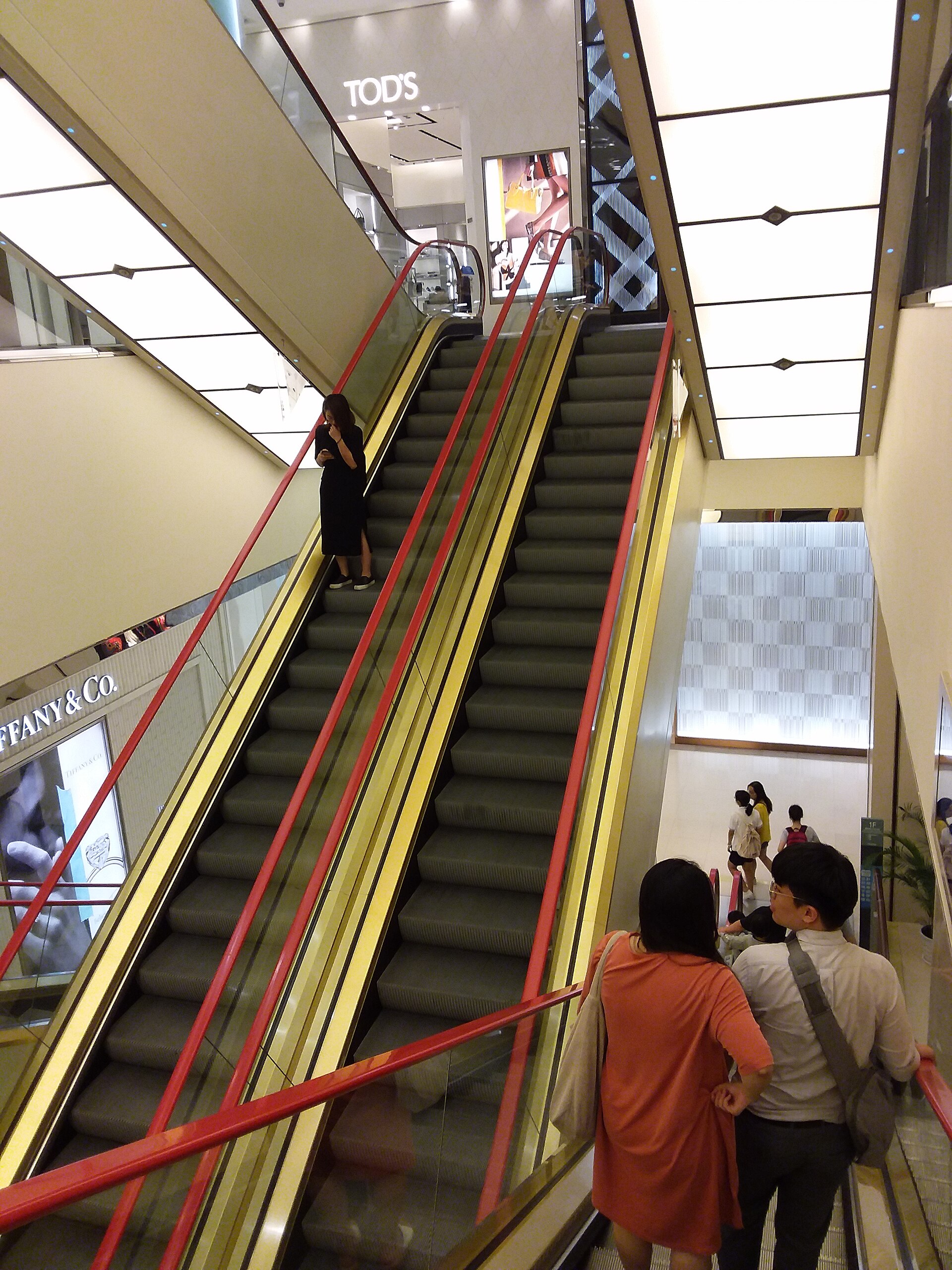
The honest verdict: on one significant purchase — a camera, a bicycle, a piece of jewellery, a serious tea set — it is free money and you should do it. On NT$2,300 of souvenirs it returns under NT$100 and costs you fifteen minutes at an airport kiosk on a morning you would rather spend at the gate. The definitive rules are published by the Ministry of Finance, and our Taiwan tax refund guide covers the process in detail.
Budgeting: what a day actually costs
Taipei is one of the cheapest major cities in developed Asia, and the gap between a frugal day and an indulgent one is narrower than in Tokyo, Seoul or Singapore. That is worth knowing because it changes how much cash planning you need to do.
A lean day — convenience-store breakfast, a NT$120 lunch, night-market dinner, MRT everywhere, free temples and parks — runs NT$700–900 including transport. It does not feel like deprivation; a lot of Taipei residents eat exactly like this.
A normal tourist day — a proper café breakfast, a paid attraction, a sit-down lunch, a decent dinner, a couple of taxis — is NT$1,800–2,800.
An indulgent day — hotel breakfast, Taipei 101 observatory, a Michelin-listed lunch, cocktails, taxis throughout — will reach NT$5,000 and struggle to go much past it without deliberate effort. The ceiling here is low compared with the rest of the region, which is one of the quiet pleasures of the city.
Accommodation sits on top of all three and is the largest single variable: a hostel bed from around NT$800, a solid three-star double NT$2,500–3,500, and the international four- and five-stars from NT$6,000. Our where to stay guide maps the districts to the price bands.
Common money mistakes
Assuming a food city takes cards. Taipei’s reputation as a modern, technologically advanced place leads people to arrive with no cash at all. The best food here is sold from stalls and counters that have never taken a card and never will.
Accepting the ATM’s currency conversion. The single most expensive button in the country. Always choose NT$.
Withdrawing small amounts repeatedly. Flat fees at both ends mean four small withdrawals cost roughly double two large ones.
Changing money at the hotel. The rate is a courtesy charge for not having walked to an ATM.
Not breaking the NT$1,000 notes. An ATM will hand you a stack of them; a NT$60 dumpling stall at 21:00 cannot change one. Buy something small at a convenience store early in the day and get change.
Forgetting the EasyCard balance on the way out. It is refundable at airport and station service counters minus a small handling fee, and people routinely fly home with NT$400 stranded on a card they will never use again.
A workable money plan for a week
Before you fly: tell your bank, check your card’s foreign-transaction fee, and consider a travel card if it is above about 2%.
On arrival: withdraw NT$5,000–10,000 from a bank ATM in the arrivals hall, declining any currency conversion offer. Buy an EasyCard and load NT$1,000 onto it. Do not visit an exchange counter.
Day to day: keep NT$2,000–3,000 in your pocket, EasyCard for transport and convenience stores, card for restaurants, hotels and shops. Break big notes early. Top the cash up from a convenience-store ATM every few days rather than daily.
On the way out: spend down or refund the EasyCard balance, claim the tax refund only if you made a substantial single purchase, and keep a couple of hundred NT$ for the airport train and a last bowl of noodles.
If you are building the wider trip budget rather than just the payment mechanics, Taipei on a budget and Taipei travel essentials are the next stops.
Related Taipei guides
- Taipei Travel Essentials: the pre-trip checklist
- How Much a Taipei Trip Costs
- Taipei on a Budget
- The Taiwan Tax Refund Explained
- Tipping in Taipei: the short answer is no
- The EasyCard: how it works and where it pays
- Taipei’s Night Markets
- Shopping in Taipei
- Taipei Taxis: fares, apps and etiquette
- The Best Taipei Souvenirs
Frequently Asked Questions
How much cash should I bring to Taipei?
Very little from home. Withdraw NT$5,000–10,000 from an airport ATM on arrival and carry NT$2,000–3,000 on you day to day. Buying New Taiwan dollars before you travel costs more and leaves you with currency you may not spend.
Can I use my credit card everywhere in Taipei?
In hotels, department stores, chain restaurants, museums, supermarkets and convenience stores, yes, including contactless. At night-market stalls, traditional markets, temples and small family restaurants, no. Those are cash, and that is where the best food is.
Do ATMs in Taiwan accept foreign cards?
The overwhelming majority do. Look for Visa, Mastercard, Cirrus or PLUS logos, and use the major banks or the machines inside 7-Eleven and FamilyMart. Post office ATMs are the common exception that often will not.
What ATM fees should I expect in Taiwan?
Typically around NT$100 per withdrawal from the local bank, plus whatever your own bank charges. Withdraw larger amounts less often to cut the total, and always decline the machine’s offer to convert to your home currency, which costs another 3–6%.
Should I exchange money before travelling to Taiwan?
No. Home bureaux stock New Taiwan dollars badly and price them accordingly. Airport counters in Taipei are better but still worse than the ATM nearby. Change a small amount only if you want notes in hand before leaving the terminal.
Is Taipei a cash or card city?
Both, in different halves. The formal economy — hotels, malls, chains, museums — is fully cashless-capable. The informal economy — stalls, markets, small restaurants, temples — is cash. You need both, and the mistake is assuming one covers everything.
Can I use Apple Pay or Google Pay in Taiwan?
Yes, anywhere contactless cards are accepted, exactly as at home. The domestic mobile wallets like LINE Pay and JKOPay generally require a Taiwanese bank account or local number and are not practical for short-term visitors.
How much is the tax refund for tourists in Taiwan?
Five per cent VAT, less a 20% administration charge, so roughly 4% of what you paid. The minimum is NT$2,000 including tax at a single authorised store on a single day, claimed with a form issued at the till and processed at the airport before you check in.
Do I need to tip in Taipei?
No. Mid-range and upper restaurants add 10% service automatically and that is the end of it. Taxis, cafés and stalls expect nothing. Leaving extra cash can genuinely confuse people.
What is the EasyCard and should I put money on it?
A stored-value card for transport that also works at convenience stores, supermarkets, vending machines, lockers, bike hire and many taxis. It costs NT$100 non-refundable. Load NT$1,000 at the start of a week-long trip and it removes most of your need for small change.
Are NT$2,000 notes a problem?
They can be. They are uncommon enough that many small vendors will refuse or struggle to change one. If an ATM offers a denomination choice, take NT$1,000 notes, and break one at a convenience store early in the day.
Is it safe to carry cash in Taipei?
Yes. Taipei has very low rates of pickpocketing and street crime, and carrying a few thousand NT$ is entirely normal. Keep the sensible habits you would anywhere in a crowded night market, but there is no need for a money belt.
Can I get my unused EasyCard balance back?
Yes, at station and airport service counters, minus a small handling fee. The NT$100 card deposit itself is not refundable. Do this before you go through security rather than remembering it at the gate.
The Bottom Line
Withdraw New Taiwan dollars from a bank ATM on arrival, decline every offer to convert the currency for you, and keep NT$2,000–3,000 in your pocket at all times. Put NT$1,000 on an EasyCard for transport and convenience stores. Use a card for hotels, restaurants and shops, and never assume a food stall will take one.
Do not change money at home, do not tip, and only bother with the tax refund if you have made one substantial purchase. Get those five things right and money in Taipei becomes what it should be — a background detail in a city where the best things cost remarkably little.
Photo Credits
A 24-hour bank ATM lobby in Taiwan: 24-Hour ATM Services, Simen Branch, Taiwan Cooperative Bank 20180929 by Solomon203, CC BY-SA 4.0, via Wikimedia Commons.
Queue at a Taipei night-market sausage stall: 202606 Guan Da Chang Bao Xiao Chang by Junyu-K, CC BY-SA 4.0, via Wikimedia Commons.
Shoppers on SOGO Fuxing escalators: TW 台灣 Taiwan 台北 Taipei mall escalators night August 2019 SSG 21 by Easo Lomsgiar, CC BY-SA 4.0, via Wikimedia Commons.