This article contains advertising. Our booking links are routed through a partner that adds commission tracking automatically, so if you book through one we earn a commission from the provider, at no extra cost to you. It never affects what we recommend. Affiliate disclosure
Most Taipei night market visitors get the food right but get the social code wrong. Pointing at the wrong moment, paying with the wrong hand, taking photos at sensitive times, ordering in confusing combinations – small etiquette mistakes that don’t ruin the experience but make you stand out as obviously foreign. This 2026 guide of Taipei night market etiquette covers how to order like a local, pay smoothly, navigate crowded stalls, photograph respectfully, and avoid the common mistakes that mark you as a first-timer. Master these and your night market experience becomes dramatically more natural.
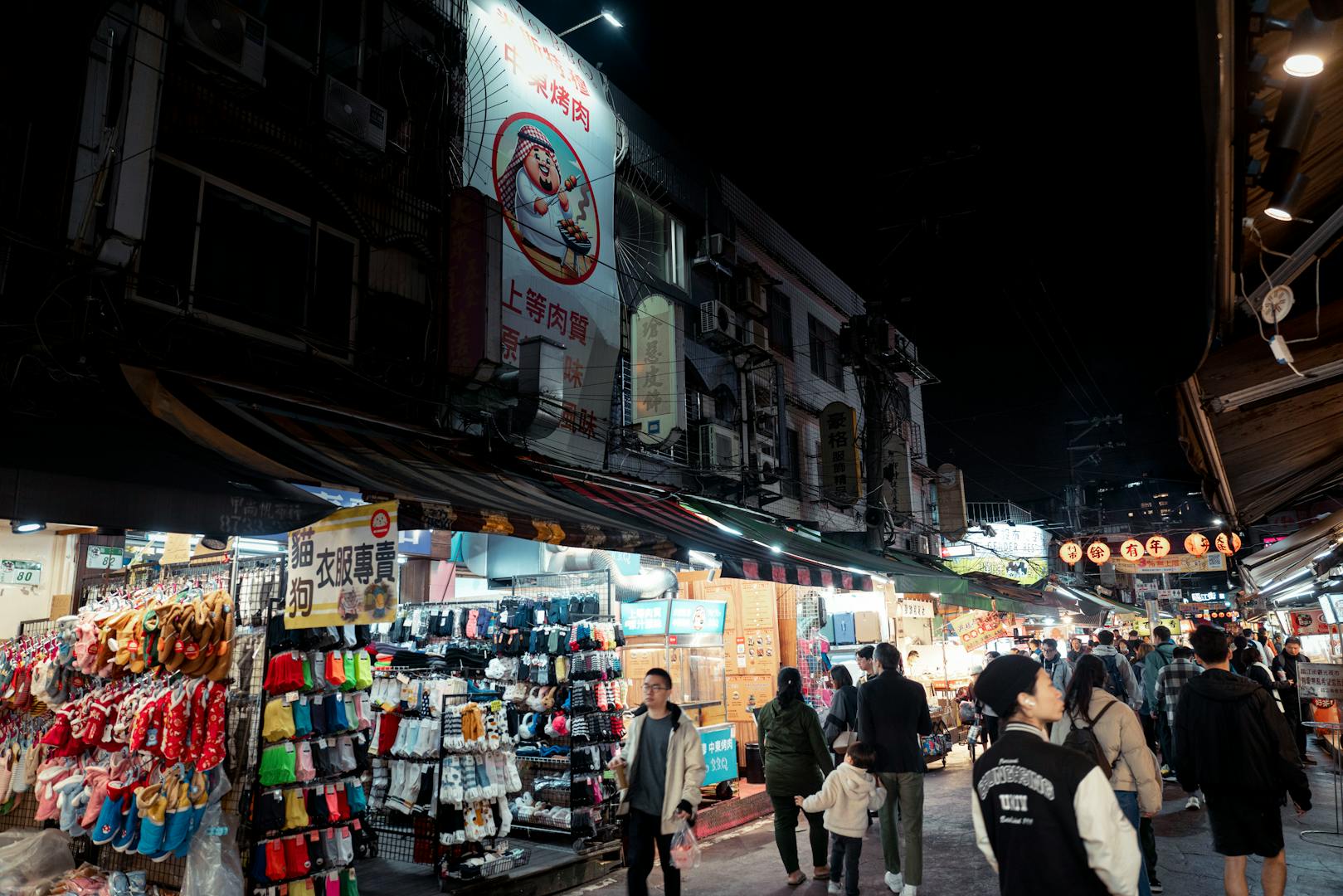
How to Order at a Taipei Night Market
The Basic Sequence
Most night market stalls follow a predictable order pattern:
1. Approach the counter. Stand close enough to be noticed but don’t crowd.
2. Look at the menu (printed board, photos, or display case).
3. Decide what you want and the quantity.
4. Get the vendor’s attention – eye contact, a small wave, or “Bu hao yi si” (excuse me).
5. Order with “Zhe ge” (this one) pointing at items, plus numbers for quantity.
6. Vendor confirms with a price total (often shown on a calculator or fingers).
7. Pay with cash.
8. Wait for the food, watching the cooking if relevant.
9. Receive food, say “Xie xie” (thank you).
10. Move out of the way to eat.
Total time: 1-3 minutes per stall on average.
What “Zhe Ge” Means
“Zhe ge” (這個) means “this one” – the most useful tourist phrase at night markets. Combined with pointing, it handles 80% of ordering situations. Examples:
“Zhe ge” + pointing at a single item = “I’ll have this one.”
“Zhe ge, liang ge” + pointing + holding up two fingers = “Two of these.”
“Zhe ge, da” + pointing = “The bigger size of this.” (Da = big.)
“Zhe ge bu yao xiang cai” = “This one, no cilantro.” (Bu yao = don’t want.)
Vendors understand pointing universally. Combined with basic Mandarin numbers (yi, er, san – one, two, three), you can order almost anything.
Numbers Quick Reference
1: yi (一) / 2: er or “liang” for “two of something” (二/兩) / 3: san (三) / 4: si (四) / 5: wu (五)
For ordering: hold up that many fingers while saying the number. Universal across all vendors.
Payment Etiquette
Cash Is Standard
Bring NT$500-1,000 in small bills (NT$50, NT$100, NT$500 notes) per evening. Most stalls do not take credit cards or mobile payment. Larger night market stalls and chain restaurants may accept cards.
How to Pay
Hand cash to the vendor with both hands (Asian formal courtesy) or with your right hand. Some vendors take cash with one hand without comment – both work. Don’t toss money on the counter.
If you need change, indicate “yes please” with a small head nod when handing over a larger bill. Vendors give change in coins and small bills.
If exact change is appreciated, give the vendor exact amounts when possible. Speeds the transaction.
Receipts
Most night market stalls don’t give receipts. Don’t ask for them – it’s an awkward unusual request. If you’re an expense-tracking traveler, take photos of your purchases or note the cost on your phone.
Tipping
Don’t tip at night markets. Pay the listed price. See our Tipping in Taipei guide for full details.
Bargaining
Not common at night markets. Prices are essentially fixed. Modest negotiation possible for items over NT$1,000 (rare at most stalls) but unusual for food items.
Behavior at Crowded Stalls
Queueing
Some stalls have formal lines (the famous black pepper bun at Raohe). Stand in line. Others have informal “swarm at the counter” patterns. Approach from a position that makes sense to the vendor.
Don’t push or rush. Even at very crowded stalls, locals are patient. Wait your turn.
Space and Movement
Night markets are crowded. Move with the flow of traffic, not against it. Don’t stop in the middle of walkways (you’ll block others) – step to the side at the edge of stalls.
If you’re eating, find a spot off the main walkway. Some markets have small tables or wall-side spots for standing eating.
Don’t block stall counters. Order, move slightly aside, and eat.
If you have a stroller, stay at the edge of walkways. Don’t bring it through tight stall areas at peak hours.
Eating Pace
Night market food is “walking food” – meant to be eaten quickly while moving. Don’t sit and savor a single dish for 30 minutes at a busy stall. Eat, move, eat again.
Standing eating is normal. You don’t need a table.
Sharing Food
Most night market portions are sized for one or two. If you and a friend order something to share, that’s normal. The vendor doesn’t need to know you’re sharing.
Touching
Don’t touch food on display or in baskets unless you’re paying. Some vendors keep displays for show; touching is rude.
You can touch your own ordered food once it’s served. Don’t reach into the cooking pot.
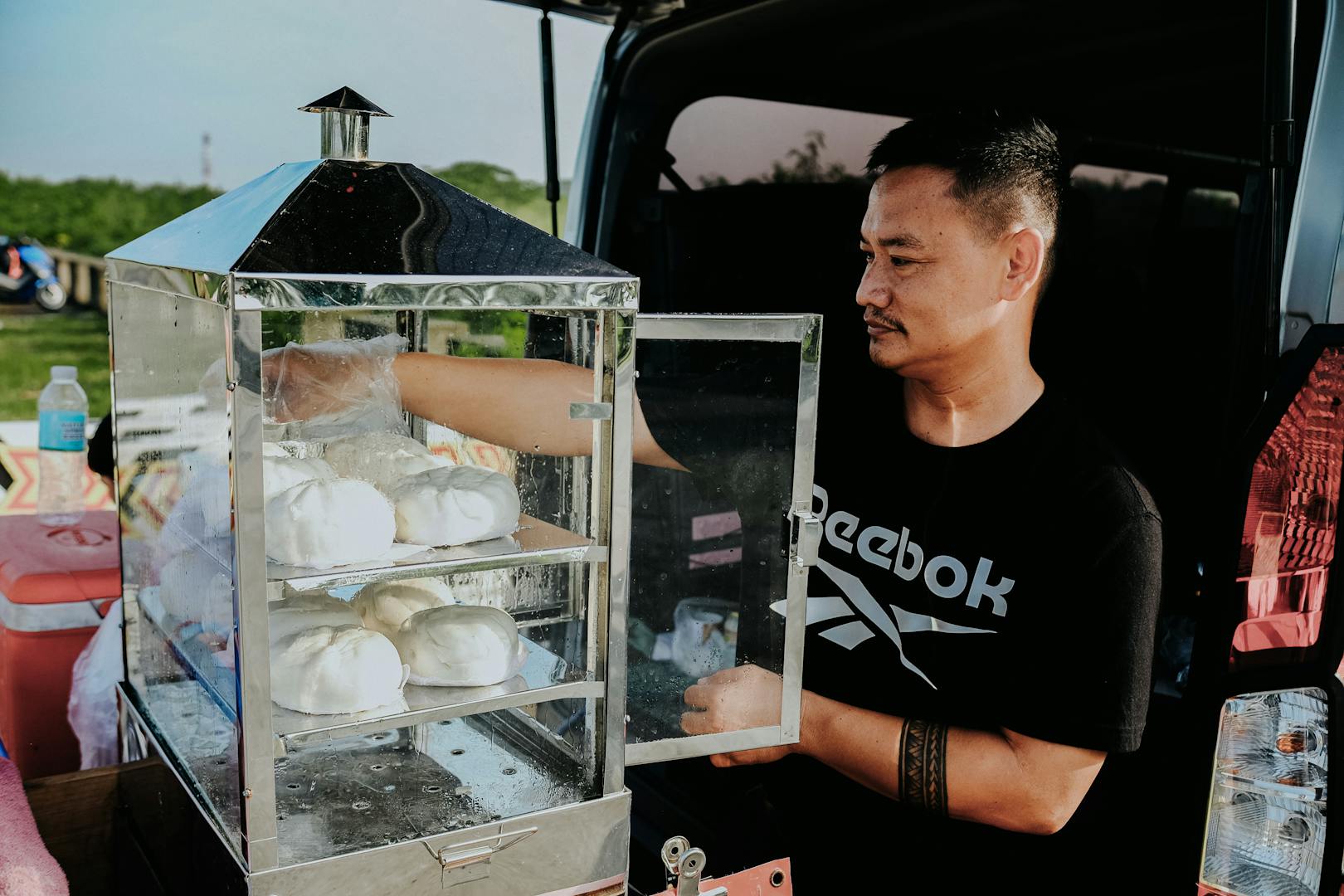
Photo Etiquette
Photographing Food
Generally fine. Most vendors don’t mind. A quick photo of your food before eating is universal tourist behavior. Don’t spend 5 minutes posing your food at a busy stall – hold up traffic.
Photographing Vendors
Ask permission for close-up portraits. Most vendors are friendly but a respect-asking approach gets you better photos and good will.
For wider scene shots that incidentally include vendors, no permission needed.
Don’t photograph during food preparation in a way that distracts the cook.
Photographing Other Diners
Avoid identifiable portraits of strangers without permission. Wider scenes are fine.
Selfies and Vlogs
Acceptable in moderation. Don’t set up tripods at peak hours, blocking walkways. Don’t spend 10 minutes filming the same stall.
Drones
Not allowed at night markets. Don’t try.
Cultural and Social Customs
Volume Level
Taiwanese conversation at night markets is moderately loud – vendors call out specialties, crowds chat, music plays. Match the volume, don’t dramatically exceed it.
Personal Space
Night markets are crowded. Personal space is minimal. Brushing against people is unavoidable and not rude. Don’t apologize excessively for accidental contact.
Smell of Food
Some night market food (stinky tofu, intense spices) has strong smells. Don’t comment loudly. Don’t make exaggerated reactions. Try the food or move on.
Asking Questions
Asking vendors about ingredients or how to eat something is fine. Use Google Translate or simple English. Vendors are usually patient with tourists.
Compliments
Simple compliments like “Hao chi!” (delicious!) are appreciated. Saying it after eating earns you smile points.
Saying Thank You
“Xie xie” (thank you) at the end of each transaction. Universal.
If You Don’t Like Something
Don’t make exaggerated negative reactions. Don’t toss food. Just throw uneaten portions in the trash. Vendors don’t expect everyone to love everything.
If You Need to Leave a Line
Walk away politely. Don’t announce your departure. If you’re losing patience, that’s fine – just go elsewhere.
Specific Stall Types
Stinky Tofu Stalls
Strong smell. If you’re ordering, approach normally. If you’re not ordering, walk past briskly without dramatic reactions. Some tourists pose for photos near stinky tofu stalls “for the experience” – that’s fine but quick.
Live Cooking Stalls (Hot Pot, Skewers)
The cooking is part of the show. Watch from a respectful distance. Don’t reach toward fire or hot oil. If you order, the vendor will gesture when ready.
Sweet/Dessert Stalls
Often slower-paced. You can chat with the vendor about toppings and customizations. Common to order shaved ice or tofu pudding and have a longer interaction.
Drink Stalls
Quick transactions. Hand over money, indicate sugar/ice levels (high, medium, low), receive drink, walk on.
Sit-Down Stalls (Beef Noodle, Hot Pot)
Treat these as casual restaurants. Wait to be seated or take an open table. Order from the menu. Pay at the counter at the end. Standard restaurant etiquette applies.
Common Tourist Mistakes
Mistake: Wandering with Food, Stopping in Walkways
Eat off to the side. Don’t block traffic flow.
Mistake: Too Much Photography Before Eating
Quick photo OK; lingering photo session at a busy stall is rude.
Mistake: Speaking English Loudly Demanding Service
Speak in normal volume. Patient gestures and simple Mandarin work better than loud English.
Mistake: Bargaining at Night Markets
Prices are fixed. Bargaining is rude in this context.
Mistake: Asking for Detailed Cooking Modifications
Most night market food has limited customization. Asking for “no salt, no oil, no garlic, no spice” is annoying. Pick a different dish if you have many restrictions.
Mistake: Trying to Pay with Large Bills
Vendors can usually break NT$1,000 bills but it slows the transaction. Bring NT$50, NT$100, NT$500 bills for smoother payments.
Mistake: Eating While Walking Without Awareness
Soup or saucy food dripping while you walk through crowded markets is messy. Eat at the side of stalls when possible.
Mistake: Strong Negative Reactions to Smells
Stinky tofu and some other foods have strong smells. Don’t pinch your nose dramatically or comment loudly. Quietly move on if it’s not for you.
Mistake: Tipping
Don’t tip. Pay the listed price. Save the tip money for situations where tipping is appropriate.
Mistake: Bringing Outside Food
Don’t carry food from another stall into a sit-down restaurant. Buy from the restaurant or eat your other food before entering.
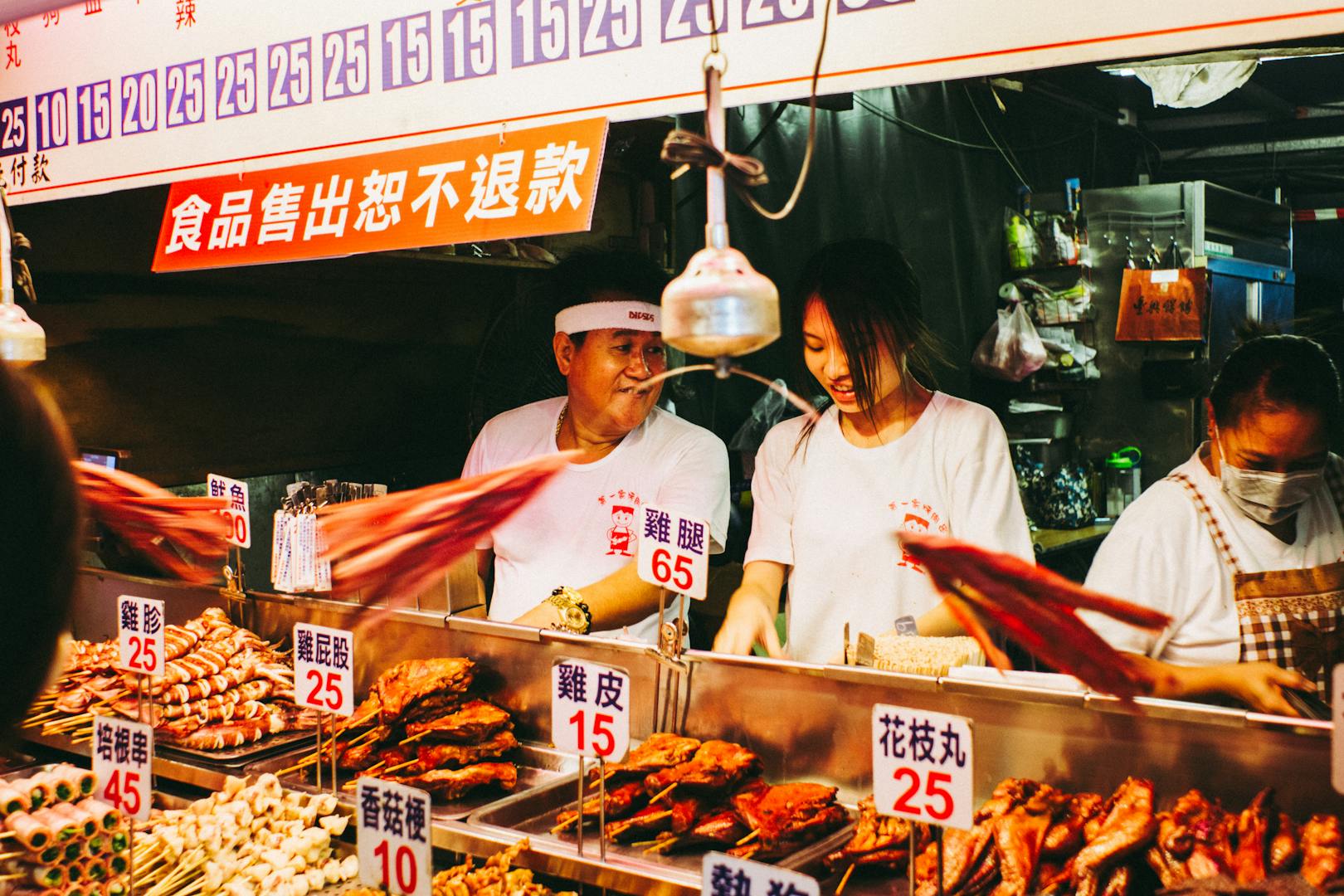
What Locals Do That Tourists Don’t
Order in advance for popular stalls. Locals call ahead to popular stalls (Fu Zhou black pepper bun, famous beef noodle) for pickup orders. Reduces wait. Tourists can do this with help from Mandarin-speaking concierge or guide.
Bring their own water bottles. Locals often carry water rather than buying drinks at night markets. Saves money.
Order specific cuts and preparations. Locals will say “more crispy please” or “extra spicy” to vendors. Tourists default to standard orders.
Eat during off-peak hours. Locals often eat 5-6pm (before crowds) or 10-11pm (after crowds). Tourists peak 7-9pm.
Use small bills. Locals carry exact change or near-exact. Tourists fumble with NT$1,000 bills.
Move quickly through stalls. Locals make decisions fast, eat fast, move on. Tourists deliberate longer.
Know the right combinations. Locals know which dishes pair well (e.g., beef noodle with side of fried tofu). Tourists order one dish and move on.
Ask about new menu items. Locals ask vendors what’s new this season. Tourists order the same famous dishes everyone else orders.
Greet familiar vendors. Locals develop relationships with stalls they frequent. Tourists are anonymous customers.
Dietary Communication
If you have dietary restrictions:
Vegetarian: “Wo chi su” (I eat vegetarian) or look for “素” signs at stalls.
Vegan: “Wo chi quan su” (I eat fully vegetarian) – excludes eggs and dairy.
No allium: “Bu yao da suan, bu yao yang cong” (no garlic, no onion). Traditional Buddhist vegetarian excludes these.
Gluten allergy: “Wo dui mai zi guo min” (I’m allergic to wheat). Print this in Chinese for serious allergies.
Peanut allergy: “Wo dui hua sheng guo min” (I’m allergic to peanuts). Critical to communicate before ordering.
Spicy: “Bu yao la” (no spicy) for ultra-mild; “Shao la” (less spicy) for slightly mild.
Cooking quality: “Bu yao tai sheng” (don’t want too raw) for meat preferences.
Bring a printed dietary card in Chinese for serious restrictions. Most vendors can accommodate basic restrictions but won’t if they can’t understand.
Hand Hygiene
Night markets are crowded with hand-touching of cash, food, and surfaces. Practical hygiene:
Carry hand sanitizer. Use before eating.
Wash hands when possible (department store bathrooms have soap and water).
Use disposable chopsticks provided by stalls. Vendors usually provide them; some stalls have reusable utensils.
Don’t touch food with bare hands unless it’s the cultural norm (most food at night markets is served with chopsticks or in disposable containers).
If you have a respiratory illness, wear a mask in crowded markets – locals do this routinely.
What to Do When You’re Lost
Night markets are sprawling and easy to get turned around in. If lost:
Use Google Maps. The major markets are mapped well.
Ask a young person for directions in English (younger Taiwanese typically speak some English).
Look for major intersections or landmarks (the temple at Huaxi Street, the main entrance arch at Raohe).
If completely lost, head to the nearest MRT station – signs are bilingual.
For Repeat Visitors
If you’ve done one Taipei night market, here’s how to upgrade your second visit:
Try a less famous market (Tonghua, Linjiang Street) where you’ll be a more obvious foreigner but get a more local experience.
Order from stalls without English signage – use Google Translate camera mode.
Try a specific specialty (e.g., dedicated dumpling stall, single-style noodle shop) rather than browsing.
Visit during off-peak hours (5-6pm or 10-11pm).
Engage with vendors more – ask questions about ingredients, regions, recipes.
Try foods you skipped the first time. Stinky tofu, oyster intestines (specifically), pork blood cake – the “challenging” Taiwan foods.
Related Taipei guides
- Shilin Night Market: The Complete Guide for Tourists
- Raohe Night Market: Why Locals Call It the Best
- Ningxia Night Market: Old-School Taipei Classics
- Shida Night Market: Student-Style Eats in Taipei
- Nanjichang Night Market: Hidden Local Favorite
- Huaxi Street Night Market (Snake Alley) Guide
Frequently Asked Questions
What is the proper etiquette at Taipei night markets?
Order with “Zhe ge” (this one) and pointing. Pay with small bills. Don’t tip. Move through stalls quickly. Eat off to the side of walkways. Photograph food respectfully. Don’t bargain. Say “Xie xie” (thank you) at each transaction.
Do I need to speak Chinese at Taipei night markets?
No, but a few phrases help. “Zhe ge” (this one), numbers 1-5, “Bu yao la” (no spicy), “Xie xie” (thank you), and “Duo shao qian” (how much). Most vendors understand pointing and basic English food words. Google Translate camera mode handles Chinese-only menus.
Should I tip at night markets in Taipei?
No. Tipping is not part of Taiwanese culture. Pay the listed price. Don’t add a tip even for exceptional service. The listed price is the final price.
How should I pay at Taipei night markets?
Cash. Most stalls don’t take cards or mobile payment. Bring NT$500-1,000 in small bills (NT$50, NT$100, NT$500 notes). Some larger stalls and chain restaurants accept cards but cash is universal.
Can I take photos at Taipei night markets?
Yes, generally. Food photos are universal and welcome. Vendor portraits should be done with permission. Quick photos are fine; lengthy photo sessions at busy stalls are rude. No flash photography. Don’t block traffic flow.
Should I bargain at Taipei night markets?
No. Prices are fixed at night markets. Bargaining is considered rude in this context. The exception is large purchases over NT$1,000 (rare at food stalls) where modest negotiation (10%) may be possible.
What should I avoid doing at Taipei night markets?
Avoid: blocking walkways while eating, photographing too long at busy stalls, paying with NT$1,000 bills (use small bills), tipping, bargaining, making dramatic negative reactions to smells (stinky tofu), demanding cooking modifications, speaking loudly to demand service.
How do I order without speaking Mandarin?
Point at what you want and say “Zhe ge” (this one). Use numbers for quantities. Use Google Translate camera mode for Chinese-only menus. Show photos on your phone for specific items. Most vendors understand pointing universally.
Is it OK to share food with friends at a night market?
Yes. Most night market portions are sized for one or two people. Sharing is normal. The vendor doesn’t need to know. Just eat from the shared portion as you walk or stand.
What is the best way to navigate a crowded Taipei night market?
Walk with the flow of traffic, not against it. Step to the side at the edge of stalls to make ordering decisions. Don’t stop in the middle of walkways. Use chopsticks or hands to keep food off your clothes. Wear comfortable closed shoes. Avoid peak hours (7-9pm Friday/Saturday) if you want easier navigation.
The Bottom Line
Taipei night market etiquette boils down to: be respectful, move efficiently, pay with cash, don’t tip, don’t bargain, photograph quickly, eat off to the side, and use simple Mandarin phrases for ordering. Master these and your night market experience becomes more natural and enjoyable – vendors treat you better, you save time, and you blend in more. The food is the same whether you behave perfectly or awkwardly, but the experience is much richer when you act like the locals do.