This article contains advertising. Our booking links are routed through a partner that adds commission tracking automatically, so if you book through one we earn a commission from the provider, at no extra cost to you. It never affects what we recommend. Affiliate disclosure
An hour south of central Taipei, in the foothills of the Snow Mountains, sits Wulai (烏來) – a small town of about 6,000 people that is the closest indigenous Atayal village to the capital, home to one of Taiwan’s most impressive waterfalls, and the source of some of the cleanest natural hot spring water in the country. A Wulai day trip is the easiest way to see indigenous Taiwanese culture, get into proper forested mountains, and soak in a natural hot spring all on the same day – and it is reachable by public bus from a Taipei MRT station for under NT$50 each way. This 2026 guide covers what to see, what to eat, how to get there, when to go, and how to combine the visit with hot springs or the surrounding hiking trails.
What Is Wulai?
Wulai is an indigenous Atayal township at the southern edge of New Taipei City, where the Nanshi River carves a deep gorge through forested mountains. The Atayal people have lived in this valley for at least 400 years; today the township is one of the most accessible places in Taiwan to encounter Atayal indigenous culture, food, music, and crafts. The name “Wulai” itself comes from the Atayal word “Kilux Ulay,” meaning “hot and poisonous” – a reference to the natural sulfur hot springs that bubble up along the river.
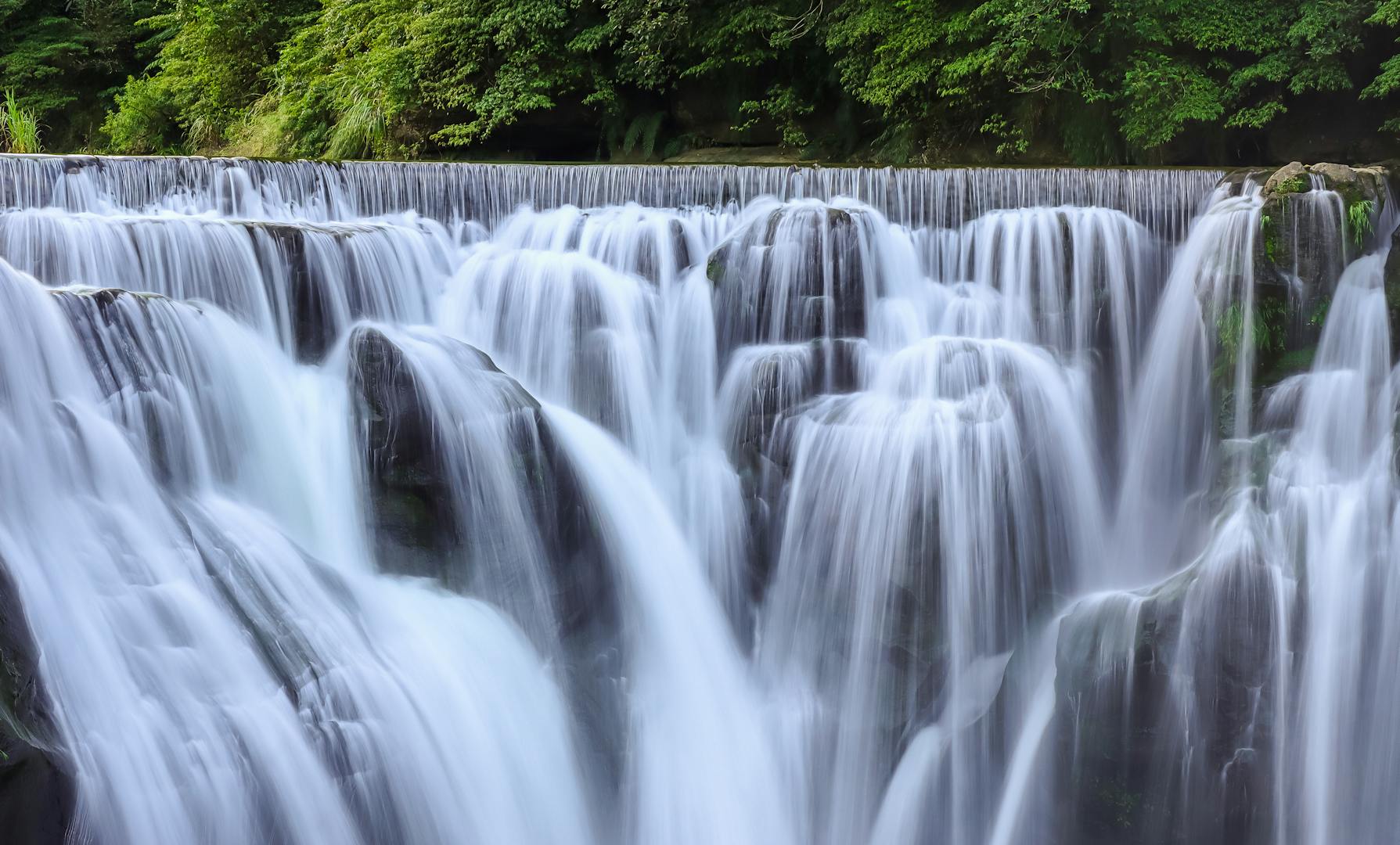
Three things draw visitors. The Wulai Waterfall, an 80-metre cascade visible from a viewing platform a 30-minute walk from the bus terminus. The hot springs along the river, in hotel pools and bathhouses beside the water. And the Atayal village itself – one street of restaurants, craft shops, and the small Wulai Atayal Museum, all run by indigenous families.
How to Get to Wulai from Taipei
The Wulai day trip is one of the easiest from Taipei because the bus is direct, frequent, and cheap.
Step 1: Take the MRT Green Line to Xindian Station (新店). This is the end-of-line station for the Green Line south of central Taipei. About 30 minutes from Taipei Main Station, NT$25 with EasyCard.
Step 2: Take Bus 849 from Xindian Station to Wulai. The bus stop is directly outside Exit 2 of Xindian Station. The bus runs every 15-25 minutes from 6:30am to 10:30pm. Travel time 40-50 minutes. Cost NT$45 with EasyCard.
Step 3: Get off at Wulai bus terminal (the last stop). The terminal is at the entrance to Wulai Old Street, directly above the river. From there everything is within walking distance.
Alternative transport:
Driving: Wulai is 50 minutes from central Taipei via Provincial Highway 9. Free parking at most hot spring hotels; public parking at the Wulai entrance for NT$50-100 per day.
Taxi: NT$700-900 one way from central Taipei. Reasonable if you have 3-4 people, especially if you also want to be driven home.
Uber: NT$700-1,100 one way. Not always available for the return trip from Wulai – have a backup plan if you Uber out.
Klook/KKDay tours: Multiple operators run Wulai day trip packages for NT$1,200-2,000 per person including transport, guide, and lunch. Useful if you want everything organized.
What to See in Wulai
The main attractions cluster within walking distance of the bus terminus. A typical day-trip route covers all of them in 4-6 hours.
Wulai Old Street
The main pedestrian shopping street, running parallel to the river. About 200 metres long, lined with Atayal-run restaurants, snack stalls, craft shops, and small shrines. Mountain-pig sausage, millet wine, fresh roasted corn, sticky rice in bamboo tubes, and wild greens are the local specialties. Most stalls open 10am-6pm. The Old Street is also where the Atayal museum and the cable car station are located.
Wulai Atayal Museum
Free entrance. A small but well-curated indigenous culture museum covering Atayal history, weaving traditions, tattoo culture, hunting tools, and the language. Allow 45-60 minutes. Closed Mondays. The on-site gift shop has high-quality Atayal-made textiles and crafts.
Wulai Mini-Train (Trolley)
A small narrow-gauge trolley that runs from the end of Old Street to the waterfall viewing area, about 1.5 km, in 15 minutes. Originally built to transport logged timber, now repurposed for tourism. NT$50 one way per person. Alternatively, you can walk the same route in 30-40 minutes along a flat trail beside the train tracks.
Wulai Waterfall
The headline attraction. An 80-metre vertical drop visible from a designated viewing platform across the river. There is a smaller separate viewpoint nearer the waterfall accessible by another short walk. Best visited mid-morning when sunlight catches the falling water at the right angle. After heavy rains the waterfall doubles in volume; in dry winter it is thinner but the surrounding cliffs are equally photogenic.
Wulai Cable Car (空中纜車)
A 1.2 km cable car from the waterfall viewing area up to the Yun Hsien Resort (雲仙樂園) on the mountain above. NT$220 round trip. The resort at the top has gardens, walking trails, a small lake, and the (very dated) Yun Hsien hotel and amusement park. Most visitors do the cable car for the views, walk for 60-90 minutes at the top, and come back down. Optional but worth doing if you have the time and want a 360-degree look at the gorge.
Wulai Hot Springs
Two ways to experience them:
Not the river itself: Wulai was once famous for free rock pools on the bank of the Nanshi River below Old Street, where hot spring water mixed with the river. The city cleared them in 2017 and 2018, and soaking in the riverbed is now banned, with fines of NT$5,000 to NT$100,000 under the tourism law. Signs mark the no-bathing zone. Enjoy the view of the river from a hotel pool instead — it is safer, too, as the Nanshi rises fast after rain.
Hot spring hotels: A row of hotels along the river offer day-use hot spring access for NT$300-1,200 per person. Top picks: Volando Urai Spring Spa and Resort (high-end, panoramic gorge views, NT$1,200+), Pause Landis (mid-range, intimate spa), and the older but charming Pause Wulai (NT$500-800 day-use). Most have both indoor and outdoor pools, mixed and gender-segregated.
The Wulai hot spring water is a clear, weakly alkaline carbonate spring – quite different from Beitou’s sulfur-heavy water. Locals consider it gentler on the skin and longer-soakable. Recommended for first-time hot spring users who find Beitou intense.

What to Eat on a Wulai Day Trip
Wulai is one of the best places near Taipei to try indigenous Taiwanese food. Atayal cuisine emphasizes hunted meats (wild boar, mountain pig), fermented grains (millet wine), foraged greens, freshwater fish, and bamboo cooking. Specialties worth seeking out:
Mountain pig sausage (山豬肉香腸): Grilled over charcoal, served on a stick with raw garlic. Fatty, smoky, intensely savory. NT$60-100 per stick. The Old Street’s grill stalls all sell some version.
Millet wine (小米酒): Sweet, milky, low-alcohol fermented millet drink. Atayal traditional. Available in shot glasses (NT$30) or small bottles (NT$120-200). Genuinely good – tastes like rice wine mixed with sweet pudding.
Sticky rice in bamboo (竹筒飯): Glutinous rice and pork/mushrooms stuffed into a hollow bamboo tube and steamed. The bamboo imparts a subtle herbal flavor. NT$80-120 per tube.
Wild greens stir-fry (山菜): Whatever the local foragers brought in that day, stir-fried with garlic. Typically bittersweet leafy greens uncommon in the city. NT$120-180 per plate.
Smoked river fish (溪魚): Freshwater fish caught from the local streams, salt-cured and smoked. Bony but delicious. NT$200-350 per fish.
Roasted corn (烤玉米): Sweet Taiwan corn brushed with sweet-soy glaze and grilled over charcoal. NT$60-80 per cob.
Hot spring eggs: Eggs cooked slowly in the hot spring water. Soft, custardy yolks. NT$50-80 for 4 eggs.
Atayal restaurants: For a sit-down lunch, Tai Ya Po Po (泰雅婆婆) and Hsiao Mi Yuan (小米園) are two of the best – both run by Atayal families serving full sets with wild boar, millet rice, fish, and mountain greens. NT$300-500 per person.
Wulai Hiking Trails
If you have energy for some walking beyond the main attractions, Wulai has several accessible trails:
Neidong Forest Recreation Area: 15 minutes by taxi from Wulai Old Street. A managed national forest park around the three-tiered Xinxian Waterfall (信賢瀑布), with fern-filled trails and Taiwan endemic birds. Admission NT$65 on weekdays and NT$80 at weekends and holidays; open 08:00–17:00 (07:00–17:00 on holidays). The paved 1 km waterfall trail takes about 30 minutes each way; the upper viewing platform has been closed after a landslip, so check the Forestry and Nature Conservation Agency’s site before you go.
Tonghou Trail (桶後越嶺步道): A 7.5 km riverside trail along the Tonghou River, popular with locals for shaded summer walking. Trailhead 5 km past Wulai Old Street; flag a taxi or arrange ahead.
Hapen Nature Reserve: Requires advance permit. Highest-quality untouched cypress forest in the area. Multi-day permits available through the Hsinchu Forest District Office.
Easier walks: The waterfall walking trail (free, 1 km flat) and the riverside walks below Old Street are accessible to anyone.
Best Time to Visit Wulai
Wulai is a year-round destination but each season offers a different experience:
Spring (March-May): Cherry blossoms line the trolley track and around the waterfall area. Mid-March to early April is peak bloom. The most beautiful season for a Wulai day trip. Crowds are heavy on weekends.
Summer (June-August): Hot and humid in the valley but the river and forest offer cool relief. The waterfall is at maximum volume after heavy rain. Hot springs feel intense in the heat. Typhoon risk – check forecast before going.
Autumn (September-November): Best balance of weather. Cool air (18-25 °C), low humidity, leaves changing color in November. Hot springs feel ideal. Light crowds on weekdays.
Winter (December-February): Cool air (10-18 °C) and steaming hot springs are the classic combination. The waterfall is thinner but still impressive. Cherry blossoms start in late February.
Day vs night: Wulai is a daytime destination. Most attractions close by 6pm, the bus stops by 10:30pm, and the village quiets dramatically after dark. Plan to arrive 10am-12pm, spend 5-7 hours, and head back to Taipei before dinner. Hot spring hotels are the exception if you want to stay overnight.
One-Day Wulai Itinerary
A standard Wulai day trip route that covers the highlights without rushing:
9am: Leave Taipei. MRT to Xindian (30 min), Bus 849 to Wulai (45 min).
10:30am: Arrive Wulai. Walk through Old Street, browse the craft shops. Coffee or millet wine.
11am: Visit the Wulai Atayal Museum (45 minutes).
12pm: Lunch at an indigenous restaurant on Old Street – try Tai Ya Po Po or similar (60-90 minutes).
1:30pm: Walk or take the mini-train to the waterfall (15-30 minutes).
2pm: Waterfall viewing and photos. Walk the surrounding trail (30-45 minutes).
3pm: Cable car up to Yun Hsien resort (optional). Walk the gardens for an hour.
4-4:30pm: Cable car down. Optional: visit a hot spring hotel for day-use soak (1.5-2 hours, NT$300-1,200).
6pm: Bus back to Xindian (45 min), MRT to Taipei (30 min).
Home by 7:30pm.
Total cost per person: NT$140 (transport) + NT$300-600 (lunch) + NT$220 (cable car) + NT$300-1,200 (hot spring optional) = NT$960-2,260 for the full day.

Practical Tips for a Wulai Day Trip
Cash: Most shops and restaurants take cash only. Bring NT$1,500-3,000 per person. ATM available at the 7-Eleven near the bus terminus.
Weather: Check the forecast. Wulai sits in a valley that traps clouds and gets significantly more rain than Taipei. Bring a light rain jacket or umbrella year-round.
What to wear: Comfortable walking shoes (the bridge to the waterfall is steep), a hat for sun, and swimwear if you plan to soak. Add a layer in winter – the valley is 3-5 °C cooler than central Taipei.
Food allergies: Atayal cuisine is heavy on pork and game meat. Vegetarians have limited but reasonable options – the wild greens, sticky rice, hot spring eggs, and corn are all vegetarian.
Toilets: Bus terminal, museum, and waterfall area all have clean public toilets. Old Street restaurants have toilets for customers.
Photo etiquette: Always ask before photographing Atayal residents or families in traditional dress. Most are happy to be photographed; some prefer not to be. Tipping is not expected but is appreciated by performers (NT$50-100 per photo with traditional costume).
Best time to take the bus: Avoid the 8:30am rush back to Xindian (Wulai workers commuting to Taipei). Outbound from Xindian, the 9-10am buses are best – early enough for full day, light enough that you get a seat.
Combining Wulai With Other Day Trip Destinations
Wulai is southwest of Taipei, while the famous day-trip destinations (Jiufen, Shifen, Yehliu) are northeast. You generally cannot combine Wulai with those in a single day without significant driving.
Reasonable Wulai combinations:
Wulai + Bitan / Xindian: On the way home, get off at Xindian and explore the riverside Bitan area (cafes, paddle boats, suspension bridge). Easy and free.
Wulai + Maokong: Both are southern Taipei destinations. Possible to do Wulai morning + Maokong evening, but tiring – 3 transit segments. Best as a Friday-Saturday weekend split.
Wulai + Pinglin (tea country): Both can be reached from southern New Taipei. Requires driving or a tour package; not possible by public transport in one day.
Wulai overnight: Stay at one of the hot spring hotels for one night. Best for honeymoons or a slower-paced Taiwan trip. Combine with day-hike at Neidong Forest Recreation Area the next morning.
Wulai Waterfall is only the start. A taxi ride up the valley, the Xinxian Waterfall at Neidong falls in three tiers through a forest of ferns, with a paved, step-free trail to the viewpoint, and on the Pingxi Line east of the city there are three more falls on the Sandiaoling trail and Shifen’s great curtain. Our guide to waterfalls near Taipei compares them all, with prices, hours and how to reach each by public transport.
Related Taipei guides
- Jiufen Day Trip from Taipei: The Complete Guide
- Shifen Day Trip: Sky Lanterns & Waterfall
- Pingxi Sky Lantern Festival: How to Experience It
- Tamsui Day Trip from Taipei: Sunsets, Seafood & Ferries
- Yehliu Geopark Day Trip from Taipei: Complete Guide
- Keelung Day Trip from Taipei: Night Market & Port Views
Frequently Asked Questions
How do I get to Wulai from Taipei?
Take the MRT Green Line to Xindian Station (last stop), then Bus 849 from outside Exit 2 directly to Wulai. Total travel time 75-90 minutes one way, total cost about NT$70 round trip with EasyCard. Buses run every 15-25 minutes from 6:30am to 10:30pm.
What is the main attraction in Wulai?
The 80-metre Wulai Waterfall is the headline. Other major draws include the Atayal indigenous Old Street with restaurants and crafts, the Atayal Museum, the cable car to Yun Hsien Resort, and the natural hot springs along the river. Most visitors do all of these on a single day trip.
Are the Wulai hot springs free?
No. The old free rock pools on the riverbank were cleared in 2017–18 and bathing in the river is now banned, with heavy fines. The hot spring hotels charge NT$300-1,200 per person for day-use of their indoor and outdoor pool facilities, with quality from basic to luxury depending on price.
How long should I spend in Wulai?
A standard Wulai day trip takes 5-7 hours including transport from central Taipei. Plan to leave Taipei around 9am and return by 6-7pm. Stay overnight at a hot spring hotel if you want a slower-paced experience or to combine with hiking in the surrounding mountains.
What should I eat in Wulai?
Atayal indigenous specialties: grilled mountain pig sausage (山豬肉香腸), millet wine (小米酒), sticky rice steamed in bamboo (竹筒飯), wild green stir-fries, smoked river fish, and roasted corn. Old Street has plenty of grills and a few sit-down restaurants serving full meals.
Is Wulai suitable for kids?
Yes. The waterfall walking path is flat and accessible, the cable car is fun, and the Old Street is full of snacks kids enjoy. Hot springs at the hotels accept children with parents. The trolley train and the indigenous craft demonstrations are also kid-friendly. Limit the toddler-aged crowd to the village area rather than the longer hikes.
Can I see Atayal indigenous culture in Wulai?
Yes – the Wulai Atayal Museum is the central cultural site, plus most Old Street restaurants are Atayal-run and serve traditional cuisine. Some craft shops sell handmade Atayal textiles, jewelry, and woven goods. Performances of traditional Atayal music and dance occur periodically; check at the visitor center for current schedule.
When is the best time to visit Wulai?
Spring (March-May) for cherry blossoms along the trolley track. Autumn (September-November) for cool weather and ideal hot spring conditions. Winter for the hot-air-meets-hot-water contrast. Summer is hot and humid but the river and forest offer relief; avoid days with typhoon warnings.
Do I need to book a Wulai tour?
No. Wulai is well-suited to independent travel – public bus, walkable village, English signage at most attractions. Booking a tour adds convenience (transport door-to-door, English guide) but is not necessary. Independent visitors save NT$700-1,500 per person compared to organized tours.
Is Wulai better than Jiufen or Shifen as a day trip?
Different experiences. Jiufen is for atmosphere, lanterns, and views of the northeast coast; Shifen for the lantern release and waterfall; Wulai for indigenous culture, mountain forest, and hot springs. If you have only one day trip from Taipei, Jiufen has the most universal appeal. For a second or third day trip, Wulai is the strongest alternative for nature lovers.
The Bottom Line
A Wulai day trip gives you indigenous Taiwanese culture, a major waterfall, mountain hiking, hot springs, and excellent food all within 75 minutes of central Taipei by public bus. Set aside a full day, leave Taipei at 9am, walk Old Street and the waterfall path, eat indigenous lunch, take the cable car, finish with a hot spring soak, and be home by dinner. It is the easiest way to see a side of Taiwan that the city alone cannot show – and one of the most rewarding day trips available from any Asian capital.