This article contains advertising. Our booking links are routed through a partner that adds commission tracking automatically, so if you book through one we earn a commission from the provider, at no extra cost to you. It never affects what we recommend. Affiliate disclosure
Ten days is the number at which Taiwan stops being a city break with excursions attached and becomes a proper circuit of the island. It is long enough to go down the west coast, across the bottom and back up the east — the loop the railway makes — without any day feeling like a transfer. It is also short enough that you have to make choices, and this taiwan itinerary 10 days is built around the ones we would actually make, including several places we would leave out.
What follows is a day-by-day plan with real journey times, what to book in advance and what to leave loose, a shorter variant for people who hate packing, and a full list of what we cut and why. Everything was checked in September 2026; prices are the right order of magnitude rather than quotations, and one major destination on this route is still restricted after an earthquake, which we cover honestly below.
The shape of the trip
Anticlockwise, because the west is fast and the east is slow, and you want the slow half when you have found your rhythm rather than on day two.
| Day | Where | Journey | Nights |
|---|---|---|---|
| 1–2 | Taipei | — | 2 |
| 3 | Taichung | HSR, under 1 h | 1 |
| 4 | Sun Moon Lake | Bus, ~1.5 h | 1 |
| 5–6 | Chiayi and Alishan | Bus + forest railway | 2 |
| 7–8 | Tainan | Train, ~1 h | 2 |
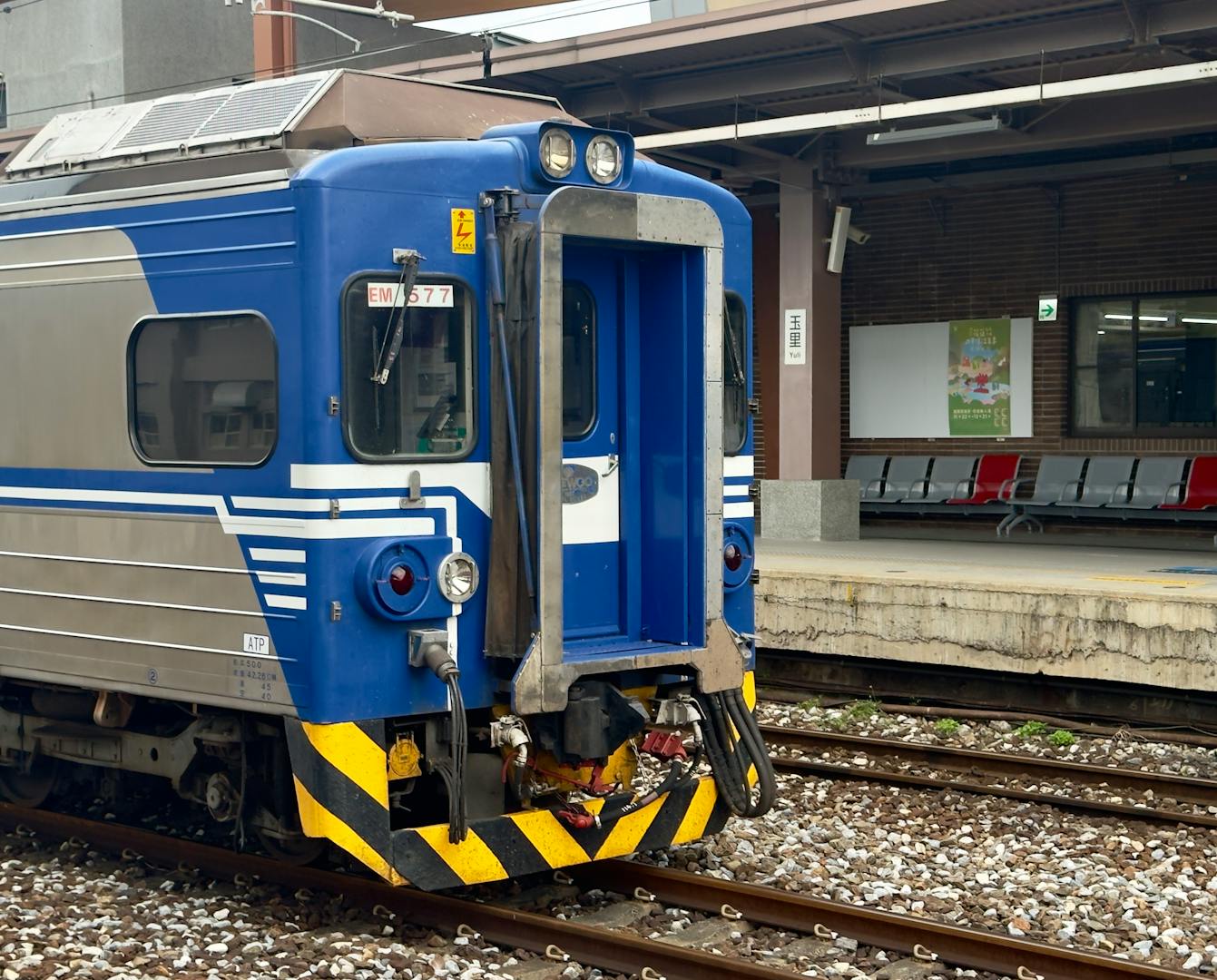
| 9 | Kaohsiung and Taitung | Train, ~2 h 15 across the south | 1 |
| 10 | Hualien, then Taipei | Train, ~2 h + 2 h | — |
Nine moves, six bases, one direction. The single biggest improvement most people can make to this plan is to remove a stop rather than add one — see the honest verdict at the end.
What to book before you fly
- East coast train seats. Days 9 and 10 are the ones that sell out. Taiwan Railways reservations open 28 days ahead; put a reminder in your calendar. Weekends and holidays genuinely go within hours.
- Alishan accommodation. Rooms inside the recreation area are limited and are the whole point — see day 5.
- Sun Moon Lake at weekends. Domestic tourism dominates and the lakeside guesthouses fill.
- Nothing else. The high speed rail runs several times an hour and you can turn up; booking online earns an early-bird discount but is not required. Taipei, Taichung, Tainan and Kaohsiung hotels have depth.
Also worth doing before departure: the mandatory Taiwan Arrival Card, which can be filled up to seven days before you fly and is free — see our travel essentials guide. And buy an EasyCard on arrival: it works on Taiwan Railways, the Taichung and Kaohsiung metros, most city buses and every convenience store on this route.
Days 1–2: Taipei
Two nights is not enough for Taipei and it is the right allocation for a ten-day island loop, because you are going to want the days at the other end. Treat it as a concentrated introduction rather than a survey.
Day 1. Land, get to the city on the Airport MRT (35–40 minutes, NT$160), check in, and do not attempt anything ambitious. Eat at a night market — Raohe if you are in the east of the city, Ningxia if you want the food-first one — and go to bed early.
Day 2. Longshan Temple in the morning while it is busy with actual worshippers, then Bopiliao and the Wanhua lanes. Chiang Kai-shek Memorial Hall and the Dadaocheng shophouses in the afternoon. Elephant Mountain or the Taipei 101 observatory for sunset. That is a full, honest day and it leaves out the National Palace Museum, which needs half a day of its own — see our three-day Taipei itinerary if you would rather start with three.
Day 3: Taichung
HSR from Taipei in under an hour, with three or more departures an hour, so there is no need to plan the time. The one thing to know is that Taichung’s HSR station is at Wuri, outside the city, with a connecting local train of about ten minutes into Taichung Station.
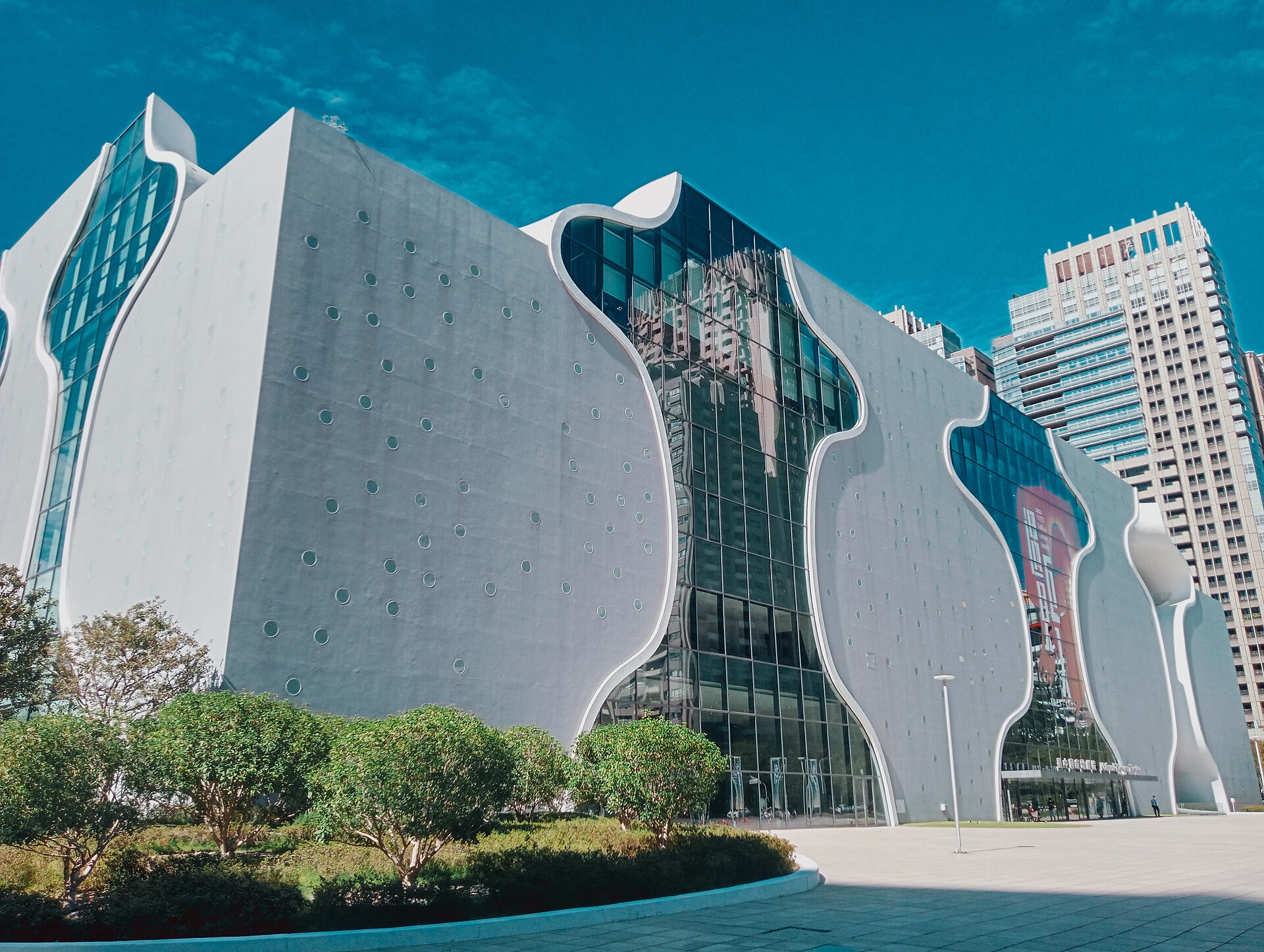
A day here is comfortable: the National Taichung Theater, which is genuinely worth seeing whatever your interest in architecture; the Shen Ji New Village and Green Ray creative quarters; a long lunch, because Taichung’s café and dessert culture is the best in Taiwan; and Fengjia Night Market in the evening, the largest in the country and a very different animal from Taipei’s.
The Rainbow Village is on every list and is one small painted settlement that takes twenty minutes. Go if it is convenient. Do not build the day around it.
Day 4: Sun Moon Lake
Buses run from Taichung’s HSR station and from Taichung Station to Shuishe on the lake’s northern shore, taking around ninety minutes to two hours. There are direct services; check the day’s timetable rather than assuming.
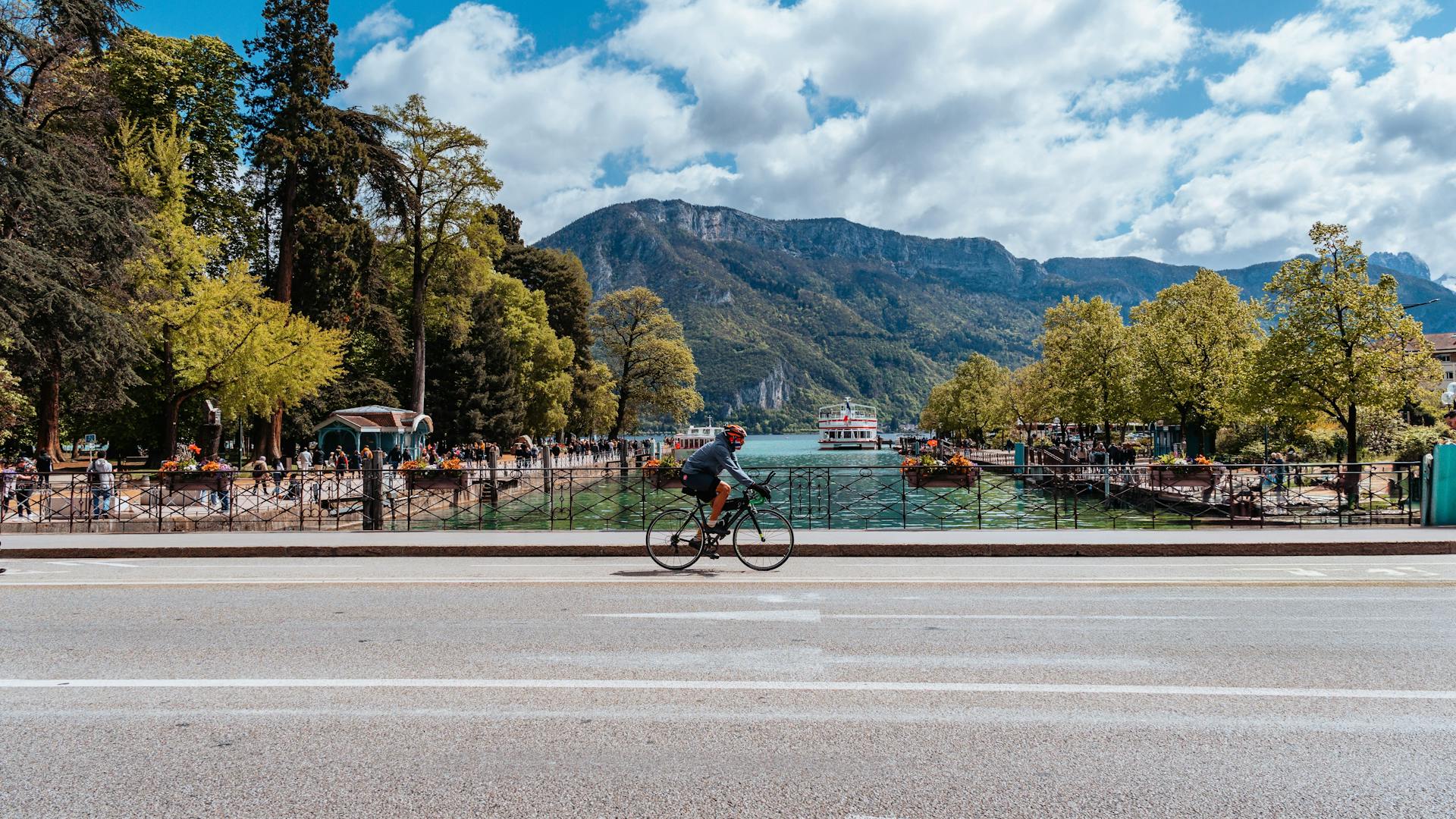
What to do: hire a bike and ride the shoreline path, which is regularly listed among the world’s most scenic cycle routes and genuinely earns it; take the ferry between Shuishe, Ita Thao and Xuanguang; ride the ropeway (09:00–17:00, year round, seven minutes) across to the Formosan Aboriginal Culture Village; and see the Wenwu Temple, which has the best view of the lake from any building on it.
Stay the night at Shuishe or Ita Thao. The lake at dawn, before the coaches, is the payoff, and it is entirely lost on a day trip. Our Sun Moon Lake guide has the detail.
Days 5–6: Chiayi and Alishan
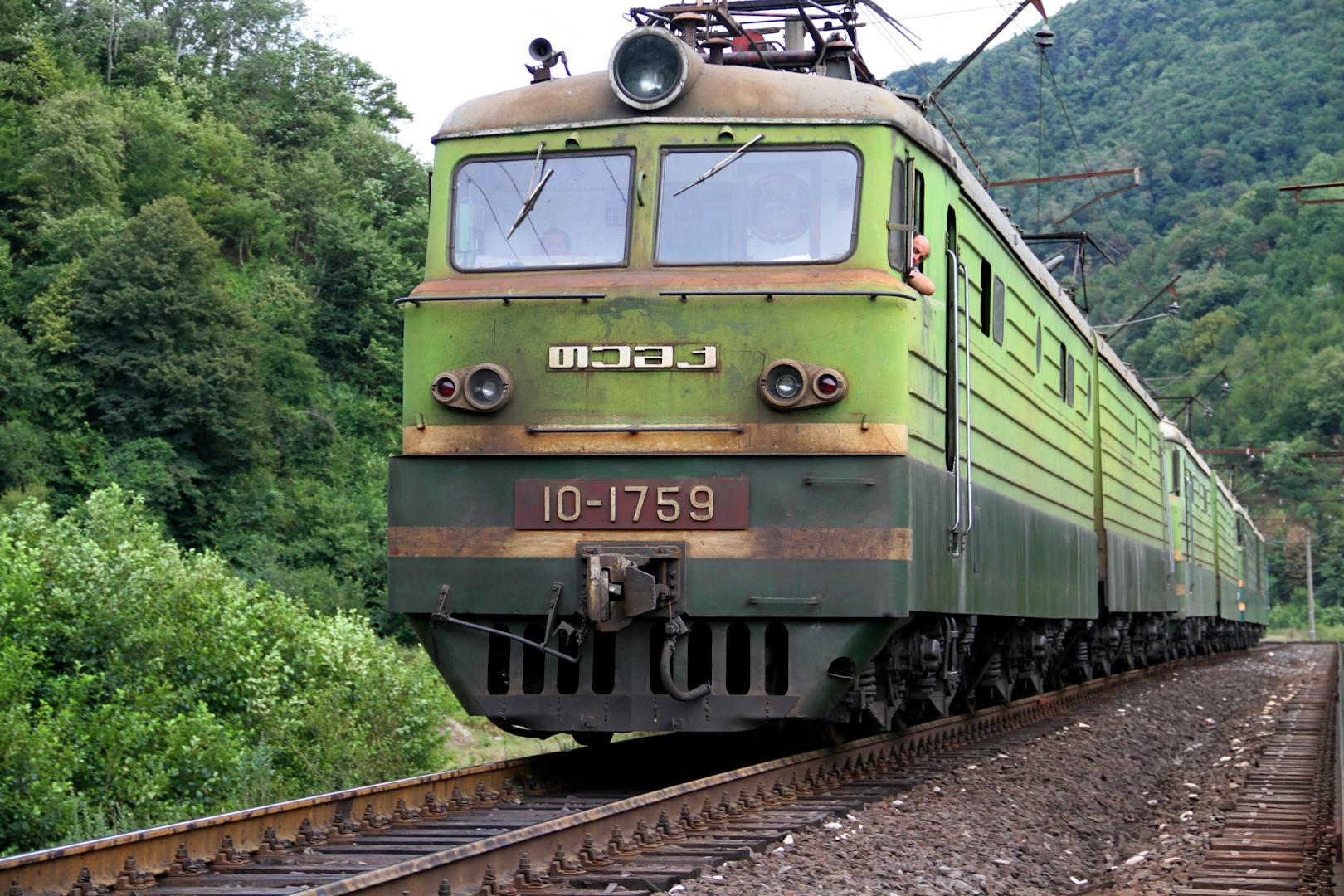
Day 5. Bus from Sun Moon Lake to Chiayi, or back through Taichung if the direct service does not suit. Then up to Alishan — either on the forest railway, whose full Chiayi to Alishan main line reopened in July 2024 after fifteen years of typhoon closures, or by bus, which is faster and less romantic. Book the railway well in advance through the operator’s own booking system; it is one of the great narrow-gauge journeys in Asia and it sells out.
Stay in the recreation area. This is not negotiable and it is the whole reason Alishan gets two days on this itinerary.
Day 6. Up before dawn for the small Zhushan line train to the sunrise viewpoint — a sea of cloud filling the valleys below with peaks poking through it, when the weather cooperates. Then the cypress groves, the Sacred Tree, the Sisters Ponds and the trails through the forest, which are exceptional and largely empty by ten in the morning once the sunrise crowd has gone back to bed.
Down to Chiayi in the afternoon, and on to Tainan by train in about half an hour. The weather gamble is real — Alishan is above the cloud line and the sunrise fails as often as it works. Our Alishan guide is honest about the odds.
Days 7–8: Tainan
The best two days of the trip, and the ones people are most surprised by. Tainan was Taiwan’s capital from the seventeenth century until 1885, it has over a thousand historic temples, and it is where Taiwanese people go when they want to eat properly.
Day 7 — the old city. Temples are the currency here: the Confucius Temple, Taiwan’s oldest; the Grand Matsu Temple; the Official God of War Temple. Chihkan Tower, built by the Dutch East India Company as Fort Provintia in 1653. Shennong Street in the evening, which is a single lane of restored shophouses and small bars and is the most photogenic street in Taiwan.
Day 8 — Anping and the food. Anping Fort and the Anping Tree House, where a banyan has swallowed a warehouse. Then eat, systematically: danzai noodles, milkfish soup for breakfast, coffin bread, shrimp rolls, oyster omelettes, and something almond-sweet. Tainan food runs sweeter than the rest of Taiwan and takes a meal to get used to.
Evenings are for Garden Night Market or Flowers Night Market, both of which are enormous and both of which run on specific days of the week — check before you go, because Tainan’s night markets rotate in a way Taipei’s do not.
Day 9: Kaohsiung, then across to Taitung
This is the itinerary’s hardest-working day and the one to modify if you want a gentler trip.
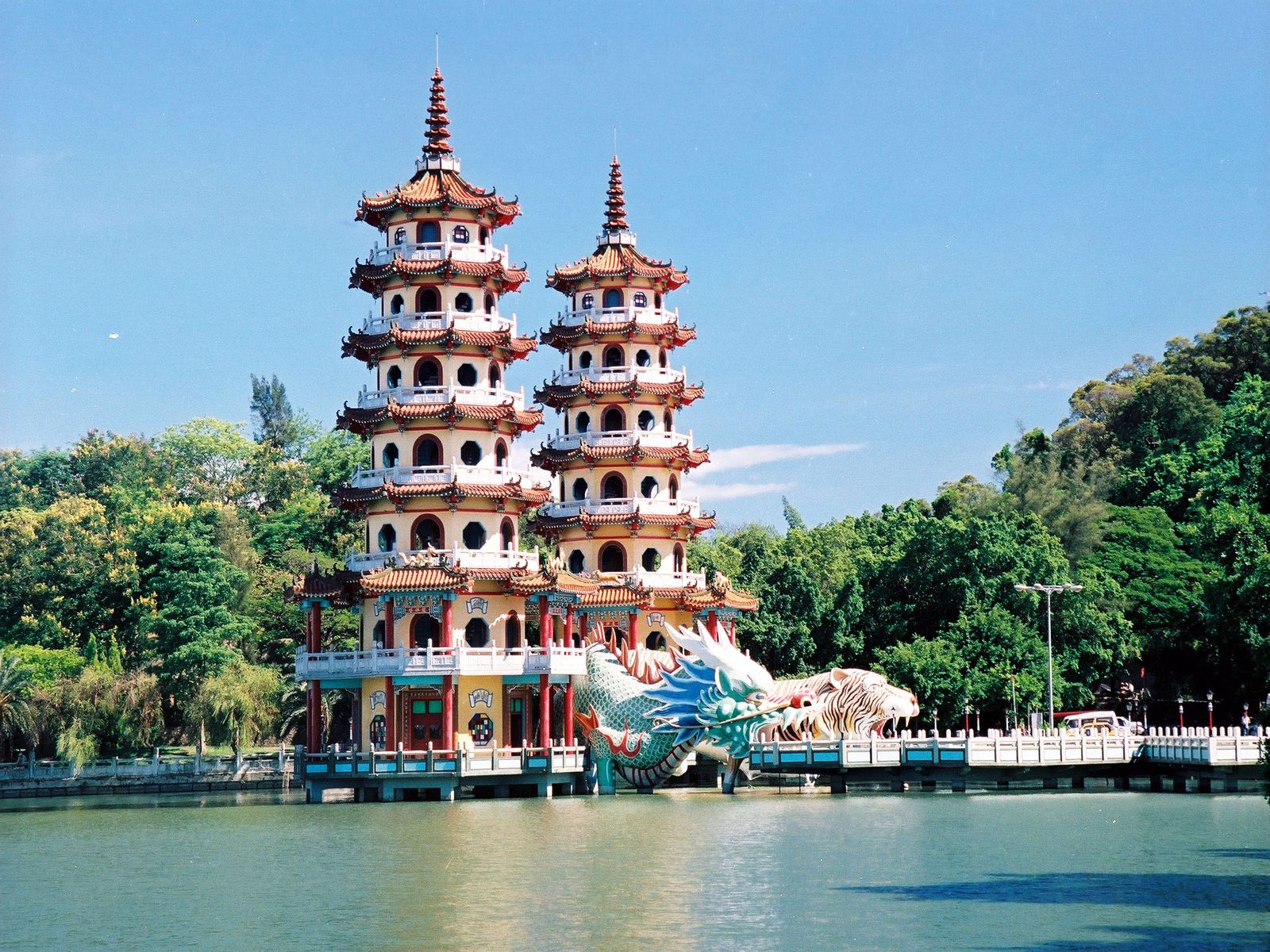
Morning train to Kaohsiung, thirty to forty minutes. Bags in a locker at the station. Then a compressed half day: the Dome of Light at Formosa Boulevard station, which is a metro station you visit deliberately; Pier-2 Art Center on the waterfront; and either Lotus Pond with its temples and pagodas or the ferry across to Cijin Island for seafood and a black-sand beach. Not both.
Then the afternoon train east to Taitung — around two and a quarter hours through the south of the island, and the moment the trip changes character. Kaohsiung is a large flat modern port; Taitung is a small town with the Pacific at the end of the street.
Day 10: the Huatung Valley and home
The best half day in Taiwan, and the reason the loop is worth doing in this direction.
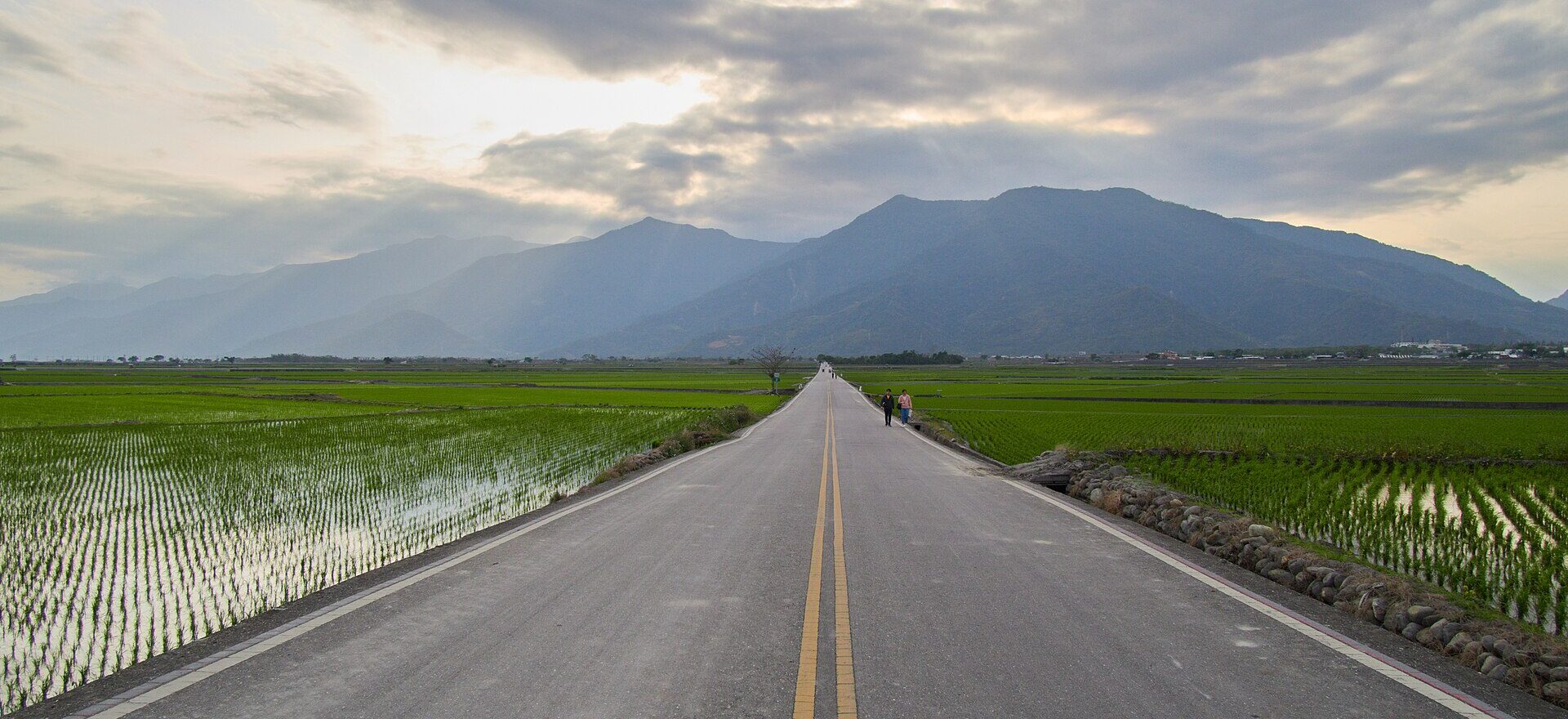
Take the northbound train up the Huatung Valley — the rift valley between the Central Mountain Range and the Coastal Range, all rice paddies, betel palms and mountains on both sides. Break the journey at Chishang, hire a bike at the station, and ride out to Mr Brown Avenue: a straight farm road between flooded paddies with the mountains at the end of it. An hour and a half is enough and you will remember it longer than Taipei 101.
On to Hualien, and then the two-hour express back to Taipei along the coast. If your flight is the following morning, this works. If it is the same evening, do not attempt it — the east coast line does not forgive tight connections.
A note on Taroko Gorge
You will notice that Taroko is not in this itinerary, and that is deliberate. The magnitude 7.4 earthquake of 3 April 2024, followed by typhoons in 2024 and 2025, caused severe landslide damage throughout the gorge. As of September 2026 the park is open but heavily restricted: the visitor centre and Tianxiang trails are open and Lushui partially reopened in February 2026, but the Swallow Grotto and Eternal Spring roads are blocked, the Tunnel of Nine Turns is closed, and the Zhuilu Old Road is closed indefinitely and may never reopen. Full recovery is estimated at up to another decade.
If Taroko matters to you, check the national park’s current status, allow an extra Hualien night, and adjust your expectations rather than your route. Our Taroko guide and the Taiwan beyond Taipei hub cover the wider east coast, which is very much worth your time regardless.
The gentler variant: same ten days, fewer moves
If nine train journeys sounds like work — and for a lot of people it is — here is the version we would recommend to friends.
| Day | Where | Nights |
|---|---|---|
| 1–3 | Taipei | 3 |
| 4–5 | Taichung and Sun Moon Lake | 2 |
| 6–7 | Tainan | 2 |
| 8–10 | Hualien and the east coast | 3 |
Four bases, four moves, three nights in the east — which is enough to hire a car, drive Highway 11 down the coast, and see the Huatung Valley properly rather than through a train window. You lose Alishan and Kaohsiung. You gain a holiday instead of an expedition. We would take this one.
Three ways to adapt it
If you only have seven days
Drop the east coast entirely and do the west properly: Taipei (2), Taichung (1), Sun Moon Lake (1), Chiayi and Alishan (2), Tainan (1). Everything is on the fast line, nothing needs booking two weeks out, and you finish 100 minutes from where you started. The east coast then becomes the reason to come back, which is not the worst outcome.
The alternative seven-day version — Taipei plus three nights in Hualien and the Huatung Valley — is the one for people who came for landscape rather than cities. Both work. Trying to do both in seven days does not.
If you are travelling with children
Cut the moves in half and use the gentler four-base variant. Sun Moon Lake with a bike trailer, the Alishan forest railway, the ferry to Cijin, and the paddy roads at Chishang are all excellent with children; the 5am start for the Alishan sunrise generally is not. Taiwan is an unusually easy country to travel with small children — see our Taipei with kids guide for the capital, and note that every train on this route has accessible toilets and that convenience stores will heat anything you hand them.
If the budget is tight
Three changes, in order of impact. Take the bus instead of the high speed rail on the long west coast legs — Taipei to Taichung or Kaohsiung costs a fraction of the fare and an overnight coach removes a hotel night as well. Stay in guesthouses and hostels, which outside Taipei run NT$600–1,200 and are frequently better than the mid-range hotels. And eat at markets and breakfast shops, which is not a sacrifice — it is where the good food is. Our Taipei on a budget guide covers the principles; they scale to the whole island.
A ten-day circuit done this way lands nearer NT$1,500 a day than NT$4,000, and the experience is not meaningfully worse. Taiwan is one of the few countries where the budget version of a trip is close to the local version of it.
What we cut, and why
Kenting. Taiwan’s southern beach resort is two hours beyond Kaohsiung by bus, which is four hours of a ten-day trip for a coastline that is good rather than exceptional. Worth it if beach days are the point of your holiday, and only then.
The outlying islands. Penghu, Green Island, Orchid Island and Kinmen are all magnificent and all need two nights minimum plus a weather contingency. Second trip.
Jiufen, Shifen and Yehliu. They are day trips from Taipei rather than stops on a circuit — see our day trips guide. Adding them means either lengthening the Taipei stay or shortening something better.
Hsinchu and Miaoli. Fine places with real interest — Hakka culture, the science park, the coastal wetlands — and not competitive with Tainan or the east in ten days.
Yilan and Jiaoxi. Genuinely lovely and forty minutes from Taipei through the tunnel, which is exactly why they belong on a different trip. On this loop they arrive at the wrong end, when you are already going home.
Practical notes for the road
- Pack light. Six bases in ten days means six hotel check-ins and a lot of station stairs. Every station on this route has coin lockers, which is what makes day 9 possible.
- Convenience stores are your infrastructure. Breakfast, coffee, cash withdrawal, EasyCard top-up, parcel collection and a seat. Our convenience store guide explains the rest.
- English thins out fast south of Taichung and on the east coast. Download the offline Chinese pack for your translation app before you leave Taipei, and learn a handful of Mandarin phrases.
- Mobile coverage is comprehensive in the west and patchy in the mountains and along parts of the east coast — the argument for Chunghwa over the budget carriers. See SIM cards and eSIMs.
- Weather runs the trip. October and November are the best months for this route. July to September brings typhoons, which close mountain roads and cancel east coast trains at short notice; see our typhoon season guide and the Central Weather Administration once you are here.
- Budget roughly NT$2,500–4,000 a day per person all in at mid-range, of which intercity transport is the largest single discretionary line. Our cost guide and money in Taipei cover the mechanics.
Day three of this circuit deserves a page of its own, because the Taichung leg has more options than any other on the route and the fast one has a catch: the high speed rail stops at Wuri, outside the city, and the connection eats fifteen to twenty-five minutes of the time you just bought. Our guide to Taipei to Taichung compares HSR, express, bus and driving, and sets out one good day hour by hour.
Days seven and eight are the ones people write home about, and they deserve their own page. Tainan rewards a slow two days — temples while it is cool, something air-conditioned in the afternoon, Shennong Street when the lanterns come on, and breakfast taken seriously and taken early. Our guide to Taipei to Tainan has the fares, the Shalun connection and the night market schedule that catches everybody out.
Day nine is the itinerary’s hardest-working day, and the Kaohsiung half of it repays a little planning — the Dome of Light, Pier-2 and Cijin are all reachable on an excellent metro, but you cannot do all three plus Lotus Pond before an afternoon train east. Our guide to Taipei to Kaohsiung sets out what fits into half a day and what needs the two nights we would rather you gave it.
The last leg of this circuit is the one that needs booking first. Hualien’s express seats open four weeks out and can go within hours on a Friday or Sunday, and there is no high speed rail fallback — the fast line stops at the mountains. Our guide to Taipei to Hualien covers the trains, the Suhua Highway bus, the Songshan flight, and what to do on the east coast with Taroko still restricted.
For the mechanics behind each leg — which trains are seat-only, how the 28-day booking window and its Friday extension work, when a THSR Pass pays for itself and when the bus is the smarter call — see our Taiwan train travel guide.
Related Taipei guides
- Taiwan Beyond Taipei: Where to Go Next
- The Taiwan High Speed Rail
- Sun Moon Lake from Taipei
- Alishan from Taipei
- Taroko Gorge from Taipei
- Day Trips from Taipei
- Taipei in 3 Days
- Taipei in 7 Days
- How Many Days Do You Need in Taipei?
- The Best Time to Visit Taiwan
- Taipei Travel Essentials
- What a Taiwan Trip Costs
Frequently Asked Questions
Is 10 days enough for Taiwan?
Yes, and it is the sweet spot for a full island circuit. Ten days lets you go down the west coast by high speed rail, across the south and back up the east by conventional train without any day being purely a transfer. Fewer than eight and you should pick one side; more than twelve and you can slow down and add the outlying islands.
Should I travel Taiwan clockwise or anticlockwise?
Anticlockwise — down the west first, back up the east. The west is fast and easy and makes a good start; the east is slower, more beautiful and better appreciated once you have found your rhythm. It also means the best half day of the trip, the Huatung Valley, lands near the end.
Do I need to book trains in Taiwan in advance?
For the east coast, yes — Taiwan Railways express seats between Taitung, Hualien and Taipei sell out weeks ahead at weekends and holidays, with reservations opening 28 days before departure. The high speed rail on the west coast runs several times an hour and you can generally turn up, though booking earns a discount.
Is a Taiwan High Speed Rail pass worth it for a 10-day trip?
Usually not on this route, because the pass periods are three or five consecutive or flexible days and this itinerary spreads its HSR legs across ten. Price your actual journeys on the operator’s site — if you compress the west coast into three days, the pass starts to look better.
Can I visit Taroko Gorge on a 10-day Taiwan itinerary?
You can visit what is open, which is much less than before. After the April 2024 earthquake and subsequent typhoons the visitor centre and Tianxiang trails are accessible and Lushui partially reopened in February 2026, but Swallow Grotto, Eternal Spring, the Tunnel of Nine Turns and the Zhuilu Old Road are closed, some indefinitely. Check current status and allow an extra Hualien night rather than squeezing it in.
What is the best time of year to do a Taiwan circuit?
October and November. Warm, dry, past the worst of typhoon season, and comfortable in both the north and the south. December to February is excellent in Tainan and Kaohsiung and grey and wet in Taipei. Avoid Lunar New Year entirely for a trip that depends on trains.
How much does a 10-day Taiwan trip cost?
Roughly NT$2,500–4,000 per person per day at mid-range, before flights — call it NT$25,000–40,000 for the ten days. Food is remarkably cheap everywhere; accommodation is cheaper outside Taipei; intercity transport is the biggest discretionary cost, and overnight buses cut it substantially.
Do I need a car for a 10-day Taiwan itinerary?
Not for this route, which is designed around trains. A car earns its keep only on the east coast, where public transport between the sights is thin — which is why the gentler variant, with three nights in Hualien, is the version where renting one makes sense. You need an International Driving Permit.
Is Sun Moon Lake worth an overnight stay?
Yes. The lake at dawn before the coaches arrive is the reason to be there, and it is entirely lost on a day trip from Taichung. One night at Shuishe or Ita Thao, a bike on the shoreline path and the early ferry is the right shape.
Is Alishan worth two days?
Only if you stay inside the recreation area, because the sunrise is the point and it happens before any bus from Chiayi could get you there. Accept that the weather fails as often as it works — Alishan sits above the cloud line and a grey morning is common.
Can I add Kenting to a 10-day Taiwan trip?
Not without cutting something better. Kenting is two hours beyond Kaohsiung by bus, so a visit costs four hours of travel plus at least one night, and the coastline is good rather than remarkable. Add it if beaches are the reason for your holiday.
Which is better for a first trip, Tainan or Kaohsiung?
Tainan, comfortably. It is the oldest city in Taiwan, has the country’s best food by broad local consensus, and is walkable and distinctive in a way Kaohsiung’s wide modern boulevards are not. Kaohsiung is the better second visit.
How many bases should a 10-day Taiwan itinerary have?
Six at most, four ideally. Every move costs a morning, a check-in and an orientation, and the most common regret people report is having moved too often. If you are choosing between adding a stop and adding a night, add the night.
Is Taiwan easy to travel independently?
Very. The rail network reaches everywhere on this route, signage is bilingual, the country is exceptionally safe, and an EasyCard covers most of the local transport. The two things that need planning are east coast train seats and typhoon season.
The Bottom Line
Ten days buys you the whole island if you are disciplined about it: Taipei, Taichung, a lake, a mountain, the old capital, a port city and the rift valley, joined by a railway that does the hard work. Go anticlockwise, book the east coast seats the moment reservations open, stay a night at Sun Moon Lake and a night inside Alishan, and give Tainan two days rather than one.
And if the version above looks like too many trains — it might be — take the four-base variant instead. Taiwan’s size makes constant movement feel free, and it is not. The trips people describe afterwards are almost never the ones with the most stops; they are the ones where somebody hired a bike at Chishang station on a Tuesday morning and rode out between the paddies with nowhere in particular to be.
Photo Credits
Mr Brown Avenue, Chishang: Mr. Brown Avenue, Chishang by lumoplank, CC0, via Wikimedia Commons.
National Taichung Theater: National Taichung Theater, Nov 2024 (1) by Ralff Nestor Nacor, CC BY-SA 4.0, via Wikimedia Commons.