This article contains advertising. Our booking links are routed through a partner that adds commission tracking automatically, so if you book through one we earn a commission from the provider, at no extra cost to you. It never affects what we recommend. Affiliate disclosure
Taiwan has two railways that barely touch each other. One is the high speed line: white Japanese-built trains on dedicated viaducts, running down the western plain from Taipei to Kaohsiung in about an hour and a half and going nowhere else. The other is the old national network, Taiwan Railways, which circles the entire island, threads through the mountains to the east coast and stops at every market town on the way. Add a dense web of intercity coaches, and choosing between them is the one piece of Taiwan trip planning that genuinely repays ten minutes of thought — which is what this Taiwan train travel guide is for. The short version: the high speed rail wins on the west coast, Taiwan Railways is the only train to the east, and the bus is better than its reputation almost everywhere.
This page covers how the three systems differ, which to take on each major route from Taipei, what they cost after Taiwan Railways’ June 2025 fare rise, when booking opens and why it matters, which passes pay for themselves, and the scenic lines worth riding for their own sake. Fares were checked in September 2026; treat them as the right order of magnitude and confirm before you travel — a surprising number of guides still quote the pre-2025 train fares.
The three systems at a glance
| High Speed Rail (HSR) | Taiwan Railways (TRA) | Intercity bus | |
|---|---|---|---|
| Where it goes | West coast only, Nangang to Zuoying (Kaohsiung) | The whole island, including the east coast and branch lines | Everywhere, including places with no station |
| Speed | Taipei–Kaohsiung in 94–120 min | Taipei–Kaohsiung in 3½–5½ hours | Taipei–Kaohsiung in about 5 hours |
| Taipei–Taichung fare | NT$700 reserved | NT$500 express | About NT$250 |
| Stations | Often outside the city centre | In the city centre | City-centre terminals |
| Booking | Usually fine on the day; book for holidays | Essential for east coast expresses; opens 28 days out | Walk-up on most routes |
| Best for | Taichung, Chiayi, Tainan, Kaohsiung | Yilan, Hualien, Taitung, anywhere scenic | Tight budgets, Yilan, overnight runs south |
Route by route: what to take from Taipei
This is the table most people actually need. Times are typical door-to-door for the train or bus itself; add the connection at the far end where the station is out of town.
| Taipei to | HSR | TRA express | Bus | Our pick |
|---|---|---|---|---|
| Taichung | ~50–60 min · NT$700 | 2–2½ h · NT$500 | ~2½ h · ~NT$250 | HSR for a day trip; the express if you are staying in the centre |
| Tainan | ~1 h 45 · NT$1,350 | 4–4½ h · NT$891 | 4–5 h · ~NT$450–480 | HSR, then the local train from Shalun |
| Kaohsiung | 94–120 min · NT$1,490 | 3½–5½ h · NT$994 | ~5 h · check | HSR to Zuoying, then the metro |
| Yilan / Jiaoxi | No service | ~60–70 min · NT$306 to Yilan | 75–95 min · NT$131–140 | Bus on weekdays, train at weekends |
| Hualien | No service | ~2¼ h on the fastest · NT$583 | 3–4 h · NT$300–350 | TRA express, booked the day sales open |
| Taitung | No service | About 3½–5 h · NT$936 | Long and indirect | TRA express, or fly |
Each of those journeys has its own detailed guide: Taipei to Taichung, Taipei to Tainan, Taipei to Kaohsiung, Taipei to Hualien and Yilan from Taipei. What follows is how the systems themselves work.
The High Speed Rail: fast, simple, and west coast only
Taiwan’s high speed line opened in 2007 and runs about 350 kilometres from Nangang, in Taipei’s eastern suburbs, to Zuoying in the north of Kaohsiung. It has twelve stations — Nangang, Taipei, Banqiao, Taoyuan, Hsinchu, Miaoli, Taichung, Changhua, Yunlin, Chiayi, Tainan and Zuoying — and on the busy Taipei–Taichung stretch there are three or more trains an hour in each direction. It is punctual, spotless and easy: signs and announcements are in English, and the ticket machines have an English mode.
The one thing everyone gets wrong is the map. The HSR does not go to Yilan, Hualien, Taitung or anywhere else on the east coast, and it never has. The mountains are in the way. Travel articles regularly imply otherwise, and people still turn up at Taipei Main Station expecting a bullet train to Hualien that does not exist.
The station catch
Because the line was built across open country, several HSR stations sit well outside the cities they are named after, and the connection is part of the journey:
- Taichung station is at Wuri, south of the city. Take the Taichung MRT Green Line or the ten-minute Taiwan Railways local train into Taichung Station.
- Tainan station is at Guiren. Walk across to Shalun station and take a local train into Tainan Station in 20–30 minutes, or catch the free H31 or H62 shuttle bus from Exit 2.
- Zuoying, for Kaohsiung, is about ten kilometres north of downtown. It shares a building with the Kaohsiung MRT Red Line, which runs to Kaohsiung Main Station or Formosa Boulevard in about fifteen minutes for NT$40.
- Hsinchu and Chiayi stations are also out of town, with rail or bus links in.
That connection is why the HSR’s time advantage shrinks on shorter trips. To central Taichung, fifty minutes on the train plus fifteen or twenty getting into town is still much quicker than two hours on the express — but not by as much as the timetable suggests.
Tickets, cars and seats
Fares from Taipei are NT$700 to Taichung, NT$1,350 to Tainan and NT$1,490 to Zuoying in a standard reserved seat; non-reserved seats are a little cheaper. Most trains have a handful of non-reserved cars — usually cars 10 to 12, but check the platform signs — where you sit wherever there is space, and a business class car with wider seats for a higher fare.
Tickets go on sale about four weeks ahead and can be bought on the THSR website, through the operator’s T Express app, from station machines and counters, and at the major convenience store chains. A limited number of early-bird discount seats are released when booking opens, and they go quickly. On an ordinary weekday you can simply turn up and buy a ticket for the next train; around Lunar New Year, long weekends and Friday and Sunday evenings, book ahead. For the full detail on the line, see our high speed rail guide.
The THSR Pass
Foreign visitors can buy an unlimited-travel pass through the operator’s pass site and authorised resellers. The 3-Day Pass costs NT$2,200 and covers three consecutive days; the Flexible 2-Day Pass costs NT$2,500 and covers any two days within a seven-day window. Resellers frequently discount both.
The arithmetic is simple. A Taipei–Kaohsiung return is NT$2,980 at the standard fare, and a Taipei–Tainan return is NT$2,700, so the 3-Day Pass pays for itself on either inside three days. A Taipei–Taichung return is NT$1,400, so a pass never makes sense for Taichung alone. Buy one if you are doing a fast run down the west coast and back; skip it if you are going one way and continuing round the island by conventional train.
Taiwan Railways: the network that goes everywhere
The national railway — run since 2024 by the state-owned Taiwan Railway Corporation, though everyone still calls it the TRA — is the older, slower and far more extensive system. Its main lines form a complete loop round the island, with branch lines up into the hills, and it is the only train to the east coast. Stations are in the middle of towns, the network reaches places no bus timetable makes easy, and on the east side some of the journeys are among the most beautiful in Asia.
The train types
| Class | What it is | Booking |
|---|---|---|
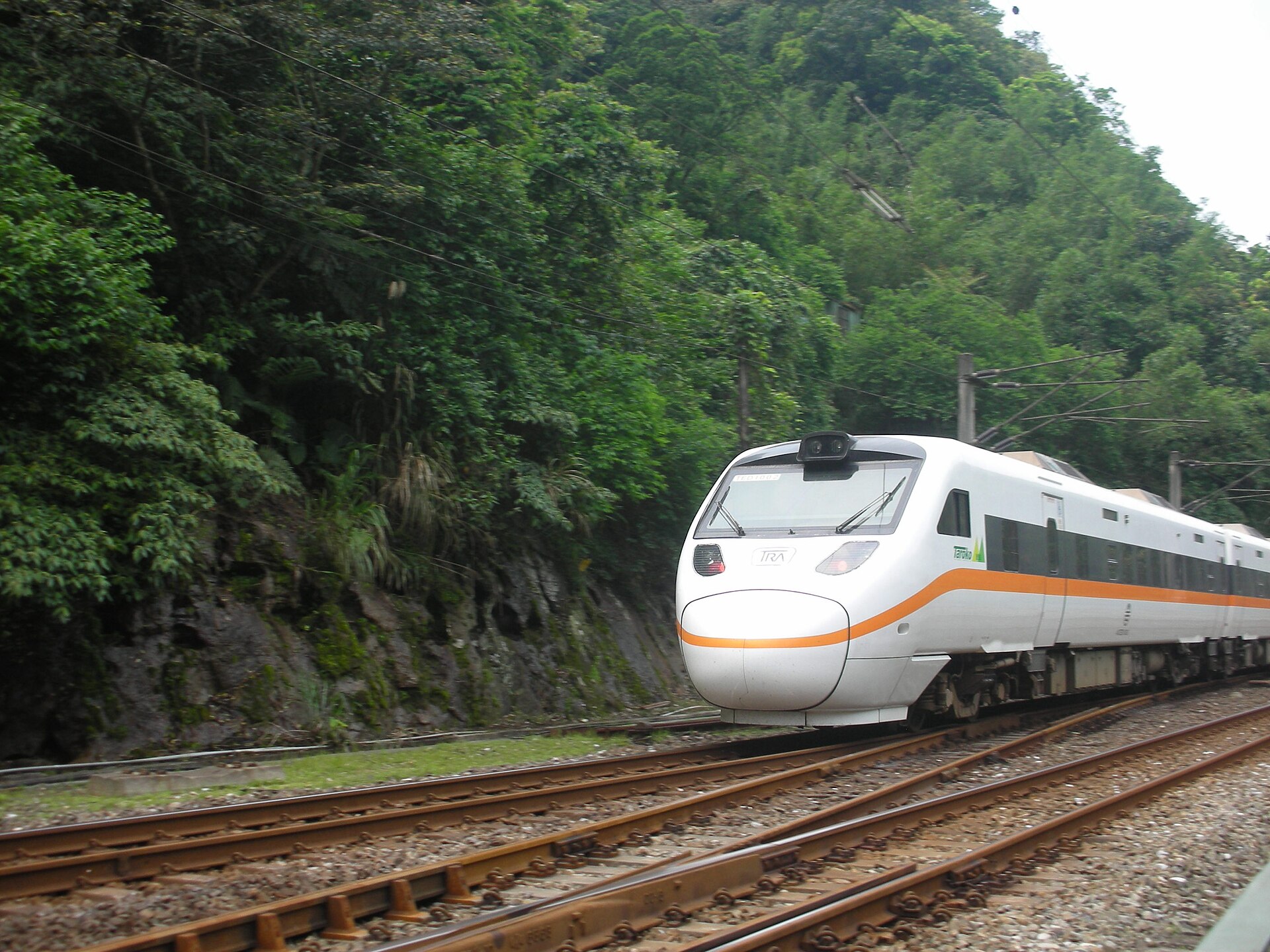
| Tze-Chiang (自強號), including the Puyuma and Taroko tilting trains and the newer EMU3000 sets | The expresses. Fastest, fewest stops, the same fare across all versions. The EMU3000 trains add a business class car. | Reserved seats; Puyuma and Taroko are seat-only |
| Chu-Kuang (莒光號) | Older, slower long-distance trains that stop more often. Cheaper. | Reserved seats; standing when full |
| Local and fast local (區間車 / 區間快) | Commuter-style trains with bench seating, stopping everywhere or nearly everywhere. | No reservations — tap an EasyCard |
Fares after the June 2025 rise
On 23 June 2025 Taiwan Railways raised its fares for the first time in about thirty years, by an average of 26.8 per cent. The increase tapered with distance, so short trips rose the most and long ones the least. If a guide quotes NT$375 to Taichung or NT$440 to Hualien, it was written before the change. The current express fares from Taipei:
| Taipei to | Tze-Chiang (express) | Chu-Kuang |
|---|---|---|
| Yilan | NT$306 | — |
| Taichung | NT$500 | — |
| Chiayi | NT$750 | — |
| Tainan | NT$891 | — |
| Kaohsiung | NT$994 | NT$767 |
| Pingtung | NT$1,040 | — |
| Hualien | NT$583 | NT$450 |
| Taitung | NT$936 | NT$722 |
Local trains are charged by distance and cost noticeably less than the expresses for the same journey; for short hops, just tap your card and let the gate work it out. One side effect of the rise worth noticing: on the west coast the gap between the HSR and the express has narrowed. Taichung by high speed rail now costs only NT$200 more than by express, for less than half the time.
Booking: 28 days, and why it matters
Taiwan Railways opens reservations 28 days before departure. On Fridays the window reaches two days further, so the whole weekend four weeks out goes on sale at once. Book on the Taiwan Railway website or app, then pay by midnight the day after you book — unpaid reservations lapse — and collect the ticket at a station machine or counter, or at a convenience store. You can book on the day itself up to 30 minutes before departure, if anything is left.
For most of the network, most of the time, that is academic: there are seats. The exception is the east coast. Express seats between Taipei, Yilan, Hualien and Taitung sell out, often within hours of release, for Friday evenings, Sunday afternoons, long weekends and every national holiday — and there is no high speed alternative. If your trip includes Hualien or Taitung, book those legs the morning the window opens and plan the rest around them.
Holidays are a different game
Around Lunar New Year, the Tomb Sweeping and Mid-Autumn long weekends, and any holiday that makes a four-day weekend, the whole country travels at once. Taiwan Railways and the HSR announce special sale dates for the busiest days, and on those mornings the seats go in minutes; freeways jam for hours and some bus fares rise. If your dates overlap a big holiday, check the operators’ announcements a month or more ahead, book the moment sales open, and consider simply staying put in Taipei for the peak days — the city empties out and is at its most relaxed.
No seat? EasyCard and standing
An EasyCard works at Taiwan Railways gates: tap in, tap out, and the fare comes off the card. On local trains that is the whole system. On most expresses you can also travel on the card without a reservation, but you have no seat — you stand, or sit in an empty one until its ticket-holder turns up. The Puyuma and Taroko services do not allow this. Standing for an hour to Yilan is fine; standing for three and a half hours to Hualien is not, so if the expresses are full, take a slower train with a seat or the bus.
Intercity buses: better than you think
Taiwan’s coaches are one of its quiet successes: frequent, cheap, comfortable and mostly walk-up. The main operators are Kuo-Kuang, Ubus, Ho-Hsin — whose wide reclining seats with personal screens are the most comfortable way to travel overnight — and, for Yilan, Kamalan and Capital Star. In Taipei most routes leave from Taipei Bus Station in the Q Square building beside Taipei Main, with Yilan services also running from Taipei City Hall Bus Station.
- Taichung: Kuo-Kuang 1826 and 1827, about two and a half hours for around NT$250.
- Tainan: Ubus, Kuo-Kuang (1837) and Ho-Hsin, four to five hours for around NT$450–480, including overnight departures.
- Kaohsiung: Kuo-Kuang 1838, Ubus and others, about five hours, including overnight departures. Check the current fare when you book.
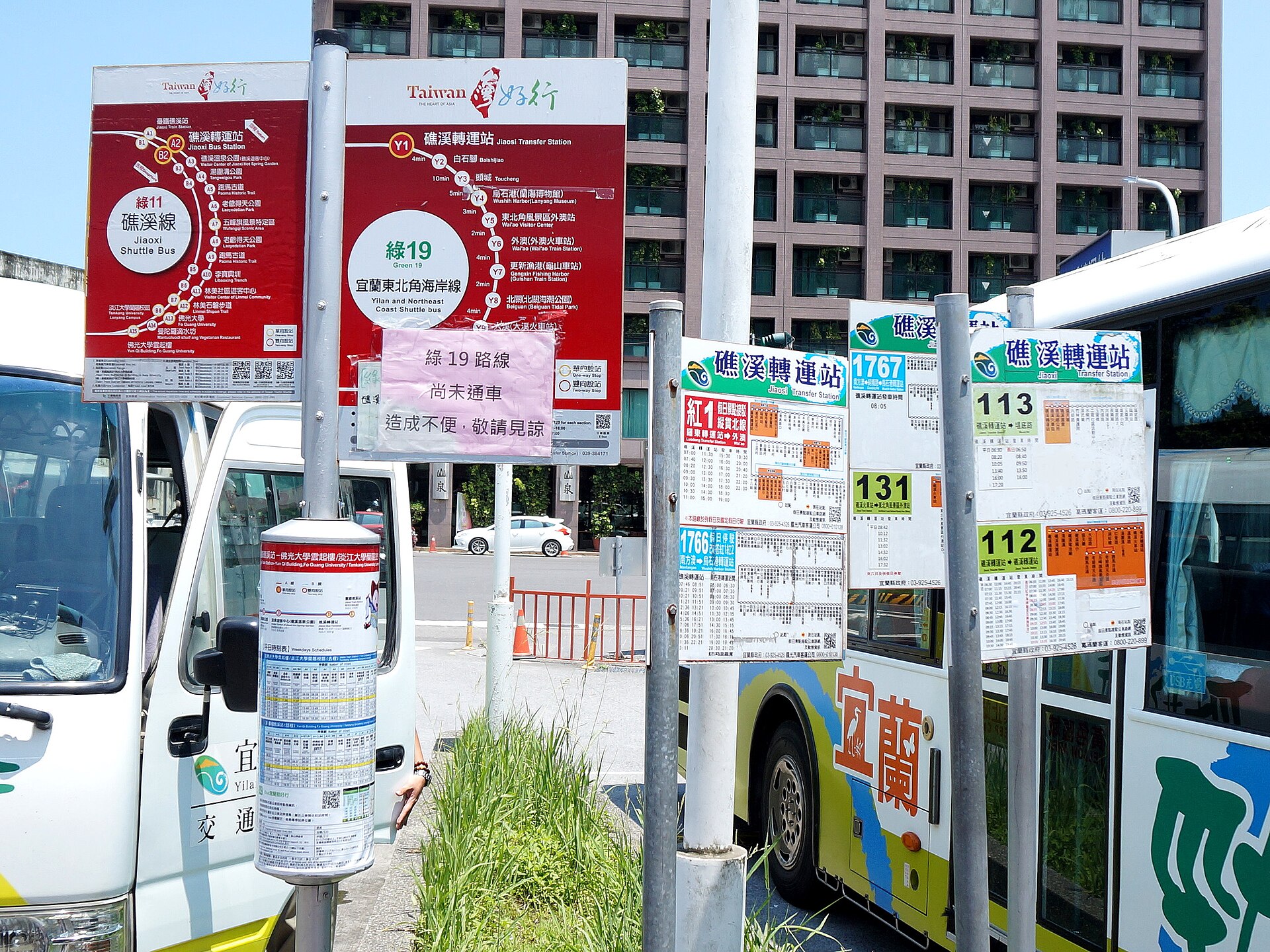
- Yilan and Jiaoxi: Kamalan 1915 and 1916, Capital Star 1572, NT$131–140 and 75–95 minutes through the Hsuehshan Tunnel.
- Hualien: three to four hours via the Suhua Highway for NT$300–350 — the best fallback when the trains have sold out.
The case against the bus is traffic. Freeways out of Taipei jam on Friday evenings, Sunday afternoons and throughout the big holidays, and the Hsuehshan Tunnel to Yilan is notorious. The case for it is price, frequency and the overnight option to the south, which saves a hotel night at the cost of a poor sleep. Our Taipei bus guide covers the terminals and how to pay.
Flying: only for the islands, mostly
Domestic flights leave from Songshan Airport, in the middle of Taipei. On the main island they rarely beat the train once you count check-in, but the Hualien flight — about fifty minutes in the air, around US$56, roughly once a day — is a genuine lifeline when the express seats have gone. For the outlying islands of Penghu, Kinmen and Matsu, flying is the normal way to go.
Passes: which ones actually pay
- THSR Pass — worth it for a west coast return trip to Tainan or Kaohsiung within three days; not for Taichung alone. Details above.
- Taiwan PASS — the Tourism Administration’s rail-and-transport packages were recently overhauled, and the Taiwan Railways edition bundles three consecutive days of unlimited TRA travel with a city metro pass and an extra attraction. Whether it pays depends entirely on how hard you ride; price your actual journeys against the current package on the Tourism Administration’s page before buying.
- EasyCard — not a pass, but the most useful thing in your wallet: trains, buses, metros in every big city, and convenience stores.
- Taipei Fun Pass — a city pass for Taipei, New Taipei and Keelung, not for intercity travel. See our Fun Pass guide.
Putting them together: a loop round the island
Most people doing more than Taipei end up combining all three systems, and the combination is logical once you see the shape of the island: fast rail down the flat west, conventional rail up the mountainous east. A typical anticlockwise loop looks like this:
| Leg | Best option | Book ahead? |
|---|---|---|
| Taipei → Taichung | HSR, then MRT or local train into the city | Only for holidays |
| Taichung → Chiayi (for Alishan) | HSR or TRA express | The forest railway, yes |
| Chiayi → Tainan | TRA express — it arrives in the city centre | Rarely needed |
| Tainan → Kaohsiung | TRA express or local, 30 minutes to an hour; the HSR saves little here | No |
| Kaohsiung → Taitung | TRA express over the South-Link | Weekends, yes |
| Taitung → Hualien | TRA through the rift valley — or a bike and a local train | Weekends, yes |
| Hualien → Taipei | TRA express | Always — book it first |
Two rules make the loop work. First, book the east coast legs before anything else, on the day each one’s window opens, and build the rest of the trip around them — the west coast will almost always have seats. Second, go anticlockwise if you can, so that the leg most likely to sell out, Hualien back to Taipei, is the last one and the one you have had longest to book. Our 10-day itinerary lays the whole thing out day by day.
Scenic lines worth riding for their own sake
- The Pingxi Line — a single-track branch up a river valley east of Taipei to Shifen, Pingxi and Jingtong, where the lanterns go up. Slow, crowded at weekends, and charming anyway. See our Shifen day trip.
- The north-east coast — the line from Ruifang down to Yilan runs past Fulong’s beach and along the sea with Turtle Island offshore. Sit on the left heading south.
- The east coast and the rift valley — south from Hualien to Taitung between two mountain ranges, past rice paddies and hot spring towns. Hire a bike somewhere in the middle rather than just watching it go by.
- The South-Link — the stretch round the southern end of the island to Taitung, with long views over the Pacific.
- The Alishan Forest Railway — the narrow-gauge mountain line from Chiayi, which reopened along its full length in July 2024 after fifteen years of closure. It books out; reserve through the forest railway’s own site. Our Alishan guide covers how to fit it in.
Practical tips for train travel in Taiwan
- Eating and drinking are fine on intercity trains. The strict food-and-drink ban applies to the metro systems, not the HSR or Taiwan Railways — and the railway’s own lunch boxes, sold at the big stations, are a small institution.
- Luggage is rarely a problem. There are racks at the ends of most carriages and overhead shelves for smaller bags; nobody weighs anything.
- Keep calls short and quiet. Carriages are hushed, and loud phone conversations get looks.
- Allow time at Taipei Main. It is huge and the different railways are well apart — see our MRT guide for finding your way to and from the metro.
- Use the right Taipei station. Eastbound trains to Yilan and Hualien also stop at Songshan and Nangang; westbound trains stop at Banqiao, which can save a trip into the centre.
- Keep your ticket or card until you exit. You need it at the gate at the other end.
- Typhoons stop everything. Between July and September, check the forecast before long journeys; services are suspended at short notice and refunds are straightforward when they are.
What we would skip
Looking for a high speed train to the east coast. There is no such thing. Book Taiwan Railways, or take the bus.
Standing for hours on a sold-out express. An hour is bearable. Three is a poor start to a holiday. Take a slower train with a seat, the bus, or a different day.
A THSR Pass for a Taichung-only trip. The pass costs more than the return fare.
The overnight bus before a big day. It saves money and a hotel night, and you will feel it the next afternoon.
Travelling on Sunday afternoon if you can avoid it. Every train, bus and freeway into Taipei is full of people doing the same thing.
Trusting old fare tables. Anything written before mid-2025 has the wrong Taiwan Railways prices.
Related Taipei guides
- Taiwan Beyond Taipei: Where to Go Next
- The Taiwan High Speed Rail
- Taipei to Taichung
- Taipei to Tainan
- Taipei to Kaohsiung
- Taipei to Hualien
- Yilan from Taipei
- Taiwan Itinerary: 10 Days from Taipei
- Alishan from Taipei
- Taipei Bus Guide
- The EasyCard
- Songshan Airport
Frequently Asked Questions
What is the difference between the HSR and the TRA in Taiwan?
The High Speed Rail is a fast, separate line down the west coast only, from Nangang in Taipei to Zuoying in Kaohsiung, with several stations outside city centres. Taiwan Railways (the TRA) is the older national network that circles the whole island and reaches the east coast; it is slower and cheaper, and its stations are in town centres.
Does the high speed rail go to Hualien?
No. The HSR runs down the west coast only. Hualien, Taitung and Yilan are served by Taiwan Railways, by bus, and — for Hualien and Taitung — by domestic flights from Songshan.
How far in advance can you book Taiwan train tickets?
Taiwan Railways opens reservations 28 days before departure, and on Fridays you can book two days further ahead, to the Sunday four weeks out. You must pay by midnight the day after booking. High speed rail tickets go on sale about four weeks ahead too.
Do I need to book trains in Taiwan in advance?
For east coast expresses to Hualien and Taitung at weekends and holidays, yes — they sell out, sometimes within hours of release. For the high speed rail on an ordinary weekday, you can usually buy on the day. Book everything ahead around Lunar New Year and long weekends.
How much is the train from Taipei to Kaohsiung?
NT$1,490 in a standard reserved seat on the high speed rail to Zuoying, taking 94–120 minutes. The Taiwan Railways express is NT$994 and takes three and a half to five and a half hours; the slower Chu-Kuang is NT$767.
Did Taiwan train fares go up?
Yes. Taiwan Railways raised fares by an average of 26.8 per cent on 23 June 2025, the first rise in about thirty years. Taipei to Hualien went from NT$440 to NT$583 on the express, and Taipei to Taichung from NT$375 to NT$500.
Is the THSR Pass worth it?
It pays for itself if you make a return trip from Taipei to Tainan or Kaohsiung within three days: the 3-Day Pass costs NT$2,200 against a NT$2,980 return fare to Zuoying. It does not pay for Taichung alone, where the return fare is NT$1,400.
Can I use an EasyCard on Taiwan trains?
Yes, on Taiwan Railways: tap in and out at the gates. On local trains that is all you need; on most expresses you can travel on the card without a seat reservation, but not on the Puyuma and Taroko services. Reserved seats need a ticket.
Is the bus or the train better in Taiwan?
It depends on the route. The HSR beats everything on the west coast for speed. To Yilan the bus is cheaper and just as quick on weekdays. To Hualien, the train is faster and the bus is the fallback. Overnight buses to the south save a hotel night if you can sleep sitting up.
Which HSR stations are far from the city centre?
Taichung (at Wuri), Tainan (at Guiren), Chiayi and Hsinchu are all outside their cities, and Zuoying is about ten kilometres north of central Kaohsiung. Each has a rail or bus connection in; allow fifteen to thirty minutes.
Can you eat on trains in Taiwan?
Yes, on the high speed rail and Taiwan Railways. The eating and drinking ban applies to the metro systems in Taipei, Kaohsiung and Taichung, not to intercity trains.
What happens if the train I want is sold out?
Try a slower class with seats left, check for cancellations nearer the day, take the bus, or — for Hualien — check the flight from Songshan. On most expresses you can also travel on an EasyCard without a seat, which is bearable for short journeys and miserable for long ones.
Is there a train around the whole of Taiwan?
Yes. Taiwan Railways’ main lines form a complete loop round the island, so you can go down the west coast, round the southern tip and back up the east side entirely by conventional train — or combine the high speed rail on the west with Taiwan Railways on the east.
The Bottom Line
On the west coast, take the high speed rail and allow for the connection at the far end; the gap in price has never been smaller. For the east coast, take Taiwan Railways, and book the expresses the morning the 28-day window opens, because nothing else will get you to Hualien in two hours. Use the bus for Yilan on weekdays, for tight budgets, and as the fallback when the trains are full.
And keep one old habit out of your planning: trusting a fare table from before June 2025. The trains are the same; the prices are not.
Photo Credits
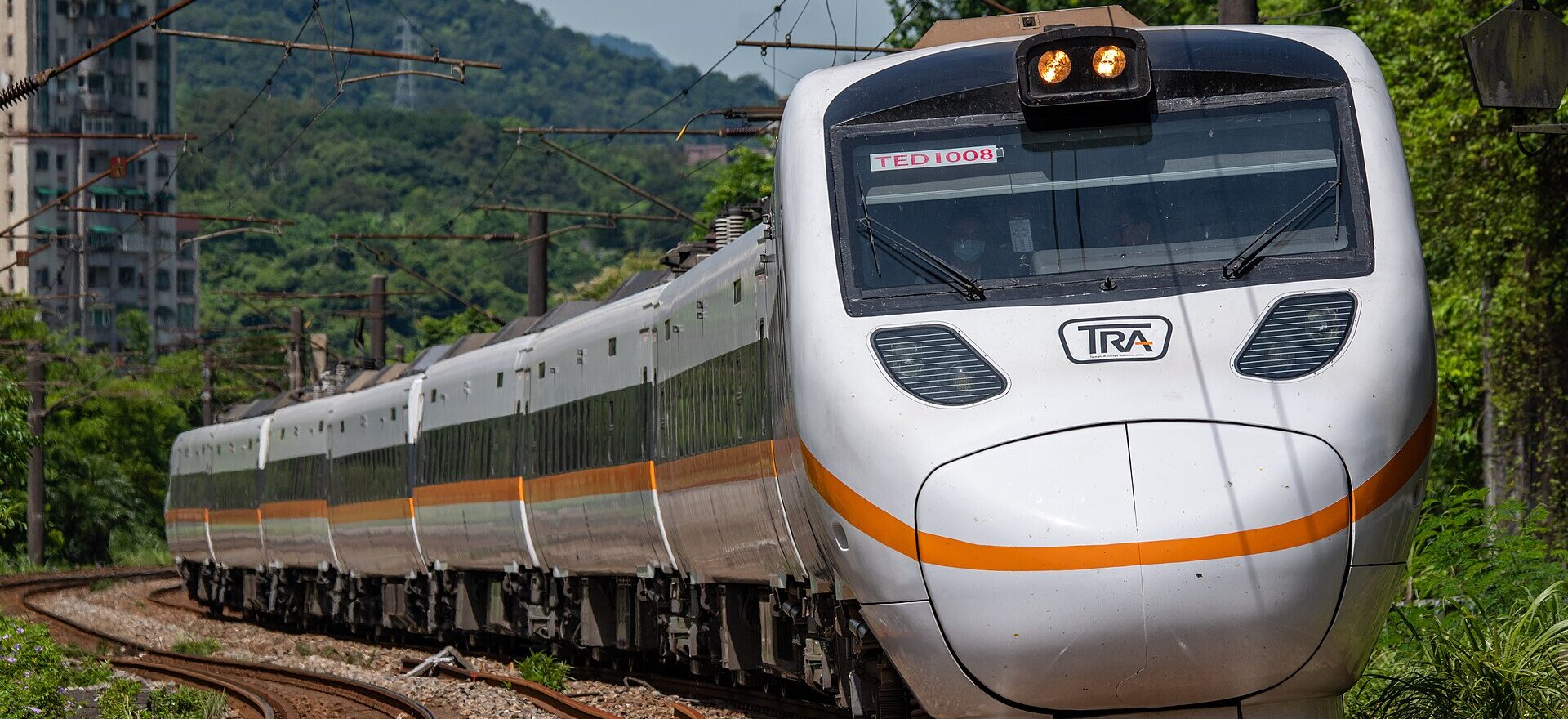
A Taroko Express near Keelung: A TRA Taroko Express between Nuannuan and Sijiaoting 20200703 by jason199567, CC BY-SA 2.0, via Wikimedia Commons.
A Taroko Express passing forest: TRA TED1002 20140413 by Foxy Who \(^∀^)/, CC BY-SA 3.0, via Wikimedia Commons.
Bus stops at Jiaoxi Transfer Station: Bus stop boards at Jiaoxi Bus Station 20200711 by Solomon203, CC BY-SA 4.0, via Wikimedia Commons.