This article contains advertising. Our booking links are routed through a partner that adds commission tracking automatically, so if you book through one we earn a commission from the provider, at no extra cost to you. It never affects what we recommend. Affiliate disclosure
Until 2006 the drive from Taipei to Yilan meant the Beiyi Highway, a mountain road whose most notorious stretch is still called the “nine turns and eighteen bends”, and a journey that could swallow a morning. Then the Hsuehshan Tunnel opened — nearly thirteen kilometres through the Snow Mountain Range, the longest road tunnel in Taiwan — and the Lanyang Plain became a bus ride of about an hour and a quarter. That is why any useful list of Yilan Taiwan things to do has to start with traffic rather than sights: the tunnel that makes the county effortless on a Tuesday makes it miserable on a Sunday afternoon, and almost every good decision about a trip here follows from knowing that.
This guide covers Yilan County as a whole — the surf coast at Toucheng, Turtle Island, the hot spring town of Jiaoxi, Yilan City, Luodong and its night market, the arts centre at Wujie and the forest up at Taipingshan — with bus and train fares from Taipei, admission prices, what to eat, and a straight answer on whether it works as a day trip. Prices were checked in September 2026; treat them as the right order of magnitude and confirm before you travel.
Yilan at a glance
| What | Cost or detail |
|---|---|
| Bus from Taipei (Kamalan, Capital Star) | NT$131–140 one way · 75–95 min on a clear run |
| Express train from Taipei Main | Roughly NT$300 · about 60 min to Jiaoxi, 70 min to Yilan |
| Local train from Taipei Main | Roughly NT$200 · about two hours, unreserved |
| Lanyang Museum | NT$100 · 09:00–17:00 · closed Wednesdays |
| National Center for Traditional Arts | NT$150 · 09:00–18:00 daily |
| Jiaoxi public foot baths | Free |
| Luodong Night Market | Free to wander; NT$200–400 buys a proper dinner |
| Guishan (Turtle) Island landing | March to November only · capped at 1,800 people a day · boat operators set their own prices |
| How long to give it | One corner of the county in a day; one night to do it properly |
Yilan is a county, not a town
The first thing to untangle is the name. Yilan County is the whole of the Lanyang Plain, a triangle of rice paddies, fish ponds and small towns hemmed in by mountains on two sides and the Pacific on the third. Yilan City is its county seat, and it is one of the less compelling reasons to come. When people in Taipei say they are “going to Yilan” for the weekend, they usually mean a hot spring hotel in Jiaoxi, a surf lesson at Wai’ao, or dinner at the night market in Luodong — three places that are twenty to forty minutes apart.
Most of the county sits on the Taiwan Railways line, which is what makes it manageable without a car. From north to south:
| Town | Why you would go | Station |
|---|---|---|
| Toucheng | The oldest settlement on the plain, Wai’ao surf beach, Lanyang Museum, boats to Turtle Island | Toucheng, Wai’ao |
| Jiaoxi | Hot springs in the middle of town, free foot baths, a waterfall walk | Jiaoxi |
| Yilan City | Jimmy Liao’s installations by the station, a Japanese-era distillery, a small night market | Yilan |
| Luodong | The best night market on this side of Taiwan, the old timber yards, the base for Taipingshan | Luodong |
| Wujie and Dongshan | The National Center for Traditional Arts and the Dongshan River | Luodong or Dongshan, then taxi |
| Su’ao and Nanfang’ao | A carbonated cold spring and a working fishing harbour | Su’ao, Su’aoxin |
| Datong and Taipingshan | Mountain forest, an old logging railway, an alpine lake | None — car or tour |
Pick one or two of those rows for a day trip, three or four for a weekend. Trying to tick off all seven is how people end up spending more time on buses than anywhere else.
Getting from Taipei to Yilan
There are two sensible options and one you can rule out straight away: the high speed rail does not go to Yilan. The HSR runs down the west coast only, and the whole north-east — Yilan, Hualien, Taitung — is served by the conventional railway, buses and roads. Our high speed rail guide explains exactly where that network stops.
| Mode | From | Time | Fare | Verdict |
|---|---|---|---|---|
| Kamalan Bus 1915 / 1916 | Taipei Bus Station (beside Taipei Main), or the stop near Technology Building MRT | ~75–80 min to Jiaoxi, ~90–95 min to Yilan | NT$131–140 | Cheap and frequent. The default on a weekday. |
| Capital Star 1572 | Taipei City Hall Bus Station | ~80 min to Jiaoxi, ~95 min to Yilan | ~NT$131 | Handier if you are staying in Xinyi. |
| TRA express — Puyuma, Taroko, Tze-Chiang | Taipei Main, Songshan, Nangang | ~60 min to Jiaoxi, ~70 min to Yilan | Roughly NT$300 | Fastest when the tunnel is jammed. Book at weekends. |
| TRA local train | Taipei Main and most city stations | About 2 hours | Roughly NT$200 | Slow, unreserved, and stops at every little coastal station. |
| Car | Anywhere, via Freeway 5 | ~1 hour without traffic | Fuel and tolls | Only worth it for Taipingshan or the coast road. |
| High speed rail | — | — | — | Does not serve Yilan. |
The bus, and the tunnel problem
The coaches are comfortable, cheap and frequent — every fifteen to twenty minutes at busy times on Kamalan’s routes — and there is nothing to book. Tap an EasyCard or pay the driver. On a weekday morning this is the obvious choice.
The catch is Freeway 5 at weekends. Everyone in Taipei has the same idea about Yilan, and the tunnel has a strict speed limit and no lane-changing, so a queue at either end has nowhere to go. Saturday mornings heading out and, above all, Sunday afternoons heading back can add an hour or more to a ninety-minute ride. If you have to travel then, take the train. Our Taipei bus guide covers how the intercity terminals work if you have not used them before.
The train goes the long way round — and that is the point
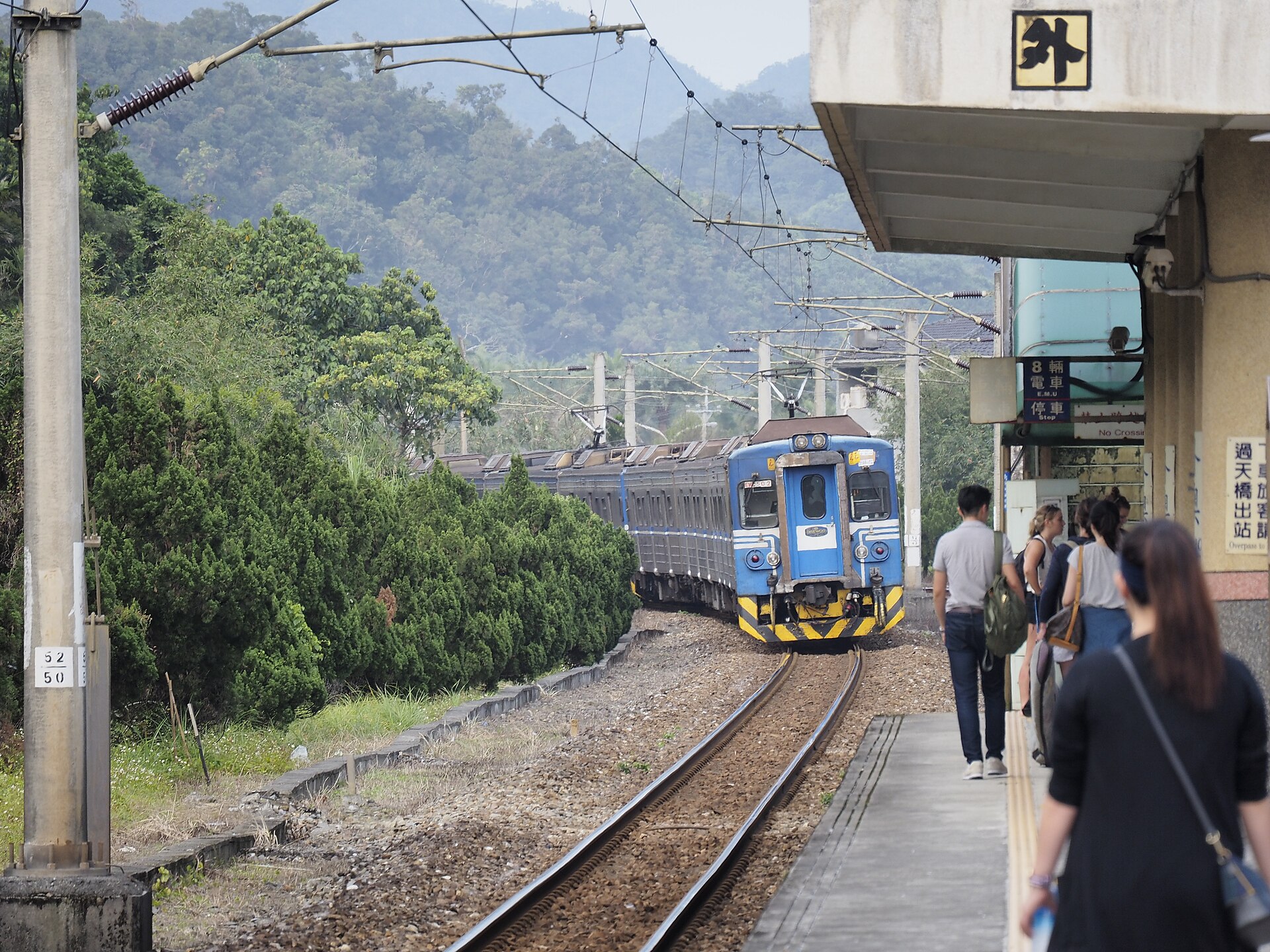
The railway does not go through the mountains the way the freeway does. It heads east to Ruifang — the stop for Jiufen, and the jumping-off point for the Pingxi line to Shifen — and then runs south along the coast past Fulong, Daxi and the beaches of Toucheng, with Turtle Island off the left-hand windows for a good part of the way. Even so, the fastest expresses reach Jiaoxi in about an hour, which on a busy weekend beats the bus comfortably.
Express seats are the scarce resource. Taiwan Railways opens reservations 28 days ahead, and on Friday evenings and Sunday afternoons the Puyuma and Taroko services sell out; buy through the Taiwan Railway website or at a station machine. Local trains need no booking at all — tap your EasyCard at the gate and sit where you like — and they stop at the small coastal stations the expresses skip, which is exactly what you want if you are heading for the beach.
Our verdict: bus out on a weekday morning, train back on a Sunday, and never the bus on a holiday weekend if you have any choice at all.
Getting around once you are there
- Trains between the towns. Toucheng, Jiaoxi, Yilan, Luodong and Su’ao are all on the line, and the hops between them take ten to twenty minutes. This is the backbone of any car-free trip.
- Buses to the outlying sights. The arts centre, the distillery and the coastal stops are served by local and tourist-shuttle buses, but the timetables are thin. Check the return times before you set off, not after.
- Taxis. Easy to find at the bigger stations and worth hiring for a half day if you want to string together the distillery, the arts centre and the coast. Agree the plan before you start.
- Bikes. The plain is dead flat and there are riverside paths along the Dongshan River. Plenty of guesthouses lend bikes to guests.
- A car. Only really necessary for Taipingshan or for the coast road south. See our car rental guide — you need an International Driving Permit alongside your licence.
The best things to do in Yilan
Toucheng: the coast, the surf and the oldest street
Toucheng was the first Han Chinese settlement on the plain — the name means, roughly, “first town” — and its old street is a pleasant, quiet half hour of shophouses and temples. Most visitors come for the coast instead.
Wai’ao Beach is a long strip of dark sand running south from Wai’ao station, with Turtle Island sitting on the horizon straight ahead and a row of surf schools and board-hire shops along the road behind. Summer brings small, forgiving waves that suit a first lesson; autumn and winter bring bigger swell, colder water and a stiff north-east wind, which is surfers’ weather rather than beginners’. It is a surf beach rather than a paddling one — swim only where lifeguards are on duty in season.
A little further north, Beiguan Tidal Park is a short walk along slabs of tilted sandstone that jut out of the sea at a steep angle, the same “cuesta” formations that give the coast its saw-toothed look. It is worth twenty minutes, not an afternoon.
Lanyang Museum
The building is the reason to come, and it is a very good reason. Designed by Kris Yao and opened in 2010, the museum rises out of the ground at the same sharp angle as the cuesta rocks along the coast, a grey-and-glass wedge on the edge of Wushi Harbour. Inside, the permanent exhibition is arranged as a descent from mountains to plain to ocean — the geology, the Kavalan people who lived here first, the rice farming, the fishing — and it does a better job of explaining why this corner of Taiwan feels different than any guidebook paragraph can.
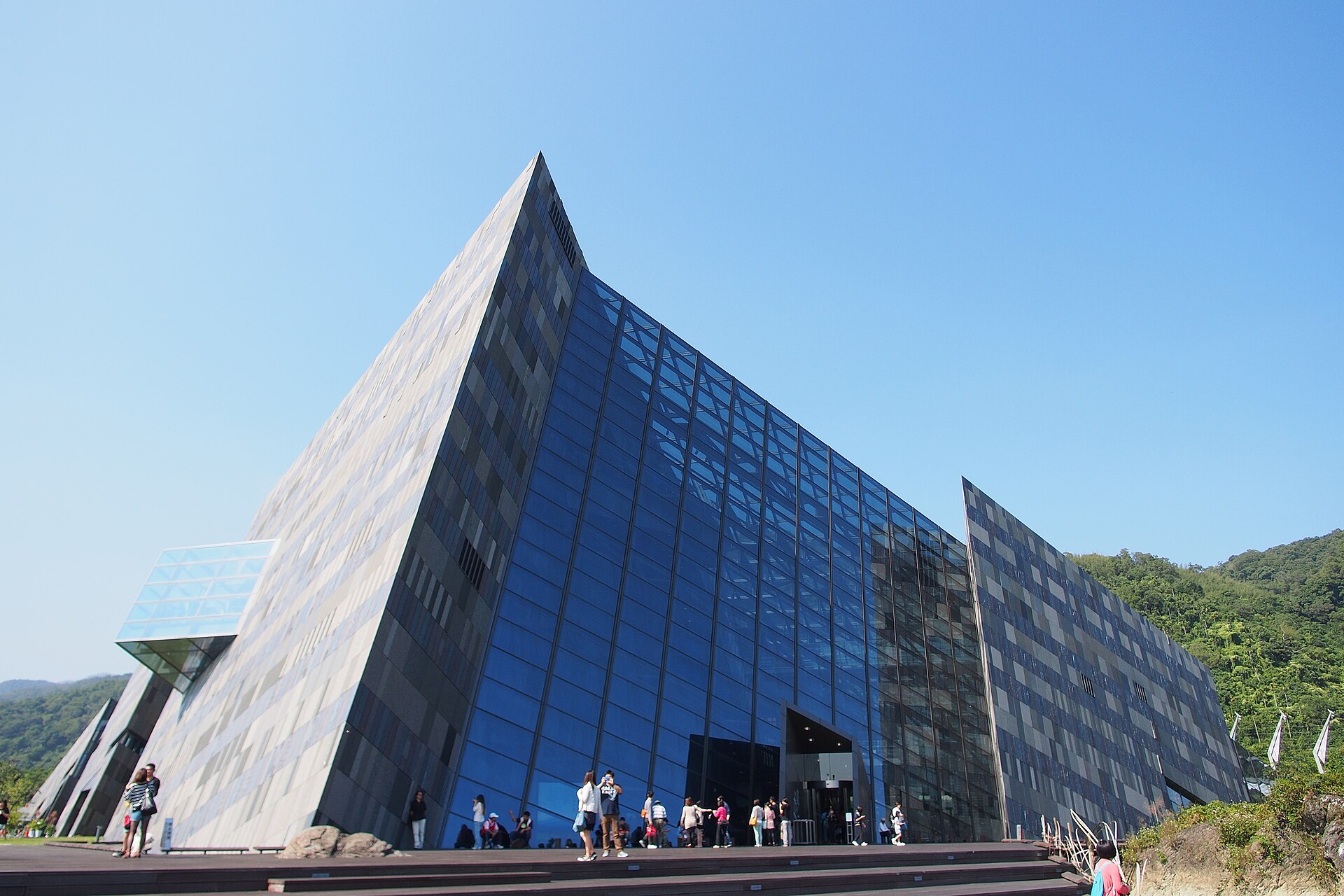
Admission is NT$100 for adults and NT$50 for students, and the museum is open 09:00–17:00, closed on Wednesdays except when a national holiday falls on one; it also closes for Lunar New Year’s Eve and Day. Give it an hour to ninety minutes. The museum’s own site posts closures and special exhibitions. It pairs naturally with a Turtle Island boat, since the harbour they leave from is right outside.
Guishan Island (Turtle Island)
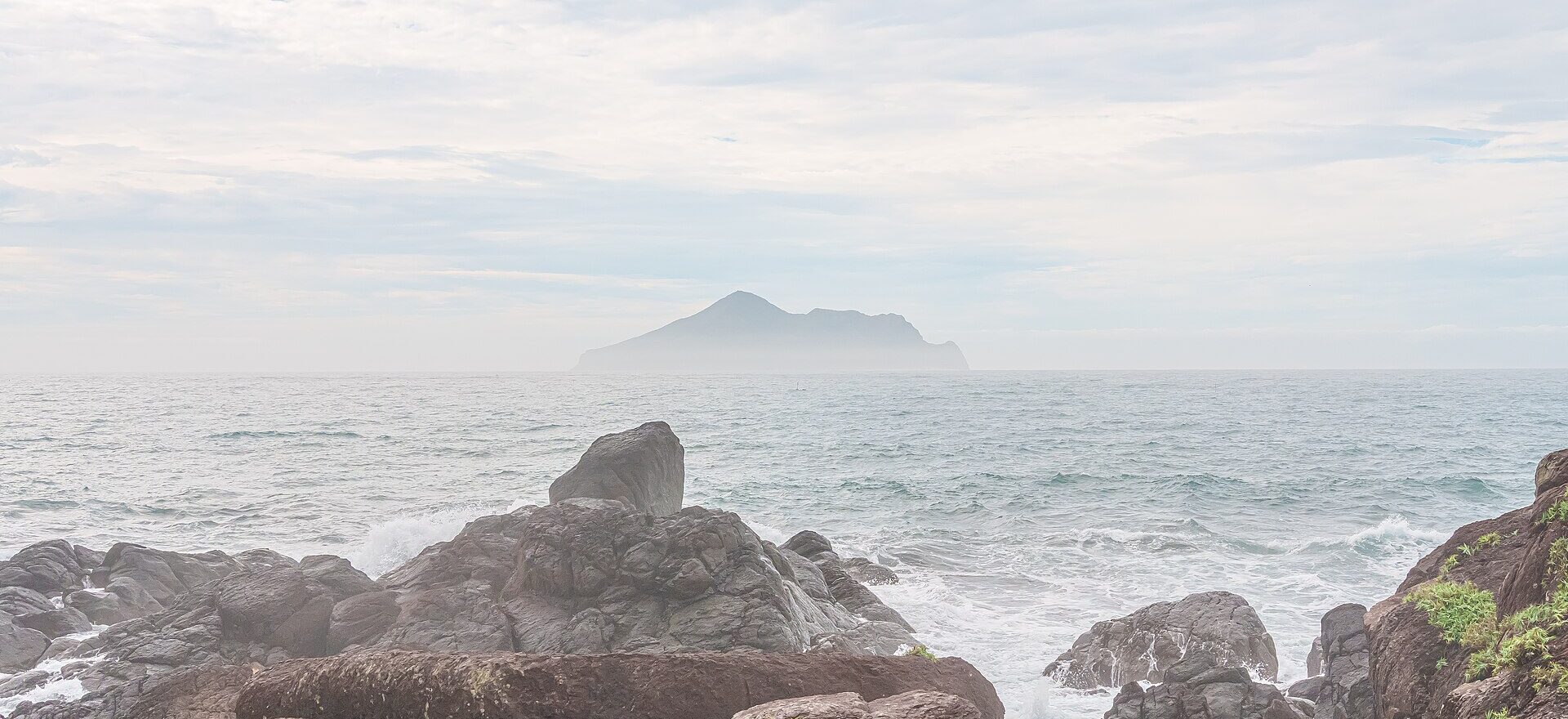
About ten kilometres offshore, Guishan Island looks from the beach exactly like its name — a turtle, head raised, swimming north. It is volcanic, still venting sulphur from vents off the “head” that turn the surrounding sea a milky pale blue, and for decades it was a military zone, which is why the island is scattered with bunkers, tunnels and gun emplacements.
There are two ways to see it. Circling tours leave from Wushi Harbour, loop the island, and usually double as whale and dolphin watching — dolphins turn up on a high proportion of trips, whales far less reliably. Landing tours put you ashore to walk the paths, the lake and the old military sites. Landings are tightly controlled:
- The island is open for landings from March to November only.
- It is closed every Wednesday.
- Numbers are capped at 1,800 people a day, split into four time slots of 450.
- Permits are applied for in advance. In practice the boat operators handle it, but they need your passport details ahead of time — book early for summer weekends.
- The climb to the summit viewpoint has its own, much smaller quota and is not always open. Ask whether your slot includes it before you pay.
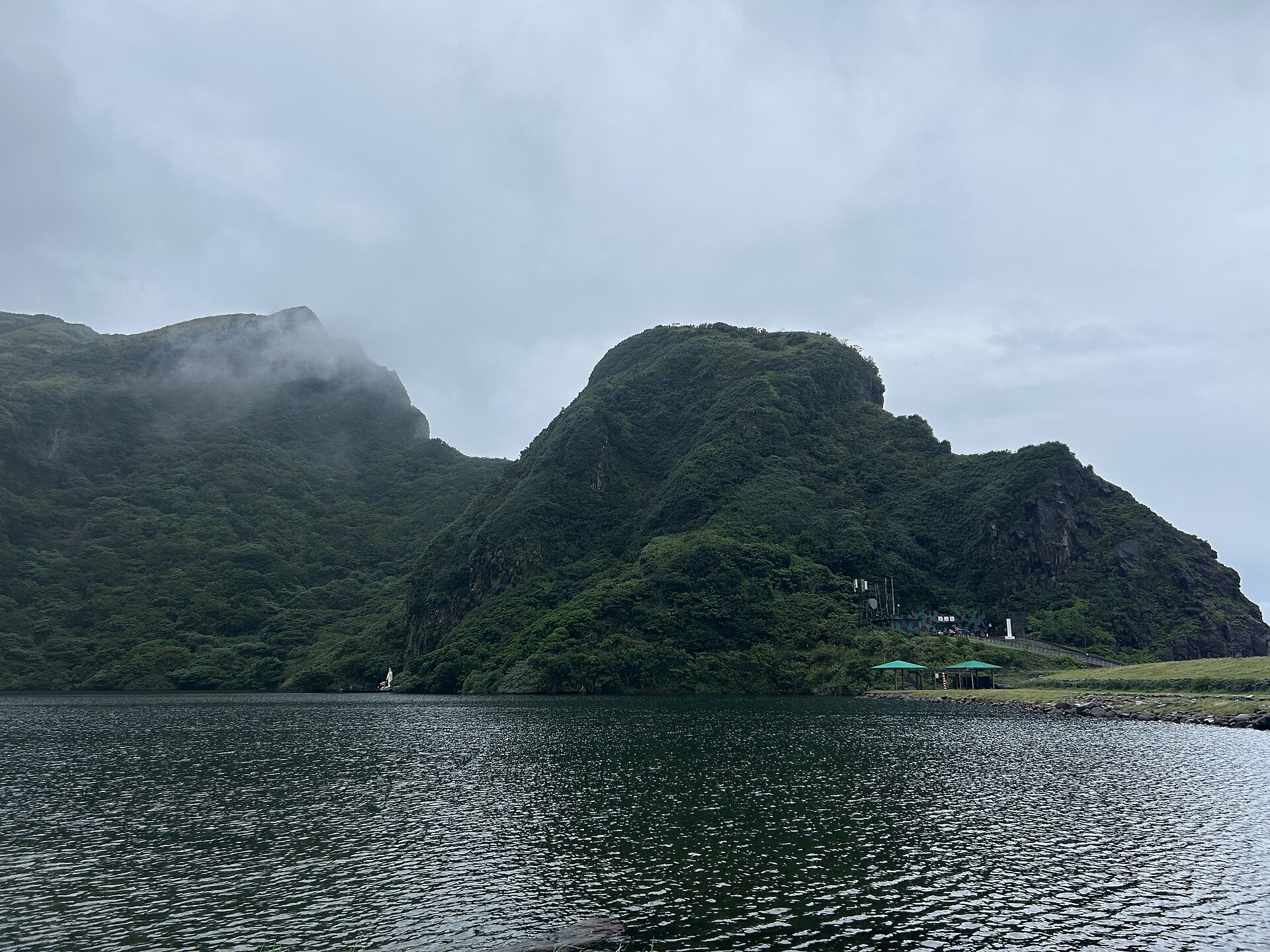
Our verdict: on a calm day, a landing tour is the best half-day in Yilan. On a rough one it is a seasick hour in a small boat, and trips get cancelled at short notice when the swell rises, so keep the day flexible and prefer a weekday.
Jiaoxi: hot springs in the middle of town
Jiaoxi is unusual among Taiwan’s spa towns in that the springs are right in the centre, a few minutes’ walk from the station. The water is clear, odourless sodium bicarbonate — nothing like the sulphurous, steaming pools of Beitou — and it comes out warm enough to heat the hotel tubs without help. The public park by the station has free foot baths, and nearly every hotel in town sells rooms with a private hot spring tub, which is the way most Taiwanese visitors use the place.
If you want a walk to go with the soak, Wufengqi Waterfall is a short taxi ride out of town, a stepped fall in a steep green valley with a path up the side. Jiaoxi deserves — and gets — its own full guide on this site; for the purposes of a wider Yilan trip, it is the obvious place to spend the night.
Yilan City
The county seat is a pleasant, low-rise town that most visitors pass straight through, and it makes a good two-hour stop rather than a destination. Right outside the station, Jimmy Liao Square fills a small plaza with oversized scenes from the picture books of Jimmy Liao, the illustrator, who was born in Yilan. A few minutes’ walk away, the Diu Diu Dang Forest is a steel-lattice canopy of artificial trees with a train sculpture suspended inside it, named after the Yilan folk song about water dripping in a railway tunnel.
Beyond those, the Yilan Distillery is a Japanese-era plant that still makes red yeast rice wine and has a small museum and shop, and there are a handful of restored Japanese-era wooden residences around the old centre. The Dongmen Night Market by the railway is small and resolutely local — a decent dinner if you are staying in the city, not worth crossing the county for.
Luodong: the night market and the timber yards
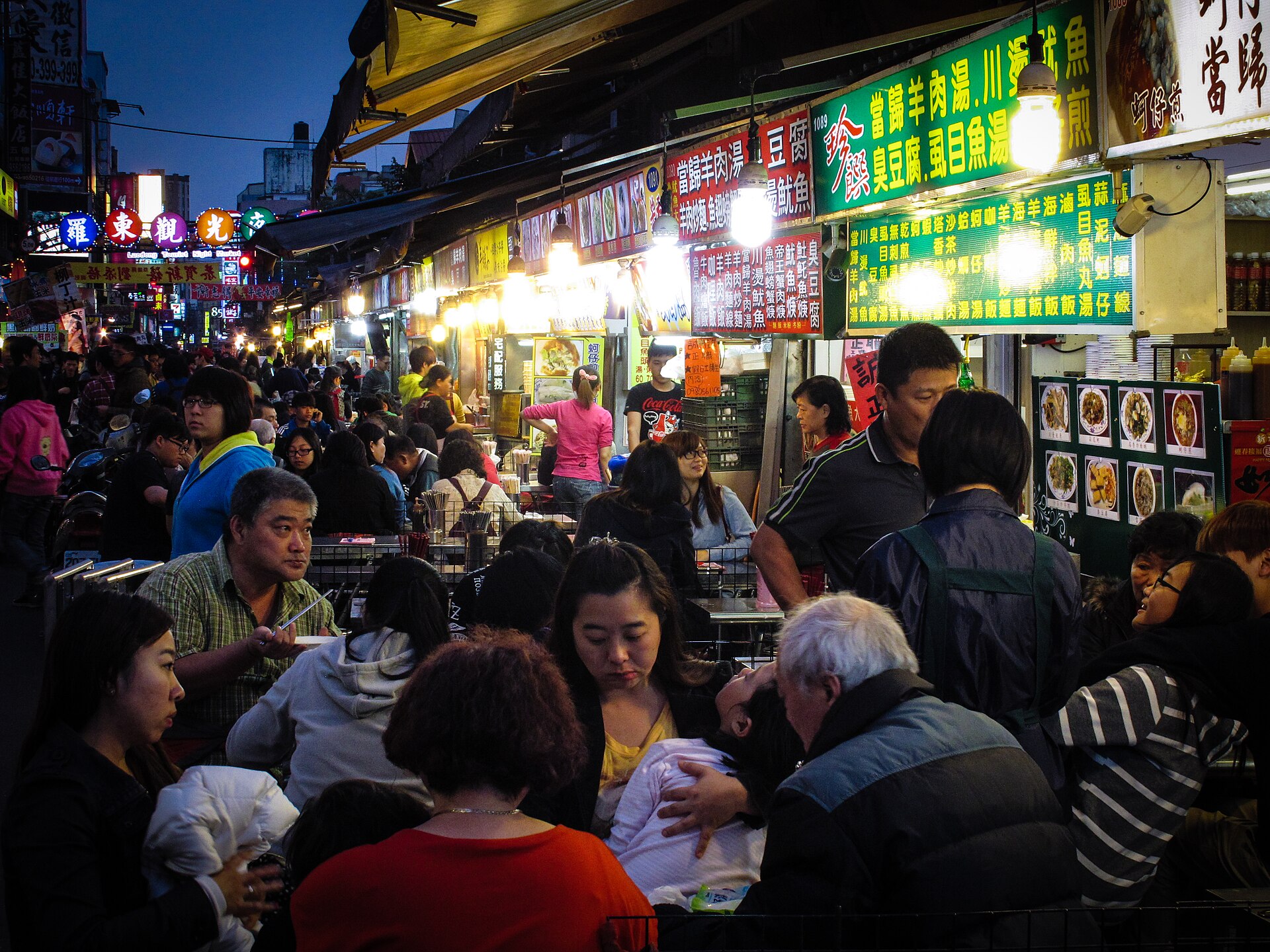
Luodong is where Yilan’s evenings happen. Luodong Night Market packs the streets around Zhongshan Park, a short walk from Luodong station, every night of the week, and it is the best night market in north-east Taiwan — denser, cheaper and more interesting to eat through than several of Taipei’s better-known ones. What to look for:
- Filled tapioca balls (包心粉圓) — chewy, marble-sized, with a sweet filling, in shaved ice or syrup. The market’s signature.
- Dragon and phoenix rolls (龍鳳腿) — not a leg of anything; minced pork and fish paste wrapped in caul fat and deep-fried.
- Angelica lamb soup (當歸羊肉湯) — a dark, herbal, warming bowl, and very welcome on a wet winter night.
- Bu rou (卜肉) — strips of marinated pork in a light batter, fried to order.
- Scallion pancakes made with Sanxing scallions from just up the valley, which is where Taiwan’s best-known spring onions are grown.
By day, the Luodong Forestry Culture Park is the other reason to stop. This was where timber felled on Taipingshan came down the mountain by forest railway and was stored in great log ponds; the ponds are still there, along with the old Zhulin station, carriages and restored sheds, and the park is free. It is quiet, shaded and an hour well spent, especially if you are heading up to Taipingshan and want to see where the logs ended up.
For the wider picture of how night markets work — ordering, paying, eating standing up — see our guide to night market food.
The National Center for Traditional Arts
On the banks of the Dongshan River in Wujie, the arts centre is a recreated Qing-style street of workshops and shops — woodcarving, glass, embroidery, puppets, sweets — along with a scholar’s mansion, a small temple and stages for Taiwanese opera and glove puppetry. Admission is NT$150, and it is open 09:00–18:00 every day.
Honestly, it sits somewhere between a museum and a theme park, and on a quiet weekday morning it can feel like a film set with the actors on a break. It comes alive when there is a performance on, which is mostly at weekends — check the programme before you go, and plan the visit around a show rather than the other way round. Families tend to like it more than solo travellers. The riverside next door, the Dongshan River Water Park, hosts the county’s big summer children’s festival of folk games through July and August.
Kavalan Distillery
In 2015 a single malt from this distillery near Yuanshan was named the world’s best at the World Whiskies Awards, beating the Scots at their own game and making a great many whisky people look up Yilan on a map. The subtropical heat speeds up maturation, which is how a distillery that only began distilling in 2006 was collecting world titles within a decade. Visiting is free: a self-guided route past the stills and the warehouse, a tasting, and a large shop. Go by taxi from Yilan City — it is not somewhere to drive to, for obvious reasons.
Su’ao cold spring and Nanfang’ao harbour
At the southern end of the plain, Su’ao has something rarer than a hot spring: a carbonated cold one, which stays at around 22°C and fizzes gently against your skin. There is a small charge for the public pools. On a hot summer afternoon it is a strange and lovely thing; in January it is a dare.
Just over the hill, Nanfang’ao is one of Taiwan’s major fishing harbours, with a busy morning catch, rows of seafood restaurants that cook what you point at, and a Mazu temple famous for a statue of the goddess cast in gold. Come hungry and at lunchtime.
Taipingshan
Up in the mountains of Datong township, Taipingshan was one of Taiwan’s great logging centres and is now a national forest recreation area, cool and misty even in summer. The Jianqing Huaigu Trail follows an old logging rail line through moss-thick forest on a boardwalk; the little Bong Bong train runs a short stretch of the old line; and further on, Cuifeng Lake is the largest alpine lake in Taiwan. At the bottom of the mountain road, the Jiuzhize hot springs are where people boil eggs in the spring water.
It is not a spontaneous half day. The road up from Luodong takes around two hours and closes after heavy rain; public transport is limited; and the area had a two-month construction closure in spring 2026 that shut the trails and the train. Check the Forestry and Nature Conservation Agency’s Taipingshan page for current access and admission before you plan around it, go early, and take a jacket.
What to eat in Yilan
Yilan’s food is its own thing — banquet dishes from the plain’s farming families, smoked duck, and a sweet tooth fed by the county’s kumquats. A few things to order:
- Gao zha (糕渣) — rich stock thickened, set, cut into blocks and deep-fried, so the outside is crisp and the inside molten. Handle with care.
- Xi lu rou (西魯肉) — a thick, savoury stew of cabbage, meat and fried egg, traditionally a banquet dish.
- Ya shang (鴨賞) — salted, smoked duck, sliced thin with spring onion. Yilan’s best-known preserved food.
- Cherry duck (櫻桃鴨) — the name comes from Cherry Valley, the British duck breed farmed here, not from any cherries. Roast, it is excellent.
- Ox-tongue biscuits (牛舌餅) — long, flat and tongue-shaped. Yilan’s are thin and crisp rather than soft, and they make a better souvenir than most.
- Candied kumquats (金棗) — sticky, sharp, and sold in every gift shop in the county.
- Sanxing scallion pancakes (三星蔥油餅) — flaky, oily and packed with the valley’s scallions.
The night markets in Luodong and Yilan City will get you most of the way through that list. For how these fit into the wider island’s cooking, see our guide to Taiwanese street food.
Day trip or overnight?
Yilan is close enough to do as a day trip, and plenty of people do. The trick is to choose one corner of the county and do it properly. Three days out that work:
| Day | Route | Why it works |
|---|---|---|
| The coast | Local train to Wai’ao → beach or a surf lesson → Lanyang Museum → Turtle Island boat in season → train back | All on the railway, no bus timetables to worry about |
| The easy one | Bus to Jiaoxi → foot baths and Wufengqi → train one stop to Yilan City → bus back | Short hops, cheap, good in the rain |
| The evening one | Train to Luodong → taxi to the arts centre → Forestry Culture Park → night market → late train back | Ends with the best meal of the trip |
One night, though, changes the trip completely. Sleep in a Jiaoxi hotel with a hot spring tub in the room, eat in Luodong, and you can do the coast one day and the plain the next without once watching a clock. It also takes you off the Sunday-afternoon freeway, which on its own is worth the room rate. If Taipingshan is on your list, budget a night regardless — it does not fit inside a day trip from Taipei with any pleasure.
For how Yilan compares with the other trips you can make from the capital, see our day trips from Taipei guide, and for the longer journeys further round the island, our Taiwan beyond Taipei hub.
When to go
There is an old Taiwanese saying, “Hsinchu wind, Yilan rain” (竹風蘭雨), and it is accurate. The Lanyang Plain faces straight into the north-east monsoon, so from roughly October to March it is grey, drizzly and cool for days at a time, noticeably wetter than Taipei. That is the season for hot springs, and a soak in Jiaoxi with rain on the roof is a very good use of a wet weekend.
Summer is sunnier on this coast than most visitors expect. It is also the season for Turtle Island landings and whale watching, beginner surf at Wai’ao, and the children’s festival on the Dongshan River — and the season for typhoons, which reach the east side of the island first and close boats, beaches and mountain roads at short notice. Keep an eye on the Central Weather Administration and read our typhoon season guide for how the warnings work.
The best all-round months are April, when the island has reopened and the heat has not arrived, and October to early November, before the monsoon settles in. See the best time to visit for the wider picture.
Where to stay
Base yourself by what you came for rather than by the map:
- Jiaoxi for hot spring hotels, from business-style rooms with a tub to full resorts. Close to the station and the buses.
- Luodong for the night market on your doorstep, cheaper rooms, and an early start to Taipingshan or the south.
- Toucheng and Wai’ao for surf guesthouses and the Turtle Island boats.
- Out on the plain for family-run minsu (民宿) among the paddies — lovely, often with breakfast and a bike, and mostly reachable only by taxi.
Prices rise sharply on Friday and Saturday nights, when half of Taipei arrives. Midweek, the same hot spring room can cost a good deal less.
What we would skip
Trying to do the whole county in one day. Seven areas, thin buses and a ninety-minute ride each way add up to a day spent in transit. One corner, properly.
The Sunday-afternoon bus back to Taipei. The tunnel queue is predictable and avoidable. Take the train, or leave before lunch.
Taipingshan as an afterthought. A mountain road, a two-hour drive and changeable weather do not reward a late start or a vague plan.
Making Yilan City the point of the trip. It is a perfectly nice town with two hours of things to see. The coast, Luodong and Jiaoxi are why you came.
A Turtle Island boat on a rough day. If the operator is wavering, so will your stomach. Move it to tomorrow.
Practical notes
- EasyCard works on the intercity buses, local trains and most local buses. Keep it topped up; see our EasyCard guide.
- Carry cash for the night markets, small restaurants and the boat operators.
- English is thinner than in Taipei. Menus in the markets are often Chinese only; a translation app and a few Mandarin phrases help.
- Bring an umbrella from October to March. The saying about the rain is not a figure of speech.
- Book Turtle Island ahead in summer, and have your passport details ready for the permit.
- Download offline maps if you are heading into the mountains; coverage thins above the plain.
If the hot springs are the reason you came, Jiaoxi deserves more than a passing soak. The foot baths opposite the bus station are free until 22:00, the outdoor Forest Hot Spring costs NT$250 and runs all night, and the old Tangweigou bathhouse charges about NT$80 for a soak in a cypress-wood bath with no time limit. Our guide to Jiaoxi hot springs covers those, the hotel pools and private rooms, and the etiquette that goes with them.
Related Taipei guides
- Taiwan Beyond Taipei: Where to Go Next
- Day Trips from Taipei
- Taipei to Hualien: Train, Bus or Flight
- Beitou Hot Springs Guide
- The Taiwan High Speed Rail
- Taipei Bus Guide
- The EasyCard
- Car Rental in Taiwan
- Shifen Day Trip
- Night Market Food
- Taipei Typhoon Season
- Taiwan Itinerary: 10 Days from Taipei
Frequently Asked Questions
Is Yilan worth visiting from Taipei?
Yes. It is the easiest escape from the city that actually feels like a different place — a flat plain of rice paddies between mountains and the Pacific, with hot springs, a surf beach, a volcanic island and one of the best night markets in the north. It is an hour or so away and needs no advance planning on a weekday.
How do I get from Taipei to Yilan?
By bus or train. Kamalan buses 1915 and 1916 leave Taipei Bus Station beside Taipei Main, and Capital Star’s 1572 leaves Taipei City Hall Bus Station, for NT$131–140. Taiwan Railways expresses reach Jiaoxi in about an hour and Yilan in about seventy minutes for roughly NT$300; local trains take about two hours for roughly NT$200.
How long is the bus from Taipei to Yilan?
About 75–80 minutes to Jiaoxi and 90–95 minutes to Yilan City when the Hsuehshan Tunnel is clear. At weekends, especially on Sunday afternoons heading back to Taipei, traffic can add an hour or more.
Does the high speed rail go to Yilan?
No. The Taiwan High Speed Rail runs down the west coast only. Yilan is served by Taiwan Railways, whose trains follow the north-east coast, and by coaches through the Hsuehshan Tunnel.
Can you do Yilan as a day trip from Taipei?
Yes, if you pick one area — the Toucheng coast, Jiaoxi and Yilan City, or Luodong and the arts centre — and leave the rest for another time. One night is better: stay in a Jiaoxi hot spring hotel and you can see two areas without rushing and avoid the Sunday traffic.
What is Yilan famous for?
Hot springs at Jiaoxi, Turtle Island, surfing at Wai’ao, Luodong Night Market, Kavalan whisky, Sanxing scallions, smoked duck, and rain. The Lanyang Museum and the National Center for Traditional Arts are the best-known cultural sights.
Is Luodong Night Market worth the trip?
Yes — it is the best night market in north-east Taiwan and better to eat through than several of Taipei’s famous ones. Go for the filled tapioca balls, dragon and phoenix rolls, angelica lamb soup and scallion pancakes, and combine it with the Forestry Culture Park or the arts centre earlier in the day.
How do I visit Turtle Island?
Book a tour from Wushi Harbour in Toucheng. Circling and whale-watching trips run in the warmer months; landing tours need a permit, which the operators arrange with your passport details. Landings are allowed from March to November only, never on Wednesdays, and are capped at 1,800 people a day.
When is the best time to visit Yilan?
April and October to early November are the best all-rounders. Winter is wet and grey because of the north-east monsoon, but ideal for hot springs; summer is the season for Turtle Island, the beach and whale watching, with the risk of typhoons from July to September.
Is Yilan good for hot springs?
Very. Jiaoxi’s springs rise in the middle of the town, the water is clear and odourless sodium bicarbonate, the foot baths in the public park are free, and most hotels offer rooms with a private hot spring tub. It is a gentler, quieter experience than Beitou’s sulphur pools.
Do I need a car in Yilan?
Not for the main towns, which are all on the railway. You will want one — or a tour, or a taxi for the day — for Taipingshan, the coast road south, and to string together the outlying sights like Kavalan Distillery and the arts centre without waiting for thin bus timetables.
What should I eat in Yilan?
Gao zha, the deep-fried set stock; xi lu rou stew; ya shang smoked duck; roast cherry duck; ox-tongue biscuits; candied kumquats; and scallion pancakes made with Sanxing scallions. Luodong Night Market adds filled tapioca balls, bu rou and angelica lamb soup.
Can I use my EasyCard in Yilan?
Yes, on the intercity buses from Taipei, on Taiwan Railways local trains, and on most local buses. For reserved seats on express trains you need a ticket, bought online, at a machine or at the counter.
The Bottom Line
Take the bus through the tunnel on a weekday morning, or the train round the coast if it is the weekend. Pick a corner of the county — the surf and the museum at Toucheng, the hot springs at Jiaoxi, or the arts centre and the night market in Luodong — and give it the day rather than trying to see everything from a bus window.
Better still, stay the night. A hot spring tub in Jiaoxi, dinner in Luodong and a morning boat to Turtle Island is about as good as a short trip out of Taipei gets, and you will ride home on Monday while everyone else is sitting in the Sunday queue at the mouth of the tunnel.
Photo Credits
Turtle Island from the Toucheng shore: 202506 龜山島與海平面上的夏日早晨之霧 01 by Junyu-K, CC BY-SA 4.0, via Wikimedia Commons.
A local train at Wai’ao station: TRA EMU500 leaving Wai’ao Station 2017-04-09 by 宇, CC BY-SA 2.0, via Wikimedia Commons.
Lanyang Museum: Lanyang Museum 20121110 by othree, CC BY 2.0, via Wikimedia Commons.
On Guishan Island: Guishan Island, Yilan by PP Xuan, CC0, via Wikimedia Commons.
Luodong Night Market: 2014-01-29 Luodong Night Market by tomscoffin, CC BY 2.0, via Wikimedia Commons.