This article contains advertising. Our booking links are routed through a partner that adds commission tracking automatically, so if you book through one we earn a commission from the provider, at no extra cost to you. It never affects what we recommend. Affiliate disclosure
Most hot spring towns make you work for it. Beitou sits in a valley at the foot of the volcanoes, Wulai is up a river gorge, and the famous Japanese onsen towns are at the end of mountain railways. Jiaoxi’s water comes up under the flat, ordinary streets of a small town on the Lanyang Plain, a few minutes’ walk from the railway station — which means that a Jiaoxi hot spring soak can start about ten minutes after you step off the train from Taipei, and cost nothing at all. That convenience is the whole appeal of the place, and it explains both why Taiwanese families have been coming here for generations and why the town itself is more concrete hotel than picturesque spa village.
This guide covers the free foot baths, the two public bathhouses and what they cost, how the hotel pools and private hot spring rooms work, the bathing etiquette nobody explains, the waterfall walk and the food, and whether Jiaoxi is worth a night or just an afternoon. Prices were checked in September 2026; treat them as the right order of magnitude and confirm before you go.
Jiaoxi at a glance
| What | Cost | Notes |
|---|---|---|
| Foot baths, Jiaoxi Hot Spring Park | Free | Open until 22:00; opposite the bus station |
| Foot baths, Tangweigou Hot Spring Park | Free | Short walk from the train station |
| Forest Hot Spring (森林風呂) | NT$250 · NT$200 concession · NT$150 seniors | Nude, gender-separated, outdoors; open 24 hours |
| Tangweigou public bath (湯圍風呂) | About NT$80 | Nude, gender-separated, indoors |
| Doctor-fish foot pool | About NT$80 | A novelty; see below |
| Hotel pool day entry | A few hundred dollars | Swimsuit and cap; weekends cost more |
| Private hot spring room (湯屋) | Priced per room, per 60–120 min | Couples, families, the modest |
| Bus from Taipei | NT$131–140 | About 75–80 min on a clear run |
| Express train from Taipei | Roughly NT$300 | About an hour |
What makes Jiaoxi different
Jiaoxi is what the Taiwanese call a “flat-land” hot spring (平地溫泉): the water rises on the plain rather than in the mountains, which is unusual, and it is the reason the town could grow up around it. Hotels drilled their own wells, the county built public parks over the outflows, and today almost every building in the centre has spring water piped into it.
The water itself is clear, odourless sodium bicarbonate. There is no rotten-egg smell, nothing stains or tarnishes, and it leaves your skin feeling slippery-smooth, which is why springs like this are sold in Taiwan and Japan as “beauty water”. It is gentle enough for a first-timer and for children, and hot enough at source that it needs cooling before anyone gets in.
| Jiaoxi | Beitou | Wulai | |
|---|---|---|---|
| Water | Sodium bicarbonate — clear, odourless | Sulphur — cloudy, strong-smelling | Sodium bicarbonate — clear, odourless |
| Setting | Town centre on a flat plain | A valley on the edge of the city | A river gorge in the mountains |
| From Taipei Main | About an hour by train or bus | 30–40 minutes by MRT | About an hour by MRT and bus |
| Best for | An easy overnight with a tub in your room | A quick soak without leaving the city | Scenery and a riverside soak |
If you only have an evening, Beitou is closer and more dramatic. If you want mountains, Wulai has the better setting. Jiaoxi wins on ease: the widest choice of hotels with hot spring water in the room, free public foot baths in the middle of town, and the rest of Yilan County — the coast, Turtle Island, Luodong’s night market — within half an hour.
Getting to Jiaoxi from Taipei
There are two ways, and both are easy.
By bus. Kamalan Bus runs routes 1915 and 1916 from Taipei Bus Station, next to Taipei Main Station, with a pick-up near Technology Building MRT on the way out; Capital Star’s 1572 leaves from Taipei City Hall Bus Station, handy if you are staying in Xinyi. The fare is NT$131–140 and the ride is about 75–80 minutes through the Hsuehshan Tunnel on a clear run. Buses drop you at the Jiaoxi Transfer Station at the north end of town, directly opposite Jiaoxi Hot Spring Park — you can be in the foot bath before the bus has pulled away. Pay with an EasyCard.
By train. Taiwan Railways expresses reach Jiaoxi in about an hour from Taipei Main for roughly NT$300; local trains take around two hours for roughly NT$200 and need no booking. The station is in the middle of town, a short walk from Tangweigou and about fifteen minutes on foot from the Hot Spring Park.
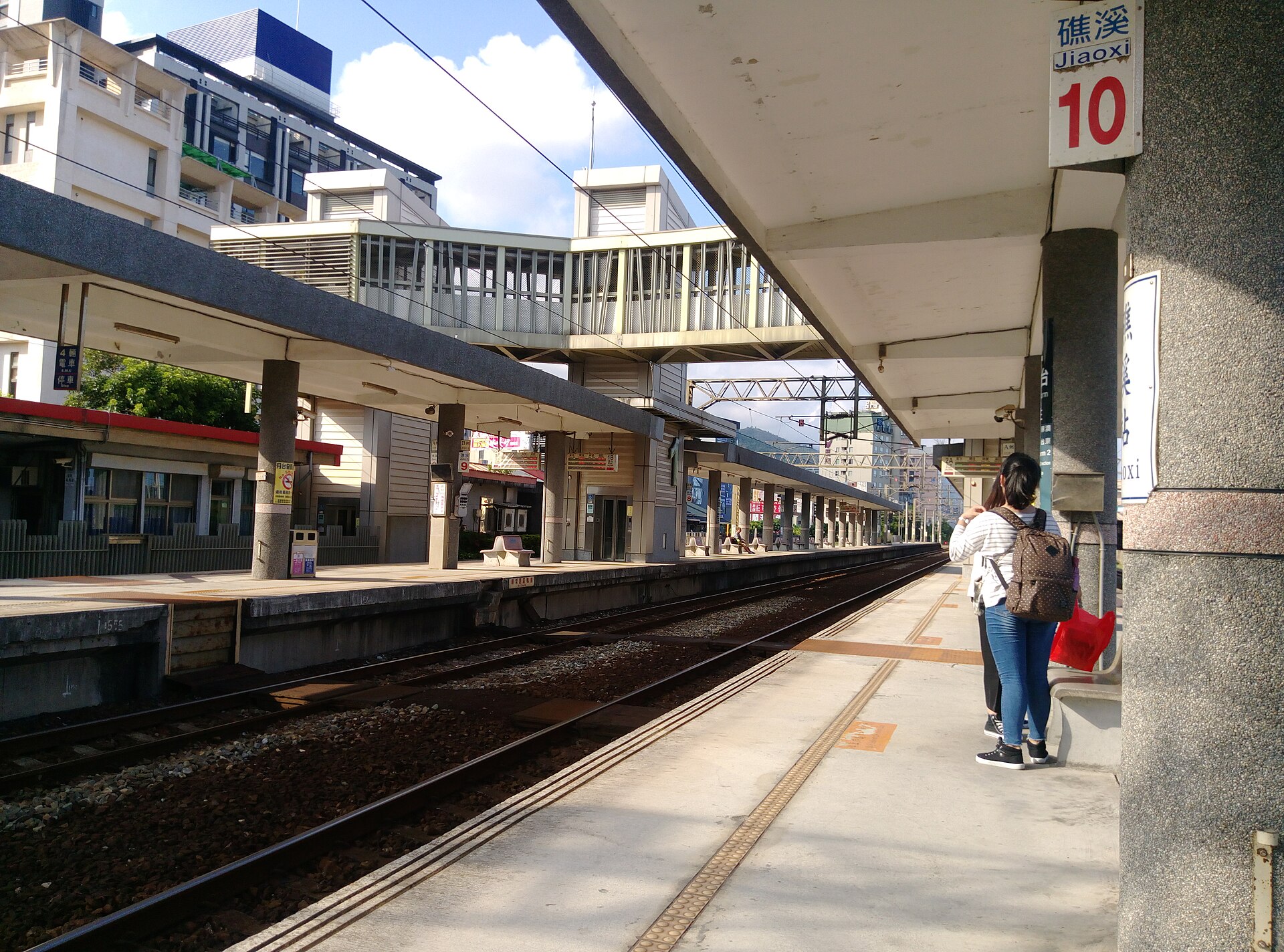
The choice comes down to the day. On a weekday the bus is cheaper, more frequent and just as quick. At weekends — above all on Sunday afternoon heading back to Taipei — traffic in the tunnel can add an hour or more, and the train is the better bet; book an express seat in advance, because Taiwan Railways opens reservations 28 days ahead and the Friday and Sunday services fill. Our Taipei bus guide covers the intercity terminals if you have not used them before.
The free way: foot baths
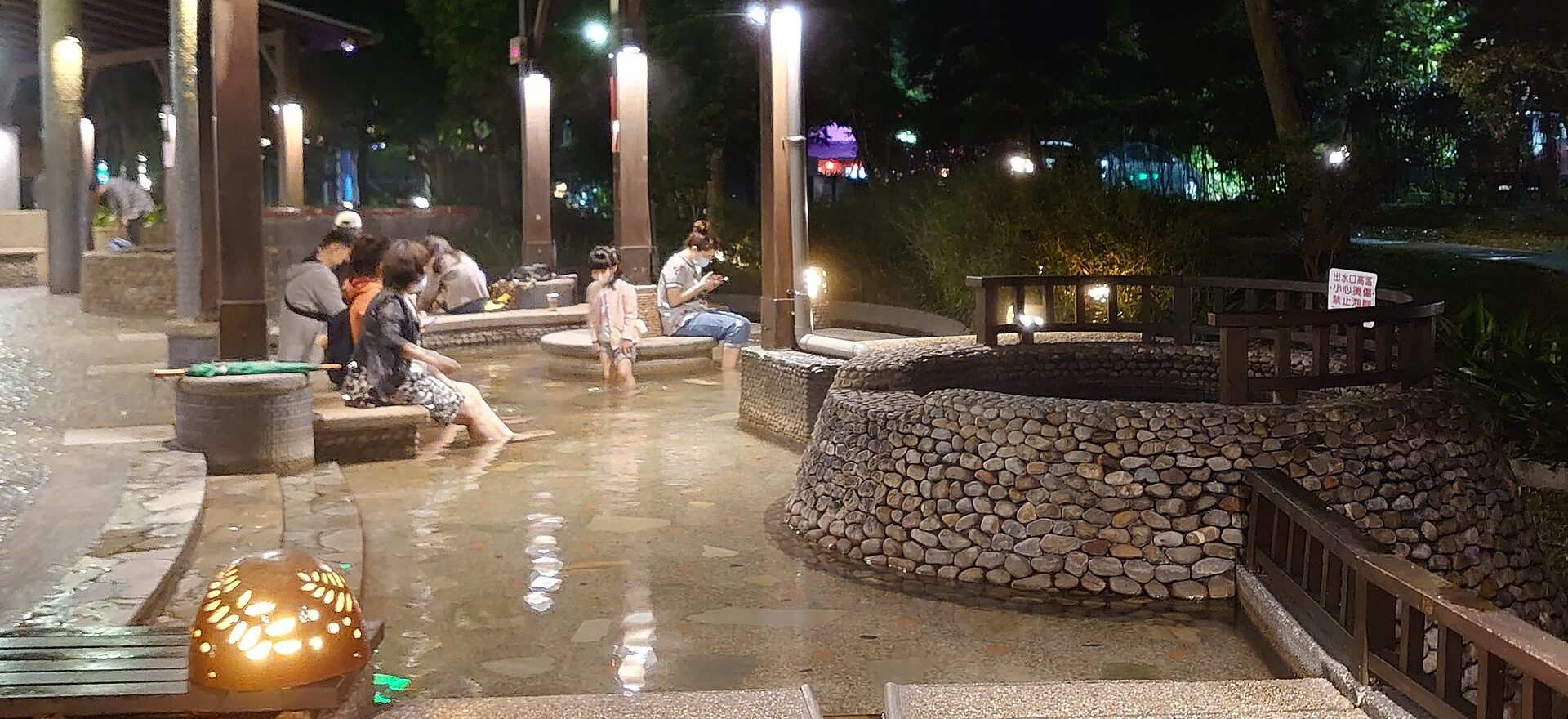
You do not need to spend a dollar to use Jiaoxi’s water. Both public parks have open-air foot baths, and at night, lit up and busy with families, they are the most pleasant thing in town.
Jiaoxi Hot Spring Park
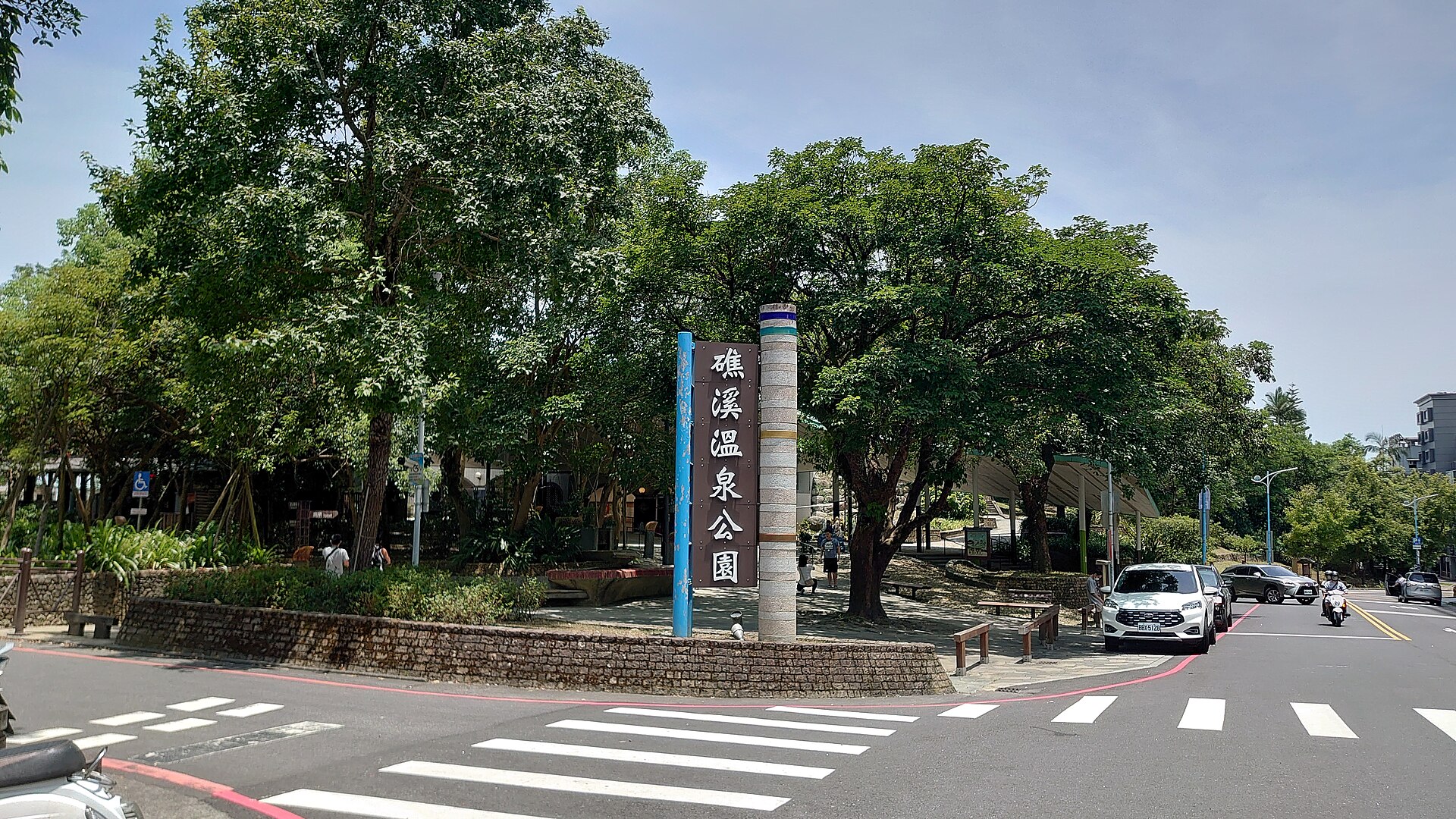
A wooded park at the foot of the hills on the north side of town, opposite the bus station. The foot baths are free and open until 22:00: shallow stone-lined channels under wooden shelters where you sit on the edge with your trousers rolled and your feet in water that is properly hot. Look for the round stone well where the water enters — the sign on it warns, accurately, that the outlet is hot enough to scald, so soak downstream of it rather than beside it. The park also has a giant rabbit sculpture by the Yilan-born illustrator Jimmy Liao, which children and photographers treat as the main attraction.
Tangweigou Hot Spring Park
Closer to the railway station, between Deyang Road and Ren’ai Road, Tangweigou is a narrow park laid out along a hot spring stream. It has free semi-outdoor foot baths, a paid public bathhouse (below), a doctor-fish foot pool, and a row of snack stalls around the entrance. It is livelier and more commercial than the Hot Spring Park, and easier to fit in around a train.
How to use a foot bath without annoying anyone
- Rinse your feet first if there is a tap, and dry them before you put your shoes back on — bring a small towel, or buy one at any convenience store.
- Roll your trousers well above the knee. The water is deeper than it looks in places, and it is hot.
- Keep splashing to a minimum and keep children from paddling across the channel; people are sitting quietly on either side.
- Ten to twenty minutes is plenty. Your feet will be pink; that is normal.
- Go after dark. The parks are at their best in the evening, when the day visitors have gone and the lights come on.
The public bathhouses
For a full soak without a hotel, Jiaoxi has two public options, both run on the Japanese model: separate baths for men and women, and no swimsuits — you bathe naked. If that thought is a deal-breaker, skip to the hotel section, where swimsuits and private rooms solve the problem.
Forest Hot Spring (森林風呂), Jiaoxi Hot Spring Park
Inside the Hot Spring Park, the Forest Hot Spring is a set of outdoor pools under the trees — the closest thing Jiaoxi has to a proper open-air bath. Admission is NT$250, NT$200 concession and NT$150 for seniors and visitors with disabilities, and tickets bought online in advance are cheaper, sometimes markedly so for two people. It is open 24 hours, all year, although between 01:00 and 07:00 only some of the pools are in use while the others are cleaned.
Men’s and women’s baths are separate. Women must wear a bath cap, and everyone should bring a towel; both are on sale at the counter if you forget. Go on a cool evening or early in the morning and it is genuinely lovely — steam, leaves, the sound of the town muffled by the trees.
Tangweigou public bath (湯圍風呂)
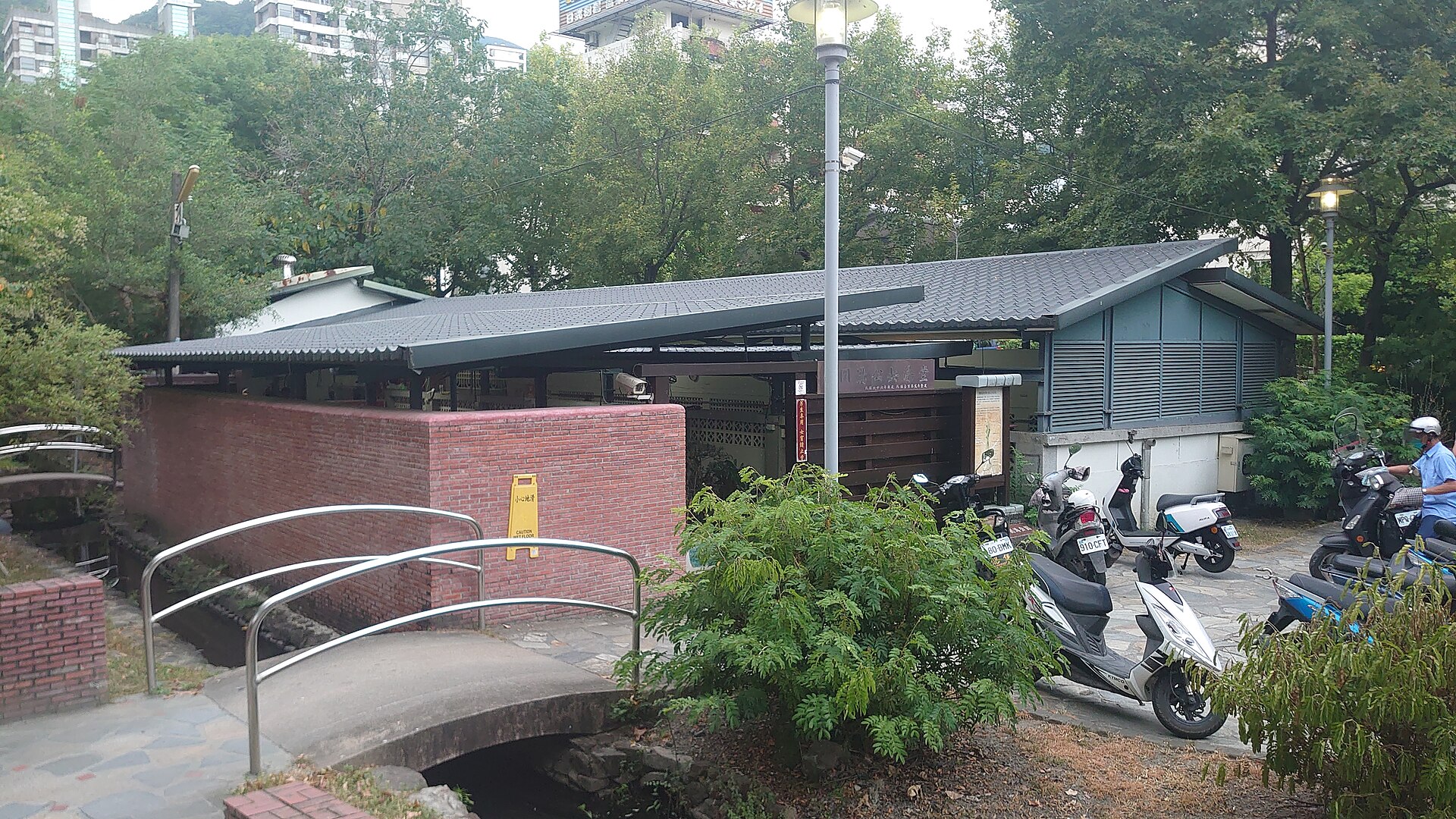
The older, simpler option: an indoor bathhouse inside Tangweigou park, gender-separated, with a bath lined in fragrant cypress wood among its pools. It costs about NT$80 and there is no time limit, which makes it the best-value full soak in Taiwan’s easiest spa town. It opens from morning into the evening with a break around midday for cleaning; check the hours on the door. The Yilan County tourism site has a page on Tangweigou (in Chinese) with the current details.
The doctor fish
Tangweigou and several shops in town offer doctor-fish pools, where you sit with your feet in warm water while small fish nibble dead skin off them, for about NT$80. It tickles appallingly for the first minute and then becomes merely odd. It is a harmless ten-minute novelty that children enjoy, but hygiene-minded people skip it — the same water and the same fish see a great many feet in a day, and health authorities in several countries have been cautious about fish pedicures for exactly that reason.
Bathing etiquette, in plain terms
Taiwan’s public baths follow Japanese customs, and the regulars notice when visitors do not. The rules are simple:
- Shower first, thoroughly, sitting on the stool at the washing station. You get into the bath clean; the bath is for soaking, not washing.
- Nothing goes in the water — no swimsuit, no towel, no soap. Fold your small towel and put it on your head or on the side.
- Tie up long hair or wear the cap, which is compulsory for women at the Forest Hot Spring.
- No photographs in the bathing areas, ever.
- Keep your voice down. People come here to be quiet.
- Soak in stages — ten or fifteen minutes, then out to cool down, then back in. Drink water between rounds.
- Do not bathe after drinking alcohol or a heavy meal, and take advice first if you are pregnant or have heart or blood-pressure problems. Get out at once if you feel dizzy.
Tattoos, which can be a problem in Japan, are rarely an issue in Taiwan. If you are worried about it — or about the nudity — a private room removes the question entirely. For the wider picture of how things are done here, see our guide to Taipei etiquette.
Hotels: pools, private rooms and a tub of your own
Most Taiwanese visitors never go near the public baths. They use the hotels, which offer hot spring water in three distinct ways, and understanding the difference is most of what you need to know.
Day entry to a hotel’s public pools
Many hotels sell day tickets to their hot spring pool complexes to non-guests. These are mixed-sex, so you wear a swimsuit, and most also require a swimming cap — standard in Taiwanese pools, and usually for sale or rent at the desk. Expect a few hundred dollars: Chuan Tang Spring, one of the big family-oriented complexes with a dozen or so pools, jets, steam rooms and a children’s area, has charged around NT$230 on weekdays and NT$320 at weekends, so treat that as the ballpark and check before you go. They are good for families and groups, and noisy on Saturdays.
Private hot spring rooms (湯屋)
The Taiwanese favourite. You rent a private room with its own large tub — sometimes a stone bath, sometimes a window over a garden — for a fixed block of time, usually 60 to 120 minutes, and fill it with spring water at whatever temperature you like. The price is per room rather than per person, so it works out well for couples and families, and it is the answer for anyone who does not want to bathe naked in front of strangers or wear a swimsuit in a crowd. Prices vary a great deal by hotel and rise at weekends; ask at reception and look at the room before you pay.
Staying overnight with a tub in your room
This is the classic Jiaoxi experience and the best reason to stay the night. Most hotels in town pipe spring water straight into the bathroom of their guest rooms, so you can soak before dinner, again at midnight and again before breakfast without putting your shoes on. Rooms range from plain business-hotel doubles with a deep tub to resort suites with a private outdoor bath. Midweek, the same room can cost far less than on a Saturday night, when half of Taipei arrives. When you book, check the listing says the bathroom has hot spring water, not simply a bath.
Wufengqi Waterfall
The one walk worth doing from Jiaoxi. About three kilometres west of town, Wufengqi is a stepped waterfall falling through a steep, green, fern-hung valley, with paths and viewing points climbing alongside the lower and middle falls. It is free.
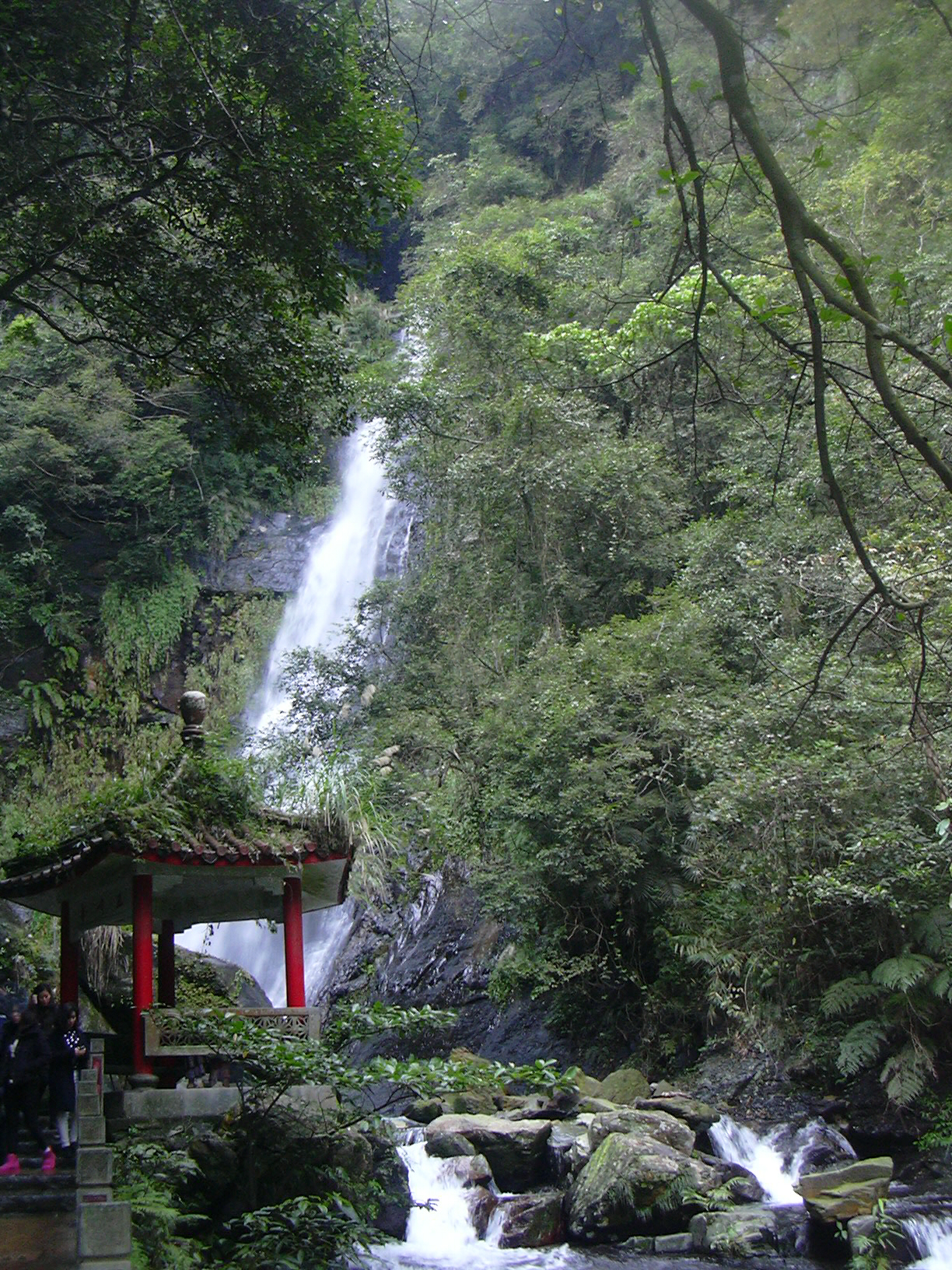
Getting there is the only awkward part. It is about 45 minutes on foot from the town centre, mostly along roads; the shuttle bus is infrequent; a taxi is the easy answer, and arranging the pick-up time with the driver saves a long wait at the top. Go after a few days of rain, when the falls are full, and heed any signs closing the upper sections, which shut after heavy rain and rockfalls. An hour on site is plenty — then back down for a bath, which is rather the point.
Eating in Jiaoxi
Jiaoxi is a place people come to bathe rather than to eat, but a few things are worth knowing:
- Hot spring vegetables. Water spinach (溫泉空心菜) grown in fields irrigated with spring water is the local speciality — crisp, bright and served stir-fried with garlic at every casual restaurant in town. Order it.
- Leshan Hot Spring Ramen (樂山溫泉拉麵) near the station has a famously long queue and a name that trades on the town. Good ramen; not a reason to come.
- Deep-fried scallion cakes (蔥餅), Yilan-style, from the stalls near the station and the Tangweigou entrance — with or without an egg cracked in, with or without chilli.
- Chilli ice cream from a stall at the Tangweigou entrance, graded from mild to properly painful. Start low.
For a better dinner, take the train fifteen or twenty minutes south to Luodong Night Market, which our Yilan guide covers along with the rest of the county.
When to go
Hot springs are a cold-weather pleasure, and Jiaoxi’s season runs from roughly November to March. The Lanyang Plain catches the north-east monsoon, so winter here is cool, grey and drizzly for days at a stretch — miserable for sightseeing, and exactly right for sitting in hot water with rain on the roof. See our guide to Taipei in winter for what else the season offers.
Summer is hot and humid, and a midday soak in July is more endurance test than pleasure. It still works if you shift the timing: foot baths after dark, the Forest Hot Spring very early in the morning, and a hotel room with air conditioning and a tub you can fill as cool as you like. Typhoons between July and September can cut the roads and railway at short notice; check the Central Weather Administration before you set off.
Avoid weekends and holidays if you can. Jiaoxi is the default weekend escape for a city of millions, hotel prices jump, the public baths fill and the Sunday traffic back through the tunnel is legendary. Lunar New Year is the busiest week of all.
Day trip or overnight?
Jiaoxi is one of the few spa towns that genuinely works as a day trip, because the water is in the middle of town and the journey is an hour. A day that works:
| When | What |
|---|---|
| Morning | Train from Taipei Main. Walk to Tangweigou for a foot soak, or straight into the public bath. |
| Late morning | Taxi to Wufengqi Waterfall; an hour on the paths. |
| Lunch | Back in town: stir-fried hot spring water spinach and whatever else the restaurant is proud of. |
| Afternoon | Forest Hot Spring, or a private room for an hour if there are two of you. |
| Evening | Foot bath at the Hot Spring Park after dark, then the bus from the station opposite. On a Sunday, take the train. |
An overnight is better still, and not much more expensive midweek. You get the evening soak, the morning soak and the empty town at night, and you can spend the second day on the Yilan coast, at the Lanyang Museum or on a Turtle Island boat before heading home. For how Jiaoxi compares with other escapes from the capital, see our day trips from Taipei guide.
What we would skip
A Saturday at a big hotel pool complex. Hundreds of families, dozens of children, a queue for the lockers. Go on a weekday or pay for a private room.
The doctor fish. Ten minutes of tickling in shared water. Harmless, but you will not miss it.
The Sunday-afternoon bus back to Taipei. The tunnel queue is predictable and long. Take the train or leave in the morning.
Midday bathing in high summer. Hot water on a 34°C day is a way to feel faint, not relaxed. Shift everything to the early morning and the evening.
Expecting a picturesque spa village. Jiaoxi is a working town of hotel blocks and traffic, with lovely water under it. Come for the water and the ease, not the architecture.
Practical notes
- Pack a swimsuit and a swimming cap if you might use a hotel pool; caps are usually compulsory in mixed pools, and are sold or rented at the desk if you forget.
- Bring a small towel for the foot baths and a larger one for the public baths, or buy them there.
- Flip-flops make the foot baths and the walk between them far easier.
- Carry cash for the public bath counters, the stalls and taxis. Your EasyCard covers buses and trains.
- Drink water before and after bathing, and do not mix hot springs with alcohol.
- Remove contact lenses if you plan to dunk your head — better still, do not dunk your head.
- Lockers are available at the public baths; valuables are safer left at your hotel.
Jiaoxi is only one of several hot spring areas within reach of Taipei. For how it compares with Beitou’s sulphur springs, Wulai’s river gorge, the seaside baths of Jinshan and Su’ao’s rare carbonated cold spring, see our guide to Taipei hot springs.
Related Taipei guides
- Yilan from Taipei: Things to Do & How to Get There
- Taiwan Beyond Taipei: Where to Go Next
- Beitou Hot Springs Guide
- Wulai Day Trip
- Day Trips from Taipei
- Taipei in Winter
- Taipei Bus Guide
- The EasyCard
- Taipei Etiquette
- Taiwan’s Convenience Stores
Frequently Asked Questions
Is Jiaoxi hot spring free?
The foot baths are. Both Jiaoxi Hot Spring Park and Tangweigou Hot Spring Park have free public foot baths, and the Hot Spring Park’s are open until 22:00. Full-body bathing costs money: about NT$80 at the Tangweigou public bath and NT$250 at the Forest Hot Spring.
How much is the Forest Hot Spring in Jiaoxi?
NT$250 for a full ticket, NT$200 concession and NT$150 for seniors and visitors with disabilities, with discounts for tickets bought online in advance. It is open 24 hours, all year, with some pools closed for cleaning between 01:00 and 07:00.
Do you bathe naked in Jiaoxi’s public hot springs?
Yes, in the gender-separated public baths — the Forest Hot Spring and the Tangweigou bathhouse — you bathe naked after showering. Hotel pool complexes are mixed and require swimsuits and usually swimming caps. Private hot spring rooms are the option if you prefer neither.
How do I get from Taipei to Jiaoxi?
Take a Kamalan bus (1915 or 1916) from Taipei Bus Station or a Capital Star 1572 from Taipei City Hall Bus Station for NT$131–140, about 75–80 minutes; the buses stop opposite Jiaoxi Hot Spring Park. Or take a Taiwan Railways train to Jiaoxi station — about an hour on an express for roughly NT$300.
Can you do Jiaoxi as a day trip from Taipei?
Yes — it is one of the easiest hot spring day trips in Taiwan, because the baths are in the town centre and the journey is about an hour. Avoid returning by bus on a Sunday afternoon, when tunnel traffic can add an hour or more.
What is the water like at Jiaoxi?
Clear, odourless sodium bicarbonate spring water that leaves the skin feeling smooth. Unlike Beitou’s sulphur springs it has no smell and does not tarnish jewellery. Jiaoxi is a “flat-land” hot spring, rising under the plain rather than in the mountains.
Is Jiaoxi better than Beitou?
They are different. Beitou is 30–40 minutes from central Taipei by MRT and has dramatic sulphur springs and a thermal valley. Jiaoxi is an hour away with gentler, odourless water, free foot baths in town and far more hotels with hot spring tubs in the room. For an evening, Beitou; for a night away, Jiaoxi.
Are tattoos allowed in Jiaoxi hot springs?
Generally, yes — tattoo bans of the kind common in Japan are rare in Taiwan. If you want to avoid any possibility of awkwardness, book a private hot spring room.
What is a private hot spring room?
A room with its own large tub that you rent for a block of time, usually 60 to 120 minutes, and fill with hot spring water. It is priced per room, so it suits couples and families, and it needs no swimsuit and no public nudity. Prices vary by hotel and rise at weekends.
When is the best time to visit Jiaoxi?
November to March, when Yilan’s cool, drizzly winter makes hot water most welcome. Go midweek to avoid crowds and higher hotel prices. Summer works if you bathe early in the morning or after dark.
How do I get to Wufengqi Waterfall from Jiaoxi?
It is about three kilometres west of town — around 45 minutes on foot, or a short taxi ride. The shuttle bus is infrequent, so a taxi with an agreed pick-up time is easiest. Entry is free; heed any closures on the upper paths after heavy rain.
Do I need a swimming cap in Jiaoxi?
For most hotel pool complexes, yes — caps are standard in mixed pools in Taiwan and are sold or rented at the desk. Women must also wear a bath cap at the Forest Hot Spring. You do not need one in a private room.
Is Jiaoxi good for children?
Very. The free foot baths are ideal for a first taste, the water is gentle and odourless, and the big hotel pool complexes have children’s areas. Keep soaks short, keep children away from the hot inlets, and check age rules before trying the adult public baths.
The Bottom Line
Jiaoxi is not beautiful and does not pretend to be. What it offers is the easiest good hot spring in Taiwan: an hour on the train, ten minutes’ walk, and your feet in clear, hot, odourless water for free — or, for NT$80, a proper soak in a cypress bath with the regulars.
Come midweek, between November and March, and stay the night in a room with spring water piped into the tub. Soak before dinner, again before bed and again before breakfast, spend the next day on the Yilan coast, and take the train home. Leave the doctor fish to the children.
Photo Credits
The foot baths at Jiaoxi Hot Spring Park at night (cropped): 礁溪溫泉公園足湯 by Yu tptw, CC BY-SA 4.0, via Wikimedia Commons.
Jiaoxi station platform: At the platform of Jiaoxi Station 01 by Dquai, CC BY-SA 4.0, via Wikimedia Commons.
The entrance to Jiaoxi Hot Spring Park: 礁溪溫泉公園入口 by Yu tptw, CC BY-SA 4.0, via Wikimedia Commons.
The Tangweigou public bathhouse: 湯圍溝公共澡堂 by Yu tptw, CC BY-SA 4.0, via Wikimedia Commons.
Wufengqi Waterfall: Wufongci falls middle by Pipi, CC BY-SA 3.0, via Wikimedia Commons.