This article contains advertising. Our booking links are routed through a partner that adds commission tracking automatically, so if you book through one we earn a commission from the provider, at no extra cost to you. It never affects what we recommend. Affiliate disclosure
You smell Beitou before you see it. Step off the little branch-line train at Xinbeitou, walk out past the station, and the air carries a faint whiff of struck matches — sulphur, rising from a stream that runs warm and steaming through the park below you. Follow it uphill and you pass a red-brick Japanese bathhouse built in 1913, a library made of wood and glass that looks like it has been moored among the trees, old inns with tiled roofs, and finally a pale green lake that boils quietly in a volcanic hollow, wrapped in its own cloud. All of this is barely half an hour on the MRT from Taipei Main Station, and that contrast — volcanic steam, colonial bathhouses and forested hills a metro ride from the city centre — is what makes Beitou Taipei‘s most unexpected half-day out, whether or not you ever get into the water.
This guide covers Beitou as a district to explore rather than a list of baths: how a volcanic valley became a Japanese spa town, the walk up the Xinbeitou valley past the museum, the library and Thermal Valley, the temples, villas and old station, what has changed with the baths in 2025–26, Guandu and the river, the hills behind, where to eat and how to plan the day. Our Beitou hot springs guide covers the soaking itself — which bath, what to pay and the etiquette. Hours and prices were checked in September 2026; treat prices as the right order of magnitude and check anything your day depends on. For how Beitou fits into the rest of the city, see our overview of Taipei neighbourhoods.
Beitou at a glance
| The short version | |
|---|---|
| Where | The far north of Taipei, on the lower slopes of the Yangmingshan volcanoes, between the city and Tamsui |
| Nearest MRT | Red Line to Beitou, then the one-stop branch line to Xinbeitou for the hot spring valley; Guandu station for the temple and the wetlands |
| Time needed | Half a day for the valley walk; a full day with a soak, Guandu or the hills |
| Best times | Tuesday to Sunday — most sights close on Mondays; October to March for the steam and the soaking |
| Entry | The museum, library, Thermal Valley, old station, park and temples are all free |
| Do not miss | The Hot Spring Museum, the Beitou Public Library, Thermal Valley, a soak |
What things cost
| Item | Typical cost (September 2026) |
|---|---|
| MRT from Taipei Main Station to Xinbeitou | Around NT$35 with an EasyCard |
| Hot Spring Museum, Beitou Public Library, Thermal Valley, Xinbeitou Historic Station | Free |
| Beitou Park Outdoor Hot Spring (Millennium Hot Spring) | NT$60, concessions NT$30 — but closed for renovation; see below |
| Hotel day-use pools and private hot spring rooms | From several hundred NT$ for a private room to a few thousand for a luxury spa |
| Braised pork rice or a bowl of noodles at Beitou Market | Usually well under NT$100 |
| Guandu Nature Park | A small admission fee |
From sulphur mine to spa town: Beitou’s story
The name comes from the Ketagalan people, who lived around the valley and called it something like Patauw, a word connected with witches or spirits — a reasonable response to a place where the ground steams and the water boils without a fire. The first outsiders were interested in something else entirely. In 1697 a Chinese official, Yu Yonghe, came up from Fujian to mine sulphur here for gunpowder, and the account he wrote of his journey is one of the earliest descriptions of northern Taiwan.
The Japanese, who took Taiwan in 1895, knew exactly what a volcanic valley full of hot springs was for. In 1896 a merchant from Osaka opened Beitou’s first hot spring inn, and within a couple of decades the valley had become a Japanese-style spa resort, with inns, a park, a railway and a grand public bathhouse. In 1905 a Japanese geologist found a rare, faintly radioactive mineral in the stream, which was named hokutolite after the Japanese reading of Beitou — the only mineral named after a place in Taiwan, and found in only one other spring in the world, in northern Japan.
After 1945 Beitou’s inns took on a different reputation. In the post-war decades they were famous for their nakashi musicians, who went from inn to inn with an accordion and a guitar, for banquets, and for the hostesses and licensed prostitution that made Beitou notorious until the government banned the trade in 1979. The spa town declined, many of the old inns closed or fell into ruin, and the grand bathhouse was left to rot.
Its revival began, charmingly, with a school outing. In the mid-1990s, teachers and pupils from a local primary school came across the derelict bathhouse in the park and started a campaign to save it; it reopened as the Hot Spring Museum in 1998. Since then the valley has been steadily restored: new hotels and spas, a restored Japanese-era temple and villas, the award-winning green library in 2006, and in 2017 the return of the old wooden railway station, which had been taken away to a folk park in central Taiwan. Beitou today is part heritage trail, part weekend spa resort and part ordinary Taipei suburb, and the mix is what makes it such a pleasant place to spend a day.
The Xinbeitou valley walk
Almost everything worth seeing in Beitou lies along a single, gently climbing walk of about a kilometre and a half, from Xinbeitou station up the valley of the Beitou Stream to Thermal Valley. You could walk it in half an hour; with stops, it takes a very pleasant half day. Here are the highlights in order.
Xinbeitou Historic Station
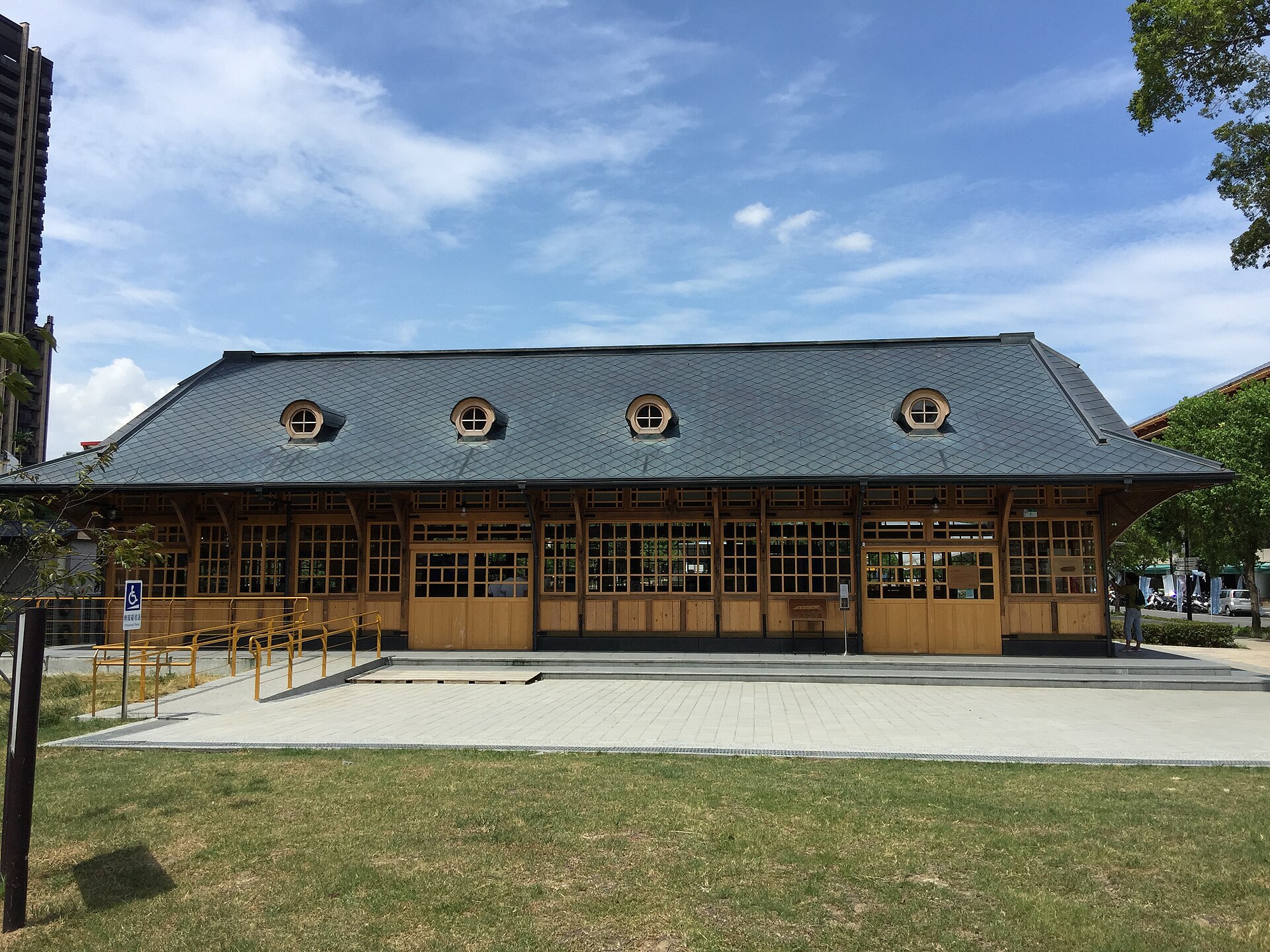
Right beside the MRT station, in the little park across the road, stands the wooden Xinbeitou Historic Station (新北投車站), built in 1916 for the branch railway that brought Japanese holidaymakers up from the city. When the line closed in 1988 to make way for the MRT, the building was dismantled and re-erected in a folk-culture theme park in Changhua, in central Taiwan. After a long local campaign it came back, and it reopened here in 2017 with small exhibitions on the railway and the district. It is free, open from 10:00 to 18:00 from Tuesday to Sunday, and closed on Mondays. It is a lovely building, and a good place to start.
Beitou Park and the stream
From the station, Beitou Park runs uphill along both banks of the Beitou Stream, which carries warm, sulphurous water down from Thermal Valley. The Japanese laid the park out a century ago, and it is still shady and green, with old trees, stone bridges and benches. In cool weather the stream steams gently; do not put your hands in it, as it is acidic as well as warm.
Beitou Hot Spring Museum
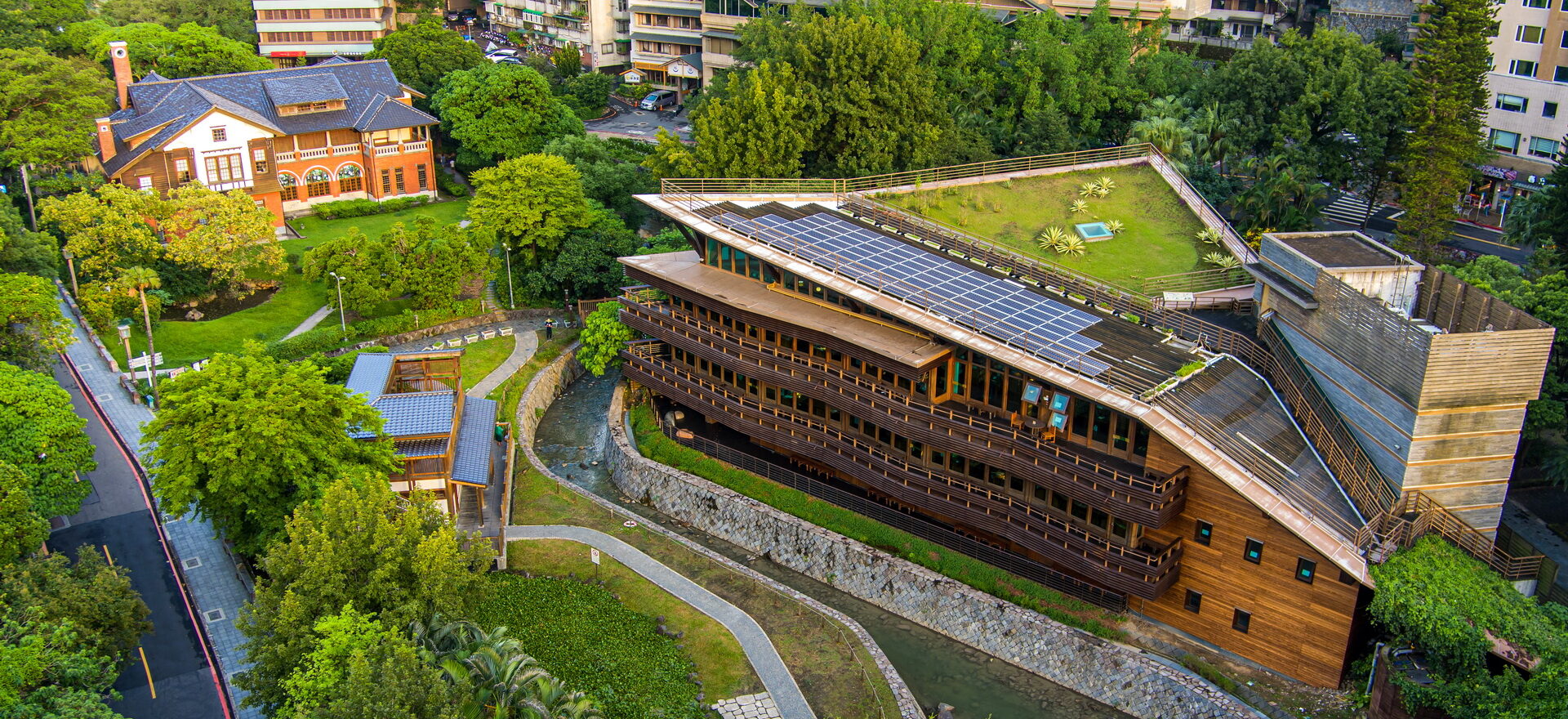
Halfway up the park, the Beitou Hot Spring Museum (北投溫泉博物館) is the building that saved the district. Built in 1913 as the Beitou Public Bath, it was modelled on a Japanese spa bathhouse, with a red-brick ground floor in European style and a wooden upper storey in Japanese style. Downstairs, the great bathing hall, with its arched colonnades, stained-glass windows and a pool you can walk round (but not get into), is the finest room in Beitou. Upstairs, a vast tatami hall where bathers once rested and drank tea now holds exhibitions on the history of the spa town, the nakashi musicians, Beitou’s film industry and a large piece of hokutolite.
The museum is free and open from 10:00 to 18:00 (last entry 17:45), Tuesday to Sunday, and closed on Mondays. You take your shoes off at the door and pad round in slippers, which adds to the atmosphere. Please note that it is a museum, not a bath: the bathing hall has been dry for decades. The museum’s official website has current exhibitions and any holiday closures.
Beitou Public Library
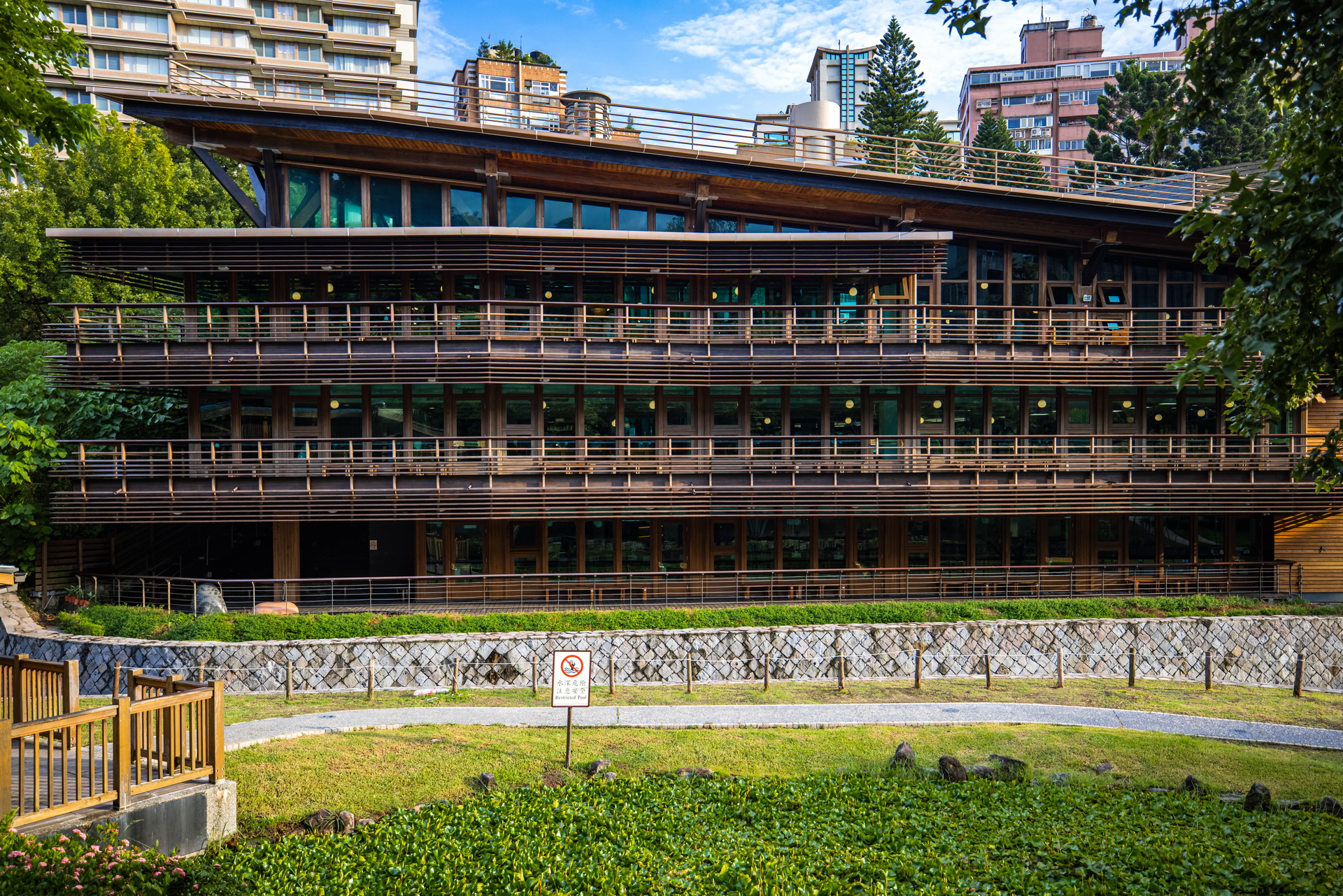
A few steps further on, the Beitou branch of Taipei Public Library (北投圖書館) looks like a large wooden ship that has run aground among the trees. Opened in 2006 as Taiwan’s first green-building library, it was designed to use as little energy as possible: deep wooden balconies and louvres shade the windows, a sloping roof garden collects rainwater for the toilets and plants, solar panels generate power, and big windows let in daylight and views of the park. It is a joy to wander through, and the balconies, where you can read in the shade with the stream running below, are one of the nicest spots in Taipei.
It is a real, working library, so keep your voice down, do not photograph people reading and leave the study areas to those studying. Visitors are welcome to look round. Opening hours are 08:30 to 21:00 from Tuesday to Saturday and 09:00 to 17:00 on Sunday and Monday — which makes it one of the few sights in Beitou open on a Monday.
Ketagalan Culture Center and the old inns
Across the road from the park, the modern Ketagalan Culture Center (凱達格蘭文化館) is dedicated to Taiwan’s Indigenous peoples, including the Ketagalan who gave Beitou its name, with exhibitions, crafts and performances. Entry is free; check its opening days before you go. On the streets around it, and along Zhongshan Road as it climbs the valley, you pass the district’s hot spring hotels, from glossy modern spas to Longnaitang (瀧乃湯), an old bathhouse dating from the early years of Japanese rule, still in business and still used by elderly locals.
Plum Garden
Near the top of the valley, the Plum Garden (梅庭) is a small Japanese-style house and garden that was the summer retreat of Yu Youren, one of the great calligraphers of modern China and a senior Nationalist statesman. It holds a small display on his life and calligraphy, and it is free; it makes a peaceful stop just before Thermal Valley.
Thermal Valley
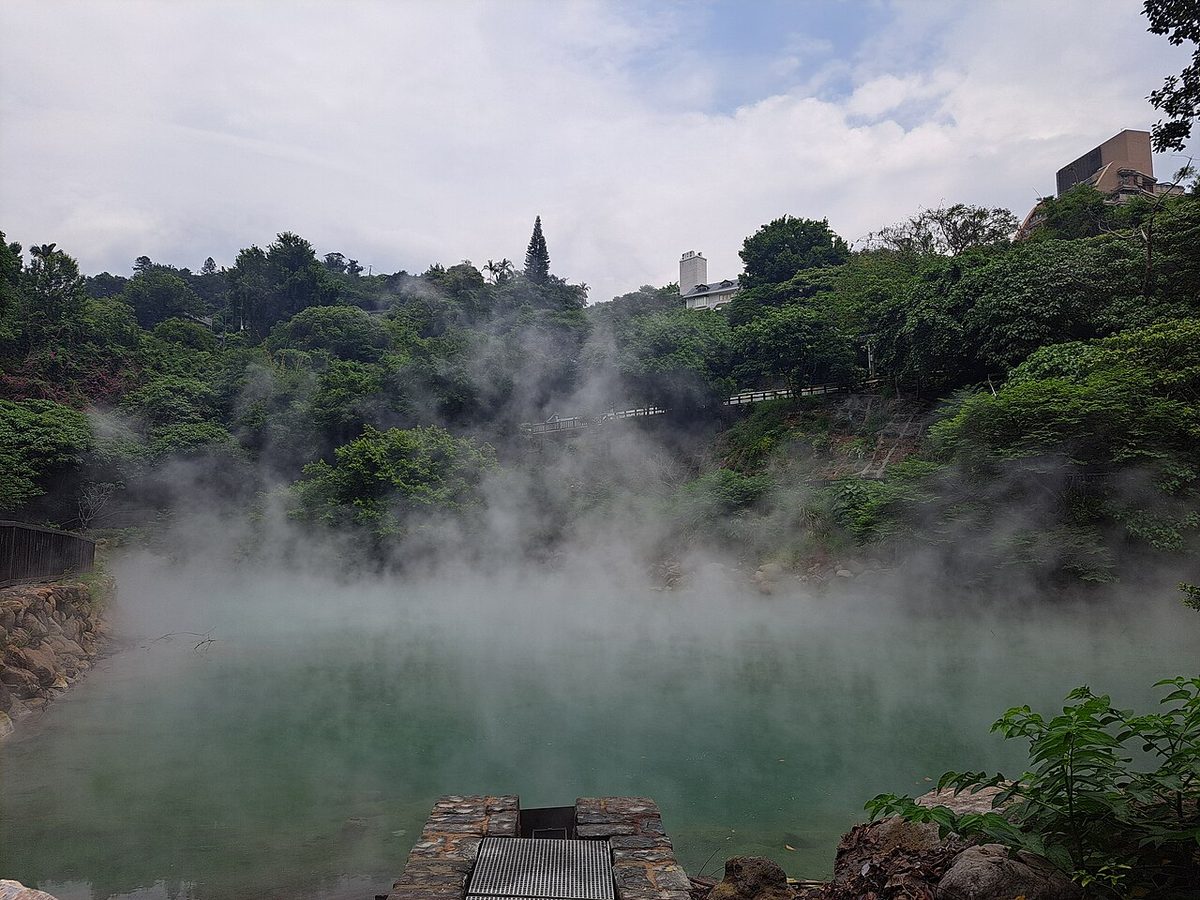
At the head of the valley, Thermal Valley (地熱谷) — also called Hell Valley or Geothermal Valley — is a volcanic crater lake fed by springs that are close to boiling point. The water is strongly acidic, pale jade-green on a bright day, and covered in drifting clouds of steam that make the whole place look like a stage set. This is the source of Beitou’s famous “green sulphur” water, and the sulphur smell here is strong.
The valley has been reworked in recent years, with a walkway that now loops round the lake so you can see it from every side. Stay on the paths: the water is far too hot to touch, and generations of visitors who once boiled eggs here have been firmly told not to. It is free and open from 09:00 to 17:00, Tuesday to Sunday, closed on Mondays. Cool, still days — especially from late autumn to early spring — give the most dramatic steam; on a hot summer afternoon it is much less impressive.
Puji Temple and the Beitou Museum
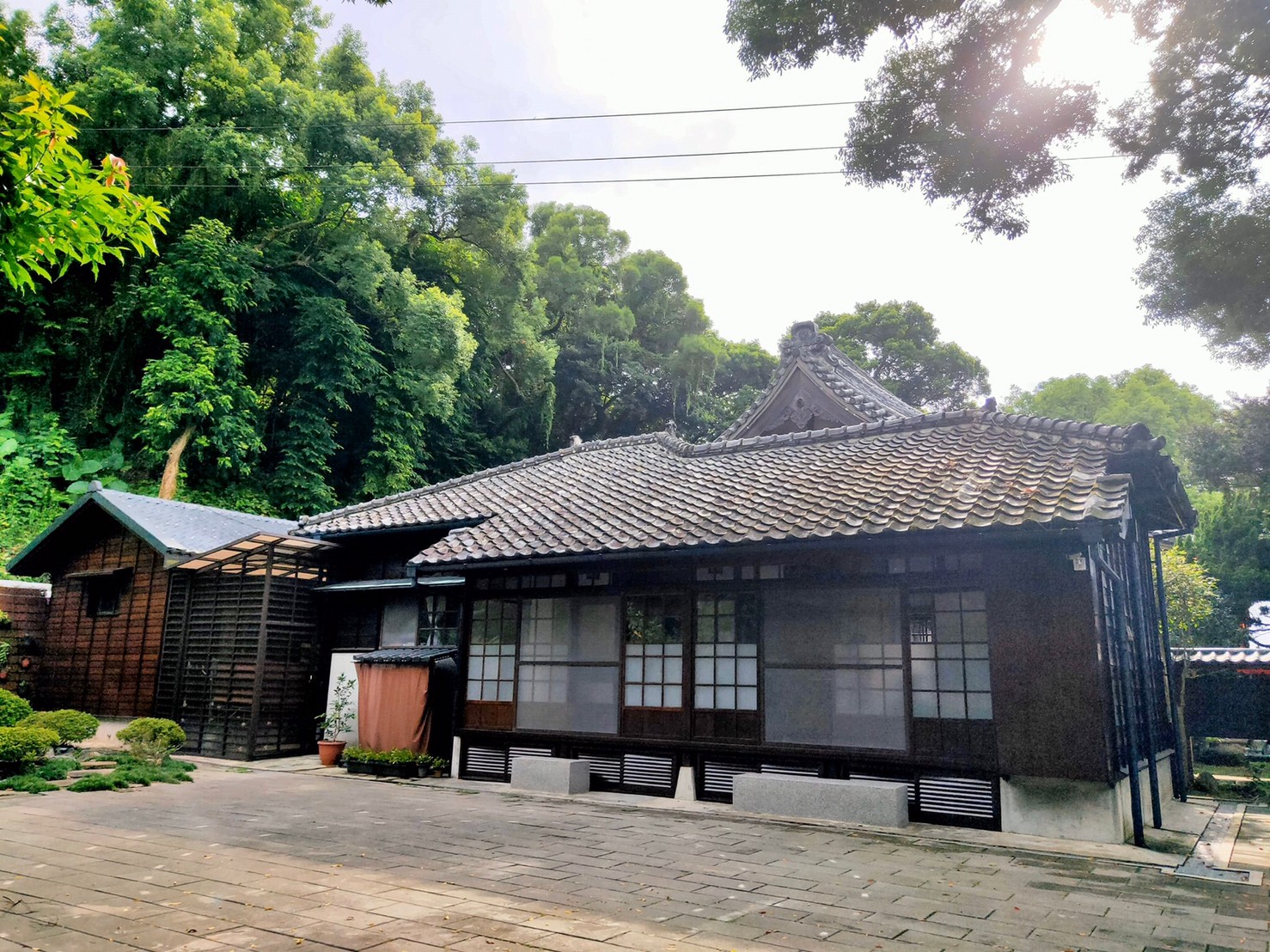
Two more places repay a short climb. On the hillside above the Hot Spring Museum, up a flight of steps, Puji Temple (普濟寺) was built in 1905 as a Japanese Buddhist temple and is one of the best-preserved Japanese-era wooden buildings in the city: a quiet, dark-timbered hall among the trees, still in use as a temple. Much further up the hill, the Beitou Museum (北投文物館) occupies a grand Japanese hot spring hotel of the 1920s, later an officers’ club, with displays of Taiwanese folk culture and a restaurant serving elaborate set meals. It charges admission and is a steep walk or a short taxi ride up from the valley; check its opening days.
Soaking in Beitou: what has changed
You do not have to bathe to enjoy Beitou, but most people want to, and there are three broad ways to do it:
- The public outdoor bath. The Beitou Park Outdoor Hot Spring, better known as the Millennium Hot Spring (千禧湯), is the city-run open-air pool in the park, where you bathe in swimsuits in time slots for NT$60 when it is open. It closed on 24 January 2025 for a major renovation, because decades of sulphur had corroded its pools and floors. The works are due to finish on 31 October 2026, with the reopening date to be announced afterwards. Check the Parks and Street Lights Office’s public pool information page before you plan around it.
- Old bathhouses. Longnaitang and a few other old-style bathhouses offer gender-separated communal bathing, nude, in the Japanese manner, at modest prices.
- Hotels and private rooms. Most of the valley’s hotels sell day use of their pools or private hot spring rooms by the hour, from simple rooms with a tiled tub to luxury spas. With the public bath closed, these have been busier than usual, so book ahead at weekends.
Our Beitou hot springs guide goes through the options, the different kinds of spring water and the etiquette in detail. Two tips worth repeating here: take off silver jewellery before you soak, because sulphur blackens it, and drink plenty of water. If you are comparing Taipei’s hot spring areas, our Wulai day trip and Jiaoxi hot springs guides cover the two main alternatives.
Guandu: temple, wetlands and the river
Three stops down the Red Line from Beitou, Guandu is where the Keelung River meets the Tamsui, and it makes a very different half day.
- Guandu Temple (關渡宮), one of the oldest and most important Mazu temples in northern Taiwan, is built into the side of a hill overlooking the river, with a long tunnel through the rock lined with statues of deities, and a terrace with views across the water to the mountains. It is busy, colourful and free.
- Guandu Nature Park (關渡自然公園) protects the wetlands and mudflats at the river mouth, one of the best bird-watching sites near the city, especially from autumn to spring, when migrating waders and waterbirds arrive. There are hides, trails and a visitor centre; a small admission fee applies.
- The river path along the Tamsui runs past Guandu to Tamsui in one direction and back towards the city in the other, and it is one of the best bike rides in greater Taipei. See our guide to YouBike in Taipei and our Tamsui day trip.
Up into the hills
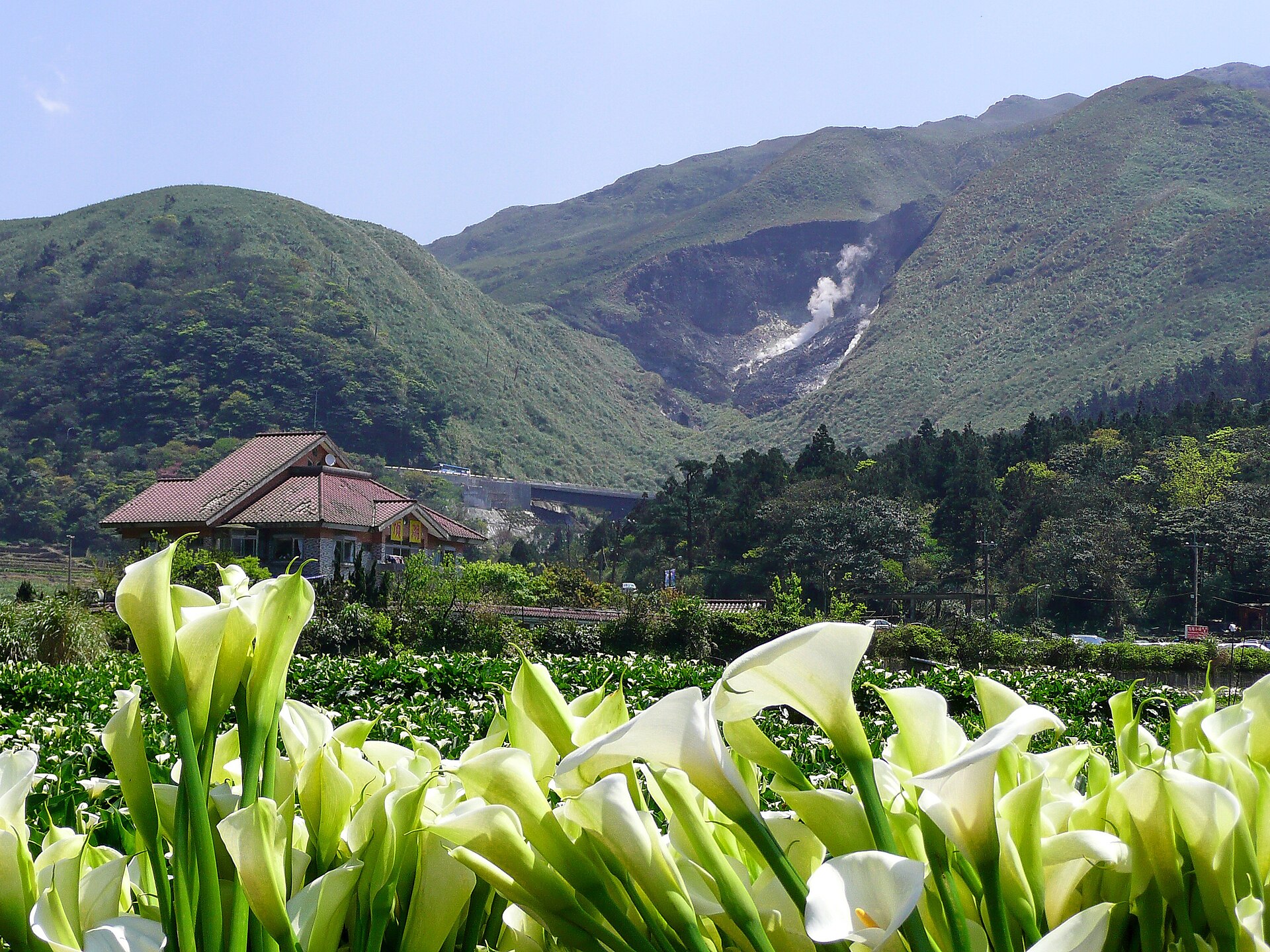
Beitou District climbs a long way up the western side of Yangmingshan, and its hills are some of the most rewarding on the mountain.
- Zhuzihu (竹子湖), a high valley of farms and flower fields, is famous for its white calla lilies in spring and hydrangeas in early summer, when the lanes between the fields are crowded with visitors. Our Yangmingshan National Park guide covers how to get there.
- Xingyi Road (行義路), on the slopes above Shipai, is lined with hot spring restaurants where Taipei families soak in the afternoon and then eat a big country-style dinner — a very local way to do Beitou.
- Short hikes start close to the city: the sandstone outcrop of Junjian Rock (軍艦岩), the “battleship rock”, above Shipai, gives a good view over the river plain for a modest climb.
For a full day on the mountain, see our Yangmingshan day trip.
Where to eat in Beitou
- Beitou Market (北投市場), near Beitou station, is the district’s great cheap eat. The upstairs food floor is packed with old stalls, and the best known is Ai Zai Cai (矮仔財), whose braised pork rice draws a queue from the morning. Go early; many stalls close in the afternoon.
- Hot spring ramen — a Japanese-style ramen shop on the Xinbeitou side, Man Lai (滿來溫泉拉麵), has been one of the district’s most popular post-soak meals for years, with long queues at weekends.
- Hotel restaurants — the bigger hotels serve Japanese set meals and afternoon teas; pairing a meal with a private bath is good value at some of them.
- Xingyi Road — for a long, rustic hot spring dinner in the hills (above).
Several Beitou stalls have featured on Michelin’s Bib Gourmand list over the years; our guide to Michelin restaurants in Taipei has the current selection.
Planning your day
Half a day: the valley
- 13:00 — Xinbeitou Historic Station, beside the MRT.
- 13:30 — Beitou Park and the Hot Spring Museum (allow an hour).
- 14:45 — Beitou Public Library, including a sit on the balcony.
- 15:30 — Plum Garden and Thermal Valley, before it closes at 17:00.
- 16:30 — A soak at a hotel or bathhouse, then dinner.
A full day
Start with breakfast at Beitou Market, do the valley walk in the late morning and a soak after lunch, then take the MRT three stops to Guandu for the temple and the river at sunset. Or head up the mountain in the afternoon for Zhuzihu or a short hike, and come back down for a hot spring dinner on Xingyi Road.
Beitou through the year
- October to March is the classic hot spring season. The air is cool, the steam in Thermal Valley and the stream is at its most dramatic, and a soak feels exactly right. Weekends in winter are busy; book private rooms ahead.
- Spring brings the calla lilies at Zhuzihu and pleasant walking weather in the hills.
- Summer is hot and humid, and midday soaking is hard work. Come in the late afternoon, bathe after dark, and spend the heat of the day in the library and the museum.
- Typhoon season, from roughly July to October, can close the mountain roads and the outdoor sights at short notice; see our typhoon season guide.
Practical tips
- Do not come on a Monday. The Hot Spring Museum, Thermal Valley, the historic station and several other sights close. The library is open, and the hotels and bathhouses keep their own hours.
- Getting there. Take the Red Line to Beitou, then change to the short branch line for one stop to Xinbeitou. Allow thirty to forty minutes from Taipei Main Station. See our MRT guide.
- The sulphur. The smell is part of the experience, but it clings to clothes after a soak, and it tarnishes silver. Leave your good jewellery at the hotel.
- Accessibility. The MRT stations are step-free, and the valley walk is on paved roads and paths, climbing steadily; Thermal Valley’s walkway is level. Puji Temple is up a flight of steps, and old buildings such as the museum involve thresholds and stairs. See our accessible Taipei guide.
- With children. Thermal Valley’s steam, the library’s children’s section and the old station all go down well. Keep small children well back from the water in the stream and the valley. Many hotel pools do not admit very young children; check before booking.
- Health. Hot springs are not recommended if you are pregnant or have heart problems or high blood pressure. Limit soaks to ten or fifteen minutes at a time.
What we would skip
Planning your day around the Millennium Hot Spring until it has definitely reopened. Check the city’s announcement first, and have a hotel pool or bathhouse as your plan B.
Thermal Valley on a hot summer afternoon. In warm air the steam barely shows and the sulphur smell is at its worst. Go on a cool morning, or in winter.
Treating the library as a photo stop. It is a working public library, full of students and families. Walk round quietly, sit on a balcony for a while, and leave the camera in your bag inside the reading rooms.
A luxury spa you will not have time to enjoy. The expensive hotel day passes are wonderful if you have three hours; if you only have forty-five minutes, a simple private room gives you the same water for far less.
Beitou on a Monday. We said it already, but it is the most common mistake visitors make.
Above Beitou’s bathhouses, the volcanic peaks of Yangmingshan fill the northern skyline, and the highest of them, Qixing Mountain, makes a superb morning walk before a hot spring afternoon. The shortest route starts beside the fumaroles at Xiaoyoukeng, a bus ride up the mountain. Our Qixing Mountain guide explains how to do it.
Related Taipei guides
- Taipei Neighbourhoods: A District-by-District Guide
- Beitou Hot Springs Guide
- Yangmingshan National Park
- Yangmingshan Day Trip
- Tamsui Day Trip
- Wulai Day Trip
- Jiaoxi Hot Springs
- Shilin District Guide
- Taipei in Winter
- Things to Do in Taipei
Frequently Asked Questions
How do I get to Beitou from Taipei?
Take the MRT Red Line towards Tamsui as far as Beitou station, then change to the short branch line for one stop to Xinbeitou, which is at the foot of the hot spring valley. It takes thirty to forty minutes from Taipei Main Station and costs around NT$35 with an EasyCard.
Is Beitou worth visiting if I do not want to bathe?
Yes. The Hot Spring Museum, the Beitou Public Library, Thermal Valley, the historic station and the park make a rewarding half day on their own, and they are all free.
Is the Beitou Hot Spring Museum free?
Yes. It is free and open from 10:00 to 18:00, Tuesday to Sunday, with last entry at 17:45, and closed on Mondays. It is a museum in the old 1913 public bathhouse — you cannot bathe there.
What are the opening hours of Thermal Valley?
09:00 to 17:00, Tuesday to Sunday; it is closed on Mondays. Entry is free. The steam is most impressive on cool days.
Is the Millennium Hot Spring open?
It closed on 24 January 2025 for a major renovation. The city’s latest notice set 26 September 2026 as the target date for finishing the works, with the reopening to be announced afterwards. Check the Taipei Parks and Street Lights Office’s website before you go; when open, entry is NT$60.
Can you visit the Beitou Public Library as a tourist?
Yes. Visitors are welcome to look round quietly. It is open 08:30–21:00 from Tuesday to Saturday and 09:00–17:00 on Sunday and Monday.
Is Beitou open on Mondays?
Partly. The library, the hotels and most restaurants are open, but the Hot Spring Museum, Thermal Valley and the Xinbeitou Historic Station are closed. Choose another day if you can.
What is hokutolite?
A rare, slightly radioactive mineral that forms in Beitou’s hot spring stream, named after Hokuto, the Japanese reading of Beitou. It is the only mineral named after a place in Taiwan and is found in only one other hot spring, in Japan. You can see a large piece at the Hot Spring Museum.
Why does Beitou smell of sulphur?
Because the water from Thermal Valley is rich in sulphur compounds from the Yangmingshan volcanoes. The smell is strongest near the valley and the stream, and on warm days.
How much time do I need in Beitou?
Half a day covers the valley walk and a soak. A full day lets you add Guandu, the hills or a leisurely dinner at a hot spring restaurant.
What is the difference between Beitou and Xinbeitou?
Beitou is the whole district and the name of the Red Line station; Xinbeitou, “new Beitou”, is the hot spring valley at the end of the one-stop branch line from Beitou station, where the museum, library and Thermal Valley are.
Is Beitou good for a day trip with children?
Yes, for the steam at Thermal Valley, the library and the old station, but keep them well away from the hot water in the stream and the valley, and check age limits before booking hotel pools.
Can I stay overnight in Beitou?
Yes, and a night in a hot spring hotel, with a private tub in the room, is one of the great Taipei treats. It suits one night of a trip rather than your whole stay, as Beitou is a long way from most of the city’s other sights. Our guide to where to stay in Taipei covers the options.
The Bottom Line
Beitou is a volcanic valley with a century of spa-town history, half an hour from the centre of Taipei on the MRT. Walk up from the old wooden station through the steaming park, take your shoes off in the 1913 bathhouse that is now its museum, sit on a balcony in the library, stand in the clouds at Thermal Valley, and finish with a soak and a bowl of ramen. Add Guandu or the hills if you have the whole day.
Avoid Mondays, check whether the public outdoor bath has reopened before you rely on it, and come on a cool day if you can. Even if you never get into the water, Beitou is one of the most memorable half-days in Taipei.
Photo Credits
The Hot Spring Museum and Beitou Public Library from the air: Beitou Hot Spring Museum and TPL Beitou Branch aerial photograph 20210818 by 臺北旅遊網, Attribution, via Wikimedia Commons.
Beitou Public Library: Beitou Library front by 臺北旅遊網, Attribution, via Wikimedia Commons.
Xinbeitou Historic Station: Front view of Xinbeitou Station on a bright sunny day by 芳蘭 徐芳蘭, CC BY 2.0, via Wikimedia Commons.
Puji Temple: Baitou Puji Temple – Judy 200914 109 by Judy yang99, CC BY-SA 4.0, via Wikimedia Commons.
Calla lily fields at Zhuzihu: Zhuzihu Calla Lily Gardens 竹子湖海芋田 – panoramio by lienyuan lee, CC BY 3.0, via Wikimedia Commons.