This article contains advertising. Our booking links are routed through a partner that adds commission tracking automatically, so if you book through one we earn a commission from the provider, at no extra cost to you. It never affects what we recommend. Affiliate disclosure
Ask a Taiwanese person where the best food in the country is and you will get one answer, delivered without hesitation and slightly aggressively, as though you had suggested otherwise. It is Tainan. It has been Tainan for about three hundred years, it will still be Tainan when the current crop of Taipei restaurants has closed, and the fact that most foreign visitors never make the trip is a source of quiet local satisfaction. Working out taipei to tainan takes about ninety seconds; working out why you should bother is the more useful part of this guide.
What follows covers all three ways to get there with real 2026 fares, the station connection nobody warns you about, what two days in the old capital should actually contain, and the things that are genuinely different about Tainan food. Prices were checked in September 2026 — treat them as the right order of magnitude and confirm before you buy.
The three ways, compared
| Mode | Time | Fare | Verdict |
|---|---|---|---|
| High Speed Rail | ~1 h 45 (express), ~2 h (commuter) | NT$1,350 reserved · NT$1,305 non-reserved | The default, plus a 20–30 min connection at the far end. |
| TRA Tze-Chiang express | ~4 h–4 h 30 | NT$891 | Two-thirds of the price, and it goes to Tainan Station directly. |
| Intercity bus (Ubus, Kuo-Kuang, Ho-Hsin) | 4–5 h | ~NT$450–480 | Cheapest. Overnight services remove a hotel night. |
| Driving | 4 h+ | Rental, fuel, tolls, parking | No. Tainan is a walking city and parking is grim. |
The HSR wins on time by a wide margin, but not by as much as the table suggests once you add the connection — call it two and a quarter hours door to door. The bus is the sleeper option: an overnight coach for NT$450 that arrives in time for a milkfish breakfast is a genuinely good trade.
The station catch: your HSR train does not stop in Tainan
This is the single most useful thing on this page, and almost nobody mentions it before you buy the ticket.
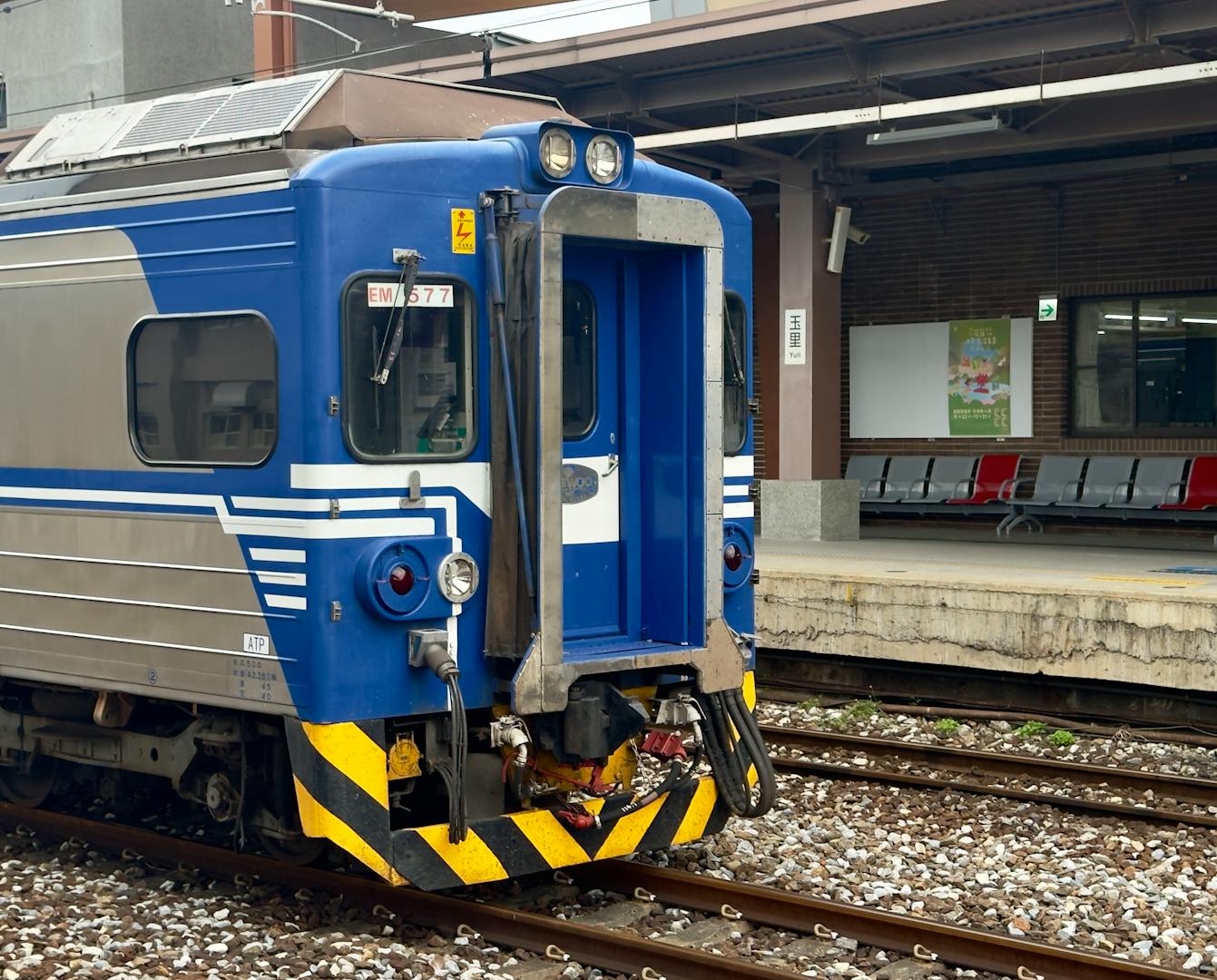
Tainan’s HSR station is at Guiren, well outside the city, and it is a different building from Tainan Station in the centre. Two ways in, both easy once you know:
- TRA Shalun station is directly connected to the HSR station — walk across, board a local train, and you are at Tainan Station in 20–30 minutes — tap your EasyCard. This is the fastest and simplest option and it is what we do.
- Free THSR shuttle buses H31 and H62 run into the city from Exit 2. Free is good; the train is faster.
Build twenty-five to forty minutes into your plan for this, including the wait. It is the reason the TRA express — which drops you at Tainan Station itself — is more competitive than the raw journey times imply. Our high speed rail guide covers booking, and the early-bird discounts on the operator’s own site can take a decent bite out of that NT$1,350.
Day trip or overnight? This one is not close
Stay. Two nights, ideally.
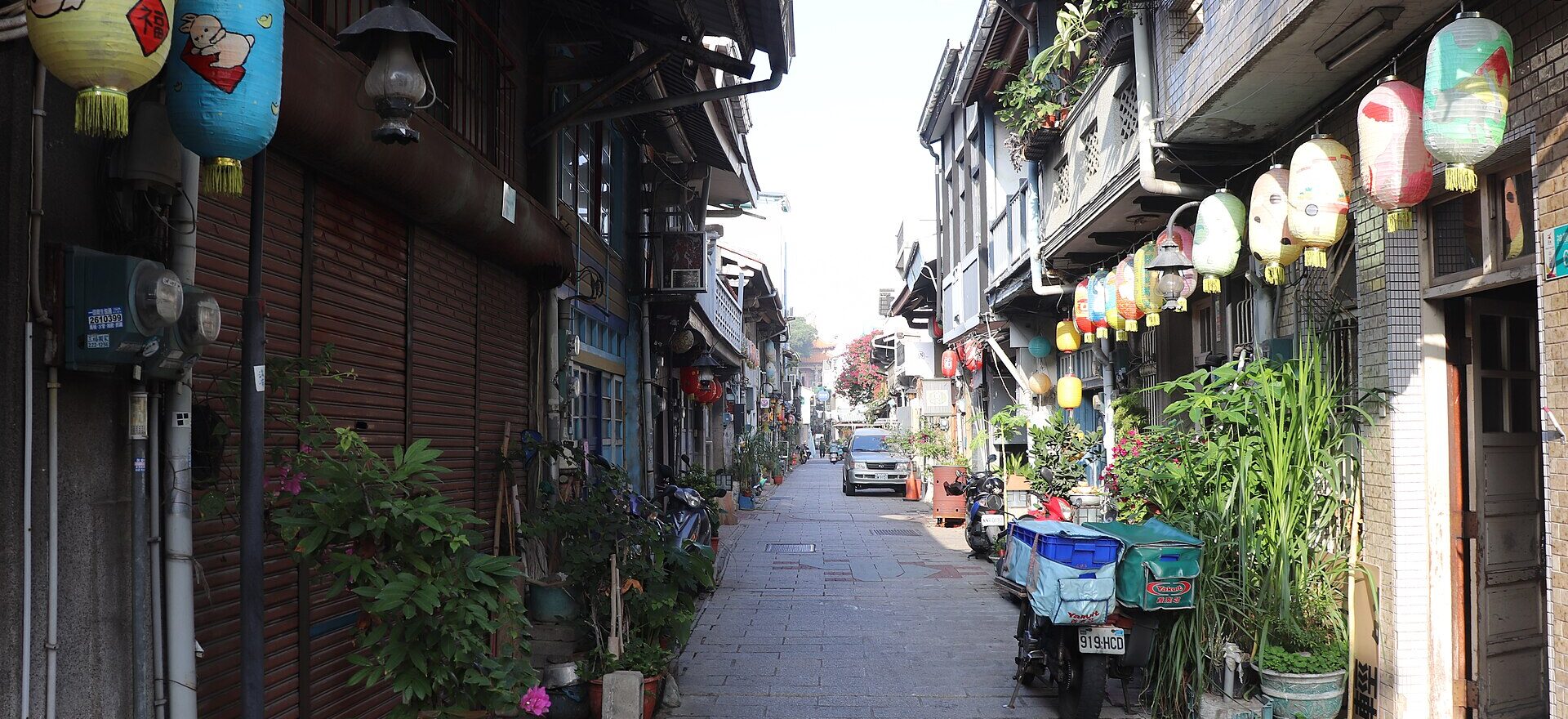
The arithmetic is straightforward. Door to door on the HSR is about two and a quarter hours each way, so a day trip costs four and a half hours of travel for perhaps six hours in the city — and Tainan’s two best hours are the ones between five and seven in the evening, when the heat breaks, the lanterns come on in Shennong Street and the food stalls open.
Beyond the arithmetic there is a structural point. Tainan is not a city with three big sights you tick off. It is a city where the good stuff is distributed across a thousand temples, a hundred alleys and about forty breakfast shops, and where the pleasure is cumulative. Six hours gets you Chihkan Tower, a queue, and a slightly disappointed sense that you have missed the point. Two days gets you the city.
Our Taiwan beyond Taipei hub sets out the wider rule: under ninety minutes each way is a day trip, and everything past it wants a night.
Two days in Tainan, done properly
Day one: the old city
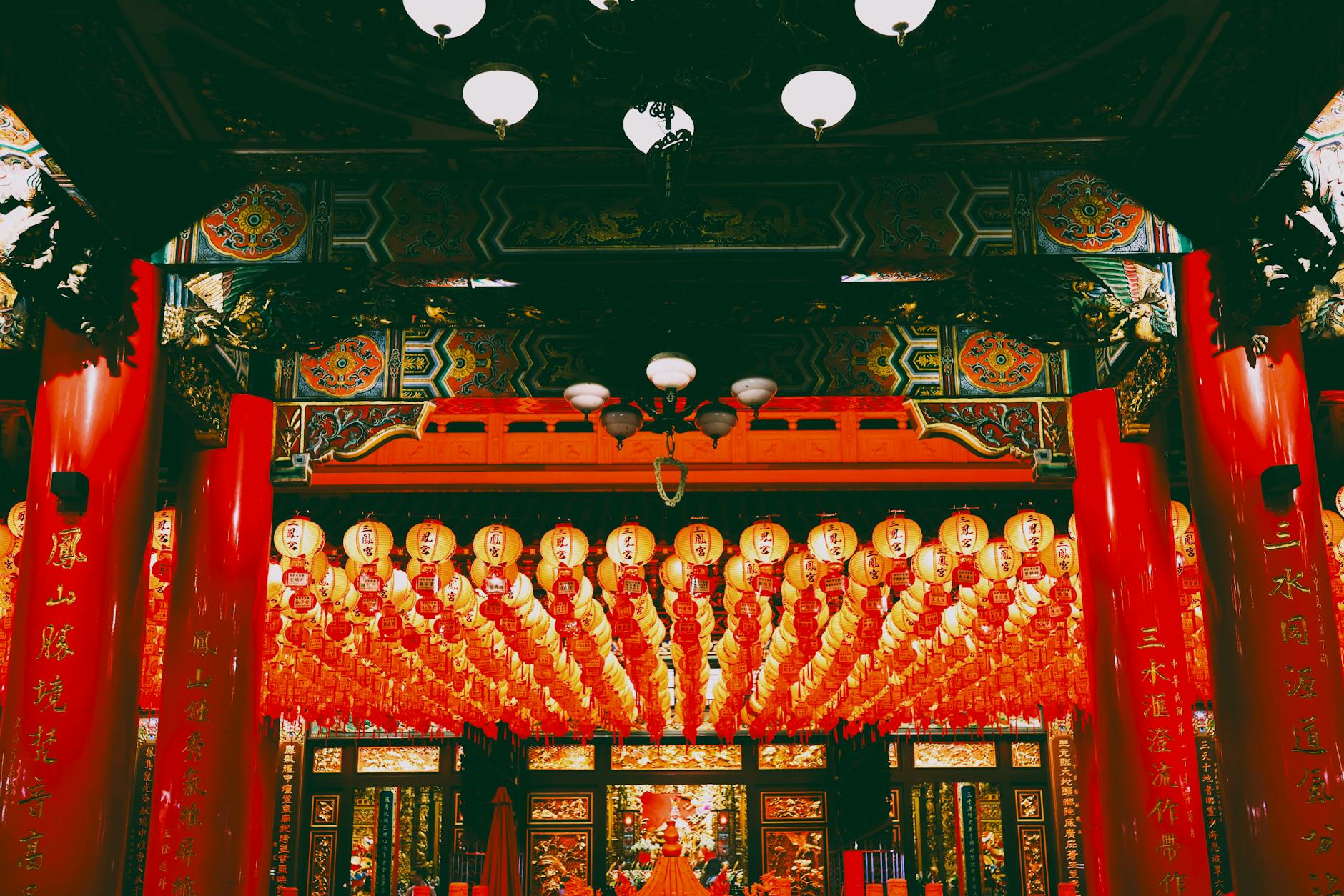
Morning. Start with the temples, which is what Tainan is. The Confucius Temple is Taiwan’s oldest, founded in 1665, and sits in a compound of old trees that is worth an hour on its own. The Grand Matsu Temple, the Official God of War Temple and the Tiantan Temple of Heaven are all within a short walk of each other and of the Confucius Temple, so this is a walking morning rather than a transport problem. Our guide to Taipei’s temples covers how to behave in one; the etiquette here is identical.
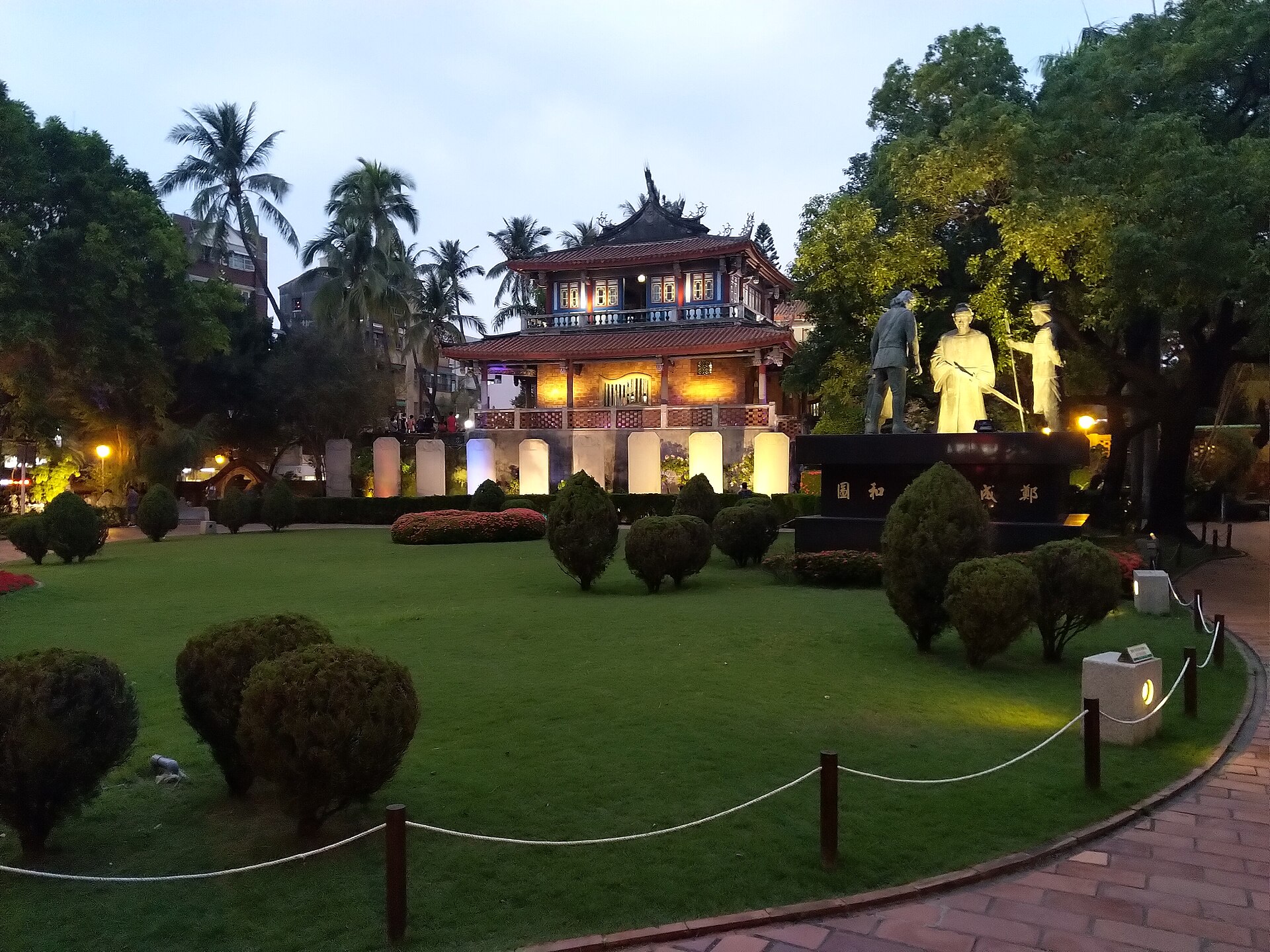
Midday. Chihkan Tower — built by the Dutch East India Company as Fort Provintia in 1653, and one of the very few places in Asia where you can stand on the foundations of a Dutch colonial administration. What survives is largely Qing-era pavilions built on top of the Dutch base, which is its own kind of history lesson.
Afternoon. Get out of the sun. The Hayashi Department Store — a restored 1932 Japanese-era building with a Shinto shrine on the roof — and the Tainan Art Museum are both good hours, and both air-conditioned. Tainan in the afternoon is hot in a way Taipei is not.
Evening. Shennong Street, which is one lane of restored Qing-era shophouses hung with lanterns and full of small bars. It is the prettiest street in Taiwan and it knows it. Have a drink, then eat.
Day two: Anping and the water
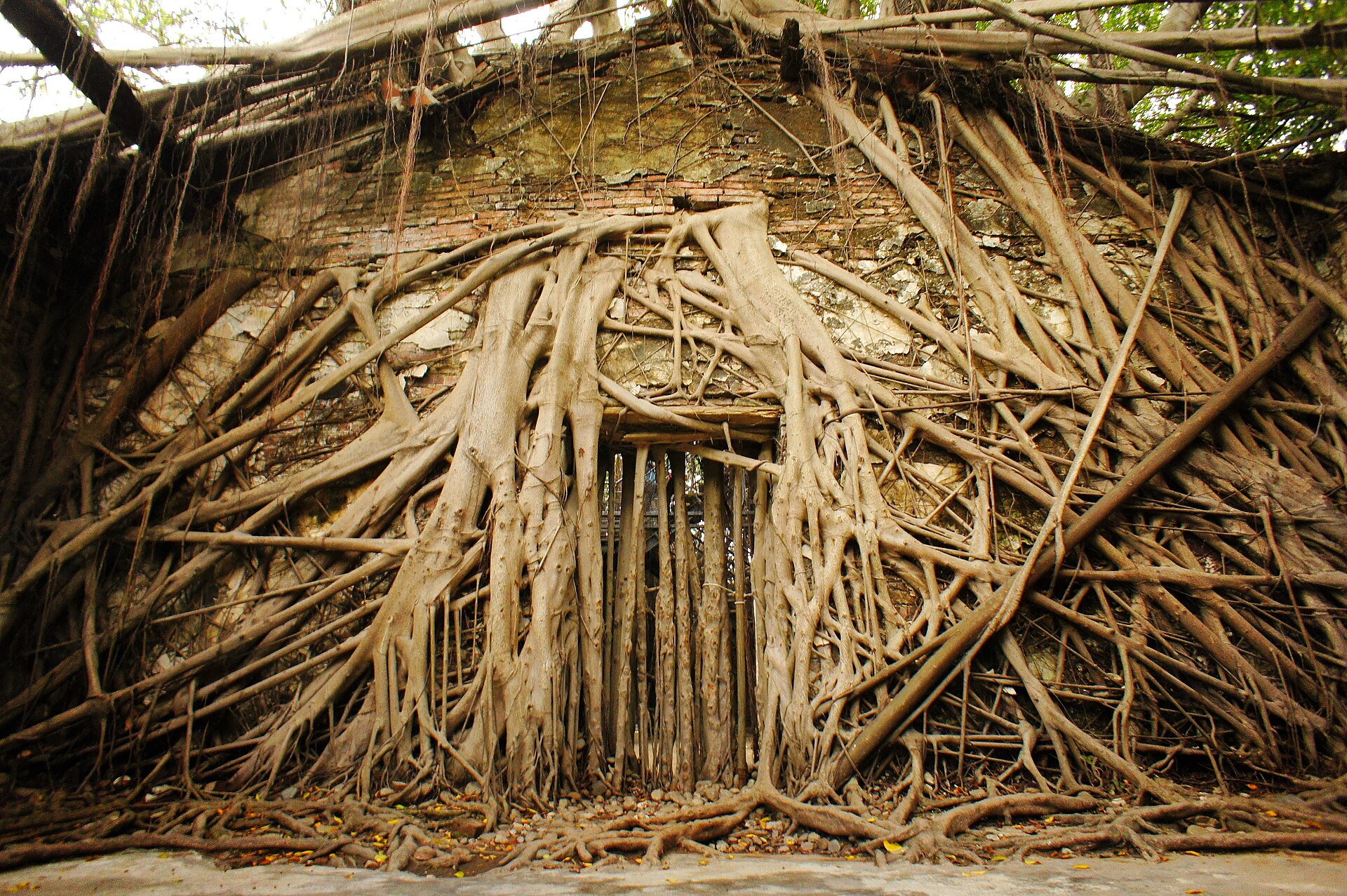
Anping is where the Dutch built Fort Zeelandia in the 1620s and where Taiwan’s history as a trading post begins. Half an hour from the centre by bus or taxi, and worth the morning.
Anping Old Fort is more interpretive than spectacular — the current structures are largely later — but the Anping Tree House next to it is genuinely extraordinary: a Japanese-era Tait & Co salt warehouse that a banyan has swallowed whole, roots pouring down the walls and through the doorways. It is one of the most photographed things in Taiwan and one of the few that lives up to it.
Add the Anping Old Street for snacks, the Eternal Golden Castle if you like forts, and — if you have a car or the time for a tour — the Sicao Green Tunnel, a mangrove waterway you punt through on a flat boat, and the Qigu salt flats north of the city at sunset.
Evening: a night market. And here is the Tainan quirk that catches everyone out.
The night market rule nobody tells you
Taipei’s night markets open every night. Tainan’s do not. The big ones — Garden (花園), Flowers (大東), Wusheng (武聖) — each run on specific days of the week, and a visitor who turns up on the wrong evening finds an empty car park.
The traditional mnemonic locals use runs roughly: Garden on Thursday, Saturday and Sunday; Wusheng on Wednesday, Saturday and Sunday; Dadong on Monday, Tuesday and Friday. Check locally before you go — schedules shift, and the version you find online is frequently out of date.
Garden Night Market is the one to aim for if the day works: it is enormous, it is where Tainan tests its food ideas, and it is a genuinely different experience from Shilin or Raohe. Our night market etiquette guide travels well.
The food, which is the actual reason
Tainan cuisine is its own tradition, not a regional accent on Taiwanese food, and the thing that startles people first is the sweetness. Sugar runs through savoury dishes here in a way it does not further north — a legacy of the sugar industry that built the region’s wealth. Give it a meal to get used to; most people come round.
What to eat, roughly in the order of importance:
- Danzai noodles (擔仔麵) — a small bowl of noodles in shrimp broth with minced pork and a prawn. Invented here in the 1890s by a fisherman filling the slack season. Deliberately small; order two.
- Milkfish (虱目魚) — as soup, as congee, as a grilled belly, and eaten for breakfast. This is the most Tainanese meal there is and the one visitors most often skip.
- Coffin bread (棺材板) — a thick slab of fried toast hollowed out and filled with a creamy seafood stew. Sounds terrible, is excellent.
- Shrimp rolls (蝦捲) — Anping’s specialty, deep-fried, best from a shop with a queue.
- Oyster omelette and oyster vermicelli — better here than in Taipei, and the oysters are local.
- Beef soup (牛肉湯) — a breakfast dish. Raw sliced beef, boiling broth poured over it at the table. Sold out by nine.
- Tofu pudding, tapioca desserts, and anything with brown sugar — Tainan’s sweet shops are extraordinary.
The operating rule: eat breakfast seriously and eat it early. Tainan’s best food is served between six and ten in the morning, from shops that close when they run out. Our Taiwanese breakfast guide covers the northern version; the southern one is a different and better animal.
Where to stay
Tainan is one of the better-value places to sleep in Taiwan, and the character of the accommodation is genuinely different from Taipei’s — this is a city of converted shophouses and small owner-run design hotels rather than international chains.
Around the Confucius Temple and the West Central District is where we would stay. You are inside the walkable historic core, three minutes from a good breakfast in any direction, and close enough to Shennong Street to walk back after a drink. The guesthouses here are frequently restored Japanese-era or Qing-era buildings, and they are cheap enough that the nice one is affordable.
Near Tainan Station is the practical choice if you are arriving late or leaving early, and it is a fifteen-minute walk from the old city. More business hotels, fewer surprises, still inexpensive.
Anping is a mistake unless you have a specific reason. It is pleasant, it is by the water, and it is half an hour from everywhere you will want to eat.
Whatever you book, ask about breakfast and then ignore the answer — you should be eating out. Our where to stay in Taipei guide is the benchmark you will be comparing prices against, and Tainan will win.
Pairing Tainan with Kaohsiung
Kaohsiung is thirty to forty minutes further south by train, which makes the two an obvious southern pair and the single best four-day trip out of Taipei. The split we would run: two nights Tainan, two nights Kaohsiung, HSR down and HSR back.
They are complementary rather than similar. Tainan is old, low-rise, dense and food-obsessed; Kaohsiung is a modern port with wide boulevards, a harbour that has been comprehensively remade, an excellent metro and a completely different pace. Doing both gives you the two versions of southern Taiwan, and the transfer between them costs less than an hour.
If you only have time for one, take Tainan. If you have a week, take both and add Alishan on the way down — the sequence is set out in our 10-day itinerary.
When to go
This is where Tainan’s real advantage shows up. December to February is the best time to be in southern Taiwan and the worst time to be in Taipei — while the capital sits under grey drizzle at 15 degrees, Tainan is 22 and sunny. If your trip lands in winter, weight it south; it is the single most effective planning decision available.
March to May is excellent. June to September is very hot, humid and prone to afternoon thunderstorms, with typhoons possible from July — see our typhoon season guide. October and November are lovely everywhere in Taiwan, Tainan included, and are the safe default. Our best time to visit guide has the full picture.
Practical notes
- There is no metro. Tainan runs on buses, taxis, scooters and — mostly — walking. The historic core is compact and flat, and walking it is the point. Buses are frequent enough for Anping and use your EasyCard.
- English is thinner than in Taipei. Noticeably. A translation app is genuinely useful here, especially in breakfast shops with handwritten menus — see our Mandarin phrases guide.
- Accommodation is cheap and good. Tainan has an unusually strong crop of small design hotels and converted shophouse guesthouses at prices that would not get you a business hotel in Taipei.
- Left luggage is available at Tainan Station and at the HSR station, which makes a day trip technically viable even if we do not recommend one.
- Cash matters more. Older breakfast shops and market stalls are cash-only far more often than their Taipei equivalents. See money in Taipei.
- Onward: Kaohsiung is thirty to forty minutes away by train, which makes the two an obvious southern pair. See the 10-day itinerary for how they fit into a circuit.
What we would skip
The day trip. Covered above, and worth repeating: four and a half hours of travel to miss the two hours that make Tainan worth visiting.
Driving from Taipei. Four hours plus tolls, and then a parking problem in a city whose whole appeal is that you can walk it.
Trying to see every temple. There are over a thousand and they are not a checklist. Pick four, sit down in each, and let the rest be scenery.
Eating dinner in a hotel. Tainan is one of the few cities on earth where this is an actively bad decision.
Booking a food tour before you arrive. Tempting, and usually unnecessary — the city is small, the good places have queues outside them, and pointing at what the person in front ordered works. Save the money for another breakfast.
Kaohsiung sits thirty to forty minutes further down the line, and pairing the two makes the best four-day trip available from Taipei: two nights here, two there, one high speed train at each end. They are complementary rather than similar — this city is old, dense and walkable, that one is modern, wide and built around a harbour. Our guide to Taipei to Kaohsiung covers the second half of that trip.
Related Taipei guides
- Taiwan Beyond Taipei: Where to Go Next
- Taiwan Itinerary: 10 Days from Taipei
- Taipei to Taichung
- The Taiwan High Speed Rail
- The Taipei Food Guide
- Taiwanese Breakfast
- The Best Temples in Taipei
- Night Market Etiquette
- Taiwan Etiquette: Dos and Don’ts
- The Best Time to Visit Taiwan
- The EasyCard: How It Works
- What a Taiwan Trip Costs
Frequently Asked Questions
How do you get from Taipei to Tainan?
High speed rail in about 1 hour 45 minutes for NT$1,350 reserved, plus a 20–30 minute connection into the city; a TRA Tze-Chiang express in four to four and a half hours for NT$891 that arrives at Tainan Station directly; or an intercity bus in four to five hours for around NT$450–480, including overnight services.
How long does the high speed rail take from Taipei to Tainan?
About 1 hour 45 minutes on an express service and around two hours on a commuter service. Add twenty-five to forty minutes for the connection from the HSR station at Guiren into the city, which makes the realistic door-to-door figure about two and a quarter hours.
Does the high speed rail go to central Tainan?
No. The HSR station is at Guiren, outside the city. Walk across to TRA Shalun station, which is directly connected, and take a local train to Tainan Station in 20–30 minutes, paying with your EasyCard. Free THSR shuttle buses H31 and H62 also run downtown from Exit 2.
Is Tainan worth visiting from Taipei?
Yes — it is our first recommendation for anyone who can only leave Taipei once. Tainan was Taiwan’s capital from the seventeenth century until 1885, has over a thousand historic temples, and is where Taiwanese people broadly agree the best food in the country is.
Can you do Tainan as a day trip from Taipei?
Technically, and we would not. Four and a half hours of travel buys you about six hours in a city whose best two are between five and seven in the evening. Two nights is the right length; one is the minimum.
How many days do you need in Tainan?
Two full days. Day one for the temples, Chihkan Tower and Shennong Street; day two for Anping, the tree house and a night market. A third day lets you add the salt flats and the mangrove waterways.
What is Tainan famous for?
Being Taiwan’s oldest city and former capital, having more historic temples than anywhere else on the island, Dutch colonial remains at Chihkan Tower and Anping, and — above all — food. Danzai noodles, milkfish, coffin bread and shrimp rolls all originate here.
What should I eat in Tainan?
Danzai noodles, milkfish soup or congee for breakfast, beef soup early in the morning before it sells out, coffin bread, Anping shrimp rolls, oyster omelette, and something sweet. Tainan food runs noticeably sweeter than the rest of Taiwan — give it a meal to adjust.
Are Tainan’s night markets open every night?
No, and this catches people out. Unlike Taipei’s, Tainan’s big night markets each run on specific days of the week — Garden, Flowers and Wusheng all rotate. Check locally before you go, because the schedules published online are often out of date.
Is Tainan cheaper than Taipei?
Yes, noticeably, on both accommodation and food. Tainan has an unusually good crop of small design hotels and converted shophouse guesthouses at prices well below the Taipei equivalent.
Does Tainan have a metro?
No. The city runs on buses, taxis and walking, and the historic core is compact and flat enough that walking is the right answer. Buses handle the trip out to Anping and take your EasyCard.
What is the best time of year to visit Tainan?
December to February, when Tainan is around 22 degrees and sunny and Taipei is grey and wet. October and November are excellent everywhere. June to September is very hot and humid with afternoon storms and typhoon risk.
Is the bus from Taipei to Tainan worth taking?
For a tight budget, yes. Around NT$450–480 against NT$1,350 on the HSR, and the overnight services also save a hotel night. Taiwanese intercity coaches are comfortable, with large reclining seats. The trade is four to five hours instead of two and a quarter.
Should I visit Tainan or Kaohsiung?
Tainan, if you can only pick one. It is more distinctive, more walkable and much better for food. Kaohsiung is thirty to forty minutes further on by train, so the honest answer for most itineraries is both — two nights in Tainan and one or two in Kaohsiung.
The Bottom Line
Take the high speed rail if time matters — an hour and three quarters plus a twenty-minute local train from Shalun — and the express or an overnight bus if it does not. Either way, stay two nights. Tainan does not perform for day-trippers; it accumulates.
Then spend those two days the local way: temples in the morning while it is cool, something air-conditioned in the worst of the afternoon, Shennong Street when the lanterns come on, and breakfast taken seriously and taken early. Do that and you will understand why every Taiwanese person you ask about food gives you the same one-word answer.
Photo Credits
Anping Tree House: Anping Tree House, Tainan (Taiwan) by Mk2010, CC BY-SA 4.0, via Wikimedia Commons.
Shennong Street: Tainan Shennong St 1 by Andrzej Otrębski, CC BY-SA 4.0, via Wikimedia Commons.