This article contains advertising. Our booking links are routed through a partner that adds commission tracking automatically, so if you book through one we earn a commission from the provider, at no extra cost to you. It never affects what we recommend. Affiliate disclosure
Religion in Taipei is one of the most visible aspects of daily life – temples on nearly every block, ritual offerings at altars in family homes, and a syncretic blend of Buddhism, Taoism, and Taiwanese folk religion that shapes everything from food choices to architecture to public holidays. Unlike many modern Asian capitals where religion is privatized, Taipei still has active temple life that visitors can witness and respectfully participate in. This 2026 guide of religion in Taipei covers the major traditions, the temples worth visiting, the rituals to understand, and how to engage respectfully as a tourist.

Taipei’s Religious Landscape
Taiwan’s religious composition is unique in Asia:
Buddhism (35%): The dominant organized religion. Several major sects including Mahayana Chinese Buddhism, Pure Land, and Tibetan Buddhism (smaller).
Taoism (33%): Indigenous Chinese religion. Often blended with folk religion in practice.
Folk religion (10-25%): Traditional Chinese folk practices including ancestor worship, deity worship, and local gods. Often overlaps with Buddhism and Taoism.
Christianity (5%): Mostly Protestant, some Catholic. Smaller community.
Other (2-5%): Smaller religions, including Islam, Hinduism, Bahá’í.
No religion (15-25%): Growing as Taipei urbanizes.
Most Taiwanese practice a syncretic mix – they’re “Buddhist” but also worship folk deities; they’re “Taoist” but also visit Buddhist temples. The labels are less strict than in Western religions.
The Major Religious Traditions
Mahayana Chinese Buddhism
The largest organized religion. Focuses on the bodhisattva ideal (compassion for all beings). Major figures: Guanyin (Goddess of Mercy), Amitabha Buddha (Pure Land), Maitreya (future Buddha).
Common practices: meditation, sutra chanting, vegetarian eating, temple visits, offerings.
Major Taipei Buddhist temples: Longshan Temple, Foguangshan branches, Tzu Chi Foundation Taipei.
Taoism
Indigenous Chinese religion focusing on the Tao (the Way). Pantheon of gods, immortals, and ancestral spirits.
Common practices: worship at temples, ancestral offerings, dietary practices, qigong/tai chi.
Major figures: Guan Yu (loyalty/business god), Mazu (sea goddess), Bao’an Da Di (medical god).
Taipei Taoist temples: Xingtian Temple, Bao’an Temple.
Folk Religion
Traditional Chinese folk practices including ancestor worship and deity worship. Often overlaps with Buddhism and Taoism in Taiwan.
Common practices: ancestor offerings (food, paper money), local deity worship, ghost month practices, festivals.
Major Taipei sites: Longshan Temple (Buddhism + folk), Xingtian Temple (Taoism + folk), Confucius Temple.
Christianity
Mainly Protestant churches (Presbyterian, Methodist, Baptist). Some Catholic churches. Growing Charismatic and Pentecostal movements.
Major Taipei churches: True Jesus Church, Taiwan Presbyterian Church, Holy Family Catholic Church.
Confucianism
Less a religion than a philosophical-cultural foundation. Confucian temples preserved as cultural sites rather than active worship places. Taipei Confucius Temple is a major site.
Major Temples to Visit in Taipei
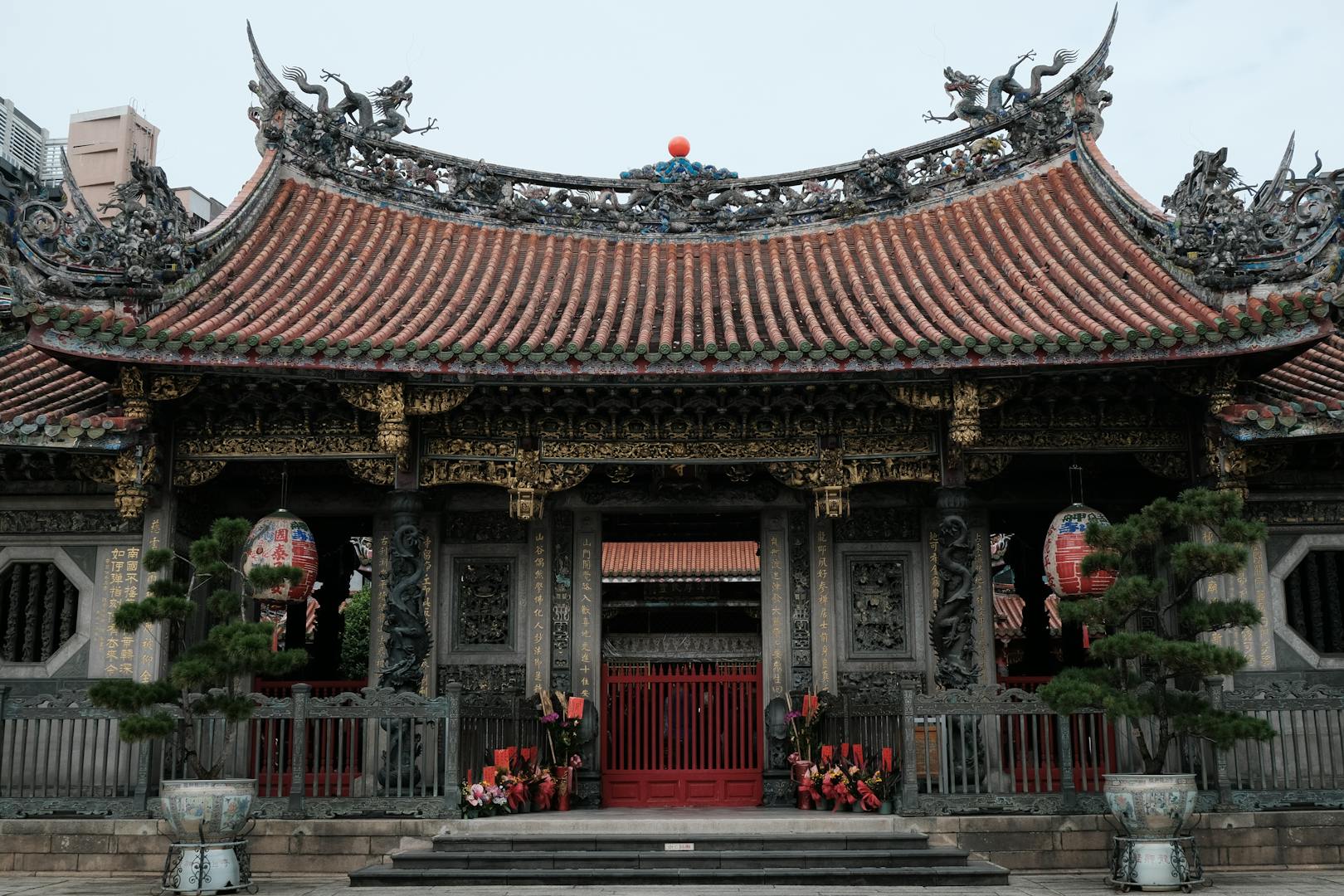
Longshan Temple (龍山寺)
Built 1738. The most important religious site in Taipei. Buddhist-Taoist syncretic temple. Multiple deities worshipped including Guanyin (Goddess of Mercy), Guan Yu, and local folk gods. Free entry, open 6am-10pm. Wanhua district. Most atmospheric in the evening when locals come for prayer.
Don’t miss: Main worship hall (Guanyin), back hall (Guan Yu), folk deity altars (love, study, business gods).
Bao’an Temple (大龍峒保安宮)
Built 1742. UNESCO recognition for cultural preservation. Datong district. Free entry. Taoist temple dedicated to Bao’an Da Di (medical god). Stunning traditional Chinese architecture.
Don’t miss: Magnificent dragon and phoenix carvings. Annual Bao’an Cultural Festival.
Confucius Temple (台北孔廟)
Built 1879. Adjacent to Bao’an Temple. Free entry. Cultural rather than active worship. Beautiful grounds and architecture. Smaller scale than the famous Beijing Confucius Temple.
Xingtian Temple (行天宮)
Zhongshan district Taoist temple dedicated to Guan Yu. Free entry, open 4am-11pm. Famous for the “shoufang” cleansing ritual where temple volunteers wave incense over devotees.
Mengjia Qingshui Temple (艋舺清水巖)
Wanhua district. Historic Chinese folk temple. Lower-profile than Longshan but worth visiting.
Songshan Ciyou Temple (松山慈祐宮)
Songshan district. Mazu temple (sea goddess). Combine with Raohe Night Market visit.
Taipei Mosque
The largest mosque in Taiwan. Da’an district. Small Muslim community in Taipei. Visitors welcome but respect prayer times.
Taipei Catholic Cathedral
Various Catholic churches throughout Taipei. Holy Family Church near Da’an is one of the larger.
Foguangshan Branches
Major Buddhist organization with several Taipei branches. Vegetarian buffets at some locations.
How to Visit a Taipei Temple Respectfully
Visitors are welcome at almost all Taipei temples. Standard etiquette:
Before Entering
Wear modest clothing. Cover shoulders and knees. Avoid revealing clothing.
Remove hats (some temples; if uncertain, follow other visitors).
Wear comfortable shoes you can remove if asked.
No food or drinks inside.
Photography generally OK but no flash. Respect signs prohibiting photos in specific areas.
No loud talking. Match the ambient noise level.
Inside the Temple
Walk around respectfully. Don’t run.
Pass altars from the right (if there’s a clear directional flow).
Don’t touch sacred objects, altars, or statues.
Step over (not on) the raised threshold beam at temple entrances – traditional sign of respect.
If you want to participate in rituals (lighting incense, making offerings), follow what locals do or ask a temple volunteer.
Bow with hands clasped if you want to show respect to a deity.
Donate small amounts (NT$50-200) if you receive blessings or use facilities. Donation boxes are at most temples.
Photo Etiquette
Generally fine. Standard temple photography for tourists welcome.
No flash photography indoors.
Don’t photograph during prayer rituals from close angles.
Don’t photograph specific religious objects (altars, ancestor tablets) if signs prohibit.
Photographing other worshippers requires permission – quick respectful shots OK, lingering portraits not.
Don’t photograph monks/priests without permission.
Specific Rituals You Might See
Lighting incense: Three incense sticks held together, bowed in front of altar, then placed in incense burner. Visitors can participate (small donation appropriate).
Casting moon blocks (jiao bei): Two crescent-shaped wood blocks thrown to ask deities yes/no questions. Multiple casts may be needed.
Drawing lots (kau cim): Bamboo sticks drawn from a container, each numbered. The number corresponds to a printed fortune.
Offerings: Food, fruits, flowers placed on altars. Don’t disturb offerings.
Burning paper money: “Ghost money” burned for ancestors or deceased. Smoke at temple courtyards is from these burnings.
Shoufang (cleansing): Xingtian Temple specialty. Volunteers wave incense over visitors. Free to participate.
Buddhism in Taipei Daily Life
Vegetarian Tradition
Mahayana Buddhism’s vegetarian emphasis means Taiwan has the highest per-capita vegetarian population in Asia. About 14% identify as some form of vegetarian. This drives the extensive vegetarian restaurant infrastructure.
Buddhist vegetarian (excludes garlic, onion, leek, chive, shallot in addition to meat) is the strictest. Many Buddhist restaurants follow this.
See our Vegetarian Restaurants Taipei guide.
Public Holidays
Major Buddhist holidays (Buddha’s Birthday in May, Mid-Autumn Festival in fall) get partial public observance. Public holidays follow Lunar Calendar.
Temple Festivals
Major temples have annual festivals – parades, performances, special rituals. Longshan Temple has Mazu festival processions. Bao’an Temple has the Bao’an Cultural Festival in spring. Open to public.
Funerary Practices
Visible in everyday Taipei. White flowers (mourning), specific paper offerings, temple ceremonies. Funeral homes (“life ceremony halls”) common in residential areas.
Taoism in Taipei Daily Life
Spiritual Influence
Taoist concepts permeate Taipei culture – qi (life energy), feng shui (geomancy), yin-yang balance. Many Taipei restaurants, hotels, and buildings designed with feng shui principles.
Local Gods
Specific gods for specific concerns: Guan Yu for business and martial concerns, Mazu for safe travel, Bao’an for health, Yue Lao for romance. Multiple temples house multiple gods.
Lunar Calendar
Festivals follow Lunar Calendar. Specific days for offerings, ancestor worship, specific deities. Many businesses still align with Lunar Calendar timings.
Ghost Month
The seventh lunar month (typically August-September). Spirits believed to roam the world. Many superstitions – no swimming, no weddings, careful business decisions. Many Taipei businesses defer to traditional practices during Ghost Month.
Folk Religion in Taipei
Family Altars
Most traditional Taiwanese families have an altar at home with ancestor tablets and deities. Daily offerings (incense, food, flowers) maintain the family spiritual relationship.
Ancestor Worship
Twice-yearly ancestor festivals (Qingming in spring, Zhongyuan in fall). Families visit ancestor graves, leave offerings, burn paper money.
Local Deities
Specific village or neighborhood deities. Smaller shrines throughout Taipei neighborhoods.
Birth and Death Rituals
Elaborate naming ceremonies for newborns, marriage rituals, funeral rituals. Each has specific religious components.
Visiting During Religious Festivals
Mazu Festival (April-May)
The Mazu Pilgrimage is one of the biggest religious events in Taiwan. Multi-day pilgrimage from Taichung area. Not in Taipei specifically but major cultural event.
Buddha’s Birthday (May)
Tzu Chi Foundation and Foguangshan host major events. Free public participation.
Ghost Month (Late July to September)
The seventh lunar month. Many cultural practices observed. Some businesses limit operations. Visit temples during this time for unique cultural experience.
Mid-Autumn Festival (September-October)
Family-focused. Temple visits, mooncakes, BBQ (Taiwanese tradition). Public holiday.
Confucius Birthday (September 28)
Annual Confucius Temple ceremony with traditional music and dance. Free to observe.
Lantern Festival (15 days after Chinese New Year)
Pingxi Lantern Festival is famous. Smaller lantern displays in Taipei. Public festivals.
Chinese New Year (January or February)
Major family religious time. Temple visits common. Most businesses close. See our Taipei in January guide.
Religion-Themed Activities for Visitors
Temple Tours
Klook and KKDay offer guided temple tours. NT$500-1,500 per person. Useful for English-speaking visitors wanting context.
Bao’an Cultural Festival
Annual spring festival at Bao’an Temple. Traditional Chinese music, dance, food. Free public attendance.
Tzu Chi Foundation Visit
Major Buddhist humanitarian organization. Headquarters in Hualien but Taipei branch open to visitors. Free entry. Educational exhibits.
Vegetarian Buffet at Buddhist Temple
Some Buddhist organizations offer free or low-cost vegetarian buffets. Open to all visitors.
Tea Ceremony at Wistaria Tea House
Historic Da’an tea house with traditional tea ceremony elements. NT$200-500 per person. Spiritual atmosphere even though not directly religious.
Meditation Center Visits
Several Taipei meditation centers welcome beginners. Free or NT$200-500 for sessions. Most in English available.
Religion and Architecture
Traditional Temple Style
Many Taipei temples follow traditional Chinese architecture – sweeping roofs, dragon and phoenix carvings, multiple courtyards, intricate woodwork. Photogenic.
Modern Religious Buildings
Newer Buddhist organizations (Foguangshan, Tzu Chi) have modernist religious architecture.
Catholic Churches
Some early-20th-century Catholic churches in Taipei. Lower-profile than Buddhist/Taoist temples.
Mosque
Taipei Grand Mosque is one of the more modernist Islamic buildings in East Asia.
Religion in Food and Restaurants
Vegetarian Restaurants
Many Taipei vegetarian restaurants follow Buddhist principles. Look for “素” (vegetarian) signs. Some restaurants are full Buddhist temples with attached restaurants.
Halal Food
Limited but growing. The Taipei Grand Mosque area has halal restaurants. Some specific restaurants advertise halal certification.
Kosher Food
Very limited. Specific imported items at international supermarkets. No dedicated kosher restaurants.
Religion-Based Dietary Practices
Many Taiwanese eat vegetarian on specific days (1st and 15th of the lunar month). Some restaurants follow these patterns.
Religion and Modern Taipei
Decline in Practice
Younger urban Taiwanese practice less than older or rural populations. Temple attendance declining among under-40s.
Cultural Heritage
Major temples remain important cultural sites even for non-religious Taipei residents. Visit for cultural reasons.
Religion and Politics
Some religious institutions are politically active. Major Buddhist organizations have political influence.
Religion and Same-Sex Marriage
Taiwan legalized same-sex marriage in 2019. Buddhist and Taoist responses varied. Some religious organizations supportive; others opposed.
Religion and Business
Many Taipei businesses still observe traditional religious practices – feng shui in office design, lucky days for business openings, ancestor altars at family-owned shops.
How to Engage as a Tourist
If You’re Religiously Curious
Visit Longshan Temple in the evening for atmospheric prayer time. Talk to temple volunteers about beliefs. Read about specific deities you encounter.
If You’re Spiritually Open
Participate in basic rituals (light incense, make offerings). Engage with the cultural aspect rather than committing to specific beliefs.
If You’re Religiously Indifferent
Temples are still beautiful cultural sites. Visit for architecture, photography, and atmosphere. Be respectful but no need to participate in rituals.
If You Have a Specific Religion
Christianity, Islam, Hinduism, and others have communities in Taipei. Specific places of worship exist. Visitors welcome.
If You’re Atheist
Taipei religious practice is approachable – even as an atheist, the cultural and architectural aspects are worth experiencing. No pressure to convert or participate.
Common Misconceptions
“Buddhism in Taipei is like Buddhism in Thailand.” No – very different traditions. Taipei follows Mahayana Chinese Buddhism, distinct from Thai Theravada.
“Temples are quiet meditation spaces.” Some are; most are active worship spaces with offerings, incense, and ritual activity.
“You can’t take photos at temples.” Generally allowed without flash. Some specific restrictions.
“Religion is declining and irrelevant.” Less practiced among younger urbanites but still culturally significant. Visiting temples is a tourist activity AND a religious activity.
“All temples are the same.” Different traditions, different deities, different practices. Visit multiple to see the diversity.
“Religious tourism is exploitative.” Visiting respectfully is welcomed by most Taipei temples. Photography and donations are part of normal visitor culture.
“Locals don’t want tourists at temples.” Generally welcoming. Major temples are tourist destinations as much as worship sites.
Specific Temple Itinerary
If you want a half-day temple tour:
9am: Bao’an Temple. Walk through magnificent traditional architecture. 45 minutes.
10am: Adjacent Confucius Temple. Quieter atmosphere. 30 minutes.
10:30am: Walk to Dihua Street for traditional shopping. Multiple folk shrines along the street.
12pm: Lunch at a Dihua Street restaurant.
1pm: MRT to Wanhua. Longshan Temple visit. 60-90 minutes.
3pm: Walk to Bopiliao Historic Block.
4pm: Return to hotel.
Total: 7-hour cultural and religious tour. Free entries plus small donations. NT$200-500 in transit and snacks.
Religious Items Worth Buying
If you want religious-themed souvenirs:
Incense: Various qualities. NT$100-500 for premium incense. Taipei has dedicated incense shops near major temples.
Statues and figurines: Small versions of major deities. NT$200-2,000. Available at temple gift shops.
Buddhist books and sutras: Major Buddhist organizations sell books. Some in English.
Religious jewelry: Beads, pendants with religious symbols. NT$300-3,000.
Prayer books and calendars: Traditional calendars with lunar dates. NT$100-500.
Most temple gift shops have a small selection. Specialty shops near major temples offer wider variety.
Modern Religious Movements
Tzu Chi Foundation: The major Buddhist humanitarian organization. Active globally. Free to visit Taipei branch.
Foguangshan: International Buddhist organization. Multiple Taipei branches and study centers.
Dharma Drum Mountain: Major Buddhist organization. Meditation focus.
I-Kuan Tao: Religious movement combining Buddhism, Taoism, Confucianism. Less prominent than mainstream Buddhism.
Tian Te Tang: Folk religion movement. Local Taipei communities.
These represent different facets of the modern religious landscape.
Religion vs Spirituality
Many Taipei residents distinguish between formal religion and personal spirituality:
Many practice rituals without strict belief. Cultural participation rather than religious commitment.
Spiritual practices (yoga, meditation, qigong) increasingly popular among younger urbanites.
Western New Age and self-help movements have small but growing influence.
Tea ceremony and other quasi-spiritual practices popular without religious framework.
For visitors, this means you can engage spiritually with Taipei without committing to specific religions.
Related Taipei guides
- Taiwan vs China: Cultural Differences Tourists Should Know
- Dragon Boat Festival in Taipei: Races & Zongzi
- Mandarin Phrases for Taipei Travelers: 40 Essentials
- Tipping in Taipei: Do You or Don’t You?
- Things to Do in Taipei: 45+ Must-See Attractions & Experiences
- Taipei Travel Guide : The Complete Planning Resource
Frequently Asked Questions
What is the main religion in Taipei?
Buddhism (35%) and Taoism (33%) are the two largest organized religions, often blended with folk religion in practice. Most Taiwanese practice a syncretic mix. Christianity (5%) is smaller. About 15-25% identify as non-religious, especially among younger urbanites.
What is the most important temple in Taipei?
Longshan Temple (built 1738) is the most important religious site in Taipei. Buddhist-Taoist syncretic temple with multiple deities worshipped including Guanyin and Guan Yu. Free entry. The 6am-10pm operating hours make it accessible throughout the day. Wanhua district.
Can tourists visit temples in Taipei?
Yes – all major Taipei temples welcome visitors. Free entry at virtually all. Wear modest clothing (cover shoulders and knees), no food/drinks inside, quiet voices, and respect prayer activities. Photography generally allowed without flash.
How should I behave at a Taipei temple?
Wear modest clothing, remove hats if other visitors do, walk respectfully, don’t touch sacred objects, no food or drinks, quiet voices, photography without flash. If you want to participate in rituals, follow what locals do or ask a temple volunteer.
What is folk religion in Taiwan?
Traditional Chinese folk practices including ancestor worship, local deity worship, and superstitions. Often blends with Buddhism and Taoism in Taiwan. Many homes have family altars with ancestor tablets. Visible in everyday Taipei life.
Is Buddhism in Taipei vegetarian?
Mahayana Buddhism (the dominant Taipei form) emphasizes vegetarianism. Many Taiwanese Buddhists practice some form of vegetarian eating. This drives Taipei’s extensive vegetarian restaurant infrastructure. About 14% of Taiwanese identify as vegetarian – highest in Asia.
What is Ghost Month in Taiwan?
The seventh lunar month (typically August-September). Spirits believed to roam the world. Cultural practices include no swimming, no weddings, careful business decisions, special offerings to wandering spirits. Many Taipei businesses observe traditional practices during Ghost Month.
Are there churches in Taipei for Christians?
Yes – several Catholic and Protestant churches throughout Taipei. Holy Family Catholic Church near Da’an is one larger. Multiple Presbyterian, Methodist, Baptist churches. Smaller community but visible places of worship.
What is the Taipei mosque?
Taipei Grand Mosque is the largest mosque in Taiwan. Da’an district. Visitors welcome but respect prayer times. Small but established Muslim community in Taiwan, especially among Indonesian and Malaysian residents.
How do I learn more about Taiwan religion as a tourist?
Visit Longshan Temple in the evening for the most active worship atmosphere. Take a Klook/KKDay temple tour for context. Visit Tzu Chi Foundation Taipei branch for Buddhism. Read books at Eslite Spectrum. Talk respectfully to temple volunteers if interested.
The Bottom Line
Religion in Taipei is one of the most visible and approachable aspects of Taiwanese culture. Buddhism, Taoism, and folk religion combine in syncretic daily practice. Major temples (Longshan, Bao’an, Xingtian) welcome visitors at no cost. The vegetarian food infrastructure, lunar calendar festivals, family altar traditions, and architectural heritage all reflect deep religious roots. Engage respectfully – dress modestly, observe before participating, donate small amounts if you light incense or use facilities. Taipei rewards spiritual curiosity with one of Asia’s most layered religious cultures.