This article contains advertising. Our booking links are routed through a partner that adds commission tracking automatically, so if you book through one we earn a commission from the provider, at no extra cost to you. It never affects what we recommend. Affiliate disclosure
Taipei in August is one of the most challenging months for visitors – peak typhoon season, the hottest weather of the year, and frequent afternoon thunderstorms. August also brings strong domestic tourism from the school summer holidays and some of the highest hotel prices outside Chinese New Year. But August has its specific appeals too – mango shaved ice at its peak, riverside summer festivals, Ghost Month rituals you cannot see at any other time, and water escapes within 90 minutes of the city. This 2026 guide to Taipei in August covers the real climate numbers, how Taiwan’s typhoon warning system actually works, and how to structure a day so the heat does not beat you.

Taipei August Weather
Temperature: Daily average 28-31 °C. Highs 33-35 °C. Lows 26-28 °C.
Humidity: 80-90% overnight and at dawn. Real-feel temperatures often 38-42 °C in direct sun.
Rain: 10-14 rainy days per month. Less plum rain than June; more typhoon-driven intense storms.
Typhoons: Peak season. 2-3 typhoons typically affect Taipei in August.
The Central Weather Administration’s 1991–2020 normals for the Taipei station give August a mean of 29.5 °C, a mean daily high of 34.2 °C and a mean low of 26.4 °C. Rainfall averages 236.5 mm over about 14.6 rain days, with roughly 183 hours of sunshine – the sunniest month of the year. The August record is 39.3 °C.
One honest correction to a claim repeated everywhere: on the official normals July edges August for heat (July mean 29.9 °C). The two are effectively tied. What separates August is water – more rain, more storms, more chance a typhoon rearranges your week.
Humidity, heat alerts and the rain pattern
The station’s mean August humidity of 72% is misleading. It swings hard: 85-95% overnight and at dawn, falling through the afternoon. Early mornings are muggy rather than cool, and sweat does not evaporate. A 34 °C Taipei afternoon is more punishing than a 38 °C dry-climate one.
The CWA issues a three-tier heat signal worth checking each morning: yellow at a daily maximum of 36 °C, orange at 38 °C in a day or 36 °C for three consecutive days, red at 38 °C for three consecutive days. Taipei sits in a basin that traps heat, so it picks up signals when the rest of the north does not. Live map: the CWA heat information page.
Ordinary August rain is a convective afternoon thunderstorm, not all-day drizzle: blinding sun until about 1pm, then a violent 30-90 minute downpour between 2pm and 5pm, then steam. Typhoon rain runs 24-48 hours without a break.
Typhoon Reality in August
August is the peak typhoon month for Taipei:
Frequency: 2-3 typhoons typically affect Taipei in August.
Intensity: Strongest storms of the year often hit August-September.
Impact: Outdoor attractions close, flights cancel, MRT may briefly close, day-long shutdowns possible.
Forecasting: 3-7 days warning is typical. Track via CWA Taiwan or Windy.com.
Context to calm the panic: the CWA reports the northwest Pacific generates an average of 25.4 typhoons a year, but only around 3.2 – roughly 12.6% – affect Taiwan, and only one or two make landfall. A two-week August trip is far likelier to include one disrupted day than a ruined holiday. The mistake is not visiting in August; it is having zero slack. See our Taipei Typhoon Season guide.
Sea warning versus land warning
The single most useful thing to understand. The CWA issues a sea warning (海上颱風警報) roughly 24 hours before a typhoon’s gale-force radius reaches waters within 100 km of Taiwan, and a land warning (陸上颱風警報) roughly 18 hours before that radius reaches land.
Sea warning: the city is normal. Ferries and offshore flights cancel and the sea turns dangerous, but shops, the MRT and museums operate. This is your window to buy food and pull outdoor plans forward.
Land warning: the storm is expected to hit the island and closures start being announced. Track it on the CWA typhoon warning page, in English.
The “typhoon day” explained
Taiwan does not shut down nationally. Each city and county decides for itself whether to suspend work and school (停班停課), and Taipei and New Taipei often disagree. Triggers: average winds of Beaufort force 7 or gusts of force 10 within four hours, or forecast 24-hour rainfall above 350 mm on the flat (200 mm in the mountains).
Announced around 8pm the night before, or by about 4:30am for a same-day call; every news app pushes it. What closes: offices, schools, most museums, theme parks and the majority of restaurants. Convenience stores mostly stay open.
What happens to transport
Taipei MRT: the underground core keeps running in almost all conditions. Elevated and surface sections are suspended when instantaneous wind exceeds force 10 (89-102 km/h) or the 10-minute average reaches force 7 (50-61 km/h) – that takes out the whole Wenhu Line, the Tamsui-Xinyi Line north of Yuanshan, and the Xinbeitou and Xiaobitan branches. Stay in Beitou or Neihu and you can be stranded while central Taipei runs normally; our Taipei MRT guide shows which lines run above ground.
Everything else: the Maokong Gondola is suspended under any land warning. Buses thin then stop, taxis get scarce, Taiwan Railway and High Speed Rail cut services, and airlines usually cancel 6-24 hours ahead with free rebooking.
The supermarket run, insurance and slack
Shop the afternoon a land warning lands. Households stock up and shelves genuinely empty – noodles, bread, eggs and water first. Get 2-3 litres of water per person and something you can eat cold. Charge everything; brief power cuts happen in older buildings.
Buy travel insurance before you book, not after. Once a storm is named and reported, insurers treat it as a “known risk” and claims tied to that typhoon are routinely refused.
Leave a buffer day before any onward flight, book refundable for day tours and anything on water, and get the written cancellation notice before filing a claim.
What a Typhoon Day Actually Looks Like
It is far less dramatic than the news footage. Mornings bring horizontal rain, window-rattling gusts and empty streets. At midday the Taipei City Mall (台北地下街) and Zhongshan Metro Mall (中山地下街) connect Taipei Main Station to Beimen and Shuanglian entirely underground, and their food outlets often trade through a storm. The rain eases as the centre passes – do not be fooled, the back half usually brings stronger winds. Once the land warning lifts, night markets reopen within hours. Treat it as a hotel-and-food day, and have a list of indoor things to do in Taipei ready before you need it.
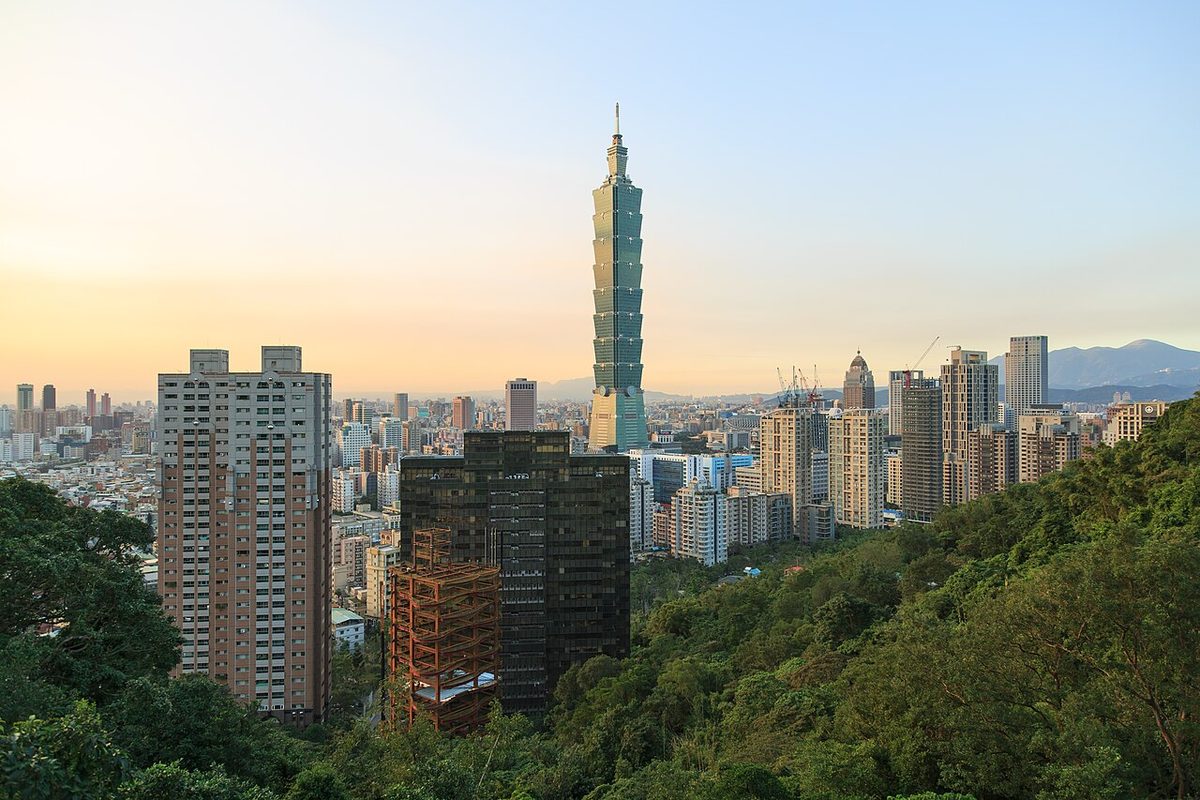
Photo: CEphoto, Uwe Aranas, CC BY-SA 3.0, via Wikimedia Commons.
Ghost Month in August
Almost no English-language guide handles this well, and it is the most culturally interesting thing happening in Taipei in August. Ghost Month (鬼月) is the seventh lunar month, when the gates of the underworld are believed to open and spirits – politely called “good brothers” (好兄弟) – wander among the living.
2026: 13 August to 10 September, with Zhongyuan Festival (中元節) on Thursday 27 August. 2027: 2 to 30 August, with Zhongyuan on Monday 16 August. In other years it begins on the first day of the seventh lunar month, shifting 10-19 days annually.
What you will actually see
Trestle tables appear outside shops and office lobbies, loaded with instant noodles, biscuits, soft drinks, fruit and cigarettes – offerings for the good brothers, later taken home and eaten. Metal drums burn joss paper on street corners, temples run pudu (普渡) ceremonies to feed the wandering dead, and Taipei’s temples are at their busiest.
What locals avoid, and whether you should care
Common taboos: no swimming in sea or rivers (water ghosts are said to be seeking a substitute), no moving house, no weddings, no starting a business, no major contracts, no whistling at night, no laundry hung outside after dark.
Does it affect travellers? Barely. Everything stays open, transport runs normally, prices are unaffected, and nobody expects a visitor to observe the taboos. The swimming one is worth respecting anyway: August seas carry typhoon swell and rip currents, and the drowning statistics behind the folklore are real.
How to be respectful: do not touch or take the food offerings, do not step over offerings or burning drums, ask before photographing worshippers close up, and never blow out incense.
Keelung Ghost Festival – the big one
The Keelung Mid-Summer Ghost Festival (雞籠中元祭) has run since 1855 and is Taiwan’s largest Zhongyuan observance: the opening of the gate at Laodagong Temple (老大公廟) on the first day of the lunar month, an illuminated water lantern parade ending with paper lantern houses burned and floated into the harbour on the eve of Zhongyuan (26 August in 2026), and the closing of the gate a month later. Keelung is 40-50 minutes by train – see our Keelung day trip guide. Go for the parade, stay for Miaokou Night Market, and check the forecast.
Best Things to Do in Taipei in August
1. Mango Shaved Ice (Peak Season)
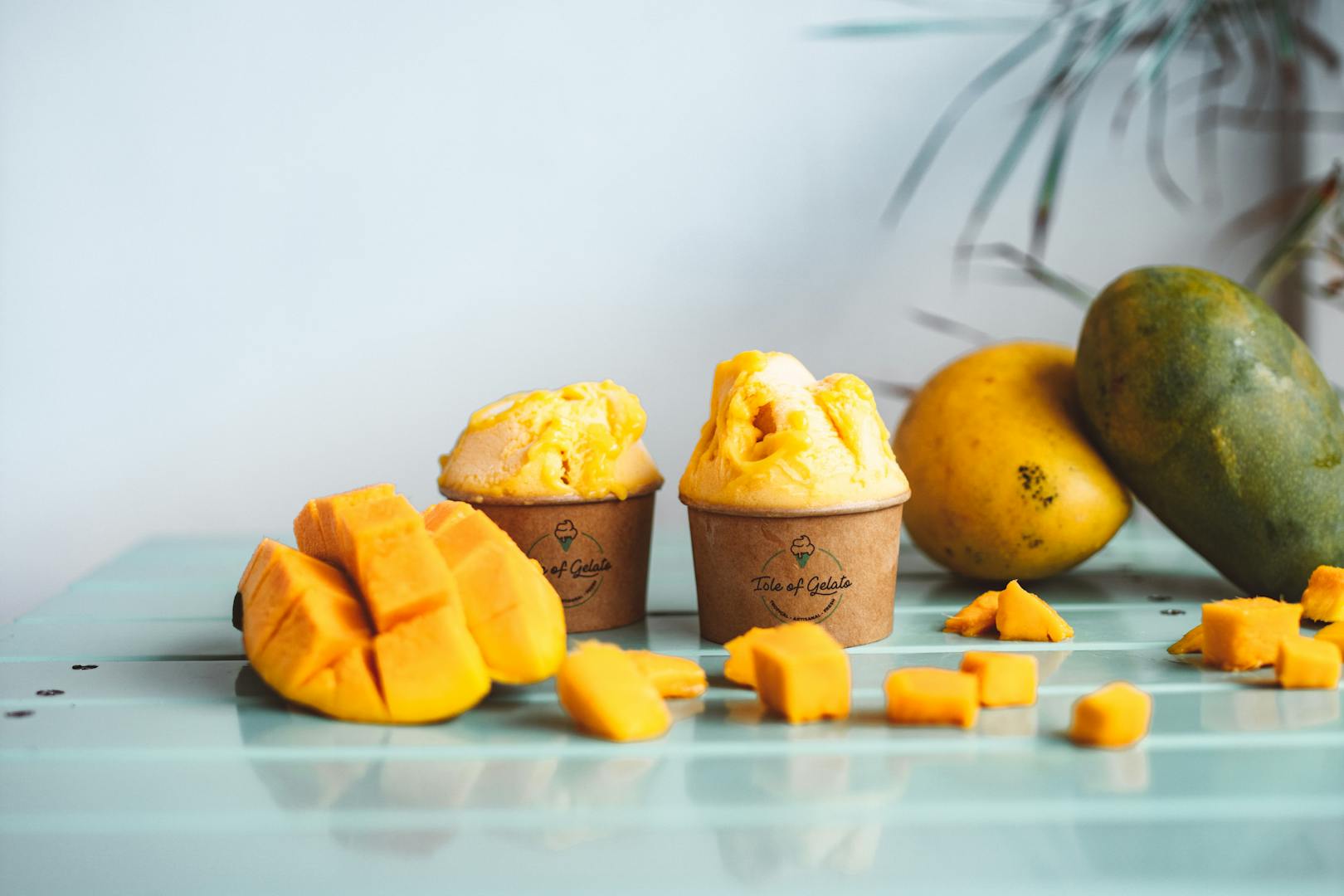
Taiwan mango is at its peak, and mango shaved ice (芒果冰) is the iconic August dessert – Irwin mango, condensed milk, shaved or snow ice. Smoothie House on Yongkang Street and Ice Monster are the famous names; expect around NT$200-350 there, NT$100-150 at a neighbourhood shop.
2. Indoor Cultural Activities
The National Palace Museum, the Fine Arts Museum, Eslite Spectrum Songyan and the Xinyi malls are all deeply air-conditioned. In August these stop being a wet-weather backup and become the core of a sane itinerary.
3. Hot Pot Dinners
Counter-intuitive but correct. Air-conditioned hot pot restaurants are among the coldest rooms in the city, and a long dinner is a legitimate way to sit out the evening humidity.
4. Early Morning Activities (Before 9am)
Yangmingshan trails, Elephant Mountain, riverside YouBike routes and temples all work between 6am and 9am. Taipei is genuinely awake at six, with tai chi in the parks and breakfast shops already open.
5. Late Evening Activities (After 6pm)
Night markets, cocktail bars and rooftop bars with skyline views. Most of what makes Taipei special happens after dark, which is why August rewards a nocturnal schedule.
6. Hot Springs (Counter-intuitive)
Many Beitou hot spring hotels have air-conditioned bath halls and cold plunge pools. August is low season for soaking, so private rooms are cheaper and easier to book than in winter.
7. Cafe Hopping
Air-conditioned boutique cafes and long sits with no pressure to leave. Da’an and Zhongshan are the strongest neighbourhoods for it.
8. Summer Concerts and Festivals
Riverside programming, fireworks nights and outdoor arts run right through August. Dates in the festivals section below.
9. Beach Day at Fulong (Cool Morning)
Northeast coast beach, best done very early before the heat peaks. Details below.
10. Water Parks and Splash Pads
Taipei Water Park in Gongguan opens its water-play area for the summer season, with Gongguan Night Market five minutes away for dinner.
Beating the Heat: A Day Structure That Works
The biggest August upgrade is not what you do but when.
6:00-9:00 – outdoor window. Hiking, temples, parks, photography. The only reliably comfortable outdoor block of the day.
9:00-11:00 – breakfast and transition. A traditional breakfast shop, then indoors before the sun goes vertical. Use 16:00-18:00 to shower, change shirt and rehydrate.
11:00-16:00 – indoor block, non-negotiable. Museum, mall, cafe, hot pot, KTV, cinema, hotel nap. Assume nothing outdoors gets done.
18:00-23:00 – second outdoor window. Night markets, riverside walks, bars, Elephant Mountain sunset.
Where the air conditioning is
The MRT is a cool corridor, not just transport. Stations and trains are aggressively cooled, and the underground mall network lets you cross central Taipei without surfacing. Convenience stores are public cooling rooms – 7-Eleven and FamilyMart branches have seating and nobody minds twenty minutes with a NT$25 drink. Temples are not cool: beautiful, but open-air and full of burning incense.
Hydration and heat illness
Drink 3-5 litres a day if you are walking, and add electrolytes – Pocari Sweat and Aquarius cost NT$25-35 in any convenience store. Warning signs: headache, nausea, dizziness, goosebumps in the heat, or sweating that suddenly stops. Get indoors and cold, and seek help if it does not resolve quickly.
Water Escapes Near Taipei in August
Fulong Beach (福隆海水浴場)
A 3 km arc of golden sand at the mouth of the Shuangxi River, and the best-known swimming beach on the northeast coast. Trains run roughly hourly from Taipei Main Station on the Yilan line and take 80-90 minutes; the beach is a five-minute walk from Fulong Station. Admission NT$100, gates 8:00-17:30, closed October through May. The river side of the sandbar is calm and good for kayaks; the ocean side is not. Details on the official Taipei Travel Fulong Beach listing.
Baishawan (白沙灣) and Green Bay (翡翠灣)
Baishawan is the closest real beach to the city, on the north coast in Shimen: MRT to Tamsui, then the Taiwan Tourist Shuttle along Highway 2. Free to enter, swimming permitted roughly May to September with lifeguards typically on duty 8:00-18:00. Green Bay in Wanli is a resort-style bay with calmer water – less scenic, but a fallback when the northeast coast is getting swell.
Wulai and the river valleys
If salt water does not appeal, go inland. Wulai is about an hour from central Taipei by MRT and bus, runs several degrees cooler than the basin, and combines a waterfall, Atayal culture and cold river water.
The safety part, honestly
Rip currents are the danger, not the surf. Northern Taiwan’s beaches produce strong rips. Swim between the flags, only when lifeguards are on duty.
Never enter a river or gorge with rain forecast upstream. Taiwan’s mountain rivers rise from ankle-deep to lethal in minutes – locals call it 溪水暴漲, “the river surges”.
Stay out of the water for 48 hours after a typhoon, and skip the coast on a sea warning day. Swell arrives long before the storm.
What to Wear in August
Loose, light cotton or linen: Essential. Tank tops or short sleeves.
Light, breathable shorts: Pants too hot.
Compact rain jacket: For typhoon edges and afternoon storms.
Light cardigan: AC indoors can be aggressive.
Hat and sunglasses: Sun protection essential, UV strong.
Sandals or sneakers: Open-toe shoes acceptable.
Sunscreen: SPF 50+. Reapply every 1-2 hours outdoors.
Compact umbrella: For sun AND rain.
More shirts than days: You will sweat through them, and canvas shoes take two days to dry in August humidity.
Hotel Strategy for August
One of the higher-priced months due to summer holidays:
Most weeks: 20-40% above off-peak. Book 4-6 weeks ahead.
Summer holiday weekends: Up to 50% premium. Book months ahead.
Strong AC priority: Verify hotel AC specifically. Older properties can have weak AC.
Indoor amenities: Pool, gym, restaurants. You will spend more time in the hotel than you expect.
Lower-floor or rear rooms: Sometimes have weaker AC. Verify before booking.
Stay on an underground MRT line. Zhongshan, Da’an, Ximending and Taipei Main all keep running in a storm; Beitou and Neihu do not.
Free cancellation is worth the price gap. A flexible rate at 10% more is cheap insurance against a rearranged week.
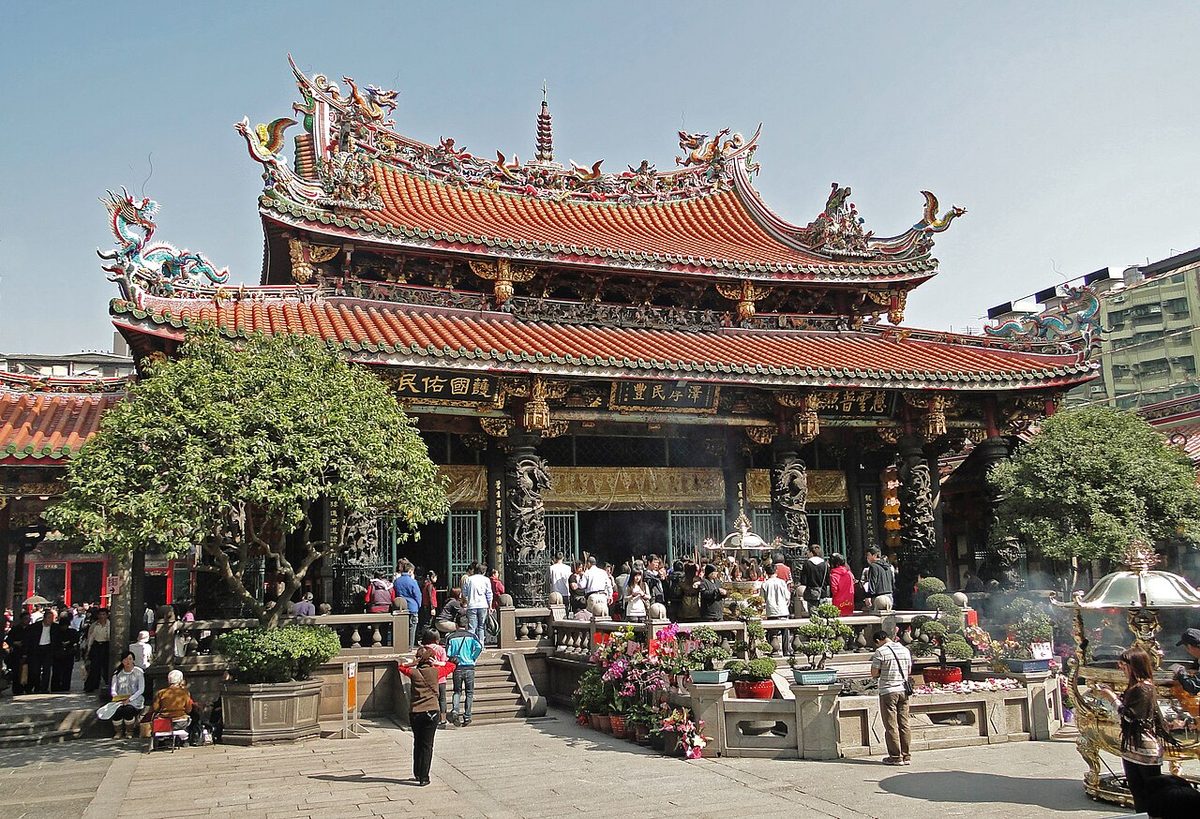
Photo: Bernard Gagnon, CC BY-SA 3.0, via Wikimedia Commons.
August Festivals and Events
Ghost Month (lunar 7th month): 13 August to 10 September in 2026; 2 to 30 August in 2027. Full detail above.
Father’s Day (August 8): Taiwan celebrates on 8 August because “ba-ba” (八八) sounds like the word for dad. Not a public holiday, but restaurants book out that weekend.
Qixi (七夕), Chinese Valentine’s Day: the seventh day of the seventh lunar month – 19 August in 2026. Couples promotions everywhere.
Taipei Summer Festival: riverside programming at Dadaocheng Wharf with fireworks and drone shows on selected nights; 25 July to 15 August in 2026.
Taipei Water Festival: water-play programming through the school holidays; 4 July to 30 August in 2026.
Taipei Fringe Festival: independent theatre across small venues from mid-August into the autumn. Taiwanese schools are out all month, so domestic travel peaks and family attractions are busy.
Dates move each year. Confirm against the official Taipei Travel event calendar, or browse our own Taipei festivals calendar.
One-Week August Itinerary
Day 1: Arrival. Hotel check-in. Light air-conditioned evening.
Day 2: Early morning Yangmingshan + afternoon Beitou hot springs (indoor pool).
Day 3: Indoor day – National Palace Museum + Eslite Spectrum + mall food court lunch.
Day 4: Iconic Taipei – Taipei 101 morning + Liberty Square + indoor restaurants.
Day 5: Cool day trip – Tamsui sunset waterfront + ferry rides.
Day 6: Mango shaved ice tour + cafe hopping + KTV evening.
Day 7: Departure.
Ghost Month variant: swap Day 5 for an early Fulong morning and a Keelung evening for the water lantern parade. Keep Days 5 and 6 refundable and leave one whole day unplanned as typhoon slack.
August Compared to Other Months
vs July: Statistically almost identical for heat – July’s normals are marginally higher. August is wetter with more typhoon activity.
vs September: September is a couple of degrees cooler with similar typhoon exposure, plus the Mid-Autumn Festival. If your dates are flexible, September is the better half of the pair.
vs June: June is plum rain peak. August is typhoon peak. Both wet, different patterns.
vs October-November: No contest on weather – 6-9 °C cooler with far less rain. August wins only on mango, Ghost Month and beach season.
What to Avoid in August
Mid-day outdoor activities (11am-3pm). Brutal heat. Indoor only.
Yangmingshan mid-day hiking. Direct sun dangerous.
Outdoor day trips on typhoon warning days. Yehliu, Jiufen and Shifen all close.
Non-refundable outdoor bookings. Build flexibility.
Skipping AC mid-day breaks. Risk of heat exhaustion.
Ignoring typhoon forecasts. 3-7 days warning is typical.
Swimming on an unguarded beach. Rip currents, not waves, catch people out.
Hiking a gorge with rain forecast upstream. Flash floods arrive without warning.
Specific Practical Tips
Hydration constantly – 3-5 litres water daily.
Indoor break every 2-3 hours when outdoors.
Typhoon forecast checked daily.
Travel insurance with weather coverage bought before any storm is named.
Convenience store water and electrolyte drinks always carried.
Watch for heat exhaustion symptoms.
Carry a small towel – many public toilets have no hand dryer, and it doubles for sweat.
Keep an EasyCard topped up so you never queue in the heat at a ticket machine.
Save your hotel address in Chinese characters for taxi drivers.
Related Taipei guides
- Taipei in Spring: Weather, What to Wear & Events
- Taipei in Summer: Heat, Typhoons & Survival Tips
- Taipei in Autumn: The Best Weather of the Year
- Taipei in Winter: Is It Cold? What to Pack
- Cherry Blossoms in Taipei: Where & When to See Them
- Taipei in January: Weather, Lunar New Year & Crowds
Frequently Asked Questions
How is the weather in Taipei in August?
Hottest month – 28-31 °C daily average, 33-35 °C highs, humidity 85-95% overnight. Real-feel 38-42 °C in direct sun, 10-14 rainy days, peak typhoon season.
Is August the hottest month in Taipei?
Effectively yes, but July is marginally hotter on the official 1991–2020 normals (29.9 °C versus 29.5 °C mean). You would not feel the difference. August is the wetter and stormier of the two.
Are typhoons common in Taipei in August?
Yes – peak typhoon month, with 2-3 typhoons typically affecting Taipei. Around 3.2 a year affect Taiwan, out of roughly 25 forming in the northwest Pacific. Forecasting gives 3-7 days warning.
What is the difference between a sea warning and a land warning in Taiwan?
A sea warning comes about 24 hours before a typhoon’s gale-force winds reach waters within 100 km of Taiwan, and the city carries on as normal. A land warning comes about 18 hours before those winds reach land, and that is when closures start being announced.
Does the Taipei MRT stop during a typhoon?
Underground sections almost never stop. Elevated and surface sections are suspended when instantaneous wind exceeds Beaufort force 10 or the 10-minute average reaches force 7 – taking out the Wenhu Line, the Tamsui-Xinyi Line north of Yuanshan, and the two branch lines.
What happens on a typhoon day in Taipei?
Each city government decides separately whether to suspend work and school, announcing around 8pm the night before or by about 4:30am. Offices, schools, museums and most restaurants close, convenience stores stay open, and everything reopens fast once the land warning lifts.
When is Ghost Month in 2026 and 2027?
Ghost Month runs 13 August to 10 September in 2026, with Zhongyuan Festival on 27 August. In 2027 it runs 2 to 30 August, with Zhongyuan on 16 August. Dates follow the seventh lunar month and shift each year.
Does Ghost Month affect tourists in Taipei?
Hardly at all. Everything stays open and prices are unaffected. Just do not touch or step over street offerings, ask before photographing worshippers, and take the no-swimming taboo seriously – August seas are genuinely dangerous.
Should I visit Taipei in August?
Challenging. Hot, humid, typhoon-affected and expensive. Best for travellers tied to school-holiday dates or interested in Ghost Month. October-November or March-April are far better for weather.
What should I wear in Taipei in August?
Loose light cotton or linen, shorts and T-shirts, a compact rain jacket and a light cardigan for aggressive indoor AC. Hat, sunglasses, SPF 50+, compact umbrella. Pack more shirts than days.
Can you swim near Taipei in August?
Yes. Fulong Beach (NT$100, 8:00-17:30, about 90 minutes by train) and Baishawan on the north coast both have lifeguarded summer seasons. Swim between the flags, and stay out of the water for about 48 hours after a typhoon.
Is travel insurance worth it for a Taipei trip in August?
Yes, and buy it early. Once a typhoon has been named it counts as a known risk, so cover bought afterwards usually will not pay out for cancellations caused by that storm.
The Bottom Line
Taipei in August is hot, humid, typhoon-affected and one of the more challenging travel months – but it is workable if you accept its shape. Front-load the day before 9am, treat 11am to 4pm as indoor time, go out again after six, buy insurance before any storm is named, and stay on an underground MRT line so a land warning cannot strand you. In exchange you get mango at its peak, riverside fireworks, beach season and Ghost Month. October-November or March-April deliver the best Taipei weather – but if August is what you have, it is far from a write-off.
