This article contains advertising. Our booking links are routed through a partner that adds commission tracking automatically, so if you book through one we earn a commission from the provider, at no extra cost to you. It never affects what we recommend. Affiliate disclosure
At twenty to nine on a weekday morning, a small queue forms at the side gate of the Presidential Office Building: tourists clutching passports, a school group in matching caps, a retired couple from Kaohsiung. Behind them rises the red-and-white brick tower the Japanese finished in 1919 to rule the island from. Two blocks away, commuters pour out of Taipei Main Station; in 228 Peace Park, pensioners are finishing their morning exercises beneath the dome of Taiwan’s oldest museum; and down the avenue, soldiers at the Chiang Kai-shek Memorial Hall are preparing for the first changing of the guard. Colonial capital, dictatorship, protest and democracy all share these few square kilometres, and seeing them together is why people call Zhongzheng District Taipei‘s civic heart — and why it rewards a day on foot far more than the quick photo stop most visitors give it.
This guide covers Zhongzheng as a neighbourhood to explore: how the walled city became a colonial capital and then a democracy’s front lawn, the government quarter and how to tour the Presidential Office, 228 Peace Park and its museums, the Chiang Kai-shek Memorial Hall and Liberty Square, the North Gate and the old station quarter, Huashan 1914, the markets and gardens of the south, where to eat and a day that links it all. The memorial hall, Nanjichang Night Market and the Gongguan edge of the district have their own guides, linked below. Hours and prices were checked in September 2026; treat them as the right order of magnitude. For how Zhongzheng fits into the city, see our overview of Taipei neighbourhoods.
Zhongzheng at a glance
| The short version | |
|---|---|
| Where | The centre of the city, from Taipei Main Station south to the Xindian River, on the site of the old walled city |
| Nearest MRT | Taipei Main Station, NTU Hospital (for 228 Peace Park and the museums), Chiang Kai-shek Memorial Hall, Beimen (for the North Gate), Zhongxiao Xinsheng (Exit 1 for Huashan), Xiaonanmen (for the Botanical Garden and Nanjichang) |
| Time needed | A full day for the government quarter, the park, the museums and the memorial hall; add an evening at Huashan or Nanjichang |
| Best times | A weekday morning for the Presidential Office tour; Tuesday to Friday for everything else, as the museums close on Mondays |
| Entry | Most of it is free; the museums charge very little |
| Do not miss | A Presidential Office tour, the National Taiwan Museum, the 228 Memorial Museum, Liberty Square, the North Gate |
What things cost
| Item | Typical cost (September 2026) |
|---|---|
| Presidential Office Building tour | Free (bring your passport) |
| National Taiwan Museum, including the Land Bank Exhibition Hall | NT$30 adult, NT$15 concession — one ticket covers both buildings |
| Nanmen Park exhibition hall | NT$20 adult; the park itself is free |
| Taipei 228 Memorial Museum | NT$20 |
| Chiang Kai-shek Memorial Hall, Liberty Square, Huashan 1914, the Botanical Garden | Free |
| A bowl of beef noodles or a basket of soup dumplings nearby | Roughly NT$170–250 |
| MRT between the district’s stations | From NT$20 with an EasyCard |
From walled city to democracy’s front lawn
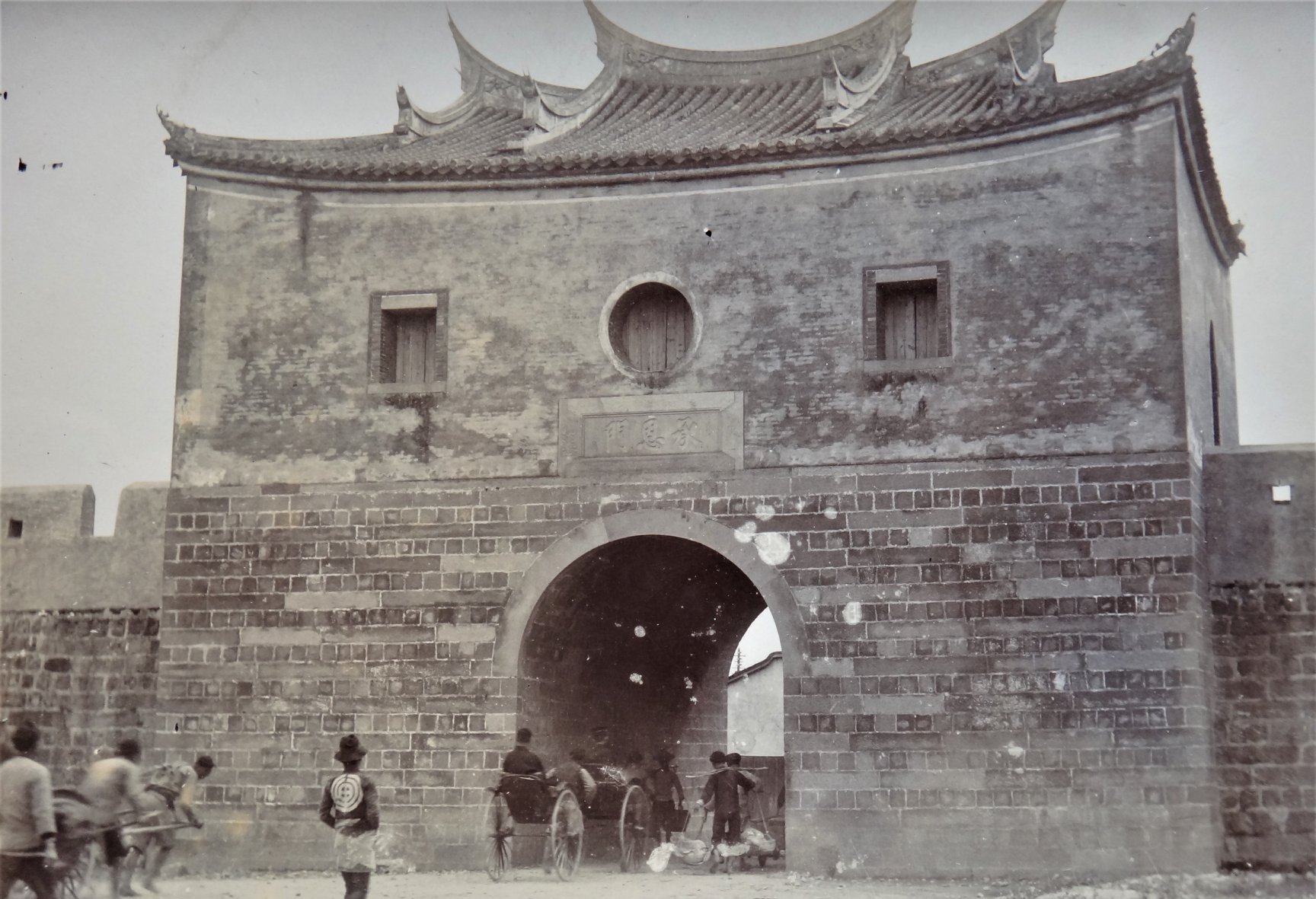
Zhongzheng is the newest of Taipei’s three historic cores and the one that has always held power. Bangka and Dadaocheng grew up as river ports; this was a planned city. In the early 1880s the Qing authorities laid out a walled administrative capital on open fields between the two ports, and the walls were finished in 1884, with five gates. Barely a decade later, after Japan took Taiwan in 1895, the colonial government made this its capital, pulled down most of the walls and replaced them with broad, tree-lined boulevards, and filled the old city with grand government buildings in brick and stone.
The Japanese era left the district its bones: the Governor-General’s Office (today’s Presidential Office), the museum and park, the railway headquarters, the courts, the hospital and the public hall where, on 25 October 1945, Japan formally handed Taiwan over to the Republic of China. After 1949 the same buildings housed Chiang Kai-shek’s government-in-exile, and the district became the stage for four decades of martial law. The streets were renamed for the new rulers, and the district itself was named Zhongzheng, after Chiang’s formal name.
It has also been the stage for Taiwan’s democracy. In 1990, thousands of students occupied the plaza of the Chiang Kai-shek Memorial Hall in the Wild Lily movement, demanding political reform, and they got it. In 2014 the Sunflower movement occupied the Legislative Yuan, a few streets north, for more than three weeks. And in May 2019, crowds celebrated in the rain outside the same parliament when Taiwan became the first place in Asia to legalise same-sex marriage. Walk through Zhongzheng today and you are walking through all of those stories at once.
The government quarter and the Presidential Office
The Presidential Office Building (總統府) was completed in 1919 as the office of the Japanese Governor-General, designed in a grand, eclectic European style of red brick and white stone around a central tower that was long the tallest structure in the city. From the air it forms the character 日, for Japan. It is still the working office of the President of Taiwan, and it is one of the few seats of government anywhere that ordinary visitors can simply walk into.
Weekday tours run from Monday to Friday, 09:00 to 12:00, with last admission at 11:30. They are free. Individual visitors do not need to book: bring your passport, queue at the visitors’ entrance from about 08:30, go through security and join a guided tour, which is offered in English as well as Mandarin. The tour covers the ground floor’s corridors, exhibitions on the building and on Taiwan’s history and democracy, and the courtyards. The building also opens more fully on a few special days each year, including National Day on 10 October and New Year’s Day; the Office of the President’s visitor page lists the dates. It has ramps, lifts and accessible toilets.
In front of it, the wide avenue of Ketagalan Boulevard — named in 1996 after the Indigenous people of the Taipei basin — is where the country holds its National Day parade and its largest demonstrations. Around it, the Japanese-era Judicial Yuan, Control Yuan and the old wing of NTU Hospital make a fine short walk of colonial architecture, and the elegant Taipei Guest House (台北賓館), built as the Governor-General’s residence at the start of the twentieth century, opens to the public on selected days.
228 Peace Park and its museums
North of the Presidential Office, 228 Peace Park (二二八和平紀念公園) was laid out by the Japanese in 1908 as the city’s first European-style park, and for most of the twentieth century it was simply New Park. It is a lovely green space of old trees, ponds, pavilions and early-morning tai chi groups, and it has layered meanings. In the post-war decades it was the hidden centre of Taipei’s gay life, immortalised in Pai Hsien-yung’s 1983 novel Crystal Boys; see our LGBT travel guide for how far the city has come since. In 1996 it was renamed in memory of the victims of the 228 Incident of 1947 and the White Terror that followed, and a large memorial stands at its centre.
National Taiwan Museum
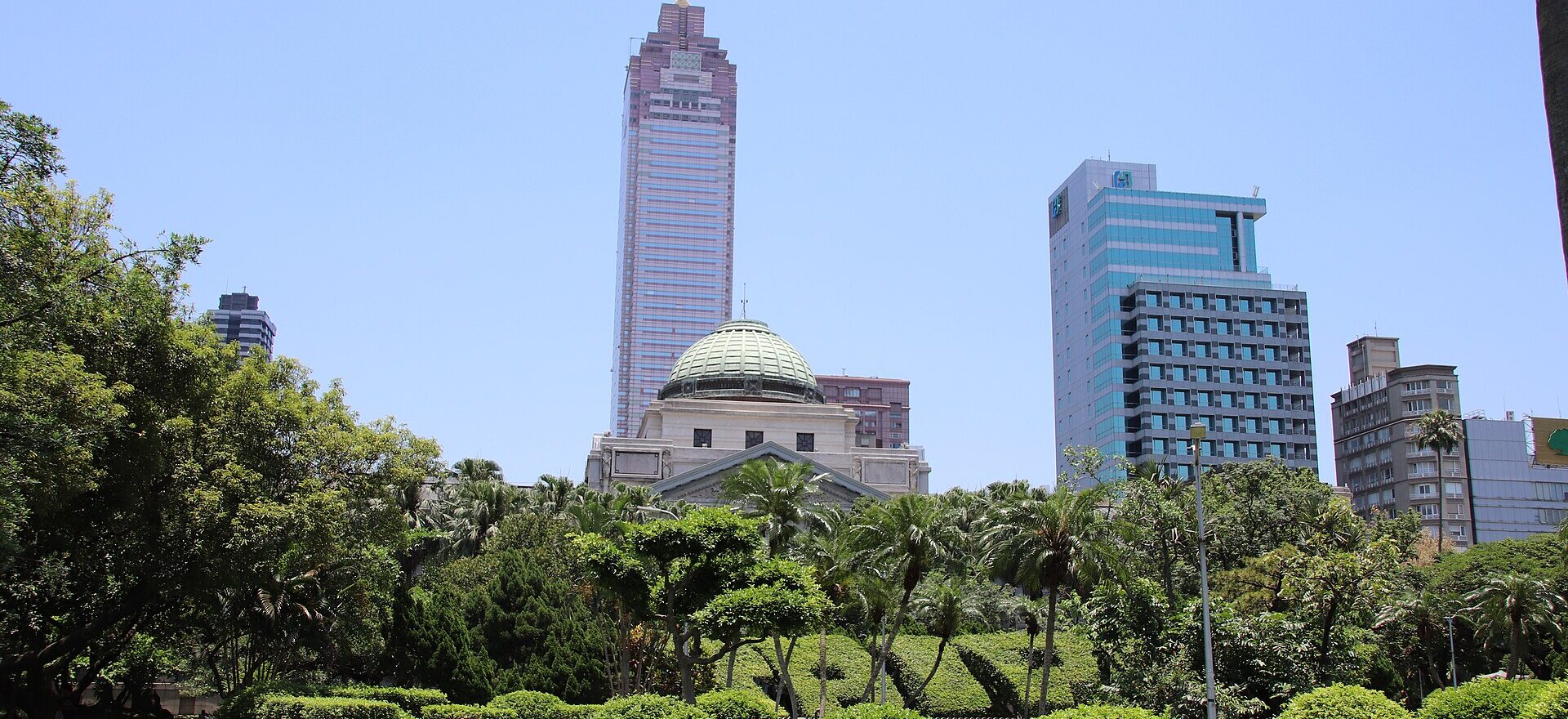
At the park’s northern entrance, facing Taipei Main Station down Guanqian Road, the domed, colonnaded National Taiwan Museum (國立臺灣博物館) is Taiwan’s oldest museum, founded in 1908; its present neoclassical building opened in 1915. Inside, beneath a stained-glass dome, are galleries on Taiwan’s natural history, its Indigenous peoples and its history, all well presented and rarely crowded.
The same ticket admits you to the museum’s Land Bank Exhibition Hall across the road, in a handsome 1930s bank building, where dinosaur skeletons tower over the old banking hall and the galleries cover Taiwan’s prehistoric wildlife and the story of life on earth. It is one of the best places in Taipei for children. Both are open from 09:30 to 17:00, Tuesday to Sunday, closed on Mondays and on Lunar New Year’s Eve and Day, and the combined ticket costs just NT$30. The museum’s website has current exhibitions and the museum’s other branches.
Taipei 228 Memorial Museum
Inside the park, the Taipei 228 Memorial Museum (臺北二二八紀念館) occupies the 1930s building of the Japanese-era Taipei broadcasting station — the station that protesters took over in 1947 to spread the news of the uprising across the island. Its exhibitions tell the story of the incident, the massacres that followed and the long silence of the martial-law decades, through documents, photographs and personal testimony. It is sobering and important, and the best single place to understand modern Taiwan. It is open from 10:00 to 17:00, closed on Mondays, and entry costs NT$20. A second, national 228 museum stands a short walk south on Nanhai Road.
Chiang Kai-shek Memorial Hall and Liberty Square
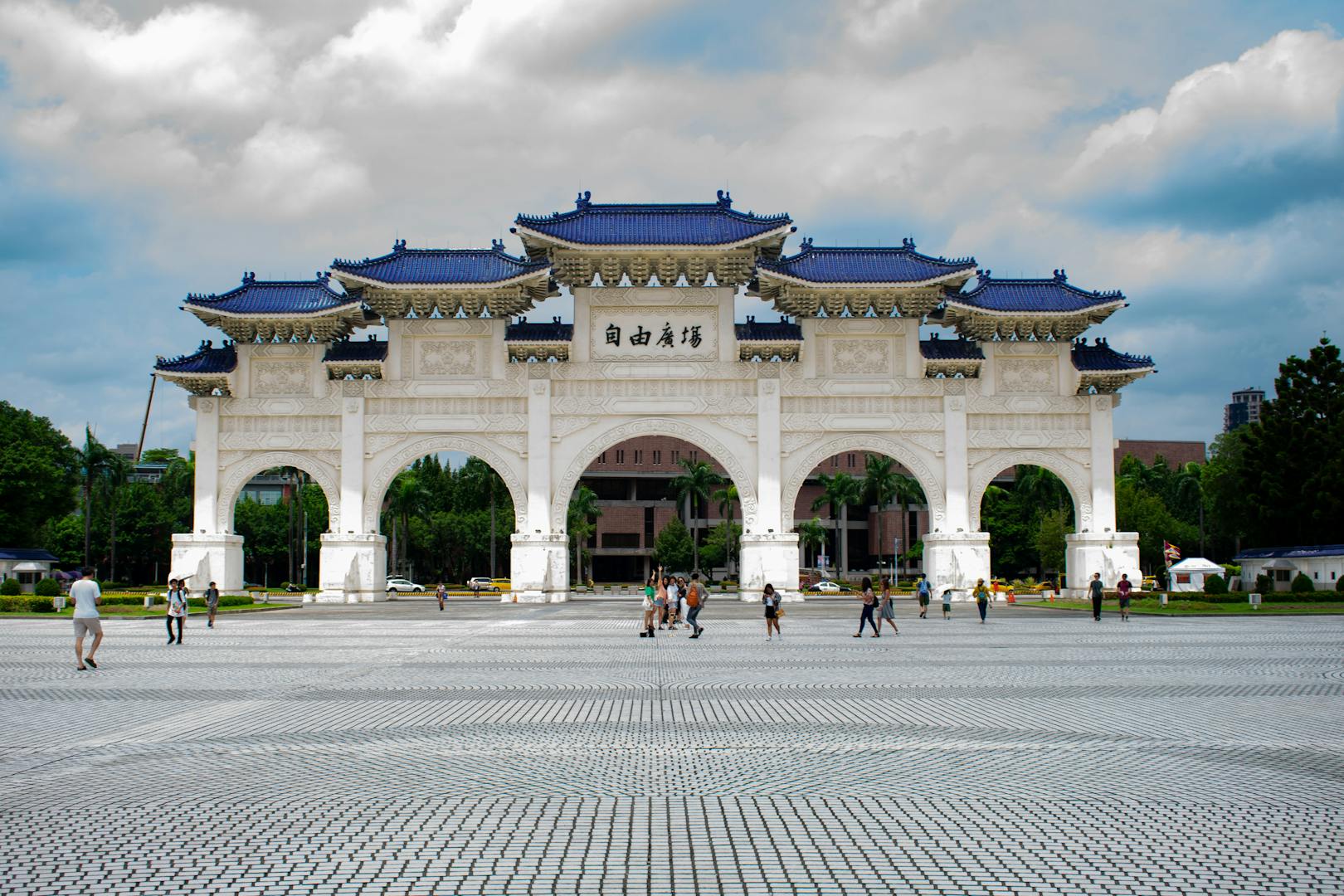
At the southern end of the government quarter, the white-and-blue Chiang Kai-shek Memorial Hall, completed in 1980, stands at the end of a vast plaza framed by the red-roofed National Theater and National Concert Hall and entered through a huge white gateway. The plaza was renamed Liberty Square in 2007, in memory of the protests held there. Inside the hall, a giant bronze statue of Chiang is watched over by an honour guard, and the hourly changing of the guard draws crowds; the lower floors hold exhibitions on Chiang’s life.
The memorial is free and impressive, and it is also one of the most argued-about places in Taiwan: many Taiwanese see it as a monument to a dictator, and what to do with it has been debated for years. Our dedicated guide covers the hall, the ceremony and the best times to visit. For a performance, check what is on at the theatre and concert hall, which host some of the best music and dance in the country.
The North Gate and the station quarter
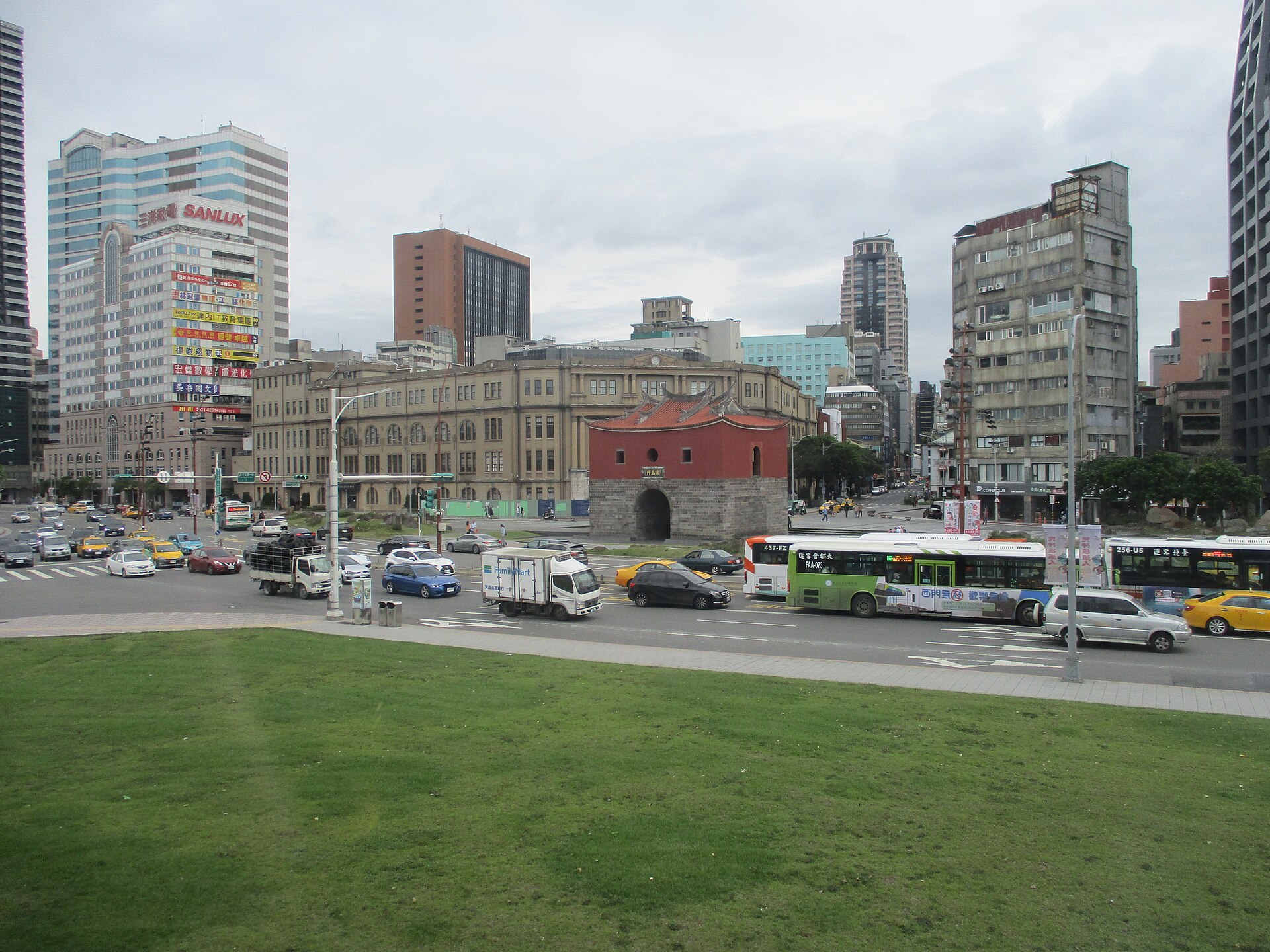
At the district’s north-western corner, the North Gate (北門, formally Chengen Gate) of 1884 is the only one of the city’s gates still in its original form: a squat, fortress-like tower of stone and brick with a single arch. For decades it was all but buried under an elevated road; the ramps were torn down in the mid-2010s, and the gate now stands in its own plaza, the best reminder anywhere of the walled city. Behind it are the stately Taipei Post Office building of the Japanese era and, a few steps away near Beimen station, the Railway Department Park, the restored headquarters of the colonial railways, now a branch of the National Taiwan Museum with exhibitions on the history of rail in Taiwan.
From the North Gate it is a short walk south-west to Zhongshan Hall (中山堂), the 1930s public hall where Japan’s surrender in Taiwan was signed in 1945, now a performance venue, and to Ximending beyond. North-west, across the district boundary, is Dadaocheng; our guide to Dadaocheng and Dihua Street picks up the walk there.
East of the gate, Taipei Main Station is the hub of the whole island’s transport, with the MRT, the Airport MRT, Taiwan Railway and the high speed rail meeting under one roof, and a warren of underground shopping streets stretching away from it in several directions. It is well worth knowing your way round before you arrive with luggage; see our guides to the MRT, getting from Taoyuan Airport and luggage storage. South of the station, Chongqing South Road was for decades the city’s great street of bookshops; most have closed or moved online, and only a handful remain among the hotels and banks.
Huashan 1914 Creative Park
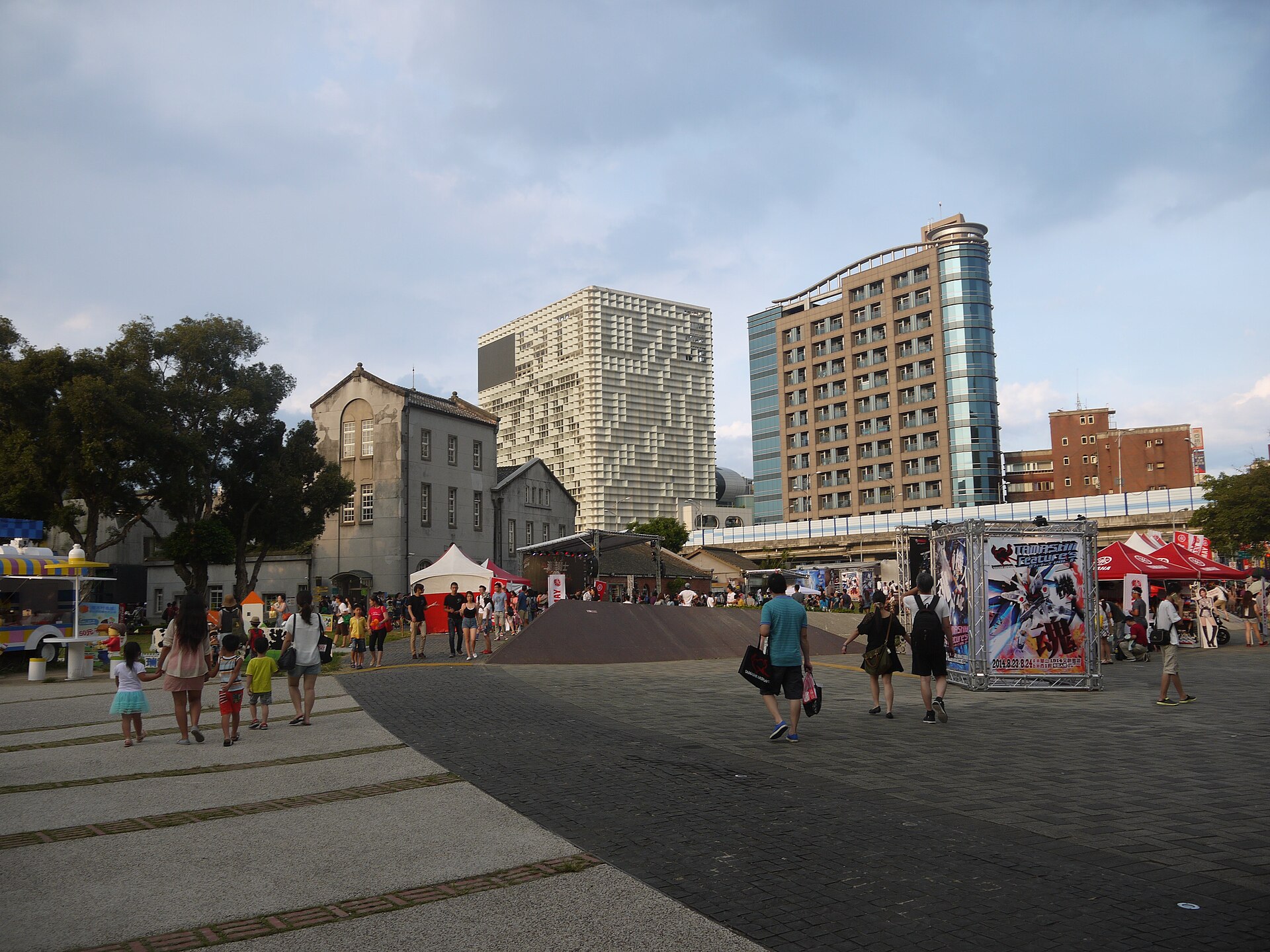
On the district’s eastern edge, a few minutes’ walk from Zhongxiao Xinsheng station — take Exit 1 and walk straight on to the Jinshan Road junction — Huashan 1914 Creative Park (華山1914文化創意產業園區) fills the red-brick halls of a factory built in 1914 as a Japanese sake plant and later run as the Taihoku Winery. After it closed, artists squatted in the buildings, and the government eventually turned it into a creative park. Today it holds exhibition halls, a cinema, live-music and performance spaces, design shops, cafés and restaurants, with a large lawn and plazas in between.
The park is free and open around the clock; the shops and restaurants close from about 21:00 to 22:00, and the exhibitions have their own tickets and hours. Weekends bring markets, street performers and crowds; weekdays are quiet. It is a good place to end a day in Zhongzheng with dinner and a drink, and it pairs naturally with the Songshan Cultural and Creative Park in Xinyi, its bigger sibling, if you like this kind of place.
The south of the district: markets, gardens and the river
- Nanmen Market (南門市場), on Roosevelt Road near CKS Memorial Hall station, is the city’s most famous traditional market for dried goods, braised and cured meats, Chinese sausages, cakes and ready-made dishes from every corner of China and Taiwan, and the place Taipei shops for festival banquets. It has moved into a new building on its original site.
- Nanmen Park (南門園區), a branch of the National Taiwan Museum in the red-brick buildings of the old Japanese camphor refinery, tells the story of camphor, once one of Taiwan’s most valuable exports, in a quiet garden setting.
- Taipei Botanical Garden (臺北植物園), near Xiaonanmen station, was founded under Japanese rule more than a century ago and has a large lotus pond that is glorious in summer. It is free. The National Museum of History, on the pond’s edge, spent years closed for a major renovation; check its current status before you go.
- Nanjichang Night Market, in the south-west of the district, is a neighbourhood night market with a strong local following and excellent food.
- Kishu An Forest of Literature (紀州庵文學森林), near Guting by the Xindian River, is a surviving wing of a Japanese-era riverside restaurant turned into a centre for Taiwanese literature, with a café and a garden; check opening days before visiting.
- At the southern tip of the district, Treasure Hill Artist Village and the Taipei Water Park are part of the Gongguan neighbourhood; see our Gongguan guide.
A walk through the Japanese-era capital
If you like architecture, Zhongzheng has the finest collection of colonial buildings in Taiwan, and they join up into an easy walk of an hour or so from NTU Hospital station:
- The National Taiwan Museum (1915) and, across the road, the Land Bank Exhibition Hall in its 1930s bank building.
- The old west wing of NTU Hospital, a long red-brick range with arcaded verandas on the western edge of 228 Peace Park.
- The Taipei Guest House, the Governor-General’s former residence, behind its railings at the head of Ketagalan Boulevard.
- The Presidential Office Building (1919), best seen from the far end of the boulevard, where its tower lines up with the avenue.
- The Judicial Yuan, a 1930s court building with a tiled tower, on Chongqing South Road.
- The Taipei Post Office and the North Gate, at the top of Bo’ai Road.
- The Railway Department Park and, a short walk south-west, Zhongshan Hall.
Most of these are working government buildings that you admire from the street; the museums, the Railway Department Park and, on its open days, the Taipei Guest House let you inside. Our guide to Taipei culture puts the colonial era in context.
Zhongzheng through the year
- New Year’s Day. Crowds gather before dawn in front of the Presidential Office for the flag-raising ceremony that opens the year, and the building opens for visitors later in the day.
- 28 February. Peace Memorial Day, a national holiday, is marked with memorial ceremonies in 228 Peace Park. It is a moving time to visit the park and its museum.
- Lunar New Year. Nanmen Market is at its busiest in the weeks before, as the city shops for banquets; the national museums close on New Year’s Eve and New Year’s Day.
- Summer. The Botanical Garden’s lotus pond is in flower, and the museums, the station’s underground malls and the concert halls are welcome refuges from the heat.
- 10 October. National Day is celebrated with a ceremony and parade on Ketagalan Boulevard in front of the Presidential Office, and the building holds an open house. Expect road closures and heavy security around the government quarter.
- Autumn and winter. The best weather for walking the district, and the main season for concerts and performances at the National Theater and Concert Hall.
Where to eat in Zhongzheng
- Taipei Main Station has food courts in the basement and on the upper floors, from Taiwanese rice dishes to Japanese curry, handy between sights or trains.
- Beef noodles — Liu Shandong (劉山東牛肉麵), in an alley near Taipei Main Station, is one of the city’s most loved beef noodle shops; see our beef noodle soup guide.
- Soup dumplings — Hang Zhou Xiao Long Bao (杭州小籠湯包), near the Chiang Kai-shek Memorial Hall, is a popular, cheaper alternative to Din Tai Fung; our xiaolongbao guide has details.
- Nanmen Market for a market lunch and snacks, and Nanjichang Night Market for dinner.
- Huashan 1914 for cafés, craft beer and restaurants in the old factory halls in the evening.
- Yongkang Street, fifteen minutes’ walk east of the memorial hall, for the city’s most famous food street; see our Yongkang Street guide.
A day in Zhongzheng
This route suits a Tuesday to Friday, when the Presidential Office is open for tours and the museums are open too.
- 08:45 — Presidential Office Building. Queue with your passport for a morning tour.
- 10:30 — Ketagalan Boulevard and the Japanese-era buildings around it, then into 228 Peace Park.
- 11:00 — Taipei 228 Memorial Museum. Allow an hour.
- 12:15 — Lunch: beef noodles near Taipei Main Station, or the station’s food courts.
- 13:30 — National Taiwan Museum and the Land Bank Exhibition Hall.
- 15:30 — Chiang Kai-shek Memorial Hall and Liberty Square, timed for a changing of the guard.
- 17:00 — Nanmen Market (if you are early enough) or a walk east to Yongkang Street.
- Evening — Huashan 1914 for dinner and a drink, or Nanjichang Night Market.
If you have less time, the Presidential Office, 228 Peace Park and the memorial hall make a very good morning, and they are all within fifteen minutes’ walk of each other.
Practical tips
- Mondays. The National Taiwan Museum, the Land Bank Exhibition Hall and the 228 Memorial Museum are closed — but Monday is a fine day for the Presidential Office tour, the memorial hall and Huashan.
- Bring your passport for the Presidential Office. Security checks are thorough; leave large bags at your hotel.
- Demonstrations. Ketagalan Boulevard and the streets round the Legislative Yuan are Taiwan’s protest venue of choice. Demonstrations are almost always peaceful, but they can close roads; watch, if you like, from a respectful distance.
- Heat and rain. Liberty Square and Ketagalan Boulevard are huge and shadeless. In summer, do the open spaces early and the museums in the afternoon heat; on wet days the museums and Taipei Main Station’s underground malls keep you dry. See our rainy day activities guide.
- Accessibility. The MRT stations are step-free, the Presidential Office has ramps and lifts, and the memorial hall and museums have accessible entrances; the older museum buildings have some steps. See our accessible Taipei guide.
- With children. The Land Bank Exhibition Hall’s dinosaurs, the changing of the guard and the park’s ponds are sure-fire hits. See our guide to Taipei with kids.
What we would skip
Treating the memorial hall as the whole district. Most visitors see the guard change and leave. The Presidential Office, the 228 museum and the National Taiwan Museum tell you far more about Taiwan, and they are ten minutes’ walk away.
Liberty Square at midday in summer. It is a vast, shadeless expanse of paving. Come in the morning or late afternoon.
Chongqing South Road for books. The book street is mostly a memory. For bookshops, try an Eslite branch or the second-hand shops of Gongguan.
The underground malls, unless you are hunting for something specific. They are useful for staying dry and fun for anime and game fans, but they are mazes of chain stores, and it is easy to lose half an hour finding the right exit.
Missing the Presidential Office tour by arriving at noon or at the weekend. Weekday mornings only, passport in hand.
Related Taipei guides
- Taipei Neighbourhoods: A District-by-District Guide
- Chiang Kai-shek Memorial Hall
- Nanjichang Night Market
- Gongguan Guide
- Dadaocheng and Dihua Street
- Wanhua District Guide
- Yongkang Street Guide
- Taipei Culture
- Taipei MRT Guide
- Free Things to Do in Taipei
- Things to Do in Taipei
Frequently Asked Questions
What is there to see in Zhongzheng District?
The Presidential Office Building, 228 Peace Park with the National Taiwan Museum and the Taipei 228 Memorial Museum, the Chiang Kai-shek Memorial Hall and Liberty Square, the North Gate, Huashan 1914 Creative Park, Nanmen Market, the Taipei Botanical Garden and Nanjichang Night Market.
Can tourists visit the Presidential Office Building in Taipei?
Yes. Free tours run on weekdays from 09:00 to 12:00, with last admission at 11:30. Individuals do not need to book; bring your passport and queue at the visitors’ entrance. The building also opens on special days such as National Day and New Year’s Day.
Do I need my passport to visit the Presidential Office?
Yes. Foreign visitors must show a passport to register and pass the security check.
How much does the National Taiwan Museum cost?
NT$30 for adults and NT$15 for concessions, and the same ticket admits you to the Land Bank Exhibition Hall across the road. Both are open 09:30–17:00, Tuesday to Sunday.
What is the 228 Incident?
An uprising that began in Taipei on 27–28 February 1947 after officials beat a cigarette seller, and was crushed by the Nationalist government with the killing of many thousands of people across Taiwan. It was followed by decades of martial law. The Taipei 228 Memorial Museum in 228 Peace Park tells the story.
Is the Taipei 228 Memorial Museum worth visiting?
Yes. It is small, inexpensive at NT$20, and the best place to understand how modern Taiwan was shaped. Allow about an hour. It is open 10:00–17:00 and closed on Mondays.
Why is it called Zhongzheng District?
It is named after Chiang Kai-shek, whose formal name was Chiang Chung-cheng (Zhongzheng). The district was created in 1990 by merging two older districts that covered the old walled city and the area to its south.
Is the North Gate the original city gate?
Yes. Built in 1884, the North Gate (Chengen Gate) is the only one of Taipei’s city gates still in its original form. The others survive in altered or rebuilt forms.
What is Huashan 1914 Creative Park?
A former sake plant and winery, built in 1914, turned into a creative park of exhibition halls, performance spaces, design shops, cafés and restaurants. It is free, open around the clock, and a few minutes’ walk from Zhongxiao Xinsheng station, Exit 1.
Is Taipei Main Station in Zhongzheng District?
Yes. Taipei Main Station, where the MRT, the Airport MRT, Taiwan Railway and the high speed rail meet, is at the northern edge of Zhongzheng District.
How long should I spend in Zhongzheng?
A full day covers the Presidential Office, 228 Peace Park and its museums and the memorial hall at a comfortable pace. If you only have a morning, prioritise the Presidential Office tour, the 228 Memorial Museum and Liberty Square.
Is Zhongzheng a good place to stay?
It is very convenient, especially around Taipei Main Station, for airport and rail connections. It is quieter in the evenings than Ximending or Zhongshan. Our guide to where to stay in Taipei compares the areas.
The Bottom Line
Zhongzheng is where Taiwan’s modern story is written in stone. Tour the Presidential Office on a weekday morning, walk through 228 Peace Park to the museum under the dome and the memorial to 1947, stand in Liberty Square where students changed the country in 1990, and finish with the North Gate, the last of the walled city, or an evening at Huashan 1914. Add the markets and gardens of the south if you have time.
Give it a full day rather than a photo stop at the memorial hall, come on a weekday, and bring your passport. Few capitals let you walk this close to their history — and their government — in a single morning.
Photo Credits
The National Taiwan Museum with the Shin Kong Life Tower behind: National Taiwan Museum, Shin Kong Life Tower & Fubon Chengzhong Building 20190615 by Gary Todd, Public domain, via Wikimedia Commons.
The North Gate in the early twentieth century: Beimen the North Gate of Taipei City, photographer unknown, Public domain, via Wikimedia Commons.
The North Gate today: From Hongqi Building to Taipei Commerce Building 20201024 by T Gordon Cheng, CC BY-SA 4.0, via Wikimedia Commons.
Huashan 1914 Creative Park: Huashan 1914, Syntrend and Jinshan e01 20140823 by Chi-Hung Lin, CC BY-SA 3.0, via Wikimedia Commons.