This article contains advertising. Our booking links are routed through a partner that adds commission tracking automatically, so if you book through one we earn a commission from the provider, at no extra cost to you. It never affects what we recommend. Affiliate disclosure
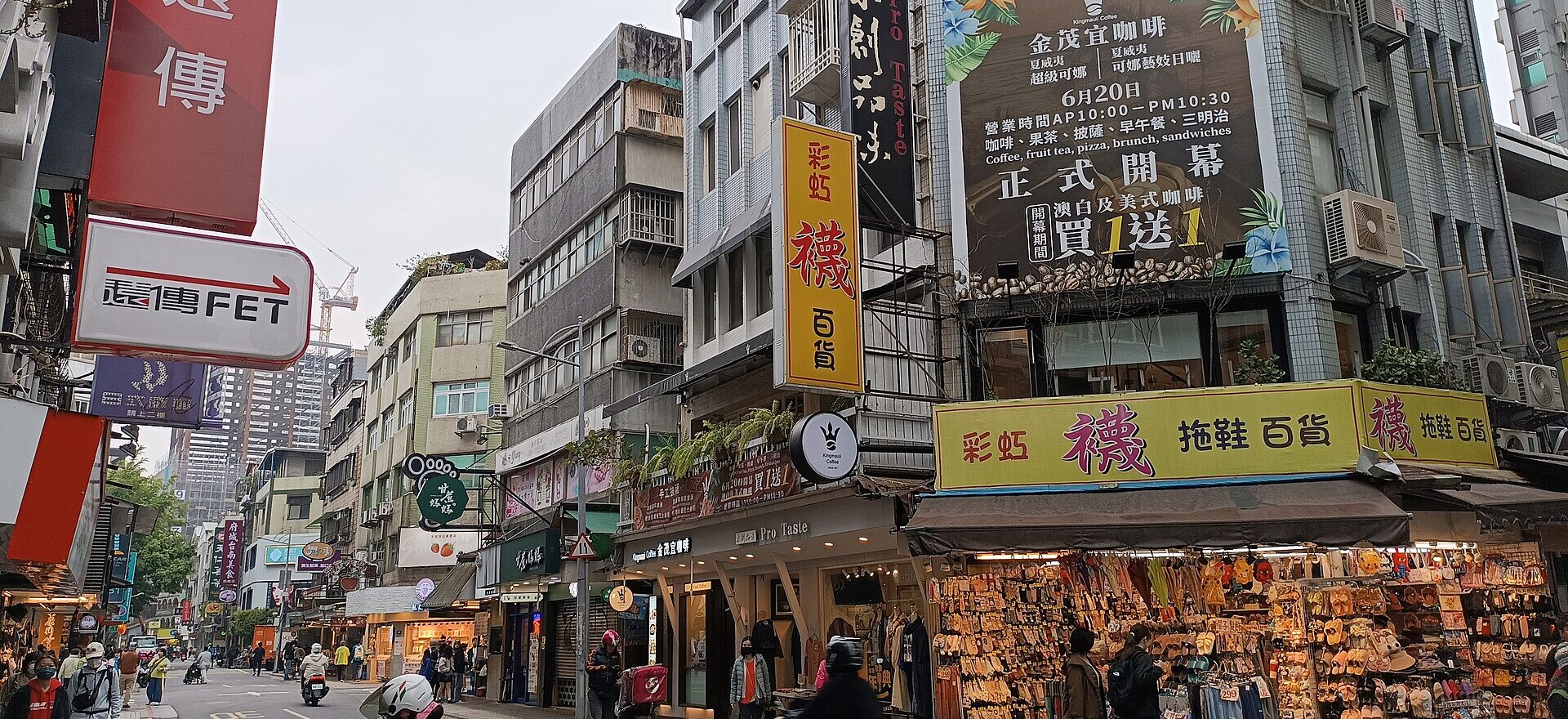
Come up out of Dongmen station’s Exit 5 at half past eleven and you are straight into it. On Xinyi Road a crowd is already waiting outside Din Tai Fung with numbered tickets in their hands; round the corner, a line has formed at a hatch in a narrow lane where a man is slapping coils of dough onto a griddle and scraping them into flaky, oily, scallion-scented rags; a little further on, people are photographing towers of mango shaved ice before they collapse. Walk five minutes more, into the lanes behind, and it all goes quiet: Japanese-era wooden houses behind garden walls, a tea house where democracy activists once met, cafés with a single long table. That combination — the famous names, the everyday lanes, and the fact that you can walk all of it in an afternoon — is what makes Yongkang Street Taipei‘s best food street, even if it is not always the place its reputation suggests.
This guide covers the street and the neighbourhood around it: how it is laid out, why the food here tastes the way it does, the famous names and our honest verdict on each, the lanes and tea houses beyond the main strip, Dongmen Market, how to eat it without queuing all day, and a walk that joins it to the rest of Da’an. Prices were checked in September 2026; treat them as the right order of magnitude, because they move. For how Yongkang fits into the city, see our overview of Taipei neighbourhoods; for the district as a whole, our Da’an district guide.
Yongkang Street at a glance
| The short version | |
|---|---|
| Where | Da’an District, running south from Xinyi Road beside Dongmen station |
| Nearest MRT | Dongmen (Red and Orange lines), Exit 5 — the street starts right outside |
| Time needed | Two to three hours for lunch and a wander; half a day with the lanes, a tea house and Dongmen Market |
| Best times | Weekday mornings and mid-afternoons; avoid weekend lunchtimes if you hate queues |
| Budget | Snacks from NT$40; a full meal NT$250–700 a head; tea houses and cafés extra |
| Do not miss | Xiaolongbao, a scallion pancake, mango shaved ice in season, a pot of tea in the lanes |
What things cost
| Item | Typical cost (September 2026) |
|---|---|
| Scallion pancake from a hatch | Roughly NT$40–70, depending on fillings |
| A regular bowl of beef noodle soup | Roughly NT$170–250 |
| A basket of xiaolongbao at Din Tai Fung | A few hundred NT$; a full meal for two with sides runs to around NT$1,000 |
| Mango shaved ice | Roughly NT$200–300 for a portion that feeds two |
| Coffee in an independent café | Roughly NT$150–280 |
| A tea house session | Roughly NT$200–500 a person, depending on the tea |
| MRT to Dongmen from central Taipei | From NT$20 with an EasyCard |
How the neighbourhood works
Yongkang Street itself is short — about half a kilometre — and runs south from Xinyi Road, past the little Yongkang Park with its old trees and benches, into a grid of quieter residential streets. The famous names cluster at the northern end, near the MRT: Din Tai Fung on Xinyi Road, the scallion pancake hatch in Lane 6, the mango ice shops and a run of dumpling houses, tea shops and souvenir stores. Beef noodles are one street west, in a lane off Jinshan South Road.
The further south you walk, the more residential it becomes, and the more interesting. Around Yongkang Park and beyond, the neighbouring streets — Lishui Street, Jinhua Street, Qingtian Street and the lanes around them — hold cafés, small restaurants, design and ceramics shops, tea houses and some of the best-preserved Japanese-era houses in the city. North across Xinyi Road is Dongmen Market, a long-established traditional market, and west is the vast plaza of the Chiang Kai-shek Memorial Hall, a fifteen-minute walk away.
Why the food here tastes the way it does
The flavours of Yongkang Street are a history lesson. In the Japanese era this was a residential quarter for colonial officials and professors of the imperial university, which is why its lanes are full of wooden houses. After 1949, many of the officials, soldiers and families who came across from the mainland with the Nationalist government settled in these houses and the apartment blocks that went up around them. They brought their home cooking with them: Shanghainese and Zhejiang dumplings and buns, Sichuan-style spicy braises, northern noodles and pancakes, and it blended over the decades with Taiwanese food into what Taipei now thinks of as its own.
That is why a street in the middle of Taipei is famous for soup dumplings, Sichuan-style beef noodles and Tianjin-style scallion pancakes, and why its two most famous businesses were founded by mainland families. Din Tai Fung started on Xinyi Road; Yong Kang Beef Noodles has been in its lane since the 1960s. Later, in the 1990s, mango shaved ice turned the street into a destination for a new generation, and the cafés, tea houses and design shops followed. Our Taipei food guide tells the wider story of how the city’s cuisine came together.
The famous names, and our honest verdicts
Din Tai Fung, Xinyi Road
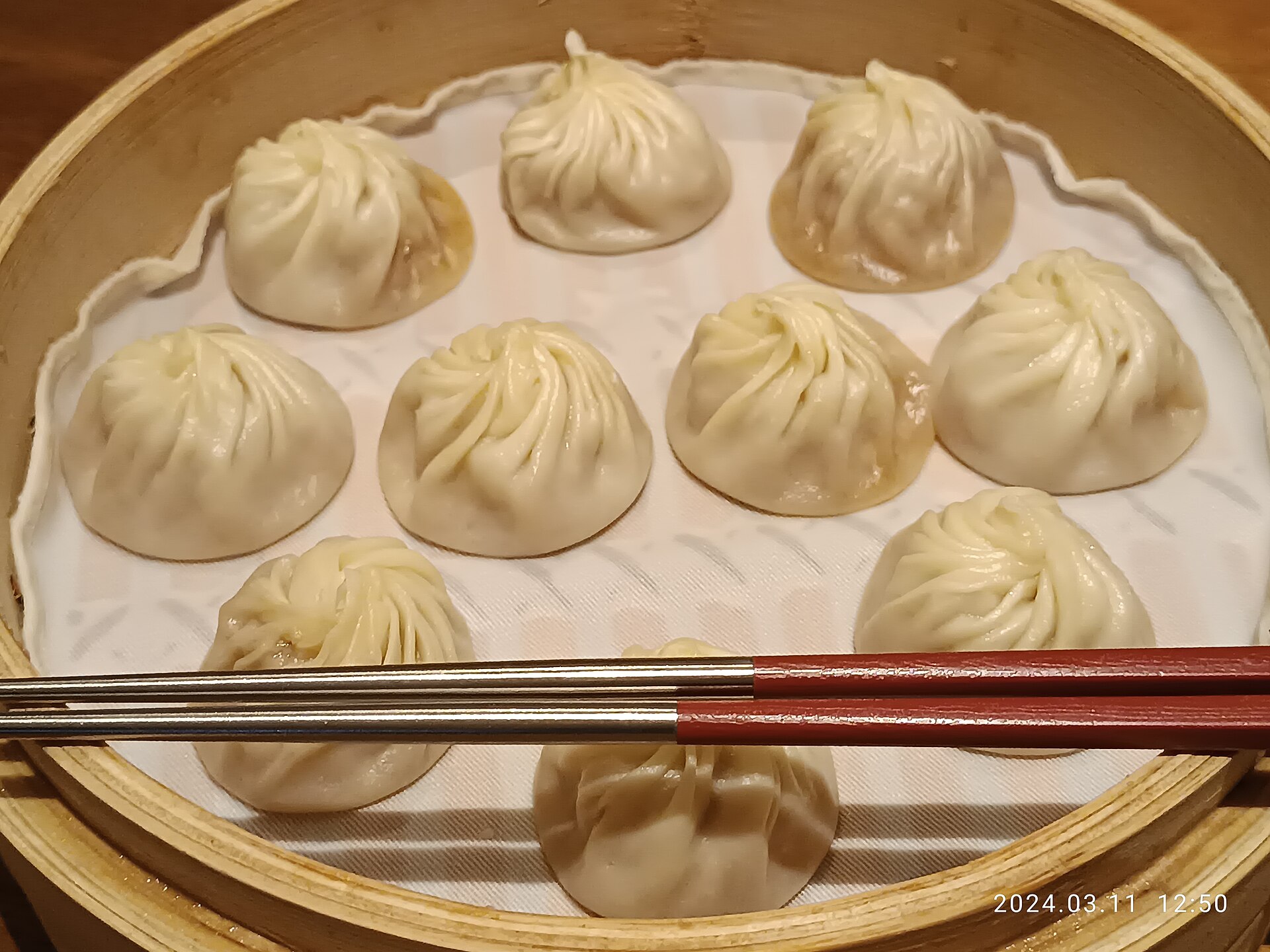
The world’s most famous dumpling house began here. Din Tai Fung (鼎泰豐) started as a cooking-oil business — sources give dates from 1949 — and switched to xiaolongbao in 1972, in a shop on Xinyi Road at the top of Yongkang Street. It now has branches across Asia, America and Europe, but the Xinyi Road address is still the one people make pilgrimages to. The original shopfront is now takeaway only; in 2020 the dine-in restaurant moved across the street into a four-floor building with about 330 seats. It is listed in the Michelin Guide, and it is a two-minute walk from Dongmen station, Exit 5.
Is it worth the queue? Yes, once. The xiaolongbao really are excellent — thin skins, precise pleats, a mouthful of clean, hot broth — the service is slick and the open kitchen, where rows of cooks weigh and fold every dumpling, is worth watching. The system is simple: take a numbered ticket at the door, check the estimated wait on the screen, and wander off to explore while you wait, returning when your number is close. At weekend lunchtimes the wait can run past an hour; on a weekday afternoon it can be ten minutes. Order the classic pork xiaolongbao, the shrimp and pork dumplings, the fried rice and some greens, and save the fancier variants for a second visit. Our xiaolongbao guide covers the other branches and the best alternatives.
Yong Kang Beef Noodles
In a lane off Jinshan South Road, a street west of Yongkang Street, Yong Kang Beef Noodles (永康牛肉麵) has been serving its Sichuan-style red-braised beef noodle soup since 1963: a dark, spicy, rich broth, falling-apart chunks of beef shank, thick noodles and a bowl of pickled greens on the table. It is the most famous beef noodle shop in Taipei and it has the queue to prove it. Our verdict, in line with our beef noodle soup guide, is that it is very good and slightly overrated: if you are already here, eat it; if you are crossing the city for a bowl, locals would send you elsewhere.
Tianjin scallion pancakes
In Lane 6 of Yongkang Street, a hatch in the wall sells Tianjin-style scallion pancakes (天津蔥抓餅): coils of dough griddled until crisp outside and soft inside, then pulled apart with spatulas so they fall into flaky shreds, with an egg, cheese, basil or ham if you want, and a brush of sweet or spicy sauce. The queue looks long but moves quickly. At roughly NT$40–70 it is the best-value mouthful on the street, and the ideal thing to eat while you wait for a table at Din Tai Fung.
Mango shaved ice at Smoothie House
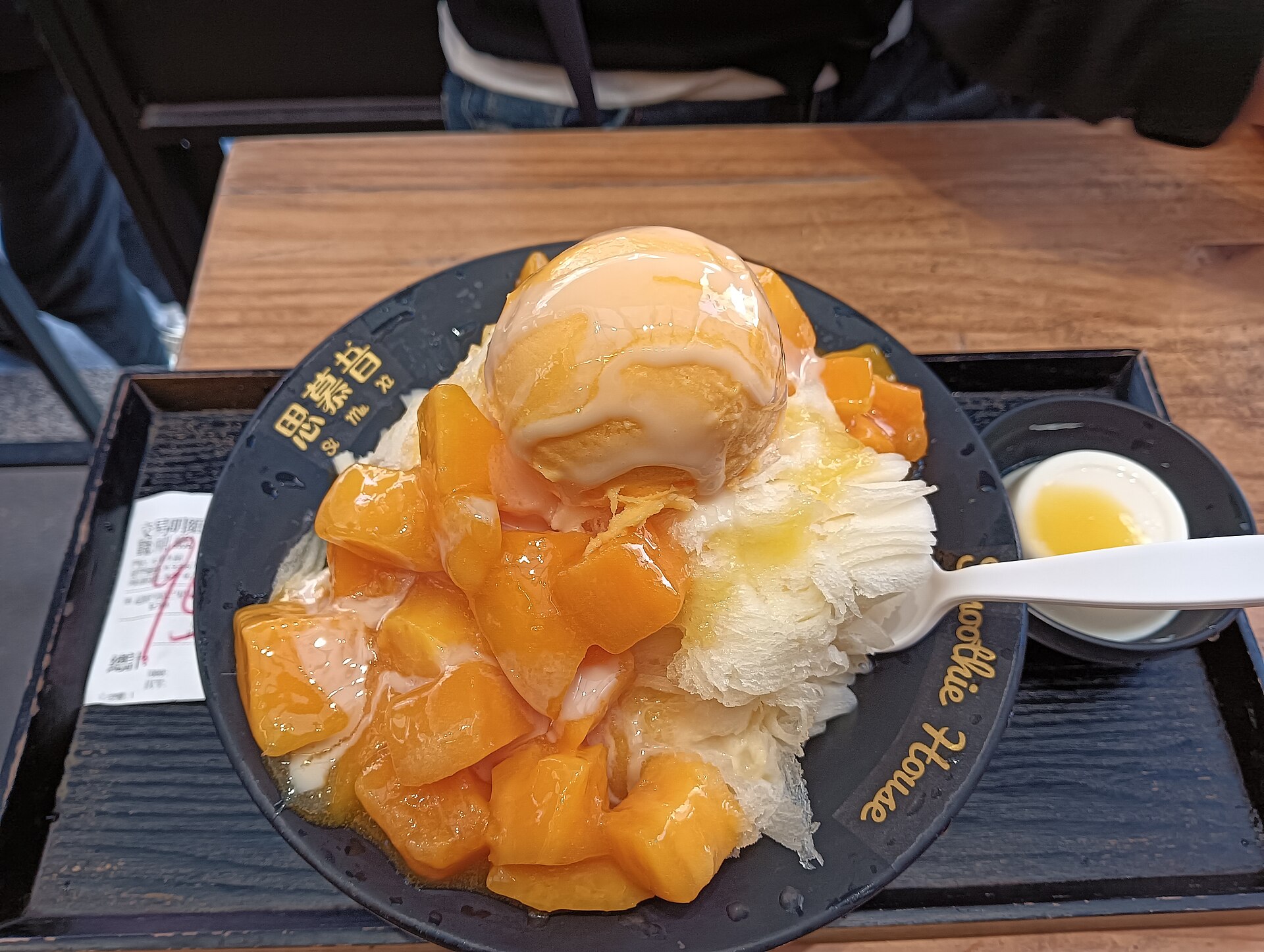
The dessert that turned Yongkang Street into a destination in the 1990s is still here. Smoothie House (思慕昔) is the best-known mango ice shop on the street: a mountain of finely shaved milk ice, piled with fresh mango, mango sauce and, if you like, a scoop of mango ice cream and a pour of condensed milk. A portion easily feeds two. It is at its best from May to September, when Taiwan’s own Irwin mangoes are in season; outside those months the fruit is frozen, and it is good rather than wonderful. (It is Smoothie House, by the way, and has nothing to do with the American chain Smoothie King.) Our guide to Taipei in summer has more on mango season.
Other names worth knowing
- Kao Chi (高記) — an old Shanghainese restaurant in the area, known for its pan-fried buns with crisp bottoms and an old-fashioned style of xiaolongbao. Roomier than Din Tai Fung and good for families.
- Du Hsiao Yueh (度小月) — the famous Tainan danzai noodle house has a branch on the street: small bowls of noodles with a pork and shrimp sauce, a taste of southern Taiwan.
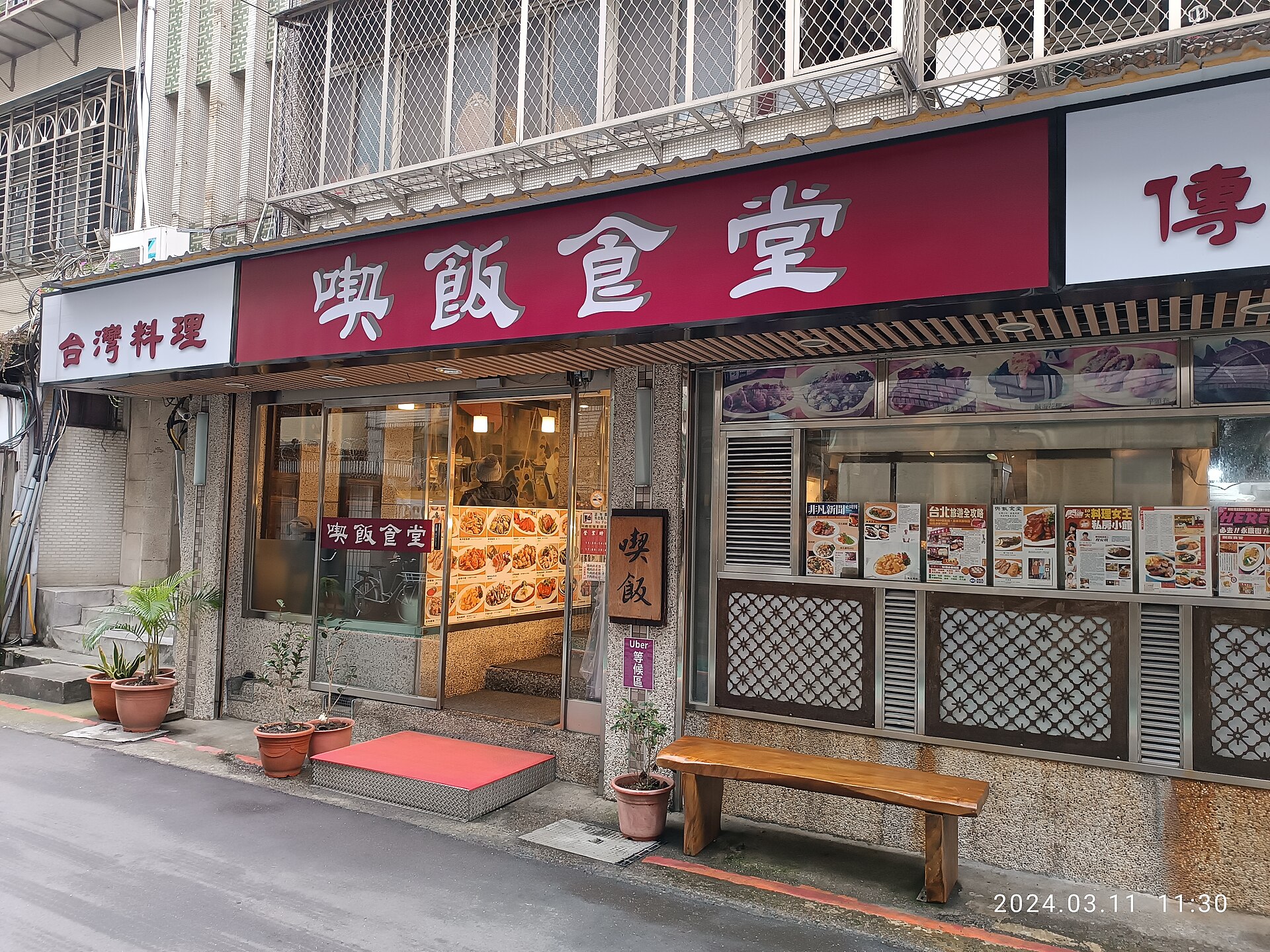
- Taiwanese home-cooking restaurants — the side streets have several small places serving three-cup chicken, braised pork, stir-fried greens and set lunches for a fraction of the famous names’ prices, with no queue.
- Dumpling and noodle shops — every few doors, all day. You will not go hungry.
Several places in the area have been picked by Michelin over the years; our guide to Michelin restaurants in Taipei has the current selection.
Beyond the main street: tea, lanes and old houses
Most visitors eat on the first two hundred metres of Yongkang Street and leave. The neighbourhood’s quieter pleasures are a few minutes’ walk further on.
Tea houses and tea shops
The area around Yongkang Street is the easiest place in Taipei to buy tea and learn about it. The shops here are used to visitors, happy to brew samples, and sell everything from everyday high-mountain oolong to aged teas and teaware; our guide to buying tea in Taipei explains what to look for.
For the full experience, sit down in a tea house. The most famous is Wisteria Tea House (紫藤廬), in a Japanese-era wooden house on Xinsheng South Road a short walk from Yongkang Park, where writers, artists and democracy activists met in the martial-law decades and where parts of Ang Lee’s film Eat Drink Man Woman were shot. It is now a protected historic building and still a tea house, with rooms looking onto the wisteria in the garden. Hours have changed in recent years, so check before you go.
Qingtian Street and its Japanese houses
South of Yongkang Park, Qingtian Street (青田街) and its lanes are lined with the tree-shaded wooden houses that the Japanese built for professors of Taihoku Imperial University, today’s National Taiwan University. Many are hidden behind walls and gates, and some are private, but several have been restored. The best known is Qingtian 76 (青田七六), a house built in 1931 for a Japanese professor and later the home of the geologist Ma Ting-ying, now a restaurant and cultural space. It serves lunch (11:30–14:00), afternoon tea (14:30–17:00) and dinner (17:30–21:00), closes on the first Monday of each month, and offers free guided tours of the house that must be booked well in advance; the Qingtian 76 website has the details. Take off your shoes at the door, and wear socks.
Cafés and design shops
The lanes around Lishui Street, Jinhua Street and Qingtian Street are dense with independent cafés, from Japanese-minimalist espresso bars to cosy places with sofas and cats, and with small shops selling Taiwanese ceramics, textiles, stationery and clothes. It is one of the best parts of the city for an afternoon of browsing; see our guides to the best cafés in Taipei and Taiwanese designer shops.
Dongmen Market
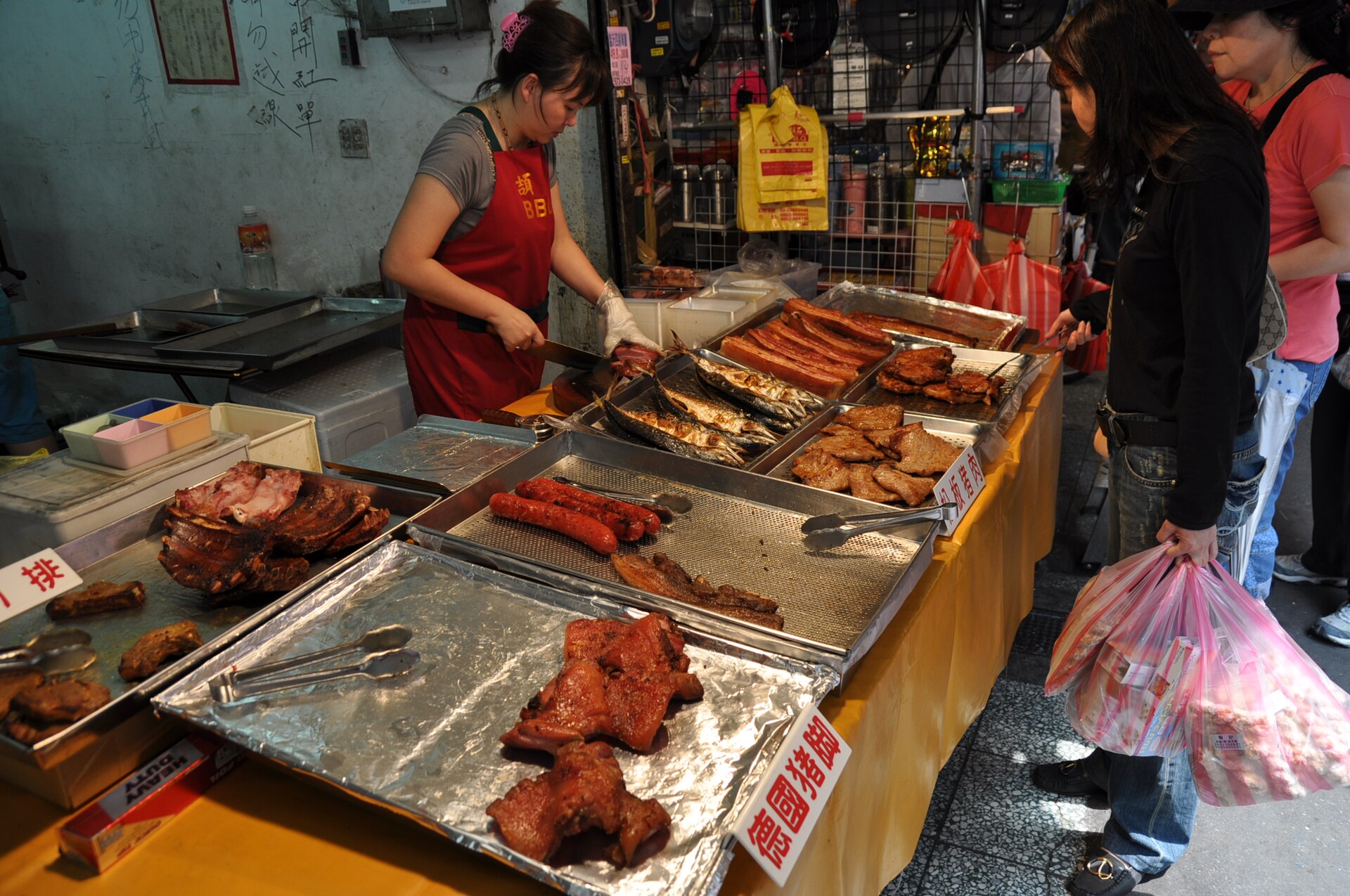
Across Xinyi Road from Yongkang Street, Dongmen Market (東門市場) is a traditional morning market, open roughly from 07:00 until early afternoon, in a maze of covered alleys just north of Xinyi Road. It sells fresh produce, meat and fish, but it is also a treasure house of ready-made food reflecting the neighbourhood’s mainland roots: steamed buns and dumplings, sticky rice, braised and roast meats, pickles, cakes and old-fashioned sweets, alongside Taiwanese breakfast stalls. Go before 10:00 for the full bustle, bring cash and small notes, and eat as you walk. If you like markets, it is one of the best in central Taipei.
How to eat Yongkang Street without queuing all day
- Go on a weekday. Weekend lunchtimes are when the queues are at their worst and the pavements are packed.
- Beat the lunch rush, or skip it. Arrive before 11:30, or come between about 14:00 and 17:00, when the queues shrink.
- Take a Din Tai Fung ticket first. Get your number as soon as you arrive, then graze and explore while you wait.
- Graze, do not feast. Share everything. A scallion pancake, a basket of dumplings, half a bowl of noodles and a shared mango ice is plenty for two.
- End with tea. A tea house or café in the lanes is the right way to digest.
- Carry cash. Din Tai Fung and the cafés take cards; the hatches, stalls and market do not.
If you would rather have someone else plan it, several companies run walking food tours of Yongkang Street and Dongmen; see our guide to Taipei food tours.
What to order where: a cheat sheet
| Place | Order | Notes |
|---|---|---|
| Din Tai Fung | Pork xiaolongbao, shrimp and pork dumplings, egg fried rice, garlic greens | Take a queue ticket first; a meal for two with sides is roughly NT$700–1,200 |
| Yong Kang Beef Noodles | Red-braised beef noodle soup; ask for half tendon, half beef (半筋半肉) if you like texture | Spicy; the pickled greens on the table are free |
| Tianjin scallion pancake | With egg, plus basil or cheese | Choose sweet or spicy sauce; eat it hot |
| Smoothie House | Fresh mango shaved ice | Share one between two; best May–September |
| Kao Chi | Pan-fried buns with crisp bottoms, xiaolongbao | More space than Din Tai Fung; good with children |
| Du Hsiao Yueh | Danzai noodles | The bowls are small — order two, or add a side |
| Dongmen Market | Steamed buns, sticky rice, braised and roast meats | Mornings only; cash and small notes |
| A tea house | High-mountain oolong or Oriental Beauty | Roughly NT$200–500 a person; staff will show you how to brew |
Ordering and etiquette in the small shops
The famous places have English menus and staff used to visitors. The small ones often do not, and they work in a particular way that is easy once you know it.
- Tick-box menus. Many noodle and dumpling shops hand you a paper order sheet listing the dishes in Chinese, with a column for quantities. Write the number you want next to each dish and hand it to the staff. If you cannot read it, point at other tables or at the photos on the wall, and hold up fingers for the number.
- Sharing tables. At busy times you may be seated with strangers. It is normal; nod, sit and eat. Do not linger over an empty bowl when there is a queue.
- Condiments. Help yourself. Black vinegar and shredded ginger go with xiaolongbao; chilli oil and pickled mustard greens with beef noodles.
- Paying. In small shops you usually pay at the counter when you order or when you leave, in cash. There is no tipping; see our guide to tipping in Taipei.
- Takeaway. Eating on the go is completely normal here. Public bins are scarce in Taipei, so carry a small bag for your rubbish.
- Queues. Taipei queues politely and patiently. Join the end, and do not hold a place for a group that has not arrived.
Evenings on Yongkang Street
After the lunchtime crush, the street is at its calmest in the early evening. Most of the famous names stay open for dinner, the queues are usually shorter than at lunch, and the side-street restaurants fill with locals rather than tour groups. A couple of bars and craft beer places have opened in the neighbourhood, but this is not a nightlife district: by about 21:30 most kitchens are winding down and the tea houses have closed. For a later night, head to the East District or Xinyi; for a late snack, Shida Night Market is twenty minutes’ walk south.
A half-day food walk
- 09:00 — Dongmen Market for a market breakfast: buns, sticky rice or soy milk.
- 10:30 — Yongkang Street: browse the tea shops and take a Din Tai Fung ticket.
- 11:00 — A scallion pancake from the Lane 6 hatch while you wait.
- 11:30 — Din Tai Fung for xiaolongbao.
- 12:45 — Mango ice at Smoothie House, in season.
- 13:30 — Walk south through Yongkang Park to Qingtian Street and its Japanese houses.
- 14:30 — Tea at Wisteria Tea House or one of the neighbourhood tea houses.
From here, Daan Forest Park is ten to fifteen minutes’ walk east, the National Taiwan University campus and Gongguan are about twenty-five minutes south, and Shida Night Market is on the way for dinner. Or begin the day at the Chiang Kai-shek Memorial Hall, fifteen minutes west, and walk over for lunch.
Yongkang Street through the year
- May to September is mango season, and the shaved ice is at its best. It is also hot and humid, so eat early and retreat to a tea house or café in the afternoon.
- Autumn and winter are the best walking weather, and the season for beef noodles and steaming dumplings. Mango ice is still served, with frozen fruit.
- Lunar New Year brings closures: many of the small family-run shops shut for several days, while the big names usually stay open with long queues.
- Rainy days are fine here — the distances are short, and the tea houses, cafés and Din Tai Fung’s dining rooms are all indoors.
Practical tips
- Getting there. Dongmen station is on the Red and Orange lines; Exit 5 puts you at the top of Yongkang Street. See our MRT guide.
- Vegetarians. Din Tai Fung has vegetable dumplings and dishes, and the tea houses and cafés are easy; the beef noodle and roast-meat stalls are not. See our guide to vegetarian restaurants in Taipei.
- With children. The pavements are narrow and crowded at lunchtime, so a baby carrier is easier than a pushchair. Din Tai Fung is very child-friendly, with high chairs and a kitchen to watch. See our stroller-friendly Taipei guide.
- Accessibility. Dongmen station is step-free, but the pavements are narrow, uneven and blocked by queues and scooters, and many small shops and tea houses have steps or tatami floors.
- Souvenirs. The tea shops are good; the pineapple-cake and gift shops on the main strip are fine but pricier than elsewhere. See our guide to the best pineapple cake in Taipei.
What we would skip
Din Tai Fung at weekend lunchtime, unless you enjoy queues. The same dumplings are served at other branches, including Taipei 101, and at quieter times of day.
Mango ice in winter. It is still nice, but it is made with frozen fruit. Have it between May and September, or have hot tangyuan or a pot of tea instead.
Eating only on the first two hundred metres. The famous names are at the top of the street; some of the best meals, and all of the calm, are in the side streets further south.
Crossing town just for Yong Kang Beef Noodles. It is good, but not the best bowl in the city. Eat it if you are here; otherwise, see our beef noodle guide.
The dinner rush with a group. Many of the smaller places are tiny and do not take bookings. Groups of four or more do better at Din Tai Fung, Kao Chi or a proper restaurant.
Related Taipei guides
- Taipei Neighbourhoods: A District-by-District Guide
- Da’an District Guide
- Xiaolongbao in Taipei
- The Best Beef Noodle Soup in Taipei
- Buying Tea in Taipei
- The Best Cafés in Taipei
- Taipei Food Guide
- Taiwanese Street Food
- Chiang Kai-shek Memorial Hall
- Gongguan Guide
- Taipei Food Tours
Frequently Asked Questions
How do I get to Yongkang Street?
Take the Red or Orange Line to Dongmen station and leave by Exit 5. Yongkang Street begins right outside, on the south side of Xinyi Road.
What is Yongkang Street famous for?
Food: the original Din Tai Fung on Xinyi Road, Yong Kang Beef Noodles, Tianjin-style scallion pancakes and mango shaved ice at Smoothie House, together with tea shops, tea houses, cafés and design shops in the surrounding lanes.
Is Yongkang Street worth visiting?
Yes, especially for lunch. It packs more famous food into a short walk than anywhere else in Taipei, and the lanes beyond the main strip are some of the most pleasant in the city. Just avoid weekend lunchtimes if you dislike queues.
Is the original Din Tai Fung on Yongkang Street?
It is on Xinyi Road at the top of Yongkang Street, two minutes from Dongmen station, Exit 5. The original shopfront is now takeaway only; the dine-in restaurant moved across the street in 2020 into a four-floor building with about 330 seats.
How long is the wait at Din Tai Fung on Xinyi Road?
Anything from ten minutes on a weekday afternoon to more than an hour at weekend lunchtime. Take a numbered ticket at the door, check the estimated wait and explore the street while you wait.
Where is the mango shaved ice on Yongkang Street?
Smoothie House (思慕昔) is the best-known shop, near the northern end of the street. Mango ice is at its best from May to September, when fresh Taiwanese mangoes are in season.
Is Yong Kang Beef Noodles worth it?
It is very good and has been open since 1963, but it is not the best bowl in the city. If you are already on Yongkang Street, eat there; if you are making a special trip, our beef noodle guide has alternatives locals prefer.
What is the best time to visit Yongkang Street?
A weekday, either before 11:30 or between about 14:00 and 17:00. Come earlier still if you want to see Dongmen Market in full swing.
Are there tea houses near Yongkang Street?
Yes. Wisteria Tea House, in a historic Japanese-era house a short walk away, is the most famous, and the area has many tea shops that offer tastings. Qingtian 76, in a restored 1931 house, serves afternoon tea as well as meals.
What is Dongmen Market?
A traditional morning market across Xinyi Road from Yongkang Street, open from about 07:00 until early afternoon. It is known for ready-made food from buns and dumplings to braised meats and sweets, as well as fresh produce.
How much should I budget for a food crawl on Yongkang Street?
About NT$500–800 a person covers a scallion pancake, a share of dumplings or noodles, a shared mango ice and a drink. A sit-down meal at Din Tai Fung with several dishes costs more.
Is Yongkang Street near Shida Night Market?
Yes — about twenty minutes’ walk south, or a short MRT hop: one stop on the Orange Line to Guting, then one stop on the Green Line to Taipower Building, Exit 3. Many visitors eat lunch on Yongkang Street and dinner at Shida.
The Bottom Line
Yongkang Street earns its reputation, but not in the way the queues suggest. Yes, have your xiaolongbao at the original Din Tai Fung, a scallion pancake from the hatch in Lane 6 and, in summer, a mango ice to share. Then keep walking: into Dongmen Market in the morning, past Yongkang Park to the Japanese houses of Qingtian Street, and into a tea house for a long pot of oolong. That is where the neighbourhood’s real character lies.
Go on a weekday, eat early or late, share everything and leave room for tea. Done that way, Yongkang Street is one of the best afternoons in Taipei; done at weekend lunchtime on the first two hundred metres, it is mostly queues.
Photo Credits
A street corner on Yongkang Street: TW 台灣 Taiwan 台北 Taipei 大安區 Da’An 永康街 Yongkang Street March 2024 R12S 606 by MAm ROFOW 022, CC0, via Wikimedia Commons.
Xiaolongbao at Din Tai Fung, Xinyi Road: TW 台灣 Taiwan 台北 Taipei 大安區 Da’An 信義路二段 Xinyi Road 鼎泰豐 Din Tai Fung Restaurant food March 2024 R12S 118 by MAm ROFOW 022, CC0, via Wikimedia Commons.
A Taiwanese restaurant near Yongkang Street: TW 台灣 Taiwan 台北 Taipei 大安區 Da’An 永康街 Yongkang Street March 2024 R12S 627 by MAm ROFOW 022, CC0, via Wikimedia Commons.
A roast-meat stall at Dongmen Market: A cooked meat vendor at Taipei Dongmen Market 20090321 01 by Banzai Hiroaki, CC BY 2.0, via Wikimedia Commons.
Mango snow ice at Smoothie House: Shaved ice mango desserts Taipei by Allervous, CC BY-SA 4.0, via Wikimedia Commons.