This article contains advertising. Our booking links are routed through a partner that adds commission tracking automatically, so if you book through one we earn a commission from the provider, at no extra cost to you. It never affects what we recommend. Affiliate disclosure
Most visitors meet Shilin in the dark. They come up out of Jiantan station into a wall of neon, fried chicken and bodies, eat their way through the night market and go home thinking they have seen the place. Come back at eight in the morning and it is a different district: pensioners doing tai chi between the rose beds of Chiang Kai-shek’s old garden, a huge silver sphere glinting beside the MRT line where Rem Koolhaas’s theatre has landed, incense drifting from a hilltop temple where the island’s first Japanese school once stood, and the green flanks of Yangmingshan rising behind it all. Add the National Palace Museum in its valley to the east and the hills where Taipei’s foreign residents have lived for seventy years, and you have the case for calling Shilin District Taipei‘s most varied day out — as long as you do not spend it all at the night market.
This guide covers Shilin as a whole district to explore: the Official Residence and its gardens, the museums of Waishuangxi, the hill and temple of Zhishanyan, the new Performing Arts Center, the science museums and children’s park by the river, the quiet backwaters of Shezi Island, the hills, where to eat beyond the market and three ways to spend a day. The night market, the National Palace Museum and Yangmingshan each have their own detailed guides, linked below; this page is the map that ties them together. Hours and prices were checked in September 2026; treat them as the right order of magnitude and check anything your day depends on. For how Shilin fits into the rest of the city, see our overview of Taipei neighbourhoods.
Shilin at a glance
| The short version | |
|---|---|
| Where | Northern Taipei, from the Keelung River up into the hills of Yangmingshan |
| Nearest MRT | Red Line: Jiantan (Exit 1 for the night market), Shilin (Exit 2 for the Official Residence, and buses to the National Palace Museum), Zhishan (for Zhishanyan) |
| Time needed | A full day for the museum, the gardens and the night market; add a second day for the hills |
| Best times | Mornings for the gardens and the museum; early evening for the night market; spring for the flowers, late autumn for the chrysanthemums |
| Entry | Gardens, temples, trails and the night market are free; museums and the Residence interior charge |
| Do not miss | The National Palace Museum, the Official Residence gardens, Zhishanyan, the Performing Arts Center building |
What things cost
| Item | Typical cost (September 2026) |
|---|---|
| MRT from central Taipei | From NT$20–30 with an EasyCard |
| Shilin Official Residence gardens | Free |
| Shilin Official Residence main house | NT$100 |
| National Palace Museum | NT$350 adult |
| Shung Ye Museum of Formosan Aborigines | NT$150 adult; NT$100 students; NT$75 seniors and disabled visitors |
| Zhishanyan, temples and trails | Free |
| A night-market dinner of several snacks | Roughly NT$250–450 |
Understanding Shilin: the lie of the land
Shilin is Taipei’s largest district by area, and it is really four landscapes stitched together:
- The river plain around Jiantan and Shilin stations: the old market town, the night market, the Performing Arts Center, the Official Residence and, by the Keelung River, the science museums and the children’s amusement park.
- The Waishuangxi valley to the east, where a stream comes down out of the hills: the National Palace Museum, the Shung Ye Museum, the Zhishan Garden and a string of university campuses.
- The hills to the north: the temple hill of Zhishanyan, the leafy suburb of Tianmu, and the long climb up to Yangmingshan and its hot springs, flower farms and volcanic peaks.
- The river edges to the west: Shezi Island, a flat, half-rural peninsula where the Keelung River meets the Tamsui.
The Red Line of the MRT runs up the middle, and almost everything is either a short walk or a short bus ride from one of its stations. See our MRT guide and our bus guide for the connections.
A little history
Before Han Chinese farmers arrived in the eighteenth century, this part of the basin belonged to the Ketagalan people, whose name for it survives in the old Chinese name of the area, Bazhilan (八芝蘭). The settlers were mostly from Zhangzhou in southern Fujian, and their great temple, on the hill of Zhishanyan, was dedicated to the patron deity of Zhangzhou. In the nineteenth century the area became known for producing a remarkable number of successful candidates in the imperial examinations, and it was renamed Shilin (士林) — the “forest of scholars”.
When Japan took Taiwan in 1895, the colonial government opened one of its first Japanese-language schools in the temple on Zhishanyan. Early in 1896, anti-Japanese fighters killed six of its teachers, an event that the Japanese turned into a founding legend of colonial education. Under Japanese rule the old market town around Cixian Temple, the Mazu temple at its centre, grew into a busy local market, the ancestor of today’s night market.
After 1949, Shilin was where the new Nationalist government put some of its most important institutions. Chiang Kai-shek made his home at the Shilin Official Residence from 1950 until his death in 1975. The treasures of the old imperial collection, brought across from the mainland, were given a new home in the National Palace Museum, which opened in the Waishuangxi valley in 1965. And the hills above, especially Tianmu, filled with American military families and foreign diplomats, which is why the district still has a more international flavour than most of Taipei.
Shilin Official Residence
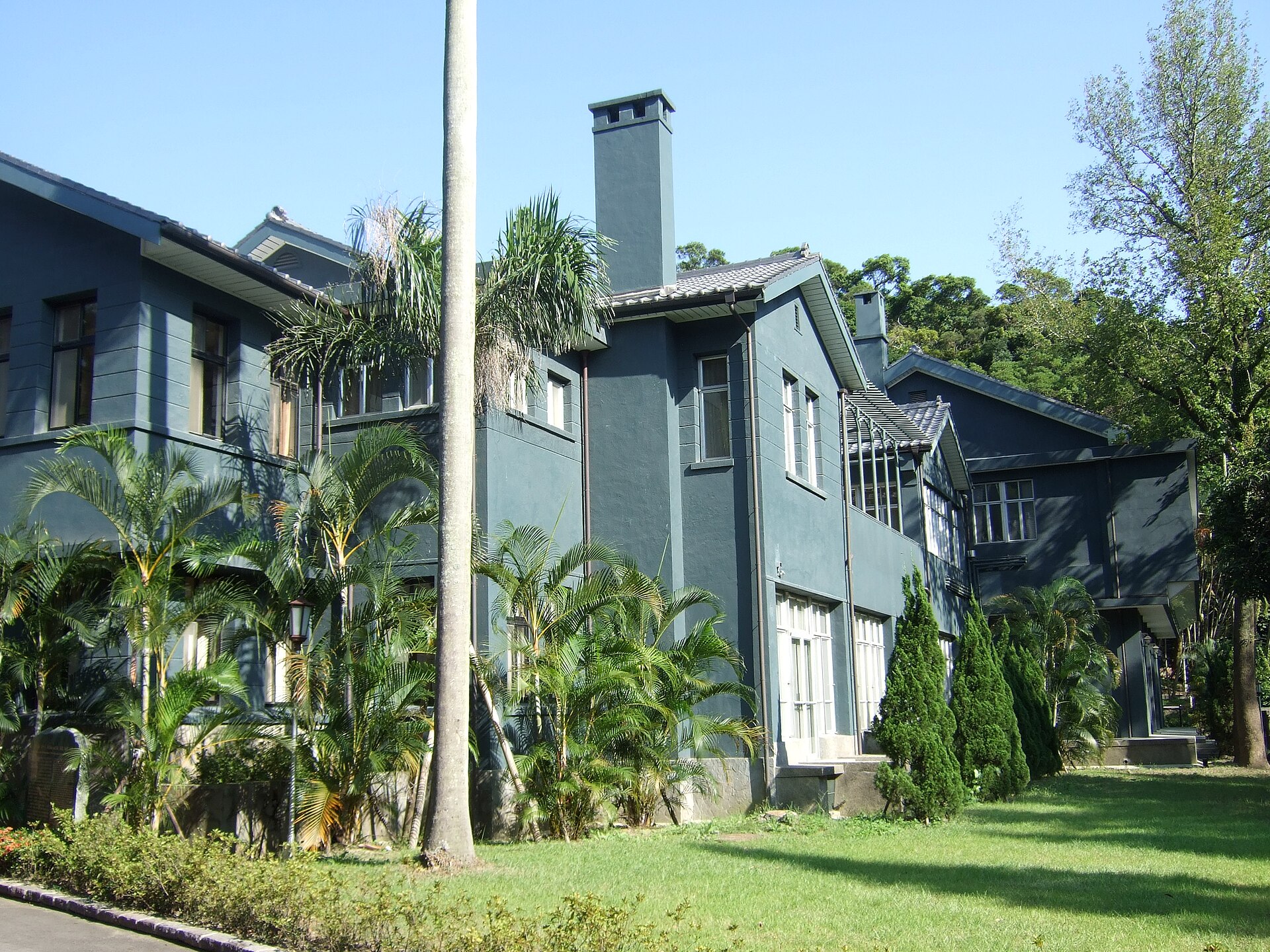
About seven minutes’ walk from Shilin station, Exit 2, the Shilin Official Residence (士林官邸) was the home of Chiang Kai-shek and his wife Soong Mei-ling for a quarter of a century, and for most of that time it was a heavily guarded compound that ordinary Taiwanese never saw. Today the grounds are a public park, and they are one of the loveliest gardens in the city.
The gardens are free and open from early morning to early evening. There is a formal Western garden with a fountain and a rose garden, a Chinese garden with a pond, pavilions and rockwork, stretches of woodland, and the little Kaige Church (凱歌堂), the private chapel where the Chiangs, both devout Methodists, worshipped. The gardens change with the seasons: tulips in February, roses from March, and every late autumn a big chrysanthemum exhibition, usually from late November into December, when the paths are lined with elaborate displays. Our guide to Taipei in November has more on the season.
The main house is open by ticket (NT$100) from Tuesday to Sunday, in two sessions: 09:30 to 12:00 and 13:30 to 17:00, with the last tickets twenty minutes before each session closes. It is a surprisingly modest two-storey house, preserved much as the Chiangs left it, with their reception rooms, dining room and studies. If you are interested in the politics of twentieth-century Taiwan, it is fascinating; if you are not, the gardens are the reason to come, and you can happily skip the house.
The National Palace Museum and the Waishuangxi valley
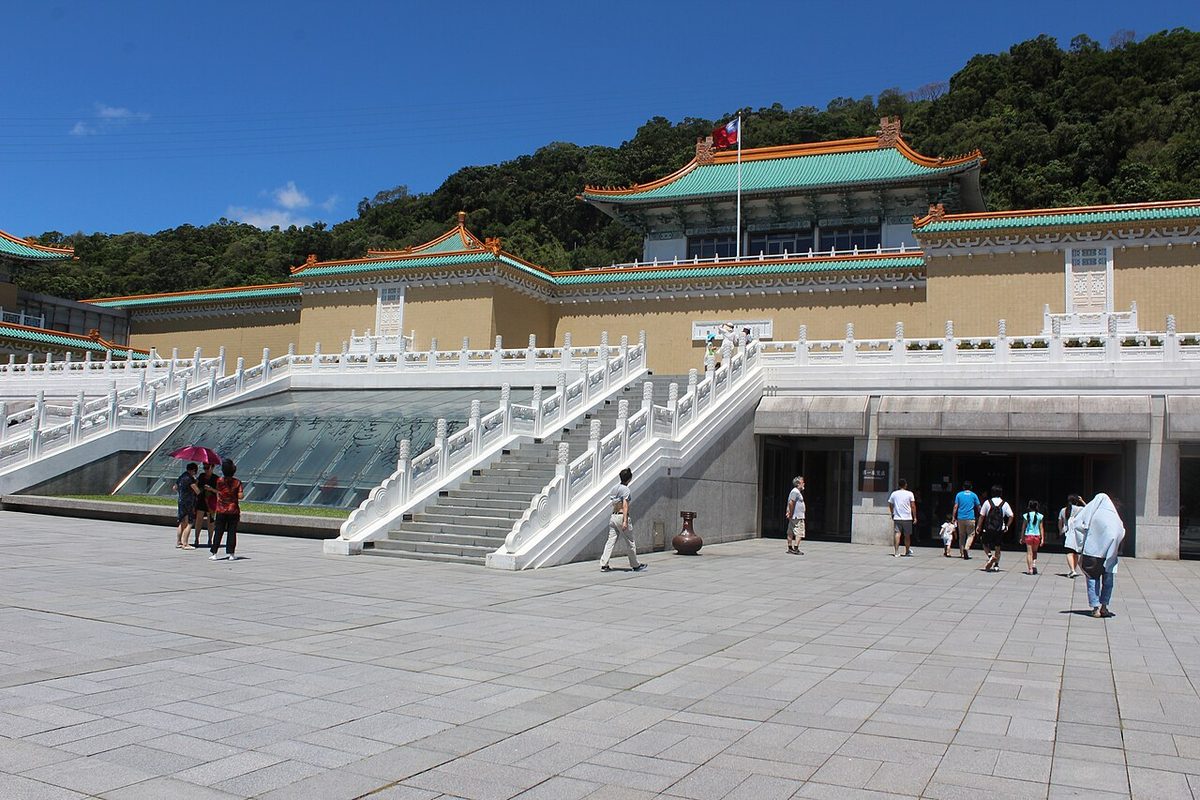
A short bus ride east of Shilin station, the National Palace Museum holds one of the world’s great collections of Chinese art — bronzes, jades, ceramics, calligraphy and painting spanning thousands of years, including the famous jadeite cabbage and the meat-shaped stone. It is the single most important reason to come to Shilin, and it deserves at least half a day. Our National Palace Museum guide covers the collection, the galleries to prioritise, tickets and the bus connections.
Two smaller places nearby make the trip even better value:
- Shung Ye Museum of Formosan Aborigines (順益台灣原住民博物館), diagonally across the road from the Palace Museum, is Taiwan’s first privately owned ethnology museum: a compact, well-presented collection of clothing, weaving, carving, tools and ritual objects from Taiwan’s Indigenous peoples. It is the perfect counterpoint to the imperial collection across the road, reminding you whose island this was first. Open 09:00 to 17:00, closed on Mondays; NT$150 for adults. The Ministry of Culture’s page on the museum has the background.
- Zhishan Garden (至善園), beside the Palace Museum, is a small classical Chinese garden of ponds, pavilions, bridges and willows, designed around themes from Chinese painting and literature. It is a peaceful place to rest your eyes after the galleries.
Up the road beyond the museum, on Yangde Boulevard as it climbs towards Yangmingshan, the hillside home of the writer Lin Yutang, which he designed himself in the 1960s, is now a small museum with a café and a view; check its opening days before making the trip. And the museum restaurant, Silks Palace, is known for its edible versions of the jadeite cabbage and the meat-shaped stone — a fun, pricey lunch for fans.
Zhishanyan: temple, trails and history
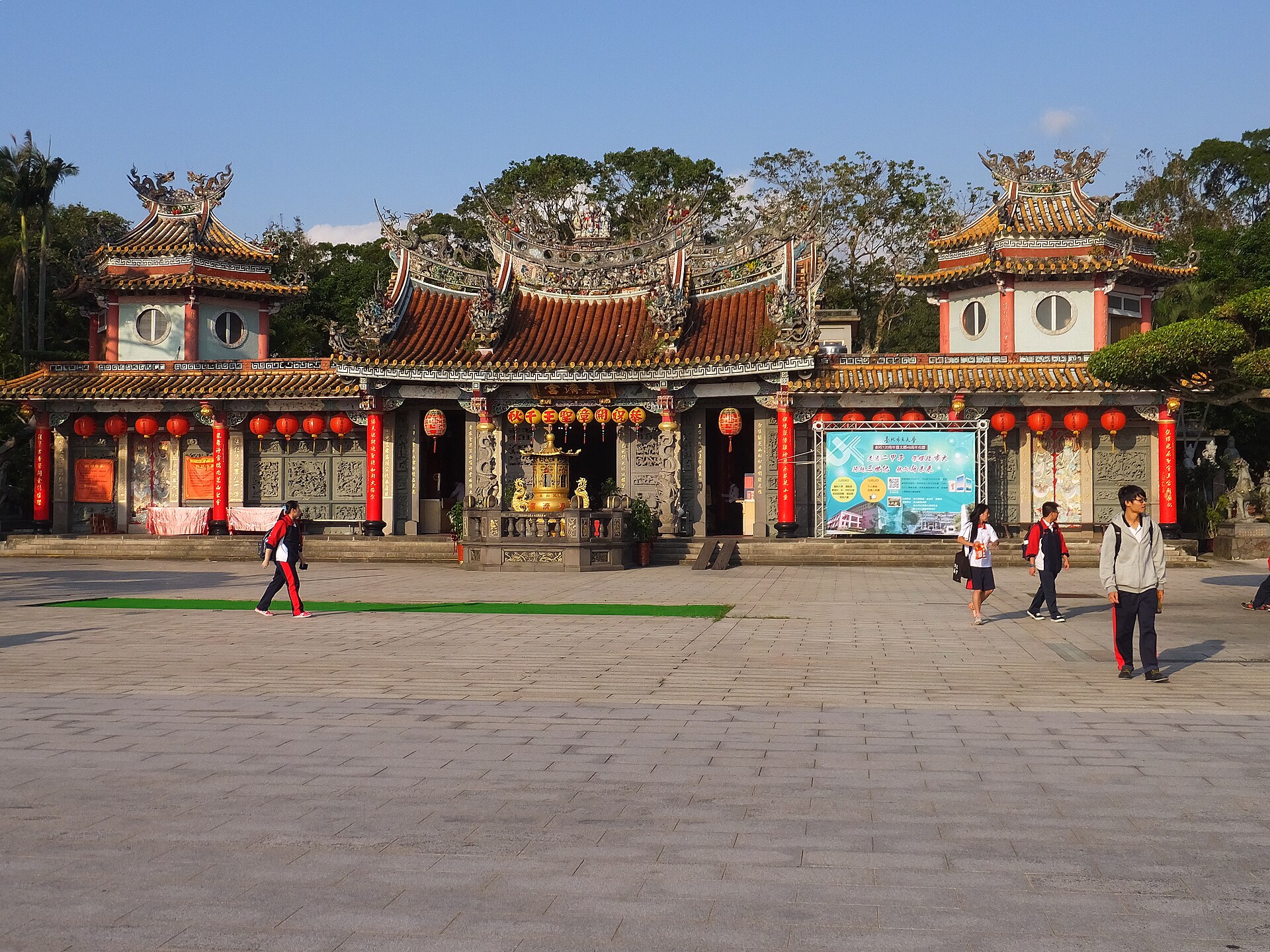
A short walk from Zhishan station on the Red Line, Zhishanyan (芝山巖) is a small, wooded, rocky hill that rises abruptly from the plain, and it packs a remarkable amount of history into a gentle hour’s walk. Stone steps and paths lead up through the trees past an old stone gateway from the days when the settlers fortified the hill, archaeological sites where prehistoric peoples lived thousands of years ago, and old trees and viewpoints over the northern city.
At the top is Huiji Temple (惠濟宮), the Zhangzhou settlers’ temple, dedicated to Kaizhang Shengwang, the deified general revered as the founder of Zhangzhou, with halls for Guanyin and Wenchang, the god of literature. It is a handsome, unhurried temple with a broad forecourt and fine views, and it is almost never crowded. Nearby, a memorial marks the site of the Japanese school and the killing of its six teachers in 1896 — one of the stranger layers of history you can find on a Taipei hilltop.
Zhishanyan is free, and it is one of the best short walks in northern Taipei, but the steps are steep in places and it is no place for wheelchairs or pushchairs. Go in the morning or late afternoon, and bring mosquito repellent in summer. Our guide to the best temples in Taipei puts Huiji Temple in the context of the city’s others.
The Taipei Performing Arts Center
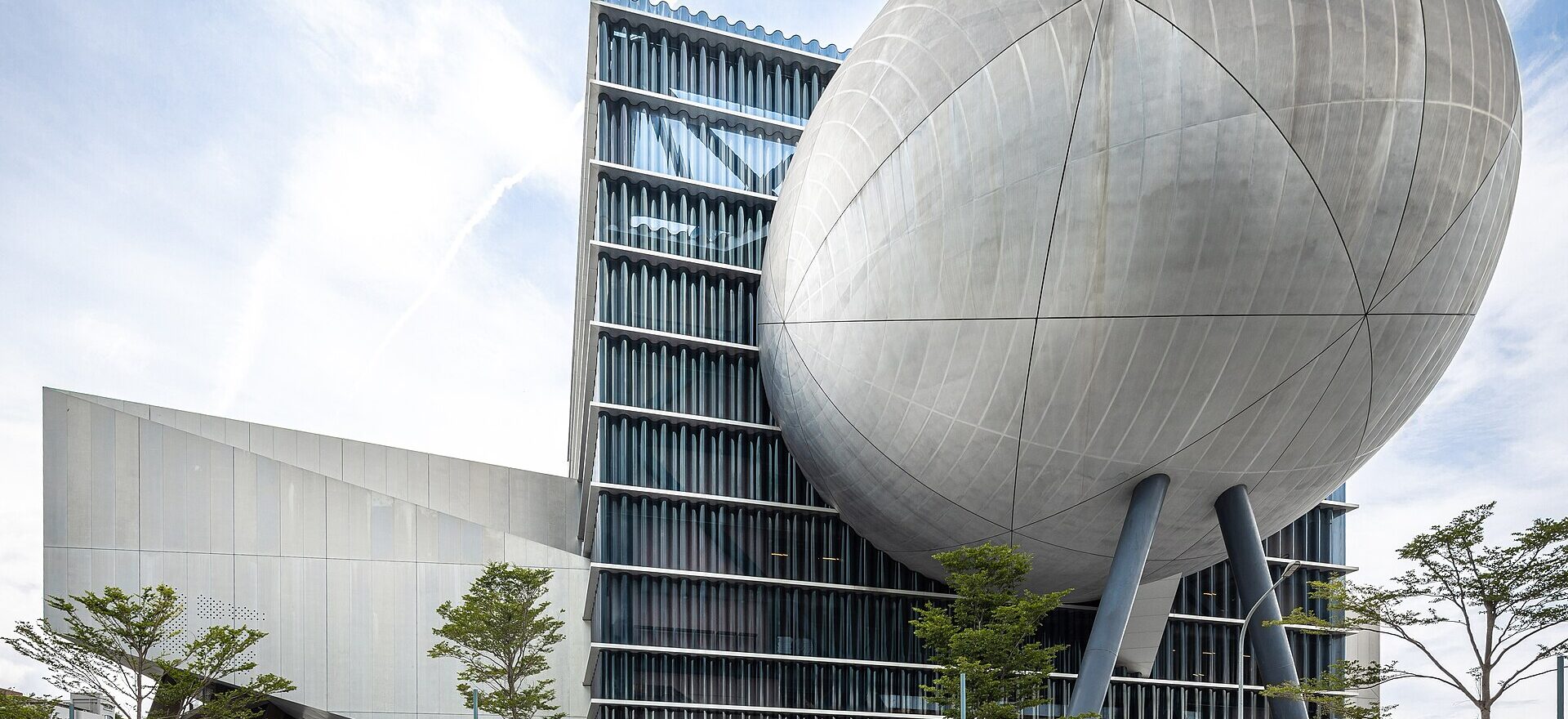
Right beside Jiantan station and the night market, the Taipei Performing Arts Center (臺北表演藝術中心), which opened in 2022, is the most striking new building in Taipei. Designed by OMA, the practice of the Dutch architect Rem Koolhaas, it is a cube raised on legs, with three theatres plugged into it: the 1,500-seat Grand Theater, the 800-seat Blue Box for experimental work and, most memorably, the spherical 800-seat Globe Playhouse, which hangs off the side of the building like a planet that has just docked.
The architects designed a Public Loop, a route through the building’s usually hidden backstage and technical spaces, with windows looking into the theatres. Check the Taipei Performing Arts Center website for current visiting arrangements, building tours and the performance programme. Even if you do not go in, it is worth walking round the building on your way to the night market; the view of the sphere from the plaza below is quite something.
By the river: science museums and the children’s park
North-west of Jiantan station, near the Keelung River, three family attractions sit close together:
- The National Taiwan Science Education Center — a large, hands-on science museum, one of the best rainy-day options in the city for children.
- The Taipei Astronomical Museum — planetarium shows, space exhibits and an observatory, next door.
- The Taipei Children’s Amusement Park — a city-run fairground with gentle rides at small prices, aimed at younger children.
Together they make an easy family day with the night market for dinner. Our guide to Taipei with kids has more ideas.
Shilin Night Market: yes, but
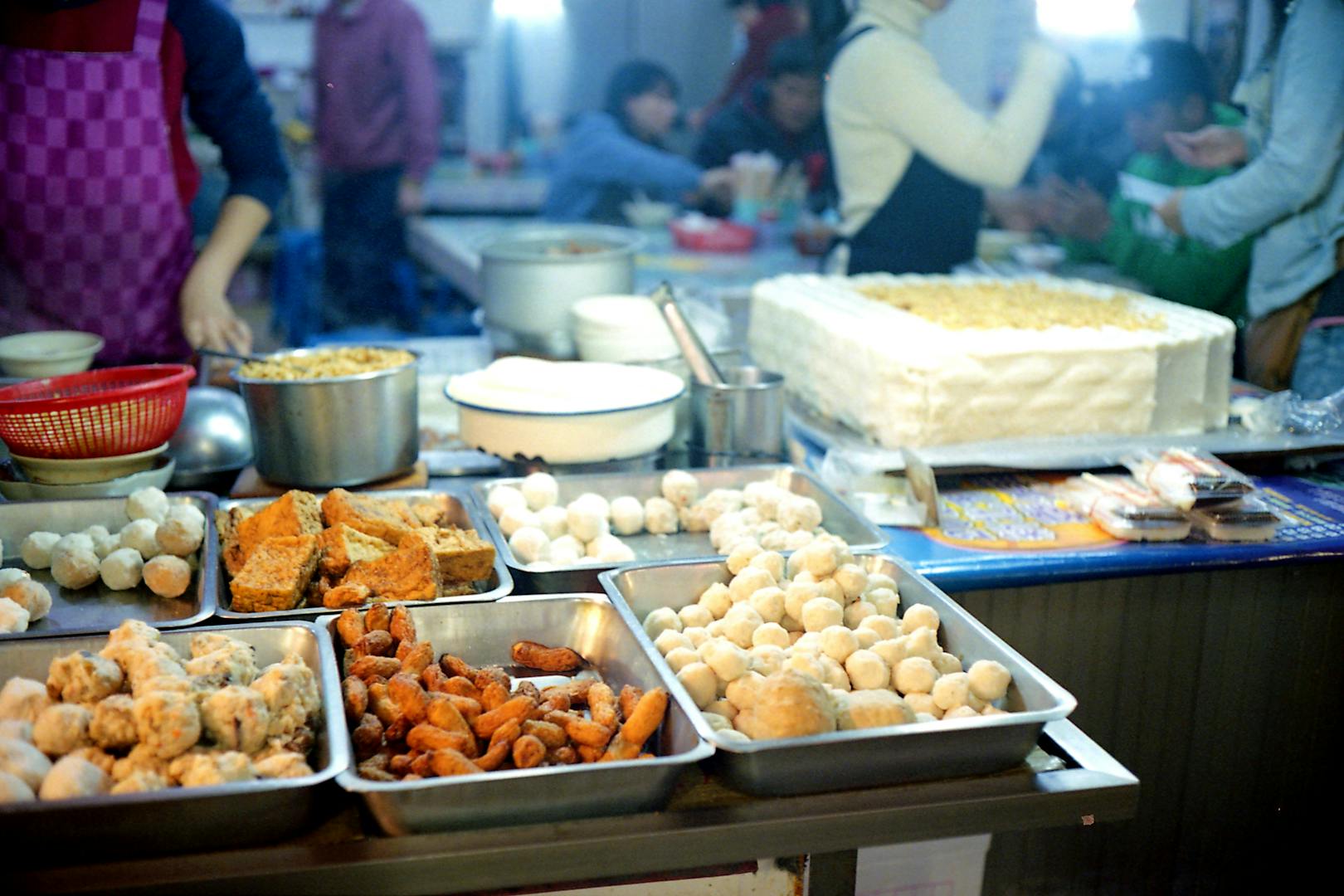
The Shilin Night Market is Taipei’s largest and most famous, spreading through the streets around Cixian Temple from Jiantan station, Exit 1, with a basement food court under the old Shilin Market building, clothes and gadget stalls, games, and every snack you have heard of. It is huge fun, and you should see it once. But it is also the most touristy and, by general agreement, not the best for food: Raohe and Ningxia feed you better. Our guide to the best night market in Taipei compares them honestly.
Before you eat, look in at Cixian Temple (慈諴宮), the Mazu temple at the heart of the market. It is the reason the market is where it is: the old Shilin market town grew up around its forecourt, and the stalls have simply never left. It is a working temple, bright with lanterns and busy with neighbourhood worshippers in the evening, and five quiet minutes inside are a good contrast to the lanes outside.
The trick with Shilin is timing. Arrive around 17:00, before the crowds, look in at Cixian Temple, eat the handful of things you came for, and leave before 20:00, when the lanes become a slow shuffle. Weeknights are much calmer than weekends.
Shezi Island and the river paths
West of the night market, where the Keelung River flows into the Tamsui, Shezi Island (社子島) is one of the strangest corners of the city: a flat, low-lying peninsula of small farms, temples, workshops and scattered houses that has been frozen for decades by flood-control rules and long-delayed redevelopment plans. It is not a sight in the usual sense, but a riverside cycle path loops round it, with wide views over the water, wetlands full of birds and a sense of the half-rural Taipei that has almost disappeared elsewhere. A YouBike from near Jiantan or Shilin station and a couple of hours on the path make a relaxed morning, and the path continues north towards Guandu and Tamsui and south towards Dadaocheng.
Up into the hills
Shilin reaches right up into the mountains, and the hills are where the district is at its most beautiful.
- Tianmu (天母) — the leafy hillside suburb north of the city, long home to many of Taipei’s foreign residents, with international schools, bakeries, cafés and a well-known flight of steps up into the hills. It is quiet, pleasant and a good half-day of wandering.
- Yangmingshan National Park — the volcanic mountains on Taipei’s northern edge, with steaming fumaroles, grassland peaks, hot springs and, in spring, flower farms. Buses run up from Jiantan station and elsewhere in the city. Our Yangmingshan day trip guide has a ready-made plan.
- Pingdeng (平等里) — a hill village above the Waishuangxi valley that is one of the city’s favourite spots for cherry blossom in February. See our cherry blossom guide.
- Neishuangxi — the upper valley of the Shuangxi stream beyond the museums, with forest trails and a nature centre, where the city feels very far away.
Where to eat in Shilin beyond the night market
Shilin’s food reputation rests on the night market, but you will eat well elsewhere too:
- The Shilin Market basement food court, under the old market building by the night market, is the most practical sit-down option for night-market classics: oyster omelettes, fried rice, noodles and tempura-style fish cakes, with tables.
- Around Shilin station, the streets of the old market town have ordinary neighbourhood noodle shops, dumpling houses and breakfast shops, at a fraction of night-market prices and without the queues.
- At the National Palace Museum, the museum’s cafés are fine for a break; Silks Palace is the showpiece restaurant for a longer, pricier lunch.
- In Tianmu, the cafés, bakeries and international restaurants reflect decades of foreign residents; it is one of the easiest places in Taipei for Western-style brunch.
Three ways to spend a day in Shilin
The culture day
- 09:00 — National Palace Museum, at opening time, before the tour groups.
- 12:30 — Lunch at the museum, then the Zhishan Garden.
- 14:00 — Shung Ye Museum, across the road.
- 15:30 — Shilin Official Residence: the gardens, and the house if you are interested.
- 17:00 — Taipei Performing Arts Center, then the night market early, before the crush.
The family day
- Morning — Science Education Center and the Astronomical Museum.
- Afternoon — Children’s Amusement Park.
- Early evening — the night market, while the children still have energy.
The green day
- Morning — Zhishanyan: the trails and Huiji Temple.
- Late morning — Tianmu for brunch and a wander.
- Afternoon — Yangmingshan by bus, for a hike or a hot spring.
Shilin through the year
Shilin’s mix of gardens, hills and museums means there is always something in season, and the weather shapes the best plan more than it does in the city centre.
- February. Tulips in the Official Residence gardens and cherry blossom at Pingdeng and on the lower slopes of Yangmingshan. Cool, often damp; the museums are the fallback.
- March–April. Roses at the Residence and the flower season on Yangmingshan, including the calla lily fields on the Beitou side of the mountain. The prettiest time of year in the district, and the busiest on the mountain roads at weekends.
- May–June. The plum rains arrive, bringing days of steady drizzle. A good season for the National Palace Museum, the science museums and the Performing Arts Center; keep the hills for the dry spells.
- July–August. The hottest months, with afternoon thunderstorms and the chance of a typhoon. Do Zhishanyan and the gardens at 08:00, spend the heat of the day in the air-conditioned museums, and go to the night market after sunset.
- September–November. The best walking weather of the year once the typhoon season eases, with clear days in the hills. From late November the chrysanthemum exhibition fills the Residence gardens.
- December–January. Cool and grey in the city, colder and wetter up the mountain. It is the season for a hot spring soak on Yangmingshan after a walk, and for warming night-market food.
Our month-by-month guides, starting with Taipei in spring, have the weather and events in more detail.
Practical tips
- Mondays. The Shung Ye Museum and the Official Residence’s main house are closed, as are many other museums; the gardens, temples and trails are open. Check the National Palace Museum’s current opening days before you go.
- Getting around. Use the Red Line for the plain and buses for the museum and the hills. Distances between the three landscapes are bigger than they look on the map, so do not try to walk from the night market to the Palace Museum.
- Weather. The hills are cooler and much wetter than the city; bring a layer and an umbrella for Yangmingshan even on a fine day in town. The museums make Shilin one of the best districts for a rainy day; see our rainy day activities guide.
- Accessibility. The MRT stations, the National Palace Museum and the science museums are step-free; the Official Residence gardens have mostly level paths. Zhishanyan and the hill trails are steep steps.
- Cash. Night-market stalls prefer cash or an EasyCard; the museums take cards.
What we would skip
Shilin Night Market as your only night market. See it for the scale, then eat properly at Raohe or Ningxia on another evening.
A ninety-minute dash round the National Palace Museum. It is one of the world’s great museums, and a rushed visit squeezed between other sights does it no justice. Give it half a day or save it for a rainy one.
The Official Residence’s main house if twentieth-century politics leaves you cold. The gardens are the real pleasure, and they are free.
Driving up Yangmingshan on a spring weekend. The flower season brings traffic jams on the mountain roads; take the bus, or go on a weekday.
The Children’s Amusement Park without children. It is built for under-tens and it knows it.
North of Shilin, the Red Line continues to Beitou, Taipei’s hot spring district, where a walk up the Xinbeitou valley takes in the 1913 bathhouse museum, the wooden green library and the steaming lake of Thermal Valley. It pairs well with a day in the hills; see our Beitou district guide.
Tianmu, at the top of Zhongshan North Road, deserves a morning of its own: climb the Japanese-era water-pipe trail at dawn, have a long brunch on its tree-lined streets, and come back in the evening for a baseball game if the Wei Chuan Dragons are at home. Our Tianmu guide has the details, including where the name really comes from.
Related Taipei guides
- Taipei Neighbourhoods: A District-by-District Guide
- Shilin Night Market Guide
- National Palace Museum
- Yangmingshan National Park
- Yangmingshan Day Trip
- National Taiwan Science Education Center
- Taipei Children’s Amusement Park
- The Best Night Market in Taipei
- Cherry Blossoms in Taipei
- Taipei with Kids
- Things to Do in Taipei
Frequently Asked Questions
What is there to do in Shilin District besides the night market?
The National Palace Museum, the Shung Ye Museum of Formosan Aborigines, the gardens of the Shilin Official Residence, the hill and temple of Zhishanyan, the Taipei Performing Arts Center, the science museums and children’s amusement park by the river, cycling round Shezi Island, and the hills of Tianmu and Yangmingshan.
Is the National Palace Museum in Shilin?
Yes. It is in the Waishuangxi valley in the east of Shilin District, a short bus ride from Shilin station. It is not within walking distance of the night market.
How do I get to the Shilin Official Residence?
Take the Red Line to Shilin station and leave by Exit 2; the entrance is about seven minutes’ walk. The gardens are free and open from early morning to early evening; the main house costs NT$100 and is open Tuesday to Sunday, 09:30–12:00 and 13:30–17:00.
Is the Shilin Official Residence worth visiting?
Yes, for the gardens, which are among the loveliest in Taipei and free, especially in spring and during the late-autumn chrysanthemum show. The house itself is worth the NT$100 if you are interested in Chiang Kai-shek and modern Taiwanese history.
When is the Shilin Official Residence chrysanthemum exhibition?
It is held every late autumn, usually from late November into December. The exact dates are announced each year, so check before planning around it.
Which MRT station is best for Shilin Night Market?
Jiantan station, Exit 1, is closest to the main market area, even though Shilin station has the district’s name. Shilin station is better for the Official Residence and for buses to the National Palace Museum.
What is Zhishanyan?
A small wooded hill near Zhishan station with Huiji Temple at the top, prehistoric archaeological sites, an old stone gateway and a memorial to the Japanese school established there in 1895. It is free and makes a good hour’s walk.
Can you visit the Taipei Performing Arts Center without a ticket?
You can walk around the outside and its plazas at any time. The building’s Public Loop and tours have their own visiting arrangements; check the centre’s website for what is open when you are there.
How do I get from Shilin Night Market to the National Palace Museum?
Do not try to walk it. Take the Red Line one stop from Jiantan to Shilin station and catch one of the buses that run up the Waishuangxi valley to the museum; our National Palace Museum guide lists the current routes. A taxi from the night market is quick and inexpensive outside rush hour.
Is Shilin good for families?
Very. The National Taiwan Science Education Center, the Taipei Astronomical Museum and the Taipei Children’s Amusement Park are next to each other by the river, and the night market is a short walk away for dinner.
Where is Tianmu?
Tianmu is the hillside neighbourhood in the north of Shilin District, known for its international schools, cafés, bakeries and long-standing foreign community. It is a short bus or taxi ride from Zhishan station.
How much time do I need in Shilin?
One full day covers the National Palace Museum, the Official Residence gardens and the night market. Add a second day, or a half day, for Zhishanyan, Tianmu or Yangmingshan.
Is Shilin a good place to stay in Taipei?
It is convenient for the museum, the hills and the night market, and quieter than the centre, but it is a longer ride from most of the other sights. Most visitors are better off staying in the central districts and coming up on the Red Line.
The Bottom Line
Shilin is far more than its night market. Spend the morning with the treasures of the National Palace Museum and the Indigenous collection across the road, walk the rose beds of Chiang Kai-shek’s old garden, climb Zhishanyan for its temple and its strange history, and admire Koolhaas’s sphere before you head into the market for dinner. On another day, go up into the hills of Tianmu and Yangmingshan.
See the night market once and eat better elsewhere, give the museum the time it deserves, and do not try to cross the district on foot. Treat Shilin as two or three different outings rather than one, and it will give you some of the best days of your trip.
Photo Credits
The Globe Playhouse at the Taipei Performing Arts Center: TPAC Globe Playhouse and bus shelters 20230730 by Supanut Arunoprayote, CC BY 4.0, via Wikimedia Commons.
The main house at the Shilin Official Residence: Chiang Kai-shek Shilin Residence by Kuailong, CC BY-SA 3.0, via Wikimedia Commons.
Huiji Temple at Zhishanyan: Huiji Temple 惠濟宮 – panoramio by lienyuan lee, CC BY 3.0, via Wikimedia Commons.