This article contains advertising. Our booking links are routed through a partner that adds commission tracking automatically, so if you book through one we earn a commission from the provider, at no extra cost to you. It never affects what we recommend. Affiliate disclosure
Start with the thing that ruins more east coast itineraries than anything else: there is no high speed rail to Hualien. The HSR is a west coast line, Taipei down to Zuoying, and it does not cross the mountains. A surprising number of travel articles imply otherwise, people build plans around a train that does not exist, and they discover the problem at Taipei Main Station with a rucksack on. So the honest version of taipei to hualien starts by ruling out the option you were probably expecting, and then gets considerably better — because the conventional train that does make this journey is one of the best rides in Asia.
This guide covers the three real options with 2026 fares, why booking the day reservations open genuinely matters here, what Hualien is for now that Taroko Gorge is heavily restricted, and whether the trip still stacks up. Prices were checked in September 2026; treat them as the right order of magnitude and confirm before you travel.
The three ways, compared

| Mode | Time | Fare | Verdict |
|---|---|---|---|
| TRA express — Puyuma, Taroko, Tze-Chiang 3000, Tze-Chiang | ~2 h for 170 km | NT$583 | The right answer. Book it 28 days out. |
| TRA Chu-Kuang Express | Slower, 3 h+ | NT$450 | Fallback when the fast ones are full. |
| TRA Fast Local | Slowest, up to ~3 h 45 | NT$376 | Cheap, scenic, unreserved. A real option if you missed the booking window. |
| Bus via Highway 5 and the Suhua Highway | ~3–4 h | NT$300–350 | Cheapest, and the coast road is spectacular. |
| Flight from Songshan | ~50 min in the air | ~US$56 | Roughly one flight a day. Useful when the trains sell out. |
| High Speed Rail | — | — | Does not exist on this route. |
For nearly everyone the answer is the express train: two hours, NT$583, and a route that spends its second half running along the Pacific. Our high speed rail guide explains what that network does and does not cover, and our Taiwan beyond Taipei hub sets out the wider east-west split.
Booking: the part that actually matters
This is the single most useful paragraph on the page. East coast express seats sell out. Not “get busy” — sell out, weeks ahead, particularly the Puyuma and Taroko services, and especially on Fridays, Sundays, long weekends and any national holiday.
Taiwan Railways opens reservations 28 days before departure — four weeks — and on Fridays the window reaches two days further, so a whole weekend four weeks out goes on sale at once. Put a reminder in your calendar for the day the window opens and book the moment it does. Popular departures can go within hours.
If you miss it, in order of preference:
- Take a Chu-Kuang or a local train. Slower, unreserved on some services, considerably cheaper, and the scenery is identical. Standing for two hours is unpleasant but survivable; standing for three and a half is not, so board early.
- Take the bus. NT$300–350 and the Suhua Highway route, which is arguably the better journey anyway.
- Fly from Songshan. Roughly one flight a day and about US$56 — worth checking when everything else has gone.
- Move your dates. A Tuesday departure is a completely different availability picture from a Friday one.
The bus, and the road that makes it worth taking
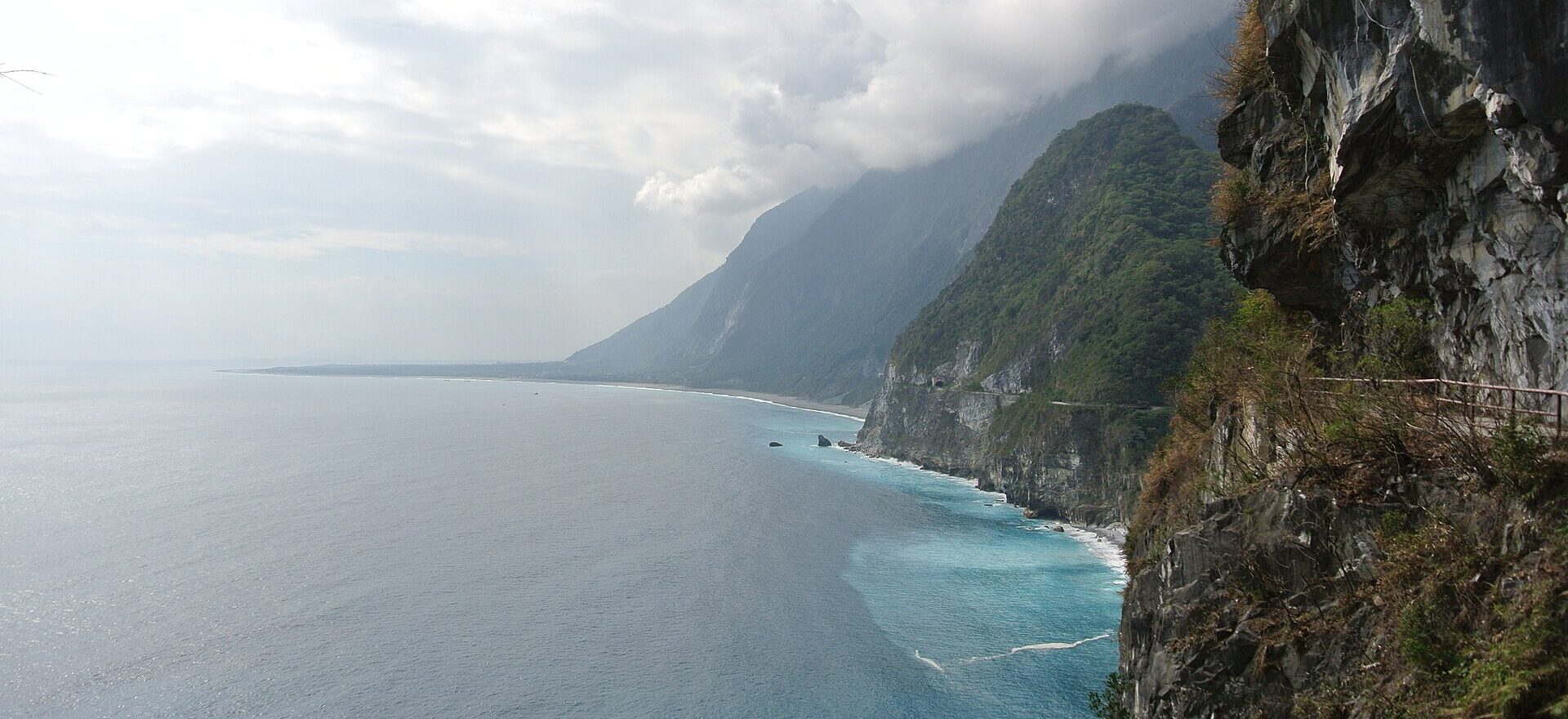
Buses run from Taipei out through the Xueshan Tunnel to Yilan on Highway 5, then south along the Suhua Highway, which is carved into cliffs directly above the Pacific and is one of the great coast roads anywhere.
It used to be genuinely alarming as well as beautiful — narrow, landslide-prone, and slow. A long programme of improvement has cut the worst section from about two and a half hours to eighty minutes, with further work running to 2032, and the modern route runs largely through tunnels and viaducts. You lose some of the vertigo and keep most of the views.
Total journey is three to four hours for NT$300–350. Take it if the trains are full, if the budget is tight, or if you would rather see the coast from a road than from a railway. Our budget travel guide covers the wider case for Taiwanese intercity coaches, which are much better than most people expect.
Taroko Gorge: read this before you book anything
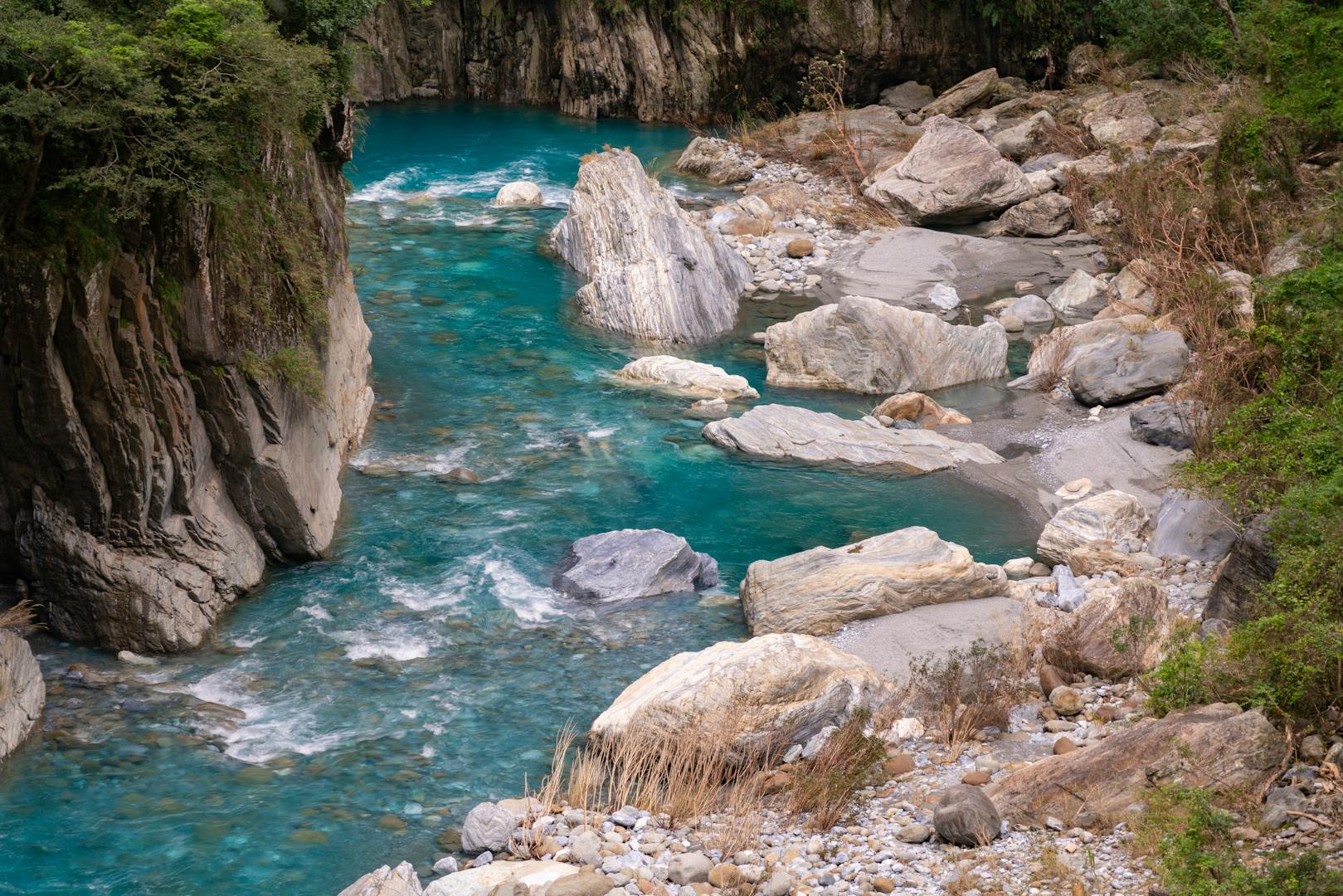
Most people come to Hualien for Taroko Gorge. That calculation has changed and you need to know how before you plan.
The magnitude 7.4 earthquake of 3 April 2024, followed by typhoons in 2024 and 2025, caused severe landslide damage throughout the gorge. As of September 2026:
- The visitor centre and the Tianxiang trails are open.
- Lushui Recreation Area partially reopened in February 2026 — the first section of the Lushui Trail and the start of the Lushui–Wenshan Trail.
- The Swallow Grotto and Eternal Spring Shrine roads are blocked.
- The Tunnel of Nine Turns is closed, with a possible 2026 reopening if engineering work stays on schedule.
- The Zhuilu Old Road is closed indefinitely and may never reopen.
- The through-road to Hehuanshan runs on a convoy system, about five times a day, for private vehicles only.
- Full recovery is estimated at up to another decade.
Check the national park’s current status before you plan a day around it. Conditions change with each engineering milestone and each typhoon season. Our Taroko guide goes into more detail.
The important point is what follows from this: do not go to Hualien for Taroko alone. Go for the east coast, of which Taroko was always only one part — and which, as the rest of this page argues, is worth the journey on its own terms.
What Hualien is actually for
Qixingtan
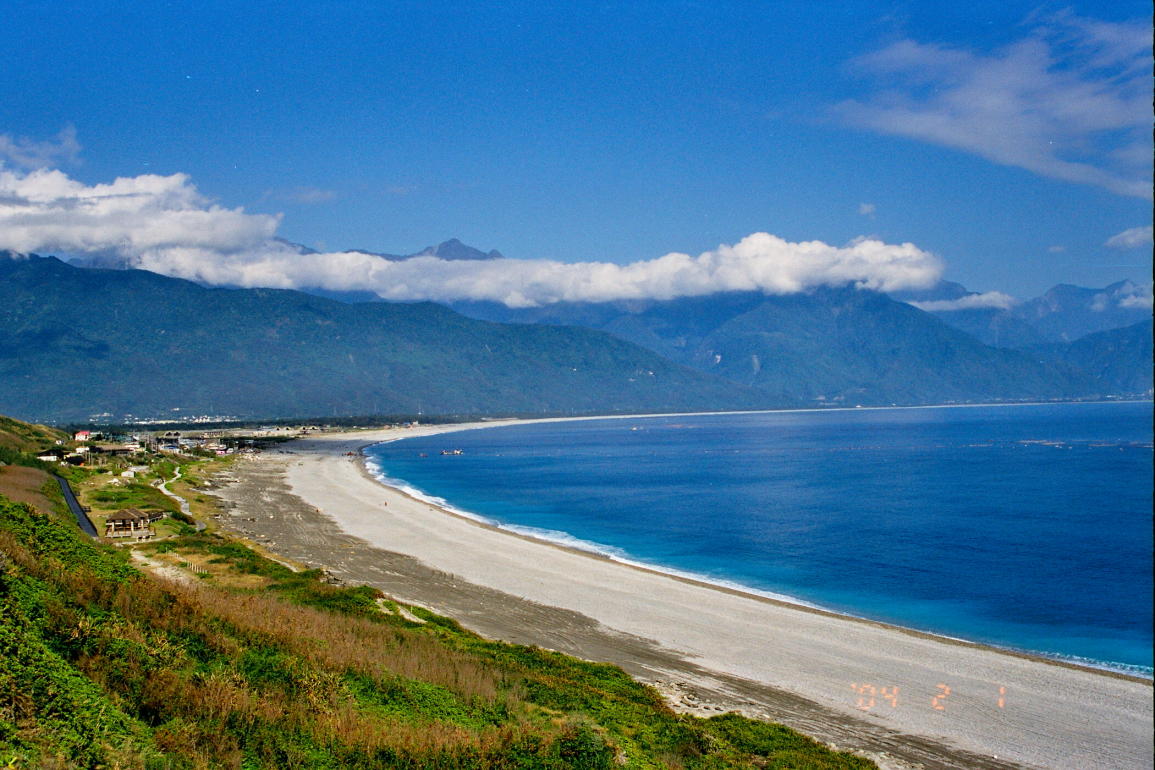
A long crescent of grey pebbles at the north end of Hualien City, with the Central Mountain Range rising directly behind it and the Qingshui Cliffs visible up the coast on a clear day. There are bike paths, showers, a visitor centre, food stalls and pavilions.
Two honest notes. It is a pebble beach, not a sand one — people arrive expecting a tropical strand and find something closer to Chesil Bank with better mountains. And swimming is prohibited because of strong currents. Come for the walk, the bike, the sunrise and, at night, the stars — it is one of the darker skies within reach of a Taiwanese city.
The Qingshui Cliffs
North of the city along Highway 9, where the marble cliffs fall more than a thousand metres straight into water that is an implausible shade of turquoise. There are viewing platforms on the road, and — better — sea kayak and SUP operators run dawn trips out from the shore beneath them. This is the east coast’s signature landscape and it is entirely outside Taroko’s restricted zone.
The Huatung Valley
The rift valley running south from Hualien to Taitung, between the Central Mountain Range and the Coastal Range. Rice paddies, betel palms, hot springs, small towns, and the best cycling in Taiwan. Chishang and its Mr Brown Avenue — a straight farm road between flooded paddies with mountains at the end of it — is the classic stop, and Luye is where the paragliders launch.
You can see it from the train window heading south, and you should get off and hire a bike instead. Our 10-day itinerary builds a half day around exactly this.
Coastal Highway 11
The road south from Hualien along the Pacific, past Shitiping, Baxian Caves and a string of small Amis villages. It needs a car or a scooter, and it is the reason renting one is more defensible here than anywhere else in Taiwan — public transport between the sights is genuinely thin. See our car rental guide, and note that you need an International Driving Permit.
Indigenous culture
Hualien and Taitung counties are the heartland of several of Taiwan’s sixteen recognised Indigenous peoples, principally the Amis and the Truku. This is a genuinely different Taiwan from the Han-majority west coast — different food, different music, different languages — and the summer harvest festivals are a real event rather than a performance for visitors. Our guide to how Taiwan differs from China touches on why this matters more than most visitors realise.
Whale and dolphin watching
Boats run from Hualien and Shihtiping, mostly April to October, and the hit rate for dolphins is high. Whales are less reliable. Sea conditions matter more than the season; a rough morning means a miserable three hours.
Where to stay
Hualien’s accommodation is guesthouse-led rather than hotel-led, and that is a feature — the family-run minsu (民宿) here are among the best in Taiwan, frequently include a proper breakfast, and the owners will lend you a bike, book your whale watching and drive you to the station.
Hualien City is where most people stay and the sensible default. You are near the station, the night market and the restaurants, and buses and taxis reach Qixingtan in fifteen minutes. Compact enough to walk in the evening.
Qixingtan itself has a cluster of seafront guesthouses and a couple of resorts. Quieter, better at dawn, and a taxi from anything else. Choose it if the beach and the stars are why you came.
Xincheng and the Taroko approach puts you at the northern end near the park gate. Given how much of the gorge is currently closed, this is a harder recommendation than it used to be — check what is actually open before committing to a base out there.
Weekends are the constraint. Hualien is a major domestic destination and Taiwanese weekend demand fills the good guesthouses well ahead of foreign visitors booking. Midweek, you can often walk in.
A two-night plan that works
This assumes the gorge stays restricted, which is the safe assumption, and that you have no car.
| When | What |
|---|---|
| Day 1, midday | Arrive on the express. Drop bags, hire a bike from the guesthouse. |
| Day 1, afternoon | Ride the coastal path north to Qixingtan. Pebbles, mountains, no swimming. |
| Day 1, evening | Dongdamen Night Market, which has an Indigenous food section worth seeking out. |
| Day 2, dawn | Sea kayak or SUP beneath the Qingshui Cliffs. This is the trip’s best hour. |
| Day 2, afternoon | Whatever is currently open in Taroko — visitor centre, Tianxiang, Lushui — or a hot spring. |
| Day 2, evening | Back in the city. Eat well; Hualien is a good food town and nobody says so. |
| Day 3 | Train south into the Huatung Valley, or north back to Taipei. |
If you have a car, replace day two’s afternoon with Highway 11 south along the coast, which is the single best drive in Taiwan and the reason a third night is worth having.
How long to stay
Two nights minimum. One night means you arrive in the afternoon, do one thing, and leave in the morning, which is four hours of train for a single afternoon.
Three nights is the sweet spot if you want to hire a car and drive Highway 11 or get down into the Huatung Valley properly.
Do not day-trip. Four hours of train for perhaps five hours in Hualien, in a place whose entire quality is space and slowness, is the least rewarding version of this trip available. Our day trips guide covers what is genuinely close enough.
When to go
October to April is the east coast’s season: clear, cooler, settled, and past the worst of the typhoon risk. October and November in particular are excellent.
July to September is hot, humid and the peak of typhoon season — and Hualien is where typhoons make landfall first. Storms close the Suhua Highway, cancel trains and shut mountain roads at short notice, so build slack into any summer plan and watch the Central Weather Administration. See our typhoon season guide for how the warnings work.
Winter is cool and clear on the east coast and much more pleasant than the same months in Taipei — see the best time to visit.
Practical notes
- Hualien City is small and walkable. The station is a taxi or a short bus ride from the centre; most guesthouses will collect you.
- Rent a scooter or a car if you can. This is the one part of Taiwan where public transport genuinely does not reach the good bits. Scooter rental requires a licence category most visitors do not hold, whatever the shop says.
- Mobile coverage thins in the mountains and along parts of the coast, which is the practical argument for Chunghwa over the budget carriers — see SIM cards and eSIMs. Download offline maps before you set off.
- Your EasyCard works on Taiwan Railways and local buses.
- Accommodation is guesthouse-heavy and books out at weekends. Hualien is a major domestic destination, and Taiwanese weekend demand is the thing that fills it, not foreign visitors.
- English is thin. Thinner than Tainan. A translation app and a few Mandarin phrases go a long way.
- Earthquakes happen here. Hualien sits on an active fault system and tremors are routine. Buildings are built for it; know where the stairs are and do not panic.
What we would skip
Looking for a high speed rail ticket. Covered at the top, and worth repeating because it is the mistake that costs people a morning.
The day trip. Four hours of travel for an afternoon in a place built around space.
A trip planned entirely around Taroko. With the gorge’s headline trails and roads closed — some indefinitely — a Hualien visit that has no plan B is a Hualien visit that goes wrong. Build the trip around the coast and the valley, and treat whatever is open in the gorge as a bonus.
Booking a hotel before booking the train. The train is the scarce resource on this route, not the room. Secure the seat, then the bed.
Travelling on a Friday or Sunday if you have any choice. The whole of northern Taiwan tries to get to and from Hualien on those two days.
If you are not in a hurry, break the journey. The line to Hualien runs straight through Yilan County, an hour out of Taipei, and a night there — a hot spring tub in Jiaoxi, dinner at Luodong Night Market, a morning boat to Turtle Island — turns one long day of travel into two short, good ones. Our guide to Yilan from Taipei covers what is worth stopping for.
If Highway 11 is calling, give it more than an afternoon. Hualien is the natural place to collect a hire car for a loop south down the coast to Taitung and back up the rift valley through Chishang — four to six days of the best driving in Taiwan, and the one trip on the island where a car genuinely earns its keep. Our east coast road trip guide has the route, the stops and the costs.
Related Taipei guides
- Taiwan Beyond Taipei: Where to Go Next
- Taiwan Itinerary: 10 Days from Taipei
- Taroko Gorge from Taipei
- Taipei to Kaohsiung
- Taipei to Tainan
- The Taiwan High Speed Rail
- Songshan Airport
- Car Rental in Taiwan
- Taipei Typhoon Season
- The Best Time to Visit Taiwan
- Day Trips from Taipei
- Taiwan SIM Cards and eSIMs
Frequently Asked Questions
Does the high speed rail go to Hualien?
No. The Taiwan High Speed Rail is a west coast line running from Taipei to Zuoying in Kaohsiung, and it does not cross the mountains. Hualien is reached by Taiwan Railways, by bus, or by a short flight from Songshan. This is the most common planning error on the east coast.
How long is the train from Taipei to Hualien?
About two hours on the fast expresses — Puyuma, Taroko, Tze-Chiang 3000 and Tze-Chiang — covering 170 kilometres. Slower services take up to three and three-quarter hours. The fare on the fast trains is NT$583.
How much is the train from Taipei to Hualien?
NT$583 on the express services, NT$450 on a Chu-Kuang Express, and NT$376 on a fast local train. The bus is NT$300–350 and takes three to four hours.
Do I need to book the Hualien train in advance?
Yes, and this is the one route in Taiwan where it genuinely matters. Reservations open 28 days before departure and popular Puyuma and Taroko services can sell out within hours, especially for Friday, Sunday and holiday travel. Book the day the window opens.
What if the Hualien trains are sold out?
Take a Chu-Kuang or a local train, which are slower and cheaper with the same scenery; take the bus for NT$300–350 via the Suhua Highway; check the roughly daily flight from Songshan at around US$56; or shift your travel to a weekday, which changes the availability picture completely.
Is Taroko Gorge open in 2026?
Partially, and far less than before. The visitor centre and Tianxiang trails are open and Lushui partially reopened in February 2026, but Swallow Grotto and Eternal Spring are blocked, the Tunnel of Nine Turns is closed, and the Zhuilu Old Road is closed indefinitely. Check the national park’s current status before planning around it.
Is Hualien still worth visiting with Taroko restricted?
Yes, provided you do not go for Taroko alone. The Qingshui Cliffs, Qixingtan, the Huatung Valley, coastal Highway 11, the whale watching and the Indigenous culture of the region are all outside the restricted zone and are the reason the east coast is Taiwan’s best landscape.
Can you do Hualien as a day trip from Taipei?
Technically, and it is the worst version of this trip. Four hours of travel buys about five hours in a place whose whole quality is space and slowness. Two nights is the minimum; three is better if you want to drive Highway 11.
Is the bus to Hualien any good?
Better than its reputation. Three to four hours for NT$300–350 via Highway 5 and the Suhua Highway, a cliff road above the Pacific whose worst section has been cut from two and a half hours to eighty minutes by ongoing improvement work. Take it when the trains are full.
Can you swim at Qixingtan Beach?
No — swimming is prohibited because of strong currents, and it is a pebble beach rather than a sand one. Go for the walk, the bike paths, the mountain backdrop, sunrise and stargazing, which is what makes it worth the trip.
Should I rent a car in Hualien?
More than anywhere else in Taiwan, yes. Public transport between the east coast’s sights is genuinely thin, and coastal Highway 11 and the Huatung Valley both want a vehicle. You need an International Driving Permit alongside your home licence.
When is the best time to visit Hualien?
October to April — clear, cooler and settled. July to September is hot, humid, and the peak of typhoon season, and Hualien is where storms make landfall first, closing roads and cancelling trains at short notice.
Is it safe to visit Hualien after the earthquake?
Yes. Hualien City is functioning normally and the damage was concentrated in the mountains, particularly the gorge. The area sits on an active fault system and tremors are routine; buildings are engineered for it. Follow current national park advice for anything inside Taroko.
How many days do you need in Hualien?
Two nights as a minimum, three if you want to hire a car and see coastal Highway 11 or get properly down into the Huatung Valley. A fourth is easy to fill if the weather is good.
Is there a flight from Taipei to Hualien?
Yes, from Songshan Airport, about fifty minutes in the air and roughly US$56, with limited frequency — around one flight a day. It is not usually the sensible choice, but it is genuinely useful when the express trains have sold out.
The Bottom Line
Book a Puyuma or Taroko express the day reservations open, four weeks out, and pay the NT$583. Two hours later you are on the Pacific side of Taiwan, in a landscape that has nothing to do with the country you left that morning. If the seats have gone, take the bus over the Suhua Highway and enjoy the road; if that has gone too, check the flight.
Then give it two nights, and build the trip around the coast rather than the gorge. Taroko will come back — slowly, over years — and in the meantime the Qingshui Cliffs, Qixingtan at dawn, a bike in the rift valley and a road that runs south along the ocean are all still there, and were always the better half of the east coast anyway.
Photo Credits
The Qingshui Cliffs: Chingshui Cliff 20150125 by Suicasmo, CC BY-SA 4.0, via Wikimedia Commons.
Qixingtan: 2004.02.01.七星潭 – panoramio by MickeyDisney, CC BY-SA 3.0, via Wikimedia Commons.
Puyuma trains at Hualien: 2 Puyuma Trains in Hualien by Kazehayashi, CC BY-SA 4.0, via Wikimedia Commons.