This article contains advertising. Our booking links are routed through a partner that adds commission tracking automatically, so if you book through one we earn a commission from the provider, at no extra cost to you. It never affects what we recommend. Affiliate disclosure
Night market food in Taipei is one of the great food experiences of Asia – an evening of moving between dozens of small stalls, trying NT$50-150 portions of dishes that families have been perfecting for generations. While our broader Taiwanese street food guide covers the full cuisine, this article zeroes in on the dishes that define the night market experience specifically – what they taste like, what they cost, and which night markets have the best versions. If you have one night to eat at a night market, this is the menu.
Every dish below carries its Chinese name and characters, so you can point at a sign or show a vendor your phone. Prices are 2026 ranges – night market pricing drifts, and famous stalls charge more than the one three doors down. Most stalls open around 5pm and run to midnight; the Taipei City listing for Raohe Street Tourist Night Market, for example, gives 17:00–00:00.

Why Night Market Food Is Different
Night market food in Taipei occupies a specific niche – more snack-sized than restaurant meals, more variety than a single shop, and more atmospheric than department store food courts. Most night markets concentrate 50-300 stalls in a few blocks, each operating its own specialty. You walk, order small portions at multiple stalls, eat standing or moving, and end up sampling 5-10 dishes for under NT$500 per person.
Night markets also tend toward indulgent, deep-fried, sweet-savory, and dramatic flavors – food meant to be eaten with friends in a festive atmosphere. Daytime food tends more toward soups and rice plates; night market food leans into the snacks-and-drinks experience.
The 20 Must-Try Night Market Foods in Taipei
1. Black Pepper Bun (胡椒餅 hu jiao bing)
Pork, heaps of spring onion and an aggressive hit of white pepper, sealed in dough and stuck to the wall of a charcoal tandoor. The base blisters crisp, the centre floods with scalding pepper broth – wait two minutes before biting. Fu Zhou Black Pepper Bun at the temple entrance to Raohe Night Market is the Michelin Bib Gourmand original; queues run 20-30 minutes. NT$60-80.
2. Oyster Omelet (蚵仔煎 ou a jian)
Small oysters and egg bound with sweet potato starch and leafy greens, griddled until the edges crisp and the centre goes deliberately gluey, then flooded with pink sweet-savoury sauce. The chewy texture divides people more than the flavour does. NT$70-130. Best at: Shilin, Raohe, Ningxia.
3. Stinky Tofu (臭豆腐 chou dou fu)
Tofu fermented in vegetable brine, deep-fried, served with pickled cabbage and chilli-garlic sauce. The smell is confronting; the taste is closer to strong blue cheese, and the pickles cut it. Stinky Tofu Lai’s at Nanjichang Night Market is Bib Gourmand recognised, and our stinky tofu guide covers the milder steamed version. NT$60-80.
4. Fried Chicken Cutlet (雞排 ji pai)
Chicken breast pounded to roughly the size of your face, marinated in five-spice, coated in sweet potato starch, double-fried and dusted with pepper-salt and chilli. Shatteringly crisp, still juicy, eaten from the bag. Hot-Star at Shilin Night Market is the famous brand. NT$80-150.
5. Salt and Pepper Chicken (鹹酥雞 yan su ji)
Point at what you want from a chilled counter – chicken, squid, green beans, mushrooms, tofu – and it is fried to order, then tossed with fried basil, garlic and white pepper. The basil hitting the wok is what makes the street smell good. NT$80-150. Best at: Tonghua, Shida.
6. Oyster Vermicelli (蚵仔麵線 ou a mi sua)
Fine wheat noodles in a thick, bonito-brown starch broth with oysters, braised pork intestine or both. Add black vinegar, garlic paste and chilli from the counter. Ay-Chung in Ximending is the standing-room-only landmark and uses intestine rather than oysters; Tian Tian Li and Yuan Huan Pien are the other names locals give. NT$70-150.
7. Beef Noodle Soup (牛肉麵 niu rou mian)
Taiwan’s national dish, and the one sit-down meal worth interrupting a crawl for. Two schools: red-braised (紅燒), soy-dark and star-anise heavy, and clear-broth (清燉), delicate and beef-forward. Ask for shank and tendon. See our guide to the best beef noodle soup in Taipei. NT$180-280.
8. Xiao Long Bao (小籠包)
Thin-skinned soup dumplings: nibble a hole, drink the broth, then eat the dumpling with ginger and black vinegar. Night market stalls do a rustic version; the famous restaurants are in our xiao long bao guide. NT$10-30 per dumpling, NT$200-400 per meal.
9. Pan-Fried Bao (生煎包 sheng jian bao)
Yeasted buns stuffed with pork and chive, crowded into a flat pan, splashed with water and lidded so the tops steam while the bottoms fry to a lacquered crust. Sesame on top, juice inside, same scalding warning as the pepper bun. NT$25-50 each. Best at: Nanjichang, Ningxia.
10. Scallion Pancake (蔥抓餅 cong zhua bing)
Laminated dough fried on a griddle then scrunched with tongs so the layers flake apart. Egg, cheese, basil or ham cost NT$10-20 extra each. The Yongkang Street stall near Dongmen and the Ningxia Night Market versions are the ones locals name. NT$45-70.
11. Grilled Squid (烤魷魚 kao you yu)
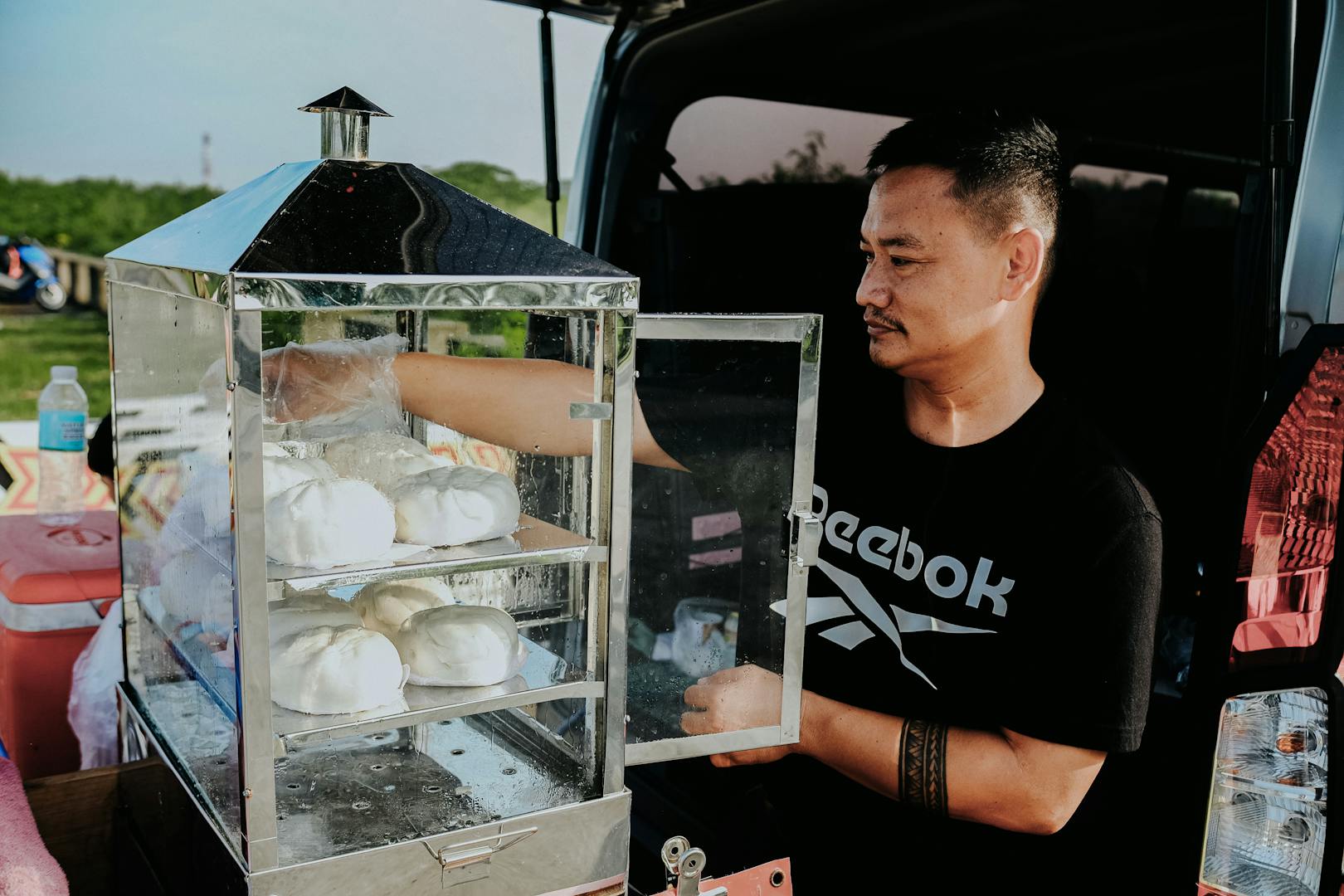
A whole squid butterflied over charcoal, basted with sweet soy and garlic, scissored into strips and handed over on a stick. Smoky, chewy, faintly sweet. Order it grilled rather than battered if you want to taste the squid. NT$150-300. Best at: Shilin, Raohe.
12. Sausage in Sausage (大腸包小腸 da chang bao xiao chang)
Literally “big intestine wraps little intestine”: a fat glutinous rice sausage split lengthwise as the bun for a grilled Taiwanese pork sausage, loaded with pickles, raw garlic and chilli. Sweet, smoky and structurally absurd. The plain grilled sausage (烤香腸) is the smaller version. NT$60-120.
13. Bubble Tea (珍珠奶茶 zhen zhu nai cha)
Black tea, milk and chewy tapioca pearls, invented in Taiwan in the 1980s, with Chun Shui Tang in Taichung the best-known claimant. Order by sugar and ice level – 半糖 (half sugar) and 少冰 (less ice) are the local settings that stop it tasting like syrup. See our bubble tea guide. NT$50-120. Best at: Shida, Gongguan.
14. Aiyu Lemon Drink (愛玉檸檬 ai yu ning meng)
A pale jelly set from the seeds of a Taiwanese climbing fig, floating in iced lemon syrup. Barely sweet, faintly citrusy, and the best counterweight to a bag of fried chicken. NT$30-60.
15. Shaved Ice (剉冰 cuo bing / 雪花冰 xue hua bing)
Two different things: coarse traditional ice with four chosen toppings and syrup, or snowflake ice shaved from a frozen milk block into ribbons. Mango is only genuinely good in season – Irwin mangoes run roughly mid-May to late August. Outside that, take taro, red bean or strawberry. Smoothie House and Ice Monster are the famous names. NT$60-120, or NT$150-300 for mango snowflake.
16. Tofu Pudding (豆花 dou hua)
Barely set soybean custard in thin ginger or brown sugar syrup, with toppings you choose: peanuts, taro, red bean, tapioca. Cold in summer, hot in winter, and one of the few night market desserts that is not deep-fried. NT$50-90.
17. Sticky Rice Roll (飯糰 fan tuan)
A dense log of glutinous rice wrapped around pork floss, pickled radish, egg and a length of youtiao for crunch. A breakfast item that shows up at night markets, and the most filling NT$60 on the street. NT$50-80.
18. Wheel Cake (車輪餅 che lun bing)
Batter cooked in circular moulds into a disc the size of a hockey puck, filled with red bean, custard, taro, peanut or savoury cabbage. Crisp at the rim, molten in the middle. Buy two flavours. NT$25-40 each.
19. Roasted Sweet Potato (烤地瓜 kao di gua)
Whole sweet potatoes roasted slowly in a drum oven until the sugars caramelise at the skin. Sold by weight, so the vendor weighs your pick. Nothing added, and the best cheap thing to eat while walking on a cold night. NT$60-100.
20. Castella Cake (蜂蜜蛋糕 feng mi dan gao)
A Japanese-derived honey sponge baked in enormous trays, cut warm, and so aerated it wobbles. Light, eggy, faintly sweet. The Nanjichang version is the one people queue for. NT$80-150 per slice.
Eight More Dishes Worth Ordering
Gua Bao (刈包)
The “Taiwanese hamburger”: a folded steamed bun holding braised pork belly, pickled mustard greens, crushed peanuts and coriander. Lan Jia at Gongguan is Bib Gourmand listed and lets you pick your fat ratio – ask for lean (瘦肉) if belly fat is not your thing. NT$55-80.
Tianbula (甜不辣)
Taiwanese oden, named from the Japanese word tempura. Fish cakes, tofu and daikon simmered in light broth with a sweet miso-ish sauce, usually with free broth refills. The safest thing on the street for cautious eaters. NT$50-80.
Braised Pork Rice (滷肉飯)
Finely chopped fatty pork slow-braised in soy, five-spice and rice wine, spooned over rice. A small bowl is the classic filler between snacks, and every shop claims a different fat-to-lean ratio. NT$30-60 a small bowl.
Taro Balls (芋圓)
Chewy taro and sweet potato dumplings in light syrup, hot in winter and over ice in summer – the Jiufen speciality that migrated to Taipei. The deep-fried version at Liu Yu Zai in Ningxia, wrapped around salted egg yolk and pork floss, has held a Bib Gourmand mention since 2018. NT$25-35 fried, NT$50-70 a bowl.
Coffin Bread (棺材板)
A Tainan invention: a thick slab of white bread deep-fried, hollowed out, filled with creamy seafood or chicken chowder and lidded. Not native to Taipei, so it appears at tourist-facing markets rather than local ones. NT$60-100. Best at: Shilin, Ximending.
Salt and Pepper Mushrooms (鹽酥杏鮑菇)
King oyster mushrooms cut into batons, battered, fried and tossed with the same basil-garlic-pepper mix as the chicken. Meaty enough that omnivores order it by choice, and the best vegetarian item at most fried-food counters – though the fryer is shared. NT$50-80.
Papaya Milk (木瓜牛奶)
Ripe papaya blended with fresh milk into something between a juice and a milkshake. Thick, mellow and caffeine-free – the drink for children while the adults have bubble tea. NT$50-80.
Herbal Pork Ribs Soup (藥燉排骨)
Pork ribs simmered in a medicinal broth of angelica root, goji and jujube, with a saucer of soy and chilli for dipping the meat. Sweet, bitter and restorative, and a Bib Gourmand-listed Raohe institution. Order it on a cold night. NT$70-120.
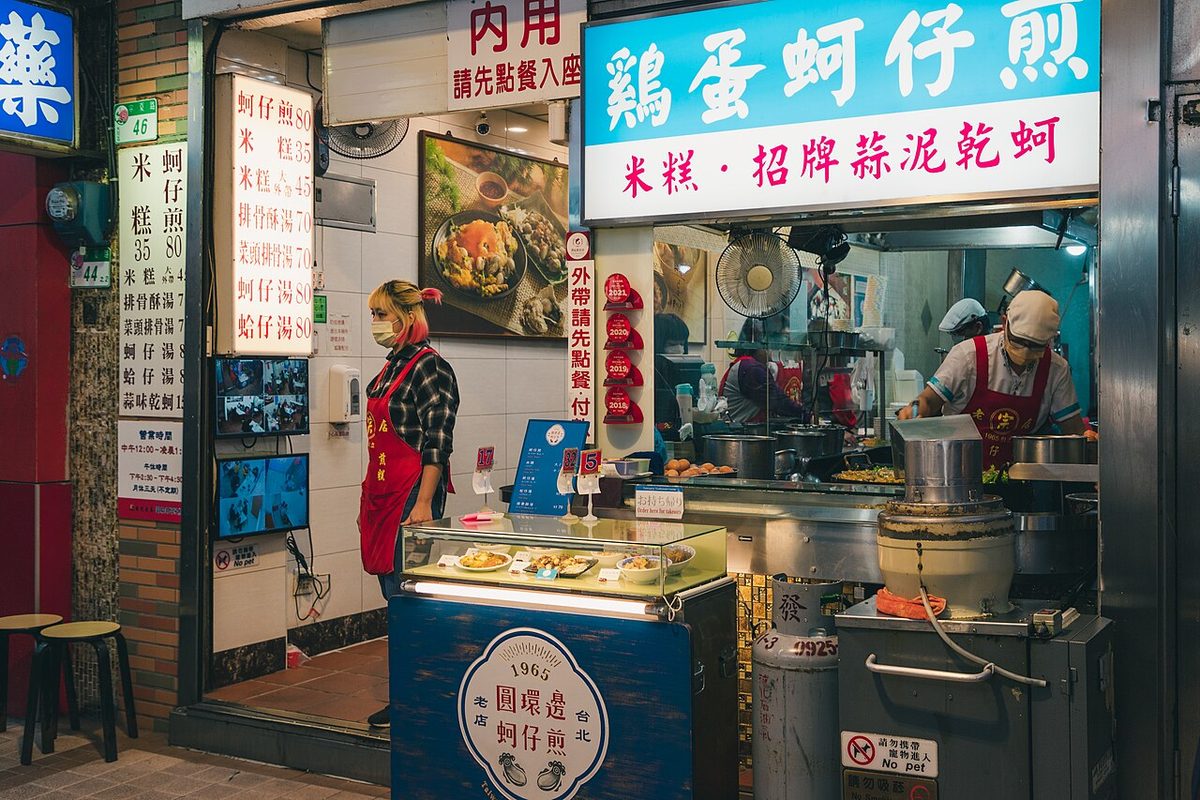
Photo: Ji Soo Song, CC BY 2.0, via Wikimedia Commons.
Which Night Market to Visit for Which Food
Some dishes are signatures of specific markets:
Shilin Night Market: Hot-Star fried chicken cutlet, oyster omelet, mango shaved ice, grilled squid, fresh fruit juice, candied fruit on a stick, coffin bread. The biggest and most tourist-oriented.
Raohe Night Market: Fu Zhou black pepper bun, herbal pork ribs soup, oyster vermicelli, grilled squid, stinky tofu. One 600-metre street, several Bib Gourmand stalls, the highest hit rate per minute walked.
Ningxia Night Market: oyster omelet, oyster vermicelli, fried taro balls, sesame oil chicken, tofu pudding, mochi. Short, food-only, and the most vegetarian-friendly of the big markets.
Nanjichang Night Market: Bib Gourmand stinky tofu, Tainan-style noodles, castella cake, pan-fried buns. Best pure food quality, almost no tourists.
Tonghua Night Market: salt and pepper chicken, sausage in sausage, beef noodles. Local prices, walkable from Taipei 101.
Shida Night Market: bubble tea, fried chicken, modern fusion snacks, student prices, younger crowd.
Huaxi Street (Snake Alley): Tainan-style noodles, medicinal soups, drunken shrimp. Historic, quiet, and covered – a useful rainy-night option.
How to Order Without Speaking Mandarin
Pointing works at essentially every stall. These five phrases cover the rest:
這個 (zhe ge) – “this one.” Point and say it. 一個 / 兩個 (yi ge / liang ge) – one / two.
內用 (nei yong) – eat in. 外帶 (wai dai) – take away. Sit-down stalls will ask this first.
不要辣 (bu yao la) – no chilli. 不要香菜 (bu yao xiang cai) – no coriander. Both are added by default in many dishes.
Google Translate’s camera mode handles menu boards. For dish names, Taipei City publishes a free multilingual menu of one hundred foods as downloadable PDFs by cooking method – save the deep-fried and noodles sheets to your phone before you go.
Cash, Cards and What to Bring
Cash rules. The large majority of stalls are cash-only. Bring NT$500-1,000 per person in small notes; NT$1,000 notes annoy vendors at 6pm.
Cards mostly do not work. Sit-down restaurants inside market streets sometimes take them. Individual stalls almost never do.
Mobile payment is spreading unevenly. Some stalls now accept LINE Pay, Taiwan Pay or an EasyCard tap. Treat any of it as a bonus, not a plan.
ATMs are everywhere. Every 7-Eleven and FamilyMart has one, most accept foreign cards, and there is usually a branch within a block of any night market.
Seating, Etiquette and How Not to Annoy Anyone
Most food is eaten standing or walking. Step out of the flow of traffic to eat – stopping dead in a narrow lane is the one thing that irritates locals.
Stools belong to a stall. If a stall has tables, they are for that stall’s customers. Order before sitting.
Return your bowl. Sit-down noodle stalls expect you to carry the bowl back to the counter or leave it stacked, not walk off.
Do not eat or drink on the MRT. This includes water and includes the paid areas of stations. Fines are enforced, typically in the NT$1,500-7,500 range. Finish your bubble tea before the gates.
Do not stick chopsticks upright in rice. It mirrors funeral incense. Lay them across the bowl.
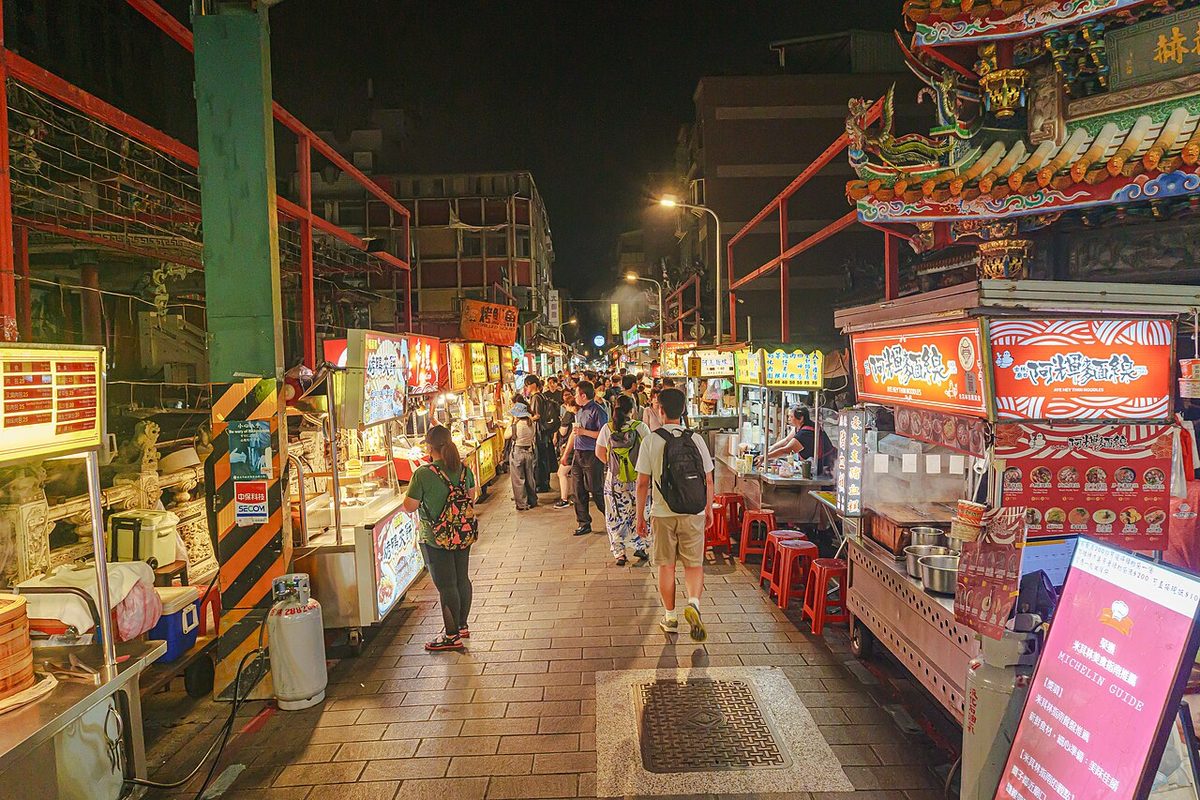
Photo: Junyu-K, CC BY-SA 4.0, via Wikimedia Commons.
Hygiene and How to Pick a Good Stall
Taiwan’s food safety standards are high and travellers very rarely have problems. Still, the difference between a great stall and a mediocre one is visible from ten metres away.
Follow the queue. Turnover is the single best proxy for freshness and quality. A line of locals beats any guidebook.
Prefer cooked-to-order. Anything fried, grilled or boiled in front of you is safest. Be more cautious about food sitting under a heat lamp.
Check the oil. Fresh frying oil is pale gold. Dark, foamy, acrid-smelling oil means it has been worked hard.
Watch the handling. Tongs, gloves or chopsticks used for raw and cooked separately is a good sign; bare hands taking cash and then food is not.
Be careful with pre-cut fruit. Fruit cut hours ago and sitting unrefrigerated is the most common minor culprit. Whole fruit blended in front of you is fine.
Vegetarian, Vegan and Halal Options
Taiwan has a large Buddhist vegetarian population, so meat-free food is easier here than in most of Asia – but night markets are still meat-heavy and lard is common.
Look for 素 (su). A stall displaying that character, often on a yellow sign with a swastika-like Buddhist symbol, is fully vegetarian. Most such stalls are also onion- and garlic-free.
Reliable meat-free orders: salt and pepper mushrooms, scallion pancake (ask for no egg for vegan), sweet potato balls, roasted sweet potato, tofu pudding, aiyu jelly, shaved ice, wheel cakes, papaya milk, fresh juice, and vegetarian stinky tofu.
Hidden animal products: dried shrimp, fish sauce, bonito stock and lard turn up in dishes that look vegetarian. Oyster vermicelli broth is never vegetarian. Ask: 有沒有肉? (you mei you rou? – does it have meat?).
Halal: individual night market stalls are not halal certified, and pork is the default meat. Taipei does run a formal Muslim-friendly certification scheme, and the city’s official Halal Travel Guide lists certified restaurants, mosques and prayer rooms. In a night market, stick to certified vendors, sealed drinks, whole fruit and clearly vegetarian stalls.
For a full sit-down meal, our guide to vegetarian restaurants in Taipei has the buffet and fine-dining options.
Allergies and What to Watch For
Allergen labelling does not exist at stall level, and vendors may not understand the question. Assume the following:
Peanuts are everywhere. Gua bao, tofu pudding, wheel cakes, shaved ice toppings, peanut ice cream rolls and many sauces. Peanut powder is often added at the end without asking.
Shellfish is common. Oysters in two of the most famous dishes, dried shrimp in stocks and rice dishes, and squid on many grills.
Gluten and soy are near-universal. Soy sauce is in almost every braise; wheat noodles, batter and buns are everywhere. A coeliac night market meal is very difficult.
Shared fryers. One oil bath handles chicken, squid, tofu and vegetables. Cross-contamination is a certainty, not a risk.
If your allergy is severe, write it in Chinese on a card before you travel and show it at every stall – and treat sealed drinks, whole fruit and simply grilled items as the safest choices.
Practical Tips for Eating Night Market Food
Hand sanitiser and tissues. Many stalls provide neither, and a lot of the food is eaten with your hands.
Order in small amounts. Most snacks are NT$50-100. Plan to try 5-8 different stalls rather than filling up on one.
Hydrate. Bubble tea or fresh juice counter-balances the heavy fried foods.
Avoid heavy clothes. Night markets get warm with the crowds and cooking grills. Light layers work best.
Bring a carrier, not a stroller. Busy market lanes are close to impassable with wheels.
Bathrooms. Public bathrooms exist near most major markets – look at the entrance or the nearest convenience store.
Night Market Food Crawl Itinerary (Ningxia)
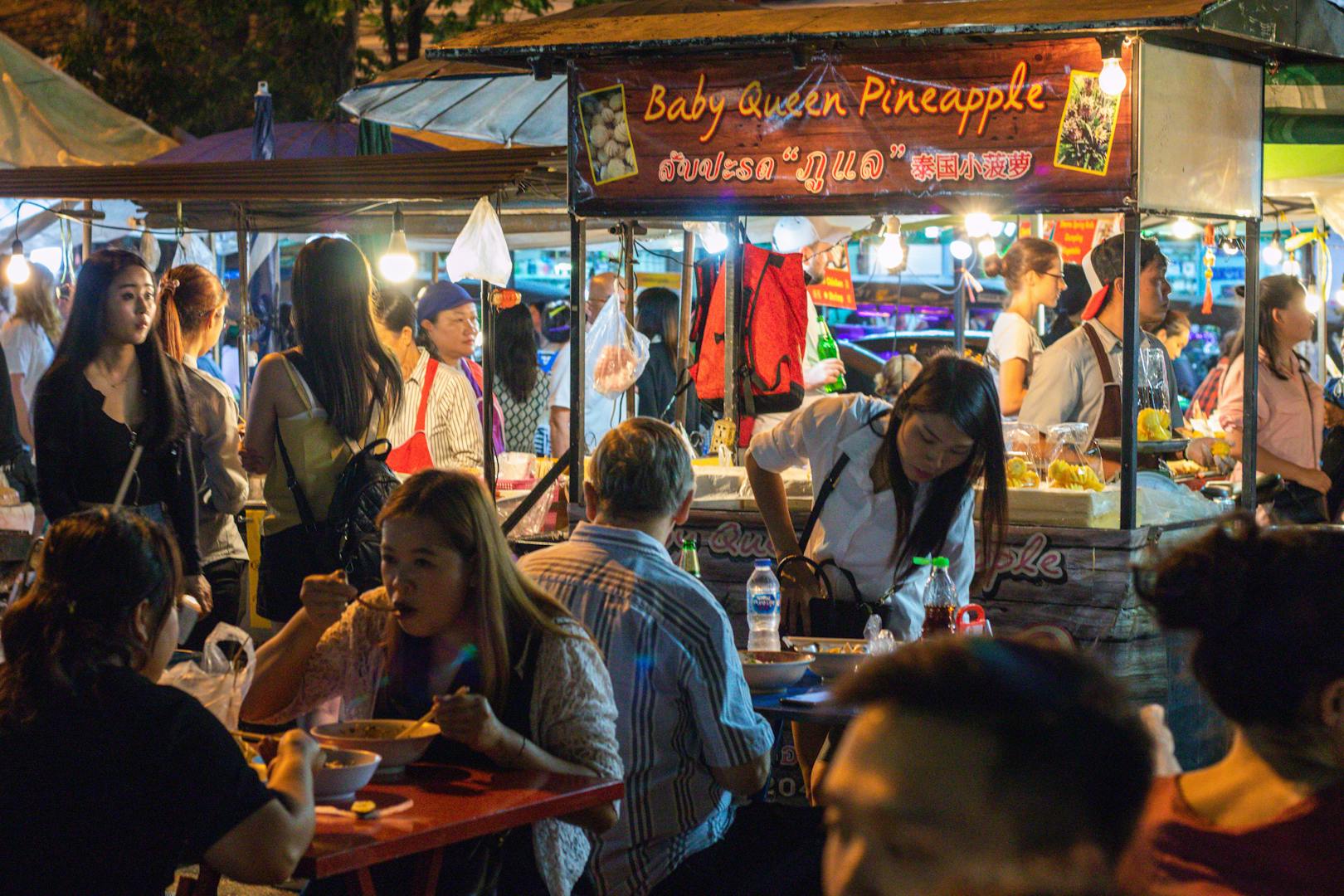
If you want a structured eating experience, try this Ningxia Night Market route. It is short, entirely food, and easy to walk end to end.
6:30pm: Arrive and walk the length of the market once without buying anything. Note the queues.
7pm: Oyster omelet – the Ningxia signature. NT$120.
7:30pm: Scallion pancake or pan-fried bao. NT$60-80.
8pm: The challenging one – stinky tofu. NT$80.
8:30pm: Reset with aiyu lemon or bubble tea. NT$60.
9pm: The protein moment – fried chicken cutlet or grilled squid. NT$150.
9:30pm: Dessert – tofu pudding or shaved ice. NT$120.
10pm: Last small bite – wheel cake or fried taro balls. NT$60.
Total per person: NT$650-800 for the full crawl, and you will have eaten seven signature night market dishes. Halve it by sharing every plate with someone.
Related Taipei guides
- Night Market Etiquette: How to Order Like a Local
- Best Night Market in Taipei: An Honest Comparison
- Things to Do in Taipei: 45+ Must-See Attractions & Experiences
Frequently Asked Questions
What is the most famous night market food in Taipei?
Black pepper bun, fried chicken cutlet, oyster omelet, stinky tofu and bubble tea are the five most famous. Each is associated with a particular market or shop – pepper buns with Raohe, chicken cutlets with Shilin – but all five are available at stalls across the city.
How much should I budget for a night market dinner in Taipei?
NT$400-800 per person for 5-8 dishes plus a drink. Under NT$400 if you stick to small snacks; NT$300-500 more if you add a sit-down bowl of beef noodle soup. Sharing every dish with a partner roughly halves the cost per dish tried.
What is the best night market for food in Taipei?
Nanjichang has the highest food quality with multiple Bib Gourmand stalls. Raohe has the best hit rate per minute walked. Shilin is the largest and most varied. Ningxia is the most compact and the most vegetarian-friendly. Pick by what you want, not by fame.
Should I eat stinky tofu?
Try it once at a reputable stall such as Stinky Tofu Lai’s. The smell is far stronger than the taste, and the pickled cabbage served with it does most of the work. At NT$60-80 it is a low-risk experiment, and the steamed and spicy-hotpot versions are milder if the fried one defeats you.
Is night market food safe for travelers?
Generally yes. Taiwan has high food safety standards and tourists rarely report problems. Choose busy stalls with high turnover, prefer items cooked to order in front of you, and be more cautious about pre-cut fruit that has been sitting out unrefrigerated.
Are there vegetarian night market options?
Yes. Look for the 素 character on a stall sign, which marks fully vegetarian vendors. Reliable orders include salt and pepper mushrooms, scallion pancake, sweet potato balls, tofu pudding, aiyu jelly, shaved ice, wheel cakes and fresh juice. Ningxia has the widest vegetarian range.
Is there halal food at Taipei night markets?
Individual stalls are not certified and pork is the default meat, so a night market is not the place for a halal meal. Taipei does run a Muslim-friendly certification scheme with a published list of certified restaurants, plus mosques and prayer rooms across the city. In the market itself, stick to sealed drinks, whole fruit and clearly vegetarian stalls.
What time do night markets open?
Most stalls open around 5pm and peak between 7pm and 9pm. Many run to 11pm or midnight and a few until 1-2am. Closing days rotate by market. Arriving at 5:30-6:30pm gets you the freshest food and the shortest queues.
How do I order food without speaking Chinese?
Point and say 這個 (zhe ge, “this one”), then hold up fingers for quantity. Learn 內用 (eat in), 外帶 (take away), 不要辣 (no chilli) and 不要香菜 (no coriander). Google Translate camera mode reads menu boards, and vendors will usually show you the price on a calculator.
Should I bring cash or cards to night markets?
Cash. The great majority of stalls take nothing else. Carry NT$500-1,000 per person in NT$50 and NT$100 notes, and refill at any convenience store ATM. Mobile payments and EasyCard taps are appearing at some stalls but are not reliable enough to plan around.
What is the difference between night market food and street food?
Largely the same thing in Taiwan – night markets are simply the main venue for Taiwanese street food. Some of the same dishes are sold at daytime food alleys such as Yongkang Street or at morning markets, but the night market is where the cuisine is most concentrated.
The Bottom Line
Night market food in Taipei delivers a multi-dish, NT$400-800 dinner crawl that ranks among the best food experiences in Asia. Go to Shilin for scale and variety, Nanjichang for Michelin-recognised quality, Raohe for the pepper buns and the densest run of great stalls, or Ningxia for a compact all-food market. Arrive by 6pm, bring small notes, share everything, alternate fried food with something cold, and start with the pepper bun, the oyster omelet and a stinky tofu you were not sure about. Seven dishes and NT$700 later, you will understand why locals eat here several nights a week.