This article contains advertising. Our booking links are routed through a partner that adds commission tracking automatically, so if you book through one we earn a commission from the provider, at no extra cost to you. It never affects what we recommend. Affiliate disclosure
Taipei is a city of mountains and rivers, not sand, and on a sticky August afternoon in the basin it is easy to forget that the sea is barely an hour away. It is, on three sides. North of Tamsui, the coast curls past pale bays and algae-green rock shelves to the northernmost tip of the island; east of Keelung, it turns wild and rocky, then opens into a three-kilometre sweep of golden sand at Fulong; further south, in Yilan, black-sand beaches draw surfers all year. The beaches near Taipei will not make anyone forget Thailand, and the sea here demands respect. But for a summer day of sand, swimming and a sunset on the way home, they are closer and better than most visitors realise.
This guide covers the beaches you can reach by train, bus or the tourist shuttle: Fulong and its sand sculpture festival, Baishawan and the north coast bays, the green reef at Laomei, the surf beaches of Yilan, when the swimming season runs, what it costs, how to stay safe in the water and which beach suits which kind of day. Prices and dates were checked in October 2026; treat them as the right order of magnitude and check before you travel. For the wider world of outdoor days around the city, see our guide to hiking in Taipei.
Beaches near Taipei at a glance
| Beach | Getting there | Best for | Cost |
|---|---|---|---|
| Fulong | Train, about an hour | Lifeguarded swimming in season, the summer sand sculpture festival | NT$220 in season |
| Baishawan | MRT to Tamsui, then bus or the 716 shuttle | An easy-going family beach on the north coast | No entry fee; showers and lockers extra |
| Qianshui Bay | Tamsui, then bus or shuttle | Sunset, cafés and a quick paddle | Free |
| Zhongjiao Bay, Jinshan | Tamsui or Keelung, then bus or shuttle | Surfing and a hot spring afterwards | Free |
| Laomei Green Reef | Tamsui, then bus or shuttle | Photographs, in April and May only | Free |
| Waiao, Yilan | Train to Waiao or bus to Toucheng | Surf lessons on a black-sand beach | Free; lessons extra |
What things cost
| Item | Typical cost (September 2026) |
|---|---|
| Fulong Beach, full ticket (ages 13–64) | NT$220; children 3–12 NT$145; 65 and over NT$110; under 3 free |
| Baishawan, Qianshui Bay, Zhongjiao Bay | Free; showers, lockers and parking may be charged separately |
| 716 north coast tourist shuttle from Tamsui | NT$15 per section, NT$90 end to end |
| Train from Taipei to Fulong | Tap your EasyCard; Taiwan Railways fares rose in 2025, so check the gate |
| Beach umbrella or chair hire | A few hundred NT$ for the day, where available |
| A railway lunch box at Fulong station | Roughly NT$100–150 |
| A beginner surf lesson in Yilan | Varies by school; board hire usually included — ask before you book |
Before you go: the Taiwanese beach season
Taiwan’s beaches have a season, and it matters more than the weather. Official swimming beaches — the ones with lifeguards, marked swimming zones, showers and changing rooms — typically open around May and close in the autumn, and outside those dates there are no lifeguards and swimming is discouraged or banned. The reason is the sea itself: the coasts around Taipei face open water, currents are strong, and swells from distant typhoons can reach the beach on a perfectly sunny day.
Two more things surprise visitors. First, many Taiwanese beachgoers avoid the sun rather than seek it: you will see long sleeves, face masks, wide hats and a forest of umbrellas, and a pale tan-free complexion is still widely admired. Nobody will mind if you sunbathe, but do not be surprised to be the only one. Second, from about November to March the north-east monsoon blows down the coast, bringing wind, drizzle and big surf. Winter is a fine time to walk the beaches and a poor time to swim in them.
If you are reading this in late October or later, when the season has ended, skip ahead to the sections on the north coast and Yilan: the bays are lovely for a walk, surfers are in the water all winter, and the green reef at Laomei comes into its own in spring.
Fulong: Taipei’s best beach
Fulong Beach (福隆海水浴場), in Gongliao on the north-east coast, is the beach most Taipei families mean when they say “going to the beach”. It is a long, gently curving sweep of golden sand — around three kilometres of it — on a spit between the mouth of the Shuangxi River and the Pacific, with mountains rising behind. The sand is the best near Taipei: fine enough for sculpture, which is exactly what happens to it every summer.
The Fulong International Sand Sculpture Art Festival
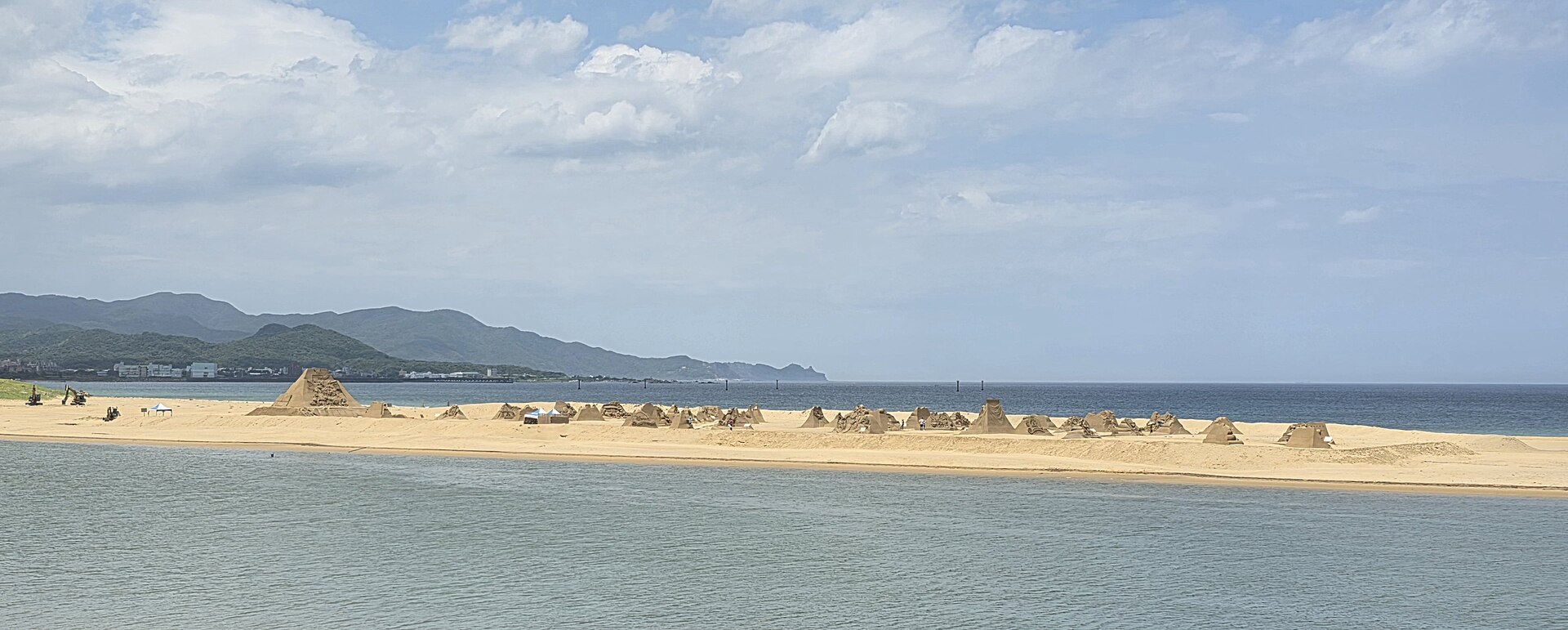
Every summer the spit becomes an open-air gallery for the Fulong International Sand Sculpture Art Festival (福隆國際沙雕藝術季). The 2026 edition, its nineteenth, ran from 29 May to 26 October 2026 under the theme “Global Summer Sand Sculpture Party”, with many of the sculptures based on famous film and animation characters. The beach itself had opened for the season on 1 May. The sculptures are impressive and extremely popular with families, and in 2026 they were included in the beach ticket.
The beach and festival are run by the neighbouring Fullon Hotel. The official details for 2026:
- Tickets: NT$220 full (ages 13–64); NT$145 for children aged 3–12; NT$110 for 65 and over. Under-3s, disabled visitors with one companion, and hotel guests enter free.
- Park hours: during the 2026 festival, Monday to Friday 08:00–19:00 (last entry and ticket sales 18:00); Saturday, Sunday and holidays 08:00–19:30 (last entry 18:30). Outside the festival, check Fullon Hotel Fulong for beach access and opening hours.
- Swimming: in 2026 the marked sea-swimming area was open from 1 May to 20 October, with lifeguards on duty 08:00–17:00. Late in the season, autumn swells can close it on the day — ask at the gate.
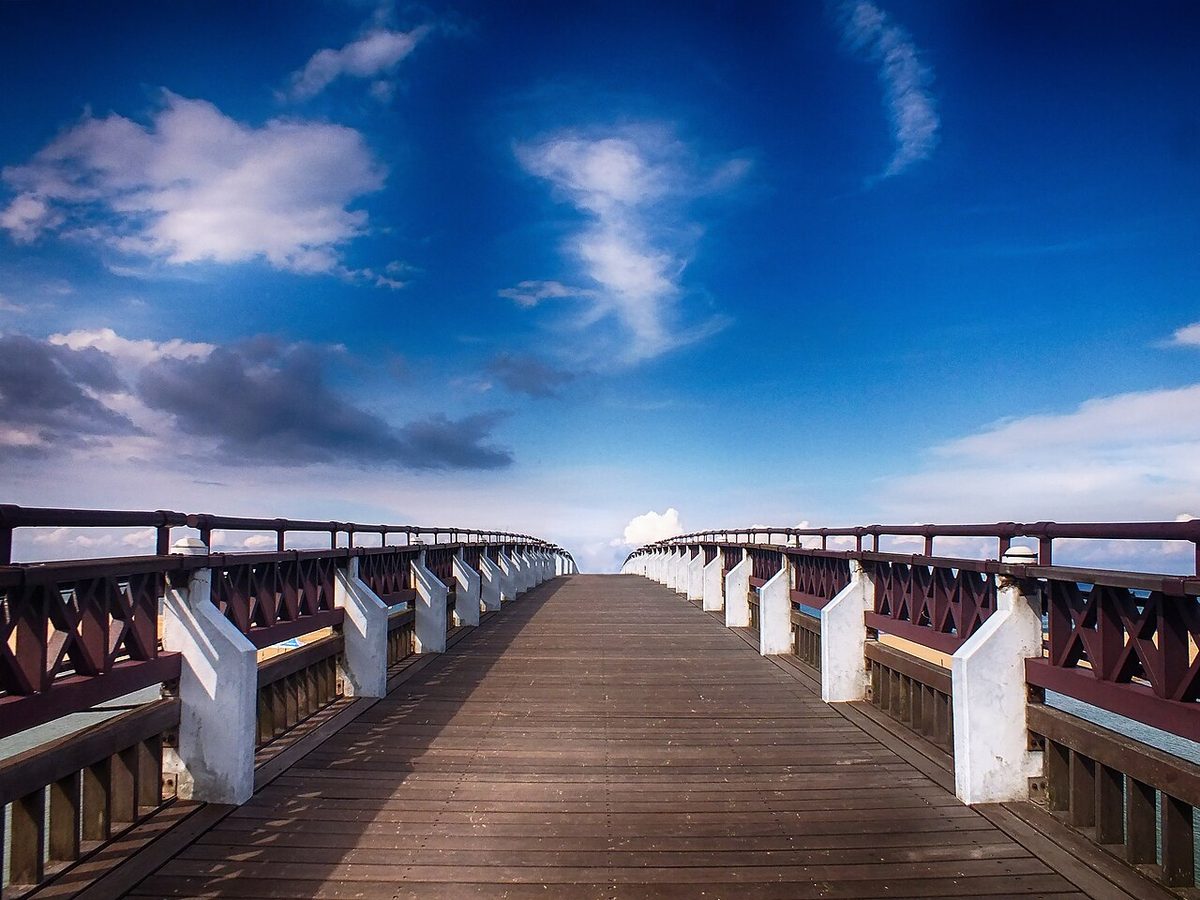
- Facilities: showers, changing rooms, lockers, food and drink stalls, umbrellas and a long wooden footbridge across the river mouth to the sand.
New Taipei City’s tourism site lists the festival on its official events page, and the Tourism Administration carries it on its events calendar: look there for the next edition’s dates.
Getting to Fulong
Take a Taiwan Railways train from Taipei Main Station, Songshan or Nangang to Fulong (福隆) on the line to Yilan. Journey times vary with the train — a little over an hour on the fastest services that stop there, an hour and a half or more on local trains — so check the timetable and look for trains that actually call at Fulong, as many expresses do not. From the station, it is a short walk to the beach park entrance. Summer weekend trains are busy; go early or on a weekday.
Around Fulong
- Fulong bento: Fulong station is famous across Taiwan for its railway lunch boxes (福隆便當), rice topped with braised pork, egg and pickles, sold at stalls around the station. Buy one for the beach or the train home.
- The Old Caoling Tunnel cycle path: bicycle rental shops near the station hire bikes for a ride through a disused railway tunnel more than two kilometres long, emerging on the coast at Shicheng in Yilan. It is cool inside even on the hottest day.
- The Caoling Historic Trail: the Qing-dynasty path over the hills to Dali starts near Fulong and makes a superb walk in the silver-grass season of late autumn, when the beach is closed.
Honest verdict: in season, Fulong is the best beach day from Taipei, and the sculptures make it a hit with children. Outside the season, when the facilities close and the lifeguards leave, the beach is a windswept place for a walk, and the bike path and the historic trail become the better reasons to come.
Baishawan and the north coast
North of Tamsui, the coast road wraps around the top of the island past a string of bays, rock shelves, capes and fishing harbours. From Tamsui MRT station, the 716 tourist shuttle links many of its bays and sights. Our guide to Taiwan’s north coast covers the whole route by car and bus; here are the beaches.
Baishawan
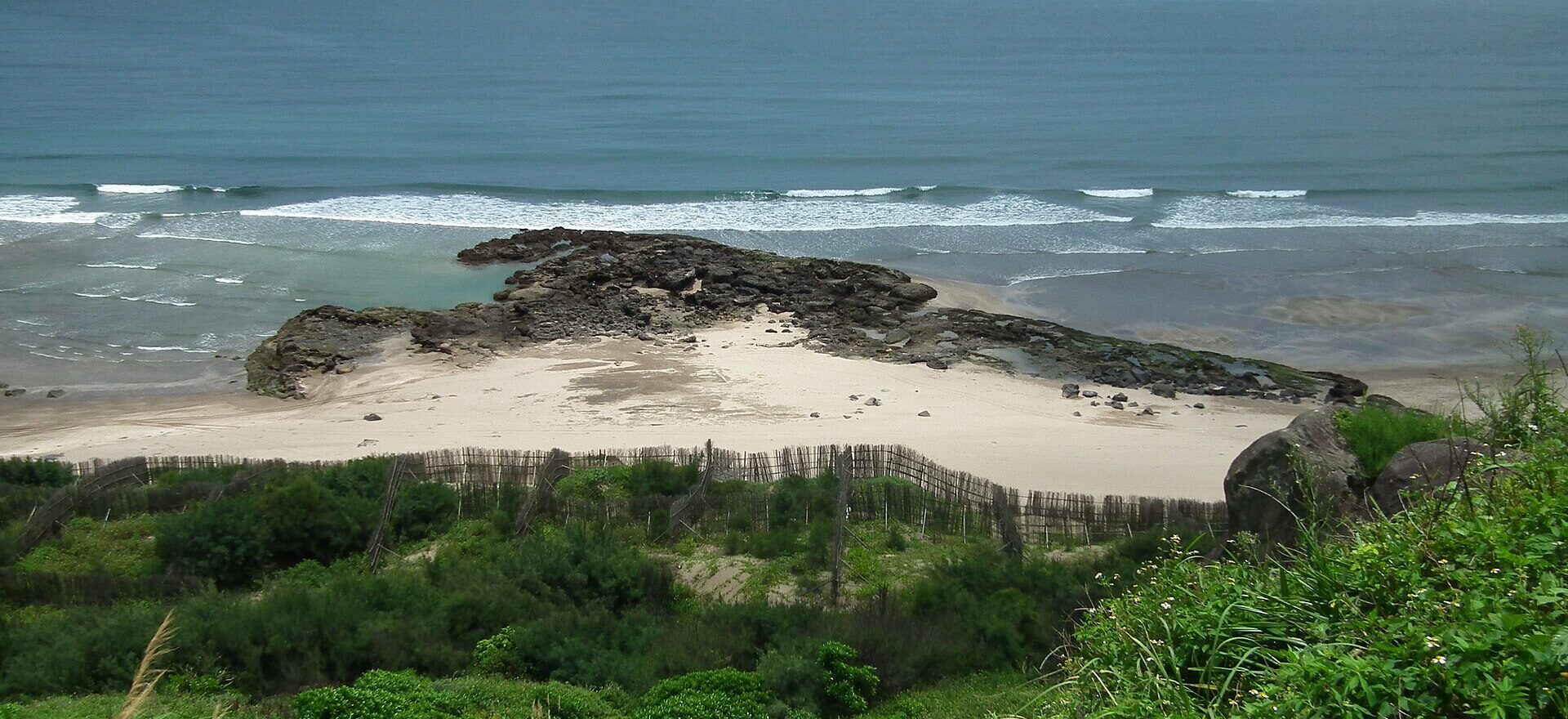
Baishawan (白沙灣, “white sand bay”), in Shimen District, is the north coast’s classic family beach: about a kilometre of pale sand between Fugui Cape and Linshanbi, with gentle slopes, a visitor centre for the North Coast and Guanyinshan National Scenic Area, and cafés and snack stalls along the road. It is free, more relaxed than Fulong, and in summer it fills with families, sandcastles, kite fliers and water-sport rentals. Swim only when lifeguards are on duty in the summer season and inside the marked area.
Getting there: MRT to Tamsui, then one of the coastal buses in the 860 series or the 716 shuttle to the Baisha Bay stop. Allow under an hour from Tamsui, depending on the bus and traffic.
Qianshui Bay
A little closer to Tamsui, Qianshui Bay (淺水灣, “shallow water bay”) in Sanzhi is a small, shallow cove with a rocky shore, lined with cafés and restaurants facing the sunset. It is less a swimming beach than a place to paddle, sit with a drink and watch the sky turn orange, and at low tide children explore the rock pools. It makes a good last stop on the way back to Tamsui.
Laomei Green Reef
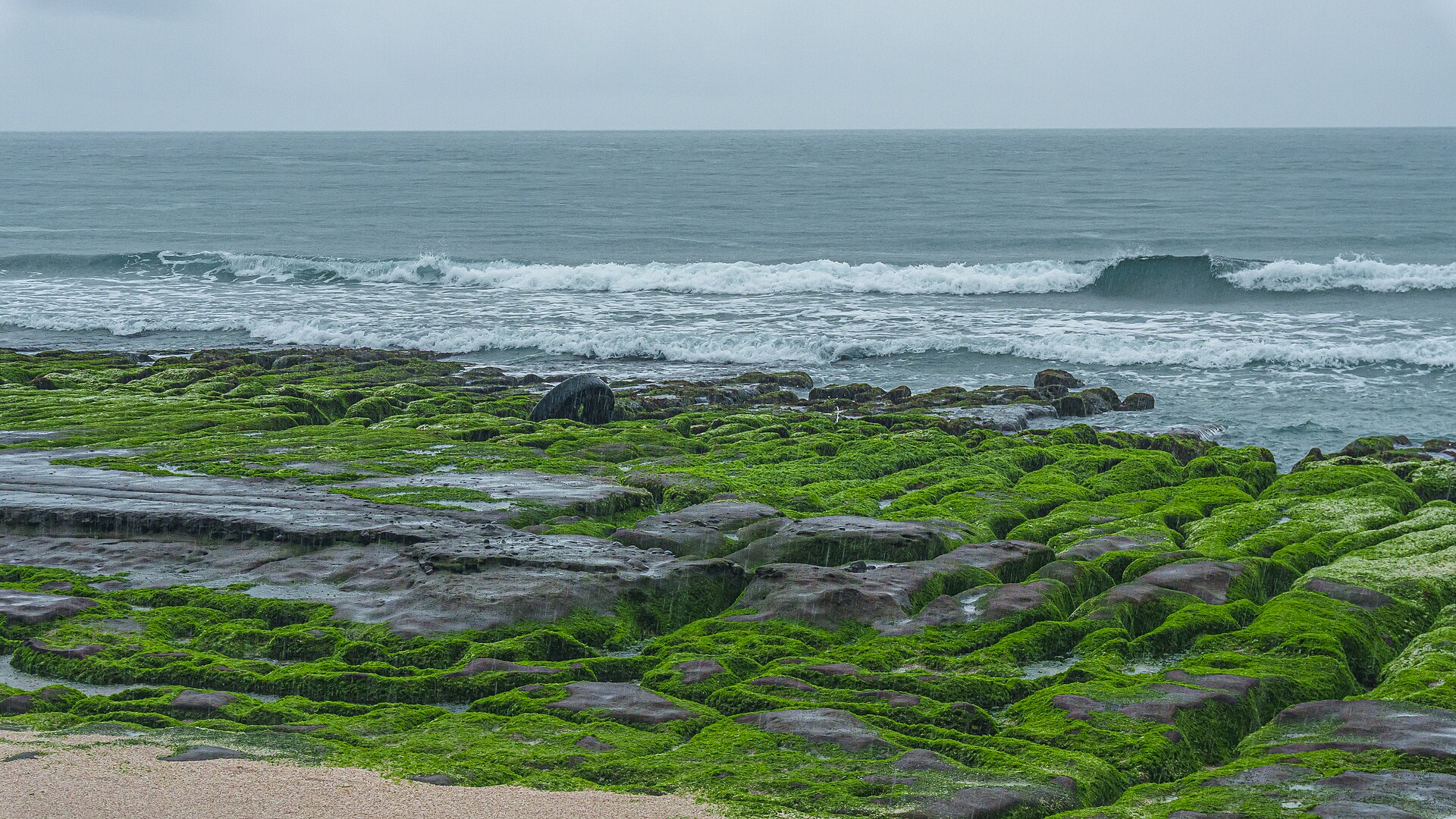
At Laomei (老梅), in Shimen, long ridges of volcanic rock run into the sea like the teeth of a comb. For a few weeks each spring they are covered in bright green algae, and the Laomei Green Reef (老梅綠石槽) becomes one of the most photographed places on the island. The green is at its best in April and May, and fades as the weather warms; at other times the reef is bare rock. It is not a swimming beach, and the algae is slippery and fragile — walk only where the paths allow, and watch the waves.
Cape Fugui and beyond
Just beyond Laomei, Cape Fugui is the northernmost point of Taiwan’s main island, with a black-and-white lighthouse whose grounds are open to visitors (09:00–18:00 from April to October, 09:00–17:00 from November to March, closed Mondays). The walk around the cape passes wind-sculpted rocks and grassland above the sea. Further east, the Juming Museum‘s outdoor sculpture park and the old streets and seaside hot springs of Jinshan are both on the 716 route.
Zhongjiao Bay, Jinshan
Zhongjiao Bay (中角灣) near Jinshan is the north coast’s surf beach, a broad bay with steady waves in the cooler months, surf shops and a scattering of cafés. Beginners are better off in Yilan (below), but it is a good place to watch the surfers, and Jinshan’s seaside hot springs are close by for a soak afterwards. Our guide to Taipei hot springs covers the options.
The 716 shuttle
The 716 Crown Northern Coast shuttle leaves from Tamsui MRT station and runs along the coast via Qianshui Bay, the Sanzhi Visitor Center, Baisha Bay, Fugui Cape Lighthouse, Laomei Green Reef, Shimen Arch, Zhongjiao Bay, the Juming Museum and Jinshan to Yehliu Geopark; allow a couple of hours end to end. Service days and frequency change with the season, so check the current timetable on the North Coast and Guanyinshan National Scenic Area site before you go, and note the last bus back. Fares are NT$15 per section, NT$90 for the full journey, payable by EasyCard, and the Taipei Fun Pass covers it.
Keelung and the north-east coast
East of Keelung the coast becomes rockier and wilder: sea cliffs, headlands and tiny coves rather than long beaches. It is superb for walking — the Bitou Cape trail loops around a lighthouse on a headland — and for snorkelling, diving and rock climbing around Longdong (龍洞), where clear water over rocky reefs draws divers from all over northern Taiwan. Keelung itself has small beaches along its coastal parks and, in the evening, its famous night market; see our Keelung day trip. None of these is a swimming beach in the Fulong sense, and snorkelling and diving here are best done with a local operator who knows the conditions.
Yilan: black sand and surf
South of Fulong, the coast crosses into Yilan County and the beaches change colour. Waiao (外澳), near Toucheng, is a long beach of dark sand that has become the centre of Taiwan’s surfing scene, with a strip of surf schools, board rental shops, cafés and hostels behind it. Its gentle, consistent waves make it one of the best places in Taiwan to learn, and in summer the water is full of beginners on soft boards. A little further north, Honeymoon Bay (蜜月灣) at Daxi is a smaller, prettier cove with more experienced surfers.
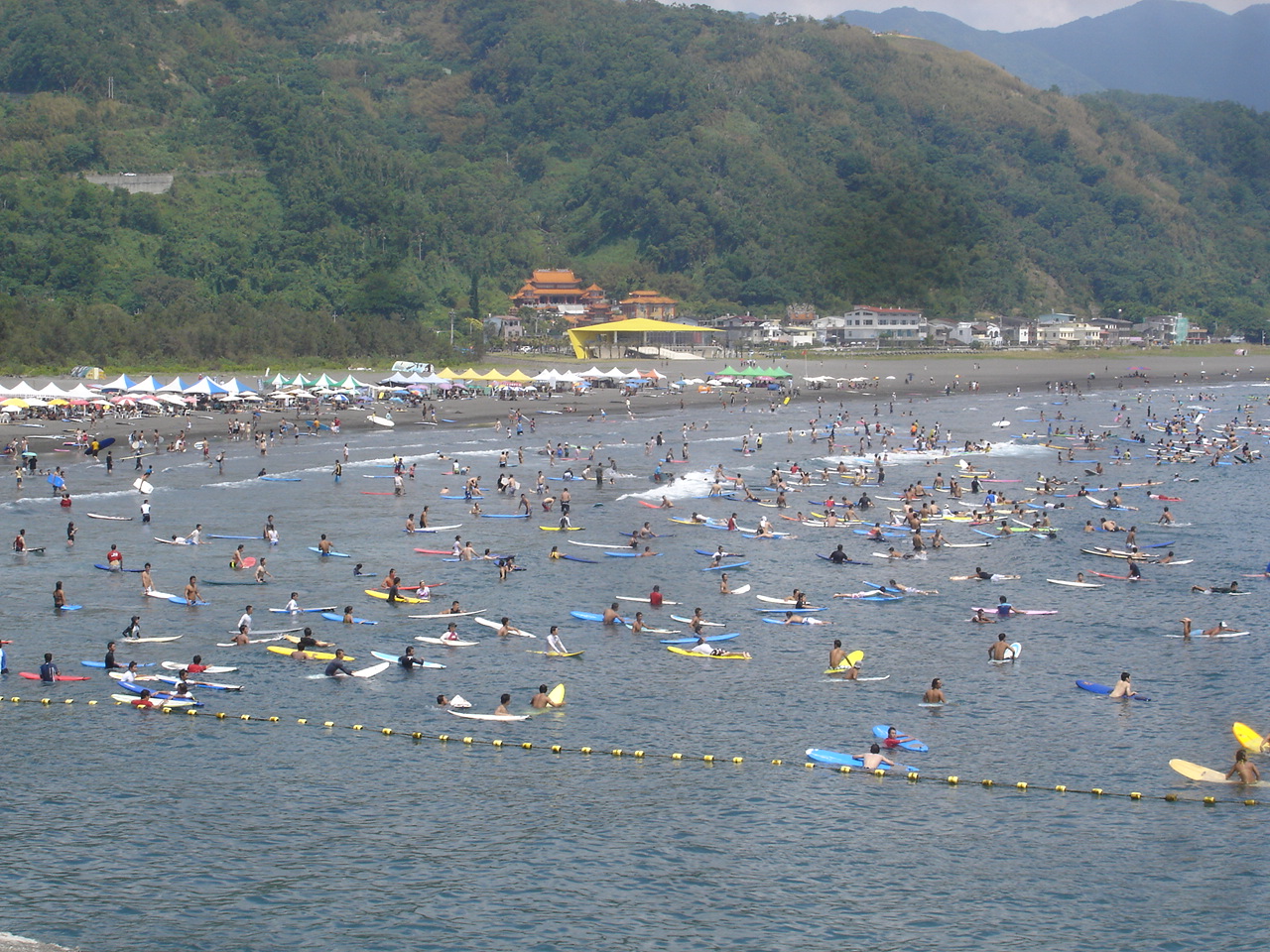
- Getting there: local trains stop at Waiao station, practically on the beach; alternatively take a train or bus to Toucheng and a short taxi ride.
- Surf lessons: schools along the beach run beginner lessons with board and rash vest included. Prices vary by school and season — ask before you book, and choose one with qualified instructors.
- Beyond the beach: Waiao is a good base for trips to Guishan Island and whale watching from Wushi Harbour, and Jiaoxi’s hot springs are nearby. Our guide to Yilan from Taipei covers the county, and our Jiaoxi hot springs guide the soak afterwards.
Which beach for what?
| If you want… | Go to |
|---|---|
| Sand and lifeguarded swimming | Fulong, in season |
| A free, easy family beach close to the MRT | Baishawan |
| Sunset with a drink | Qianshui Bay |
| A surf lesson | Waiao |
| Photographs nobody else has | Laomei Green Reef in April or May, early in the morning |
| Snorkelling or diving | Longdong, with a local operator |
| A beach and a hike | Fulong and the Caoling Historic Trail, or Cape Fugui and its coastal path |
| A proper tropical beach holiday | Kenting, at the southern tip of Taiwan — see our Kenting guide |
Staying safe in the water
Taiwan’s coastal waters are beautiful and genuinely dangerous, and drownings happen every summer. The rules are simple:
- Swim only at official beaches, in season, when lifeguards are on duty, and only inside the marked swimming zone.
- Respect the flags and the whistles. If a lifeguard calls you in, come in.
- Beware of rip currents. If you are pulled out to sea, do not swim straight back against the current: swim parallel to the shore until you are out of it, then swim in, or float and signal for help.
- Stay out of the water when a typhoon is anywhere near Taiwan, even on a sunny day. Swells travel far ahead of the storm, and coastal areas close.
- Keep off wet rock shelves near the waves. Rogue waves sweep people off rocks along this coast every year, especially anglers and photographers.
- Some beaches ban swimming altogether — Qixingtan near Hualien, for one — because of dangerous currents. Take the signs seriously.
- In an emergency, dial 118 for the Coast Guard or 119 for rescue and ambulance.
For forecasts, marine warnings and typhoon news, the source of record is the Central Weather Administration’s English site. Our guide to typhoon season in Taipei explains what warnings mean for your plans.
What to bring
- Serious sun protection: high-factor sun cream, a hat, sunglasses and a light long-sleeved top. The summer sun here is fierce, and shade on the sand is scarce.
- A beach umbrella or sunshade, if you have one; rentals are not available everywhere.
- Water and snacks. Stalls exist at the big beaches, but not at the quieter bays.
- Beach shoes for rocky shores and hot sand.
- A towel and a change of clothes for the train or bus home, plus a bag for wet swimwear.
- Cash for showers, lockers and small stalls, and an EasyCard for buses and trains.
- A bag for rubbish. Leave the beach cleaner than you found it.
A beach day on the north coast
| Time | Plan |
|---|---|
| 08:30 | MRT to Tamsui |
| 09:30 | The 716 shuttle or a coastal bus to Baishawan |
| 10:00–13:00 | Swim, sand and lunch at Baishawan |
| 13:30 | Shuttle on to Cape Fugui for the lighthouse and the coastal path (or Laomei in April and May) |
| 15:30 | The Juming Museum or Jinshan’s old street and a hot spring |
| 17:30 | Back towards Tamsui, stopping at Qianshui Bay for sunset |
| 19:30 | Dinner on Tamsui’s waterfront — see our Tamsui day trip — and the MRT home |
For Fulong, keep it simple: a morning train, the beach and the sculptures until mid-afternoon, a bento at the station, and a bike ride through the Old Caoling Tunnel if you still have energy.
Beaches with children
Fulong in season is the best choice with children: lifeguards, showers, a long shallow shoreline, food on site and the sand sculptures to explore. Baishawan is a close second and free. Keep children within arm’s reach in the water, even in the swimming zones — waves here can knock over small swimmers in the shallows — and stick to rock pools at low tide rather than rock shelves at high tide. Our guide to Taipei with kids has more ideas for summer days.
What we would skip
- Swimming anywhere without lifeguards, however calm it looks. The currents here are not a myth.
- Fulong out of season as a special trip. Without the lifeguards, the sculptures and the facilities, it is a long train ride to a windswept spit. Come for the bike tunnel or the historic trail instead.
- Laomei Green Reef outside April and May. Without the algae, it is grey rock.
- Beach plans during a typhoon warning, even if the sun is shining in Taipei.
- Kenting for a weekend from Taipei. It has the best beaches in Taiwan, but it is four and a half hours or more each way. Give it three days or leave it.
- Expecting the Mediterranean. These are wild, windy, working coasts with fishing harbours and sea walls. Come for what they are.
Related Taipei guides
- Hiking in Taipei: Best Trails, Beaches & Outdoor Escapes
- Taiwan’s North Coast
- Tamsui Day Trip
- Yehliu Geopark Day Trip
- Keelung Day Trip
- Yilan from Taipei
- Kenting from Taipei
- Taipei in Summer
- Taipei Typhoon Season
- Day Trips from Taipei
Frequently Asked Questions
What is the best beach near Taipei?
Fulong, on the north-east coast a little over an hour by the fastest trains, has a sandy beach with lifeguarded swimming in season and the summer sand sculpture festival. Baishawan on the north coast is the best free alternative and easy to reach from Tamsui.
How do I get to Fulong Beach from Taipei?
Take a Taiwan Railways train from Taipei Main Station to Fulong station, a little over an hour on the fastest trains that stop there and an hour and a half or more on local trains. The beach park entrance is a short walk from the station.
How much does Fulong Beach cost?
In the 2026 season, tickets were NT$220 for ages 13–64, NT$145 for children aged 3–12 and NT$110 for 65 and over, and covered the sand sculpture festival, which ran until 26 October. Under-3s, disabled visitors with one companion, and guests of the neighbouring hotel entered free. Check Fullon Hotel Fulong for current admission before you go.
When is the Fulong Sand Sculpture Festival in 2026?
The 2026 festival, the nineteenth, ran from 29 May to 26 October at Fulong Beach, which had opened for the season on 1 May. During the festival the park opened 08:00–19:00 on weekdays and 08:00–19:30 at weekends and on holidays. For the next edition’s dates, check New Taipei City’s tourism calendar.
Can you swim at beaches near Taipei?
Yes, at official beaches such as Fulong and Baishawan during the summer season, when lifeguards are on duty, and only in the marked swimming areas. Currents are strong, and swimming outside the season or away from lifeguards is dangerous.
When is beach season in Taipei?
Official swimming beaches usually open around May and close in the autumn. July and August are the hottest months and the busiest at the beach, but they are also typhoon season, so check the forecast. From November to March the north-east monsoon brings wind and big surf.
Is Baishawan free?
Yes. Baishawan, in Shimen District on the north coast, has no entry fee; showers and lockers are charged, and parking may be too. It is reached by bus or the 716 tourist shuttle from Tamsui MRT station.
Where can I surf near Taipei?
Waiao in Yilan, near Toucheng, is the centre of Taiwan’s surf scene, with surf schools and board rental on a long black-sand beach; local trains stop at Waiao station. Honeymoon Bay at Daxi and Zhongjiao Bay near Jinshan are other popular spots.
When is Laomei Green Reef green?
April and May are the peak months, when the rock ridges are covered in bright green algae. At other times of year the reef is bare rock. It is not a swimming spot, and the algae is slippery.
Does the 716 shuttle run all year?
It runs daily from May to October, and only at weekends and on public holidays from November to April. Fares are NT$15 per section and NT$90 for the whole route from Tamsui to Yehliu, and the Taipei Fun Pass covers it.
Are there beaches in Taipei city itself?
No. Taipei City is inland, in a basin. The nearest beaches are on the north coast, reached via Tamsui, and on the north-east coast around Fulong, both in New Taipei City and about an hour or more away.
Is it safe to swim at Fulong?
Inside the marked swimming area, in season, with lifeguards on duty, yes — it is the most carefully managed beach near Taipei. Outside those hours and dates, and whenever typhoon swells are running, stay out of the water.
The Bottom Line
The beaches near Taipei are not a reason to fly to Taiwan, but they are a very good reason to spend a summer day outside the city. Fulong in season is the best of them — golden sand, lifeguards and a festival of giant sand sculptures an hour or so from Taipei Main Station — and Baishawan is a free, easy alternative on the north coast, with Qianshui Bay for sunset on the way home. Surfers should head to Waiao, photographers to Laomei in spring. Wherever you go, swim only where lifeguards are watching, stay out of the water when typhoons are near, and bring more sun protection than you think you need.
Photo Credits
Baishawan: Baishawan 白沙灣 – panoramio by lienyuan lee, CC BY 3.0, via Wikimedia Commons.
Sand sculptures at Fulong Beach: Fulong Beach 01 20250715 by 阿道, CC BY-SA 4.0, via Wikimedia Commons.
Laomei Green Reef: 202605 A large tire on Laomei Green Reef 01 by Junyu-K, CC BY 4.0, via Wikimedia Commons.
Surfers at Waiao: Wai-ao by Pwjg, Public domain, via Wikimedia Commons.
The footbridge at Fulong Beach: Bridge on Fulong Beach (福隆海水浴場), HDR by Любарский Сергей Николаевич, CC BY-SA 4.0, via Wikimedia Commons.