This article contains advertising. Our booking links are routed through a partner that adds commission tracking automatically, so if you book through one we earn a commission from the provider, at no extra cost to you. It never affects what we recommend. Affiliate disclosure
There is no road to Sandiaoling station. The little platform clings to a ledge between a forested cliff and the upper Keelung River, reached only by train or on foot, and when the two-carriage Pingxi Line train pulls away, the loudest thing left is the river. Ten minutes’ walk from here, the Sandiaoling Waterfall Trail climbs into a green gorge past three waterfalls: a two-tiered fall seen across the valley from a viewing platform, a second tucked into the cliffs, and a third you can stand beside close enough for the spray to hit your face. It is one of the best half days you can have in northern Taiwan without a car — a country railway, a forest trail, three falls and, if you like, the sky lanterns of Shifen for the afternoon.
This guide covers everything you need: how to reach Sandiaoling by train, the trail waterfall by waterfall, how long it takes, what to do about the old route to Dahua, the seasons and the hazards, and how to combine the walk with Houtong’s cats and Shifen’s lanterns on the same ticket. Details were checked in October 2026. Trail conditions here change after typhoons and heavy rain, so check before you travel. For more walks around the city, see our guide to hiking in Taipei.
The Sandiaoling Waterfall Trail at a glance
| The short version | |
|---|---|
| Where | Ruifang District, New Taipei, on the Pingxi Line about an hour from Taipei |
| The falls | Hegu Waterfall (合谷瀑布), Motian Waterfall (摩天瀑布) and Pipa Cave Waterfall (枇杷洞瀑布) |
| Length | About 2.7 km of trail; the city recommends returning at the end of the waterfall section |
| Time | A trail of about 2.7 km; stopping at the Hegu viewpoint makes it shorter |
| Difficulty | Easy to the first viewpoint; moderate beyond, with steps, ladders and slippery rock |
| Getting there | Train to Ruifang, then the Pingxi Line two stops to Sandiaoling |
| Best time | A dry spell after rain in spring or early summer, when the falls are full |
| Cost | Free, apart from the train |
What things cost
| Item | Typical cost (September 2026) |
|---|---|
| Train from Taipei to Ruifang | Tap your EasyCard; check the current fare at the gate or on the ticket machine |
| Pingxi Line, Ruifang to Sandiaoling | A local fare on your EasyCard; a Pingxi Line one-day pass is sold if you plan to hop between several stations — check the current price |
| The trail | Free |
| Water and snacks, bought in Ruifang before you go | Roughly NT$50–100 — there is nowhere to buy them at Sandiaoling |
| Lunch in Shifen afterwards | Roughly NT$100–250 for snacks on the old street |
A station without a road
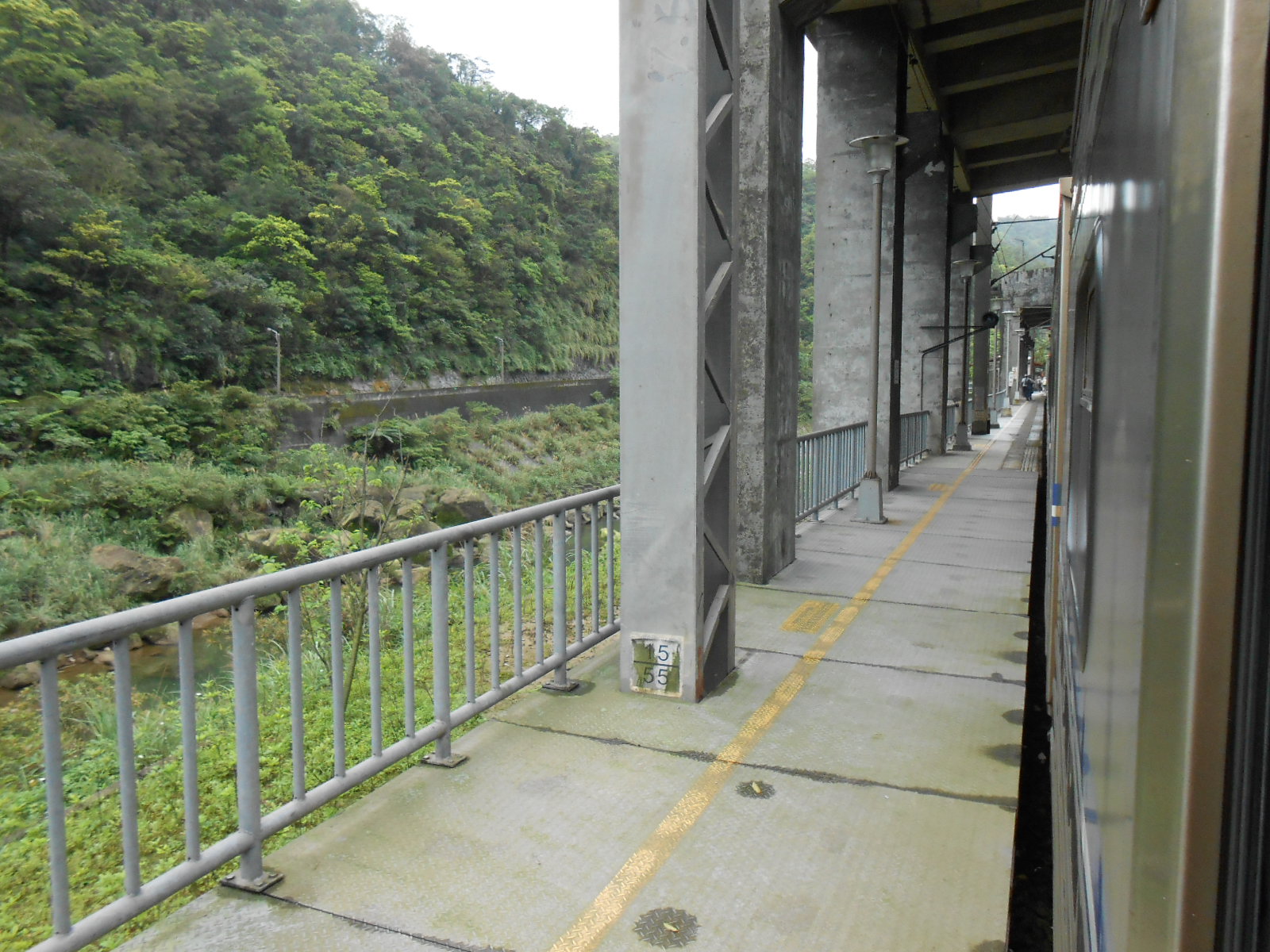
Sandiaoling sits in a narrow valley where the Pingxi Line branches off the main line to Yilan, and it is famous in Taiwan as the station you cannot drive to. The platforms are squeezed onto a ledge between the cliff and the river, with concrete shelters over the tracks to catch falling rock. A handful of houses remain in the old mining settlement beside it, and otherwise there is only forest, water and the railway.
The ridge here lies on the old route between the Taipei basin and the Yilan plain. Houtong, one stop back towards Ruifang, was a coal town, and as the mines of these hills closed, the valleys emptied and the forest took the hillsides back. The waterfalls were always here, and the trail to them is a popular waterfall hike in New Taipei City, with many visitors on holidays.
Getting to Sandiaoling
You need two trains. First, take any Taiwan Railways train that stops at Ruifang (瑞芳) from Taipei Main Station, Songshan or Nangang; local trains and many expresses call there, so check the Taiwan Railways timetable for the next departure. At Ruifang, change to the Pingxi Line (平溪線), the single-track branch railway to Shifen, Pingxi and Jingtong. Sandiaoling is the second stop, after Houtong, about ten minutes from Ruifang. Some Pingxi Line trains start further back along the main line.
Pingxi Line trains run roughly once an hour, so check the timetable for the return before you set off: missing a train means a long wait on an empty platform. Timetables are on the Taiwan Railway official website and on the boards at Ruifang. EasyCards work throughout; if you plan to hop off at several stations along the line — Houtong, Sandiaoling, Shifen, Pingxi, Jingtong — a one-day Pingxi Line pass can work out cheaper. Weekend trains can be packed, especially in the afternoons, when day-trippers head for Shifen’s lanterns.
Buy water and food in Ruifang before you change trains. There are no shops at Sandiaoling.
The railway that made the trip
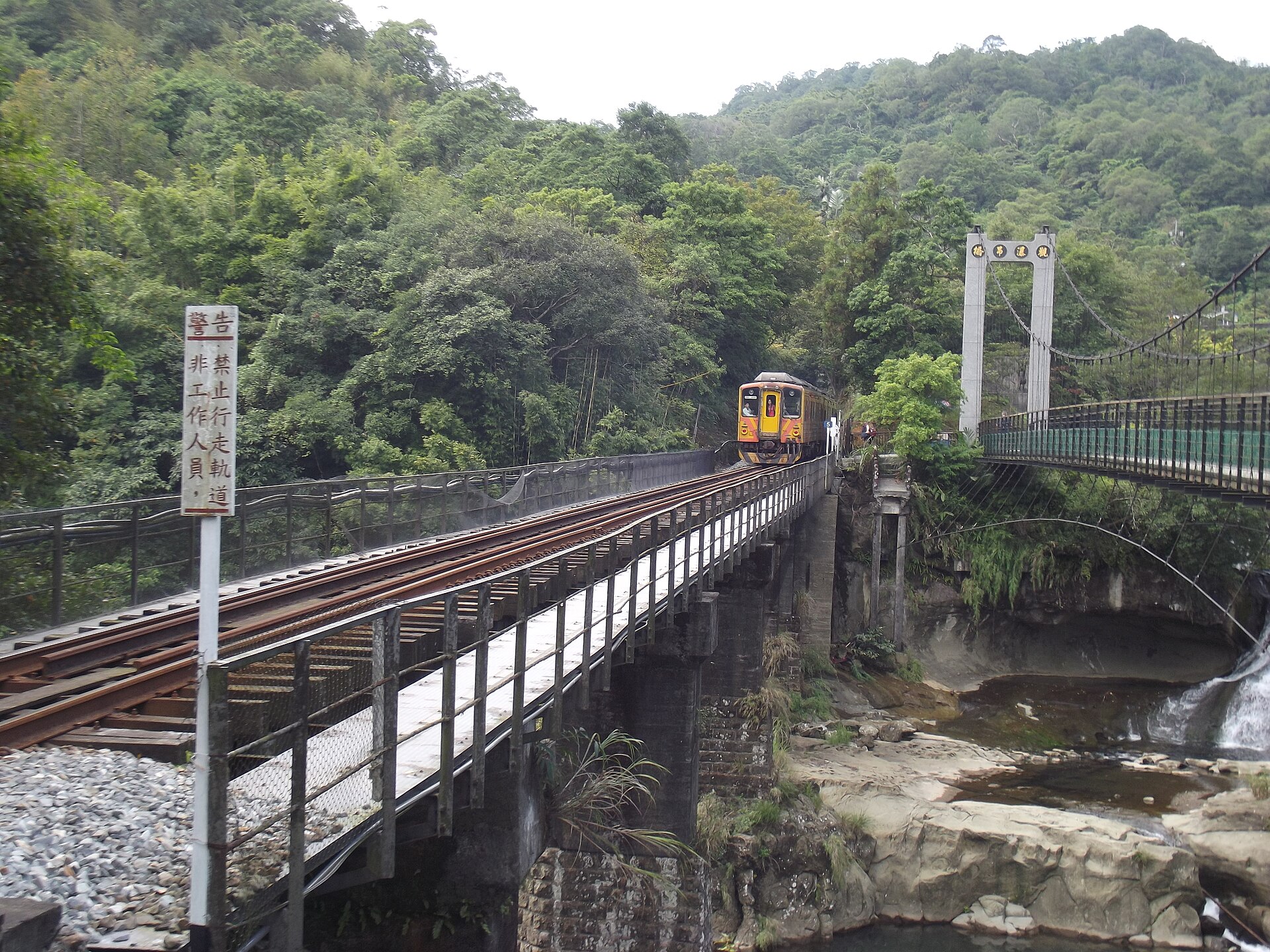
The Pingxi Line was not built for tourists. It was laid in the early 1920s, during the Japanese colonial period, by a mining company to carry coal out of the Pingxi valley, and was taken over by the government railway later that decade. For half a century it was a working freight line serving the mines and the villages that grew up around them. When the mines closed, the line survived as a rural lifeline, and then found a second life as one of Taiwan’s favourite scenic railways. Today its small diesel trains carry walkers to Sandiaoling, cat lovers to Houtong and lantern-launchers to Shifen, but the stations, bridges and old mining buildings along the way still tell the older story.
The trail, waterfall by waterfall
From the platform, follow the signs for the waterfall trail (瀑布步道). The path runs beside the railway for a few minutes before turning up into the forest; stay on the walkway, keep well clear of the tracks and watch for trains, which come through more often than you might expect on a branch line. At the trailhead, stone steps and dirt paths climb above the stream into a gorge thick with ferns, bamboo and broad-leaved forest.
Hegu Waterfall
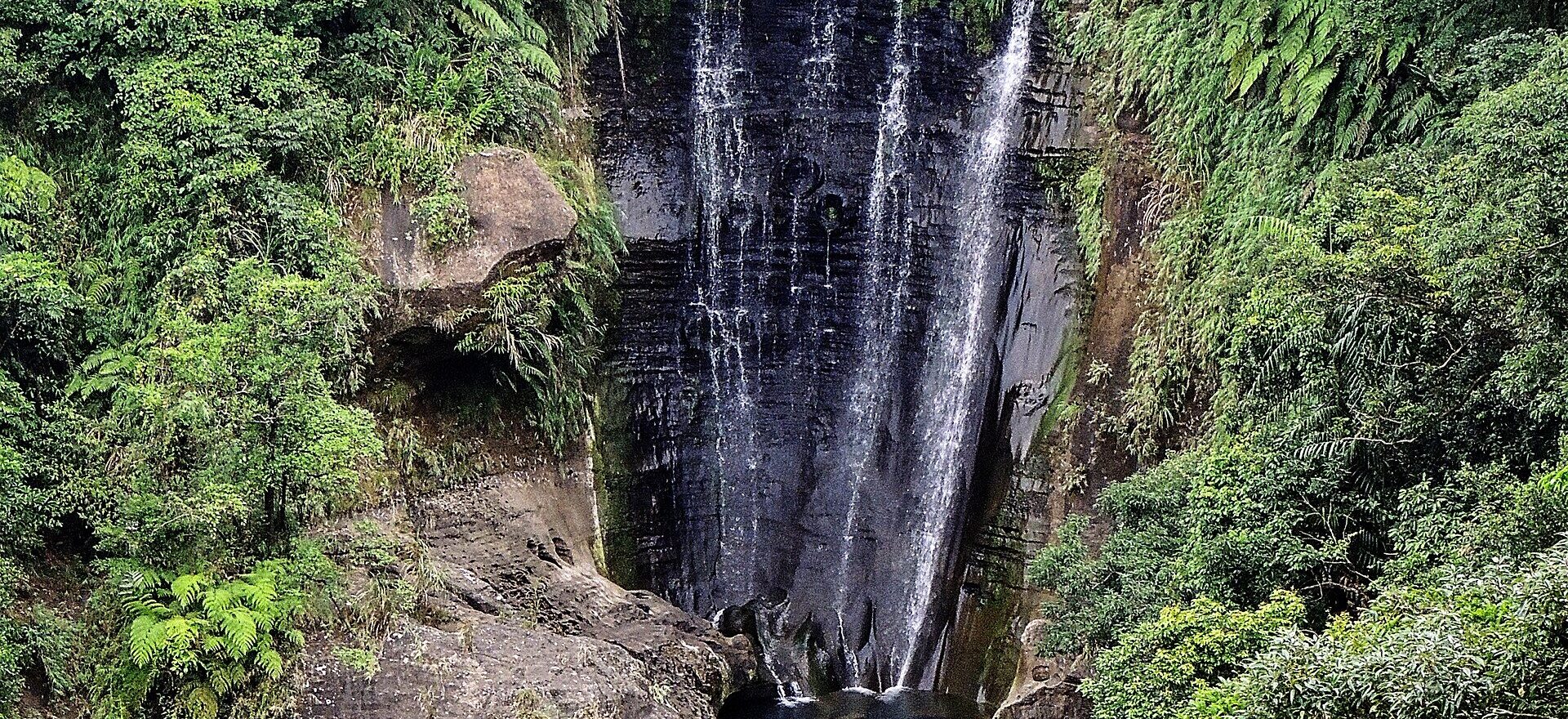
A viewing platform looks across the valley to Hegu Waterfall (合谷瀑布), the tallest and most powerful of the three. It falls in two tiers, the upper drop about 25 metres and the lower about 15. You cannot get close to it; the platform is the view. After heavy rain it roars; in a dry spell it thins to a few white threads. Either way it is the moment most people decide the trip was worth it.
If you are with small children, or short of time, the Hegu viewpoint makes a perfectly good turning point. The path to here is easy.
Motian Waterfall
Beyond the viewpoint, the trail gets more interesting. Steps climb steeply through the forest, the path narrows along the edge of the gorge, and in places you use metal ladders, handrails and ropes to get over rock ledges. Motian Waterfall (摩天瀑布) is tucked into the cliffs along this stretch. The city classes the route as a natural hiking trail, so you need to be comfortable on uneven natural paths.
Pipa Cave Waterfall
The best is last. Pipa Cave Waterfall (枇杷洞瀑布) is the one you can walk right up to: a fall in a rocky hollow — the “cave” of its name — with potholes worn into the rock around its foot. Short ladders and rocky ledges bring you down beside it, close enough to feel the spray. It is the obvious place for a rest and a snack, and the natural place to turn round.
The old route to Dahua
For years the trail continued beyond the waterfalls, climbing to a road and then crossing to Dahua station, the next stop up the Pingxi Line, via a red bridge. The city recommends returning at the end of the waterfall section, and that is the plan to make: walk the waterfall section out and back and return to Sandiaoling station. Conditions on the onward route change, so check New Taipei City’s tourism site for current notices before you think of continuing to Dahua.
New Taipei City’s tourism site lists the trail on its official page (in Chinese). Check it, or ask at the tourist information centre by Ruifang station, before you go; the trail can close for repairs after typhoons, and the city warns about bees on the path.
How long does it take?
| Route | Time (approx.) | Suits |
|---|---|---|
| Station to the Hegu Waterfall viewpoint and back | The shortest option | Families with young children, anyone short of time |
| Station to Pipa Cave Waterfall and back, via all three falls | The longer option | Anyone who wants all three falls |
| The old through-route to Dahua | Check current notices | The city recommends returning at the end of the waterfall section |
Plan your walk around the train times. If you arrive on a mid-morning train, the next train or the one after will usually suit your return, and you can still be in Shifen for lunch.
When to go
- Spring and early summer (March–June): the falls are at their fullest after the spring rains and the plum-rain season in May and June. Pick a dry day between spells of rain for full falls without a soaking.
- Summer (July–September): the gorge is shady and cooler than the city, which makes this one of the better summer walks near Taipei — but afternoon thunderstorms and typhoons can raise the stream quickly. Go in the morning, and never go during a typhoon warning.
- Autumn (October–November): clear, comfortable walking weather, but bees and hornets are a hazard on the path. Check for closures, stay alert and do not linger if you hear buzzing near the path.
- Winter (December–February): the north-east of Taiwan is damp in winter, and the rocks and ladders stay wet and slippery for days. It is fine on a dry spell; wear good shoes.
Weekdays are much quieter than weekends, when the trains fill with walkers and the ladders can queue.
Staying safe
- Slippery rock. The single biggest hazard. Wear shoes with real grip, take the ladders slowly and use the handrails and ropes.
- Rising water. After heavy rain, streams in these valleys rise fast. Keep out of the water and away from the stream bed in wet weather, and turn back if the path is flooded.
- Hornets and wasps. The city warns about bees on the path. Avoid strong perfume and bright, sugary drinks on the trail, and move away quickly and quietly if they start to circle you.
- Snakes. Present, as in all Taiwan’s forests. Watch where you put your hands on rock ledges.
- Trains. The walk from the station runs beside the tracks. Stay on the path.
- The route beyond the falls. Turn back at the end of the waterfall section rather than pushing on towards Dahua.
- Emergencies. Dial 119. Tell someone your plan if you are walking alone.
What to bring
- Grippy shoes — trail shoes or trainers with a good sole. Sandals are a bad idea.
- Water and snacks, bought in Ruifang.
- Insect repellent: the gorge is humid and the mosquitoes know it.
- A light rain jacket or umbrella, and a dry layer for the train.
- A small towel, if you plan to stand in the spray at Pipa Cave.
- A bag for rubbish. There are no bins on the trail.
Photographing the falls
- Overcast days are your friend. Harsh sun in a deep gorge means blown-out water and black shadows. Soft, cloudy light, or the shade of early morning, shows the rock and the falls far better.
- Slow the water down. Most phones have a long-exposure or “live photo” mode that turns falling water silky; brace the phone on a rail or rock to keep the rest of the frame sharp. A small travel tripod helps, but set it up where it will not block the narrow path.
- Bring a lens cloth. At Pipa Cave Waterfall the spray will be on your lens within seconds.
- Use a long lens for Hegu. The viewpoint is across the valley; zoom in on the potholes between the two tiers for the most interesting frame.
- Look after yourself first. Do not step beyond the railings or onto wet ledges for a shot. More people are hurt on waterfall trails taking photographs than doing anything else.
Beyond the falls: the old railway tunnel
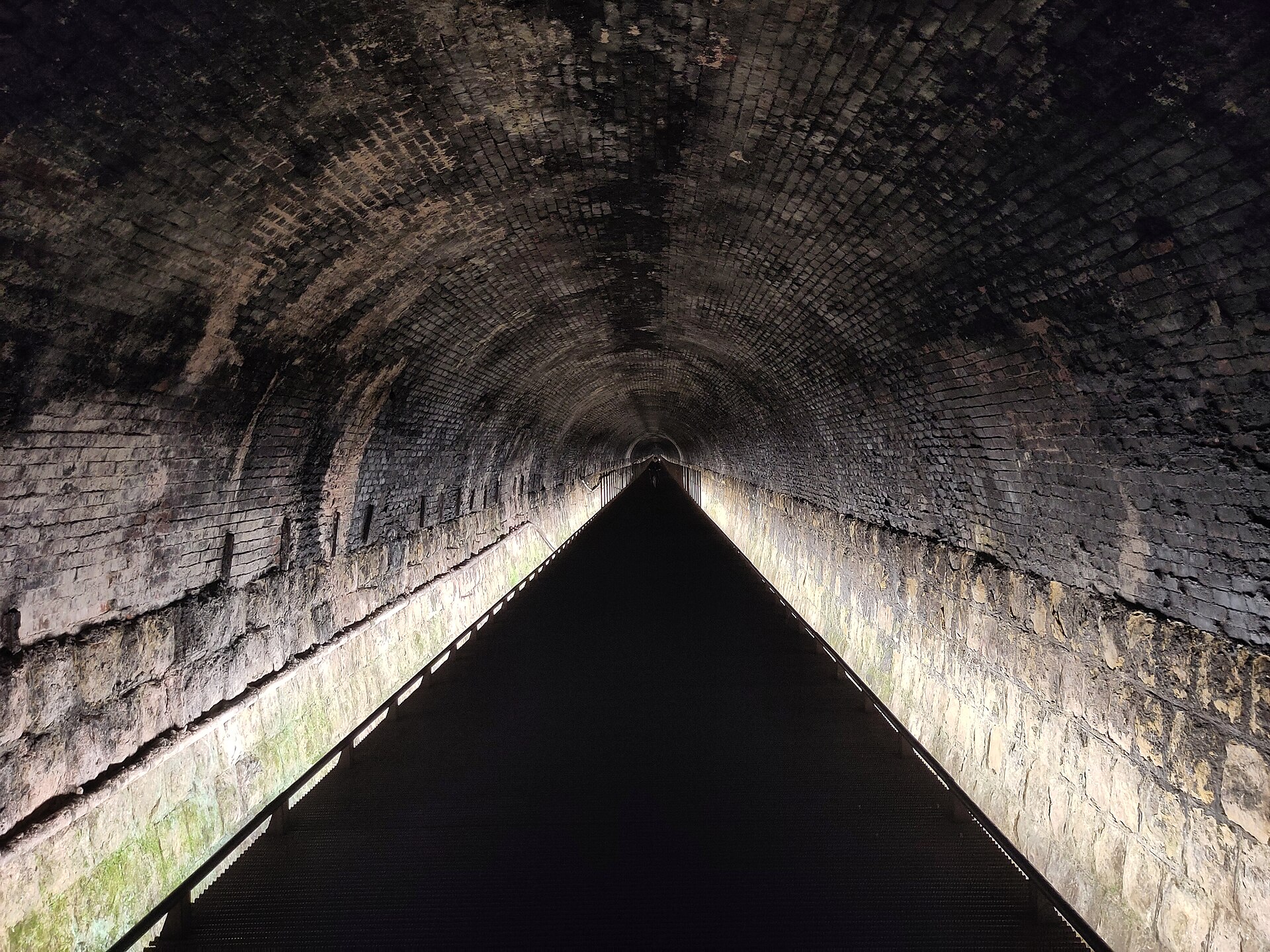
Sandiaoling’s railway history goes deeper than its station. The old tunnels of the original line through the valley, abandoned when the railway was realigned, have been restored and opened as a lit walking path through the brick-lined bores. It makes an atmospheric extra half hour, especially on a hot or wet day. Opening days and visitor arrangements have changed since it opened, so check New Taipei’s tourism site before you plan around it.
Combining Sandiaoling with Houtong and Shifen
The Pingxi Line strings together some of the best-loved small sights in northern Taiwan, and Sandiaoling fits neatly into a day along it:
- Houtong, one stop back towards Ruifang, is the former coal town now famous for its cats, with a mining museum and a footbridge over the tracks. Our Houtong cat village guide covers it. An hour is enough.
- Shifen, two stops up the line, is where the trains run straight down the middle of the old street and visitors launch paper sky lanterns painted with wishes. Shifen Waterfall, a broad curtain of water, is a walk away from the station. See our Shifen day trip.
- Pingxi and Jingtong, at the end of the line, are quieter old mining villages with more lanterns, old streets and the terminus station. In late winter, the area hosts the famous Pingxi Lantern Festival.
- Jiufen is a bus ride up the hill from Ruifang, and its lantern-lit lanes are at their best at dusk. See our Jiufen day trip.
A day on the Pingxi Line
| Time | Plan |
|---|---|
| 08:00 | Train from Taipei Main Station to Ruifang; buy water and snacks |
| 09:15 | Pingxi Line to Sandiaoling |
| 09:30–12:00 | The waterfall trail, out and back to Pipa Cave Waterfall |
| 12:30 | Train on to Shifen for lunch on the old street, the waterfall and a sky lantern |
| 15:00 | Pingxi or Jingtong for a quieter hour at the end of the line |
| 17:00 | Back to Ruifang; the train to Taipei, or a bus up to Jiufen for dusk |
If cats matter more than lanterns, swap Shifen for Houtong on the way back. Everything depends on the hourly trains, so write the times down before you leave Ruifang.
How Sandiaoling compares with other waterfalls near Taipei
| Waterfall | Getting there | Effort | Best for |
|---|---|---|---|
| The Sandiaoling falls | Train to Ruifang, then the Pingxi Line | Forest trail, ladders and wet rock | A real walk, and three falls in one gorge |
| Shifen Waterfall | Pingxi Line to Shifen, then a walk | Easy, mostly paved | A broad, powerful curtain of water with little effort |
| Wulai Waterfall | MRT to Xindian, then a bus to Wulai | Easy walk along the old street, or a short ride on the little tourist train | Combining a waterfall with an Atayal village and hot springs — see our Wulai day trip |
| Golden Waterfall | Bus from Ruifang to Jinguashi | Roadside — a photo stop | Rocks stained gold and orange by minerals from the old mines, on the way to Jiufen and Jinguashi |
If you only have time for one, Shifen is the easiest spectacle and Sandiaoling the best walk. The two are two stops apart on the same railway, which is why so many people do both.
On a wet day, or if the trail is not for you
The Sandiaoling trail is not accessible to wheelchair users or anyone who cannot manage steep steps and ladders, and after heavy rain it is best avoided by everyone. The good news is that the Pingxi Line itself is a fine consolation: the ride along the river gorge is lovely in any weather, Houtong’s mining museum and cafés are close to the station, and Shifen’s waterfall is reached on a much easier path. On a grey day, ride to the end of the line at Jingtong, work back through Pingxi and Shifen, and save Sandiaoling’s falls for a dry morning.
Sandiaoling with children
The walk from the station to the Hegu Waterfall viewpoint is easy, short and exciting for children — a train with no road, a path beside the tracks, a big waterfall across the valley. Beyond it, the ladders and wet rock call for close supervision, and small children are better turned round at the viewpoint. Older children who like scrambling usually love the Pipa Cave section. Pushchairs are not practical on any of the trail. Pair the walk with Houtong’s cats for an easy family day; our guide to Taipei with kids has more ideas.
What we would skip
- The through-walk to Dahua station. The city recommends returning at the end of the waterfall section. Walk out and back.
- The trail straight after a typhoon or during heavy rain. Streams rise, rock gets treacherous and sections can be closed.
- Sandals and smooth-soled shoes. This is the one short walk near Taipei where footwear really matters.
- Arriving without the return train time. A missed train can mean an hour on the platform.
- A tour that “does” Sandiaoling, Shifen, Jiufen and Yehliu in a day. You will see a waterfall from a coach park. Take the train and give the trail the morning it deserves.
Related Taipei guides
- Hiking in Taipei: Best Trails, Beaches & Outdoor Escapes
- Houtong Cat Village
- Shifen Day Trip
- Pingxi Lantern Festival
- Jiufen Day Trip
- Wulai Day Trip
- Day Trips from Taipei
- Taiwan Train Travel Guide
- Taipei Typhoon Season
Frequently Asked Questions
How do I get to the Sandiaoling Waterfall Trail from Taipei?
Take a Taiwan Railways train from Taipei Main Station to Ruifang, then change to the Pingxi Line and ride two stops to Sandiaoling. The trail starts about ten minutes’ walk from the platform.
How long is the Sandiaoling Waterfall Trail?
The trail is about 2.7 kilometres in total. Walking from the station to all three waterfalls and back takes longer than going only as far as the Hegu Waterfall viewpoint, which is the shorter option.
Is the Sandiaoling Waterfall Trail open?
The city lists the waterfall section as open year round, though it can close after typhoons, and bees are a hazard on the path. Check New Taipei City’s tourism site or ask at Ruifang before you go.
Is the Sandiaoling Waterfall Trail difficult?
The first part, to the Hegu Waterfall viewpoint, is easy. Beyond it, the trail has steep steps, metal ladders, ropes and slippery rock ledges. It is moderate rather than hard, but good shoes and care are essential.
What are the three waterfalls at Sandiaoling?
Hegu Waterfall (合谷瀑布), a two-tiered fall seen from a viewing platform; Motian Waterfall (摩天瀑布), tucked into the cliffs; and Pipa Cave Waterfall (枇杷洞瀑布), which you can walk right up to.
Can you drive to Sandiaoling?
No. Sandiaoling station has no road access and is reached only by train or on foot, which is part of its charm. Take the Pingxi Line from Ruifang.
Can I walk from Sandiaoling to Dahua station?
The city recommends returning at the end of the waterfall section rather than continuing. Walk the waterfall section out and back and take the train on from Sandiaoling, and check New Taipei City’s tourism site for current notices before you plan anything longer.
How often do Pingxi Line trains run?
Roughly once an hour in each direction. Check the timetable for your return train before you start the walk, as missing one means a long wait on the platform.
Can I combine Sandiaoling with Shifen and Houtong?
Yes. Houtong is one stop back towards Ruifang and Shifen is two stops further along the Pingxi Line, so a morning on the waterfall trail and an afternoon in Shifen, or an hour with Houtong’s cats, fits easily into one day.
Is the Sandiaoling Waterfall Trail suitable for children?
The walk to the Hegu Waterfall viewpoint is easy and suits children. Beyond it, ladders and wet rock need close supervision; young children are better turned round at the viewpoint.
When is the best time to visit Sandiaoling’s waterfalls?
Spring and early summer, on a dry day after rain, when the falls are full. Avoid heavy rain and typhoon warnings, watch for bees and hornets, and go on a weekday if you can.
Are there shops or toilets at Sandiaoling?
There are no shops at Sandiaoling and very limited facilities. Buy food and water in Ruifang, and use the toilets there or on the train before you set off.
The Bottom Line
The Sandiaoling Waterfall Trail is everything a short walk from Taipei should be: a slow train to a station with no road, a forest gorge, three waterfalls along a trail of about 2.7 kilometres, and Shifen’s lanterns a few stops up the line for the afternoon. Walk it out and back rather than pushing on towards Dahua, go on a dry day after rain, wear shoes that grip, buy your water in Ruifang and note the return train before you leave the platform. Do that, and it is one of the best half days in northern Taiwan.
Photo Credits
Hegu Waterfall (cropped): 224, Taiwan, 新北市瑞芳區碩仁里 – panoramio by Woodford Yang, CC BY 3.0, via Wikimedia Commons.
Sandiaoling station: Sandiaoling Station Southbound Platform 20140328 by R96340, CC BY-SA 4.0, via Wikimedia Commons.
The old railway tunnel near Sandiaoling: 2024-06-14 Sandiaoling Tunnel by Jaller94, CC0, via Wikimedia Commons.
A Pingxi Line train by the Guanpu suspension bridge: Guanpu Suspension Bridge and TRA Pingxi Line railway bridge 20141016a by Smiley.toerist, CC BY-SA 4.0, via Wikimedia Commons.