This article contains advertising. Our booking links are routed through a partner that adds commission tracking automatically, so if you book through one we earn a commission from the provider, at no extra cost to you. It never affects what we recommend. Affiliate disclosure
Late on a weekday afternoon, the crossroads outside National Taiwan University’s main gate turns into a river of bicycles. Students freewheel out from under the palms, weave between the buses on Roosevelt Road and scatter into the lanes: to a queue for braised-pork buns, to a basement bookshop, to a bubble tea counter with a line of thirty people, to a riverside path where the light is going gold over the water. Behind them, on the campus, a bronze bell rings twenty-one times. Everyone calls Gongguan Taipei‘s student quarter, and for once the label undersells it: this is also where you will find one of the loveliest campuses in Asia, a hillside squatter village turned artists’ colony, a century-old waterworks with a summer water park, and some of the cheapest good food in the city.
This guide covers Gongguan as a neighbourhood to explore: the university and what is worth seeing on campus, Treasure Hill Artist Village, the Water Park and its museum, the night market and where students actually eat, the bookshops and cafés, the riverside, a half-day route and how Gongguan compares with Shida and Yongkang Street. Hours and prices were checked in September 2026; treat prices as the right order of magnitude and check anything your day depends on. For how Gongguan fits into the rest of the city, see our overview of Taipei neighbourhoods.
Gongguan at a glance
| The short version | |
|---|---|
| Where | The southern edge of central Taipei, where Roosevelt Road meets Xinsheng South Road and Keelung Road, straddling Da’an and Zhongzheng districts |
| Nearest MRT | Gongguan (Green Line): Exit 1 for Treasure Hill and the riverside, Exit 4 for the Water Park; the NTU main gate is a couple of minutes’ walk north |
| Time needed | Half a day for the campus, Treasure Hill and dinner; a full day with the Water Park in summer and a ride along the river |
| Best times | Late afternoon into evening; March for the campus azaleas; July and August for the water park |
| Entry | Campus, Treasure Hill and the riverside are free; the Water Park charges in the summer water-play season |
| Do not miss | The Royal Palm Boulevard, Treasure Hill at dusk, a gua bao on the night-market lanes, sunset by the Xindian River |
What things cost
| Item | Typical cost (September 2026) |
|---|---|
| MRT from central Taipei | From NT$20 with an EasyCard |
| NTU campus, Treasure Hill, riverside parks | Free |
| Taipei Water Park, summer water-play season | NT$80 for the day; under-sixes free |
| A gua bao, bowl of soup or noodles on the night-market lanes | Usually well under NT$100 |
| Bubble tea | Roughly NT$50–90, depending on the shop and size |
| Shaved ice or a sweet soup | Around NT$60–150 |
| YouBike along the river | A small charge per half hour, deducted from your EasyCard |
Where Gongguan is, and why it feels different
Gongguan is not a district on the map but a neighbourhood around a crossroads. It grew up at the point where the main road south out of the city met the road east along the foot of the hills, just before the Xindian River, and it has been shaped for almost a century by the university that sits beside it. North and east of Roosevelt Road is the vast green campus of National Taiwan University, in Da’an District. South and west, in Zhongzheng District, are the streets of shops and restaurants, the night-market lanes, the Water Park, Treasure Hill and the river.
What makes Gongguan feel different from the rest of central Taipei is its population. Tens of thousands of students live, study and eat here, alongside the staff of NTU and its neighbour, National Taiwan University of Science and Technology. Everything is priced for them — the food, the coffee, the second-hand books, the hostels and bike repairs — and everything stays open late. It is younger, cheaper and scruffier than Da’an to the north, and much less polished than Xinyi. It is also greener, with the campus, the river and the hills all within a few minutes’ walk.
Gongguan station on the Green Line is the hub. The line runs north through Taipower Building (for Shida), Guting and Ximen to Songshan, so Gongguan is fifteen minutes or less from most of central Taipei. See our MRT guide for the network.
National Taiwan University
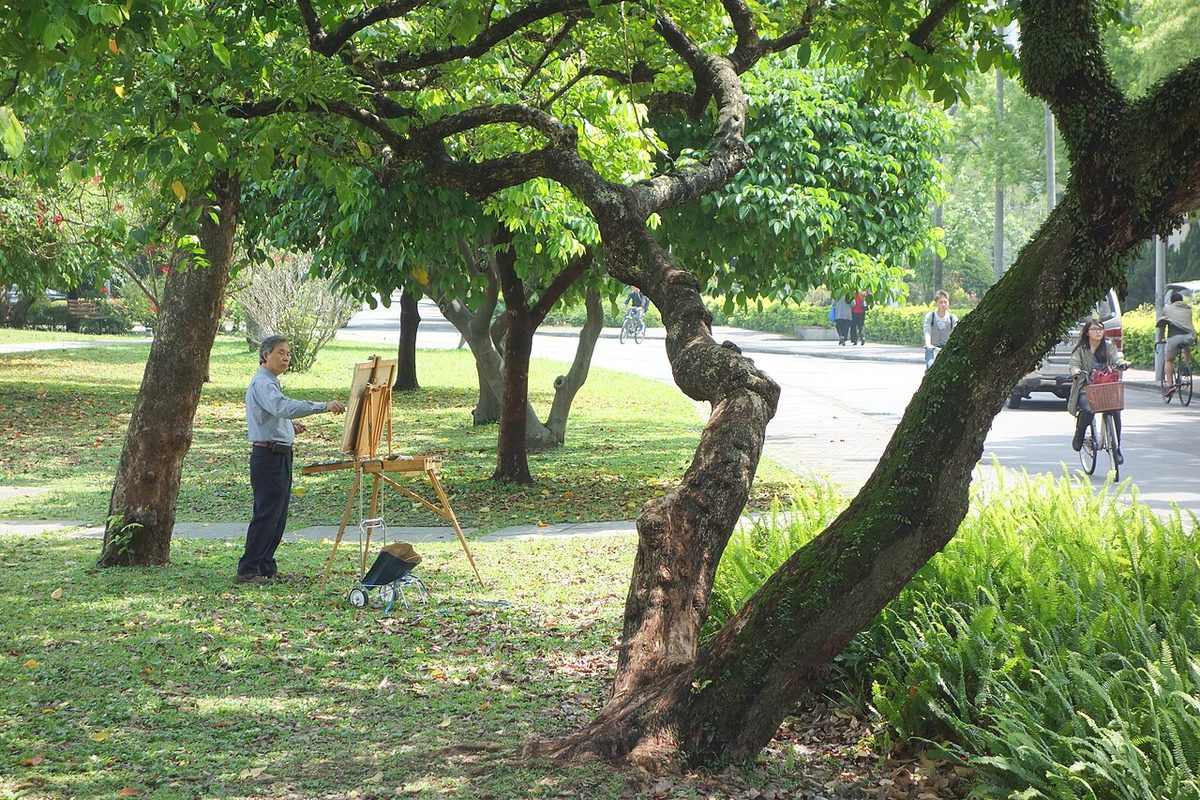
Taiwan’s leading university was founded in 1928 as Taihoku Imperial University, one of the Japanese empire’s imperial universities, and it took its present name after 1945. Its campus is enormous by city standards and open to the public, and on a warm afternoon it is one of the most pleasant places in Taipei to walk. You do not need a plan; just go in through the main gate on Roosevelt Road and follow the palms.
The Royal Palm Boulevard and the Fu Bell
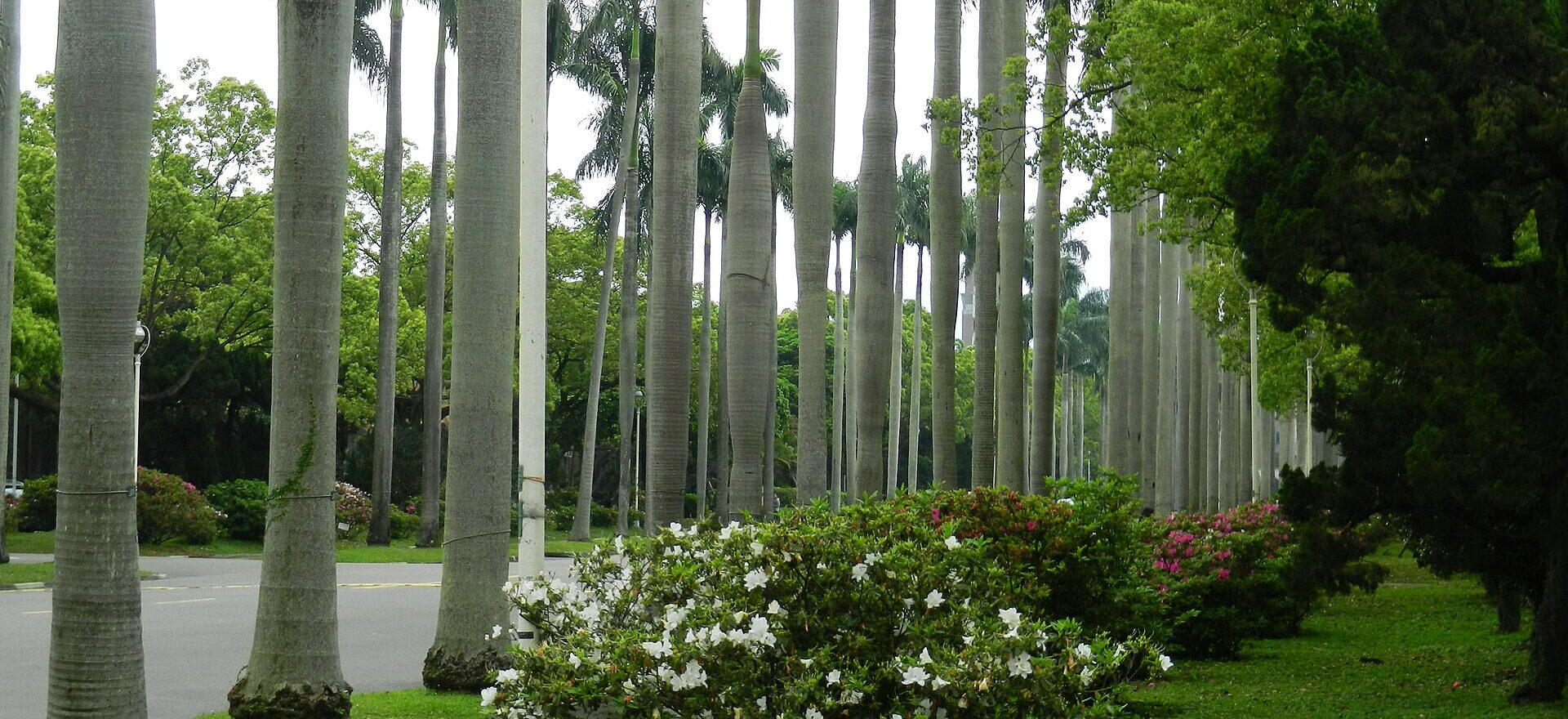
The Royal Palm Boulevard (椰林大道) runs straight from the main gate to the main library, a double avenue of towering royal palms with cycle paths, lawns and the university’s old Japanese-era buildings on either side. It is the image of NTU that every Taiwanese knows, and in March, when the azaleas bloom along it, it is at its finest.
Just off the boulevard, near the administration building, is the Fu Bell (傅鐘), named after Fu Ssu-nien, the historian who was president of the university in 1949 and 1950 and died in office. It rings twenty-one times at the start and end of classes, because Fu is supposed to have said that a day has only twenty-one hours — the other three are for reflection. Students have a tradition of never walking directly under it, for fear of failing to graduate on time. You may prefer not to test it.
The rest of the campus
- The main library — the large building at the end of the boulevard, finished in the late 1990s. The public can usually go into the lobby; the reading rooms are for students and staff.
- The Gallery of NTU History — in the university’s old library building, from the Japanese era, with displays on the university’s history since its imperial beginnings.
- Drunken Moon Lake (醉月湖) — a pond with a little pavilion in the north of the campus, a favourite spot for students to sit, read and, according to campus legend, be haunted.
- The farm shop — the university’s agricultural faculty runs a shop on campus selling its own milk, ice cream, eggs and produce. An NTU ice cream on a hot afternoon is a small Gongguan ritual.
- Azaleas — every March the university holds its Azalea Festival, when the campus is in full bloom and hosts open days and events. Our guide to Taipei in March has the season’s other flowers.
Campus etiquette is simple: this is a working university. Keep off the cycle lanes, keep quiet near the teaching buildings, and do not walk into classrooms or labs. Bikes have priority on the boulevard, and students ride them fast.
Treasure Hill Artist Village
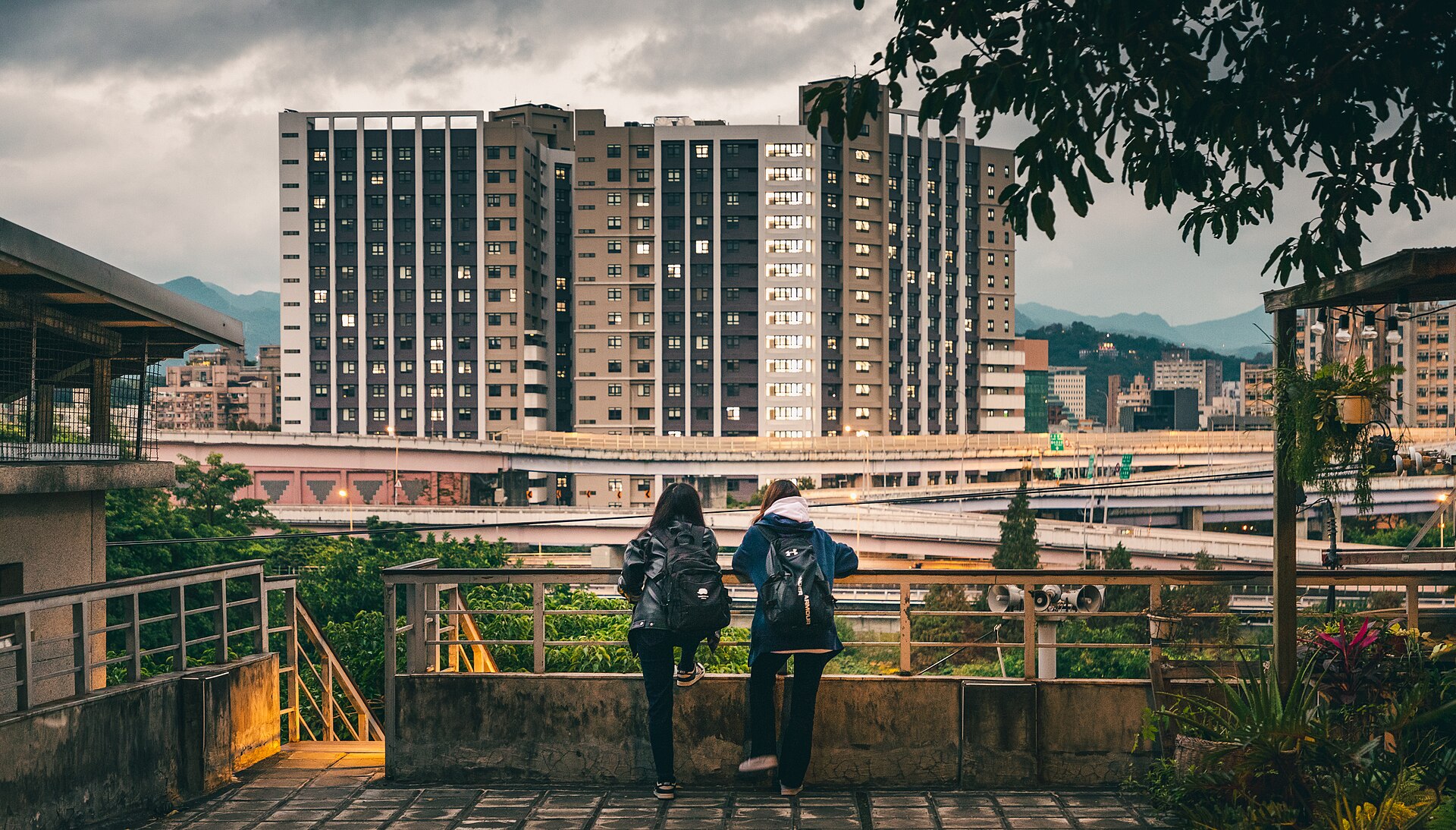
Ten minutes’ walk from Gongguan station’s Exit 1, on a small hill above the Xindian River, Treasure Hill (寶藏巖) is one of the most unusual places in Taipei. At its foot is Treasure Hill Temple, a small Guanyin temple that goes back to the Qing dynasty. Above and around it, from the late 1940s onwards, soldiers who had retreated to Taiwan with the Nationalist army, and later rural migrants who came to the city for work, built themselves homes on the hillside without permission, using whatever materials they could find. The result was a dense, organic warren of small houses, stairways, terraces and vegetable plots, stacked up the slope and joined by paths barely wide enough for two people.
By the 1990s the city wanted to clear the settlement for a park. Residents, activists, architects and artists campaigned to save it, and in 2010 it reopened as Treasure Hill Artist Village, with the houses restored as artists’ studios, galleries, a café and residences for visiting artists — while some of the original families still live there. It is not a museum and not a theme park; it is a small, lived-in village where you can wander the stairways, look into open studios, see exhibitions and installations, and stop on a terrace to look out over the river.
The village is open from 11:00 to 22:00, Tuesday to Sunday, and closed on Mondays; the indoor exhibition spaces close at 18:00. Entry is free. At weekends there are free guided walks in the afternoon, which gather at the entrance — ask on the day about the language. The best time to come is late afternoon, when you can see the studios and exhibitions, watch the sun go down over the river from the top of the hill and walk back down to the night market for dinner.
Two things to remember: people live here, so keep your voice down and do not walk into anything that looks like a home; and the village is all steps and slopes, with no easy route for wheelchairs or pushchairs.
Taipei Water Park and the Museum of Drinking Water
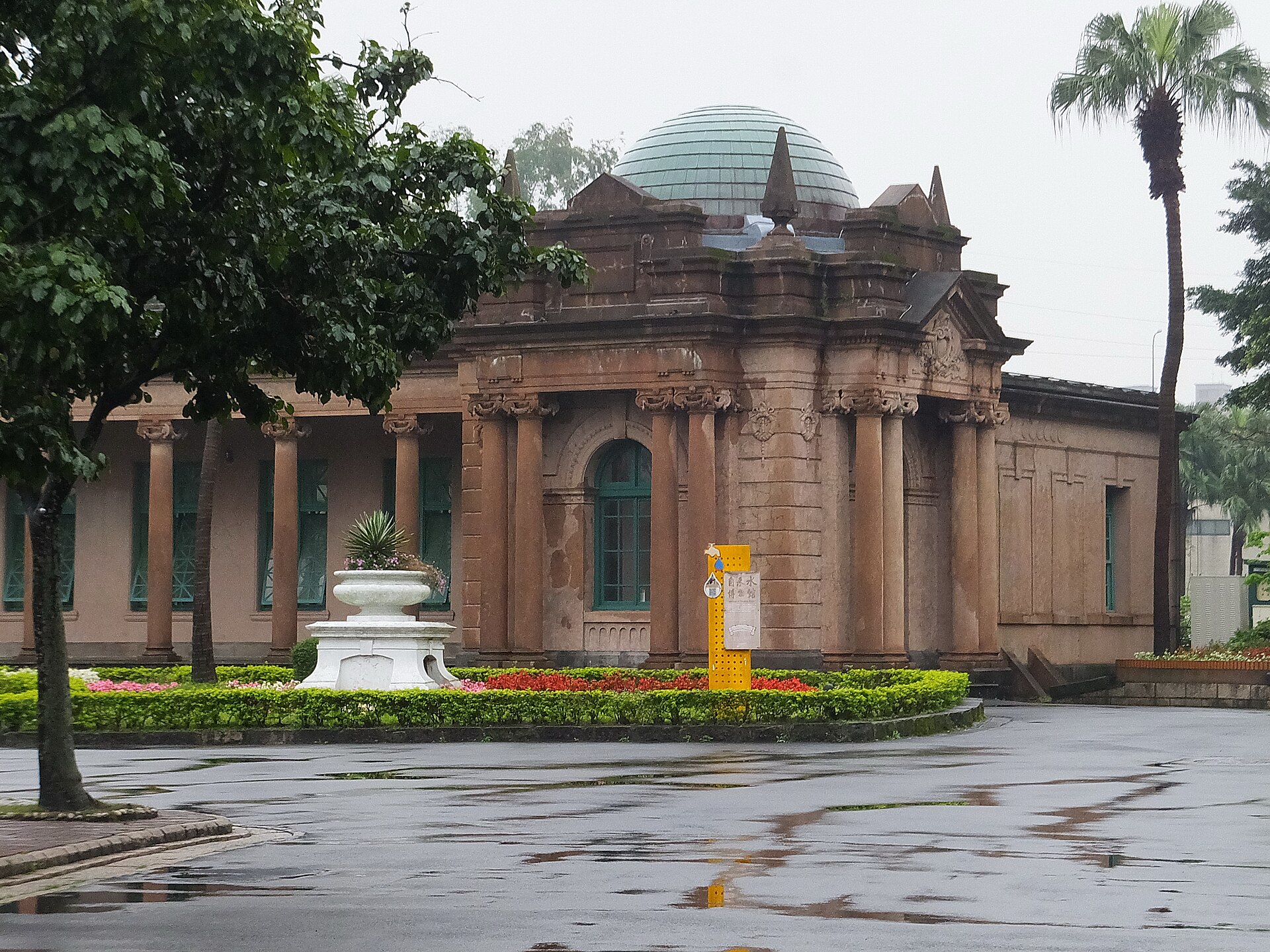
Across Siyuan Street from Gongguan station’s Exit 4, about five minutes’ walk, the Taipei Water Park (自來水園區) occupies the site of the city’s first modern waterworks, built by the Japanese in the early twentieth century to take water from the Xindian River. Its centrepiece is the old pump house, a surprisingly grand building with a dome and colonnades, now the Museum of Drinking Water, where the original pumps and machinery are on display with exhibits on how the city gets its water.
For most of the year it is a pleasant, quiet park with a small museum, worth half an hour if you are passing and interested in the city’s history. In summer it becomes something else: from late June to late August, the park’s water-play area opens, with pools, fountains and slides, and it becomes one of the best-value days out for families in Taipei. In 2026 the water-play season ran from 27 June to 30 August, at NT$80 for the day, with children under six free. The park is open from 09:00 to 18:00 and closed on Mondays; check the official Water Park website for current hours and the next summer’s dates.
The waterworks are also a reminder that Taipei’s tap water is treated to a high standard; our guide to tap water in Taipei explains why locals still boil theirs.
Eating in Gongguan
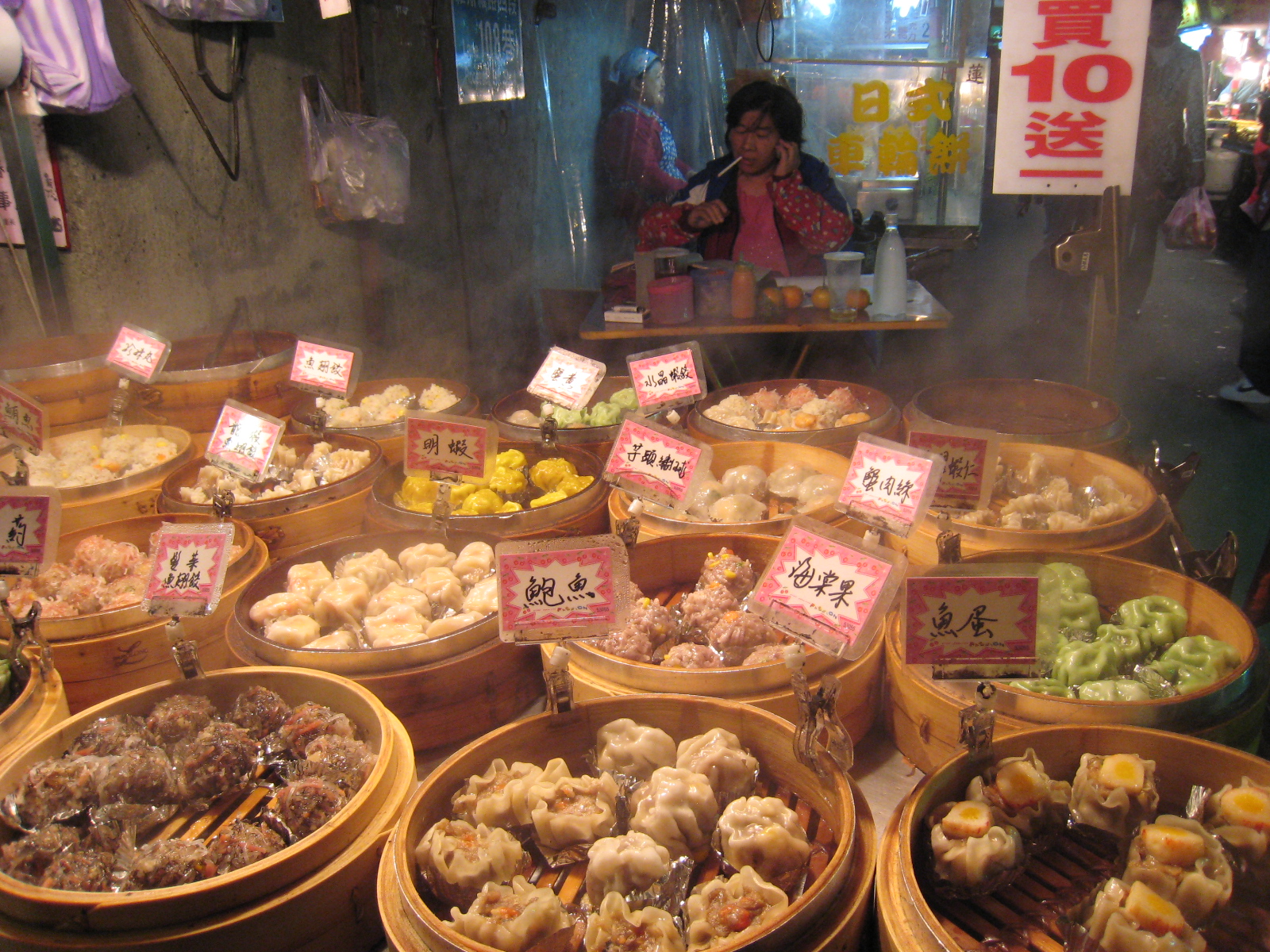
Gongguan eats cheaply, quickly and late, and the food is aimed squarely at students with an appetite and not much money. That makes it one of the best places in the city to graze.
The night-market lanes
Gongguan Night Market is not a single street but a cluster of lanes off Roosevelt Road around the station — Lane 316 of Roosevelt Road Section 3 above all — and along Tingzhou Road behind it. Unlike the tourist night markets, it runs from late morning to late at night, because students eat at all hours, and it is busiest from about 18:00. There is no grand gateway and no crowd of tour groups; just stalls, small shops and counters with plastic stools, mostly frequented by locals.
The stall everyone mentions is Lan Jia Gua Bao (藍家割包), on Lane 316, which has been selling gua bao — braised pork belly with pickled mustard greens, crushed peanut and coriander in a folded steamed bun — for decades. You choose your pork fatty, lean or mixed, and it is worth pairing with a bowl of four-herb soup. Around it are stalls and shops for stinky tofu, fried chicken, dumplings and buns, pepper buns, grilled skewers, noodle soups and every kind of drink. Several Gongguan stalls have been picked for Michelin’s Bib Gourmand list over the years; our guide to Michelin restaurants in Taipei has the current selection.
Shaved ice, sweet soups and bubble tea
Across the road from the campus, on Xinsheng South Road, Tai Yi Milk King (台一牛奶大王) has been a student institution for decades: shaved ice piled with fruit and condensed milk in summer, and hot sweet soups with glutinous rice balls in winter. And because students run on bubble tea, the streets around the station have a remarkable density of tea shops, from the big Taiwanese chains to one-counter independents; there is almost always a queue at the most fashionable one of the moment. Our guide to bubble tea in Taipei will help you order.
Cafés and cheap sit-down meals
The lanes between Gongguan and Shida, around Wenzhou Street and the backstreets off Xinsheng South Road, have one of the densest concentrations of independent cafés in the city — small, bookish places where students write theses over a single latte for four hours. They are ideal for a rainy afternoon; see our guide to the best cafés in Taipei. For a proper meal, the streets off Roosevelt Road and Tingzhou Road are full of cheap noodle shops, dumpling houses, Japanese curry counters, hot pot for one and Southeast Asian restaurants, most with set meals at student prices.
Bookshops, music and student culture
Gongguan has long been one of Taipei’s bookshop districts. Along Roosevelt Road and in the lanes towards Wenzhou Street you will find new and second-hand bookshops, academic and political specialists, and shops for students of English, many of them tucked into basements and first floors that you would walk past without noticing. Even if you cannot read Chinese, the second-hand shops are fascinating to browse, with shelves of old records, magazines and paperbacks.
The neighbourhood has also been a cradle of the city’s indie music scene for decades, with small live houses and café stages where a generation of Taiwanese bands and singer-songwriters played their first gigs. Venues come and go, so check what is on before you plan an evening around one; our guide to live music in Taipei covers the scene across the city.
The riverside and the hills
Walk through the flood wall below Treasure Hill and you are on the bank of the Xindian River, looking across to Yonghe and Zhonghe in New Taipei. The riverside parks here are wide, green and full of cyclists, joggers, dog walkers and anglers, and the view at sunset, with the lights coming on across the water, is one of the best in the south of the city.
The riverside is part of the cycle network that runs round the whole city. A YouBike from one of the docks near the station takes you north along the water towards Wanhua and Dadaocheng, or south upriver towards Xindian and Bitan. Across the river, Yonghe is the home of the soy milk breakfast shop; if you are up early, it is worth crossing for a traditional Taiwanese breakfast.
On the other side of the crossroads, Toad Mountain (蟾蜍山), the small hill that rises just south-east of Gongguan, has a short trail and a preserved post-war settlement on its slopes, with views back over the neighbourhood. It is a pleasant hour if you have explored everything else, not a reason to come in its own right.
Gongguan, Shida or Yongkang Street?
Gongguan is one of three food neighbourhoods strung along the southern edge of Da’an, and visitors often wonder which to choose. The honest answer is that they are close enough to combine, but they have different personalities:
| Gongguan | Shida | Yongkang Street | |
|---|---|---|---|
| Feel | Student, scruffy, spread out | Student, compact, night-market buzz | Polished, busy, more tourists |
| Best for | Cheap grazing at any hour, the campus, Treasure Hill | A night-market evening, fried chicken | Famous restaurants, dumplings, mango ice |
| Busiest | Evenings, and lunch in term time | Evenings | Weekends and lunchtime |
| Prices | Lowest | Low | Moderate to high |
| MRT | Gongguan | Taipower Building, Exit 3 | Dongmen, Exit 5 |
Gongguan and Shida Night Market are one MRT stop apart, and the walk between them through the Wenzhou Street lanes takes about twenty minutes. Our Da’an district guide puts all three in context.
A half-day in Gongguan
This route starts in the early afternoon and ends with dinner. Avoid Mondays, when Treasure Hill and the Water Park are closed.
- 14:00 — NTU main gate. Walk the Royal Palm Boulevard to the main library, detouring to the Fu Bell (walk round it, not under it).
- 14:45 — The rest of the campus. The Gallery of NTU History, Drunken Moon Lake and an ice cream from the farm shop.
- 15:45 — Coffee in the Wenzhou Street lanes, or a second-hand bookshop.
- 16:30 — Taipei Water Park, for the pump house and, in summer, the water-play area.
- 17:15 — Treasure Hill. Studios, exhibitions and the stairways, ending at the top for sunset over the river.
- 18:30 — Down to the riverside for the last of the light.
- 19:00 — Dinner on the night-market lanes: gua bao, soup, something fried and a bubble tea to finish.
If you have a whole day, start with breakfast across the river in Yonghe, cycle the riverside path in the morning and pick up this route after lunch. And if you are walking from further north, the route through Da’an — Yongkang Street, Daan Forest Park and then the NTU campus — makes a very good day on foot.
Gongguan through the year
Because it runs to the rhythm of the university, Gongguan changes more with the calendar than most Taipei neighbourhoods.
- Spring (February–April). The campus’s scattered cherry trees flower in February, and in March the azaleas turn the Royal Palm Boulevard pink and white for the Azalea Festival. It is the prettiest time of year on campus and a lovely season for the riverside path.
- Graduation (June). The campus fills with students in gowns and their families, posing for photographs under the palms and in front of the library. It is cheerful to watch; just stay out of the shots.
- Summer (July–August). Hot and humid, with afternoon thunderstorms. The Water Park’s pools are the big draw, the university is on holiday, and evenings by the river are the best part of the day. Do the walking early or late.
- Autumn (September–November). The new term brings the students back and the night-market lanes are at their busiest. On the night of the Mid-Autumn Festival — 15 September in 2027 — the riverside parks fill with families barbecuing under the moon, a very Taiwanese scene. With cooler, drier weather, this is the best season for Treasure Hill and cycling.
- Winter (December–February). Cool and often damp. It is the season for hot sweet soups with glutinous rice balls and steaming herbal broths on the night-market lanes. Over Lunar New Year the students go home and many small stalls close for several days; Gongguan is at its quietest.
Practical tips
- Mondays. Treasure Hill and the Water Park are closed. The campus and the food are not.
- Term time. The university year runs from September to June, with breaks in winter and summer. In term Gongguan is at its liveliest; in the holidays it is quieter and the queues are shorter.
- Rain. Gongguan has plenty for a wet afternoon: the Museum of Drinking Water, the bookshops and the cafés. Our guide to rainy day activities in Taipei has more.
- Cash. The night-market stalls and many of the small shops prefer cash or an EasyCard; the chains and cafés take cards.
- Traffic. The Gongguan crossroads is one of the busiest junctions in the south of the city, and Roosevelt Road jams at rush hour. Take the MRT, not a taxi.
- Accessibility. The MRT station is step-free, and the campus is flat, with wide paths and good kerbs. Treasure Hill is all stairs and effectively inaccessible to wheelchair users; the night-market lanes are narrow and crowded in the evening.
- With children. The Water Park in summer is the obvious draw, and the campus ponds, lawns and farm-shop ice cream go down well at any time of year. See our guide to Taipei with kids.
What we would skip
Crossing the city just for Gongguan Night Market. It is an excellent neighbourhood market and a great place to eat if you are here anyway, but it is not a spectacle in the way Raohe or Shilin are. Combine it with the campus and Treasure Hill rather than making a special evening trip.
The Water Park out of season, unless you like industrial history. The pump house is handsome and the museum is interesting for half an hour, but outside the summer water-play months it is a quiet park rather than a destination.
Treasure Hill at midday on a hot weekend. The stairways are shadeless and the village is at its busiest. Late afternoon is cooler, quieter and ends with a sunset.
Taxis through the Gongguan junction at rush hour. You will sit in traffic while the MRT passes underneath you.
If you are walking up from Gongguan through Da’an, Yongkang Street is about twenty-five minutes north, past Daan Forest Park — the city’s most famous food street, with the original Din Tai Fung, beef noodles and mango ice. See our Yongkang Street guide.
Related Taipei guides
- Taipei Neighbourhoods: A District-by-District Guide
- Da’an District Guide
- Shida Night Market
- Taipei Night Markets
- The Best Cafés in Taipei
- Bubble Tea in Taipei
- Live Music in Taipei
- YouBike in Taipei
- Taipei on a Budget
- Free Things to Do in Taipei
- Wanhua District Guide
Frequently Asked Questions
Where is Gongguan in Taipei?
Gongguan is the neighbourhood around the junction of Roosevelt Road, Xinsheng South Road and Keelung Road, on the southern edge of central Taipei next to National Taiwan University. It straddles Da’an and Zhongzheng districts and is served by Gongguan station on the Green Line.
What is Gongguan known for?
National Taiwan University and its palm-lined campus, cheap student food and the Gongguan Night Market, bookshops and cafés, Treasure Hill Artist Village, the Taipei Water Park and the riverside parks along the Xindian River.
Is Gongguan worth visiting?
Yes, especially if you enjoy wandering. It combines one of the city’s loveliest green spaces with one of its most unusual sights, Treasure Hill, and some of its cheapest good food. Half a day, ending with sunset and dinner, is ideal.
How do I get to Treasure Hill Artist Village?
Take the Green Line to Gongguan station, leave by Exit 1 and walk for about ten minutes towards the river along Tingzhou Road. The village is open from 11:00 to 22:00, Tuesday to Sunday, with indoor spaces closing at 18:00, and entry is free.
Can tourists visit National Taiwan University?
Yes. The campus is open to the public, and visitors are welcome to walk the Royal Palm Boulevard, see the Fu Bell and Drunken Moon Lake, visit the Gallery of NTU History and buy ice cream at the farm shop. Respect the teaching buildings and keep out of the cycle lanes.
Why does the Fu Bell ring 21 times?
It is named after Fu Ssu-nien, NTU’s president in 1949–1950, who is said to have told students that a day has only twenty-one hours and the other three should be kept for reflection. The bell rings twenty-one times at the start and end of classes.
When is the NTU Azalea Festival?
In March, when the azaleas along the Royal Palm Boulevard and around the campus are in full bloom. The exact dates change each year and are announced by the university.
What is there to eat at Gongguan Night Market?
Cheap student food: gua bao with braised pork belly, four-herb soup, stinky tofu, fried chicken, dumplings and buns, noodle soups, grilled skewers and endless bubble tea. Lan Jia Gua Bao on Lane 316 of Roosevelt Road Section 3 is the best-known stall.
What time does Gongguan Night Market open?
Many stalls and shops open from late morning, because students eat at all hours, and the market is busiest from about 18:00 until late evening. Individual stalls keep their own hours and closing days.
How much does Taipei Water Park cost?
In the summer water-play season, which ran from 27 June to 30 August in 2026, entry was NT$80 for the whole day, with children under six free. The park is open 09:00–18:00 and closed on Mondays; check the official website for current prices outside the summer season.
Which is better, Gongguan or Shida Night Market?
Shida is more compact and has more of a night-market buzz; Gongguan is more spread out, runs longer hours and is cheaper, and sits next to the campus and Treasure Hill. They are one MRT stop apart, so you can easily try both.
Is Gongguan a good place to stay?
It suits budget travellers who want cheap food and a lively, young atmosphere, with the Green Line on the doorstep. It is a little further from the main sights than Zhongshan or Da’an, and it has fewer hotels, so most visitors stay further north and come here for an afternoon and evening.
The Bottom Line
Gongguan is Taipei at its youngest and cheapest, with a surprising amount to see. Walk the palm avenue at NTU and buy an ice cream from the farm shop, climb the stairways of Treasure Hill as the light goes, watch the sun set over the Xindian River, and eat your way down the night-market lanes for a fraction of what you would pay across town. In summer, add an afternoon at the Water Park.
Do not cross the city for the night market alone, and keep Treasure Hill for late afternoon rather than the midday heat. But give Gongguan an afternoon and evening, and you will see a side of Taipei — relaxed, bookish, green and happily scruffy — that the big sights never show you.
Photo Credits
The Royal Palm Boulevard at National Taiwan University: NTU Royal Palm Boulevard 20140402 by lienyuan lee, CC BY 3.0, via Wikimedia Commons.
The view from Treasure Hill: Apartments viewed from Treasure Hill, Taipei by Ji Soo Song, CC BY 2.0, via Wikimedia Commons.
The Museum of Drinking Water: Museum of Drinking Water 自來水博物館 – panoramio by lienyuan lee, CC BY 3.0, via Wikimedia Commons.
Dumplings at a Gongguan night-market stall: Dim sum dumplings by brappy! in Gongguan Market, Taipei by brappy!, CC BY-SA 2.0, via Wikimedia Commons.