This article contains advertising. Our booking links are routed through a partner that adds commission tracking automatically, so if you book through one we earn a commission from the provider, at no extra cost to you. It never affects what we recommend. Affiliate disclosure
At seven on a Saturday morning, the pavement outside Houshanpi station is already full of people in sun hats and walking shoes, some carrying folding fans, one or two with a small radio playing old Taiwanese songs. They are heading south through quiet residential streets towards a wall of forest that rises straight out of the city grid. Later that morning most of them will be standing on a boulder at the far end of the ridge, looking across at Taipei 101 as if they had just walked into a postcard — which, more or less, they have. That, in a sentence, is the Four Beasts hike Taipei‘s weekend walkers keep coming back to: four small mountains, a string of temples and viewpoints, and the city’s most famous skyline as the reward at the end.
This guide covers the whole ridge rather than just its famous last summit: what the Four Beasts are, the best route and which way to walk it, how long it takes, the temples and viewpoints on the way, how to extend it onto the higher Nangang ridge behind, when to go, and what to bring. Allow a relaxed half day, and check conditions before you go. If you only have an hour, our Elephant Mountain guide covers the short climb from Xiangshan station on its own; for the bigger picture, see our guide to hiking in Taipei.
The Four Beasts at a glance
| The short version | |
|---|---|
| Where | The forested hills on the south-eastern edge of Xinyi District, behind Taipei 101 |
| The four peaks | Tiger (虎山), Leopard (豹山), Lion (獅山) and Elephant (象山) |
| Start and finish | Houshanpi station (Blue Line) to Xiangshan station (Red Line), or the reverse |
| Time | A relaxed half day at an easy pace; longer for the traverse from Yongchun |
| Difficulty | Easy to moderate: stone steps and paved paths, with a few steep stretches |
| Best time | Late afternoon, finishing on Elephant Mountain at sunset; early mornings in summer |
| Cost | Free, apart from two MRT rides |
What things cost
| Item | Typical cost (September 2026) |
|---|---|
| MRT to Houshanpi, and back from Xiangshan | Roughly NT$20–35 each way with an EasyCard |
| The hike, the viewpoints and the temples | Free |
| Water and snacks from a convenience store before you start | Roughly NT$20–60 |
| Taxi back to central Taipei if you finish somewhere unexpected | Roughly NT$150–300 |
| Dinner in Xinyi afterwards | From about NT$150 in a food court to as much as you like in the towers |
What are the Four Beasts?
Behind Xinyi, the city stops abruptly against a range of low, forested sandstone hills. Along their front edge, facing the skyline, stand four small summits that some long-ago walker decided looked like animals: Tiger Mountain (虎山), Leopard Mountain (豹山), Lion Mountain (獅山) and Elephant Mountain (象山). Together they are known as the Four Beasts (四獸山), and the web of paths, steps and lanes between them makes up one of the most popular walking areas in the city. Behind them, a second and higher ridge — the Nangang Mountain range — carries more peaks and longer trails, so the whole area has around nine small summits spread across two parallel ridges.
Do not expect the names to make sense. With a lot of imagination and the right angle, Elephant Mountain has something of a trunk about it; the other three require more faith. What they do have is forest, birdsong, temples tucked into the slopes, and viewpoints looking straight into the heart of the city from angles you cannot get anywhere else.
The hills also have a working past. Coal was mined here before the Second World War, and the remains of Songshan No. 1 Mine (松山一坑) can still be found near the trail. The temples came with the settlers and the miners, and many of them are still busy with worshippers at weekends. On a clear morning you will share the trails with retirees doing their daily walk, families, trail runners and hiking groups, and on the ridge you may hear Taiwan barbets calling from the treetops and see a crested serpent eagle circling overhead.
The route, beast by beast
Walk the ridge from east to west — Tiger first, Elephant last — and you get the best of everything: the quieter peaks while you are fresh, a gentle finish mostly downhill, the famous view at the end, and the MRT waiting at the bottom. The directions below follow that order; the reverse works just as well for a morning walk.
Getting to the start
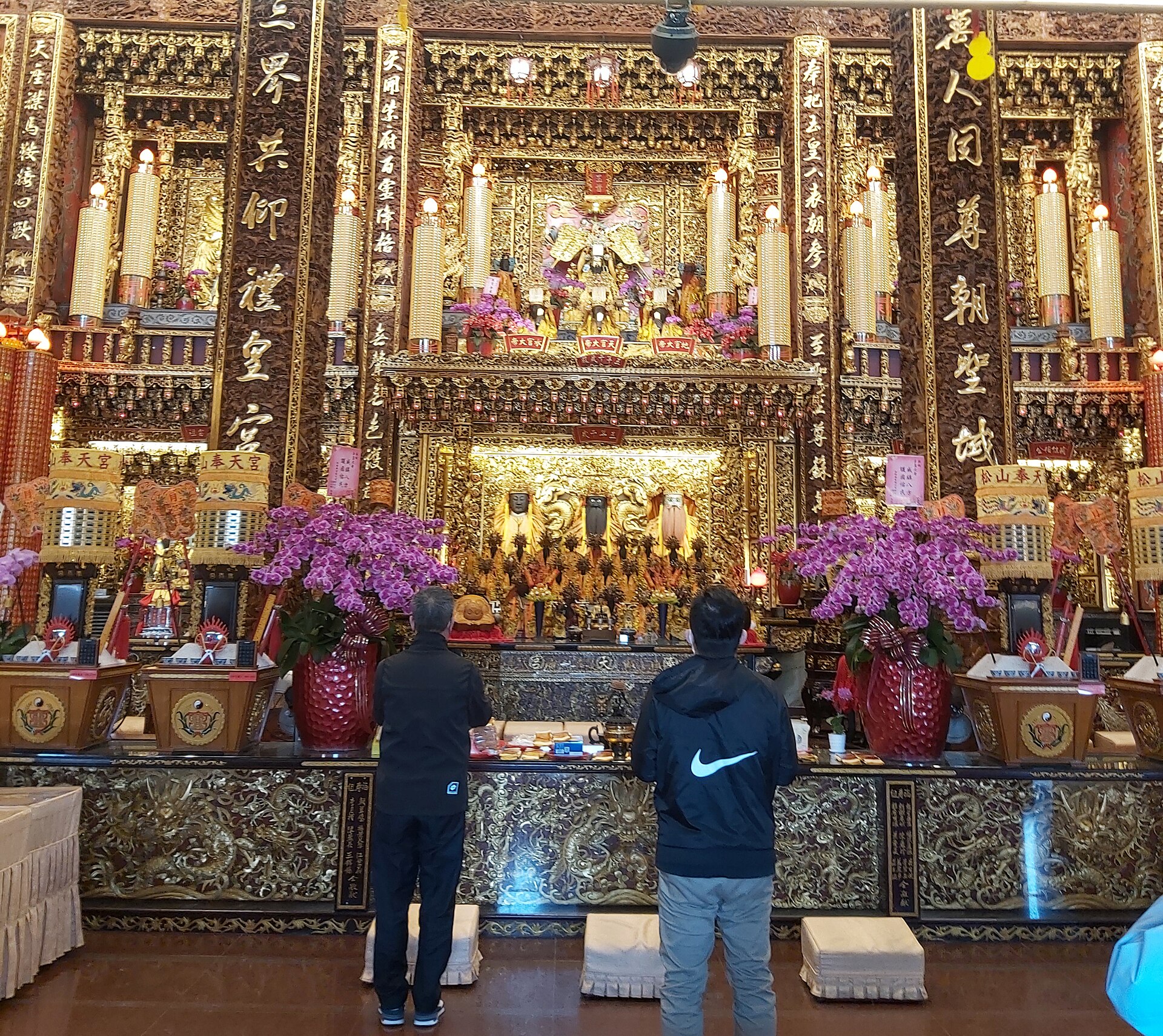
Take the Blue Line to Houshanpi station. Walk south along Zhongpo South Road, cross Fude Street (福德街) and follow the side lane towards the hills. Two trailheads climb Tiger Mountain from this side: one beside Songshan Cihui Temple (松山慈惠堂), the other by Songshan Fengtian Temple (松山奉天宮), a big and richly decorated temple to the Jade Emperor that is worth a look inside before you set off. Pick up water at a convenience store on the way; there are no shops on the ridge itself.
Tiger Mountain
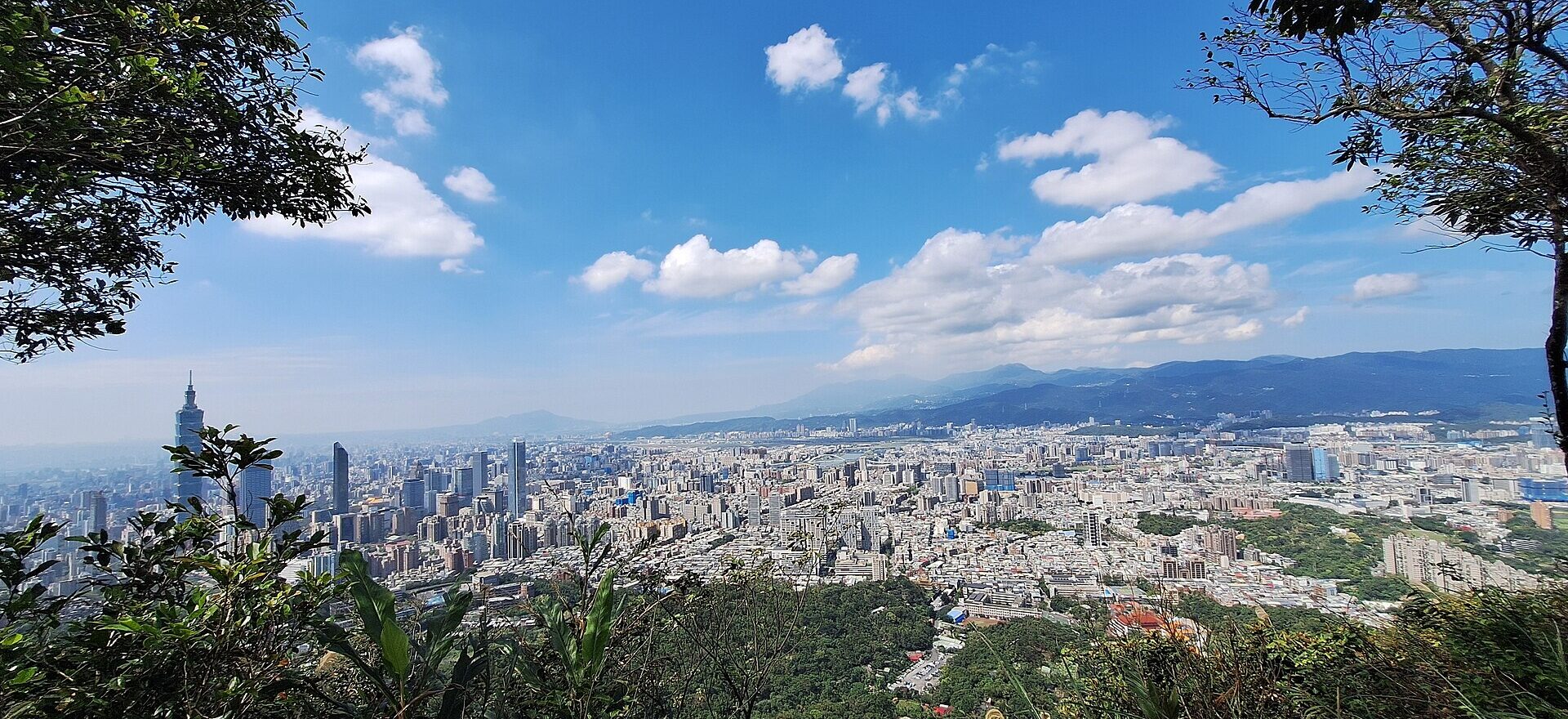
The climb up Tiger Mountain is the first real effort of the walk, a steady ascent on stone steps through the forest. Near the top, an avenue of Chinese fan palms leads to a lookout with some of the best views of the day: the whole city spread out to the north-west, Taipei 101 rising out of Xinyi, and on a clear day the volcanic peaks of Yangmingshan on the far side of the basin. Below the summit, a stream runs through the valley of the Tiger Mountain nature trail, which is one of Taipei’s best-known places to watch fireflies on spring evenings, usually around April.
Leopard Mountain
From Tiger Mountain the route joins a narrow lane, Songshan Road, that threads along the ridge. Leopard Mountain is about ten minutes further on, and it is the least visited of the four: its viewpoint looks over the city too, though not as widely as Tiger’s. If you are going to skip a summit, this is the one — but it is close enough that most people tick it off.
Lion Mountain
Another ten minutes or so along Songshan Road brings you to Lion Mountain, whose summit is a quiet clearing among bamboo and rhododendrons. It is the only one of the four with no view at all, which makes it a good place for a rest in the shade. The lane ends at Beixingbao Temple (北星寶宮), where the route leaves the road and joins the main trail towards Elephant Mountain. On the way you will pass other temples tucked into the hillside, including Zhenguang Temple (真光禪寺) and Yaochi Temple (瑤池宮).
Elephant Mountain
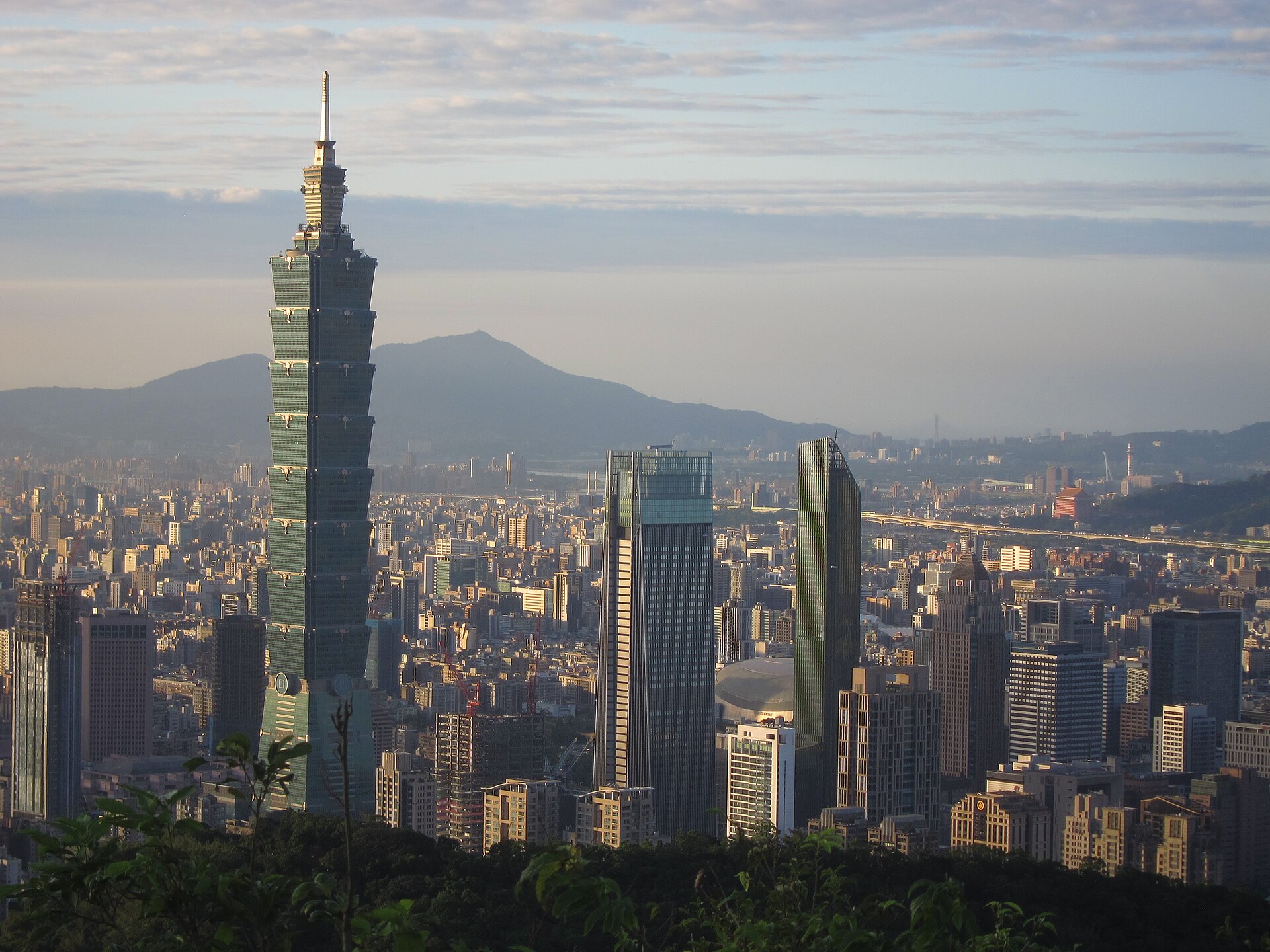
The last beast is the famous one. The path descends through the forest to Elephant Mountain‘s series of platforms and boulders, including the Six Giant Rocks (六巨石), where people clamber up for the classic shot of Taipei 101. After the quiet of the ridge, the crowds can be a shock, especially at sunset, but the view is as good as everyone says. From here it is a steep staircase of about twenty minutes down to the trailhead and a short walk to Xiangshan station, the end of the Red Line. Our Elephant Mountain guide covers the viewpoints and the best times to be there.

Which way should you walk it?
- Tiger to Elephant (east to west): the best choice for an afternoon. You climb Tiger Mountain first, walk the quiet middle of the ridge, arrive at Elephant Mountain for sunset and descend straight to the Red Line and Xinyi’s restaurants.
- Elephant to Tiger (west to east): better in the early morning, when you can have Elephant Mountain’s viewpoints almost to yourself, then walk the ridge in the cool and come down to Houshanpi for breakfast. It means climbing Elephant Mountain’s steep staircase first.
- A loop from Xiangshan: if you want to return to where you started, climb Elephant Mountain, walk the ridge to Lion Mountain and Beixingbao Temple, and come back the same way or on a parallel path. It is shorter, and you miss Tiger’s fan-palm lookout.
How long does it take?
| Route | Distance (approx.) | Time at an easy pace |
|---|---|---|
| Elephant Mountain only, from Xiangshan and back | Shortest | A short outing, including time at the top |
| Loop from Xiangshan: Elephant, Lion and back | Short to medium | Longer than Elephant Mountain alone |
| The Four Beasts, Houshanpi to Xiangshan | Medium | A relaxed half-day outing |
| Full traverse from Yongchun, taking in side peaks and the higher ridge | Longest | The longest option |
These are walking times for a reasonably fit adult with stops for photos. Families with small children and anyone walking in summer heat should allow more.
Extending the walk: the Nangang ridge and Nine-Five Peak
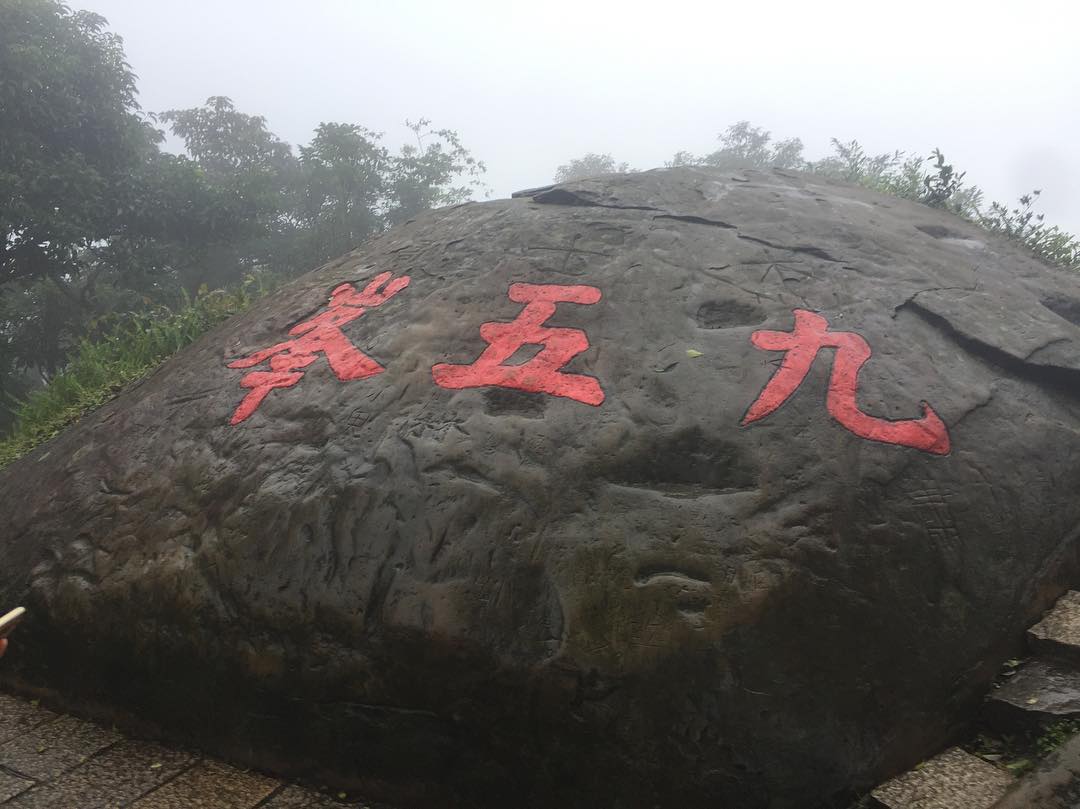
If the Four Beasts leave you wanting more, the higher ridge behind them offers a longer, wilder day. Trails climb from the back of Elephant and Lion mountains up to the Nangang Mountain range, where the path runs along a forested crest with occasional views over both the city and the valleys to the south. The highest point is Nine-Five Peak (九五峰), marked by a big boulder painted with red characters, and nearby Thumb Mountain (拇指山) has a steep stone-step ascent to its rocky summit. You can drop back down to the Four Beasts at several points, or continue east and descend towards Nangang.
The full traverse — from Yongchun station on the Blue Line, up to the higher ridge and back down over the Four Beasts to Xiangshan — is the longest option on this ridge. It is a good introduction to the kind of walking you find on the Taipei Grand Trail: steep, stepped and green. Check how you will reach each end by MRT or bus before you set out.
When to go
- Late afternoon, for sunset: start at Houshanpi with plenty of time before sunset and you will reach Elephant Mountain as the light turns gold and the city lights come on. Bring a torch or use your phone for the last stretch of forest; the main staircase down from Elephant Mountain stays busy well into the evening.
- Early morning: the coolest and quietest time, and the only sensible time from June to September. Start by 07:00 in summer.
- Autumn and winter: October to December brings the clearest air and the best views. Winter days can be grey and drizzly, but the forest is lovely in mist.
- Spring evenings: around April, fireflies glow along the stream in the valley below Tiger Mountain.
- Avoid: the middle of a summer day, the hours after heavy rain (the steps get slippery), and Elephant Mountain on New Year’s Eve unless you want to join the crowds who camp out for the fireworks — see our guide to the Taipei 101 New Year’s fireworks.
Timing a sunset walk
Taipei’s sunset moves by almost two hours through the year, from a little after 17:00 in late November and early December to nearly 18:50 in late June. Leave Houshanpi with plenty of time before sunset if you want to linger at Tiger Mountain’s lookout and walk the ridge at a relaxed pace. The times below are approximate — check a weather or sunset app on the day.
| Month | Sunset in Taipei (approx.) | Leave Houshanpi by |
|---|---|---|
| December–January | 17:05–17:35 | About 14:45 |
| February–March | 17:38–18:09 | About 15:30 |
| April–May | 18:15–18:40 | About 16:00 |
| June–July | 18:40–18:50 | About 16:20, but a dawn walk is kinder in the heat |
| August–September | 17:42–18:38 | About 15:45 |
| October–November | 17:04–17:41 | About 15:00 |
The best light often comes after the sun has gone: the twenty minutes of “blue hour”, when the sky is still deep blue and Taipei 101’s lights are on, make the classic photograph. Stay on Elephant Mountain for it, then walk down with the crowd.
For forecasts, the Central Weather Administration’s English site is the source of record. Summer afternoons often bring sudden thunderstorms, even when the morning is clear.
What to bring and how to stay safe
- Water. At least a litre, more in summer. There are no shops on the ridge, though some temples have drinking water or vending machines.
- Shoes with grip. Trainers are fine; the stone steps get slick after rain.
- Insect repellent. The forest has mosquitoes most of the year.
- A torch if you plan to be on the ridge at sunset.
- An umbrella or a hat. Much of the route is shaded, but the viewpoints are not.
- A bag for rubbish. There are few bins, and you are expected to carry everything out.
The Four Beasts are busy and well signposted, and the risks are modest. Watch your footing on wet steps, stay on the paths — snakes live in these hills, as in all of Taiwan’s forests, and wasps are most active in autumn — and give any stray dogs a calm, wide berth. In an emergency, dial 119.
Food and drink before and after
At the start, the streets around Houshanpi station have breakfast shops, bakeries and convenience stores, and the Wufenpu garment wholesale district near the station is worth a wander if you are there after the stalls open. Raohe Night Market is a short taxi ride away if you want to end the day there instead.
At the Elephant Mountain end, you come down into Xinyi, the city’s newest and richest district, with food courts in the department stores, restaurants of every kind and, at the foot of Taipei 101, Four Four South Village (四四南村), a restored military dependants’ village with exhibition spaces and a bookstore in its old houses. Our Xinyi District guide covers the area, and if you still have energy after the hike, you can see the same view from the top of Taipei 101’s observatory.
Photographing Taipei 101 from the ridge
The Four Beasts are Taipei’s favourite place to photograph the city, and a little planning makes a big difference:
- Choose your viewpoint for the shot you want. Tiger Mountain’s lookout gives expansive city views, with Yangmingshan visible to the north. Elephant Mountain, and the Six Giant Rocks in particular, give the close, towering view of the tower and the Xinyi skyline that everyone recognises.
- Go on a clear day, or just after rain. Summer haze can flatten the view; the clearest air usually comes with autumn and winter fronts, or the morning after a heavy shower.
- Arrive early for sunset. The best rocks on Elephant Mountain fill up long before the sun goes down, especially at weekends. Tripods are tolerated but take up precious space; be ready to share, and do not stand on the fragile edges of the boulders.
- Use the blue hour. Phones handle it well in night mode if you brace them on a rail or rock. For long exposures, a small travel tripod or a beanbag is plenty.
- Look the other way too. The forest, temples and ridge lanes make good pictures, and the path between Leopard and Lion mountains is lovely in low afternoon light.
If you want the view without the climb, the observation deck at the top of Taipei 101 looks out over the city and the hills around it.
The Four Beasts with children
With young children, keep it short. Elephant Mountain alone is steep but brief and has the big view; the fan-palm path on Tiger Mountain is gentle once you reach it; and the ridge lane between Leopard and Lion is easy walking. The full route is fine for school-age children who are used to walking, especially in the cool of the morning, but carry more water and snacks than you think you will need and plan to finish before dark. Pushchairs are not practical on the steps. Our guide to Taipei with kids has other ideas for the day.
A day around the Four Beasts
The Four Beasts slot neatly into a day in eastern Taipei. One plan that works well in autumn, winter and spring:
- Morning — the museums and parks of the east. Songshan Cultural and Creative Park, the old tobacco factory turned design hub, and its Taiwan Design Museum; or the shops and cafés of the East District.
- Lunch — somewhere easy. A food court in one of Xinyi’s department stores, or noodles near Houshanpi before you start.
- Afternoon — the Four Beasts. Blue Line to Houshanpi, then over Tiger, Leopard and Lion mountains to Elephant Mountain for sunset and the blue hour.
- Evening — Xinyi or Raohe. Down to Xiangshan station and dinner in Xinyi, or a taxi to Raohe Night Market for pepper buns and grilled skewers.
In summer, flip it: walk the ridge at dawn from Xiangshan, finish at Houshanpi for breakfast, and spend the heat of the day indoors.
If the weather or your legs say no
The Four Beasts are not accessible to wheelchair users or anyone who cannot manage long flights of steps, and on a grey, drizzly day the views vanish. The good news is that eastern Taipei has alternatives. The observatory at Taipei 101 has lifts all the way up and the best view of the ridge itself; the lawns and ponds around Songshan Cultural and Creative Park and Xinyi’s plazas are level and step-free; and on a wet afternoon the malls and food courts around Taipei City Hall station are all connected by covered walkways. Save the hike for the next clear day — in autumn and winter one is rarely far away.
How the Four Beasts compare with other city hikes
| Hike | Time | Best for | Watch out for |
|---|---|---|---|
| Elephant Mountain | A short climb | The classic Taipei 101 view, sunset | Crowds and steep stairs |
| The Four Beasts | A half day | A varied half day with temples and several viewpoints | Heat in summer; no shops on the ridge |
| Jinmian Mountain, in Neihu | Two hours | Rock scrambling and a view over the airport | Slippery rock after rain |
| The Tianmu Trail, in Tianmu | Depends how far you go | A forest workout and macaques | About 1,300 steps; do not feed the monkeys |
What we would skip
- A special detour to Lion Mountain’s summit if you are short of time. It is the only one of the four with no view; the lane past it is the pleasant part.
- Walking west to east in the afternoon. You climb Elephant Mountain’s steepest stairs when you are fresh but finish at the quieter end of the ridge as the light goes, far from the Red Line and the restaurants.
- The ridge in the midday heat of July and August. The forest gives shade, but the humidity does not care.
- Elephant Mountain on New Year’s Eve, unless camping on a rock for hours to watch the fireworks is your idea of fun.
- A guided tour. The route is signposted, busy and starts and ends at MRT stations. You do not need one.
Related Taipei guides
- Hiking in Taipei: Best Trails, Beaches & Outdoor Escapes
- Elephant Mountain Hike
- Xinyi District Guide
- Taipei 101 Observatory
- Taipei 101 New Year’s Fireworks
- Neihu: Lakeside Parks, Ridge Hikes and a Ferris Wheel
- Tianmu Guide
- Raohe Night Market
- Taipei MRT Guide
- Taipei in Autumn
Frequently Asked Questions
What is the Four Beasts hike in Taipei?
A walk over four small, forested peaks on the south-eastern edge of Xinyi — Tiger, Leopard, Lion and Elephant mountains — linked by stone steps, paths and a narrow ridge lane. It usually starts at Houshanpi station and finishes on Elephant Mountain with the famous view of Taipei 101.
How long does the Four Beasts hike take?
Allow a relaxed half day at an easy pace from Houshanpi to Xiangshan. The longer traverse from Yongchun over the higher Nangang ridge takes noticeably longer, so start early.
How difficult is the Four Beasts hike?
Easy to moderate. The paths are paved or stepped throughout, with a steep climb up Tiger Mountain and a steep staircase down from Elephant Mountain. There is no scrambling on the main route. The heat and humidity in summer are the biggest challenge.
Where does the Four Beasts hike start?
The usual start is Houshanpi station on the Blue Line. Walk south along Zhongpo South Road, cross Fude Street and follow the side lane to Songshan Cihui Temple and the Tiger Mountain trailhead; a second way up starts at Songshan Fengtian Temple. You can also start at Xiangshan station on the Red Line and walk the route in reverse.
Which of the Four Beasts has the best view?
Elephant Mountain has the famous close-up view of Taipei 101. Tiger Mountain’s lookout, at the end of an avenue of fan palms, has a broad view over the city towards Yangmingshan. Leopard Mountain’s view is smaller, and Lion Mountain has none.
Can I do the Four Beasts hike at sunset?
Yes, and it is the best time. Start at Houshanpi with plenty of time before sunset, walk east to west, and you will reach Elephant Mountain as the city lights come on. Carry a torch for the forest sections as it gets dark.
Is there water or food on the Four Beasts trail?
Not on the ridge. Buy water and snacks at a convenience store near Houshanpi or Xiangshan station before you start. Some temples along the way have drinking water or vending machines, but do not rely on them.
Is the Four Beasts hike suitable for children?
For school-age children used to walking, yes, especially in the cool of the morning. For small children, do Elephant Mountain alone or the gentle section between Leopard and Lion. Pushchairs cannot manage the steps.
Is the Four Beasts hike better than Elephant Mountain?
They are different. Elephant Mountain alone is a short climb for the famous view, with crowds. The Four Beasts adds two quieter peaks with views, a forest ridge, temples and more exercise, then finishes at the same viewpoint. If you have the time, the full walk is more rewarding.
Can you see fireflies on the Four Beasts trail?
Yes, in spring. The stream valley on the Tiger Mountain nature trail is one of Taipei’s best-known firefly spots, usually around April. Go at dusk, keep torches pointed at the ground, and stay on the path.
What is Nine-Five Peak?
Nine-Five Peak (九五峰) is the highest point of the Nangang Mountain ridge behind the Four Beasts, marked by a big boulder painted with red characters. Trails climb to it from the back of Elephant and Lion mountains for a longer walk.
Do I need a guide for the Four Beasts hike?
No. The route is signposted, busy with local walkers and starts and ends at MRT stations. A downloaded map or hiking app is useful for choosing between the many side paths.
The Bottom Line
Elephant Mountain gets the fame, but the Four Beasts are the better walk. For a half day and two MRT fares, you climb through the forest to a fan-palm lookout on Tiger Mountain, stroll a quiet ridge lane past temples and a sleepy summit or two, and arrive at the most famous view in Taipei just as the city starts to glow. It is easy enough for most visitors, varied enough to feel like a proper hike, and close enough to the centre to fit into any afternoon. Start at Houshanpi, walk west, carry water, time it for sunset, and finish with dinner in Xinyi.
Photo Credits
Taipei from the Four Beasts hills: Taipei View from Four Beasts Scenic Area 20250301 by Heeheemalu, CC BY-SA 4.0, via Wikimedia Commons.
Songshan Fengtian Temple: 松山奉天宮.2023-03-04-01 by 阿道, CC BY-SA 4.0, via Wikimedia Commons.
Taipei 101 from the Nangang Mountain trail: Taipei Skyline from Nangang Mountain Hiking Trail 20251223 by Ken Marshall, CC BY 4.0, via Wikimedia Commons.
Nine-Five Peak: Jiuwufeng (Taipei) by Gslin, CC0, via Wikimedia Commons.