This article contains advertising. Our booking links are routed through a partner that adds commission tracking automatically, so if you book through one we earn a commission from the provider, at no extra cost to you. It never affects what we recommend. Affiliate disclosure
Where you stay in Taipei changes the trip. Pick the neighborhood that fits how you like to travel and you’ll wake up to street food, sleep within walking distance of your favorite cafés, and be on the MRT to anywhere else in the city in under 20 minutes. Pick the wrong one and you’ll spend an hour a day commuting in and out of the bits you actually came to see.
Taipei is divided into 12 administrative districts and a handful of well-known sub-neighborhoods, but for a tourist, only about six really matter. Each has a distinct personality, a distinct price point, and a distinct kind of trip that suits it. Ximending is the loud, neon, K-pop-infused playground for younger travelers. Xinyi is the gleaming high-rise quarter at the foot of Taipei 101. Da’an is the leafy, café-lined neighborhood favored by travelers who want to feel like locals. Zhongshan is the elegant central spine of restaurants and design shops. Zhongzheng is the historical core around Taipei Main Station. Beitou is the misty hot-spring escape north of the city.
This guide breaks down the best neighborhoods in Taipei for tourists, who each one is best for, what to expect on the street, and how to choose between them based on your travel style and budget. By the end, you’ll have a clear picture of where to base yourself for your 2026 Taipei trip.
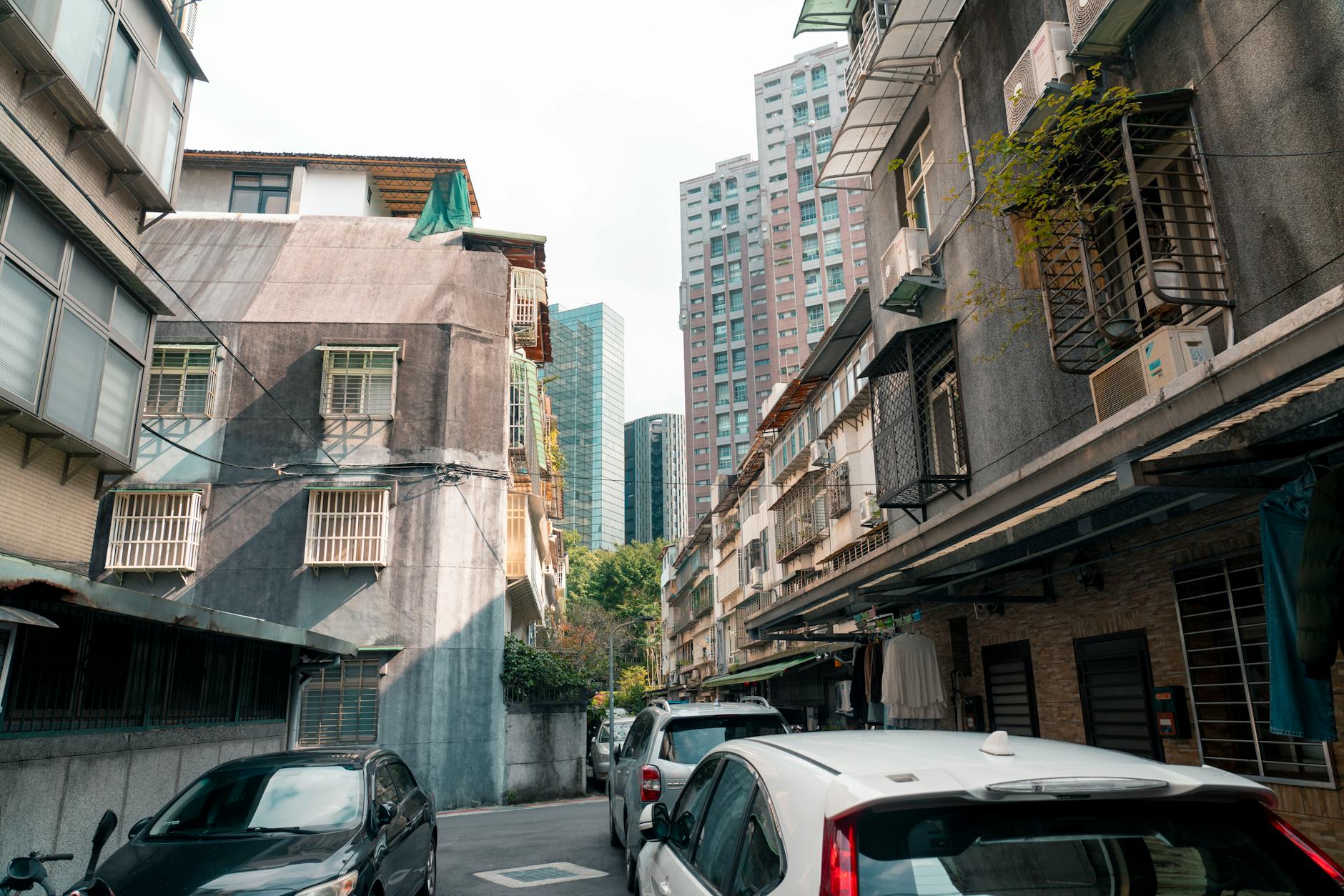
Quick Comparison: The Best Neighborhoods in Taipei
- Ximending (Wanhua District) — Best for: First-timers, budget travelers, nightlife, shopping, young energy.
- Xinyi District — Best for: Luxury travelers, Taipei 101 access, shopping, business trips.
- Da’an District — Best for: Foodies, repeat visitors, families, slow travelers, anyone who wants a “live like a local” feel.
- Zhongshan District — Best for: Mid-range travelers, design and café lovers, easy MRT access.
- Zhongzheng District — Best for: History buffs, transport convenience, day trippers using the High-Speed Rail.
- Beitou District — Best for: Hot-spring escapes, nature lovers, longer or romantic trips.
- Songshan District — Best for: Raohe Night Market access, design and creative travelers, quieter base.
1. Ximending (Wanhua District)
If you’ve seen one photo of Taipei nightlife, it was almost certainly taken in Ximending. The pedestrianized core of the Wanhua District, Ximending is the city’s beating youth-culture heart — neon signs, K-pop blaring from speakers, fashion boutiques selling every trend two months before it hits New York, themed cafés, street performers, and a tattoo parlor every fifty meters. It’s been called Taipei’s Harajuku, and the comparison fits.
It’s also one of Taipei’s oldest neighborhoods. Walk a few blocks south of the neon and you’ll find Longshan Temple (the city’s most famous temple, dating to 1738), the Bopiliao Historic Block (preserved Qing-dynasty street that’s been a film backdrop for everything from Monga to historical TV dramas), and the older streets where Taipei has been Taipei for two and a half centuries.
Best for: First-time visitors who want everything close, budget travelers (Ximending has the highest concentration of cheap hostels and mid-range hotels in the city), young travelers, nightlife, late-night street food, and anyone who wants the most central jumping-off point.
The downsides: Loud at night well past midnight. The streets get truly mobbed on weekend evenings. Some areas to the south of Ximending get sketchier after midnight — not unsafe by Western standards, but worth being aware of.
Get there: MRT Bannan (Blue) or Songshan-Xindian (Green) Line to Ximen Station. Direct from Taipei Main Station in 4 minutes.
Don’t miss: Eslite Wuchang bookstore, the Red House (1908 octagonal market building), Longshan Temple at dawn, the LGBTQ+ bar zone behind the Red House.
2. Xinyi District
If Ximending is Taipei’s youth, Xinyi is its grown-up. Anchored by Taipei 101 — the iconic 508-meter skyscraper that defines the city’s skyline — this is Taipei’s modern showpiece district. Wide boulevards, glassy department stores, the city’s most expensive hotels, the highest concentration of Michelin-listed restaurants, and the rooftop bars with the best Taipei 101 views in town.
Xinyi is where you stay if your trip is built around shopping, fine dining, business meetings, or simply wanting to wake up with a clear view of Taipei 101 from your hotel window. The district feels like a cleaner, more open version of Tokyo’s Roppongi — luxury stores, glass towers, and a slightly sleepier atmosphere on weekday nights compared to the energy of Ximending.
Best for: Luxury travelers, business travelers, shoppers, food-focused trips, couples wanting the iconic skyline view, and anyone who values a quieter, more orderly base.
The downsides: Significantly more expensive than other neighborhoods. Less of a “neighborhood feel” — it can feel sterile compared to Da’an or Zhongshan. Limited cheap food (though excellent expensive food).
Get there: MRT Tamsui-Xinyi (Red) Line to Taipei 101/World Trade Center Station, or the Bannan (Blue) Line to City Hall Station. About 12–15 minutes from Taipei Main Station.
Don’t miss: Taipei 101 observatory at sunset, Din Tai Fung at the original B1 restaurant, Sun Yat-sen Memorial Hall, the Taipei 101 mall, the rooftop bars on the upper floors of the surrounding buildings.
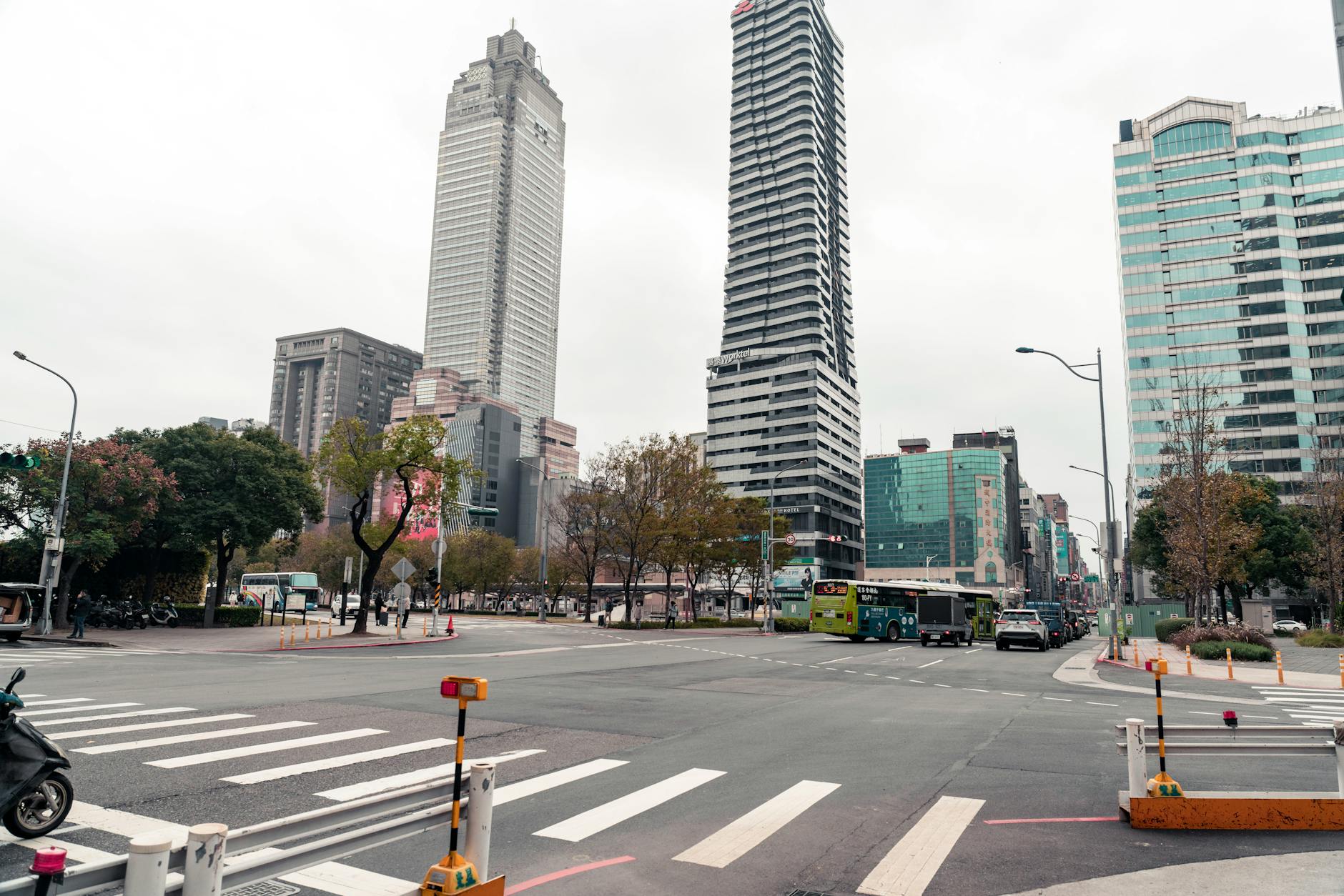
3. Da’an District
Ask 10 long-term Taipei residents which neighborhood they’d recommend a friend stay in, and at least 7 will say Da’an. It’s the leafy, residential, café-rich district at the geographic center of the city — a roughly 15-minute walk to either Ximending or Xinyi, with vastly more local character than either. Tree-lined streets, independent boutiques, the city’s best concentration of small specialty cafés, and Da’an Forest Park (the city’s “Central Park”) all sit within this area.
Da’an is also the foodie quarter. Yongkang Street, in the southwest of the district, is the most famous food street in Taipei — Din Tai Fung’s original location, mango shaved ice institutions, and dozens of small restaurants where the menu hasn’t changed in 30 years. South of Yongkang is Lishui Street and the Qingtian neighborhood, with its preserved Japanese-era houses and cafés that feel like a Tokyo backstreet.
Best for: Foodies (this is the food neighborhood), repeat visitors who already saw the headline sights, families (lots of green space and accessible MRT stations), slow travelers, café people, anyone who wants Taipei to feel like a place they could live.
The downsides: Hotels are slightly limited — most accommodations are mid-range boutiques or Airbnb-style. It’s not as walkable to the iconic sights as Xinyi or Ximending — you’ll be on the MRT more.
Get there: MRT Tamsui-Xinyi (Red) Line to Da’an, Daan Park, or Dongmen stations.
Don’t miss: Yongkang Street eating, Da’an Forest Park, the cafés on Lishui and Qingtian Streets, Tonghua Night Market in the south of the district.
4. Zhongshan District
Zhongshan runs north from the Taipei Main Station area through some of the city’s most pleasant central streets. The district has had a small renaissance in the last decade — independent design boutiques, third-wave cafés, vintage shops, and trendy bars and restaurants have replaced what used to be a slightly tired commercial corridor. The northern half (around Zhongshan MRT and the Linsen North Road area) is now a favorite for design-minded travelers.
The district also has heritage layers worth seeing. The Taipei Confucius Temple and Bao’an Temple sit in the north, both more atmospheric and less touristed than Longshan. Dadaocheng / Dihua Street on the western edge of Zhongshan is the city’s most beautifully preserved 19th-century commercial district, a row of restored shophouses where dried-goods stores share the block with hipster coffee shops.
Best for: Mid-range travelers, design and café lovers, second-time visitors looking for something between Ximending’s chaos and Da’an’s quiet, anyone wanting easy MRT access to everywhere.
The downsides: Some northern parts of Linsen North Road have a longstanding reputation as a Japanese-businessman entertainment district, with hostess bars and karaoke clubs. It’s not unsafe — just not what you might expect.
Get there: MRT Tamsui-Xinyi (Red) Line to Zhongshan or Shuanglian. 5 minutes from Taipei Main Station.
Don’t miss: Dihua Street’s old shophouses, Taipei Confucius Temple, Bao’an Temple, the Mitsukoshi Department Store complex, the cluster of design cafés around MRT Zhongshan.
5. Zhongzheng District
Zhongzheng is the political and historical core. It’s home to Taipei Main Station (where almost every major train, bus, and MRT line converges), the Presidential Office Building, the Chiang Kai-shek Memorial Hall, the National Taiwan Museum, and the 228 Peace Memorial Park. If your interest in Taipei is heavy on history, government, and museums, this is the district to base from.
The transit access is the other major appeal. From Taipei Main Station you can be at Taipei 101 in 15 minutes, the airport in 35 minutes (via Airport MRT), Taichung in 50 minutes (via High-Speed Rail), or Hualien in 2 hours (via TRA train). For travelers planning multiple day trips out of the city or making Taipei the start of a longer Taiwan loop, Zhongzheng is logistically unbeatable.
Best for: Day trippers, travelers using Taipei as a base for the rest of Taiwan, history and culture-focused trips, business travelers who need a one-night transit base, budget hotel hunters (the area around Taipei Main Station has many mid-range chains).
The downsides: The streets immediately around Taipei Main Station can feel a little dated and somewhat impersonal compared to Da’an or Zhongshan. Limited evening atmosphere — most of the great food and bars are in other districts.
Get there: MRT Bannan (Blue) and Tamsui-Xinyi (Red) Lines both stop at Taipei Main Station.
Don’t miss: Chiang Kai-shek Memorial Hall (free, with an hourly guard-changing ceremony), the National Taiwan Museum, 228 Peace Memorial Park, the underground retail tunnels around Taipei Main Station (a city in themselves).
6. Beitou District
Beitou is the wild card. About 30 minutes north of central Taipei by MRT, this is the city’s hot-spring district — a steam-shrouded valley of Japanese-era ryokan-style hotels, public hot-spring bathhouses, and a famous geothermal “Hell Valley” (Dìrè Gǔ) where you can watch sulfurous water boil at 90°C. Hot-spring bathing here goes back to the Japanese colonial era, and several of the original 1920s-30s buildings are still in operation as hotels.
If you want a slower, more nature-leaning Taipei base — or if you’re combining Taipei with a more spa-style trip — Beitou is a magical option. It’s not where you’d stay if your priority is night markets, fashion shopping, and the headline sights, but it works beautifully for a 1-2 night extension at the start or end of a Taipei trip.
Best for: Hot-spring trips, romantic getaways, longer stays, travelers seeking a quieter base, anyone interested in Taipei’s Japanese colonial architecture.
The downsides: Far from the central sights. Daily MRT trips into the city become a real consideration. Best as part of a longer trip or a deliberate side stay rather than a primary base.
Get there: MRT Tamsui-Xinyi (Red) Line to Beitou, then transfer to the short Xinbeitou shuttle line.
Don’t miss: Beitou Hot Spring Museum (the original 1913 public bathhouse, now a free museum), Thermal Valley, public hot springs at Millennium Hot Spring, the boutique hot-spring hotels along Guangming Road.
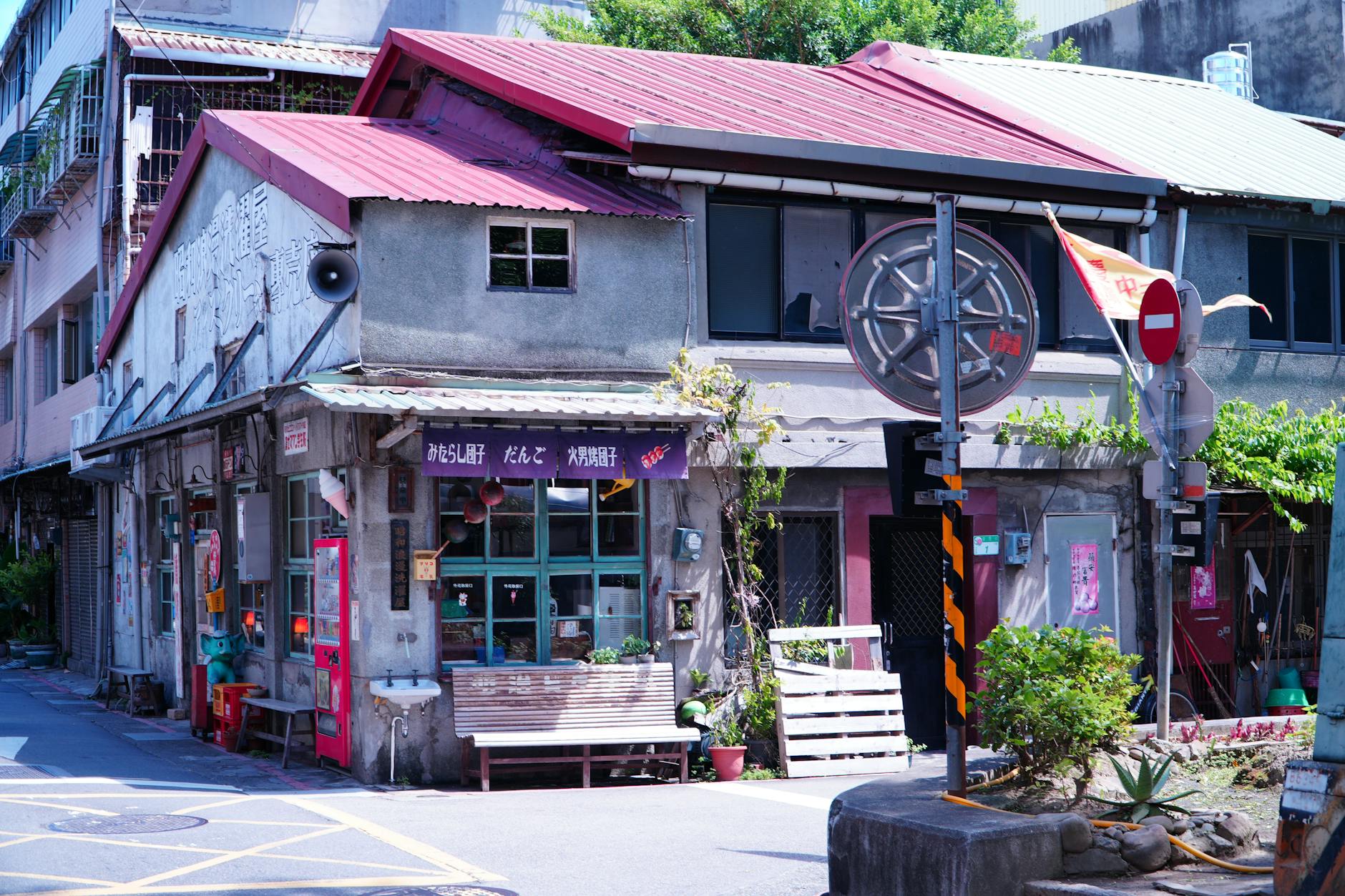
7. Songshan District
The eastern half of central Taipei, Songshan has quietly become one of the most rewarding areas for travelers who’ve already seen the headline sights. It’s home to the Songshan Cultural and Creative Park (a 1937 Japanese-built tobacco factory turned design and art hub, now hosting exhibitions and shops in beautifully restored industrial spaces), Raohe Night Market (the most concentrated and arguably best-quality night market in the city), and the Songshan Airport for domestic flights.
Songshan is more residential than Ximending or Zhongshan, but the MRT lines that pass through it (Songshan-Xindian and Wenhu) connect easily to everywhere else. It’s a quieter, slightly more local-feeling base.
Best for: Returning visitors, design and creative travelers, Raohe Night Market enthusiasts, travelers using Songshan Airport for domestic flights.
The downsides: Fewer hotels than the central districts. Less obvious tourist density (which some people see as a benefit).
Get there: MRT Songshan-Xindian (Green) Line to Songshan or Nanjing Sanmin, or the Wenhu (Brown) Line for the Cultural Park area.
Don’t miss: Raohe Night Market, Songshan Cultural and Creative Park, the riverside parks along the Keelung River.
How to Choose: A Decision Guide
If you’re still torn, a one-line test:
- First trip to Taipei, want everything close? Ximending or Zhongshan.
- Luxury or honeymoon? Xinyi.
- Budget under NT$2,500/night? Ximending.
- Foodie focus? Da’an.
- Combining Taipei with the rest of Taiwan? Zhongzheng (transport access).
- Hot-spring escape? Beitou.
- Repeat visitor wanting the local feel? Da’an or Songshan.
- Family with kids? Da’an (parks, calmer streets) or Zhongshan (central, mid-range hotels).
Neighborhoods to Skip (For Most Travelers)
Taipei has 12 districts but not all are tourist-worth. Skip:
Wenshan District: Far south, mostly residential. Worth visiting for the Maokong Gondola but not for staying.
Nangang District: Industrial and tech-park area on the eastern edge. Modern hotels exist here but it’s awkwardly far from the central sights.
Shilin District (the broader district, not Shilin Night Market): Most of the district is suburban residential. Stay here only if you specifically want walking distance to the National Palace Museum or Shilin Night Market — otherwise base elsewhere and come for visits.
Datong District (around the Taipei Bridge): Has charm — Dadaocheng / Dihua Street is here — but the hotel options are limited compared to Zhongshan, and the MRT access is slightly more awkward.
Where to Stay by Trip Length
Length of trip plays into the neighborhood decision more than people realize.
1–2 days: Stay in Ximending or Zhongzheng. You want maximum proximity to the iconic sights and minimum transit time.
3–4 days: Ximending, Zhongshan, or Da’an all work well. The Taipei MRT is fast enough that a 4-day trip can be based anywhere central without losing much time.
5–7 days: Da’an is ideal. You’ll be in town long enough to want a “neighborhood” feel rather than a “tourist district.” Alternative: split — 3 nights central (Ximending or Zhongshan) plus 2 nights in Beitou for a hot-spring change of pace.
1+ week: Da’an or split-stay. The novelty of a buzzy central neighborhood wears off after 5 days; the leafy, café-rich vibe of Da’an does not.
Tips for Picking a Hotel in the Right Neighborhood
Walking distance from the MRT matters more than central distance. A hotel 2 minutes from any MRT station beats one 15 minutes from a “central” location. The MRT is fast enough that location on a station compresses the city.
The number of MRT lines at the closest station matters. Hotels near interchange stations (Taipei Main, Zhongxiao Fuxing, CKS Memorial Hall) shave 5–15 minutes off most trips because you avoid one transfer.
Read recent reviews for noise. Ximending in particular varies — some hotels are quiet, others have karaoke bars next door. Reviews from the last 6 months are the best signal.
Hotel breakfasts in Taipei are usually skippable. Almost any neighborhood has 7-Eleven breakfasts, traditional Taiwanese breakfast shops, or independent cafés that beat hotel buffets. Don’t pay for breakfast unless the hotel breakfast is genuinely a draw.
Wi-Fi is universally fast. All hotels offer good free Wi-Fi. Some also offer “handy phone” rentals (a free pocket Wi-Fi device + smartphone) — useful if you didn’t pre-arrange a Taiwanese SIM card or eSIM.
Related Taipei guides
- Where to Stay in Taipei: Best Neighborhoods and Hotels
- Da’an District Guide: Cafes, Parks & Food Streets
- Best Luxury Hotels in Taipei: 12 Top Picks
- Best Boutique Hotels in Taipei: 10 Top Picks
- Airbnb in Taipei: Is It Legal and Where to Book
- Best Taipei Hotels Near MRT Stations
Frequently Asked Questions
What is the best neighborhood to stay in Taipei for first-time visitors?
Ximending and Zhongshan are the best two for first-timers. Ximending if you want maximum buzz, late-night street food, and the cheapest mid-range hotels; Zhongshan if you prefer something slightly more polished with great cafés and easy MRT access to everywhere. Both put you within 15 minutes of every iconic Taipei sight.
Where do locals recommend staying in Taipei?
Locals most often recommend Da’an for travelers who want to experience real-life Taipei rather than a tourist hub. The leafy streets, the café scene, the proximity to Yongkang Street’s food, and the calmer atmosphere make it the “live like a local” choice.
Is Ximending safe at night?
Yes. Ximending and the wider Wanhua District are safe at all hours by Western standards. The streets immediately south of Ximending get quieter and slightly grittier after midnight but still aren’t dangerous. Use normal night-time city sense.
Should I stay in Xinyi or Ximending?
Stay in Xinyi for luxury, Taipei 101 views, modern shopping, and a quieter atmosphere. Stay in Ximending for nightlife, street food, budget hotels, and a younger, more energetic vibe. Xinyi is better for couples and business travelers; Ximending is better for first-timers and budget travelers.
Is Da’an a good area to stay in Taipei?
Yes — it’s many travelers’ favorite area for a longer Taipei stay. Da’an is leafy, café-rich, full of great food, and centrally located, with multiple MRT stations. It’s quieter than Ximending or Xinyi but feels more like a real neighborhood than a tourist quarter.
What’s the cheapest area to stay in Taipei?
Ximending has the highest concentration of budget hostels and mid-range hotels. Expect NT$1,000–2,500 per night for a private room. Zhongzheng (around Taipei Main Station) is the second cheapest and has many business chain hotels in the same range.
Is Beitou worth staying in?
Yes, for a 1–2 night hot-spring extension at the start or end of a longer trip. As your only Taipei base it’s too far from the central sights, but as part of a longer trip it’s a magical change of pace.
How do I get from Taoyuan Airport to my hotel?
The Airport MRT is the cheapest and fastest option to most central Taipei neighborhoods — about NT$160 (US$5) and 35–50 minutes from TPE to Taipei Main Station, where you can change to other MRT lines. From there, your hotel is at most 15 minutes more.
Final Take
The best neighborhoods in Taipei aren’t really competing — they’re offering different trips. Ximending if you want loud and central. Xinyi if you want polished and luxury. Da’an if you want the local-feel slow trip. Zhongshan if you want the middle ground. Zhongzheng if transit is everything. Beitou if you want a hot-spring break.
Pick once, book a hotel within 5 minutes of an MRT station, and trust that the rest of Taipei is 15 minutes away. The city makes it easy to be wrong about almost anything except where you sleep — get that right, and the trip falls into place.